
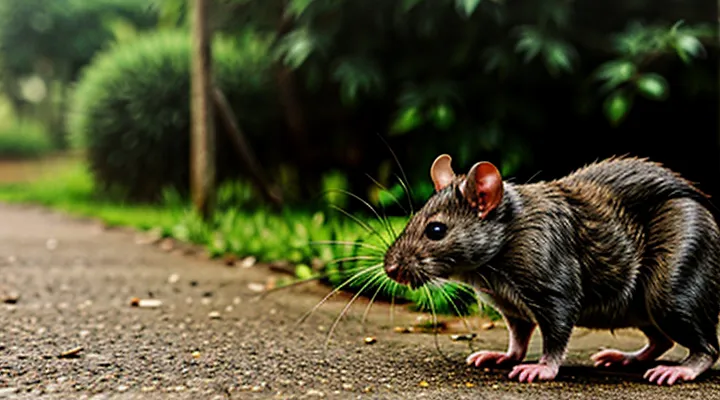
Introduction to Wild and Domestic Rats
What Defines «Wild» vs. «Domestic» Rats
Genetic Divergence
Wild populations of Rattus spp. exhibit marked genetic divergence from their domesticated counterparts, reflecting distinct evolutionary pressures and demographic histories.
Genetic separation arises primarily from founder events during domestication, sustained artificial selection for traits such as tameness and coat color, and restricted gene flow between captive colonies and free‑living groups. Natural selection in heterogeneous habitats further accentuates allele frequency differences.
Key genomic regions that differ between the two groups include:
- Mitochondrial DNA haplotypes: wild rats possess diverse lineages absent in laboratory strains.
- Immune‑related loci (e.g., MHC class I and II genes): elevated polymorphism in wild individuals enhances pathogen resistance.
- Metabolic pathways: alleles influencing xenobiotic metabolism and nutrient utilization show adaptation to variable diets in the wild.
These genetic distinctions affect experimental reproducibility, disease modeling, and the efficacy of rodent control measures. Recognizing the extent of divergence enables more accurate interpretation of laboratory findings and informs strategies that target wild populations without impacting domestic stocks.
Environmental Influence
Wild rodents experience a breadth of environmental pressures that shape their physiology, behavior, and genetics, distinguishing them markedly from their domesticated counterparts. Natural habitats expose these animals to variable temperature regimes, fluctuating food availability, predation risk, and competition for shelter. Such conditions drive adaptive traits such as heightened sensory acuity, robust immune responses, and flexible foraging strategies. In contrast, captive rats live in regulated climates, receive consistent nutrition, and face minimal predator threats, resulting in reduced selective pressure for these traits.
Key environmental factors influencing wild populations include:
- Climate variability – seasonal extremes demand thermoregulatory efficiency and seasonal fur changes.
- Resource scarcity – intermittent food sources promote opportunistic diet breadth and efficient energy storage.
- Predator presence – constant threat selects for heightened vigilance, rapid escape responses, and cryptic coloration.
- Habitat complexity – diverse microhabitats require advanced spatial navigation and territorial behaviors.
- Pathogen exposure – diverse microbial environments foster robust, adaptable immune systems.
These pressures generate observable differences in morphology, stress hormone profiles, and social organization. Wild rats typically exhibit larger adrenal glands, more pronounced stress reactivity, and complex hierarchical structures that reflect competition for limited resources. Domestic rats, removed from such stresses, display attenuated physiological responses and simplified social dynamics. The environmental context therefore constitutes a primary driver of divergence between free‑living and laboratory or pet rat populations.
Key Differences in Physical Characteristics
Size and Build
Muscle Development
Wild rats exhibit markedly greater muscle development than their domestic counterparts. Their skeletal musculature is adapted to continuous foraging, escape, and territorial defense, resulting in higher muscle mass relative to body size and enhanced contractile strength.
- Fast‑twitch (type II) fibers dominate in wild specimens, providing rapid burst power for predator evasion.
- Myogenic regulatory factors (MyoD, Myf5) display elevated expression, promoting fiber hypertrophy.
- Circulating catecholamines and cortisol are consistently higher, stimulating protein turnover and muscle growth.
- Protein‑rich, variable diet supplies essential amino acids, supporting anabolic pathways.
Domestic rats, bred for reduced activity, show opposite traits:
- Increased proportion of slow‑twitch (type I) fibers, suited for low‑intensity movement.
- Lower myogenic factor activity, leading to modest fiber size.
- Stabilized hormonal milieu reduces catabolic signaling.
- Uniform, carbohydrate‑heavy feed limits amino acid availability for muscle synthesis.
These physiological divergences arise from environmental demands and selective breeding, shaping distinct muscular phenotypes between wild and laboratory‑raised rats.
Fur Density and Coloration
Wild rats exhibit markedly higher fur density than their domesticated counterparts. In natural habitats, dense pelage provides insulation against temperature fluctuations, moisture, and abrasive vegetation. Domestic rats, bred for laboratory or pet environments, possess a reduced hair coat that conserves energy in controlled climates and facilitates handling.
Coloration patterns differ substantially. Wild specimens display a range of cryptic hues—gray, brown, black, and mixed mottling—designed to blend with soil, leaf litter, and shadows. These pigments arise from adaptive melanogenesis that enhances camouflage and predator avoidance. In contrast, domesticated rats often show uniform coat colors such as albino, hooded, or solid black, resulting from selective breeding that prioritizes aesthetic traits over camouflage.
Key distinctions can be summarized:
- Hair shaft thickness: Wild rats have thicker, more resilient fibers; domestic rats possess finer strands.
- Undercoat presence: A well‑developed insulating layer is typical in wild individuals; many domestic strains lack a distinct undercoat.
- Pigment distribution: Wild coats feature irregular, zone‑specific melanin deposition; domestic coats display homogenous or deliberately patterned coloration.
- Seasonal variation: Some wild species thicken fur or alter shade with seasons; domestic rats maintain a constant coat year‑round.
These physiological differences reflect the divergent selective pressures experienced by rats living in uncontrolled ecosystems versus those maintained in human‑controlled settings.
Sensory Acuity
Enhanced Olfaction
Wild rats that inhabit natural environments possess an olfactory system markedly more sensitive than that of their domesticated counterparts. The nasal epithelium of wild individuals contains a higher density of olfactory receptor neurons, extending the detectable concentration range for volatile compounds by up to an order of magnitude. This anatomical adaptation enables rapid localization of food sources, predators, and conspecifics through scent trails that are often invisible to domestic rats.
Key functional distinctions include:
- Receptor diversity: Wild rats express a broader repertoire of odorant receptor genes, allowing discrimination of a larger set of chemical cues.
- Signal amplification: Enhanced expression of cyclic nucleotide-gated channels increases the electrical response to odor binding.
- Neural processing: The olfactory bulb of wild specimens exhibits expanded glomerular layers, supporting finer spatial mapping of odorant inputs.
Ecological consequences stem directly from these capabilities. Efficient detection of carrion and seed dispersal agents facilitates opportunistic feeding, while heightened sensitivity to pheromonal markers aids in territory establishment and mating. Conversely, domestic rats, bred for reduced stress responses in confined settings, display diminished olfactory acuity, limiting their reliance on scent for navigation and foraging.
Research employing electrophysiological recordings and gene‑expression profiling consistently confirms that environmental pressure drives the evolution of superior olfactory function in free‑living rats. Comparative studies reveal that selective breeding in laboratory strains reduces receptor gene expression by approximately 30 %, correlating with slower odor‑guided learning tasks.
In summary, the superior olfactory apparatus of wild rats represents a critical adaptation for survival in heterogeneous habitats, contrasting sharply with the attenuated sense of smell observed in domesticated populations.
Superior Hearing
Wild rodents exhibit auditory capabilities that surpass those of laboratory-bred specimens. The cochlear structure of field-dwelling rats contains a higher density of hair cells, extending the detectable frequency range to approximately 80 kHz, whereas domesticated individuals typically max out near 70 kHz. This anatomical adaptation enhances the detection of ultrasonic vocalizations used for predator avoidance and conspecific communication.
Key functional advantages include:
- Faster sound‑localization reflexes, reducing response latency to sudden aerial threats.
- Improved discrimination of low‑intensity rustling, enabling identification of prey or rival activity beneath leaf litter.
- Greater sensitivity to high‑frequency alarm calls, supporting coordinated escape behaviors within colonies.
Domestication processes have attenuated these traits. Selective breeding for docility and reduced stress responses diminishes the selective pressure to maintain extreme auditory acuity. Consequently, captive rats display narrower frequency bandwidths and elevated auditory thresholds.
Ecologically, superior hearing facilitates niche exploitation. Wild rats can forage in dense vegetation where visual cues are limited, relying on acoustic signals to locate food and navigate complex burrow systems. The heightened auditory perception also contributes to predator‑prey dynamics, allowing early detection of owls, snakes, and other aerial hunters.
Overall, the auditory system of wild rats represents a specialized evolutionary response to environmental demands, contrasting sharply with the reduced hearing performance observed in their domesticated relatives.
Behavioral Disparities
Social Structures and Dynamics
Colony Size and Hierarchy
Wild rat colonies typically contain 30‑150 individuals, whereas pet rat groups rarely exceed 10. Larger colonies occupy extensive burrow networks, often spanning several hundred square meters, and maintain multiple nesting chambers. High density promotes resource sharing but also intensifies competition for food and shelter.
Social organization follows a strict dominance hierarchy. The structure can be summarized as:
- Alpha male – controls breeding access, patrols territory, resolves conflicts.
- Alpha female – leads maternal duties, influences group cohesion.
- Beta individuals – subordinate males and females that assist in foraging and nest maintenance, defer to alphas during disputes.
- Subordinate members – juveniles and lower‑rank adults, receive limited resources, contribute to collective vigilance.
Hierarchy stability depends on colony size; larger groups exhibit more pronounced rank distinctions, while smaller assemblages display fluid roles. Dominance is reinforced through aggressive displays, scent marking, and occasional physical confrontations. The established order regulates mating, food distribution, and nest occupancy, ensuring colony resilience in unpredictable environments.
Mating Strategies
Wild rats exhibit mating systems shaped by high population density, territoriality, and seasonal resource fluctuations. Males typically adopt a polygynous strategy, defending overlapping territories that attract multiple females. Dominance hierarchies determine access to receptive females; higher‑ranking males monopolize prime nesting sites and scent‑marking posts, thereby increasing mating opportunities. Females display estrus cycles synchronized with photoperiod, concentrating breeding during spring and autumn when food abundance peaks. This temporal clustering reduces offspring mortality by aligning birth with optimal conditions.
In contrast, rats kept in controlled environments experience reduced competition and stable resource availability. Both sexes breed year‑round, and pair bonds may form more readily due to limited mate choice. Male aggression declines, and females often mate with the same partner repeatedly, resulting in a quasi‑monogamous pattern under captivity.
Key differences in reproductive tactics include:
- Territorial defense – pronounced in wild males; minimal in domesticated settings.
- Seasonal breeding – evident in free‑living populations; absent in laboratory colonies.
- Mate competition – intense male‑male contests outdoors; reduced in confined spaces.
- Scent communication – extensive urine marking for dominance and estrus signaling in the wild; limited use in indoor enclosures.
These distinctions illustrate how ecological pressures drive divergent mating strategies between free‑living rodents and their domesticated relatives.
Foraging and Diet
Opportunistic Scavenging
Wild rats exhibit opportunistic scavenging, exploiting any accessible organic material without selective preference. Their foraging strategy relies on rapid assessment of resource availability, allowing them to capitalize on seasonal fluctuations and human-generated waste. In contrast, domesticated counterparts receive consistent diets, limiting the development of such flexible intake patterns.
Key characteristics of opportunistic scavenging in wild populations include:
- Consumption of carrion, including dead insects, rodents, and small vertebrates.
- Ingestion of plant matter such as seeds, fruits, and tubers when animal protein is scarce.
- Utilization of anthropogenic refuse: grain spillage, discarded food, and organic waste in urban environments.
- Adaptation to novel food sources, for example, ingesting synthetic polymers that have become edible through biofilm colonization.
These behaviors enhance survival odds by reducing dependence on a single food type, supporting population resilience across diverse habitats.
Controlled Feeding
Controlled feeding refers to the deliberate regulation of nutrient intake, timing, and portion size. In laboratory or pet environments, food is presented on a fixed schedule, often with a precisely measured diet composition. This practice contrasts sharply with the foraging behavior of free‑ranging rats, which ingest food sporadically and select items based on availability, season, and competition.
Wild rats encounter unpredictable food sources such as seed caches, insects, and human refuse. Their intake fluctuates daily, resulting in periods of caloric surplus followed by scarcity. Consequently, their digestive systems adapt to variable nutrient loads, and metabolic pathways remain flexible to accommodate rapid shifts in energy supply.
In captivity, controlled feeding imposes consistency:
- Fixed daily ration eliminates binge‑eating episodes.
- Standardized macronutrient ratios ensure balanced growth.
- Predictable timing aligns with circadian rhythms, reducing stress‑induced hormonal spikes.
These conditions produce measurable differences in body composition, reproductive output, and disease susceptibility. For example, captive rats exhibit higher lean‑mass percentages and lower incidence of gastrointestinal parasites compared with their wild counterparts, whose diets often include coarse fibers and occasional toxins.
Understanding the disparity between opportunistic consumption in natural habitats and regimented diets in controlled settings informs experimental design, welfare protocols, and comparative physiology studies. Accurate interpretation of data requires acknowledgment that feeding regime alone can account for significant phenotypic variation between wild and domesticated rat populations.
Survival Instincts and Predation
Evasion Techniques
Wild rats have evolved sophisticated evasion strategies that distinguish them from their domesticated relatives. Their heightened sensory perception enables rapid detection of predators and human activity. Acute hearing and whisker sensitivity allow them to perceive vibrations and low‑frequency sounds that domestic counterparts often overlook.
Burrowing behavior contributes to concealment. Complex tunnel networks provide multiple escape routes, reduce exposure to open spaces, and facilitate quick retreats when threats appear. These subterranean systems are continually expanded, incorporating new chambers that serve as safe zones during adverse conditions.
Nocturnal habits reduce encounter rates with diurnal predators. By operating primarily at night, wild rats exploit reduced visibility and lower human presence. Their ability to navigate in low‑light environments relies on enhanced retinal rod cells and spatial memory of terrain features.
Social coordination enhances group survival. Individuals emit alarm pheromones that trigger immediate dispersal or collective movement toward pre‑mapped refuges. This communication minimizes individual risk and optimizes collective evasion.
Typical evasion techniques include:
- Rapid assessment of vibrations and auditory cues
- Utilization of multi‑layered burrow systems
- Night‑time foraging and movement
- Deployment of alarm chemicals to alert conspecifics
- Strategic use of cover objects such as debris, vegetation, and man‑made structures
- Adaptive learning from previous trap encounters, leading to avoidance of familiar bait locations
These mechanisms collectively enable wild rats to persist in diverse habitats, maintain low detection rates, and effectively circumvent conventional control measures.
Fear Response
Wild rats exhibit a markedly heightened fear response compared with their domesticated counterparts. In natural habitats, exposure to predators, fluctuating temperatures, and scarce resources triggers rapid activation of the hypothalamic‑pituitary‑adrenal (HPA) axis, resulting in elevated corticosterone levels and intensified startle reflexes. Domestic rats, shielded from such pressures, display blunted hormonal surges and slower reaction times when confronted with novel stimuli.
Key behavioral distinctions include:
- Immediate freezing or fleeing upon detection of aerial or terrestrial predators; domestic rats often investigate before retreating.
- Use of scent marking to communicate threat zones, a behavior rarely observed in laboratory strains.
- Reliance on group vigilance: wild individuals emit ultrasonic alarm calls that synchronize collective escape, whereas pet rats show limited vocalization in danger.
Neurophysiological studies reveal that wild rats possess a denser distribution of amygdalar neurons responsive to olfactory cues associated with predation. This neural architecture supports faster threat assessment and more robust defensive actions, underpinning the divergent fear profiles between free‑living and captive populations.
Health and Lifespan Variations
Disease Resistance
Natural Immunity
Wild rats encounter a diverse array of pathogens, parasites, and environmental stressors. Continuous exposure shapes a robust innate immune system that rapidly detects and eliminates invaders. Elevated levels of antimicrobial peptides and heightened activity of natural killer cells characterize this baseline defense.
Domestic rats, maintained in controlled environments, experience limited pathogen diversity. Their immune systems rely more heavily on adaptive responses that develop after specific exposures. Consequently, baseline innate defenses are less pronounced than in their wild counterparts.
Key aspects of natural immunity that differ between the two groups include:
- Barrier integrity: Wild rats possess thicker, more keratinized skin and mucosal epithelium, reducing pathogen entry.
- Microbiome composition: A diverse gut microbiota in wild individuals produces metabolites that modulate immune signaling and enhance resistance.
- Complement activity: Serum complement proteins show higher baseline activity in wild rats, facilitating rapid opsonization.
- Phagocytic efficiency: Macrophages and neutrophils from wild rats exhibit increased phagocytosis rates and reactive oxygen species production.
These physiological distinctions result from evolutionary pressure in uncontrolled habitats, providing wild rats with a more immediate and generalized protective capacity compared with the comparatively passive innate immunity of laboratory or pet rats.
Exposure to Pathogens
Wild rodents encounter a broad spectrum of microorganisms that domestic counterparts rarely meet. Their habitats—sewers, fields, and abandoned structures—harbor bacteria, viruses, fungi, and parasites adapted to harsh, fluctuating conditions. Consequently, wild individuals serve as reservoirs for pathogens such as Leptospira spp., hantaviruses, Salmonella spp., and ectoparasites like Xenopsylla cheopis.
Key aspects of pathogen exposure in free‑living rats:
- Environmental diversity: Soil, water, and refuse provide continuous sources of infectious agents; seasonal changes alter pathogen prevalence.
- Social behavior: High‑density colonies and aggressive grooming facilitate direct transmission of blood‑borne and skin‑contact pathogens.
- Dietary breadth: Consumption of carrion, insects, and contaminated food introduces gastrointestinal microbes not typical in laboratory or pet diets.
- Vector interactions: Fleas, ticks, and mites acquire and disseminate pathogens while feeding on the host, expanding the range of transmissible diseases.
Immune responses in wild rats differ markedly from those of domesticated animals. Chronic exposure induces heightened baseline activity of innate defenses, including elevated neutrophil counts and up‑regulated Toll‑like receptor expression. Adaptive immunity shows broader antibody repertoires, reflecting repeated encounters with antigenically diverse agents.
Human health implications stem from the overlap between wild rat habitats and urban environments. Inhalation of aerosolized rodent excreta can transmit hantavirus pulmonary syndrome; contact with contaminated water may lead to leptospirosis; flea bites can spread plague. Surveillance programs that monitor rodent populations for pathogen load provide early warning of emerging zoonotic threats.
Overall, the natural ecology of wild rats subjects them to a constant influx of infectious organisms, shaping robust immune mechanisms and presenting significant public‑health challenges.
Lifespan Expectancy
Impact of Environment
Wild rats encounter habitats ranging from forests and agricultural fields to urban sewers. Temperature fluctuations, seasonal food scarcity, and exposure to predators create selective pressures absent in laboratory or pet environments. These pressures dictate physiological and behavioral traits that distinguish them from their domesticated counterparts.
Domesticated rats live under constant temperature, regulated nutrition, and protection from natural enemies. The absence of environmental stressors results in reduced adrenal activity, uniform coat coloration, and predictable growth rates.
Environmental conditions shape several physiological parameters in wild populations:
- Muscle mass and skeletal density increase in response to frequent climbing and burrowing.
- Fur thickness varies with ambient temperature, providing insulation in colder climates.
- Baseline corticosterone concentrations rise during periods of food shortage, indicating heightened stress response.
Behavioral adaptations arise directly from habitat demands:
- Opportunistic foraging includes scavenging, seed hoarding, and predation on insects.
- Predation risk enforces heightened vigilance, leading to extended nocturnal activity and rapid escape responses.
- Social structures become fluid; dominant individuals secure prime nesting sites, while subordinates adopt peripheral roles.
Reproductive strategies reflect environmental variability. Wild rats breed seasonally, aligning litters with periods of abundant resources, and often produce larger litters to offset higher juvenile mortality. Domestic rats, receiving continuous nourishment, reproduce year‑round with relatively stable litter sizes.
Overall, the natural environment imposes constraints and opportunities that drive distinct morphological, hormonal, and behavioral profiles in wild rats, contrasting sharply with the uniform conditions experienced by their domesticated relatives.
Human Intervention
Human activities shape the ecology of wild rats in ways that domestic rats rarely experience. Urban expansion replaces natural cover with concrete, forcing feral populations into narrower corridors and increasing contact with human waste. Agricultural practices introduce seasonal food surpluses, prompting rapid population spikes that amplify competition and disease transmission.
Key mechanisms of human influence include:
- Habitat modification: construction, deforestation, and irrigation alter shelter availability and predator exposure.
- Food provisioning: garbage collection, crop residues, and intentional bait create predictable resources that drive foraging behavior.
- Population control: poison baits, traps, and rodenticide programs reduce numbers but select for tolerant individuals, affecting genetic composition.
- Disease management: surveillance and vaccination campaigns target zoonotic pathogens carried by wild rats, impacting public health risk assessments.
Research demonstrates that these interventions generate measurable genetic divergence between feral and captive rats. Genetic studies reveal increased alleles linked to rodenticide resistance in urban colonies, while reduced genetic variability appears in isolated rural populations due to habitat fragmentation. Consequently, management strategies must consider ecological feedback loops: altering one factor often triggers compensatory changes in behavior, reproduction, or disease dynamics.
Effective policy requires coordinated monitoring of population trends, habitat changes, and resistance markers. Data-driven adjustments to control measures can mitigate unintended consequences, such as secondary poisoning of non‑target species or the emergence of super‑resistant rat strains. Continuous assessment ensures that human actions remain aligned with ecological objectives and public health goals.
Implications for Research and Pet Ownership
Ethical Considerations in Study
Behavior Observation
Observing wild rats reveals patterns that diverge sharply from those recorded in laboratory colonies. Field researchers record activity cycles, social interactions, and foraging strategies directly in natural habitats, while domestic rats are monitored under controlled lighting, temperature, and food supply.
Data collection relies on motion‑activated cameras, infrared sensors, and miniature radio transmitters. Researchers position devices near burrow entrances, along established runways, and at resource hotspots. Continuous recording captures nocturnal peaks, inter‑individual spacing, and response to predator cues without human interference.
- Social organization: wild rats form fluid hierarchies, with dominant individuals defending limited nesting sites; domestic groups exhibit stable, low‑conflict structures.
- Foraging behavior: wild individuals travel extensive ranges, exploit diverse food sources, and display opportunistic scavenging; captive rats consume fixed rations within a confined arena.
- Predator avoidance: wild rats employ sentinel duty, alarm vocalizations, and rapid retreat to subterranean refuges; domestic rats show reduced vigilance and limited escape responses.
- Territorial marking: wild rats deposit urine and glandular secretions along runways to delineate boundaries; domestic rats exhibit minimal scent marking in enriched cages.
These observations inform ecological risk assessments, guide humane control measures, and refine laboratory models by integrating naturalistic variables. Accurate behavioral records ensure that conclusions drawn from captive studies remain relevant to populations thriving outside human settlements.
Habitat Recreation
Recreating the natural surroundings of free‑living rodents is essential for research, rehabilitation, and conservation. Unlike laboratory‑bred or pet rats, wild individuals depend on a mosaic of microhabitats that provide foraging, nesting, and predator avoidance. Accurate habitat simulation yields reliable behavioral data and supports physiological health.
Key environmental elements to replicate:
- Substrate: a mix of leaf litter, soil, and coarse organic material that permits burrowing and foraging.
- Vegetation: live or artificial grasses, shrubs, and seed heads to supply cover and food sources.
- Shelter: hollow logs, rock crevices, and nesting boxes that mimic burrow entrances and provide security.
- Climate control: temperature ranges of 10‑30 °C, relative humidity of 50‑80 %, and photoperiod matching seasonal daylight cycles.
- Water access: shallow dishes with natural filtration to emulate stream or puddle conditions.
Design considerations focus on spatial complexity and sensory cues. Enclosures should exceed 1 m³ per animal, incorporate multiple levels, and allow continuous rearrangement of objects to prevent habituation. Inclusion of predator scent marks or distant auditory recordings introduces realistic risk factors, promoting natural vigilance.
Maintenance protocols require weekly substrate turnover, periodic vegetation pruning, and continuous monitoring of temperature, humidity, and light intensity. Seasonal adjustments—such as adding leaf litter in autumn or increasing shelter density in winter—align the captive setting with the rodents’ natural cycles. Regular health assessments ensure that the recreated habitat meets the physiological demands of wild rat populations.
Understanding Pet Rat Needs
Enrichment Requirements
Wild rats that live outdoors require enrichment that mirrors the dynamic conditions of their natural habitats. Their survival depends on constant interaction with varied substrates, unpredictable food sources, and complex social networks.
- Multi‑layered terrain: soil, leaf litter, stones, and vegetation provide digging, climbing, and hiding opportunities.
- Foraging stimulation: scattered seeds, insects, and carrion encourage search behavior and problem‑solving.
- Social complexity: groups of mixed ages and sexes promote hierarchy formation, grooming, and vocal communication.
- Predator cues: occasional exposure to predator scents or silhouettes maintains vigilance and stress‑resilience mechanisms.
- Seasonal variation: changes in temperature, daylight length, and resource availability require adaptable shelter and thermoregulation options.
Captive environments that aim to satisfy these requirements must incorporate rotating substrate batches, live‑prey introductions under controlled conditions, and group housing that reflects natural size ratios. Enclosures should allow burrowing depth of at least 20 cm, include concealed pathways, and provide adjustable lighting to simulate day‑night cycles.
Meeting these enrichment criteria reduces stereotypic behavior, supports immune function, and aligns captive care with the ecological reality of free‑living rats.
Socialization Practices
Wild rats exhibit strong territorial instincts and hierarchical structures that differ markedly from those of laboratory‑bred or pet rats. When humans interact with these animals, socialization practices must accommodate innate wariness, seasonal breeding cycles, and the species’ reliance on scent cues for group cohesion.
- Limit handling to brief, low‑stress contacts; extend duration only after the individual shows reduced flight response.
- Introduce novel humans gradually, pairing visual exposure with a familiar scent (e.g., cloth previously scented with the rat’s own bedding).
- Maintain stable group composition; avoid frequent reshuffling of individuals, which can trigger aggression and disrupt social bonds.
- Provide complex burrow‑like shelters and foraging opportunities to mimic natural environments, encouraging exploratory behavior without excessive stress.
- Conduct all interactions during daylight hours when wild rats are naturally less active, reducing the likelihood of defensive responses.
These practices contrast with domestic rat handling, where frequent, prolonged contact and frequent group changes are common and typically well tolerated. Wild rats’ heightened sensitivity to unfamiliar stimuli necessitates a measured, environment‑focused approach to foster habituation without compromising their natural social hierarchy. Implementing the outlined methods improves research reliability, reduces injury risk, and respects the behavioral ecology of free‑living rodents.