
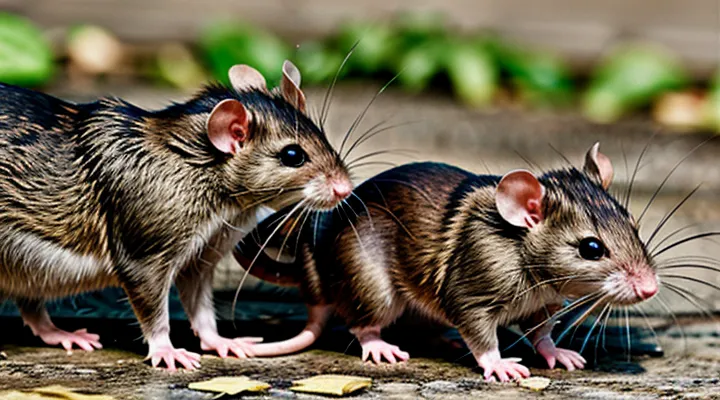
Understanding Rat Parasites
Types of Parasites Affecting Rats
External Parasites («Ectoparasites»)
External parasites, commonly referred to as ectoparasites, attach to the skin, fur, or ears of rats and can be identified through direct observation, tactile examination, and laboratory analysis.
Visual inspection under adequate lighting reveals adult insects, larvae, or nymphs. Look for motile organisms, translucent or pigmented bodies, and clusters of dark spots where insects have fed. Pay particular attention to the base of the tail, ventral abdomen, and inner pinnae, as these regions retain moisture and provide refuge.
Tactile assessment involves gently running a fine-toothed comb or a soft brush through the coat. Detached specimens fall onto a white surface for easier identification. The presence of small, mobile particles or a gritty sensation on the skin indicates infestation.
When visual and tactile methods are inconclusive, collect samples for microscopic examination. Place collected material on a slide with a drop of saline solution, cover with a coverslip, and examine at 100–400× magnification. Identify characteristic morphological features:
- Fleas: laterally compressed bodies, jumping legs, combs on the head.
- Mites: oval bodies, leg arrangement of 4 pairs, sometimes with sucker-like mouthparts.
- Lice: elongated bodies, clawed legs, absence of wings.
For definitive species determination, submit specimens to a veterinary parasitology laboratory where molecular techniques such as PCR can confirm identification.
Routine monitoring, performed weekly in laboratory or breeding colonies, reduces the risk of unchecked ectoparasite populations and prevents secondary infections.
Internal Parasites («Endoparasites»)
Internal parasites, also called endoparasites, inhabit the gastrointestinal tract, liver, lungs, or blood of rats. Common species include nematodes (e.g., Syphacia muris, Nippostrongylus brasiliensis), cestodes (e.g., Hymenolepis nana), and protozoa such as Giardia and Coccidia.
Clinical signs often provide the first indication of infection. Observe for weight loss, reduced feed intake, dull coat, diarrhea, abdominal distension, or respiratory distress. In severe cases, anemia or lethargy may appear. However, subclinical infections are frequent; laboratory analysis is required for reliable detection.
Diagnostic procedures:
- Fecal flotation – concentrate ova and cysts using a saturated salt or sugar solution; examine under a microscope.
- Direct smear – place a small amount of fresh feces on a slide; identify motile trophozoites or eggs without concentration.
- Sedimentation – separate heavier ova (e.g., trematode eggs) by allowing feces to settle in water; examine the sediment.
- PCR assays – extract DNA from feces or tissue; amplify species‑specific gene fragments for precise identification.
- Blood smear – assess for blood‑borne parasites such as Hematospora; stain with Giemsa and evaluate under high magnification.
- Necropsy – inspect gastrointestinal tract, liver, and lungs for adult worms; recover specimens for morphological or molecular analysis.
Interpretation of results must consider parasite life cycles. For instance, Syphacia eggs appear intermittently; multiple samples collected over several days increase detection probability. PCR offers higher sensitivity, especially for low‑intensity infections, but requires appropriate controls to avoid false positives.
Effective management relies on accurate identification. Regular monitoring of colony rats with the methods above enables timely treatment and prevents spread to other animals or research projects.
Visual Inspection for External Parasites
Observing Rat Behavior
Observing a rat’s behavior provides early clues that a parasitic infection may be present. Changes in activity level, grooming habits, and feeding patterns often precede visible physical signs, allowing timely intervention.
Typical behavioral indicators include:
- Reduced exploration of the cage or environment
- Excessive scratching or fur‑mouthing, especially around the abdomen and tail base
- Lethargy or prolonged periods of immobility
- Decreased food and water intake
- Erratic or uncoordinated movements, suggesting discomfort or neurological impact
To incorporate behavioral monitoring into a diagnostic protocol, record baseline activity for each animal during a defined acclimation period. Conduct daily visual checks, noting deviations from the baseline using a simple checklist. When one or more indicators appear consistently over 24–48 hours, proceed with fecal examination, blood sampling, or imaging to confirm parasitic presence. This systematic observation reduces reliance on invasive tests and improves detection efficiency.
Examining the Rat’s Fur and Skin
Signs of Fleas and Lice
Rats infested with fleas or lice display distinct external and behavioral cues that enable reliable identification of these ectoparasites. Visible evidence includes small, dark specks moving rapidly across the fur, clusters of tiny insects attached to the skin, and the presence of dark, oval fecal pellets near the base of the tail or on bedding. Skin irritation manifests as redness, swelling, or scabbing, especially around the ears, neck, and abdomen. Rats may exhibit excessive scratching, grooming, or biting at affected areas, resulting in hair loss or thin patches of fur.
Key indicators of flea or lice infestation:
- Live insects observed moving on the coat or in the nest material.
- Dark, sand‑like droppings (flea feces) on the fur or surrounding surfaces.
- Irritated skin with erythema, edema, or crusted lesions.
- Hair loss or thinning in localized zones.
- Increased grooming, scratching, or self‑inflicted wounds.
A systematic examination involves gently parting the fur with a fine comb or brush, inspecting the skin for live parasites and debris, and using a magnifying lens to confirm species characteristics. Collecting a sample of any observed insects for microscopic identification enhances diagnostic accuracy and informs targeted treatment.
Signs of Mites and Ticks
Mite and tick infestations manifest through distinct physical and behavioral cues that can be observed during routine handling or cage inspection.
Key indicators include:
- Excessive scratching or grooming, especially around the ears, neck, and base of the tail.
- Visible crusts, scabs, or small dark specks attached to the skin; mites appear as tiny, moving particles, while ticks are larger, engorged ovals.
- Hair loss in localized patches, often accompanied by reddened or inflamed skin.
- Presence of blood spots on bedding or fur, suggesting tick attachment and feeding.
- Restlessness, irritability, or reduced activity levels, reflecting discomfort caused by parasitic irritation.
Direct examination under a magnifying lens or handheld microscope confirms the presence of mites or ticks. Careful removal of debris from the coat, followed by visual assessment of the skin surface, reveals the characteristic shape and size of each parasite. Prompt identification enables targeted treatment and prevents secondary infections.
Fecal Examination for Internal Parasites
Collecting Fecal Samples
Collecting fecal samples provides a reliable, non‑invasive method for diagnosing parasitic infections in laboratory or field rats. Fresh droppings contain eggs, larvae, or cysts that can be identified through microscopy or molecular assays, allowing early intervention and accurate prevalence estimates.
When gathering specimens, follow a standardized protocol:
- Isolate the animal in a clean cage equipped with a wire mesh floor to prevent fecal contamination of bedding.
- Observe the rat for recent defecation; collect each pellet within 30 minutes of expulsion to preserve parasite integrity.
- Use sterile forceps or a disposable spatula to transfer feces into a pre‑labeled, airtight container.
- Record the animal’s identification number, collection date, and time of sampling on the label.
- Place the container on ice or in a refrigerated transport box (4 °C) if processing will be delayed beyond two hours.
For storage prior to analysis, keep samples at 4 °C for up to 48 hours or freeze at –20 °C for longer periods. Avoid repeated freeze‑thaw cycles, which degrade parasite DNA and compromise morphological features.
Laboratory preparation typically includes:
- Weighing 0.2–0.5 g of feces.
- Mixing with a flotation solution (e.g., saturated salt or zinc sulfate) to separate ova and larvae.
- Centrifuging at 1500 rpm for 5 minutes, then examining the supernatant under a microscope at 100–400× magnification.
- For molecular detection, extracting DNA from the pellet and running PCR with parasite‑specific primers.
Adhering to these steps ensures consistent sample quality, reduces contamination risk, and enhances the sensitivity of parasitological diagnostics in rats.
Macroscopic Examination of Feces
Macroscopic examination of rat feces provides a rapid initial assessment for parasitic infection. Fresh droppings are collected directly from the cage or from a clean surface, placed on a white ceramic tile, and examined within 15 minutes to prevent desiccation or contamination.
The observer evaluates several visual parameters:
- Color: abnormal shades such as black, tarry, or pale yellow may indicate blood, bile, or nutrient malabsorption.
- Consistency: watery, mucoid, or extremely firm stools suggest gastrointestinal disturbance.
- Presence of visible organisms: adult helminths, proglottids, or cysts are occasionally discernible to the naked eye.
- Mucus or blood: streaks or droplets point to mucosal irritation or hemorrhage.
These macroscopic signs are recorded and compared with reference ranges for healthy laboratory rats. While the method detects large parasites and overt pathology, it cannot identify microscopic stages or low‑intensity infections; therefore, positive or ambiguous findings must be confirmed by microscopic flotation, sedimentation, or molecular assays.
Microscopic Examination of Feces
Flotation Method
The flotation method provides a reliable means of identifying gastrointestinal parasites in rat specimens. The technique exploits the difference in specific gravity between parasite stages and a dense aqueous solution; eggs, cysts, and larvae rise to the surface while heavier debris remains submerged.
A typical preparation includes a saturated salt or sugar solution (specific gravity ≈ 1.18–1.20), clean centrifuge tubes, a disposable pipette, and a compound microscope equipped with a 10×–40× objective. The solution must be freshly prepared to maintain consistent density and to prevent crystallization.
Procedure:
- Collect fresh fecal material; avoid drying or freezing.
- Weigh 2–3 g of feces and suspend in 20 ml of the flotation solution.
- Vigorously shake for 30 seconds to homogenize the mixture.
- Transfer the suspension to a centrifuge tube, fill to the brim, and cover with a glass slide.
- Centrifuge at 500 g for 5 minutes; eggs and other light stages accumulate under the cover slip.
- Carefully lift the slide, examine the entire field under the microscope, and record any observed structures.
Positive findings consist of characteristic morphologies: spherical or elliptical eggs with defined shells, oocysts with internal sporulation, and motile larvae. Measurements and shape aid in species identification.
Advantages of the flotation technique include rapid processing of multiple samples, high sensitivity for light-stage parasites, and low material cost. The method is compatible with routine laboratory equipment and does not require extensive training.
Limitations involve reduced recovery of heavy eggs (e.g., Trichuris spp.) that may not rise in standard solutions, potential distortion of fragile stages by osmotic pressure, and the necessity for fresh specimens to preserve viability. Adjustments such as using zinc sulfate solutions (specific gravity ≈ 1.30) can mitigate some shortcomings but may introduce additional handling considerations.
Direct Smear Method
The direct smear technique provides a rapid assessment of parasitic infection in laboratory rats. A fresh fecal sample is collected on a clean glass slide, spread thinly with a sterile applicator, and covered with a coverslip. The slide is examined under a light microscope at 100–400× magnification. Morphological features of eggs, larvae, or cysts are identified using standard parasitological keys.
Materials required:
- Clean glass slides and coverslips
- Sterile wooden or plastic applicator sticks
- Distilled water or saline for dilution (optional)
- Microscope with appropriate objective lenses
- Reference images or identification guides
Procedure:
- Place a small amount of feces on the center of the slide.
- Add a drop of distilled water if the sample is dry; mix gently to create a uniform suspension.
- Spread the mixture into a thin film with the applicator.
- Place the coverslip carefully to avoid air bubbles.
- Observe the slide immediately, noting size, shape, and internal structures of any observed parasites.
Interpretation focuses on recognizing characteristic features: egg size and shell thickness, larval body segmentation, or cyst wall morphology. Positive identification confirms the presence of specific helminths or protozoa, guiding subsequent treatment or control measures.
Advantages include minimal equipment, fast turnaround (minutes), and suitability for screening large numbers of animals. Limitations involve reduced sensitivity for low‑intensity infections and inability to quantify parasite load accurately. For comprehensive diagnostics, the direct smear is often combined with concentration techniques such as flotation or sedimentation.
Other Diagnostic Methods
Blood Tests
Blood analysis provides a direct method for identifying internal parasites in laboratory rats. When a parasite invades the bloodstream or induces a systemic immune response, specific markers appear in the serum or cellular components, allowing laboratory confirmation without necropsy.
The most common blood‑based diagnostics include:
- Serological assays – Enzyme‑linked immunosorbent assay (ELISA) and indirect fluorescent antibody (IFA) tests detect host antibodies against nematodes, cestodes, or protozoa. Positive titers indicate exposure and often correlate with active infection.
- Molecular detection – Polymerase chain reaction (PCR) applied to whole blood or plasma amplifies parasite DNA. Species‑specific primers distinguish between Heligmosomoides, Syphacia, Trichinella, and other common rat parasites.
- Hematology – Complete blood counts reveal eosinophilia, anemia, or leukocytosis, which frequently accompany helminth or protozoan infections. Differential counts pinpoint the type of immune response.
- Biochemistry – Elevated liver enzymes or altered albumin levels may reflect tissue damage caused by migrating larvae or adult worms.
Sample collection requires aseptic technique to avoid contamination. A 0.5–1 ml volume drawn from the lateral tail vein or retro‑orbital sinus suffices for most assays. Anticoagulants (EDTA for PCR, heparin for hematology) must match the intended test. Prompt processing—centrifugation within 30 minutes and storage at –20 °C for DNA preservation—preserves analyte integrity.
Interpretation hinges on correlating laboratory data with clinical signs such as weight loss, fur condition, or gastrointestinal disturbance. Positive serology without PCR confirmation may indicate past exposure; conversely, PCR positivity with normal hematology suggests early infection before immune activation. Combining at least two modalities increases diagnostic confidence and guides appropriate antiparasitic treatment.
Skin Scrapings
Skin scrapings provide a direct method for detecting ectoparasites and dermal stages of internal parasites on laboratory or field‑caught rats. The technique isolates organisms that reside on the epidermis, hair follicles, or within superficial skin layers, allowing microscopic identification without reliance on serology or fecal examination.
The procedure requires a sterile scalpel blade, a glass microscope slide, a drop of physiological saline, and a cover slip. The rat should be restrained gently but securely to prevent injury. Using the blade, a thin layer of skin is lifted from the dorsal or ventral surface, avoiding deeper tissue. The collected material is transferred onto the slide, mixed with saline, and covered. Immediate examination under low‑power (10‑40×) magnification reveals motile ectoparasites such as mites, lice, and fleas. Subsequent high‑power (400‑1000×) observation distinguishes species based on morphological keys.
Key points for reliable results:
- Sample integrity: Perform scrapings within 15 minutes of capture; delay reduces parasite viability.
- Safety: Wear gloves and a face shield; dispose of contaminated blades in a sharps container.
- Preservation: If immediate microscopy is impossible, fix the slide with 70 % ethanol and store at 4 °C for up to 48 hours.
- Interpretation: Presence of live arthropods confirms infestation; cysts or ova indicate dermal stages of nematodes or trematodes.
- Limitations: Deep skin‑dwelling parasites may be missed; low‑level infestations can escape detection without repeated sampling.
Integrating skin scrapings with fecal flotation and serological assays enhances overall diagnostic accuracy for parasitic infections in rats.
Post-Mortem Examination
Post‑mortem examination provides the most reliable means of confirming parasitic infection in a rat. The procedure begins with humane euthanasia, followed by a systematic necropsy that preserves organ integrity for subsequent analysis.
- Perform a dorsal midline incision to expose the thoracic and abdominal cavities.
- Remove the gastrointestinal tract, liver, lungs, and mesenteric lymph nodes, placing each specimen in separate, labeled containers.
- Examine the external surface of the skin, fur, and mucous membranes for visible cysts, nodules, or lesions.
- Open the intestines longitudinally, flush contents with saline, and collect washings for microscopic evaluation.
- Slice solid organs (liver, lungs, spleen) into 1‑2 mm sections, inspect for granulomas, larval capsules, or adult worms.
Microscopic assessment follows the gross inspection. Prepare wet mounts of intestinal washings and tissue smears, stain with iodine or Giemsa, and examine under 400× magnification. Identify characteristic morphological features such as cuticular ridges, scolex hooks, or eggs with distinctive shells. For helminths, conduct larval recovery by sedimentation or Baermann funnel techniques; for protozoa, employ flotation or immunofluorescent assays.
Molecular confirmation can be added by extracting DNA from affected tissues and applying PCR with primers specific to common rat parasites (e.g., Hymenolepis nana, Trichuris muris, Giardia duodenalis). Sequencing of amplified products validates species identification and supports epidemiological tracking.
Documentation of findings includes a detailed necropsy report, photographs of gross lesions, and micrographs of identified parasites. Proper record‑keeping facilitates comparison across studies and informs control measures in laboratory or field settings.
When to Seek Professional Help
Consulting a Veterinarian
When a rat shows signs that may indicate parasitic infection, professional veterinary assessment provides the most reliable path to accurate diagnosis and effective treatment.
Before the appointment, gather the animal’s health history and any observable symptoms. Record the duration of weight loss, changes in fur condition, gastrointestinal disturbances, or abnormal behavior. Prepare a stool sample, if feasible, by collecting fresh droppings in a sealed container. If the rat lives in a colony, note the number of affected individuals and any recent environmental changes.
- Species, age, and sex of the rat
- Recent diet and feeding schedule
- Housing conditions (cage type, bedding, sanitation routine)
- Observed clinical signs (e.g., diarrhea, anemia, lethargy)
- Results of any prior examinations or treatments
During the consultation, the veterinarian conducts a physical examination, checking for pale mucous membranes, abdominal distension, and coat quality. The clinician may request fecal flotation or sedimentation tests, PCR assays, or blood work to identify internal parasites such as nematodes, cestodes, or protozoa. External parasites are assessed through skin and fur inspection, employing magnification tools when necessary.
Laboratory analysis yields species‑specific identification, allowing the vet to prescribe the appropriate anthelmintic or anti‑protozoal medication. Dosage is calculated based on the rat’s weight and health status, with clear instructions on administration frequency and duration. The veterinarian also advises on preventive measures, including routine deworming schedules, sanitation protocols, and quarantine procedures for new arrivals.
After treatment begins, the vet schedules follow‑up examinations to verify parasite clearance. Repeat fecal tests confirm eradication, and any persistent or recurrent infections are re‑evaluated for possible resistance or secondary complications. Continuous communication with the veterinarian ensures the rat’s health is maintained and future infestations are minimized.
Laboratory Analysis
Laboratory analysis is the primary means of confirming parasitic infection in a laboratory rat. Samples are collected, processed, and examined using standardized protocols to ensure reliable identification.
Typical specimens include feces, intestinal tissue, blood, and organ homogenates. Each specimen type requires a specific preparation method:
- Fecal flotation – Mix fresh feces with a high‑specific‑gravity solution, centrifuge, and examine the surface layer under a light microscope for ova or cysts.
- Direct smear microscopy – Place a small amount of fecal or tissue material on a slide, stain with iodine or trichrome, and inspect for motile trophozoites, larvae, or eggs.
- Polymerase chain reaction (PCR) – Extract DNA from tissue or fecal samples, amplify parasite‑specific gene regions, and compare amplicon size or sequence to reference databases. PCR provides species‑level resolution and detects low‑intensity infections.
- Serological assays – Apply enzyme‑linked immunosorbent assay (ELISA) or indirect fluorescent antibody test (IFAT) to serum to detect host antibodies against common rodent parasites such as Trichuris or Nippostrongylus species.
- Necropsy and organ culture – Perform a complete necropsy, isolate the gastrointestinal tract, and incubate sections in appropriate media to encourage larval emergence, facilitating identification by morphology or molecular methods.
Quality control measures include the use of positive and negative controls in PCR runs, validation of flotation solutions for specific parasite densities, and routine calibration of microscopes. Results are recorded in a laboratory information system, with findings reported to the responsible researcher or veterinarian for subsequent treatment decisions.