
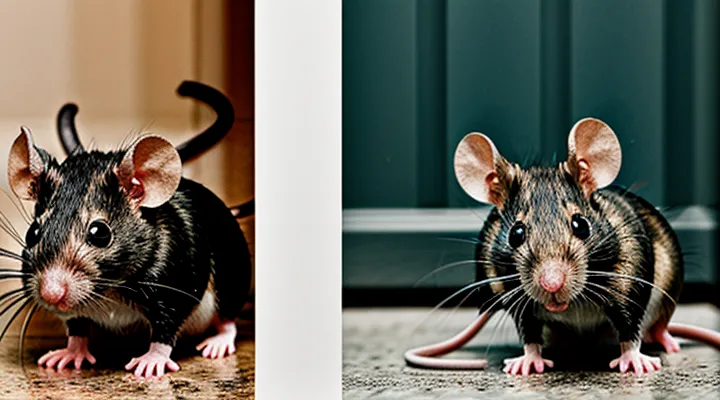
Physical Differences
Size and Weight
Body Length
Mice usually have a body length of 6–10 cm (nose to base of tail), whereas rats commonly measure 15–30 cm. Adult house mice average about 7.5 cm, while adult Norway rats average roughly 20 cm. The following list summarizes typical ranges:
- Mouse: 6–10 cm
- Rat: 15–30 cm
Body length reflects species‑specific growth patterns; mice reach adult size within weeks, while rats continue to increase in size for several months. The larger dimensions of rats influence habitat preference, predator avoidance strategies, and handling techniques in laboratory settings.
Tail Length
Mice possess tails that match or slightly exceed their body length, typically ranging from 70 mm to 100 mm in laboratory strains. The tail surface is largely hairless, covered by fine, overlapping scales that provide flexibility and aid in thermoregulation. Muscular control enables fine adjustments for balance during rapid, agile movements.
Rats exhibit tails that are proportionally shorter than their bodies, measuring 150 mm to 200 mm in common species such as the brown rat. The tail is thicker, with prominent scales and a modest fur covering near the base. Its structure supports stability while navigating larger spaces and contributes to heat dissipation through a well‑vascularized surface.
Key comparative points:
- Length ratio: mouse tail ≈ 1 : 1 body length; rat tail ≈ 0.8 : 1 body length.
- Surface texture: mouse tail smooth and largely naked; rat tail scaly and partially furred.
- Functional emphasis: mouse tail optimized for precise balance and climbing; rat tail optimized for support and thermoregulation in broader habitats.
Weight Range
Weight provides a clear metric for distinguishing a mouse from a rat. Adult house mice (Mus musculus) typically weigh between 15 g and 30 g, with most individuals clustering around 20 g. In contrast, adult Norway rats (Rattus norvegicus) exhibit a broader and heavier range, from 250 g to 500 g, and many mature males exceed 300 g.
- Mouse: 15 g – 30 g (average ≈ 20 g)
- Rat: 250 g – 500 g (average ≈ 300 g)
Weight variation depends on factors such as age, sex, diet, and strain. Juvenile mice reach adult weight within 6–8 weeks, while juvenile rats require 10–12 weeks. Male rodents generally outweigh females by 10–20 percent. Laboratory strains may display narrower ranges due to controlled breeding, whereas wild populations show greater variability.
These numerical distinctions enable reliable identification in research, pest control, and wildlife management contexts.
Head and Facial Features
Snout Shape
The shape of the rostrum provides a reliable visual cue for separating the two common laboratory rodents.
Mice possess a narrow, sharply tapered snout that extends forward with a slight upward curve. The tip is fine, allowing precise manipulation of small food particles. The overall profile appears elongated and slender, contributing to the animal’s agile foraging behavior.
Rats display a broader, more robust snout. The muzzle ends in a blunt, rounded tip, and the width remains relatively constant from the base to the tip. This configuration supports stronger bite forces and accommodates larger food items.
Key distinctions:
- Length-to-width ratio: mouse snout > 2:1; rat snout ≈ 1.5:1.
- Tip shape: mouse – pointed; rat – rounded.
- Profile curvature: mouse – slight upward; rat – relatively straight.
These morphological traits enable rapid identification in field observations, cage inspections, and taxonomic assessments.
Ear Size and Shape
Ear morphology provides a reliable criterion for separating the two common rodent species. Mice possess compact, rounded ears that sit close to the skull. The pinna measures roughly 5–7 mm in length, with a soft, thin edge and a relatively low profile. The cartilage is delicate, allowing the ear to fold slightly when the animal is at rest. These features give the mouse a discreet auditory organ that does not dominate its head shape.
Rats display markedly larger and more angular ears. The pinna typically reaches 12–15 mm, extending well beyond the head’s outline. The edges are firmer and often exhibit a slight point at the apex. Thickened cartilage supports a sturdier structure, which remains upright even when the animal is stationary. The overall shape is elongated rather than circular, contributing to a pronounced silhouette.
Key contrasts in ear size and shape:
- Length: mouse ≈ 5–7 mm; rat ≈ 12–15 mm.
- Outline: mouse = rounded; rat = elongated with pointed tip.
- Cartilage thickness: mouse = thin and flexible; rat = thick and rigid.
- Position relative to head: mouse ears lie close to skull; rat ears extend outward.
These anatomical differences aid field identification and reflect divergent ecological adaptations.
Eye Prominence
Mice and rats exhibit distinct eye prominence, a trait that influences visual field and behavior. The mouse eye is positioned relatively high on the skull, resulting in a more forward‑facing orientation. This arrangement provides a narrower field of view but enhances depth perception for navigating tight burrows.
In contrast, the rat eye sits lower and more laterally. The lateral placement expands peripheral vision, allowing detection of predators from a broader angle. The reduced forward focus diminishes stereoscopic depth cues compared with the mouse.
Key points of comparison:
- Position: mouse – high, forward; rat – low, lateral.
- Field of view: mouse – limited, focused; rat – wide, encompassing.
- Depth perception: mouse – strong; rat – moderate.
- Adaptive advantage: mouse – precise movement in confined spaces; rat – heightened vigilance in open environments.
Fur and Coat
Color Variation
Mice (Mus spp.) display a broad spectrum of coat colors. Wild individuals commonly exhibit agouti fur, a banded pattern of light and dark hairs that creates a mottled brown appearance. Domestic strains expand the range to solid black, gray, brown, and white, with occasional patches of tan or cream. Genetic mutations such as the “h” (hooded) and “c” (capped) alleles produce distinct markings limited to the head or dorsal region. Albino mice lack pigment entirely, resulting in pink eyes and a white coat.
Rats (Rattus spp.) possess a narrower palette. The typical laboratory Norway rat presents a uniform dark brown or black coat, while the “Wistar” strain often shows a lighter gray shade. Albino rats are common, characterized by pink eyes and white fur. Some wild populations exhibit a reddish-brown hue, but the occurrence of patterned or multi‑colored coats is rare. Genetic variants that affect melanin production, such as the “h” (himalayan) allele, yield a limited tan mask on the face, ears, and tail.
Key distinctions in color variation:
- Mice: extensive natural and bred color diversity, frequent patterned coats.
- Rats: predominantly solid colors, limited patterned variants, higher prevalence of albino forms.
Texture
The tactile characteristics of mice and rats differ markedly across multiple body regions.
- Fur: Mice possess fine, silky pelage averaging 5–8 mm in length; rat fur is coarser, denser, and typically 10–15 mm long, providing a rougher surface texture.
- Tail: A mouse tail is sparsely haired, with a smooth, cylindrical skin; a rat tail is largely hairless, covered by overlapping scales that create a distinctly scaly feel.
- Footpads: Mouse footpads exhibit a uniformly thin, soft keratin layer, yielding a supple texture; rat footpads are thicker, heavily keratinized, and present a noticeably tougher surface.
- Whiskers: Mouse vibrissae are slender and flexible, delivering a delicate tactile response; rat vibrissae are thicker and more rigid, offering a sturdier tactile probe.
These textural distinctions affect each species’ sensory perception, locomotion, and interaction with varied environments.
Paws and Feet
Foot Size
Mice possess markedly smaller feet than rats. Adult house mice (Mus musculus) typically exhibit hind foot lengths ranging from 9 mm to 12 mm, with forepaws slightly shorter. In contrast, common rats (Rattus norvegicus) display hind foot measurements of 20 mm to 30 mm, and forepaws extending 15 mm to 22 mm. The proportional disparity reflects overall body size differences and divergent locomotor adaptations.
Key dimensional contrasts:
- Hind foot length: mouse ≈ 9–12 mm; rat ≈ 20–30 mm.
- Forefoot length: mouse ≈ 7–9 mm; rat ≈ 15–22 mm.
- Footpad surface area: mouse ≈ 30 mm²; rat ≈ 80 mm².
These measurements influence gait patterns: mice rely on rapid, agile steps, while rats employ stronger, more forceful strides. The larger foot size in rats also supports greater load‑bearing capacity and enhanced digging ability.
Claw Characteristics
Mice possess small, delicate claws that measure approximately 1–2 mm in length. The tips are sharply pointed, allowing precise manipulation of lightweight objects and facilitating rapid burrowing in soft substrate. The curvature is modest, providing a balance between grip and agility on narrow surfaces such as wires or plant stems.
Rats feature larger claws, typically 3–5 mm long, with a more pronounced curvature. This shape enhances traction on rough terrain and supports the animal’s greater body mass during climbing and digging. The claw tip is broader, offering increased surface area for stability on vertical or uneven structures.
Key distinctions in claw morphology:
- Length: mouse claws 1–2 mm; rat claws 3–5 mm.
- Curvature: mouse claws gently arched; rat claws markedly curved.
- Tip shape: mouse tips narrow and acute; rat tips broader and blunt.
- Function: mouse claws optimized for fine manipulation and lightweight locomotion; rat claws adapted for robust climbing, digging, and support of heavier weight.
These anatomical differences reflect each species’ ecological niche and locomotor demands, influencing how they navigate their environments and interact with objects.
Droppings and Tracks
Dropping Shape and Size
Mice and rats differ markedly in physical dimensions that become evident when they fall or are released from a height. The smaller, more compact mouse presents a rounded torso, a proportionally short tail, and a body mass typically ranging from 10 to 30 g. Its low center of gravity and streamlined silhouette reduce air resistance, causing a relatively slow, fluttering descent. In contrast, the rat possesses a longer, cylindrical body, a tail that can equal or exceed its body length, and a weight between 150 and 300 g. The elongated shape increases drag, while the greater mass accelerates the fall, producing a faster, more direct drop.
Key comparative measurements:
- Body length: mouse ≈ 6–10 cm; rat ≈ 20–30 cm.
- Tail length: mouse ≈ 5–9 cm; rat ≈ 15–25 cm.
- Weight: mouse ≈ 10–30 g; rat ≈ 150–300 g.
- Body mass distribution: mouse concentrates mass near the head; rat distributes mass along the torso and tail.
- Aerodynamic profile: mouse’s rounded form yields higher drag coefficient; rat’s elongated form yields lower drag coefficient, influencing descent speed.
These dimensional contrasts directly affect how each rodent behaves during a drop, with the mouse exhibiting a slower, more erratic fall and the rat displaying a quicker, steadier descent.
Footprint Patterns
Footprint morphology offers a practical means of distinguishing small rodents in field and laboratory settings. Mice and rats leave distinct tracks that reflect differences in body size, limb structure, and locomotor behavior.
- Size: Mouse prints measure approximately 4–6 mm in length and 2–3 mm in width; rat prints range from 8–12 mm long and 4–6 mm wide.
- Toe arrangement: Both species display five toes per hind foot, but mouse hind‑foot prints show a tighter cluster of toes with minimal spacing, whereas rat hind‑foot prints exhibit a broader spread, especially between the outermost digits.
- Digit impressions: Mouse tracks often lack clear individual digit marks, presenting a smooth oval shape; rat tracks typically reveal separate impressions for each toe, producing a more angular outline.
- Stride length: Average mouse stride length is 20–30 mm, while rat stride length extends to 45–60 mm, resulting in greater spacing between successive prints.
- Pressure distribution: Rat footprints display a pronounced central pressure point corresponding to the larger metatarsal pad; mouse footprints show a more evenly distributed pressure across the pad area.
These measurable characteristics enable reliable identification of species based on track evidence, supporting ecological surveys, pest management, and laboratory research.
Behavioral Differences
Habitat and Nesting
Preferred Environments
Mice and rats occupy separate ecological niches, and their preferred environments reflect distinct physiological and behavioral adaptations.
Mice favor locations that provide concealment, easy access to food, and minimal competition. Typical settings include:
- Wall voids and ceiling spaces in residential or commercial buildings
- Stored grain, pantry items, and other small food sources
- Dense vegetation or ground cover in fields and gardens
- Small burrows or nests constructed from shredded material
Rats require larger territories and gravitate toward areas that support their size, social structure, and diet. Common habitats encompass:
- Sewer systems, storm drains, and underground utility tunnels
- Open warehouses, dumpsters, and refuse piles offering abundant waste
- Agricultural fields with extensive root systems for burrowing
- Outdoor structures such as barns, sheds, and livestock pens
These preferences influence where each species is most likely to be encountered and dictate effective control measures.
Nest Construction
Mice construct nests that are small, typically no larger than a few centimeters in diameter, and are built primarily from soft fibers such as shredded paper, cotton, or plant material. The structures serve as temporary shelters for rest and reproduction, often located in concealed spots like closets, wall cavities, or under furniture. Mice frequently remodel their nests, adding or removing material to adjust insulation and space.
Rats create larger, more permanent nests that can exceed 30 cm in diameter. They incorporate a wider range of materials, including twigs, cardboard, insulation, and sometimes animal remains. Nest sites are chosen for durability and strategic advantage, such as burrows in soil, sewers, or deep crevices within buildings. Rats tend to maintain a single primary nest, reinforcing it over time rather than frequently rebuilding.
Key distinctions in nest construction:
- Size: mouse nests are miniature; rat nests are substantially larger.
- Material diversity: mice use soft, lightweight fibers; rats employ mixed, heavier components.
- Location preference: mice favor easily accessible indoor niches; rats select robust, often subterranean or semi‑subterranean sites.
- Stability: mouse nests are transient and frequently altered; rat nests are stable, with incremental reinforcement.
Understanding these construction patterns clarifies how each species adapts its sheltering behavior to ecological and social requirements.
Diet and Feeding Habits
Food Preferences
Rodents display species‑specific dietary patterns that reflect physiological and ecological adaptations.
Mice prefer foods that are high in carbohydrates and low in fat. Typical items include:
- Whole grains and cracked corn
- Seeds such as sunflower or pumpkin
- Small insects and larvae
- Sweet substances like fruit puree or honey
Rats consume a wider range of nutrients and tolerate higher fat and protein levels. Common choices are:
- Cooked meats and fish scraps
- Processed foods containing fats and oils
- Fruit and vegetable waste
- Grain products, though not exclusively
Key distinctions:
- Mice select low‑fat, high‑carbohydrate items; rats accept high‑fat, high‑protein sources.
- Rats exhibit stronger opportunistic foraging, readily exploiting human refuse; mice remain more selective, favoring natural seeds and insects.
- Nutrient absorption efficiency differs: rats extract more calories from fatty foods, while mice excel at processing carbohydrates.
Foraging Behavior
Mice and rats exhibit distinct foraging strategies that reflect their differing ecological niches and physiological capacities.
Mice prioritize rapid, opportunistic exploitation of scattered seeds and insects. Their small body size permits entry into narrow crevices and dense ground cover, where they collect numerous tiny items within short foraging bouts. Food intake per episode remains low, but frequency is high, allowing mice to sustain energy needs despite limited storage.
Rats adopt a more deliberate approach, targeting larger, higher‑calorie resources such as grain kernels, fruit, and carrion. Their greater strength enables manipulation of tougher foods and transport of sizable portions back to secure nests. Foraging trips are longer, and rats often establish cache sites to buffer against scarcity.
Key behavioral contrasts:
- Search pattern: mice use a random, high‑frequency sweep; rats employ directed movement toward known abundant patches.
- Diet breadth: mice consume a wider variety of minute items; rats focus on fewer, nutrient‑dense foods.
- Risk tolerance: mice accept higher predation exposure due to brief outings; rats favor concealed routes and longer sheltering periods.
- Memory use: rats rely heavily on spatial memory to revisit profitable sites; mice depend more on immediate sensory cues.
These differences shape each species’ role in ecosystems, influencing seed dispersal, pest dynamics, and disease transmission.
Social Structure
Group Size
Group size distinguishes the two rodent species in both natural habitats and captive settings.
Mice typically occupy small family units. Field observations record nests containing 4–8 individuals, occasionally reaching 12 during peak breeding periods. Laboratory colonies are maintained at densities of 5–10 mice per cage to prevent stress and aggression.
Rats form larger, more complex colonies. Wild populations establish burrow systems that host 10–30 individuals, with some urban colonies exceeding 50 members. Commercial breeding facilities house 15–20 rats per enclosure, reflecting their tolerance for higher densities.
The contrast in social organization stems from differing reproductive strategies and territorial behavior. Mice prioritize rapid turnover of small groups, while rats sustain extensive networks that support hierarchical structures and resource sharing. This divergence influences population dynamics, disease transmission potential, and management practices across research, pest control, and wildlife conservation contexts.
Hierarchy
Mice and rats occupy distinct positions within the biological classification system. Both belong to the order Rodentia, yet they diverge at the family, genus, and species levels, reflecting separate evolutionary branches.
- Kingdom: Animalia – shared by all mammals.
- Phylum: Chordata – common to vertebrates.
- Class: Mammalia – includes all mammals.
- Order: Rodentia – the rodent order containing both groups.
- Family: Muridae – the mouse’s family; the rat belongs to the family Muridae as well, but is placed in a different subfamily.
- Genus: Mus – mouse; Rattus – rat.
- Species: Mus musculus (house mouse); Rattus norvegicus (Norway rat) and Rattus rattus (black rat).
Beyond taxonomic hierarchy, social structures differ. Mice form small, fluid colonies with limited dominance hierarchies, while rats develop larger groups with clearly defined alpha individuals that regulate access to resources and mating opportunities. These hierarchical patterns influence behavior, disease transmission, and ecological impact.
Reproduction
Litter Size
Mice and rats differ markedly in the number of offspring produced per birth. A typical house mouse (Mus musculus) delivers 5–8 pups, with occasional litters reaching 12. The gestation period lasts about 19–21 days, allowing several litters each year. In contrast, the Norway rat (Rattus norvegicus) averages 6–12 pups per litter, with large litters exceeding 15. Its gestation spans 21–23 days, supporting up to five litters annually under optimal conditions.
Key points:
- Average litter size: mouse ≈ 6–7, rat ≈ 8–10.
- Maximum recorded litter: mouse = 12, rat = 15+.
- Reproductive cycles per year: mouse = 5–10, rat = 4–5.
These figures illustrate that rats generally produce larger broods, while mice maintain higher reproductive frequency. The disparity influences population dynamics, resource competition, and control strategies in laboratory and pest‑management contexts.
Gestation Period
Mice and rats exhibit distinct reproductive timelines, most notably in the length of pregnancy. A typical laboratory mouse (Mus musculus) carries its young for approximately 19–21 days. In contrast, the common rat (Rattus norvegicus) gestates its offspring for about 21–23 days.
- Mouse gestation: 19‑21 days
- Rat gestation: 21‑23 days
The slight extension in the rat’s pregnancy correlates with larger litter size and greater neonatal weight, factors that influence population dynamics and experimental scheduling. Researchers must account for these differences when designing breeding programs or interpreting developmental data across the two species.
Breeding Frequency
Mice and rats exhibit markedly different reproductive schedules, a factor that influences population dynamics in laboratory and field settings.
The common house mouse (Mus musculus) reaches sexual maturity at 5–6 weeks of age. Gestation lasts 19–21 days, after which a litter of 5–8 pups is typical. Females can produce a new litter every 21–28 days, allowing up to 10 litters per year under optimal conditions.
The Norway rat (Rattus norvegicus) attains sexual maturity later, at 9–10 weeks. Gestation extends to 21–23 days, and litter size averages 6–12 pups. Post‑partum estrus enables a new litter approximately every 30–35 days, resulting in 6–8 litters annually in favorable environments.
Key reproductive parameters:
- Age at first estrus: mouse ≈ 5 weeks; rat ≈ 9 weeks
- Gestation length: mouse ≈ 20 days; rat ≈ 22 days
- Average litter size: mouse 5–8; rat 6–12
- Litters per year: mouse up to 10; rat 6–8
These metrics demonstrate that mice reproduce more rapidly, with shorter intervals between litters and earlier sexual maturity, whereas rats produce larger litters but at a slower overall pace.
Communication
Vocalizations
Mice and rats produce distinct vocal repertoires that reflect differences in social organization, predator avoidance, and mating strategies.
Mice emit ultrasonic calls ranging from 30 to 110 kHz. These sounds are brief, frequency‑modulated sweeps used during pup‑care, territorial encounters, and courtship. Adult males increase call rate when presented with female urine, while females respond with softer, lower‑frequency chirps. Pup distress calls peak around 50 kHz and fade as the young mature.
Rats generate both ultrasonic and audible vocalizations. Ultrasonic calls span 20–80 kHz and appear during social play, copulation, and anticipation of reward. In addition, rats produce audible squeaks (1–10 kHz) that signal pain, aggression, or sudden threat. The audible spectrum includes short, high‑amplitude cries that can be heard by human observers, contrasting with the mouse’s primarily hidden ultrasonic output.
Key comparative points:
- Frequency range: mice ≈ 30–110 kHz; rats ≈ 20–80 kHz (ultrasonic) plus 1–10 kHz (audible).
- Context specificity: mouse calls focus on pup‑care and brief courtship; rat calls cover a broader social spectrum, including play, mating, and distress.
- Detectability: rat audible cries are perceptible without equipment; mouse vocalizations require ultrasonic detectors.
These divergences illustrate how vocal communication aligns with each species’ ecological niche and behavioral repertoire.
Scent Marking
Scent marking serves as a primary means of territorial communication for both mice and rats, yet the mechanisms and scale differ markedly between the two species.
Mice employ minute urine droplets and secretions from the mandibular and perianal glands to delineate a confined home range. Marks are placed on the undersides of objects, within nesting sites, and along narrow pathways. Deposition occurs several times a day, with each excretion covering only a few centimeters.
Rats produce larger urine splashes and extensive deposits from the flank and preputial glands. Marks appear on the tops of structures, along broad corridors, and on the perimeters of burrow entrances. Frequency is lower than in mice, but each marking event covers a wider area, reflecting the species’ larger territory requirements.
Key distinctions:
- Size of excreted marks: mice ≈ microliters; rats ≈ milliliters.
- Glandular sources: mice rely mainly on mandibular and perianal glands; rats add prominent flank and preputial glands.
- Spatial coverage: mouse marks confined to immediate nest vicinity; rat marks span entire burrow system and surrounding external space.
- Marking frequency: mice mark multiple times per day; rats mark less often but with broader strokes.
These variations enable each rodent to maintain species‑specific boundaries and convey reproductive status, dominance, and individual identity through olfactory cues.
Health and Disease Implications
Common Pests
Fleas
Fleas are ectoparasites that frequently infest both small rodents and larger rodents, yet the prevalence and species composition differ noticeably between mice and rats. Mice, typically living in indoor environments, host fewer flea species, with the common cat flea (Ctenocephalides felis) and the mouse flea (Ctenocephalides muris) representing the majority. Rats, which occupy more varied habitats including sewers, basements, and outdoor burrows, sustain a broader flea community, such as the northern rat flea (Nosopsyllus fasciatus) and the oriental rat flea (Xenopsylla cheopis). This disparity reflects the rodents’ ecological niches and grooming behaviors.
Key points of comparison:
- Host preference: Flea species show stronger affinity for rats, driven by larger body mass and longer hair, providing more feeding opportunities.
- Infestation intensity: Average flea counts per individual are higher in rats, often exceeding 30 fleas, whereas mice commonly carry fewer than 10.
- Disease vector potential: Rat‑associated fleas transmit pathogens like Yersinia pestis and Rickettsia typhi more frequently than mouse‑associated fleas, which are less efficient vectors.
- Control measures: Effective management for mice emphasizes indoor insecticide dusts and regular cleaning, while rat control requires broader environmental sanitation, bait stations, and outdoor insecticide applications.
Understanding these distinctions assists veterinarians, pest managers, and public‑health officials in tailoring interventions to the specific rodent host, thereby reducing flea‑borne disease risk and improving rodent control outcomes.
Ticks
Ticks are hematophagous arthropods that frequently infest small mammals, making them a pertinent factor when comparing mice and rats. Their presence influences host health, disease dynamics, and laboratory outcomes, therefore understanding tick‑host interactions is essential for accurate rodent comparison.
Several tick species demonstrate distinct host preferences. The common house mouse (Mus musculus) is regularly parasitized by Ixodes ricinus larvae and Dermacentor variabilis nymphs, whereas the Norway rat (Rattus norvegicus) more often carries Ixodes scapularis adults and Ornithodoros moubata soft ticks. Geographic distribution and habitat use drive these patterns, with urban rat populations encountering higher densities of soft‑tick species that thrive in burrows and sewers.
Key distinctions in tick‑related parameters:
- Infestation intensity: Mice typically carry fewer ticks per individual; rats often host larger tick burdens due to larger body size and longer lifespan.
- Species composition: Mice are associated with hard‑tick larvae and nymphs; rats frequently harbor adult hard ticks and soft ticks.
- Pathogen transmission: Tick‑borne agents such as Borrelia burgdorferi are more commonly transmitted through mouse‑associated ticks, while rats serve as reservoirs for pathogens like Rickettsia typhi transmitted by rat‑associated ticks.
- Seasonal dynamics: Mouse infestations peak in late spring, aligning with larval emergence; rat infestations show a broader seasonal window, reflecting the continuous activity of soft‑tick populations.
These differences affect experimental design, pest‑management strategies, and public‑health assessments. Accurate identification of tick species and quantification of infestation levels are required to isolate rodent‑specific variables and to mitigate disease risk in environments where both mice and rats coexist.
Mites
Mice and rats host distinct mite communities, reflecting differences in size, habitat, and grooming behavior. Mites that prefer mice are typically smaller, such as Myobia musculi, which feeds on mouse fur and skin debris. These mites complete their life cycle on a single host, rarely moving to other species.
Rats are more commonly infested by Ornithonyssus bacoti and Laelaps echidnina. These species are larger, capable of surviving off‑host for several days, and can infest multiple rodent species. Their broader host range increases the risk of transmission to humans and domestic animals.
Key distinctions:
- Host specificity: mouse‑associated mites show strict preference for mice; rat‑associated mites are less selective.
- Mobility: rat mites endure longer off‑host periods, enhancing spread; mouse mites remain on the host.
- Pathogenic potential: rat mites are vectors for pathogens such as Rickettsia spp.; mouse mites generally cause only localized irritation.
Understanding these mite differences aids in targeted pest control and reduces health hazards linked to rodent infestations.
Disease Vectors
Hantavirus
Hantavirus is a rodent‑borne pathogen that causes severe respiratory or renal disease in humans. The virus persists in the tissues of its natural hosts and is shed in urine, feces, and saliva. Direct contact with infected rodents or inhalation of aerosolized excreta leads to transmission.
-
Primary reservoirs:
• Deer mouse (Peromyscus maniculatus) – carrier of New World hantaviruses that cause Hantavirus Pulmonary Syndrome.
• House mouse (Mus musculus) – carrier of Seoul virus, an Old World hantavirus.
• Norway rat (Rattus norvegicus) and other Rattus species – carriers of Seoul virus and related strains. -
Transmission dynamics:
• Mice typically inhabit rural and semi‑natural environments; human exposure occurs during activities such as cleaning cabins or farms.
• Rats thrive in urban settings; outbreaks often follow infestations in sewers, warehouses, or densely populated neighborhoods. -
Human disease patterns:
• Infections linked to mice predominantly produce Hantavirus Pulmonary Syndrome, characterized by rapid onset of fever, cough, and severe respiratory distress.
• Infections linked to rats produce Hemorrhagic Fever with Renal Syndrome, marked by high fever, hemorrhage, and acute kidney injury.
Control strategies focus on reducing rodent populations and minimizing human contact with contaminated materials. Effective measures include sealing entry points, proper waste management, regular trapping of both mouse and rat species, and use of personal protective equipment during cleaning operations.
Leptospirosis
Leptospirosis is a zoonotic infection caused by pathogenic Leptospira spp. Bacteria are shed in the urine of infected animals, contaminating water and soil. Human exposure occurs through skin abrasions or mucous membranes when contact is made with contaminated environments.
Mice and rats both serve as reservoirs, but their roles differ markedly.
- Carrier status: Rats frequently harbor pathogenic strains without showing disease, maintaining high bacterial loads in renal tubules. Mice often clear infection more rapidly, resulting in lower chronic shedding.
- Prevalence: Field studies report higher isolation rates of Leptospira from rat populations than from mouse populations in comparable habitats.
- Species specificity: Certain serovars, such as L. icterohaemorrhagiae, are strongly associated with rats, whereas serovars like L. ballum are more frequently isolated from mice.
- Environmental impact: Because rats excrete larger urine volumes, they contribute greater contamination of water sources, increasing human infection risk in urban slums and agricultural settings.
Clinical manifestations in rodents are generally subclinical. In rats, infection may cause interstitial nephritis, while mice can experience transient fever and mild hepatic inflammation before recovery. Laboratory diagnosis relies on culture, PCR, or serology; the choice of method may be influenced by the host species, as rat samples often contain higher bacterial concentrations, facilitating culture success.
Control measures target both species. Effective rodent control reduces environmental contamination, and vaccination of livestock can interrupt transmission cycles that involve rodents as spill‑over hosts. Understanding the distinct epidemiological contributions of mice and rats is essential for designing surveillance programs and mitigating leptospirosis outbreaks.
Plague
Plague, caused by the bacterium Yersinia pestis, spreads primarily through fleas that feed on infected rodents. The disease’s epidemiology depends heavily on the characteristics of the rodent host.
Rats and mice differ markedly in their capacity to maintain and transmit plague. Rats, especially Rattus rattus and Rattus norvegicus, host larger flea populations, thrive in densely populated urban settings, and exhibit higher mortality rates when infected, which accelerates bacterial release into the environment. Mice, such as Mus musculus, typically carry fewer fleas, inhabit smaller family groups, and display lower susceptibility, resulting in reduced bacterial amplification.
Key distinctions relevant to plague dynamics:
- Flea burden: Rats > 10 fleas per individual; mice ≈ 1‑3 fleas.
- Population density: Urban rat colonies can exceed 100 individuals per hectare; mouse colonies are generally sparser.
- Transmission efficiency: Rat‑borne fleas transmit Y. pestis to humans more frequently than mouse‑borne fleas.
- Mortality response: Rats often die rapidly, dispersing bacteria; mice often survive longer, limiting spread.
Public‑health strategies prioritize rat surveillance, rodent control, and flea management to curb outbreaks. Monitoring mouse populations remains useful for early detection but yields lower predictive value for human cases.
Lifespan
Average Lifespan in Wild
Mice survive considerably shorter periods in natural habitats than rats. Field and house mice typically reach ages of three to six months, with occasional individuals living up to nine months under favorable conditions. In contrast, wild brown and black rats commonly attain one to two years, and a minority may persist for three years when predation pressure and disease incidence remain low.
- Mouse (Mus spp.): average lifespan 0.25–0.5 years; maximum recorded ≈0.75 years.
- Rat (Rattus spp.): average lifespan 1–2 years; maximum recorded ≈3 years.
These disparities stem from differences in size, reproductive strategies, and vulnerability to predators, which together shape the distinct survival timelines observed in the wild.
Average Lifespan in Captivity
Mice kept in controlled environments generally live between 1.5 and 3 years. Longevity depends on strain, diet, housing conditions, and health monitoring. Laboratory strains such as C57BL/6 often reach the upper end of this range, while wild‑type or outbred mice tend toward shorter lives.
Rats in captivity typically survive 2 to 4 years. Larger body size, slower metabolism, and robust health protocols contribute to a longer average lifespan compared with mice. Common laboratory strains like Sprague‑Dawley or Wistar frequently attain the maximum of the range, whereas pet rats may experience slightly reduced longevity if care standards vary.
- Mouse lifespan: 1.5–3 years
- Rat lifespan: 2–4 years
- Influencing factors: genetics, nutrition, cage size, veterinary care, environmental enrichment
The disparity reflects species‑specific physiology and the impact of husbandry practices on each rodent’s health trajectory.
Control and Management Strategies
Identification for Pest Control
Visual Cues
Visual cues provide the most immediate method for separating a mouse from a rat when both are observed in the same environment. Size dominates the comparison: mice typically measure 2–4 inches in body length, while rats range from 6 to 9 inches. Tail proportion follows a similar pattern; a mouse tail often equals or slightly exceeds its body length, whereas a rat tail is shorter relative to its body, generally about 60–70 % of the total length.
Fur coloration offers additional distinction. Mice display a broader palette, including gray, brown, white, and black, with many individuals exhibiting a stark contrast between dorsal and ventral fur. Rats usually present a uniform brown or black coat, occasionally with a lighter belly but lacking the vivid pattern variations seen in mice.
Ear and eye dimensions further separate the species. Mouse ears are large in proportion to the head, appearing almost as wide as the skull, and eyes are relatively prominent. Rat ears are smaller relative to head size, and eyes, while still noticeable, are less exaggerated. The nose tip of a mouse is pointed and sharply defined; a rat’s snout is broader and more blunt.
Whisker length serves as a reliable metric. Mice possess whiskers roughly equal to their head width, whereas rat whiskers extend well beyond that measurement, often twice the head width. This difference influences tactile perception and can be detected without direct handling.
A concise checklist of visual identifiers:
- Body length: mouse 2–4 in, rat 6–9 in
- Tail ratio: mouse ≈ body length, rat ≈ 0.6–0.7 × body length
- Fur pattern: mouse varied, rat uniform brown/black
- Ear size: mouse large, rat smaller relative to head
- Eye prominence: mouse high, rat moderate
- Nose shape: mouse pointed, rat blunt
- Whisker length: mouse ≈ head width, rat ≈ 2 × head width
These visual markers enable accurate identification without resorting to genetic or behavioral analysis, supporting field observations, pest control assessments, and scientific research where rapid species discrimination is required.
Evidence of Infestation
When rodent activity is suspected, observable signs allow precise identification of the culprit. Distinguishing between the two common species relies on measurable differences in droppings, gnaw marks, pathways, and nesting materials.
- Droppings: Mouse feces are ¼‑inch long, spindle‑shaped, and dark brown; rat feces exceed ½‑inch, thicker, and gray‑black. Concentrations of mouse droppings appear near food sources, while rat droppings cluster along walls and in concealed cavities.
- Gnaw marks: Mice leave shallow, parallel scratches on soft materials; rats produce deeper, broader gouges with pronounced bite marks on wood, plastic, and wiring.
- Pathways: Mouse runways are narrow, often less than 2 inches wide, and follow low‑lying routes behind appliances. Rat runways exceed 3 inches, align with structural beams, and may include reinforced burrows.
- Nesting material: Mice construct small, spherical nests from shredded paper, cotton, or insulation, typically hidden in wall voids. Rats build larger, irregular nests using shredded fabrics, bedding, and debris, frequently found in basements, attics, or crawl spaces.
- Audible cues: Mice emit high‑pitched squeaks during movement; rats produce louder, lower‑frequency chattering and occasional squeals.
- Odor: Rat infestations generate a strong, musky smell from urine and glandular secretions; mouse odor is faint and less pervasive.
Accurate interpretation of these indicators enables targeted remediation, reduces unnecessary chemical use, and prevents structural damage. Prompt detection based on species‑specific evidence supports effective pest‑management strategies.
Trapping Methods
Live Traps
Live traps capture rodents without killing them, allowing removal and relocation. They consist of a cage, a trigger mechanism, and a secure door that closes automatically when the animal enters.
Design variations address the size gap between mice and rats.
- Entrance diameter: 1 in. for mice, 2 in. for rats.
- Interior volume: 0.5 qt. for mouse models, 1.5 qt. for rat models.
- Door strength: thinner spring for mice, reinforced latch for rats.
- Mesh gauge: finer for mice to prevent escape, coarser for rats to reduce chewing damage.
Bait selection follows species‑specific feeding habits. Mice respond to high‑carbohydrate items such as peanut butter or rolled oats; rats prefer protein‑rich foods like dried fish or meat scraps. Stronger scent cues improve capture rates for rats, while milder aromas avoid deterring mice.
Placement aligns with typical movement patterns. Mice frequent wall cracks, cupboards, and low‑lying clutter; set traps along baseboards and behind appliances. Rats travel along sewer lines, utility pipes, and open gutters; position traps near drainage openings, along walls at 2‑3 ft. height, and close to food storage areas.
Monitoring requires twice‑daily inspection to prevent stress and dehydration. Upon capture, use gloves to transfer the animal into a secondary container, then release at least 2 mi. from the original site to discourage return. Follow local wildlife regulations regarding relocation distances and protected species.
Snap Traps
Snap traps are a primary mechanical solution for controlling small rodent populations. They operate by delivering a rapid, high‑impact force that kills the target instantly, eliminating the need for chemical agents.
Mice and rats require distinct trap specifications. Mouse‑sized traps feature a trigger mechanism that activates with a force of approximately 5–7 grams, allowing capture of the lighter animal without premature release. Rat‑sized traps demand a trigger force of 15–20 grams, preventing escape of the larger, stronger rodent. The spring tension, bar length, and platform dimensions correspond to these force requirements.
Bait selection aligns with species preferences. Mice respond best to sweet or grain‑based attractants such as peanut butter, sunflower seeds, or dried fruit. Rats show stronger attraction to protein‑rich or fatty substances, including canned fish, meat scraps, or commercial rodent lures containing animal fats.
Effective placement follows behavioral patterns. For mice, position traps perpendicular to walls, within 1–2 inches of baseboard, targeting concealed runways. For rats, locate traps along established pathways near burrow entrances, sewer lines, or garbage storage areas, ensuring the trigger platform aligns with the animal’s forward movement.
Safety protocols are mandatory. Use tamper‑resistant models that shield the spring mechanism from accidental contact. Keep traps out of reach of children and domestic pets, and wear gloves when handling captured specimens.
Routine maintenance sustains efficacy. Inspect traps daily, remove dead rodents, and reset the mechanism. Replace damaged springs or bent bars promptly to maintain calibrated trigger forces.
Key distinctions between mouse and rat snap traps
- Trigger force: ~5–7 g (mouse) vs. ~15–20 g (rat)
- Bar length: shorter (mouse) vs. longer (rat)
- Platform size: compact (mouse) vs. larger (rat)
- Recommended bait: sweet/grain (mouse) vs. protein/fat (rat)
- Placement height: 1–2 inches from floor (mouse) vs. 2–4 inches (rat)
Adhering to these specifications ensures optimal capture rates while minimizing non‑target exposure.
Exclusion Techniques
Sealing Entry Points
Mice and rats differ in size, climbing ability, and preferred entry routes, which influences how entry points must be sealed. Mice can squeeze through openings as small as ¼ inch (6 mm), while rats require gaps of at least ½ inch (12 mm). Consequently, a seal that blocks a rat may still allow a mouse to infiltrate.
Effective sealing involves three steps:
- Identify all potential openings, including gaps around pipes, vent covers, foundation cracks, and roof eaves. Use a flashlight and mirror to inspect hidden areas.
- Apply materials matched to the opening size and location. Expandable foam works for irregular gaps up to ¼ inch; steel wool combined with caulk blocks larger holes without being chewed. For exterior cracks, use cement‑based mortar or metal flashing.
- Test the integrity after installation. Place a small piece of cardboard or a draft detector near the sealed area; any movement or airflow indicates a remaining breach.
Because rats possess stronger jaws, reinforce seals with chew‑resistant materials such as copper mesh or hardware cloth. Mice, being more agile, require attention to minute gaps around wiring and conduit. Regular inspection, especially after seasonal weather changes, ensures that seals remain intact and both species are excluded.
Rodent-Proofing Materials
Effective rodent exclusion depends on choosing materials that address the physical distinctions between mice and rats. Mice are smaller, can squeeze through openings as narrow as ¼ inch, and have relatively low bite force. Rats are larger, require gaps of at least ½ inch to enter, and can gnaw through tougher substances.
- Metal flashing (steel or aluminum): Resists gnawing by both species; thickness of 0.025 inch deters rats, while 0.015 inch suffices for mice.
- Rigid polycarbonate sheets: Transparent, high tensile strength; withstands rat incisors, provides a barrier for mice without compromising visibility.
- Hardboard or particleboard with metal reinforcement: Suitable for interior walls; metal edge strips prevent rats from chewing through, while the board itself blocks mice.
- Concrete or cement mortar: Permanent seal for foundation cracks; rats cannot breach, and mice are blocked by the solid mass.
- Copper mesh (¼‑inch or smaller apertures): Flexible for sealing vents; copper’s hardness resists chewing, effective for both rodent sizes.
Installation must eliminate any gap larger than the species‑specific threshold. Seal joints with high‑strength, rodent‑resistant caulk; avoid silicone or latex compounds that can be chewed. Fasten metal flashing with stainless‑steel screws to prevent corrosion and maintain structural integrity. For existing structures, retrofit with overlapping layers: a metal barrier beneath a polycarbonate sheet adds redundancy, ensuring that if one material fails, the secondary layer remains intact.
Choosing the appropriate combination of materials based on the size and gnawing capability of the target rodent provides a durable, low‑maintenance solution that prevents entry without relying on chemical deterrents.
Professional Pest Control
When to Call an Expert
Understanding whether a small rodent is a mouse or a rat often determines the appropriate response. Accurate identification influences control methods, health risk assessment, and legal compliance. When uncertainty remains, professional consultation becomes essential.
- Persistent activity in walls, attics, or crawl spaces that exceeds visual confirmation.
- Damage to stored food, wiring, or structural components where species‑specific behavior affects remediation strategy.
- Presence of disease symptoms in humans or pets that correlate with known rodent‑borne pathogens.
- Requirement to comply with local regulations that differentiate between pest categories for reporting or eradication permits.
- Situations involving endangered or protected wildlife where misidentification could trigger legal penalties.
Contact a licensed pest‑management specialist, a veterinary pathogen expert, or a wildlife regulatory officer whenever the above conditions arise. Their expertise ensures correct species determination, safe intervention, and adherence to public‑health standards.
Integrated Pest Management
Integrated Pest Management (IPM) provides a systematic framework for controlling rodent populations while minimizing environmental impact. Effective IPM relies on accurate species identification because mice and rats exhibit distinct ecological traits that influence the choice of monitoring methods and control tactics.
Key biological distinctions that shape IPM decisions include:
- Size: mice are markedly smaller, allowing access to tighter openings; rats can breach larger structural gaps.
- Reproductive capacity: mice produce up to ten litters annually, each with 5‑9 offspring; rats typically generate 6‑8 litters with 6‑12 young per litter.
- Foraging range: mice operate within a 10‑meter radius of a nest; rats travel up to 30 meters when searching for food.
- Nesting preferences: mice favor concealed indoor spaces such as wall voids; rats prefer burrows, sewers, and outdoor debris piles.
IPM implementation adapts to these differences through four core steps. First, systematic monitoring employs low‑profile traps and motion‑sensing devices calibrated to each species’ activity patterns. Second, threshold levels are set based on species‑specific population density and damage potential. Third, control tactics combine exclusion, sanitation, and targeted lethal methods: sealing entry points as narrow as 6 mm deters mice, while reinforcing foundations and vent covers blocks rat ingress. Fourth, evaluation cycles review trap catch data, bait consumption rates, and habitat modifications to adjust strategies promptly.
Recommendations for practitioners:
- Maintain rigorous sanitation to eliminate food sources that attract both rodents, with particular attention to grain residues that favor mice.
- Install physical barriers: steel mesh of 1 mm for mouse entry points, 3 mm for rat openings.
- Deploy snap traps for immediate reduction; use bait stations with anticoagulant rodenticides only where monitoring confirms species presence and non‑target risk is minimal.
- Consider biological agents, such as predatory birds, primarily for outdoor rat populations where nesting sites are exposed.
- Document all interventions, review outcomes quarterly, and refine thresholds according to observed population trends.
Cultural Perceptions
Symbolism and Folklore
Mice in Culture
Mice appear repeatedly in human storytelling, religious narratives, and visual media, often embodying traits distinct from those assigned to larger rodents. While rats are frequently linked to disease and urban decay, mice are portrayed as clever, timid, or magical beings.
In mythology, the ancient Egyptian god Bastet is sometimes shown protecting mice, emphasizing their value in agricultural societies. Classical Greek fables such as Aesop’s “The Lion and the Mouse” use the small animal to illustrate unexpected assistance. Asian folklore includes the Japanese “Nezumi” spirits, small deities that bring luck or mischief.
Literature and popular culture reinforce these associations:
- Children’s books – “Stuart Little” presents a mouse as an adventurous protagonist navigating human environments.
- Fantasy series – “The Tale of Despereaux” depicts a mouse as a heroic figure confronting larger threats.
- Animation – Disney’s “Mickey Mouse” establishes a global icon of optimism and ingenuity.
- Science fiction – The “Mice” in the novel The Mouse and His Child serve as allegorical figures for autonomy and resilience.
Visual arts also treat mice symbolically. Renaissance paintings occasionally feature mice as reminders of mortality, while contemporary street art employs their image to critique consumerism. In advertising, mouse motifs suggest compactness, efficiency, and approachability, contrasting with the rugged, survivalist imagery often attached to their larger counterparts.
These cultural representations influence public perception, shaping how societies differentiate the small rodent from its bigger relative in moral and aesthetic judgments.
Rats in Culture
Rats have occupied a prominent place in human cultural expression for millennia. Ancient Egyptian tomb paintings depict rats as pests threatening grain stores, reflecting early agricultural concerns. Classical Greek literature presents the rodent as a symbol of cunning and survival; Aesop’s fable “The Rat and the Elephant” illustrates moral lessons through the animal’s behavior. In East Asian tradition, the rat appears as the first sign of the zodiac, embodying intelligence and adaptability, while Chinese folklore frequently casts it as a trickster figure capable of outwitting stronger opponents.
In modern media, rats serve both heroic and antagonistic roles. The 1995 film Ratatouille portrays a rat as a culinary virtuoso, challenging negative stereotypes and highlighting themes of talent transcending species. Conversely, horror cinema often employs rats to evoke fear and decay, as seen in Willard and The Rats (1977). Literary works such as Franz Kafka’s The Metamorphosis use the rat motif to explore alienation and transformation, while contemporary graphic novels like Maus employ anthropomorphic rats to represent oppressed populations, creating powerful visual allegories.
Cultural attitudes toward rats influence public policy and scientific research. Urban pest control programs draw on historical perceptions of rats as disease carriers, prompting large‑scale eradication efforts. Simultaneously, scientific communities recognize the animal’s value in biomedical studies; laboratory rats contribute to advancements in genetics, pharmacology, and neuroscience, reinforcing the dual perception of rats as both menace and indispensable research tool.
Key cultural representations of rats:
- Mythology: Egyptian pest deity, Greek trickster, Chinese zodiac sign.
- Literature: Aesop’s fables, Kafka’s novella, Spiegelman’s graphic memoir.
- Film & television: Ratatouille (heroic), Willard (villainous), The Simpsons (satirical).
- Visual arts: Renaissance still lifes featuring rats as symbols of decay, contemporary street art celebrating urban wildlife.
These examples illustrate the complex, multifaceted role rats play across societies, shaping and reflecting human attitudes toward survival, ingenuity, and the boundary between civilization and nature.
Portrayal in Media
Fictional Characters
Fictional narratives often assign distinct personalities to small rodents, reflecting real‑world distinctions between the two species. Mice are portrayed as agile, timid, and resourceful, while rats appear as larger, assertive, and occasionally cunning.
-
Mouse characters
Jerry (Tom and Jerry) – quick, evasive, relies on speed.
Stuart Little – adventurous, modest size, navigates human environments.
Remy (Ratatouille) – although a rat, the film contrasts his refined culinary talent with typical rat stereotypes, highlighting the flexibility of rodent archetypes. -
Rat characters
Splinter (Teenage Mutant Ninja Turtles) – wise, physically imposing, serves as mentor.
Rizzo (The Muppets) – sarcastic, street‑savvy, larger stature informs his confidence.
Lord Voldemort’s snake – not a rat but often associated with rat imagery, emphasizing menace.
These examples illustrate how creators exploit size, social perception, and behavioral traits to differentiate characters. Larger rodents receive roles that demand authority or intimidation; smaller ones occupy niches requiring stealth or innocence. The pattern persists across literature, animation, and film, reinforcing biological contrasts through storytelling.
Stereotypes
Stereotypes about small rodents persist despite clear biological distinctions between mice and rats. Popular culture often portrays mice as harmless, timid creatures and rats as dirty, dangerous pests. These images shape public perception, influence pest‑control policies, and affect scientific research funding.
Mice are frequently described as shy and harmless, yet studies reveal they exhibit complex social hierarchies, aggressive territorial behavior, and the capacity to transmit pathogens such as hantavirus. Their small size does not preclude ecological impact; mice can cause significant grain loss and damage electrical wiring in residential settings.
Rats are commonly labeled as filthy disease carriers, but epidemiological data show that urban rat populations can be well‑managed, with low incidence of zoonotic outbreaks when sanitation standards are maintained. Rats display high intelligence, problem‑solving abilities, and social cooperation, traits that contradict the notion of mindless vermin.
Key misconceptions versus factual observations:
-
Misconception: Mice are universally gentle.
Fact: Mice can display aggression, establish dominance hierarchies, and transmit diseases. -
Misconception: Rats are inherently dirty and disease‑laden.
Fact: Proper waste management reduces rat‑borne disease risk; rats demonstrate adaptability and social learning. -
Misconception: Size determines threat level.
Fact: Both species cause comparable economic damage; behavioral traits, not size, dictate risk. -
Misconception: All rodent control methods rely on lethal measures.
Fact: Integrated pest management combines habitat modification, exclusion, and humane trapping to address specific species behavior.
Understanding the factual basis of rodent behavior dispels mythic images and supports evidence‑based approaches to coexistence and control.