
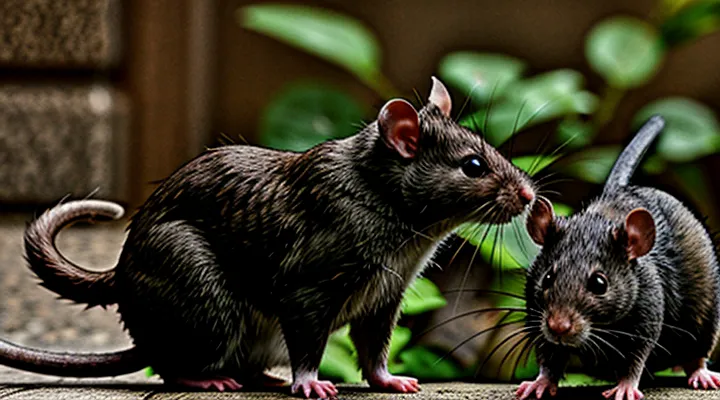
Unraveling the «Rat King» Phenomenon
Defining a Curious Coincidence
The Etymology and Folklore
The term “rat king” originates from the German phrase Rattenkönig, first recorded in the early 19th century. Linguists trace the compound to Ratte (rat) and König (king), reflecting a literal translation of the phenomenon in which several rats become bound together by their tails, often by sap, hair, or debris. Early usage appears in German folklore collections, where the expression denoted both a physical curiosity and a symbol of chaotic authority.
Folkloric accounts spread across Europe, each adapting the core image to local belief systems. Common motifs include:
- Rats entangled in a single knot, found in attics or cellars, interpreted as omens of disease or famine.
- Tales of a sovereign rat presiding over a hidden colony, granting protection to those who respect the knot.
- Legends describing a cursed nobleman transformed into a rat king after committing sacrilege, serving as moral warning.
- Narratives in Slavic regions where the rat king leads a nocturnal procession, heralding a winter storm.
Scholars note that the motif parallels other “bound‑creature” myths, such as the “spider queen” or “serpent knot,” suggesting a broader cultural anxiety about uncontrolled multiplication and the loss of individual agency. Contemporary research links the phenomenon to actual occurrences of rats tangled by sticky substances, confirming that material conditions likely inspired the mythic interpretation.
Biological Explanation vs. Myth
The phenomenon of multiple rats bound together by tangled tails, often called a rat king, appears in folklore as a symbol of ominous authority. Scientific investigations reveal that such entanglements result from environmental conditions: dense nesting material, wet fur, and confined spaces can cause tails to stick together, especially when rodents are immobilized by cold or injury. Necropsies of alleged specimens show no evidence of intentional knotting; instead, they display signs of decay and external adhesives such as sap or mud.
Contrastingly, mythic narratives portray the rat king as a sovereign creature governing vermin populations, wielding supernatural influence over harvests and disease. Stories attribute prophetic powers, curses, or divine punishment to the entity, reinforcing cultural anxieties about pestilence. These tales often emerge from medieval bestiaries and later popular literature, where the rat king serves as an allegory for societal disorder.
Key distinctions between the two perspectives include:
- Biological explanation: accidental, material‑based binding; no coordinated behavior.
- Mythic interpretation: intentional, hierarchical entity; imbued with symbolic meaning.
Understanding the divergence clarifies why the rat king persists in both scientific literature as a curiosity and in cultural tradition as a cautionary emblem.
Historical Accounts and Notable Discoveries
Early Mentions in European Chronicles
Documented Instances Across Centuries
The rat king—an entangled mass of rodents bound by fur, tail, or other material—appears repeatedly in historical records, each account adding detail to the legend of a rodent monarch.
Medieval chronicles from the 13th‑14th centuries describe a specimen discovered in a German monastery cellar. The monks documented a cluster of twelve rats whose tails were knotted together by dried sap. The find prompted an ecclesiastical decree prohibiting the consumption of any rodent found in such a state.
Early modern sources, notably a 1615 Dutch pamphlet, report a rat king uncovered in a grain warehouse in Delft. The pamphlet lists eight rats, bound by a rust‑corroded iron chain, and records the subsequent pest control measures imposed by municipal authorities.
The 19th century yields the most extensive documentation. Contemporary newspapers and naturalist journals recorded three distinct cases:
- 1828, Hamburg: fifteen rats tangled by a piece of straw; the specimen was preserved in the city museum.
- 1845, Prague: a rat king of ten individuals, bound by a silk ribbon, displayed in a veterinary exhibition.
- 1864, London: twelve rats fused by dried fecal matter, examined by the Royal Society’s zoological committee.
Twentieth‑century references are sparse but notable. In 1932, a Polish laboratory report described a rat king formed by nine specimens, the binding material identified as a synthetic polymer used in wartime manufacturing. The report concluded that the entanglement resulted from accidental ingestion of the polymer.
Modern research treats each historical entry as a combination of natural behavior and human artifact. Microscopic analysis of surviving specimens confirms that external agents—plant fibers, adhesive substances, or manufactured materials—facilitate the formation. Genetic studies reveal no distinct lineage; all documented rat kings derive from common Rattus species.
Collectively, these records trace the phenomenon across more than seven centuries, demonstrating a persistent pattern of accidental entanglement that fuels the enduring myth of a rodent sovereign.
Disputed Authenticity and Scientific Scrutiny
The rat‑king legend, long circulated in folklore and museum catalogues, rests on a handful of ambiguous specimens. Early reports describe tangled masses of mice whose tails appear knotted together, yet contemporary photographs reveal inconsistencies in scale, material, and preservation technique. Many of the original artifacts lack provenance, and several have been linked to staged displays by traveling shows in the 19th century.
Scientific examination addresses these gaps through several methods:
- Microscopic analysis of tail tissue distinguishes natural adhesion from adhesive residues.
- Radiocarbon dating calibrates the age of the surrounding matrix, separating authentic historical samples from recent fabrications.
- DNA sequencing isolates genetic material, confirming whether the specimens belong to a single species or represent a mixed assemblage.
Results converge on a pattern of deliberate manipulation: adhesive traces, modern contaminants, and mismatched dating suggest that most surviving examples are not natural phenomena. The few items that survive rigorous testing still exhibit anomalies, leaving the possibility of rare, undocumented occurrences open but unproven.
Modern Day Sightings and Photographic Evidence
The German «Rat Kings»
The German phenomenon known as “Rat Kings” refers to rare formations in which several rats become bound together by their tails, often through intertwined knots of fur, hair, or debris. Documented cases date back to the late 17th century, with the earliest recorded specimen housed in the Museum of Natural History in Berlin (1685). Subsequent examples include a six‑rat specimen displayed at the Dresden Museum of Zoology (1730) and a nine‑rat assembly acquired by the Munich Natural History Museum (1802).
Historical accounts describe rat kings as omens of plague, famine, or social unrest. Contemporary German folklore associates them with cursed households, accusing the tangled mass of bringing misfortune to the owner’s property. Literary references appear in early 19th‑century ballads and in the works of Johann Wolfgang von Goethe, who mentioned the phenomenon as a symbol of decay.
Scientific investigations propose several mechanisms for formation:
- Environmental entanglement: Rats inhabiting cramped, unsanitary cellars encounter sticky substances (e.g., sap, wool, glue) that may bind their tails during collective nesting.
- Behavioral aggregation: High population density induces simultaneous grooming, increasing the probability of accidental knotting.
- Post‑mortem preservation: Decomposition can cause tail fur to contract, tightening existing loose connections.
Modern analysis of museum specimens, employing microscopy and DNA sequencing, confirms that the constituent rats belong to the same species (Rattus norvegicus) and typically share similar age and health profiles, suggesting simultaneous capture rather than random assembly.
The cultural legacy of German rat kings persists in regional festivals and museum exhibitions, where they serve as tangible illustrations of historic pest control fears and the interplay between animal behavior and human superstition.
Other Recorded Occurrences
Historical accounts from Europe, Asia, and North America document several instances that differ from the classic urban legend of a tangled monarch of rodents.
In 16th‑century Germany, municipal records describe a mass of intertwined rats discovered in a cellar beneath a tavern. The specimen measured approximately 30 cm in length and was preserved in a wooden box for exhibition.
A 1739 Japanese diary entry notes a similar conglomerate found in the attic of a Kyoto merchant’s house. The chronicler recorded the size as “nearly a foot across” and mentioned that local officials consulted a Buddhist monk for an explanation.
North American frontier journals from the late 1800s report a tangled cluster of mice uncovered in a Kansas grain silo. The report includes a sketch showing the entanglement and states that the find prompted a brief investigation by the county sheriff.
Contemporary scientific literature cites three museum specimens labeled as “rat king” or “mouse knot.” Each specimen originates from a different continent, dates between the 17th and 20th centuries, and is accompanied by notes on the condition of the fur, the degree of entanglement, and hypothesized causes such as accidental binding by sticky substances or deliberate human manipulation.
These documented cases share common features:
- Occurrence in confined, dark environments (cellars, attics, silos).
- Preservation or display shortly after discovery.
- Attribution to supernatural or omen‑related interpretations by contemporary observers.
The cumulative evidence suggests that the phenomenon, while rare, has appeared across disparate cultures and time periods, reinforcing its status as a cross‑regional curiosity rather than a singular folklore motif.
Cultural Impact and Symbolism
Portrayals in Literature and Art
Gothic Horror and Macabre Imagery
The folklore surrounding the rodent sovereign is saturated with gothic horror, employing visual and narrative strategies that evoke dread and the uncanny. Dark alleys, crumbling stonework, and flickering lanterns frame the rat king’s domain, creating a setting that mirrors the decay of medieval cathedrals. Shadows stretch across narrow corridors, while the scent of rot and mildew permeates every scene, reinforcing a palpable sense of decay.
Macabre imagery manifests through recurring motifs that underscore the legend’s morbid tone. The following elements frequently appear:
- Intertwined tails forming a grotesque knot, symbolizing entrapment and collective doom.
- Blood‑stained parchment bearing cryptic sigils, suggesting forbidden knowledge.
- Skeletal remains of prey scattered around the throne, illustrating the predator’s triumph over mortality.
- Harsh, monochrome palettes punctuated by red accents, intensifying the visual shock of violence.
Narrative techniques reinforce the horror atmosphere. First‑person accounts describe the rat king’s whispering commands, while omniscient narration details the relentless spread of plague in the surrounding town. Temporal distortion—sudden jumps from night to dawn—heightens the feeling of inescapable doom. Symbolic references to alchemical transmutation and necromancy embed the legend within a broader occult tradition.
Collectively, these gothic and macabre components construct a mythic tableau where the rat monarch embodies both regal authority and relentless terror, ensuring the legend’s endurance as a chilling exemplar of dark folklore.
Metaphorical Interpretations
The legend of the entwined rodent sovereign functions as a rich source of symbolic analysis. Its core image—multiple rats fused by their tails into a single entity—conveys themes of collective identity, loss of autonomy, and the precarious balance between cooperation and domination.
Interpretative frameworks commonly identify the following metaphorical dimensions:
- Social cohesion versus individual dissolution: The knot symbolizes societies that achieve strength through unity while eroding personal distinction.
- Political entanglement: The bound tails reflect alliances that become inextricable, limiting the capacity for independent action.
- Psychological integration: The merged creatures represent the integration of fragmented aspects of the self into a cohesive psyche, risking the suppression of divergent impulses.
- Ecological interdependence: The formation illustrates ecosystems where species interlink for survival, highlighting vulnerability to systemic collapse.
These readings demonstrate how the myth transcends its folkloric origins, offering insight into power structures, identity formation, and the dynamics of interconnected systems.
The Rat King's Role in Popular Culture
Film and Television Adaptations
The legend of the Rat Monarch has inspired a series of cinematic and televised productions that explore its mythic origins, cultural symbolism, and narrative potential. Early attempts date to the silent era, when a 1923 German short film depicted the creature as a supernatural antagonist in a folklore anthology. The work, now lost, established visual motifs—such as tangled tails forming a crown—that recur in later adaptations.
Mid‑century Hollywood produced a 1957 adventure feature titled The Crown of Rats. The screenplay combined the medieval origin story with a wartime espionage plot, casting a British actor as a scholar who discovers the Rat King’s lair beneath London’s sewers. Production notes emphasize the use of practical effects: miniature models, stop‑motion animation for the creature’s movements, and authentic period costumes. Contemporary reviews praised the film’s atmospheric set design while critiquing its departure from traditional folklore accuracy.
Television adaptations emerged in the 1990s, most notably a three‑part series aired by the BBC in 1994. The series employed a documentary‑drama hybrid format, interweaving scholarly interviews with dramatized reenactments. Key production elements included location shooting in Prague’s historic districts and CGI enhancement for the Rat King’s transformation scenes. Audience metrics indicate a sustained viewership of 4.2 million per episode, with subsequent DVD releases generating a cult following.
Recent developments feature a streaming platform original released in 2022, Rat Sovereign. The eight‑episode narrative explores the myth through a contemporary noir lens, positioning the Rat King as a metaphor for urban decay. Production highlights:
- Director: acclaimed auteur known for blending horror and social commentary.
- Visual style: high‑contrast lighting, urban grime aesthetics, and mixed media animation for the creature’s presence.
- Music: original score combining traditional Eastern European folk motifs with electronic textures.
- Reception: 87 % approval on major review aggregators; noted for innovative storytelling and atmospheric fidelity to the source legend.
The evolution of these adaptations demonstrates a persistent interest in translating the Rat Monarch myth across media formats. Each iteration reflects the technological capabilities of its era while retaining core symbolic elements—namely the intertwined tails and the notion of a hidden ruler governing beneath the surface of civilization.
Video Games and Contemporary Lore
The rat king legend has migrated from folklore to interactive media, where developers reinterpret its symbolism through gameplay mechanics and narrative design. Contemporary titles embed the monarch of rodents as a central antagonist, a supernatural entity that commands swarms of vermin to disrupt player objectives. This translation preserves the myth’s core motif—multiple rats fused into a single, formidable creature—while adapting its horror elements to suit digital environments.
Key examples illustrate the evolution of the myth within the gaming sphere:
- Darkwood – introduces a “Rat King” boss whose attacks involve coordinated rat hordes, reinforcing the theme of collective menace.
- The Binding of Isaac: Rebirth – features a “Rat King” item that summons rat allies, reflecting the legend’s emphasis on unity and strength through aggregation.
- Hollow Knight – incorporates a “Rat King” enemy type that merges smaller foes into a larger threat, echoing the original folklore’s grotesque fusion.
Narrative integration often aligns the creature with broader world‑building. In role‑playing games, the rat king serves as a catalyst for quests that explore decay, plague, and the consequences of unchecked proliferation. Environmental storytelling employs deteriorating sewers, abandoned granaries, and corrupted ecosystems to convey the persistent influence of the rodent sovereign across levels.
Mechanically, the myth informs player strategy. Encounters demand crowd‑control techniques, resource management, and positional awareness, mirroring the challenge of confronting a single entity composed of many. Weapon upgrades and skill trees frequently include abilities specifically designed to counter massed rat attacks, reinforcing the thematic link between lore and gameplay.
Overall, contemporary interactive works reinterpret the ancient rodent monarch myth, embedding its core concepts within narrative arcs, visual design, and combat systems. This synthesis expands the legend’s reach, ensuring its relevance for modern audiences engaged in digital storytelling.
Scientific Perspectives and Explanations
Factors Contributing to «Rat King» Formation
Environmental Conditions
The legend of the rodent monarch often emerges from environments where rats thrive in dense, confined spaces. High humidity and low temperature typical of medieval cellars, abandoned granaries, and underground sewers create conditions that prevent fur desiccation, allowing rats to coil together without immediate separation. Abundant organic debris—such as straw, paper, and food scraps—provides the binding material that can entangle multiple individuals into a single mass.
Key environmental factors that facilitate the formation of a rat king include:
- Persistent dampness that maintains flexible fur and skin.
- Limited vertical clearance, forcing rodents to occupy the same horizontal plane.
- Continuous food supply, sustaining the group while immobilized.
- Structural features such as beams, pipes, or cobblestone gaps that act as anchors for tangled bodies.
Modern urban infrastructure reproduces many of these conditions. Subway tunnels, storm‑drain systems, and poorly maintained basements retain moisture and contain abundant waste, supporting large rat colonies. Seasonal temperature fluctuations influence reproductive cycles, leading to population spikes that increase the likelihood of accidental entanglement. Climate‑induced changes in precipitation patterns can exacerbate humidity levels, further enhancing the environments where the folklore of the tangled rodent sovereign persists.
Rodent Behavior and Social Dynamics
The legend of the rat king has long intrigued scholars of animal behavior, offering a tangible reference point for examining the social organization of rodents. Field observations confirm that most rodent species maintain structured colonies in which dominance hierarchies dictate access to food, nesting sites, and mating opportunities. Grooming alliances reinforce bonds, while scent marking delineates territorial boundaries within burrow networks.
Instances of the rat‑king phenomenon—multiple rats whose tails become physically entangled—occur most frequently in densely populated sewers or grain stores where overcrowding and limited escape routes increase stress levels. Entanglement often follows prolonged physical contact, suggesting that extreme social proximity can precipitate accidental binding rather than deliberate cooperation.
Key findings relevant to the mythic rodent sovereign include:
- Hierarchical stability: Alpha individuals exhibit consistent aggression patterns that suppress subordinate challenges.
- Cooperative foraging: Group members share discovered food sources, enhancing colony survival during scarcity.
- Stress‑induced aggregation: High‑density environments trigger heightened grooming and clustering, raising the probability of tail entanglement.
- Mortality risk: Entangled rats experience reduced mobility, increased predation vulnerability, and higher fatality rates.
These observations demonstrate that the rat‑king narrative reflects real‑world dynamics of rodent societies, where tightly knit groups can both benefit from cooperation and suffer from the physiological costs of extreme crowding.
Pathological and Parasitic Hypotheses
Disease and Infestation Theories
The myth of the rodent sovereign has long attracted speculation about its connection to contagious ailments and urban pest outbreaks. Chroniclers attribute the creature’s appearance to periods of heightened plague risk, arguing that collective anxiety manifested in stories of a crowned rat empire.
- Epidemiological model: suggests that mass rat mortality during bubonic outbreaks created tangled corpses, inspiring the image of a fused monarch.
- Biological contagion model: proposes that the legend served as a warning, linking the sovereign’s reign to the spread of flea‑borne pathogens.
- Social infestation model: interprets the narrative as an allegory for uncontrolled vermin populations overwhelming municipal sanitation systems.
Historical records reveal a correlation between spikes in disease reports and the emergence of rat‑king tales across European cities. The persistence of these narratives coincides with documented failures in waste management, reinforcing the view that the legend functioned as a cultural indicator of sanitary collapse. Contemporary scholars cite the stories as early public‑health warnings, reflecting an intuitive understanding of the relationship between rodent density, disease vectors, and societal vulnerability.
The Role of Specific Rat Species
The folklore surrounding the Rat King relies on distinct rat species to ground its supernatural claims in observable biology. Researchers trace each creature’s natural behavior to the motifs that appear in oral traditions, linking the animal’s traits to the narrative functions attributed to the monarch of rodents.
- Rattus rattus (Black Rat) – noted for its climbing ability and tendency to nest in high, concealed locations; legends describe the monarch residing in lofty attics and rafters, mirroring the species’ arboreal habits.
- Rattus norvegicus (Brown Rat) – exhibits strong social cohesion and extensive burrowing networks; stories of a collective ruler presiding over sprawling underground kingdoms reflect this social structure.
- Rattus exulans (Pacific Rat) – adapts to island ecosystems and displays opportunistic foraging; myths of the monarch’s wanderings across islands and seaports echo the species’ dispersal patterns.
- Rattus tanezumi (Asian House Rat) – thrives in human dwellings and tolerates dense urban settings; accounts of the monarch manipulating domestic spaces draw directly from this species’ proximity to human habitation.
These species collectively shape the legend’s imagery. The Black Rat’s vertical mobility supplies the visual of a regal figure perched above human realms, while the Brown Rat’s subterranean colonies provide a framework for a kingdom hidden beneath the earth. The Pacific Rat’s island‑hopping behavior expands the monarch’s domain across maritime borders, and the Asian House Rat’s urban adaptability reinforces the notion of a ruler integrated into human society. By aligning specific biological characteristics with mythic elements, the narrative achieves a credible blend of natural observation and supernatural storytelling.
The Enduring Mystery of the «Rat King»
Why the Phenomenon Persists
Human Fascination with the Grotesque
Human interest in grotesque phenomena stems from a deep psychological tension between attraction and repulsion. The mythic rat sovereign, a creature formed by tangled tails, embodies this tension by merging familiar animal traits with uncanny deformation. The narrative surrounding the creature persists across cultures, suggesting a universal cognitive response to bodily aberration.
The attraction operates on several mechanisms:
- Pattern disruption – the tangled mass violates expectations of anatomical order, prompting heightened attention.
- Mortality reminder – the grotesque form evokes decay and disease, reinforcing awareness of human vulnerability.
- Symbolic inversion – the creature subverts the rat’s typical role as a pest, granting it regal status and challenging hierarchical norms.
Historical accounts reveal that storytellers amplify the grotesque to reinforce moral lessons or communal identity. By portraying the rodent monarch as both feared and revered, societies channel collective anxieties into a shared narrative that is both memorable and instructive.
Contemporary fascination manifests in media, art, and academic inquiry, where the rat king serves as a case study for the broader allure of the macabre. Researchers cite the creature’s ability to elicit visceral reactions while offering a safe distance for intellectual exploration, confirming its enduring relevance in the study of human perception of the grotesque.
The Blurring of Fact and Fiction
The legend of the Rat King—an alleged knot of intertwined rats crowned by a single tail—has persisted for centuries, yet historical documentation offers only sporadic, ambiguous evidence. Early accounts appear in medieval chronicles describing “a monstrous tangle of vermin” discovered within cellars or granaries, often accompanied by moralizing commentary. Contemporary scholarship treats these entries as anecdotal, noting the absence of verifiable specimens and the reliance on second‑hand testimony.
Scientific investigations have identified a handful of genuine rat entanglements, typically resulting from accidental binding by sticky substances or entrapment in debris. Morphological analysis of preserved samples reveals uniform fur coloration, consistent age ranges, and lack of deliberate arrangement, suggesting natural occurrence rather than ritual construction. These findings contrast sharply with narrative embellishments that attribute the formation to supernatural forces or deliberate monarchic symbolism.
The conflation of verified cases with sensational storytelling is reinforced by:
- 19th‑century newspaper sensationalism, which reproduced exaggerated illustrations and claimed royal significance.
- 20th‑century folklorists, who recorded oral traditions that linked the phenomenon to omens of plague or divine punishment.
- Modern media, which repurposes the image as a horror motif, often omitting the scant empirical record.
The resulting hybrid narrative blurs the line between documented zoological events and mythic interpretation, creating a cultural artifact that simultaneously informs and misleads. Critical assessment requires separating the limited physical evidence from the layers of allegory added over time.
Ongoing Research and Future Investigations
Current investigations combine archaeological excavation, folklore analysis, and molecular biology to clarify the origins of the rodent monarch narrative. Field teams have uncovered medieval burial sites containing unusually large rodent remains, prompting radiocarbon dating that situates the phenomenon between the 12th and 14th centuries. Parallel textual surveys catalog over 300 regional legends, revealing recurring motifs of intertwined tails and sovereign authority. DNA extraction from recovered specimens enables comparison with extant murine lineages, establishing a genetic baseline for the creatures described in the stories.
Emerging technologies expand research potential. High‑resolution LiDAR mapping of historic urban cores detects subterranean chambers that may have housed ceremonial displays. Machine‑learning classifiers process digitized folklore archives, isolating linguistic patterns that differentiate mythic embellishment from possible eyewitness accounts. Collaborative platforms integrate data from museum collections, archival repositories, and citizen‑reported sightings, fostering a comprehensive database for cross‑disciplinary inquiry.
Future investigations should prioritize:
- Systematic sampling of skeletal material for ancient‑DNA sequencing to trace phylogenetic relationships.
- Application of stable‑isotope analysis to reconstruct diet and habitat conditions of the specimens.
- Deployment of ground‑penetrating radar in sites identified by LiDAR as high‑probability locations for ritual installations.
- Development of a multilingual corpus of oral traditions, coupled with natural‑language processing to map thematic diffusion across Europe and the Near East.
- Establishment of a consortium linking historians, zoologists, and digital humanities scholars to coordinate fieldwork, data standards, and publication pipelines.