
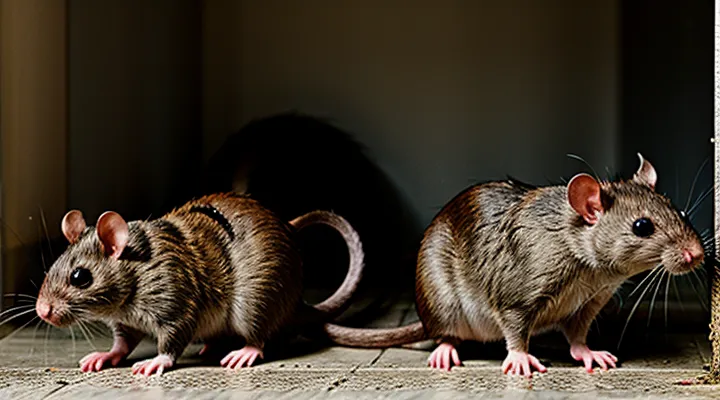
Understanding Rat Gestation
The Basics of Rodent Reproduction
What is Gestation?
Gestation denotes the interval between fertilization of an ovum and the birth of offspring, during which the embryo undergoes development within the maternal uterus. The process begins with implantation of the blastocyst, proceeds through organogenesis, and ends with parturition, all under the control of endocrine signals such as progesterone and estrogen.
Key characteristics of gestation include:
- Species‑specific duration, ranging from a few weeks in small mammals to over a year in large mammals.
- Dependence on maternal body size and metabolic rate; smaller species generally complete development more rapidly.
- Sensitivity to environmental conditions, including temperature, nutrition, and stress, which can alter developmental timing.
- Sequential developmental milestones: embryonic cleavage, gastrulation, formation of primary organ systems, and fetal growth.
In rodents, gestation is markedly brief compared to many other mammals. Female rats typically carry embryos for approximately 21‑23 days before delivering litters of several pups. This short interval reflects the species’ high reproductive turnover and aligns with the broader pattern that smaller mammals exhibit compressed prenatal development.
Factors Influencing Pregnancy Duration
Pregnancy length in rats varies according to a combination of physiological, environmental, and genetic variables. Hormonal balance, particularly the timing of progesterone and estrogen peaks, directly regulates uterine receptivity and embryo implantation, thereby setting the gestational timeline. Nutritional status influences maternal energy reserves; diets deficient in protein or essential fatty acids can shorten or extend the gestation period by affecting fetal growth rates and placental efficiency.
Environmental conditions also modify gestational duration. Ambient temperature fluctuations alter metabolic rates; cooler environments tend to decelerate development, while mild warmth can accelerate it. Photoperiod exposure influences melatonin secretion, which indirectly modulates reproductive hormones and may shift the onset of parturition. Social stressors, such as overcrowding or aggressive interactions, elevate corticosterone levels, leading to premature labor or delayed delivery.
Genetic background determines baseline gestation length across rodent strains. Inbred lines exhibit consistent gestational periods, whereas hybrid or outbred populations display greater variability due to heterozygosity. Specific gene variants linked to placental angiogenesis and fetal organ maturation have been identified as contributors to shortened or prolonged gestation.
Key factors influencing rat gestation duration:
- Hormonal profile (progesterone, estrogen, prolactin)
- Maternal nutrition (protein, lipid, micronutrient intake)
- Ambient temperature and humidity
- Photoperiod and light intensity
- Social density and stress levels
- Genetic strain and specific allelic variations
Understanding how these elements interact enables precise prediction of gestational timelines and informs experimental design in reproductive research.
The Rat Pregnancy Cycle
Average Gestation Period for Rats
Typical Duration in Days
Rats carry their young for a relatively short time compared with most mammals. The gestation period for the common laboratory rat (Rattus norvegicus) averages 21 to 23 days. This range reflects normal variation among individuals and slight differences in breeding conditions.
Key points about the typical length:
- Average duration: 22 days
- Observed range: 21–23 days
- Upper limit under optimal conditions: up to 24 days, rarely exceeding this value
Factors that can shift the duration within this narrow window include maternal age, nutrition, and ambient temperature. Younger or undernourished females may approach the lower end of the range, while well‑conditioned, mature females tend toward the upper end. The concise timeframe enables rapid reproductive cycles, a characteristic that underlies the species’ prolific breeding capacity.
Variations Across Species
Rats typically carry embryos for 21–23 days, a period that reflects their moderate body size and rapid reproductive cycle. Across the rodent order, gestation lengths vary markedly, correlating with species-specific physiological and ecological demands.
- Mice (Mus musculus): 19–21 days, slightly shorter than rats due to smaller size and higher metabolic rate.
- Syrian hamsters (Mesocricetus auratus): 16–18 days, the briefest among common laboratory rodents, supporting multiple litters per year.
- Gerbils (Meriones unguiculatus): 23–24 days, comparable to rats, yet often produce fewer, larger offspring.
- Guinea pigs (Cavia porcellus): 59–72 days, a prolonged gestation linked to advanced fetal development and precocial young.
- Chinchillas (Chinchilla lanigera): about 111 days, the longest among frequently studied rodents, reflecting a strategy of low litter size and extensive prenatal growth.
- Squirrels (Sciuridae family): 30–45 days, intermediate duration that balances rapid maturation with the need for well-developed neonates in arboreal habitats.
Key determinants of these differences include:
- Body mass: Larger species generally require more time for organogenesis and tissue growth.
- Metabolic rate: Smaller rodents sustain higher metabolic rates, accelerating embryonic development.
- Ecological niche: Species inhabiting environments with limited predation pressure or abundant resources often evolve longer pregnancies to produce more mature offspring.
- Litter size and parental investment: Species with few, well‑cared‑for young tend toward extended gestation, whereas those producing many altricial pups favor shorter cycles.
Understanding these patterns clarifies how reproductive timing adapts to diverse survival strategies within the rodent clade.
Stages of Rat Pregnancy
Early Development
Rats complete gestation in approximately 21–23 days, with the first half of this interval dedicated to embryonic formation and organ primordia. After fertilization, the zygote reaches the uterus within 24 hours and implants by day 4–5. Implantation initiates a cascade of cellular differentiation that generates the three germ layers: ectoderm, mesoderm, and endoderm. By day 6–7, the embryonic disc expands, establishing the primitive streak that will guide axial development.
Neural tube closure occurs between days 8 and 10, providing the foundation for the central nervous system. Concurrently, somite segmentation produces the precursors of vertebrae and skeletal muscle. Limb buds become visible around day 12, marking the onset of musculoskeletal patterning. Cardiovascular development progresses rapidly; the heart begins beating by day 9 and circulates blood throughout the embryo by day 11, supporting nutrient exchange for the rapidly growing tissues.
Key milestones of early rat embryogenesis:
- Day 4–5: uterine implantation, establishment of placenta.
- Day 6–7: formation of germ layers, primitive streak appearance.
- Day 8–10: neural tube closure, onset of brain vesicle formation.
- Day 9: initiation of cardiac contractility.
- Day 12: limb bud emergence, early digit patterning.
- Day 14: organogenesis intensifies, respiratory and gastrointestinal primordia differentiate.
By the end of the second week, most major organ systems are identifiable, although functional maturation continues throughout the remaining gestational period. Early developmental events set the structural framework that determines fetal growth rates and postnatal viability, making precise timing essential for experimental planning and comparative reproductive studies.
Mid-Pregnancy Changes
Mid‑pregnancy in rats, roughly days 10‑14 of a typical 21‑day gestation, is marked by rapid fetal organogenesis and pronounced maternal adaptations. Hormonal profiles shift dramatically: progesterone peaks to sustain the uterine environment, while luteinizing hormone and prolactin rise to prepare mammary tissue for lactation. These endocrine changes drive uterine growth; the myometrium thickens, and the endometrial surface expands to accommodate the increasing number of embryos.
Maternal physiology reflects the fetuses’ demands. Body weight gains average 30‑40 % of pre‑pregnancy mass, primarily from fluid retention and adipose deposition. Blood volume expands by approximately 20 %, enhancing nutrient delivery. Cardiovascular output rises, and respiratory rate increases to meet elevated metabolic requirements.
Fetal development accelerates during this interval. By day 12, limb buds differentiate into recognizable structures, and the central nervous system undergoes extensive myelination. Organ systems such as the liver and kidneys begin functional maturation, preparing neonates for post‑natal life. Placental efficiency improves, with increased vascularization facilitating oxygen and nutrient exchange.
Behavioral modifications accompany physiological changes. Pregnant females exhibit heightened nesting activity, gathering bedding material and arranging it into compact nests. This behavior intensifies between days 10 and 14, indicating preparation for parturition. Additionally, grooming frequency rises, likely serving thermoregulation and stress reduction.
Key mid‑pregnancy milestones can be summarized:
- Hormonal surge: progesterone, luteinizing hormone, prolactin
- Uterine remodeling: myometrial thickening, endometrial expansion
- Maternal growth: 30‑40 % weight gain, 20 % blood volume increase
- Fetal organogenesis: limb differentiation, CNS myelination, organ maturation
- Nesting behavior: increased material collection, nest construction
Understanding these changes provides a precise framework for evaluating reproductive health, experimental interventions, and comparative gestational studies in rodent models.
Late-Stage Development
Rats enter the final phase of gestation around day 15 of a typical 21‑day pregnancy. During this period fetal weight increases rapidly, reaching approximately 80 % of the newborn’s mass by day 20. Skeletal ossification progresses from cartilage precursors to hardened bone, particularly in the forelimbs and skull. Lung development accelerates, with surfactant production beginning on day 18, preparing the neonate for air breathing.
Cardiovascular maturation continues as the fetal heart rate stabilizes near 300 beats per minute. Placental blood flow peaks, delivering nutrients essential for glycogen storage in the liver. Neural circuits refine; myelination of peripheral nerves becomes evident, and sensory organs—especially the auditory system—reach functional thresholds.
Maternal physiology reflects the approaching birth. Cervical dilation initiates around day 20, accompanied by a rise in prostaglandin levels. Uterine contractility increases, and the amniotic fluid volume contracts as the fetuses occupy more space. These changes culminate in the onset of labor within 24 hours of the gestational endpoint.
Key late‑stage milestones:
- Day 15‑16: rapid fetal weight gain, initial ossification.
- Day 17‑18: surfactant synthesis, lung readiness.
- Day 19‑20: myelination, sensory organ maturation.
- Day 20‑21: cervical dilation, hormonal shift toward parturition.
Life After Gestation
Birth Process «Parturition»
Duration of Labor
Rats complete the birthing process in a remarkably short period. The entire labor, from the onset of contractions to the expulsion of the last pup, usually lasts between 15 and 30 minutes. This interval includes three distinct phases:
- First stage: Cervical dilation and early uterine contractions; lasts 3–5 minutes.
- Second stage: Delivery of each pup; each individual birth requires roughly 1–2 minutes, with brief intervals for cleaning and positioning.
- Third stage: Expulsion of the placenta and uterine involution; typically 2–4 minutes.
Variations arise from litter size, maternal age, and environmental conditions. Larger litters may extend the second stage to up to 45 minutes, while experienced females often complete the process closer to the lower end of the range. Comparatively, mice exhibit a similar total labor duration, whereas larger rodents such as guinea pigs require several hours for parturition.
Number of Pups «Litter Size»
Rats carry embryos for approximately 21–23 days, a period consistent across laboratory strains and wild populations. The short gestational interval enables rapid population turnover, especially in environments with abundant food and shelter.
Litter size in rats varies with species, age, and maternal condition. Typical ranges are as follows:
- Norway (Rattus norvegicus) and domestic fancy rats: 6–12 pups per litter, with an average of 8–10.
- Larger species such as the black rat (Rattus rattus) may produce 7–14 offspring.
- First‑time (primiparous) females often deliver fewer pups, commonly 5–7, while experienced breeders can reach the upper end of the range.
Factors influencing pup number include:
- Nutritional status: high‑calorie diets correlate with larger litters.
- Photoperiod and temperature: longer daylight and moderate warmth promote increased reproductive output.
- Genetic selection: strains bred for laboratory use display narrower litter size distributions than wild counterparts.
Overall, a rat’s reproductive capacity is defined by a concise gestation period and a litter size that typically falls between six and twelve offspring, subject to modulation by environmental and physiological variables.
Post-Natal Care and Development
Nursing and Weaning
Rats typically begin nursing immediately after birth, and the lactation period extends for about three weeks. During this time, the dam provides milk rich in protein, fat, and antibodies, supporting rapid growth and organ development in the newborns. Pup weight roughly triples by the end of the third week, reflecting the efficiency of maternal milk.
Weaning occurs when pups acquire the ability to ingest solid food and maintain body temperature without maternal warmth. Standard practice in research colonies sets the weaning age at 21 days, coinciding with the natural decline in milk production and the emergence of independent feeding behavior. Earlier separation can result in reduced growth rates and increased mortality; later separation may prolong dependence and alter social dynamics.
Key considerations for successful nursing and weaning:
- Monitor dam’s nipple condition; swollen or cracked nipples indicate over‑exertion and may require supplemental feeding.
- Provide nest material that retains heat, ensuring pups remain warm during the first two weeks.
- Introduce solid chow gradually around day 14 to familiarize pups with non‑milk nutrition.
- Separate males and females at weaning to prevent premature breeding and aggression.
Proper management of the nursing phase and precise timing of weaning are essential for optimal pup development and reliable experimental outcomes.
Growth Rate of Pups
Rats complete gestation in approximately three weeks, after which neonates emerge weighing 5–7 g. Immediate post‑natal growth is rapid; within the first 24 hours pups typically gain 1–2 g, representing a 20–30 % increase in mass.
During the first week, average daily weight gain ranges from 0.8 g to 1.2 g, depending on litter size and maternal milk availability. By day 14, most pups reach 20–25 g, and by weaning at day 21 they approach 30–35 g. The growth curve flattens after weaning, with the rate dropping to 0.3–0.5 g per day as solid food replaces milk.
Key factors that modify growth rate include:
- Litter size: larger litters dilute milk resources, reducing individual weight gain.
- Maternal health: adequate nutrition and body condition of the dam correlate with higher milk output.
- Environmental temperature: ambient warmth supports thermoregulation, preventing energy loss.
- Genetic strain: laboratory strains exhibit distinct growth trajectories compared to wild‑type rats.
Monitoring pup weight daily during the first two weeks provides reliable data for assessing developmental health and detecting deviations that may signal maternal or environmental deficiencies.