
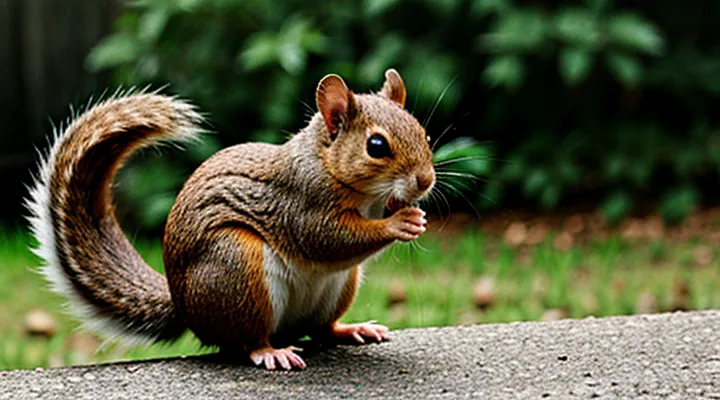
Understanding Rodents: The Order Rodentia
Defining Characteristics of Rodents
Specialized Dentition
Rodents that include squirrels, rats, and hamsters possess a dental formula that distinguishes the order: one pair of incisors in each jaw, no canines, and a variable number of premolars and molars. This arrangement underlies their capacity for gnawing and grinding.
- Incisors: continuously erupting; enamel covers the labial surface while dentin forms the lingual side, producing a self‑sharpening edge.
- Canine gap: a diastema separates incisors from cheek teeth, allowing manipulation of food.
- Cheek teeth: rootless premolars and molars, occlusal surfaces marked by cusps and ridges; enamel thickness and crown height differ among species.
Squirrels exhibit high‑crowned (hypsodont) molars suited for processing fibrous seeds and nuts. Rats display broader, flatter molars that accommodate an omnivorous diet, including grains and animal matter. Hamsters have relatively low‑crowned (brachydont) cheek teeth, optimized for grinding stored seeds and tubers.
The combination of ever‑growing incisors and specialized cheek teeth enables these rodents to maintain dental integrity while exploiting diverse food resources. Continuous eruption compensates for wear, while enamel‑dentin architecture ensures a cutting edge that remains effective throughout the animal’s life.
Diverse Habitats and Lifestyles
Squirrels, rats, and hamsters occupy a wide range of environments, each species adapting its behavior and physiology to local conditions.
Squirrels thrive in forest canopies, urban parks, and suburban backyards. Their arboreal lifestyle relies on strong hind limbs for climbing, a diet rich in nuts, seeds, and occasional insects, and a habit of caching food for winter scarcity.
Rats demonstrate remarkable ecological flexibility. They inhabit sewers, grain stores, agricultural fields, and natural riverbanks. Their omnivorous feeding strategy includes grains, fruits, carrion, and human refuse, while their nocturnal activity reduces competition with diurnal species.
Hamsters are primarily ground‑dwelling rodents. Their natural habitats span arid steppes, semi‑desert scrub, and cultivated gardens. Adaptations include cheek pouches for transporting seeds, burrowing behavior to escape predators and temperature extremes, and a seasonal pattern of hoarding food.
Key habitat characteristics:
- Vegetation structure: trees for squirrels, dense ground cover for hamsters, mixed vegetation for rats.
- Food availability: seasonal nuts for squirrels, omnivorous resources for rats, seed stores for hamsters.
- Shelter: tree nests, burrows, and crevices respectively.
These ecological niches shape distinct lifestyles, influencing locomotion, social organization, and reproductive cycles across the three rodent groups.
Key Families Within Rodentia
Sciuridae: The Squirrel Family
Sciuridae, commonly known as the squirrel family, comprises over 280 species distributed across six subfamilies. Members range from tree-dwelling squirrels and ground squirrels to flying squirrels, marmots, chipmunks, and prairie dogs. All Sciuridae species share a set of morphological traits: sharp incisors for gnawing, a robust skull, a bushy tail in most genera, and a dental formula of 1.0.1.3 / 1.0.1.3. Their habitats span temperate forests, grasslands, deserts, and mountainous regions, reflecting a high degree of ecological adaptability.
Key genera within Sciuridae include:
- Sciurus – tree squirrels such as the Eastern gray squirrel and the red squirrel.
- Tamias – chipmunks, notable for striped backs and burrowing behavior.
- Marmota – marmots and ground squirrels, characterized by large bodies and social colonies.
- Glaucomys – flying squirrels, capable of gliding flight using a membrane between limbs.
- Cynomys – prairie dogs, highly social rodents inhabiting North American plains.
- Spermophilus – ground squirrels, occupying a variety of open habitats.
Squirrels belong exclusively to Sciuridae, whereas rats are classified under Muridae and hamsters under Cricetidae. Consequently, the squirrel family does not encompass rats or hamsters, but represents a distinct taxonomic lineage within the order Rodentia.
Tree Squirrels
Tree squirrels belong to the family Sciuridae, a diverse lineage of rodents that also includes ground squirrels, marmots, and chipmunks. Within this family, the genus Sciurus comprises the most familiar arboreal species, such as the Eastern gray squirrel (Sciurus carolinensis), the red squirrel (Sciurus vulgaris), and the fox squirrel (Sciurus niger). These species share several distinctive traits:
- Strong, clawed limbs adapted for climbing and gripping bark.
- Bushy tails that provide balance and serve as a shield against cold weather.
- Dental formula of 1/1 incisors, 0/0 canines, 1/1 premolars, and 3/3 molars, a hallmark of all rodents.
- Highly developed visual and auditory senses that aid in predator detection.
Habitat preferences focus on forested environments where mature trees supply food sources—nuts, seeds, and fruits—and nesting sites. Tree squirrels construct dreys, spherical nests woven from twigs and leaves, typically positioned in forked branches 5–30 m above ground. Seasonal food caching is a critical survival strategy; individuals bury thousands of nuts during autumn, retrieving them when supplies dwindle in winter.
Reproductive cycles vary with latitude. In temperate zones, females produce one to two litters per year, each containing 2–6 altricial offspring. Gestation lasts approximately 40 days, after which the young remain in the nest for 8–10 weeks before achieving independence.
Ecologically, arboreal squirrels influence forest dynamics through seed dispersal. By burying and forgetting portions of their caches, they facilitate the germination of hardwood species, thereby shaping vegetation composition over decades.
In the broader classification that encompasses squirrels, rats, and hamsters, tree squirrels represent the most visibly arboreal members, distinguished by specialized locomotor anatomy, nest-building behavior, and a pronounced role in woodland regeneration.
Ground Squirrels
Ground squirrels belong to the family Sciuridae, a subfamily of rodents that share common ancestry with other members such as tree squirrels, rats, and hamsters. Their scientific classification places them in the tribe Marmotini, which includes marmots, prairie dogs, and chipmunks. This taxonomic grouping reflects shared morphological traits, including robust bodies, strong hind limbs, and a dental formula typical of rodents.
These animals inhabit open environments across North America, Europe, and Asia. Preferred habitats consist of grasslands, deserts, and alpine meadows where soil is suitable for burrowing. Burrow systems serve multiple functions: shelter from predators, temperature regulation, and storage of food caches. Ground squirrels exhibit diurnal activity patterns, emerging each morning to forage on seeds, grasses, insects, and occasionally small vertebrates.
Key biological characteristics include:
- Social structure: colonies range from solitary individuals to complex communal networks with defined hierarchies.
- Reproductive cycle: breeding occurs once or twice annually, producing litters of 2–8 offspring after a gestation period of approximately 23–30 days.
- Adaptations: thick fur for insulation, cheek pouches for transport of food, and vocalizations that convey alarm signals within the colony.
Ground squirrels play a notable ecological role by influencing vegetation dynamics through selective grazing and by aerating soil via their burrowing activities. Their presence also supports predator populations, including raptors, snakes, and carnivorous mammals, thereby contributing to trophic stability within their ecosystems.
Marmots and Prairie Dogs
Marmots and prairie dogs belong to the order Rodentia, the same taxonomic group that contains squirrels, rats and hamsters. Both genera are members of the family Sciuridae, which unites ground‑dwelling and arboreal rodents with continuously growing incisors.
Marmots are large, diurnal rodents found in mountainous regions of North America, Europe and Asia. They excavate extensive burrow systems, hibernate for up to eight months, and feed on grasses, herbs and alpine vegetation. Their social organization is typically solitary or composed of a breeding pair with offspring, and they communicate through loud whistles that warn of predators.
Prairie dogs inhabit the grasslands of North America, forming complex colonies called towns. Colonies consist of multiple family groups that cooperate in foraging, predator detection and burrow maintenance. Diet consists mainly of grasses and seeds; they practice a sophisticated alarm‑call system with distinct vocalizations for different threats. Their activities aerate soil and influence plant diversity, making them ecosystem engineers.
Key distinctions between the two groups:
- Habitat: marmots – high‑altitude meadows; prairie dogs – lowland prairies.
- Social structure: marmots – generally solitary or small family units; prairie dogs – large, cooperative colonies.
- Activity pattern: marmots – primarily active in daylight; prairie dogs – crepuscular to diurnal, with frequent surface emergence.
Both marmots and prairie dogs illustrate the ecological breadth of the Sciuridae family, expanding the rodent assemblage that also includes squirrels, rats and hamsters.
Muridae: The Mouse and Rat Family
Muridae, the taxonomic family commonly known as the mouse‑and‑rat family, comprises over 1,400 species of small to medium‑sized rodents. Members share a set of morphological traits: a robust skull, continuously growing incisors, and a high reproductive rate. The family is divided into several subfamilies, including Murinae (true mice and rats) and Deomyinae (brush‑tailed mice). Species such as the house mouse (Mus musculus) and the brown rat (Rattus norvegicus) are globally distributed and have adapted to a wide range of habitats, from agricultural fields to urban environments.
Key characteristics of Muridae:
- Dental formula: 1/1, 0/0, 0/0, 3/3 (total of 16 teeth).
- Dental enamel limited to the front surface of the incisors, creating a self‑sharpening edge.
- Highly flexible diet; many species are omnivorous, consuming seeds, insects, and human waste.
- Rapid gestation periods (typically 19–23 days) and large litter sizes, which facilitate quick population growth.
Squirrels belong to the family Sciuridae, while hamsters are members of the subfamily Cricetinae within the family Cricetidae. Neither group falls under Muridae, illustrating that the family of mice and rats does not encompass all small rodent-like mammals often associated with household pests. Understanding the taxonomic boundaries clarifies why rodents such as squirrels and hamsters are classified separately from true murids.
Old World Mice and Rats
Old World mice and rats belong to the family Muridae, subfamily Murinae. They are native to Europe, Asia, and Africa, with several species introduced worldwide through human activity. Typical members include the house mouse (Mus musculus), the brown rat (Rattus norvegicus), and the black rat (Rattus rattus). These rodents share a high reproductive rate, omnivorous diet, and a dental formula of 1/1 incisors, no canines, and a variable number of molars.
All three groups—squirrels, rats, and hamsters—are classified within the order Rodentia, but they occupy separate families. Squirrels reside in the family Sciuridae, hamsters in Cricetidae, while Old World mice and rats remain in Muridae. This taxonomic distinction reflects differences in morphology, habitat preference, and evolutionary lineage.
Key characteristics of Old World mice and rats:
- Robust skull with a pronounced nasal region.
- Long, naked tail often longer than the body.
- Presence of a single pair of large, continuously growing incisors.
- Adaptability to human‑altered environments, leading to commensal relationships.
Understanding these traits clarifies the placement of Old World mice and rats within the broader rodent assemblage that also includes squirrels and hamsters.
New World Mice and Rats
New World mice and rats belong to the family Cricetidae, subfamily Neotominae and Sigmodontinae. They are native to the Americas, ranging from Canada to southern Argentina. Unlike Old World rats (Rattus spp.) they evolved independently, displaying distinct dental and skeletal features. Their molar patterns show three rows of cusps, a trait shared with many South‑American rodents.
Ecologically, these rodents occupy diverse habitats: grasslands, forests, deserts, and high‑altitude regions. They serve as prey for a wide array of predators, including raptors, snakes, and carnivorous mammals. Their reproductive rates are high, with litters typically ranging from three to ten offspring, enabling rapid population turnover.
Key genera include:
- Peromyscus – deer mice, adaptable to both natural and urban environments.
- Neotoma – packrats, noted for constructing extensive middens.
- Calomys – vesper mice, common in tropical and subtropical zones.
- Oryzomys – rice rats, associated with wetland habitats.
In the broader classification of rodents that also comprises squirrels and hamsters, New World mice and rats represent a separate evolutionary line, highlighting the diversity of the order Rodentia across the Western Hemisphere.
Cricetidae: Hamsters and New World Rodents
Hamsters belong to the family Cricetidae, a diverse group of rodents that occupies the New World and parts of the Old World. Within Rodentia, Cricetidae falls under the superfamily Muroidea and comprises several subfamilies, each containing species with distinct ecological roles.
Key subfamilies of Cricetidae include:
- Cricetinae – the true hamsters, such as the Syrian hamster (Mesocricetus auratus) and dwarf hamsters (Phodopus spp.).
- Neotominae – North American “rats” and mice, for example the deer mouse (Peromyscus maniculatus) and the cotton rat (Sigmodon spp.).
- Sigmodontinae – South American rodents, encompassing rice rats (Oryzomys spp.) and various forest-dwelling species.
- Arvicolinae – voles, lemmings, and water voles, exemplified by the meadow vole (Microtus pennsylvanicus) and the Norway lemming (Lemmus lemmus).
All members share characteristic rodent traits: continuously growing incisors, a gnawing dentition pattern, and a primarily herbivorous diet. Geographic distribution spans temperate and tropical zones of the Americas, with some hamsters extending into Eurasia. Although squirrels also belong to the order Rodentia, they are classified in a separate family, Sciuridae, and are not part of Cricetidae. Consequently, the family Cricetidae unites hamsters with a broad array of New World rodents, distinguishing them from the squirrel lineage while linking them to the various rat-like species native to the Americas.
True Hamsters
True hamsters belong to the subfamily Cricetinae within the family Cricetidae. They represent a distinct lineage of small rodents adapted to burrowing and nocturnal activity.
Unlike squirrels (family Sciuridae) and rats (genus Rattus, family Muridae), true hamsters possess cheek pouches that extend to the shoulders, a trait absent in the other two groups. Their dental formula (1/1 incisors, no canines, 0/0 premolars, 3/3 molars) also differs from that of squirrels and rats, reflecting a diet focused on seeds, grains, and occasional insects.
Key characteristics include:
- Body length 5–18 cm, tail reduced to a stub.
- Fur coloration ranging from sandy brown to gray, often with dorsal striping.
- Seasonal torpor or hibernation in temperate zones.
- High reproductive rate, with litters of 4–12 offspring after a gestation of 16–22 days.
Recognized species of true hamsters:
- Syrian hamster (Mesocricetus auratus) – common laboratory and pet species.
- Dwarf hamster (Phodopus spp.) – includes Campbell’s, Djungarian, and Roborovski varieties.
- European hamster (Cricetus cricetus) – endangered in parts of its range.
- Chinese hamster (Cricetulus griseus) – used in biomedical research.
- Turkish hamster (Mesocricetus brandti) – native to mountainous regions.
Conservation assessments indicate that several true hamster species face habitat loss and population decline, prompting inclusion in regional protection programs. Their ecological role as seed dispersers and prey supports biodiversity within grassland and steppe ecosystems.
Voles and Lemmings
Voles and lemmings belong to the order Rodentia, the same taxonomic group that includes squirrels, rats and hamsters. Both genera are classified in the family Cricetidae, a diverse family that also contains many hamster species. Voles are placed in the subfamily Arvicolinae, which groups them with lemmings, muskrats and voles themselves. Lemmings share this subfamily, making them close relatives of voles despite differences in size and ecological niche.
Voles are small, stout-bodied mammals with short tails and dense fur. They inhabit temperate grasslands, forests and agricultural fields across Europe, Asia and North America. Their diet consists mainly of grasses, roots and seeds, and they construct extensive tunnel networks that influence soil aeration. Lemmings are adapted to Arctic and sub‑Arctic tundra environments. They display seasonal coat changes, from brown summer pelage to white winter fur, and feed on mosses, lichens and small herbaceous plants. Population cycles in lemmings are marked by rapid increases followed by abrupt declines, a phenomenon documented in long‑term field studies.
Key similarities and distinctions can be summarized:
- Taxonomy: both in subfamily Arvicolinae; voles span multiple genera, lemmings belong to the genus Lemmus and related taxa.
- Habitat: voles prefer temperate habitats; lemmings occupy cold, high‑latitude tundra.
- Social structure: voles often live in family groups within burrows; lemmings form larger aggregations during peak population phases.
- Reproduction: both exhibit high reproductive rates; voles produce several litters per year, lemmings may have one to two large litters during the short summer.
Understanding the placement of voles and lemmings within the rodent order clarifies their relationship to other members such as squirrels, rats and hamsters, and highlights the ecological diversity contained within this mammalian group.
Evolutionary Success of Rodents
Reproductive Strategies
Squirrels, rats, and hamsters represent distinct lineages within the order Rodentia, yet their reproductive biology shares several adaptive features that enable rapid population turnover.
All three taxa are characterized by short gestation periods, high litter frequencies, and modest parental investment beyond the nursing phase. Females reach sexual maturity within months, permitting multiple breeding cycles each year. Mating systems range from promiscuity in many rat species to seasonal monogamy observed in some squirrel populations, while hamsters typically exhibit a brief estrous window that concentrates reproductive effort.
- Squirrels (e.g., Sciuridae): gestation 28–45 days; 1–4 offspring per litter; 1–2 litters annually in temperate zones, up to three in milder climates; post‑natal care limited to weaning at 6–8 weeks; seasonal breeding aligned with resource availability.
- Rats (e.g., Rattus spp., Mus spp.): gestation 21–23 days; 5–12 pups per litter; up to 10 litters per year under favorable conditions; females can become pregnant again within 24 hours of delivering; maternal care extends until weaning at 3–4 weeks, after which juveniles attain independence.
- Hamsters (e.g., Cricetinae): gestation 16–22 days; 4–10 pups per litter; typically 1–2 litters per breeding season; estrus occurs once every four days, concentrating reproductive activity; mothers provide exclusive nursing for approximately two weeks before juveniles disperse.
These strategies reflect a balance between rapid offspring production and limited parental involvement, allowing each species to exploit fluctuating environments and maintain resilient populations.
Adaptability and Global Distribution
Squirrels, rats and hamsters belong to the order Rodentia, the most species‑rich mammalian group. Their shared evolutionary traits—ever‑growing incisors, high reproductive output and generalist feeding habits—underpin a remarkable capacity to thrive in diverse environments.
Adaptability factors
- Omnivorous diet permits exploitation of seeds, fruits, insects and human waste.
- Short gestation periods and large litters ensure rapid population recovery.
- Flexible nesting behavior ranges from arboreal burrows to underground tunnels and human‑made structures.
- Physiological tolerance to temperature extremes enables survival from temperate forests to arid regions.
Global distribution
- Rats (particularly Rattus norvegicus and Rattus rattus) occupy every continent except Antarctica, often associated with urban settlements.
- Squirrels (tree, ground and flying species) inhabit North America, Europe, Asia and parts of Africa, thriving in forests, parks and suburban areas.
- Hamsters are native to Eurasian steppes and deserts; several species have been introduced to Europe and North America through the pet trade, establishing feral populations in temperate zones.
The combination of dietary breadth, reproductive vigor and habitat plasticity explains why these rodents are among the most widely dispersed mammalian taxa on Earth.
Common Misconceptions and Distinctions
Rodents vs. Lagomorphs
Key Morphological Differences
Squirrels, rats, and hamsters are all members of the order Rodentia, yet they occupy distinct families—Sciuridae, Muridae, and Cricetidae respectively. Their divergent evolutionary paths produce recognizable morphological contrasts.
- Body size and proportion: squirrels range from medium to large (200–1 200 g) with elongated bodies; rats are medium (150–300 g) with compact torsos; hamsters are small (20–150 g) and markedly rounded.
- Tail characteristics: squirrels possess long, bushy tails equal to or exceeding body length; rats have relatively short, hair‑less tails about half the body length; hamsters feature very short, often concealed tails.
- Ear morphology: squirrels exhibit large, mobile ears suited for arboreal hearing; rats have medium‑sized, rounded ears; hamsters display small, recessed ears adapted for burrowing.
- Dental structure: all three share continuously growing incisors, but squirrels have pronounced enamel ridges for gnawing hard seeds, while rats show smoother enamel surfaces for varied diets, and hamsters possess broader incisors for grinding plant material.
- Limbs and locomotion: squirrels show elongated hind limbs and highly flexible ankle joints for climbing; rats have robust fore‑ and hind limbs enabling rapid scurrying; hamsters have short, sturdy limbs with strong claws for digging.
- Skull shape: squirrels have elongated skulls with a well‑developed zygomatic arch; rats possess a more compact skull with a pronounced infraorbital foramen; hamsters feature a rounded skull with reduced facial length.
- Fur texture and coloration: squirrels exhibit dense, often multi‑colored pelage; rats display coarse, typically uniform fur; hamsters have soft, thick fur with distinct dorsal stripes in many species.
These anatomical distinctions reflect each species’ ecological niche—arboreal, terrestrial, and fossorial—providing reliable criteria for identification and classification within the broader rodent group.
Dietary Variations
Squirrels, rats, and hamsters belong to the order Rodentia, yet each exhibits distinct feeding habits shaped by habitat, physiology, and seasonal availability.
-
Squirrels: Primarily herbivorous; consume nuts, seeds, buds, and fruits. In temperate zones, they store high‑fat nuts for winter. Urban individuals supplement with human‑provided foods such as bread and pet treats, reflecting opportunistic adaptation.
-
Rats: Omnivorous generalists. Natural diet includes grains, fruits, insects, and carrion. In proximity to human settlements, they exploit refuse, processed foods, and pet waste, resulting in a broader nutrient intake and increased exposure to pathogens.
-
Hamsters: Predominantly granivorous. Wild species favor seeds, grasses, and occasional insects. Captive hamsters receive formulated mixes of pellets, dried fruits, and occasional protein sources (e.g., boiled egg), mirroring their natural preference for high‑energy seeds while preventing nutritional deficiencies.
Seasonal shifts modify consumption patterns. Squirrels increase nut intake during autumn, rats expand scavenging during winter scarcity, and hamsters store food caches in burrows to survive periods of low resource availability. These dietary variations illustrate adaptive strategies within a closely related group of rodents.
The Importance of Classification
Scientific Nomenclature
Squirrels, rats, and hamsters belong to the order Rodentia, the most diverse mammalian order. Within this order, each group occupies a distinct family and genus, reflected in their scientific names.
Squirrels are members of the family Sciuridae. The common Eastern gray squirrel, for example, is classified as Sciurus carolinensis. Other genera in Sciuridae include Tamias (chipmunks) and Pteromys (flying squirrels), all sharing the characteristic squirrel morphology.
Rats are placed in the family Muridae, subfamily Murinae. The brown rat carries the binomial Rattus norvegicus, while the black rat is Rattus rattus. Both species belong to the genus Rattus, distinguished by their adaptable omnivorous diet and rapid reproductive cycle.
Hamsters fall under the family Cricetidae, subfamily Cricetinae. The Syrian hamster is identified as Mesocricetus auratus, and the dwarf hamster species include Phodopus sungorus (Siberian dwarf hamster) and Phodopus campbelli (Campbell’s dwarf hamster). All hamsters share a compact body plan and cheek pouch adaptations.
Key taxonomic hierarchy for the three groups:
- Order: Rodentia
- Families: Sciuridae (squirrels), Muridae (rats), Cricetidae (hamsters)
- Representative genera and species:
- Sciurus – S. carolinensis (gray squirrel)
- Rattus – R. norvegicus (brown rat), R. rattus (black rat)
- Mesocricetus – M. auratus (Syrian hamster)
- Phodopus – P. sungorus, P. campbelli (dwarf hamsters)
These scientific names provide a universal framework for identifying and comparing the three rodent groups across research, veterinary practice, and conservation efforts.
Understanding Biodiversity
Rodents such as squirrels, rats, and hamsters illustrate the breadth of animal diversity within the order Rodentia. These species occupy distinct ecological niches, ranging from arboreal habitats in temperate forests to urban environments and desert burrows. Their varied adaptations—gliding membranes in some squirrels, high reproductive rates in rats, and specialized cheek pouches in hamsters—demonstrate morphological and behavioral diversification that contributes to ecosystem complexity.
Taxonomic classification groups these mammals under the same order but separates them into different families and genera. Squirrels belong primarily to the family Sciuridae, rats are members of the family Muridae, and hamsters fall within the family Cricetidae. This hierarchical structure reflects evolutionary divergence and supports the concept of biodiversity as the sum of genetic, species, and ecosystem variation.
Key aspects of biodiversity highlighted by these rodents include:
- Habitat specialization: forest canopies, sewers, and arid soils.
- Dietary flexibility: nuts and seeds, omnivorous waste consumption, grain and tuber storage.
- Reproductive strategies: seasonal breeding in squirrels, continuous breeding cycles in rats, and short gestation periods in hamsters.
- Predator–prey interactions: serving as prey for birds of prey, snakes, and carnivorous mammals.
Understanding the distinct roles and characteristics of squirrels, rats, and hamsters reinforces the broader principle that biodiversity encompasses the full spectrum of life forms, their adaptations, and their contributions to ecological stability.