
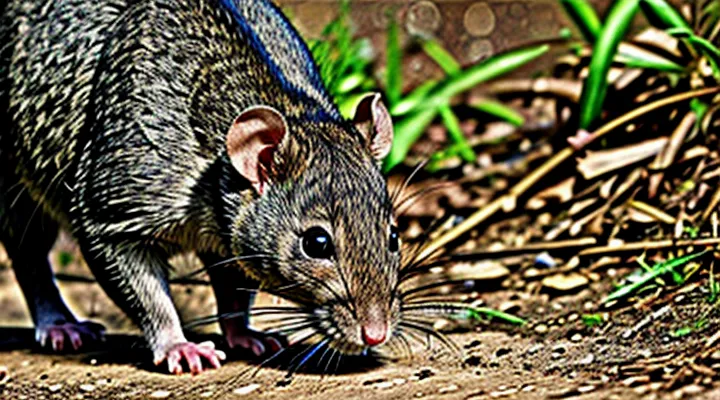
Introduction to Wild Rats
What Defines a Wild Rat?
Species of Wild Rats
Wild rats comprise several distinct species that occupy diverse ecosystems across continents. Each species adapts to specific environmental conditions, influencing its distribution and ecological niche.
- Rattus norvegicus (Norwegian rat) – thrives in temperate floodplains, riverbanks, and agricultural fields; frequently found near human settlements where water sources are abundant.
- Rattus rattus (Black rat) – prefers warm, humid regions such as tropical forests, mangroves, and coastal scrub; often nests in tree cavities and abandoned burrows.
- Rattus exulans (Polynesian rat) – inhabits island ecosystems, occupying coastal dunes, lowland forests, and cultivated gardens; demonstrates high tolerance for isolated habitats.
- Rattus argentiventer (Ricefield rat) – specialized for wetland environments, especially irrigated rice paddies and marshy lowlands; relies on dense vegetation for cover.
- Rattus tanezumi (Asian house rat) – occupies subtropical forests, shrublands, and cultivated areas; frequently encountered in secondary growth and human‑altered landscapes.
- Rattus fuscipes (Dusky rat) – restricted to arid and semi‑arid zones of Australia, favoring rocky outcrops, sand dunes, and sparse shrub cover.
These species illustrate the broad spectrum of natural habitats utilized by wild rats, ranging from aquatic margins and tropical canopies to arid interiors and isolated islands. Their presence reflects adaptability to both pristine ecosystems and environments modified by human activity.
Common Misconceptions About Rats
Rats are often portrayed as exclusively urban pests, yet their natural distribution extends across diverse ecosystems. Wild individuals occupy forests, grasslands, agricultural fields, coastal dunes, and mountainous regions. They construct burrows, nest in rock crevices, and use dense vegetation for shelter, demonstrating adaptability far beyond human‑made structures.
Common misconceptions and factual corrections:
-
Misconception: Rats live only in sewers and basements.
Fact: Many species thrive in open habitats, including prairie, scrubland, and forest understory, where they forage for seeds, insects, and plant material. -
Misconception: All rats are dirty and carry disease.
Fact: Wild rats maintain clean burrow systems, groom regularly, and only a minority harbor pathogens. Disease transmission to humans occurs primarily through specific interactions, not routine contact. -
Misconception: Rats are solitary creatures.
Fact: Social organization is typical; colonies form hierarchies, share nesting sites, and cooperate in foraging and predator avoidance. -
Misconception: Rats are aggressive toward humans.
Fact: Defensive aggression appears only when threatened or cornered. Normal behavior includes avoidance and nocturnal foraging. -
Misconception: Rats provide no ecological benefit.
Fact: They contribute to seed dispersal, soil aeration through digging, and serve as prey for numerous predators, influencing trophic dynamics.
Understanding the true ecological niche of wild rats clarifies their role in natural environments and dispels stereotypes that limit effective wildlife management.
Natural Habitats of Wild Rats
Preferred Environments
Forests and Woodlands
Wild rats frequently occupy forested and woodland environments, where diverse structural elements create stable microhabitats. The multilayered canopy, understory, and ground cover provide shelter, foraging opportunities, and protection from predators.
Key forest features that sustain rat populations include:
- Dense leaf litter that retains moisture and harbors insects and seeds.
- Fallen logs and standing dead trees offering cavities and crevices for nesting.
- Thickets of shrubbery that conceal movement and facilitate escape routes.
- Seasonal fruiting trees supplying high‑energy food sources.
Rats exploit a broad diet within these habitats, consuming seeds, nuts, fungi, invertebrates, and carrion. Seasonal abundance of fruit and mast drives population fluctuations, while the constant presence of detritus ensures year‑round sustenance.
Nesting strategies adapt to forest conditions. Individuals construct nests in burrows beneath leaf litter, line cavities within rotting wood, or occupy abandoned bird nests. Nest materials typically consist of grasses, twigs, and shredded bark, providing insulation against temperature extremes.
Common species found in forests and woodlands include the North American wood rat (Neotoma spp.), the brown rat (Rattus norvegicus) in temperate zones, and the black rat (Rattus rattus) in subtropical forests. Each species selects microhabitats that align with its foraging preferences and reproductive requirements, reinforcing the importance of forest complexity for wild rat survival.
Grasslands and Open Fields
Wild rats occupy extensive grassland ecosystems where vegetation provides both cover and foraging opportunities. The open terrain allows easy movement, while tall grasses and scattered shrubs create microhabitats that conceal nests from predators.
Nesting sites commonly occur in shallow burrows, abandoned rodent tunnels, or dense root mats. Burrows are typically 10–30 cm deep, lined with dried vegetation, and positioned near water sources such as seasonal puddles or irrigation ditches.
Food availability drives concentration in these areas. Rats exploit:
- Seeds and grains from native grasses and cultivated crops
- Insects and arthropods attracted to herbaceous plants
- Fallen fruit and plant debris
- Organic matter in soil surface layers
Predator pressure influences spatial patterns. Open fields expose rats to avian hunters, prompting nocturnal activity and the use of concealed burrows. Conversely, the abundance of cover in taller grasses reduces encounter rates with ground predators.
Seasonal changes affect population density. During dry periods, rats migrate toward irrigated fields or riparian zones within the grassland matrix, while spring growth of vegetation expands breeding sites and food supplies.
Wetlands and Coastal Areas
Wild rats inhabit a range of aquatic and semi‑aquatic environments, with wetlands and coastal zones providing essential resources for survival. These habitats supply abundant water, dense vegetation, and plentiful food sources such as insects, seeds, and small invertebrates.
In marshes, swamps, and riparian floodplains, species like the marsh rat (Myodes gapperi) and the rice field rat (Rattus argentiventer) construct nests among reeds, cattails, and root mats. The proximity to standing water enables efficient foraging for aquatic insects and crustaceans, while the cover offered by emergent plants reduces predation risk.
Coastal dunes, salt‑marsh edges, and tidal flats support populations of water‑adapted rodents, including the coastal water rat (Nectomys spp.) and the beach rat (Rattus norvegicus). These mammals exploit the intertidal zone during low tide, feeding on mollusk larvae, carrion, and plant detritus. Burrows are often situated just above the high‑tide line, allowing quick retreat from rising waters.
Key ecological functions observed in these settings:
- Food acquisition: Direct access to aquatic prey and terrestrial seeds.
- Shelter: Use of dense vegetation and burrow systems for protection.
- Reproduction: High humidity and abundant material for nest building increase breeding success.
- Dispersal: Water currents and tidal movements facilitate range expansion along shorelines.
Adaptations that enable rats to thrive in wetland and coastal ecosystems include waterproof fur, elongated hind limbs for swimming, and a keen sense of smell for locating food underwater. Seasonal fluctuations in water level drive behavioral adjustments, such as temporary relocation to higher ground during floods.
Overall, wetlands and coastal regions constitute critical habitats that sustain diverse wild rat populations through a combination of resource availability, protective structure, and physiological adaptations.
Factors Influencing Habitat Choice
Availability of Food and Water
Wild rats thrive in environments where edible material and hydration are consistently accessible. Moist soils, leaf litter, and decaying vegetation provide a steady supply of seeds, insects, and plant matter, while proximity to water sources reduces the energy cost of hydration.
- Seeds from grasses and herbaceous plants
- Invertebrates such as beetles, larvae, and worms
- Fruit remnants and fallen nuts
- Fungal mycelium and spores
- Human‑derived waste, including grain spillage and discarded food
Freshwater availability shapes settlement patterns. Natural reservoirs, such as puddles, streams, and dew‑laden vegetation, sustain daily intake, whereas temporary water collections support seasonal population spikes.
- Shallow pools formed by rain runoff
- Perennial streams and creeks
- Moisture retained in mosses and lichens
- Waterlogged root systems
- Anthropogenic sources like irrigation ditches and drainage canals
Resource abundance directly influences density and range. Areas with overlapping food and water supplies host larger colonies, while scarce provisions limit occupancy to marginal niches. Consequently, the distribution of wild rats aligns closely with the spatial arrangement of these essential resources.
Shelter and Protection from Predators
Wild rats occupy a variety of natural shelters that reduce exposure to predators and harsh weather. Burrows excavated in soft soil provide underground refuge; they often feature multiple chambers, escape tunnels, and reinforced walls that impede entry by snakes, birds of prey, and mammals. In dense vegetation, rats construct nests from grasses, leaves, and twigs, positioning them low to the ground and concealed by foliage. Rocky outcrops and crevices serve as permanent hideouts, offering protection from aerial and terrestrial hunters. Abandoned burrows of other small mammals are frequently repurposed, extending the network of safe sites without additional excavation effort.
Protection strategies complement shelter selection. Rats are primarily nocturnal, limiting activity to periods when many predators are less active. When foraging, individuals emit short alarm chirps that trigger immediate retreat to nearby cover. Group living enhances vigilance; colony members rotate sentinel duties, scanning for threats while others feed. Burrow architecture includes narrow entrances that allow rapid escape while restricting predator access. In open areas, rats exploit ground cover such as fallen leaves, mulch, or debris to mask movement and reduce visual detection.
Key shelter types:
- Underground burrows with multiple exits
- Leaf and grass nests hidden in dense undergrowth
- Rock crevices and fissures
- Reused tunnels of other small mammals
Primary defensive behaviors:
- Nocturnal foraging schedule
- Alarm vocalizations prompting collective retreat
- Sentinel rotation within colonies
- Use of narrow burrow entrances to limit predator entry
These adaptations enable wild rats to persist across diverse ecosystems while minimizing predation risk.
Climate and Temperature Considerations
Wild rats occupy environments where temperature and moisture levels remain within ranges that support their physiological processes and reproductive cycles. In temperate zones, seasonal fluctuations dictate shelter selection; rats seek burrows, rock crevices, or dense vegetation that buffer extreme cold and heat. Summer heat drives them to cooler microhabitats such as shaded leaf litter or underground tunnels, while winter cold prompts occupation of insulated nests built from plant material or abandoned mammal burrows.
Key climate factors influencing distribution include:
- Minimum winter temperature: populations decline where prolonged sub‑zero conditions exceed rats’ tolerance for frost without adequate shelter.
- Maximum summer temperature: areas with sustained temperatures above 35 °C limit activity unless reliable shade or water sources are present.
- Precipitation pattern: moderate rainfall sustains vegetation cover and soil moisture, creating stable nesting sites; excessive flooding forces relocation to higher ground.
- Humidity: moderate to high humidity reduces dehydration risk, supporting foraging efficiency.
In arid regions, rats adapt by exploiting oasis‑like microclimates, such as riparian corridors or underground aquifers, where temperature remains lower and moisture is available. Conversely, in tropical rainforests, consistently warm and humid conditions allow year‑round breeding, but high rainfall can inundate ground nests, prompting use of elevated structures like fallen logs or tree hollows.
Overall, climate envelopes define the geographic limits of wild rat populations, with temperature extremes and moisture availability determining the suitability of specific habitats for survival and reproduction.
Rat Nests and Burrows
Construction and Design
Underground Burrows
Wild rats commonly inhabit subterranean systems they excavate themselves. These tunnels are typically found in loose, well‑drained soils near sources of food such as grain fields, orchards, or riverbanks. The entrance often lies concealed by vegetation or debris, reducing detection by predators.
The architecture of a rat burrow includes several distinct sections:
- Vertical shafts: 30–60 cm deep, allowing rapid escape and ventilation.
- Horizontal tunnels: 1–3 m long, connecting multiple chambers and providing routes to foraging areas.
- Nest chambers: lined with shredded plant material, fur, or soft debris, serving as resting and breeding sites.
- Larder chambers: storage spaces for collected seeds, insects, or carrion.
Burrow depth and complexity vary with soil composition and climate. In temperate regions, rats deepen shafts during winter to maintain stable temperatures, while in arid zones they construct shallow networks to avoid excessive heat. Moisture levels influence tunnel stability; excessive water can cause collapse, prompting relocation.
Construction proceeds through continuous gnawing and clawing. Front incisors cut through soil, while forelimbs excavate and push debris outward. Rats reinforce walls with compacted soil and occasional use of saliva to bind particles, enhancing structural integrity.
Predator avoidance and disease control are primary benefits of underground habitation. Burrows conceal movement, limit exposure to aerial hunters, and isolate the colony from external parasites. Additionally, the microclimate within tunnels reduces pathogen proliferation by maintaining moderate humidity and temperature.
Overall, underground burrows represent an adaptive solution that enables wild rats to exploit diverse ecosystems while mitigating environmental risks.
Above-Ground Nests
Wild rats frequently construct nests above the ground to escape flood‑prone burrows, avoid soil predators, and exploit seasonal resources. These structures are built in a range of environments, from dense vegetation to human‑altered landscapes, and provide thermal insulation and concealment.
Typical characteristics of above‑ground nests include:
- Location: dense shrub thickets, tall grasses, hollow stems, low tree branches, abandoned bird nests, and debris piles near human settlements.
- Materials: dried grasses, leaves, twigs, moss, shredded bark, and occasionally anthropogenic items such as fabric scraps or paper.
- Construction: a loosely woven outer layer surrounds a compact core of softer material, creating a pocket that retains heat and moisture.
- Seasonal adaptation: in winter, nests become denser and incorporate insulating substances; in summer, they remain open to facilitate ventilation.
The choice of an elevated nest reduces competition with ground‑dwelling rodents, limits exposure to flooding, and positions the colony near foraging opportunities such as seed heads, insects, and discarded human food. Predation pressure shifts upward, favoring concealment and rapid escape routes rather than reliance on subterranean tunnels.
Materials Used for Nesting
Natural Debris
Wild rats occupy a variety of outdoor settings, and natural debris forms a fundamental element of these environments. Fallen leaves, twigs, and accumulated litter on forest floors create concealed pathways and nesting spaces. In grasslands, clumps of dead vegetation provide shelter from predators and extreme weather, while in riparian zones, submerged plant matter supplies both cover and foraging opportunities.
Key types of natural debris that support rat habitation include:
- Leaf litter: dense layers retain moisture and conceal burrow entrances.
- Coarse woody debris: logs and branches offer structural stability for tunnel systems.
- Moss and lichens: retain humidity, facilitating thermoregulation.
- Decaying roots and stumps: create cavities suitable for nesting and food storage.
These materials collectively enhance habitat complexity, allowing rats to exploit microhabitats, avoid detection, and maintain stable body temperatures. Their presence also attracts insects and seeds, expanding the rats’ dietary options. Consequently, the distribution of natural debris directly influences the density and persistence of wild rat populations across diverse ecosystems.
Man-Made Materials
Wild rats often exploit environments altered by human activity, even when those settings intersect with natural ecosystems. Man‑made materials provide shelter, nesting sites, and food sources that complement the species’ inherent adaptability.
Commonly utilized artificial substrates include:
- Discarded plastic containers and bags, which create insulated cavities.
- Wooden pallets and crates, offering structural gaps for burrowing.
- Metal debris such as corrugated sheets, delivering protected crevices.
- Concrete structures with cracks or voids, serving as permanent dens.
These items appear alongside natural features such as leaf litter, burrows, and rocky outcrops. The presence of artificial resources can increase local rat density, extend the range of populations, and facilitate movement between habitats. Consequently, the distribution of wild rats in the wild is shaped not only by natural elements but also by the availability of human‑generated materials.
Adaptations for Survival in the Wild
Diet and Foraging Habits
Omnivorous Nature
Wild rats occupy a range of natural environments, including forests, grasslands, wetlands, and rocky outcrops. Their presence in these habitats is closely linked to the availability of diverse food sources, which reflects their omnivorous feeding strategy.
The diet of wild rats comprises:
- Seeds and grains harvested from herbaceous plants.
- Fruits and berries that fall to the forest floor.
- Invertebrates such as insects, larvae, and earthworms.
- Small vertebrates, including amphibians and nestling birds, when opportunistic.
- Organic detritus, carrion, and fungal material.
This broad spectrum of consumables enables rats to exploit seasonal fluctuations in resource abundance. In forested areas, they rely heavily on seed caches and fallen fruit, while in grasslands they supplement plant matter with insects uncovered by grazing mammals. Wetland margins provide access to aquatic invertebrates and amphibian prey, whereas rocky habitats offer shelter and occasional carrion.
The ability to digest both plant and animal matter reduces competition with specialist feeders and supports high population densities across varied ecosystems. Consequently, the omnivorous nature of wild rats underpins their successful colonization of virtually any natural setting where food complexity is present.
Scavenging Behaviors
Wild rats occupy diverse natural settings such as deciduous and coniferous forests, grasslands, riparian zones, and the edges of agricultural fields. In each environment, they rely on the ability to locate and exploit a wide range of food sources that are not actively hunted or cultivated.
Scavenging provides the primary means of acquiring nutrients when prey is scarce. Their diet includes:
- Carrion from small mammals, birds, and reptiles.
- Insect larvae and adult insects found in leaf litter or soil.
- Fallen fruits, seeds, and tubers.
- Plant detritus and fungal mycelia.
- Human‑derived waste deposited near settlements or along trails.
Through these activities, rats accelerate decomposition, redistribute organic matter, and influence seed germination patterns. Their consumption of diseased carcasses can reduce pathogen loads, while occasional predation on arthropods helps regulate insect populations.
Physiological and behavioral traits support efficient scavenging. Acute olfactory receptors detect volatile compounds released by decaying matter. Strong, continuously growing incisors allow processing of tough tissues. Nocturnal foraging reduces competition with diurnal predators, and a flexible social structure enables rapid information transfer about food locations.
Social Structures
Colony Living
Wild rats establish colonies in a variety of natural settings, selecting sites that provide shelter, food access, and protection from predators. Colonies consist of interconnected burrows or nests that house multiple individuals, often including breeding pairs, juveniles, and subordinate members. Social cohesion is maintained through scent marking, vocalizations, and grooming, which facilitate cooperation in foraging and defense.
Typical environments where these groups thrive include:
- Underground burrow systems beneath grasslands or agricultural fields
- Dense leaf litter and root mats in forest understories
- Hollow logs or fallen timber in woodland areas
- Rock crevices and scree slopes in arid or mountainous regions
Colony structure enhances reproductive success. A dominant breeding pair usually produces several litters each year, while subordinate rats assist in nest maintenance and juvenile care. This division of labor reduces individual workload and increases overall colony resilience.
Resource sharing within the group mitigates competition. Food caches are collectively stored, and members communicate the location of abundant sources through pheromone trails. Such cooperation enables colonies to persist in fluctuating environments, ensuring that wild rats maintain a stable presence across diverse natural habitats.
Territoriality
Wild rats occupy a range of natural environments, from temperate woodlands to arid scrublands. Their distribution depends on the availability of shelter, food sources, and water. In forested areas, rats nest in burrows beneath leaf litter, fallen logs, or within dense root systems. In grasslands, they create shallow tunnels beneath vegetation, often near rodent colonies that provide communal benefits.
Territorial behavior regulates the use of these habitats. Adult males establish and defend exclusive zones that encompass feeding sites, nesting chambers, and water access points. Females typically maintain smaller, overlapping ranges centered around reproductive nests. Boundary marking relies on scent deposits, vocalizations, and physical aggression, which reduce intrusions and limit resource competition.
Key characteristics of rat territories include:
- Size variation from 10 m² in resource‑rich zones to over 100 m² in sparse landscapes.
- Core area containing the primary nest and immediate foraging routes.
- Peripheral zones used for occasional foraging excursions and predator avoidance.
- Seasonal adjustment, with expansion during abundant periods and contraction during scarcity.
Population density correlates with territorial stability. High‑density clusters exhibit clear hierarchical structures, where dominant individuals occupy prime locations, while subordinate rats occupy peripheral or less favorable patches. This spatial organization enables efficient exploitation of natural habitats while minimizing conflict.
Reproductive Strategies
Rapid Breeding Cycles
Wild rats thrive in diverse ecosystems because their reproductive strategy maximizes population turnover. Females reach sexual maturity as early as five weeks, allowing colonies to expand rapidly after colonisation of a new site. A single breeding season can produce up to five litters, each containing three to twelve pups, resulting in exponential growth under favourable conditions.
Key factors that accelerate breeding cycles in natural settings:
- Abundant food sources such as seeds, insects, and carrion reduce inter‑litter intervals to 21‑28 days.
- Warm, humid microclimates shorten gestation to 21 days and enhance pup survival.
- Minimal predation pressure in sheltered burrows or dense vegetation lowers stress‑induced reproductive suppression.
- Social structures that promote communal nesting facilitate rapid mate access and synchronized estrus.
These biological advantages enable wild rats to colonise a wide range of habitats—from forest floor litter and riverbanks to agricultural fields and urban green spaces—by quickly establishing dense populations that outcompete other small mammals for resources.
Parental Care
Wild rats occupy a range of natural environments, including grasslands, deciduous woods, riverbanks, and rocky outcrops. Within these settings they construct concealed nests from vegetation, burrow soil, or exploit hollow logs. Nest placement reflects the need for thermal stability and predator avoidance.
Parental care in these mammals follows a predictable sequence:
- Nest preparation – females gather dry stems, leaves, and shredded bark to line the chamber, ensuring insulation and moisture control.
- Gestation and parturition – a single litter, typically 6‑12 pups, is born after a 21‑day pregnancy.
- Lactation – mothers provide milk rich in protein and lipids for the first three weeks, adjusting composition as pups develop.
- Thermoregulation – the dam huddles with offspring, maintaining body temperature until juveniles achieve autonomous thermogenesis.
- Grooming – frequent licking removes debris and stimulates circulation, reducing infection risk.
- Protection – females remain vigilant, emitting alarm vocalizations and retreating to the burrow when threats arise.
- Weaning – solid food is introduced at 14‑18 days; mothers gradually reduce nursing frequency, encouraging independent foraging.
Male rats rarely participate in direct care but may defend the nesting area against intruders, indirectly supporting offspring survival. The combination of a secure nest, sustained nutrition, and vigilant maternal behavior enables young rats to reach independence within one month, preparing them for the diverse habitats they will later occupy.
Human Impact on Wild Rat Habitats
Habitat Loss and Fragmentation
Urbanization
Wild rats occupy a range of natural environments that differ markedly from the built‑up areas created by human settlement. Their preferred habitats include riverbanks, floodplains, dense vegetation, and abandoned burrows of other mammals. These locations provide shelter, abundant food sources, and opportunities for breeding.
Urban expansion reshapes these habitats through land conversion, fragmentation, and pollution. As agricultural fields and natural wetlands are replaced by roads, housing, and commercial structures, the continuity of suitable environments is disrupted. Remaining green spaces become isolated patches, limiting movement and increasing competition for resources.
Consequences of urbanization for wild rat populations are observable in several patterns:
- Reduction of core habitat size, leading to higher population density in remaining areas.
- Increased reliance on anthropogenic food waste, which alters diet composition.
- Greater exposure to predators such as domestic cats and urban raptors.
- Elevated stress levels associated with noise, light pollution, and human activity.
Mitigation measures focus on preserving riparian corridors, maintaining buffer zones around wetlands, and implementing green infrastructure that connects fragmented habitats. These actions sustain the ecological niches required by wild rats and diminish the pressure exerted by expanding urban landscapes.
Agricultural Expansion
Agricultural expansion reshapes the environments where wild rats are found. Converting forests, grasslands, and wetlands into croplands reduces the availability of natural shelter and foraging grounds. The loss of native vegetation forces rats to occupy marginal habitats, often closer to human settlements.
The process creates several direct effects:
- Habitat fragmentation isolates populations, limiting gene flow.
- Increased exposure to pesticides and rodenticides raises mortality rates.
- Dense crop rows provide new food sources, encouraging higher population densities in cultivated areas.
- Irrigation systems generate moist microhabitats that attract species adapted to damp conditions.
Adaptation to altered landscapes leads to a shift in distribution patterns. Populations that persist in remaining natural patches become dependent on field margins and hedgerows for cover. In regions where field edges are removed, rats increasingly occupy storage facilities, grain bins, and other anthropogenic structures.
Long‑term monitoring shows that sustained land conversion correlates with a decline in biodiversity within rat communities, favoring a few opportunistic species that thrive in agricultural settings. Management strategies that preserve buffer zones, maintain hedgerows, and limit pesticide use can mitigate habitat loss and support more balanced rat populations alongside crop production.
Coexistence and Conflict
Rats in Human-Dominated Landscapes
Rats have colonized environments heavily altered by humans, exploiting resources that are scarce or absent in undisturbed ecosystems. Their presence in cities, farms, and industrial zones reflects a capacity to thrive where shelter, food, and water are abundant and predictable.
- Sewage and drainage systems: Dark, moist tunnels provide permanent shelter and access to organic waste.
- Residential gardens and parks: Dense vegetation and compost piles offer nesting sites and diverse foraging options.
- Agricultural fields: Crops, grain storage, and irrigation channels supply high‑calorie food and cover from predators.
- Landfill sites and waste processing facilities: Large quantities of discarded food and refuse support rapid population growth.
- Transportation corridors: Bridges, tunnels, and roadside vegetation create linear habitats that facilitate movement and dispersal.
Key traits that enable exploitation of these habitats include an omnivorous diet, tolerance of high population densities, and the ability to reproduce continuously under favorable conditions. Nest construction adapts to available materials, ranging from shredded paper to dry vegetation, while social structures remain flexible, allowing solitary or communal living as conditions dictate.
The overlap between rat populations and human activity creates persistent challenges for public health and infrastructure. Effective management requires targeted sanitation, structural maintenance of underground networks, and monitoring of population dynamics to mitigate disease transmission and material damage.
Pest Control and Conservation Efforts
Wild rats occupy a spectrum of natural environments, including forests, grasslands, riverbanks, and agricultural fields. Their presence influences soil aeration, seed dispersal, and the food web, yet high densities can jeopardize crops and human health. Managing these populations requires a balance between reducing damage and preserving ecological functions.
Effective pest control combines direct reduction techniques with habitat‑based strategies.
- Trapping and baiting target individuals that threaten specific sites; placement follows rigorous monitoring to avoid non‑target capture.
- Biological agents, such as predatory birds or rodent‑specific pathogens, lower numbers while maintaining natural predator‑prey dynamics.
- Habitat modification reduces shelter availability: clearing dense ground cover, managing waste, and controlling water sources diminish breeding sites without eliminating essential ecosystem components.
Conservation efforts focus on protecting species that rely on rat activity for food or nesting. Maintaining corridors of native vegetation supports predators that naturally regulate rat populations, reducing the need for chemical interventions. Monitoring programs record population trends, enabling adaptive management that aligns agricultural productivity with biodiversity objectives.
Integrated approaches that coordinate chemical, biological, and environmental measures achieve sustainable outcomes. By aligning pest reduction with ecosystem stewardship, stakeholders protect both human interests and the integrity of natural habitats where wild rats reside.