
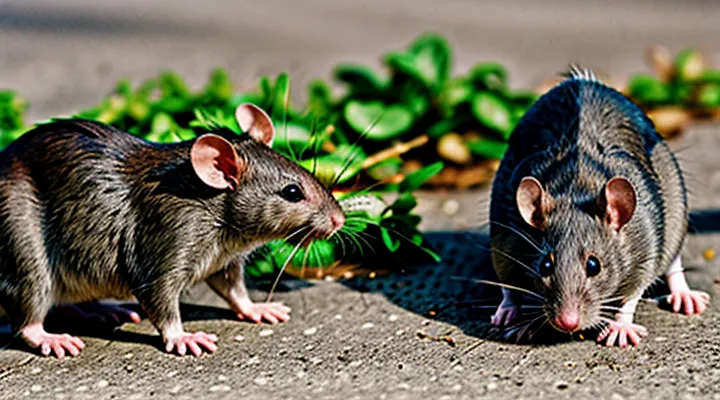
Understanding the Problem: Why Rats Refuse Poison
The Evolution of Poison Aversion
Behavioral Adaptations
Rats frequently reject toxic baits because of innate wariness toward unfamiliar substances and learned avoidance behaviors. This resistance undermines conventional poisoning strategies and requires a nuanced understanding of rodent behavior.
Key behavioral adaptations include:
- Strong neophobia, causing immediate rejection of novel food items.
- Conditioning after sub‑lethal exposure, leading to long‑term bait aversion.
- Social transmission of avoidance cues through scent marks and grooming.
- Preference for specific food textures and flavors, diminishing attraction to standard poison formulations.
- Opportunistic foraging patterns that prioritize safe, familiar sources over risky offerings.
Effective countermeasures rely on exploiting these traits rather than confronting them directly. Recommended actions are:
- Introduce non‑lethal pre‑bait that mimics the target food, establishing familiarity before adding toxic agents.
- Rotate active ingredients and delivery matrices to prevent recognition of a single poison type.
- Incorporate potent attractants such as grain or fruit extracts to override neophobic responses.
- Combine poisoning with habitat modification, reducing shelter availability and forcing rodents to explore new food sources.
- Monitor bait uptake continuously, adjusting placement and formulation based on observed acceptance rates.
By aligning control tactics with the rats’ adaptive behaviors, pest managers can increase bait consumption and improve overall efficacy.
Genetic Resistance
Genetic resistance in rodent populations emerges when individuals inherit mutations that diminish the efficacy of toxic baits. These mutations often affect the target site of anticoagulant rodenticides, reducing binding affinity and allowing rats to survive doses that would otherwise be lethal. The spread of resistant alleles accelerates under repeated exposure to the same chemical, creating a self‑reinforcing cycle of reduced control success.
Resistance monitoring relies on biochemical assays and molecular diagnostics that detect known mutations, such as those in the Vkorc1 gene. Early identification of resistant cohorts enables timely adjustment of management tactics, preventing widespread treatment failure. Data collection should include geographic distribution, bait consumption rates, and mortality outcomes to inform predictive models.
Effective response strategies include:
- Rotating active ingredients with distinct modes of action to interrupt selection pressure.
- Integrating non‑chemical measures, such as habitat modification and exclusion devices, to lower reliance on poison.
- Employing bait stations that deliver sub‑lethal doses only to susceptible individuals, preserving vulnerable genotypes.
- Conducting periodic resistance testing to verify the continued suitability of chosen toxins.
Sustained efficacy of rodent control programs depends on recognizing genetic resistance as a dynamic factor and implementing adaptive, evidence‑based interventions.
Common Mistakes in Rodent Control
Insufficient Bait Stations
Insufficient bait stations limit exposure to rodenticide, allowing rats to avoid lethal doses. When placement density falls below recommended levels, individuals may encounter untreated zones, maintain sub‑lethal consumption, and develop bait aversion.
Key consequences include:
- Reduced overall mortality rates
- Prolonged infestations
- Increased risk of secondary poisoning in non‑target species
Remedial actions:
- Conduct a systematic survey of the premises to identify gaps in coverage.
- Increase station count to meet the guideline of one station per 100 sq ft of infested area.
- Distribute stations uniformly, ensuring accessibility from all travel routes.
- Verify station integrity regularly; replace damaged units promptly.
- Document station locations and maintenance dates for ongoing evaluation.
Incorrect Bait Placement
Incorrect bait placement dramatically reduces the likelihood that rodents will encounter toxic material. Rats tend to avoid unfamiliar or inaccessible locations, rendering the poison ineffective.
Typical placement errors include:
- Positioning bait on smooth surfaces where rats cannot grip.
- Locating bait near strong odors that mask the scent of the attractant.
- Placing bait in open areas exposed to weather, causing dilution or runoff.
- Setting bait too close to human activity, prompting avoidance.
Corrective measures:
- Secure bait on rough, insulated surfaces such as wood or cardboard.
- Choose concealed sites along established runways, behind appliances, or within wall voids.
- Shield bait with weather‑proof covers that allow scent diffusion but prevent moisture entry.
- Locate bait at least several feet from frequent human traffic, using low‑traffic corridors favored by rodents.
Consistent evaluation of bait placement, combined with strategic positioning, restores the intended efficacy of rodenticides.
Substandard Bait Quality
Substandard bait quality undermines efforts to counteract rodent poison avoidance. Degraded active ingredients, incorrect moisture levels, and inadequate palatability reduce the likelihood that rats will ingest the product, leading to persistent infestations and wasted resources.
Typical indicators of poor bait include:
- Active ingredient concentration below label specifications;
- Excessive moisture causing clumping or spoilage;
- Unpleasant odor or taste that deters feeding;
- Expiration date surpassed or storage conditions compromised;
- Inconsistent particle size affecting delivery.
Effective response requires sourcing bait from reputable manufacturers, verifying batch integrity before deployment, storing in a cool, dry environment, and conducting limited‑area acceptance trials to confirm consumption. Continuous monitoring of bait performance ensures rapid adjustment if rats continue to reject the formulation.
Ignoring Environmental Factors
Rats often reject toxic baits when surrounding conditions favor alternative food sources or provide comfortable shelter. Overlooking such environmental variables reduces the likelihood of successful control and can lead to repeated bait failures.
- Abundant accessible food diminishes bait attractiveness.
- Warm, dry locations encourage nesting and activity near bait stations.
- Strong odors from cleaning agents or competing scents mask poison cues.
- Structural gaps and clutter create escape routes and hideouts.
Assessing the habitat before deploying poison is essential. Identify and eliminate unsecured food storage, seal entry points, and remove debris that offers refuge. Adjust bait placement to areas with limited alternative nourishment and stable microclimates. Regular monitoring of temperature and humidity helps predict bait acceptance patterns.
- Conduct a thorough inspection of the premises.
- Reduce clutter and seal cracks.
- Store waste in sealed containers.
- Position bait away from strong competing odors.
- Record environmental readings and adapt bait strategy accordingly.
Integrating these measures addresses the root causes of bait avoidance, increasing the effectiveness of rodent control initiatives.
Strategies for Effective Rodent Management
Integrated Pest Management (IPM) Principles
Inspection and Monitoring
Inspection and monitoring constitute the backbone of any effective response to rodents that reject toxic baits. Regular visual surveys identify entry points, nesting sites, and foraging trails. Detecting fresh droppings, gnaw marks, or urine stains signals active infestation and guides subsequent actions.
Key elements of an inspection program include:
- Systematic perimeter walk‑throughs at least twice weekly, focusing on concealed areas such as wall voids, under appliances, and storage compartments.
- Use of non‑toxic tracking media (e.g., powdered chalk, fluorescent dust) applied to suspected pathways; subsequent footprints reveal movement patterns.
- Placement of motion‑activated cameras to verify nocturnal activity and to assess bait acceptance rates.
- Documentation of all findings in a standardized log, noting date, location, and intensity of signs.
Monitoring continues after initial control measures. Frequent checks of bait stations confirm whether rodents are consuming the offered poison or avoiding it altogether. If avoidance persists, rotate active ingredients, adjust station density, or incorporate alternative delivery methods such as bait blocks or tamper‑resistant stations.
Data collected during inspection and monitoring enable rapid adjustment of the control strategy, ensuring that resources are directed toward the most problematic zones and that any resurgence is detected before it escalates.
Sanitation and Exclusion
Effective control of rodent populations that reject toxic baits relies on two complementary pillars: rigorous sanitation and strategic exclusion.
Sanitation eliminates attractants that encourage foraging. Key actions include:
- Removing food residues from floors, countertops and storage areas.
- Securing waste in sealed containers and disposing of it regularly.
- Cleaning spills promptly and maintaining dry conditions in kitchens and pantries.
- Eliminating standing water and damp debris that provide hydration sources.
Exclusion prevents rodents from entering premises where bait placement is intended. Essential measures consist of:
- Inspecting building envelopes for gaps larger than ¼ inch and sealing them with steel wool, caulk or metal flashing.
- Installing door sweeps and weather stripping on all exterior doors.
- Repairing damaged screens, vents and utility penetrations.
- Ensuring that utility lines, pipes and cables pass through protected sleeves rather than open openings.
When sanitation removes food and water incentives and exclusion blocks access routes, the likelihood that rodents will encounter and consume poison increases dramatically. Combining these practices creates an environment where toxic baits become the most viable food option, thereby enhancing overall pest‑management efficacy.
Non-Toxic Methods
Non‑toxic approaches provide effective alternatives when chemical baits prove ineffective. Physical barriers prevent entry by sealing gaps larger than a quarter of an inch, installing metal mesh around vents, and reinforcing door sweeps. Habitat modification reduces shelter by removing clutter, storing food in sealed containers, and maintaining clean gutters.
- Snap traps equipped with a spring mechanism deliver immediate results without chemicals.
- Live‑capture traps allow relocation, provided release occurs far from residential areas to avoid re‑infestation.
- Ultrasonic emitters emit high‑frequency sound waves that disrupt rodent communication; placement near walls and entry points maximizes coverage.
- Natural repellents such as peppermint oil, cayenne pepper, or crushed garlic create an unfavourable scent environment; regular reapplication sustains efficacy.
- Predatory encouragement, for example installing owl nesting boxes, introduces natural enemies that deter rodent activity.
Monitoring devices, including motion‑activated cameras, record activity patterns and guide targeted interventions. Combining exclusion, sanitation, and mechanical removal creates a comprehensive strategy that eliminates reliance on toxic substances while maintaining a safe environment for occupants.
Advanced Baiting Techniques
Pre-Baiting Strategies
Pre‑baiting prepares rodents for subsequent toxic baits by establishing a reliable feeding pattern before poison is introduced. The approach minimizes bait aversion and increases the likelihood of lethal ingestion.
Effective pre‑baiting follows a systematic sequence:
- Identify active runways, nests, and foraging zones through visual inspection, droppings, and gnaw marks.
- Deploy non‑toxic, highly palatable food items (e.g., grain, peanut butter, dried fruit) in bait stations positioned along confirmed pathways.
- Use a consistent feeding schedule; replenish stations daily to reinforce the association between the station and food availability.
- Gradually reduce the size of the non‑toxic feed while maintaining station presence, encouraging rats to explore the bait area more thoroughly.
- Introduce a low‑dose, slow‑acting anticoagulant in the final stage, ensuring the bait remains attractive and the rodents are already conditioned to consume the offered material.
Monitoring includes regular inspection of bait stations for consumption rates, checking for signs of secondary food sources, and adjusting placement based on observed activity patterns. Consistent pre‑baiting reduces the chance that rats will reject poisoned bait, thereby enhancing overall control efficacy. «Effective pre‑baiting reduces bait shyness and supports rapid population decline».
Rotation of Baits
Rats that develop resistance to a single toxic formulation quickly reduce the effectiveness of control programs. Rotating baits prevents habituation by regularly introducing new active ingredients and delivery matrices, thereby maintaining lethal appeal.
Rotation involves alternating between anticoagulant, bromadiolone, and chlorophacinone formulations, as well as varying grain or wax carriers. Changing the chemical class every 2–3 weeks disrupts learned avoidance, while alternating carriers prevents sensory habituation.
Implementation steps:
- Identify at least three approved bait types with distinct active ingredients.
- Establish a calendar that assigns each bait to a specific 14‑day interval.
- Record placement dates, locations, and observed rodent activity.
- Replace exhausted or contaminated baits with the next scheduled type.
Continuous monitoring is essential. Track consumption rates and mortality data; if a bait shows reduced uptake, adjust the rotation frequency or introduce an alternative formulation. Documentation of trends supports evidence‑based decisions and minimizes the risk of widespread bait aversion.
Strategic Placement for Maximum Impact
Effective rodent control requires precise positioning of toxic baits to overcome avoidance behavior. Placement must consider travel pathways, shelter proximity, and food sources. Targeted locations increase encounter rates and reduce waste.
- Identify primary runways: narrow passages along walls, under appliances, and beneath furniture where rodents move frequently.
- Position bait stations near nesting sites: within 1–2 feet of known burrows, but out of direct predator sight lines.
- Use concealed containers: opaque, tamper‑resistant units placed at ground level to prevent visual detection.
- Align bait with natural foraging patterns: near discarded food debris, waste bins, and pantry edges.
- Rotate stations weekly: relocate to alternate points along the same runway to prevent habituation.
Environmental factors influence success. Moisture‑prone areas should be avoided to preserve bait potency. Seasonal temperature shifts may alter rodent activity; adjust placement timing accordingly. Regular monitoring of consumption data informs fine‑tuning of station density and spacing.
Strategic deployment reduces the number of ineffective applications, minimizes non‑target exposure, and accelerates population decline. Consistent adherence to these placement principles yields measurable improvement in control outcomes.
Professional Intervention
When to Call an Expert
Rats that ignore poison present a serious risk to health and property. Recognizing the point at which professional assistance becomes essential prevents ineffective DIY attempts and limits damage.
Key indicators that an expert should be engaged include:
- Persistent presence of rats despite repeated bait placement.
- Evidence of bait avoidance, such as untouched poison stations.
- Signs of infestation in hard‑to‑reach areas (wall voids, attics, crawl spaces).
- Rapid population growth, indicated by multiple sightings within a short period.
- Concerns about secondary poisoning of non‑target animals or children.
- Legal or regulatory requirements for pest control in commercial or rental properties.
When any of these conditions are observed, contacting a licensed pest‑management professional ensures proper assessment, selection of appropriate control methods, and compliance with safety standards. Professionals can conduct thorough inspections, identify resistant species, and implement integrated strategies that combine bait, traps, and exclusion techniques. Prompt expert intervention reduces the likelihood of prolonged exposure to disease vectors and minimizes long‑term economic loss.
Benefits of Professional Services
When rodent populations reject toxic baits, relying on trained specialists becomes essential. Professional pest‑control firms bring calibrated knowledge of rodent behavior, allowing rapid identification of alternative control methods that match the specific resistance patterns observed.
Benefits include:
- Accurate assessment of infestation scope, preventing unnecessary chemical use.
- Implementation of integrated strategies, combining traps, habitat modification, and targeted baits.
- Compliance with health‑safety regulations, reducing liability for property owners.
- Continuous monitoring and documentation, ensuring long‑term effectiveness.
- Access to certified products and equipment, guaranteeing consistent performance.
Engaging experts minimizes waste of resources, safeguards non‑target species, and restores control over the problem with measurable outcomes. «Effective intervention relies on expertise, not trial and error».