
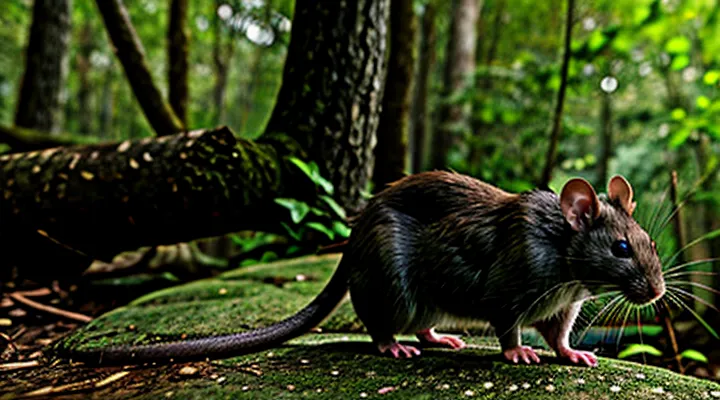
Rat Species in Forest Ecosystems
Common Forest Rat Species
Black Rat («Rattus rattus»)
The black rat (Rattus rattus) occupies forest edges, canopy layers, and riparian corridors where dense vegetation offers shelter and foraging opportunities. Individuals prefer arboreal routes, constructing nests in tree hollows, dense shrubbery, or abandoned bird nests. This spatial preference reduces direct competition with strictly terrestrial rodents.
Key ecological traits include:
- Dietary breadth: omnivorous, consuming fruits, seeds, insects, and occasional carrion; seasonal shifts align with resource availability.
- Reproductive capacity: up to five litters per year, average litter size 5‑7; gestation lasts 21‑23 days, enabling rapid population growth under favorable conditions.
- Dispersal behavior: juveniles exhibit long‑distance climbing and gliding between trees, facilitating colonization of adjacent forest patches.
- Predator‑prey interactions: serve as prey for raptors, small carnivores, and snakes; also act as opportunistic predators of invertebrates and eggs, influencing arthropod communities.
- Disease reservoir: carriers of several zoonotic pathogens (e.g., Leptospira, hantaviruses), potentially transmitting infections to wildlife and humans in proximity to forested areas.
Impact on forest ecosystems manifests through seed predation and dispersal, alteration of understory composition, and indirect effects on pollinator dynamics. High densities can suppress regeneration of certain tree species by consuming seedlings, while occasional seed transport may aid colonization of distant sites.
Management recommendations focus on habitat modification that limits arboreal nesting sites, such as removal of dead wood and control of dense shrub layers near human settlements, combined with targeted trapping in corridors linking forest fragments. Monitoring population trends via live‑trapping grids and genetic sampling provides data for adaptive management strategies.
Brown Rat («Rattus norvegicus»)
The brown rat (Rattus norvegicus) occupies a wide range of forest ecosystems, from temperate woodlands to riparian corridors. Individuals establish burrow systems beneath leaf litter, fallen logs, or in soft soil, often near water sources that provide both hydration and prey abundance. These subterranean nests protect against predators and extreme weather while facilitating social interactions among colony members.
In forest settings, brown rats display omnivorous feeding habits. Their diet includes:
- Seeds and nuts harvested from the canopy or ground layer
- Invertebrates such as beetles, worms, and larvae found in decaying organic matter
- Small vertebrates, including amphibians and nestlings, when opportunistic
- Anthropogenic food items when human activity introduces waste into the habitat
Seasonal fluctuations in resource availability drive shifts in foraging patterns, with increased reliance on plant material during autumn and heightened predation on invertebrates in spring.
Reproductive cycles are closely linked to environmental conditions. Females can produce up to five litters per year, each consisting of three to twelve offspring. The breeding season peaks when temperature and food supply are optimal, typically from late spring to early fall. Rapid juvenile growth, coupled with high fecundity, enables populations to expand quickly after disturbances such as canopy gaps or flood events.
Territorial behavior is mediated through scent marking and vocalizations. Males patrol overlapping ranges, defending access to females and high‑quality foraging sites. Social hierarchies within colonies influence mating opportunities and resource allocation, reducing intra‑specific competition while maintaining population stability in the forest matrix.
Native Forest Rat Species
Native forest rat species occupy a range of temperate and tropical woodlands, each adapted to specific microhabitats such as leaf litter, fallen logs, and canopy understory. Their morphological traits—robust incisors, dense fur, and elongated tails—facilitate climbing, burrowing, and thermoregulation within the shaded environment.
Key representatives include:
- Eurasian wood mouse (Apodemus sylvaticus) – omnivorous, favors deciduous forests; high reproductive output with multiple litters per year.
- Northern red-backed vole (Myodes rutilus) – herbivorous, prefers coniferous stands; forms small family groups that defend overlapping territories.
- Southern bush rat (Rattus fuscipes) – opportunistic feeder on seeds, insects, and fungi; exhibits nocturnal foraging and dense nesting colonies in hollow logs.
- Amazonian forest rat (Nectomys squamipes) – semi-aquatic, inhabits riparian zones; relies on aquatic invertebrates and plant material, displays strong site fidelity.
Dietary flexibility allows these rodents to influence seed dispersal, insect population control, and nutrient cycling. Foraging behavior typically involves short, rapid movements through understory vegetation, punctuated by periods of caching or hoarding. Social organization varies: some species maintain solitary territories, while others establish cooperative breeding groups that share nest sites and parental duties.
Reproductive cycles align with seasonal resource availability; gestation periods range from 20 to 30 days, and litter sizes average three to six offspring. Juveniles attain independence within weeks, contributing to high turnover rates that sustain population resilience. Predation pressure from raptors, snakes, and small carnivores shapes anti‑predator adaptations such as cryptic coloration and alarm vocalizations.
Conservation assessments reveal that habitat fragmentation and logging pose the greatest threats to forest-dwelling rats. Species with limited distribution, such as the Amazonian forest rat, exhibit heightened vulnerability, whereas widespread taxa like the Eurasian wood mouse maintain stable populations under moderate disturbance. Effective management requires preservation of continuous canopy cover, protection of deadwood resources, and maintenance of riparian corridors to support the ecological functions these rodents provide.
Adaptations to Forest Environment
Physical Adaptations
Forest‑dwelling rats exhibit a suite of morphological traits that facilitate survival in densely vegetated environments. Compact bodies reduce exposure to predators while allowing movement through narrow burrows and leaf litter. Muscular forelimbs and elongated claws provide grip on bark and roots, enabling vertical climbing and foraging on arboreal substrates.
Sensory adaptations enhance detection of food and threats. Enlarged auditory bullae amplify low‑frequency sounds typical of forest acoustics, and a high density of vibrissae transmits tactile information across complex ground cover. Retinal organization favors dichromatic vision with heightened sensitivity to the green–yellow spectrum, improving discrimination of ripe fruit and young shoots.
Locomotor features support both terrestrial and arboreal activity. A semi‑prehensile tail balances the animal during rapid ascent and descent, while flexible vertebrae permit agile maneuvering among branches. Limb proportions—long hindfeet relative to forefeet—generate powerful leaps, allowing escape from predators and access to elevated foraging sites.
Thermoregulatory mechanisms mitigate fluctuating microclimates. Dense underfur traps heat during cool, damp periods, whereas a sparse outer guard hair layer facilitates heat dissipation under direct sunlight. Seasonal molting adjusts coat thickness in response to ambient temperature shifts.
Dental specialization underpins a varied diet. Continuously growing incisors, reinforced with enamel on the anterior surface, allow gnawing of tough bark and seeds without wear. Molars possess complex occlusal patterns that grind fibrous plant material and insects alike.
Key physical adaptations include:
- Streamlined body shape for burrow navigation
- Enhanced auditory and tactile sensory organs
- Semi‑prehensile tail for arboreal stability
- Flexible spine and elongated hindlimbs for agile locomotion
- Seasonal coat adjustments for temperature regulation
- Continuously growing incisors and complex molars for diverse feeding strategies
These traits collectively enable forest rats to exploit multiple niches, maintain energy balance, and persist across a range of woodland habitats.
Behavioral Adaptations
Rats inhabiting temperate and boreal woodlands exhibit a suite of behavioral adaptations that optimize survival in a complex, resource‑variable environment.
Foraging strategies prioritize opportunistic exploitation of fallen fruit, seeds, insects, and fungal fruiting bodies. Individuals display temporal partitioning, shifting activity to crepuscular or nocturnal periods when predation pressure diminishes. Spatial memory enables repeated use of productive microhabitats while minimizing exposure to competitive conspecifics.
Social organization centers on fluid, hierarchical groups. Dominant individuals regulate access to high‑quality nests and food caches, while subordinate members contribute to collective vigilance. Cooperative breeding occurs in resource‑rich patches; adults assist in the care of related offspring, enhancing kin survival.
Predator avoidance relies on multi‑modal detection and rapid escape responses. Rats employ acute olfactory cues to sense mammalian predators, auditory signals to locate avian threats, and tactile feedback to navigate dense understory. When danger is imminent, individuals emit ultrasonic alarm calls that trigger immediate cessation of foraging and retreat to concealed burrows.
Nest construction reflects environmental constraints. Burrows are excavated beneath leaf litter or within decayed logs, providing thermal stability and moisture regulation. Seasonal adjustments include deepening tunnels before winter to maintain a stable microclimate and incorporating insulating materials such as moss and twigs.
Communication mechanisms extend beyond alarm calls. Scent marking with urine and glandular secretions delineates territorial boundaries and conveys reproductive status. Body language—tail flicks, ear positions, and posture—facilitates rapid intra‑group signaling during foraging and conflict resolution.
These adaptations collectively enable forest‑dwelling rats to exploit heterogeneous habitats, mitigate predation risk, and sustain reproductive success across fluctuating seasonal conditions.
Ecological Role and Impact
Diet and Foraging Behavior
Herbivory and Seed Predation
Forest-dwelling rats exhibit herbivorous activity that directly influences plant community composition. By consuming leaves, shoots, and tender stems, they regulate understory growth and modify light penetration. Their selective feeding often targets fast‑growing species, allowing slower competitors to persist.
Seed predation by these rodents further shapes regeneration patterns. The process involves removal of seeds from the soil seed bank, either through consumption or caching. Outcomes include:
- Immediate loss of viable seeds, reducing recruitment of certain tree species.
- Dispersal to microhabitats favorable for germination when cached and later forgotten.
- Altered seed‑size distribution, as larger seeds are preferentially selected for storage.
Temporal variation in herbivory and seed predation correlates with seasonal resource availability. During mast years, increased seed production prompts heightened caching behavior, while lean periods intensify leaf consumption to meet energetic demands.
Interactions with other forest organisms amplify the ecological impact. Predation pressure from avian and mammalian predators influences rat foraging intensity, indirectly affecting plant regeneration. Concurrently, fungal pathogens exploit seed damage caused by chewing, adding another layer to seed fate determination.
Omnivory and Opportunistic Feeding
Forest-dwelling rats consume a wide range of food items, reflecting true omnivory. Their diet includes:
- Seeds and nuts from understory vegetation
- Fallen fruits and berries
- Invertebrates such as insects, arachnids, and mollusks
- Small vertebrates, including amphibian larvae and nestlings
- Decaying organic matter and fungi
Feeding behavior adjusts rapidly to local resource fluctuations. When fruiting periods peak, rats prioritize high‑energy fruits; during lean seasons, they increase consumption of insects and detritus. Opportunistic foraging is evident in the exploitation of temporary food sources, such as carrion after predator kills or human‑derived waste near forest edges. Rats employ tactile and olfactory cues to locate novel items, often testing edibility before full consumption.
These dietary strategies influence forest dynamics. Seed handling promotes dispersal and germination of certain plant species, while predation on invertebrates regulates arthropod populations. Consumption of detritus accelerates decomposition, contributing to nutrient cycling. The flexible feeding pattern also reduces direct competition with specialist herbivores and carnivores, allowing rats to occupy ecological niches across varying forest successional stages.
Predation and Prey Dynamics
Predators of Forest Rats
Forest rats occupy a central position in woodland food webs, serving as a primary energy conduit between primary producers and higher trophic levels. Their abundance and reproductive capacity make them a reliable resource for a diverse assemblage of carnivores and raptors.
- Red fox (Vulpes vulpes) – opportunistic hunter that captures rats using stealth and rapid bursts of speed.
- European pine marten (Martes martes) – arboreal predator capable of pursuing rats through canopy and understory.
- Tawny owl (Strix aluco) – nocturnal bird of prey that detects rat movement with acute auditory and visual acuity.
- Common buzzard (Buteo buteo) – diurnal raptor that seizes rats from open ground or low branches.
- Eurasian lynx (Lynx lynx) – large felid that ambushes rats in dense vegetation, especially during winter when alternative prey are scarce.
- Mustelids such as the European badger (Meles meles) – exploit rat burrows and surface activity for foraging.
Predation exerts a regulating effect on rat population density, influencing reproductive output and dispersal patterns. Seasonal fluctuations in predator abundance correspond to measurable changes in rat capture rates, indicating top‑down control that stabilizes ecosystem productivity.
Rats exhibit behavioral adaptations that mitigate predation risk, including nocturnal foraging, use of complex burrow systems, and heightened vigilance near predator scent marks. Concurrently, predators have evolved hunting techniques—such as silent flight, scent tracking, and cooperative hunting—to maximize capture efficiency in the structurally heterogeneous forest environment.
Role as a Food Source
Forest-dwelling rats constitute a substantial component of the trophic web, providing a reliable source of protein and energy for a diverse assemblage of predators. Their relatively high reproductive output ensures a steady supply of individuals, which supports the population stability of carnivorous mammals, birds of prey, and reptilian hunters.
Key predator groups that depend on these rodents include:
- Small to medium-sized carnivores (e.g., foxes, martens, weasels) that capture rats opportunistically during nocturnal foraging.
- Raptors such as owls and hawks, which exploit rat activity peaks at twilight and dawn.
- Snakes and other ectothermic predators that ambush rats along forest floor pathways and within understory vegetation.
Seasonal fluctuations in rat abundance directly affect predator reproductive success. In years of high rat productivity, breeding rates and juvenile survival improve among dependent predators, whereas low‑density periods can trigger increased territorial range and dietary shifts toward alternative prey.
Nutritionally, forest rats offer a balanced ratio of muscle tissue, fat reserves, and micronutrients, meeting the metabolic demands of both endothermic and ectothermic consumers. Their role as prey also influences predator foraging behavior, encouraging the development of specialized hunting techniques such as silent stalking, rapid pounce, and aerial swooping.
Overall, the presence of rats in forest ecosystems sustains predator diversity, modulates food‑chain dynamics, and contributes to the resilience of higher trophic levels.
Impact on Forest Regeneration
Seed Dispersal
Forest rodents that inhabit woodland ecosystems regularly interact with seeds during foraging. When individuals collect fruits, they often carry the edible portion to a feeding site and discard the seed, creating a spatial shift from the parent plant. This behavior transports viable propagules across microhabitats, influencing plant regeneration patterns.
Key processes include:
- Caching: Rats bury seeds in shallow pits for later consumption. Unretrieved caches germinate, establishing seedlings away from the source tree.
- Gut passage: Ingested seeds pass through the digestive tract, emerging with scarified coats that enhance germination rates. Defecated seeds are deposited in nutrient‑rich feces, providing a favorable substrate.
- Transport on fur: Seeds adhering to fur are dislodged at subsequent resting locations, contributing to secondary dispersal.
Empirical studies show that seed removal rates by forest rats can exceed 30 % of available fruit within a single night, and cache distances average 15–30 m, with occasional outliers beyond 100 m. Species with larger home ranges tend to disperse seeds over greater distances, linking distant plant populations.
The net effect of these activities is a redistribution of genetic material, increased colonization of disturbed sites, and enhanced resilience of forest plant communities. By moving seeds away from parent crowns, rats reduce density‑dependent mortality and promote heterogeneous seedling establishment across the canopy gap mosaic.
Damage to Young Plants and Trees
Rats inhabiting forest ecosystems exert considerable pressure on regeneration by directly damaging seedlings and saplings. Their foraging activities include bark stripping, stem gnawing, and consumption of buds and tender shoots, which reduces growth rates, increases susceptibility to pathogens, and often leads to mortality of young vegetation. The most intense impact occurs during early spring when fresh growth is abundant and rats intensify feeding to build energy reserves for reproduction.
Key mechanisms of damage:
- Bark removal: Rats gnaw away protective outer layers, exposing cambium to desiccation and fungal invasion.
- Stem girdling: Chewing around the stem base interrupts nutrient transport, causing wilting and death of the entire plant.
- Bud predation: Consumption of terminal buds eliminates the primary source of vertical growth, stunting height development.
- Seed and nut theft: Removal of dispersed seeds prevents establishment of new individuals and alters species composition.
Seasonal patterns show peak damage in March–May, coinciding with the flush of new foliage. Population surges in autumn, driven by high reproductive output, can amplify the pressure on seedlings that have survived the spring onslaught. Indirect effects include increased competition among remaining plants, as damaged individuals allocate resources to wound repair rather than growth, allowing less-preferred species to dominate.
Management recommendations focus on reducing rat access to vulnerable vegetation:
- Install physical barriers (e.g., metal mesh collars) around the base of high-value seedlings.
- Apply habitat modification to lower rodent density, such as removing ground debris that provides shelter.
- Use targeted baiting programs timed before the spring feeding peak to suppress population growth.
Monitoring protocols should record stem damage incidence, bark loss percentage, and seed predation rates to quantify impact and evaluate control measures. Consistent data collection enables adaptive strategies that maintain forest regeneration despite persistent rodent pressure.
Social Structure and Communication
Social Organization
Solitary vs. Colonial Behavior
Forest-dwelling rats display two contrasting social strategies: solitary living and colonial organization. Solitary individuals maintain exclusive home ranges, defend food caches, and limit direct contact with conspecifics. This approach reduces competition for limited resources, especially in habitats where mast production or insect abundance fluctuates sharply. Territorial behavior is reinforced by scent marking and aggressive encounters, which help maintain spatial separation and minimize disease transmission.
Colonial groups form dense burrow networks or nest clusters, often sharing a common foraging area. Group cohesion enhances vigilance against predators; multiple individuals can detect threats earlier and coordinate escape routes. Cooperative activities include collective nest building, shared thermoregulation, and communal care of offspring. High population density within colonies can increase intraspecific competition, but the benefits of shared information about food locations and reduced individual predation risk frequently outweigh the costs.
Key ecological differences between the two strategies include:
- Resource allocation: Solitary rats allocate more time to defending food stores; colonial rats rely on shared foraging and storage.
- Reproductive output: Solitary females typically produce fewer litters per season, whereas colonial females may experience higher reproductive rates due to reduced stress and increased mate availability.
- Disease dynamics: Pathogen spread accelerates in dense colonies, while solitary individuals encounter lower infection pressure but may suffer from limited genetic exchange.
- Habitat modification: Colonial burrowing alters soil structure and nutrient cycling more profoundly than the scattered excavations of solitary rats.
Environmental conditions often dictate the prevalence of each behavior. Areas with abundant, evenly distributed food resources and low predator density favor colonial formation, while fragmented forests with patchy resource distribution and high predation pressure promote solitary lifestyles. Understanding these behavioral modalities informs management of forest ecosystems, as rat activity influences seed dispersal, soil aeration, and trophic interactions.
Hierarchy within Groups
Forest-dwelling rats organize into stable social structures that influence resource distribution, predator avoidance, and reproductive success. Within each group, individuals occupy distinct positions that are maintained through a combination of aggression, affiliative behavior, and chemical signaling.
The hierarchy typically comprises three tiers:
- Dominant individuals: Usually adult males or exceptionally large females. They control access to food caches, nesting sites, and mating opportunities. Their status is reinforced by frequent scent marking and occasional confrontations.
- Subordinate members: Younger adults and non‑breeding females. They defer to dominants during foraging bouts, often occupying peripheral zones of the home range. Subordinates gain indirect benefits by receiving protection and occasional food sharing.
- Peripheral juveniles: Recently weaned pups and dispersing offspring. They remain on the group’s fringe, receiving limited social interaction and relying on maternal care until integration into the subordinate class.
Dominance is not static; rank shifts occur after mortality events, seasonal changes in food availability, or successful challenges. Aggressive encounters are brief, with the loser displaying submissive postures and emitting ultrasonic vocalizations that signal acceptance of lower status. Chemical cues, primarily urinary pheromones, provide a continuous assessment of each member’s rank, allowing rapid adjustments without overt conflict.
Group hierarchy also shapes spatial organization. GPS telemetry studies reveal that dominant rats maintain core territories with high resource density, while subordinates patrol overlapping peripheral zones. This spatial stratification reduces intra‑group competition and optimizes foraging efficiency across the habitat.
Understanding these hierarchical dynamics is essential for predicting population responses to habitat alteration, disease transmission, and predator pressure. Management interventions that disrupt dominant individuals—such as targeted removal—can cascade through the social structure, leading to increased dispersal, altered foraging patterns, and heightened vulnerability to external threats.
Communication Methods
Scent Marking
Forest‑dwelling rats communicate through chemical cues deposited on substrates such as soil, leaf litter, and bark. These secretions convey information about individual identity, reproductive status, and spatial occupancy, influencing social interactions and population structure.
The primary constituents of scent marks include volatile fatty acids, phenolic compounds, and protein‑rich secretions from the flank and preputial glands. Urine contributes additional nitrogenous metabolites that persist in humid microhabitats, allowing detection over extended periods.
- Territory delineation: marks define the perimeter of an individual’s foraging range, reducing overlap with conspecifics.
- Hierarchical signaling: concentration and composition reflect dominance rank, modulating aggression and submission.
- Reproductive advertisement: specific pheromonal blends indicate estrus readiness, attracting mates while deterring rivals.
- Predator avoidance: scent trails can obscure recent movement, decreasing predation risk for the marker.
Environmental variables such as temperature, moisture, and substrate composition affect marker volatility and longevity. Higher humidity prolongs diffusion, whereas direct sunlight accelerates degradation. Seasonal changes in leaf litter depth alter the depth at which marks are deposited, influencing detection distance for nearby rats.
Field studies employ scent‑trap arrays and gas‑chromatography–mass spectrometry to quantify mark composition and distribution. Data reveal correlations between scent‑mark density and local population density, informing management strategies for forest ecosystems where rat activity impacts seed dispersal and soil turnover.
Vocalizations
Forest-dwelling rats produce a repertoire of acoustic signals that facilitate territory defense, predator avoidance, and social coordination. Recordings reveal frequencies ranging from 2 kHz to 12 kHz, with tonal calls used for long‑distance communication and broadband chirps for close‑range interactions.
Key vocalization categories include:
- Territorial calls: Low‑frequency roars emitted during dawn and dusk to assert spatial boundaries.
- Alarm bursts: Rapid, high‑pitch series triggered by sudden predator movement; listeners respond with immediate freezing or retreat.
- Contact chirps: Short, modulated notes exchanged between mother and offspring to maintain cohesion during nest relocation.
- Mating trills: Complex sequences with variable tempo and amplitude, produced by males during breeding season to attract females.
Behavioral observations link vocal output to environmental variables. Dense understory reduces signal propagation, prompting rats to increase call amplitude and repeat rate. Seasonal changes in foliage density alter the effective communication range, influencing the timing of dispersal events.
Physiological studies indicate that vocal production relies on specialized laryngeal musculature and neural circuits synchronized with respiratory patterns. Hormonal fluctuations, particularly elevated testosterone in breeding males, correlate with heightened trill complexity. Acoustic monitoring provides a non‑invasive method for assessing population density, health status, and habitat integrity across woodland ecosystems.
Body Language
Forest-dwelling rats rely on a complex system of visual and tactile cues to coordinate social interactions, avoid predators, and exploit resources. Their body language conveys status, intent, and emotional state without vocalization.
Postural cues dominate communication. An upright stance with a raised tail indicates alertness and territorial assertion. Lowered body, flattened ears, and a tucked tail signal submission or fear. Rapid, exaggerated tail flicks accompany aggressive encounters, while slow, rhythmic tail movements accompany grooming or affiliative behavior.
Whisker positioning provides additional information. Forward‑projected whiskers denote exploration or curiosity; backward‑retracted whiskers accompany retreat or defensive posturing. Facial muscle tension, especially around the eyes and nose, modulates expression of threat or curiosity.
Locomotor patterns function as signals in group dynamics. Sudden, erratic bursts of movement denote alarm, prompting conspecifics to freeze or flee. Coordinated, steady foraging routes reflect established social hierarchies and shared resource use.
Key body‑language elements can be summarized:
- Tail posture: raised (alert), lowered (submissive), flicking (aggressive), rhythmic (social).
- Body height: upright (dominant), crouched (vulnerable).
- Whisker orientation: forward (investigative), backward (defensive).
- Facial tension: tight (threatened), relaxed (calm).
- Movement style: erratic (alarm), steady (foraging cohesion).
These visual and tactile signals enable rats to negotiate space, maintain group cohesion, and respond rapidly to environmental changes within the forest ecosystem.
Reproductive Strategies and Population Dynamics
Breeding Patterns
Seasonal Breeding
Seasonal breeding in forest-dwelling rats aligns reproductive activity with periods of maximal resource availability. Photoperiod lengthening in spring triggers hormonal cascades that elevate gonadotropin release, initiating estrous cycles. Elevated ambient temperatures and increased plant productivity provide the nutritional surplus necessary for gestation and lactation.
Key environmental drivers of breeding timing include:
- Day‑light duration, which regulates melatonin-mediated endocrine pathways.
- Food abundance, particularly seed and fruit yields that rise after leaf‑out.
- Soil moisture and precipitation patterns that affect burrow stability and predator exposure.
Litter characteristics reflect seasonal pressures. Litters produced during the early summer peak contain 5–8 offspring, with average birth weights 12–15 g, supporting rapid growth before the onset of autumn scarcity. Maternal investment, measured by nest construction intensity and nursing frequency, intensifies during this window, enhancing juvenile survival rates above 70 %. In contrast, breeding attempts in late autumn result in smaller litters, reduced birth weights, and higher mortality, indicating adaptive suppression of reproductive output.
Population dynamics within woodland ecosystems therefore exhibit pronounced annual fluctuations. Peaks in juvenile recruitment during the warm months drive short‑term increases in density, while winter mortality and reduced breeding curtail numbers. Understanding these cycles is essential for managing rodent‑related forest health issues, such as seed predation and disease transmission, and for predicting responses to climate‑induced shifts in seasonal patterns.
Litter Size and Frequency
Forest‑dwelling rats typically produce litters ranging from three to seven offspring. Average litter size clusters around five individuals, with slight variation among species and geographic regions. Seasonal abundance of seeds and insects correlates with larger litters; peak reproductive output coincides with spring and early summer when food resources surge.
Reproductive cycles permit multiple litters per year. Most species in temperate woodlands generate two to three litters annually, with inter‑litter intervals of 30–45 days. In tropical rainforests, continuous food supply enables up to four litters within a twelve‑month period, reducing the spacing between births to approximately 25 days.
Factors influencing litter size and frequency include:
- Food availability: High caloric intake expands uterine capacity and accelerates embryonic development.
- Predation pressure: Elevated risk prompts earlier breeding and increased litter frequency to offset mortality.
- Population density: Dense colonies trigger hormonal feedback that can suppress litter size but increase breeding attempts.
- Habitat quality: Stable microhabitats with ample nesting material support larger litters and shorter recovery times.
These reproductive parameters affect population dynamics, genetic diversity, and the role of rats as seed dispersers and prey within forest ecosystems. Understanding the quantitative aspects of litter production provides a basis for modeling population growth and assessing ecological impact.
Population Growth and Regulation
Factors Influencing Population Size
Food abundance directly determines reproductive output and survival rates; abundant seeds, fruits, and invertebrates increase litter size and juvenile growth.
Predation intensity regulates mortality; high densities of mustelids, raptors, and snakes reduce population growth, while predator scarcity allows rapid expansion.
Disease prevalence imposes density‑dependent constraints; outbreaks of hantavirus, bacterial infections, or ectoparasite infestations depress survival and fecundity.
Habitat complexity shapes shelter availability; dense understory, fallen logs, and leaf litter provide nesting sites and escape routes, supporting larger local populations.
Climate variables affect metabolic demand and breeding cycles; warmer temperatures extend the breeding season, whereas extreme cold shortens it and raises mortality.
Interspecific competition for resources limits population size; overlap with other granivorous mammals or birds reduces food intake per individual.
Human disturbance, including logging, road construction, and forest fragmentation, alters habitat quality and connectivity, often causing local declines or facilitating colonization of edge environments.
Genetic diversity influences resilience; populations with greater heterozygosity exhibit higher tolerance to environmental fluctuations and disease pressures.
Seasonal fluctuations modify resource availability and predator activity; spring peaks in seed production trigger population booms, while autumn scarcity leads to attrition.
Reproductive traits, such as gestation length, litter size, and breeding frequency, set the intrinsic growth potential; species with short gestation and multiple litters per year can recover quickly from declines.
Disease and Parasitism
Forest-dwelling rats host a range of pathogens and ecto‑/endoparasites that shape population health and ecosystem interactions. Viral agents such as hantavirus, arenaviruses, and flaviviruses circulate among individuals, often transmitted through aerosolized excreta or direct contact. Bacterial infections include Leptospira spp., Salmonella enterica, and Borrelia spp., which persist in kidney tissues or gastrointestinal tracts and can be shed in urine, feces, or saliva.
Key parasitic groups affecting these rodents are:
- Ectoparasites: Ixodid ticks (e.g., Ixodes spp.), fleas (Ctenocephalides spp.), and mites (Laelaps spp.) serve as vectors for bacterial and viral agents, while also causing blood loss and skin irritation.
- Endoparasites: Gastrointestinal nematodes (Heligmosomoides spp., Nippostrongylus spp.), cestodes (Hymenolepis spp.), and protozoans (Giardia spp., Trichomonas spp.) impair nutrient absorption and can trigger inflammatory responses.
- Hemoparasites: Trypanosoma spp. and Babesia spp. invade the bloodstream, leading to anemia and reduced fitness.
Disease prevalence fluctuates with seasonal resource availability, population density, and habitat structure. Dense understory and abundant leaf litter increase contact rates among rats and between rats and vectors, elevating transmission probability. Conversely, periods of food scarcity reduce host condition, diminishing immune competence and facilitating pathogen replication.
Transmission pathways extend beyond rat communities. Predators, scavengers, and humans encounter pathogens through contaminated water, soil, or food sources. Tick and flea infestations can bridge the gap to larger mammals, while rodent‑borne viruses may aerosolize during forest clearing or logging activities.
Effective monitoring requires:
- Systematic trapping and sampling across habitat gradients.
- Molecular diagnostics for viral and bacterial agents.
- Microscopic and serological methods for parasitic identification.
- Integration of environmental data (temperature, humidity, vegetation cover) to model outbreak risk.
Management strategies focus on habitat manipulation to reduce vector breeding sites, targeted rodent control where disease spillover threatens public health, and vaccination programs for at‑risk wildlife and human populations.
Competition for Resources
Forest-dwelling rats confront limited food, nesting sites, water, and shelter, creating intense competition that shapes their ecological patterns. Direct confrontations, such as bite‑induced aggression, establish dominance hierarchies and secure priority access to high‑quality resources. Scent marking and vocalizations reinforce territorial boundaries, reducing overlap and minimizing costly encounters.
Resource scarcity triggers several adaptive strategies:
- Temporal partitioning: individuals alter foraging times to avoid peak activity periods of rivals.
- Dietary flexibility: rats expand diet breadth, incorporating seeds, fungi, insects, and carrion when preferred items decline.
- Spatial displacement: subordinate animals occupy peripheral or less productive microhabitats, often with higher predation risk.
- Cooperative sharing: in kin groups, dominant individuals may allocate excess food to relatives, enhancing inclusive fitness.
Population density directly influences competition intensity. High densities elevate aggression frequency, increase stress hormone levels, and accelerate turnover of nesting sites. Conversely, low densities reduce contest frequency, allowing individuals to maintain larger home ranges with reduced energy expenditure.
Seasonal fluctuations further modulate competitive dynamics. Autumn mast events temporarily alleviate food pressure, leading to reduced aggression and increased social tolerance. Winter scarcity intensifies contests for limited stores, prompting cache hoarding and heightened vigilance.
Interspecific interactions add complexity. Forest rats compete with other small mammals, such as squirrels and shrews, for overlapping food items. Competitive exclusion often results in niche differentiation, where rats specialize in ground‑level foraging while competitors exploit arboreal resources.
Overall, competition for resources drives behavioral plasticity, influences spatial organization, and affects survival rates, thereby playing a central role in the ecological functioning of woodland rodent communities.
Conservation and Management
Threats to Native Forest Rats
Habitat Loss and Fragmentation
Forest‑dwelling rats depend on continuous woodland for foraging, nesting, and shelter. When logging, agriculture, or infrastructure projects remove large tracts of forest, the remaining patches become isolated, reducing the area available for these rodents to meet their basic ecological needs.
Habitat loss directly limits the number of suitable burrow sites and food resources. Fragmentation further constrains movement, forcing individuals to cross open or degraded terrain to reach other patches. The consequences include:
- Decreased population density in isolated patches
- Reduced genetic exchange, leading to inbreeding depression
- Increased exposure to predators in edge habitats
- Higher susceptibility to parasites and diseases due to stressed immune systems
These effects alter the species’ behavior. Rats adjust activity patterns, spending more time near patch edges where food may be abundant but predation risk is elevated. Home‑range sizes expand as individuals search for resources, increasing energy expenditure and mortality rates.
Long‑term outcomes involve local extirpations and a shift in community composition, as other, more adaptable mammals replace the displaced rats. Conservation measures that maintain corridor connectivity, protect core forest blocks, and limit further fragmentation can mitigate these impacts and preserve the ecological role of forest rats.
Invasive Species
Forest-dwelling rats encounter invasive organisms that alter resource availability, predator‑prey dynamics, and disease transmission. Non‑native rodents, arthropods, and plant species compete for seeds and nesting material, forcing native rat populations to adjust foraging patterns and territorial boundaries. Invasive pathogens, such as Leptospira carried by introduced mammals, increase mortality rates and can trigger population declines in susceptible forest rat communities.
Key ecological consequences include:
- Reduced seed dispersal efficiency because invasive competitors diminish the number of native rats that transport acorns and nuts.
- Elevated predation pressure when invasive predators, like the American mink, exploit rat burrows previously unused by native carnivores.
- Habitat modification as invasive plants alter understory structure, limiting cover and influencing rat movement corridors.
Management interventions focus on early detection, eradication of established invasive populations, and restoration of native vegetation to preserve the ecological functions of forest rats. Continuous monitoring of rat health indicators provides data for assessing the effectiveness of control measures and for predicting future invasions.
Climate Change
Climate change alters temperature regimes, precipitation patterns, and seasonal cycles within forest ecosystems, directly influencing the physiological stress and resource availability for forest‑dwelling rats. Elevated temperatures increase metabolic rates, raising food requirements while simultaneously accelerating the decomposition of leaf litter, which reshapes the abundance of seeds and invertebrates that constitute the primary diet of these rodents.
- Warmer winters reduce snow cover, exposing ground nests to predation and freezing events, thereby decreasing juvenile survival rates.
- Shifts in rainfall intensity lead to soil erosion and altered burrow stability, prompting changes in nest site selection and territorial spacing.
- Phenological mismatches between seed production and rat breeding cycles result in periods of food scarcity, compelling individuals to expand foraging ranges and increase interspecific competition.
Behavioral adaptations emerge as a response to these pressures. Rats exhibit heightened nocturnal activity during hotter days to avoid thermal stress, and they modify cache storage strategies by selecting deeper soil layers that retain moisture. Genetic studies reveal accelerated selection for heat‑tolerant alleles, indicating rapid evolutionary responses within populations facing sustained climatic shifts.
Long‑term monitoring shows that population density fluctuations correlate with the frequency of extreme weather events. Regions experiencing repeated droughts report lower overall abundance, while areas with milder climate trends show modest population growth, suggesting that localized climate trajectories dictate demographic outcomes.
Management implications include the need for habitat connectivity to facilitate dispersal, preservation of microhabitats that provide thermal refuges, and integration of climate projections into conservation planning for forest rodent communities.
Management of Invasive Rat Species
Trapping and Removal
Effective management of forest‑dwelling rodents requires systematic trapping and removal strategies that align with ecological objectives. Capturing devices must be selected based on target species size, activity patterns, and habitat complexity. Live‑capture traps, such as multi‑capture cage systems, enable relocation or humane euthanasia while minimizing non‑target mortality. Snap traps provide rapid kill but demand careful placement to avoid harming birds, small mammals, or reptiles.
Key operational steps include:
- Conducting preliminary surveys to map population density hotspots and movement corridors.
- Deploying traps along established runways, near food sources, and at ground‑level entry points to structures.
- Checking traps at intervals not exceeding 12 hours to reduce stress and prevent predator attraction.
- Recording capture data (date, location, sex, age) for population monitoring and adaptive management.
Removal efforts must consider seasonal breeding cycles; targeting pre‑breeding periods reduces reproductive output and limits rapid recolonization. Integration with habitat modification—such as removing dense understory that offers shelter, sealing entry points to tree hollows, and managing food availability—enhances long‑term control.
Legal and ethical compliance is essential. Permits may be required for lethal methods, and wildlife agencies often mandate reporting of capture numbers. Training personnel in proper handling, disposal of carcasses, and biosecurity measures prevents disease transmission and protects ecosystem health.
Continuous evaluation of trap efficacy, by‑catch rates, and population response informs adjustments to bait types, trap density, and deployment timing, ensuring that removal actions remain effective and ecologically responsible.
Biological Control Methods
Biological control targets forest‑dwelling rat populations by exploiting natural antagonists and reproductive interference while minimizing chemical inputs.
Field studies demonstrate that native predators such as owls, martens, and snakes reduce rat activity through direct predation. Enhancing habitat features—nesting boxes for raptors, brush piles for mustelids, and amphibian refuges—boosts predator abundance and sustains pressure on rodent numbers.
Pathogen‑based approaches employ host‑specific viruses, bacteria, or fungi. Examples include:
- Myxoma‑like viruses engineered for rodent specificity, causing morbidity without affecting non‑target mammals.
- Bacillus thuringiensis formulations applied to seed caches, leading to gut disruption after ingestion.
- Entomophthora spores adapted to infect rodents, delivering lethal infection under humid canopy conditions.
Sterile‑male release programs introduce laboratory‑reared male rats sterilized by irradiation or genetic modification. Repeated releases dilute fertile breeding pairs, resulting in gradual population decline without ecological disruption.
Habitat manipulation reduces resource availability. Strategies involve:
- Removing fallen logs and dense understory that provide shelter.
- Managing mast-producing trees to limit seasonal food surges.
- Installing barriers around high‑value regeneration zones to restrict movement.
Integrated biological control combines predator enhancement, pathogen deployment, sterile‑male releases, and habitat management. Monitoring protocols—live‑trapping density indices, camera‑trap activity, and pathogen prevalence assays—guide adaptive adjustments, ensuring sustained impact on rat populations while preserving overall forest ecosystem integrity.
Integrated Pest Management
Integrated Pest Management (IPM) provides a systematic framework for controlling rodent populations that inhabit woodland ecosystems while preserving ecological balance. The approach combines preventive measures, population monitoring, and targeted interventions to reduce damage to vegetation, limit disease transmission, and maintain biodiversity.
Key components of IPM for forest-dwelling rats include:
- Habitat modification: removal of dense ground cover, pruning of low branches, and management of food sources such as fallen fruit or seed caches.
- Exclusion techniques: installation of rodent-resistant barriers around high-value tree trunks and nesting sites.
- Biological control: promotion of native predators (owls, foxes, mustelids) and introduction of parasitic nematodes or insect larvae that affect rat reproductive success.
- Chemical control: selective use of rodenticides applied in bait stations with tamper‑proof designs, timed to minimize non‑target exposure.
- Monitoring: regular placement of tracking plates, motion‑activated cameras, and live‑trap surveys to assess population density and activity patterns.
Implementation proceeds through a decision‑making cycle. Initial assessment identifies infestation hotspots and evaluates environmental conditions that favor rat proliferation. Preventive actions are prioritized; habitat alteration and exclusion reduce the likelihood of colonization. When monitoring indicates a threshold exceedance, biological agents are deployed to exert pressure on the population. Chemical treatments are reserved for situations where other methods fail to achieve acceptable control levels, and they are applied according to strict dosage guidelines to protect wildlife.
Evaluation of IPM outcomes relies on quantitative metrics: reduction in gnaw‑damage indices, decline in trap captures, and stabilization of seedling survival rates. Adaptive management adjusts tactics based on observed efficacy, ensuring that control measures align with the dynamic behavior of forest rodents and the broader ecosystem objectives.
Conservation Efforts for Native Species
Habitat Restoration
Habitat restoration aims to reestablish the structural and functional conditions required for sustainable forest‑dwelling rat populations. Restoring understory complexity, leaf‑litter depth, and dead‑wood availability directly influences foraging efficiency, nesting opportunities, and predator avoidance.
- Remove invasive plant species that suppress native seedling growth.
- Replant native hardwoods and shrubs to increase canopy heterogeneity.
- Reintroduce coarse woody debris to provide shelter and thermoregulatory sites.
- Reconstruct riparian buffers to enhance moisture regimes and food resources.
Restored habitats typically exhibit higher rodent density, reduced seasonal fluctuations, and more balanced trophic interactions. Improved ground cover supports seed dispersal, while increased predator refuges maintain natural population checks.
Monitoring protocols include live‑trapping grids for abundance estimates, radio‑telemetry for movement patterns, and vegetation surveys for habitat quality metrics. Data collection should occur seasonally to capture phenological variation.
Challenges involve fragmented land parcels limiting connectivity, climate‑driven shifts in vegetation phenology, and the need for long‑term financial commitment. Effective restoration therefore requires coordinated landscape planning, adaptive management based on monitoring feedback, and sustained stakeholder engagement.
Protected Areas
Protected areas preserve forest ecosystems where rodent species occupy essential niches. Legal designation restricts logging, mining, and other disturbances, creating stable habitats for native rat populations. Conservation statutes often require monitoring of vertebrate and invertebrate communities, providing baseline data on population size, age structure, and reproductive output.
Within these zones, rat densities tend to stabilize, reducing fluctuations caused by habitat loss. Limited human access lowers predation pressure from domestic animals and minimizes exposure to pollutants. Consequently, individuals exhibit natural foraging patterns, territoriality, and social organization that reflect undisturbed ecological conditions.
Management programs incorporate measures such as habitat restoration, invasive species control, and periodic population surveys. Adaptive strategies adjust buffer zones and seasonal restrictions to align with breeding cycles, ensuring minimal disruption during peak reproductive periods. Data from long‑term monitoring inform policy revisions and resource allocation.
Key ecological contributions of forest‑dwelling rats in protected landscapes include:
- Seed dispersal for a variety of understory plants.
- Soil aeration through burrowing activity.
- Nutrient cycling via consumption of fungi, insects, and organic matter.
- Support for predator populations that rely on rodents as a primary food source.
Research and Monitoring
Research on forest-dwelling rats requires systematic data collection to characterize population dynamics, habitat use, and interspecific interactions. Field teams employ standardized trapping grids positioned along transects that intersect varying canopy densities, soil types, and moisture gradients. Captured individuals are marked with passive integrated transponder (PIT) tags, measured for biometric parameters, and released at the point of capture to enable longitudinal tracking.
Key monitoring components include:
- Remote camera stations calibrated to detect nocturnal activity, providing temporal patterns of foraging and social behavior.
- Live‑trap networks combined with capture‑mark‑recapture (CMR) protocols, yielding estimates of abundance, survival rates, and movement corridors.
- Environmental DNA (eDNA) sampling from soil and water sources, allowing detection of rat presence without direct observation.
- Acoustic monitoring devices that record ultrasonic vocalizations, facilitating assessment of communication networks and stress responses.
Data integration follows a hierarchical framework: site‑level observations feed into regional databases, which are analyzed using occupancy models and spatially explicit population simulations. Results inform adaptive management strategies, such as habitat modification or targeted control measures, and contribute to broader ecological understanding of small‑mammal roles in forest ecosystems.