
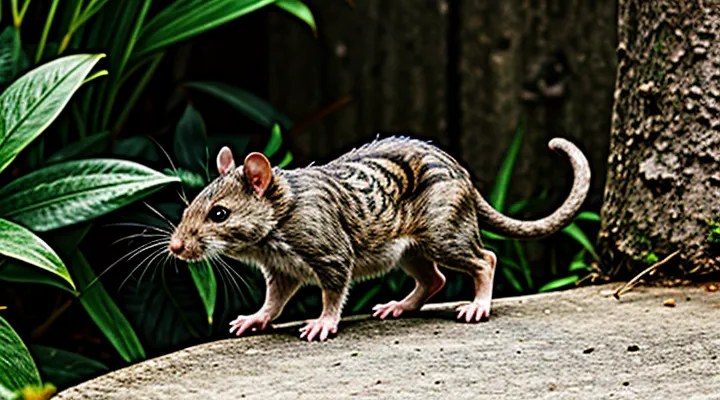
Understanding Wild Rats
What are Wild Rats?
Types of Wild Rats
Wild rats encompass several species whose natural behaviors influence the feasibility of domestication. Understanding these species clarifies expectations for any attempt to tame a free‑living individual.
- Norway rat (Rattus norvegicus) – Large, robust, prefers sewers, basements, and agricultural settings; highly adaptable, exhibits strong territoriality and social hierarchies.
- Black rat (Rattus rattus) – Smaller, agile, favors elevated structures such as roofs and attics; more prone to exploratory foraging and less tolerant of confinement.
- Roof rat (Rattus rattus, subpopulation) – Similar to the black rat but specialized for tropical climates; displays heightened wariness toward human presence.
- Polynesian rat (Rattus exulans) – Diminutive, island‑dwelling; limited distribution, highly cautious, rarely approaches humans without food incentives.
- Asian house rat (Rattus tanezumi) – Common in Southeast Asia, thrives in rice fields and urban peripheries; aggressive when resources are scarce, yet capable of habituation under consistent feeding.
Each species exhibits distinct ecological niches, social structures, and stress responses. These factors determine the degree of trust a wild individual may develop when exposed to regular human interaction, directly affecting the prospect of successful taming.
Natural Behavior and Instincts
Wild rats exhibit strong foraging instincts, relying on acute olfactory and tactile senses to locate food. Their nocturnal activity pattern concentrates feeding and exploration during low‑light hours, limiting human interaction opportunities.
Territoriality governs social structure; individuals defend burrow entrances and maintain hierarchies through scent marking and brief aggressive displays. This behavior resists prolonged confinement and rapid habituation to unfamiliar caretakers.
Reproductive drives dominate seasonal cycles. Breeding peaks trigger heightened aggression and nest‑building, which conflict with attempts to impose routine handling schedules.
Key natural traits that impede tameness:
- High neophobia: immediate avoidance of novel objects or humans.
- Rapid stress response: elevated cortisol levels when confined or restrained.
- Social hierarchy reliance: dominance disputes arise when multiple rats share limited space.
- Scavenging diet: preference for protein‑rich, high‑fat foods, leading to selective feeding behaviors.
Understanding these innate patterns clarifies why sustained domestication of a feral rat remains improbable without extensive, multi‑generational selection and environmental conditioning.
Differences Between Wild and Domesticated Rats
Rats that live independently in urban or rural environments differ markedly from those raised by humans. Wild specimens rely on instinctual foraging, display heightened wariness, and maintain strict hierarchies within small colonies. Domesticated counterparts exhibit reduced fear of people, adapt to varied diets, and often form bonds with caregivers.
- Behavior: Wild rats avoid contact, retreat at distant sounds, and exhibit rapid flight responses. Domesticated rats approach hand gestures, tolerate handling, and show curiosity toward novel objects.
- Temperament: Wild individuals are aggressive toward perceived threats; domesticated rats display docile tendencies and reduced territorial aggression.
- Dietary needs: Wild rats consume seeds, insects, and refuse, requiring high‑protein, low‑fat intake. Domesticated rats accept formulated pellets, fruits, and vegetables, tolerating broader nutritional profiles.
- Health profile: Parasite load and exposure to pathogens are higher in wild populations, leading to frequent respiratory and ectoparasitic conditions. Domesticated rats benefit from controlled environments, vaccinations, and regular veterinary care, resulting in lower disease incidence.
- Genetic traits: Selective breeding in captivity emphasizes coat color, size, and temperament, producing genetic bottlenecks distinct from the diverse gene pool of wild rats.
- Social structure: Wild colonies maintain rigid dominance hierarchies, limiting interaction with outsiders. Domesticated rats form fluid groups, often integrating new members without conflict.
- Lifespan: Average lifespan of wild rats ranges from 6 to 12 months due to predation and disease; captive rats commonly live 2 to 3 years with proper care.
These contrasts influence the feasibility of taming a free‑living rat. The innate fearfulness, health challenges, and strong territorial instincts of wild individuals create substantial barriers to habituation. Successful acclimation requires prolonged, low‑stress exposure, veterinary assessment, and gradual diet adjustment. Even under optimal conditions, expectations should align with the inherent behavioral limits that distinguish wild rats from their domesticated relatives.
Challenges of Taming a Wild Rat
Health Risks and Diseases
Zoonotic Diseases
Taming a wild rat involves direct, repeated contact that can expose handlers to pathogens routinely carried by the species. Rats serve as reservoirs for a range of zoonotic agents; each poses a health risk that must be managed before any domestication attempt.
Common rat‑associated zoonoses include:
- Leptospira spp. – bacteria transmitted through urine; can cause severe kidney and liver damage.
- Salmonella enterica – gastrointestinal infection spread via fecal contamination.
- Hantavirus – respiratory illness contracted from aerosolized rodent droppings.
- Yersinia pestis – plague bacterium historically linked to rodent fleas.
- Rat‑bite fever (Streptobacillus moniliformis) – bacterial infection following bites or scratches.
Transmission pathways are well documented: direct bites, scratches, handling of contaminated fur, inhalation of dried excreta, and flea vectors. Even brief, non‑aggressive interaction can introduce microbes, especially when the animal’s stress level increases during captivity, amplifying shedding rates.
Mitigation strategies for anyone attempting to domesticate a wild rat are:
- Conduct health screening of the animal for known pathogens.
- Use personal protective equipment (gloves, masks) during handling.
- Maintain strict sanitation; clean cages daily, disinfect surfaces, and control rodent waste.
- Implement vector control to eliminate fleas and mites.
- Seek veterinary guidance for prophylactic treatments and post‑exposure monitoring.
Failure to address these risks can result in outbreaks that affect both the individual handler and surrounding community. Effective management of zoonotic disease exposure is therefore a prerequisite for any effort to tame a wild rat.
Parasites
Parasites represent a primary obstacle when attempting to domesticate a free‑living rodent. Wild rats commonly host ectoparasites such as fleas (Xenopsylla cheopis), mites (Laelaps spp.) and lice (Polyplax spp.), each capable of transmitting bacterial agents like Yersinia pestis or Rickettsia spp. Internal parasites include helminths—nematodes (e.g., Strongyloides ratti), cestodes (e.g., Hymenolepis nana)—and protozoans such as Giardia and Toxoplasma gondii. These organisms can impair health, reduce appetite, and diminish the animal’s capacity to adapt to captivity.
Effective management requires a systematic protocol:
- Conduct a thorough physical examination to identify visible ectoparasites.
- Collect fecal samples for microscopic analysis to detect helminth ova and protozoan cysts.
- Apply an appropriate ectoparasiticide (e.g., a topical pyrethrin formulation) following dosage guidelines for rodents.
- Administer an anthelmintic (e.g., fenbendazole) in a calibrated regimen to eliminate nematodes and cestodes.
- Re‑evaluate after a 7‑day interval to confirm eradication; repeat treatment if residual infection persists.
Beyond treatment, preventive measures sustain a parasite‑free environment. Regular cage sanitation, use of sealed bedding, and isolation of newly introduced rats for a quarantine period reduce re‑infestation risk. Monitoring weight, grooming behavior, and fecal consistency provides early indicators of parasitic resurgence.
In summary, the presence of ecto‑ and endoparasites directly compromises the feasibility of conditioning a wild rat for human interaction. Comprehensive detection, targeted pharmacological intervention, and stringent hygiene constitute the essential framework for overcoming this barrier.
Behavioral Difficulties
Fear and Aggression
Fear manifests in wild rats as heightened vigilance, rapid respiration, and avoidance of direct eye contact. When a rat perceives a human as a threat, it may freeze, emit high‑pitched squeaks, or retreat to concealed areas. These responses indicate activation of the sympathetic nervous system, which prepares the animal for flight.
Aggression appears when fear escalates or when the rat feels its territory is challenged. Typical behaviors include lunging, biting, stiffened posture, and tail rattling. Aggressive displays often accompany elevated cortisol levels, reflecting stress that can impede learning and habituation.
Effective reduction of fear and aggression relies on gradual exposure and consistent handling:
- Begin with passive observation from a safe distance; allow the rat to become accustomed to the handler’s presence without direct contact.
- Introduce a neutral object (e.g., a wooden block) that the rat can explore, reinforcing curiosity rather than threat perception.
- Progress to gentle hand placement near the rat’s body, avoiding sudden movements; reward calm behavior with food treats.
- Monitor physiological cues such as ear position and whisker orientation; cease interaction if signs of distress emerge.
- Maintain a stable environment—consistent lighting, minimal noise, and predictable feeding times—to lower baseline stress.
Repeated, low‑intensity interactions rewire neural pathways linked to threat assessment, diminishing the intensity of fear responses. Over time, the rat’s aggression subsides as the handler is no longer interpreted as a predator, allowing for a functional, low‑stress relationship.
Lack of Socialization
Lack of socialization creates a fundamental barrier to taming a feral rat. Without exposure to human interaction during early developmental stages, the animal retains strong avoidance instincts, exhibits heightened stress responses, and shows limited capacity to form trust. These behaviors manifest as rapid flight, aggression toward handlers, and refusal to engage in voluntary feeding or handling.
Key consequences of insufficient social exposure include:
- Persistent fear of humans, leading to defensive biting or scratching.
- Inability to recognize caretakers as sources of safety and nourishment.
- Elevated cortisol levels, which suppress learning and memory formation.
- Reduced adaptability to confined environments, increasing the risk of escape attempts.
Effective mitigation requires systematic, gradual introduction to gentle human contact, consistent routine, and positive reinforcement. Early, low‑stress interactions can reshape neural pathways, decreasing fear and enhancing the rat’s willingness to cooperate with caretakers.
Stress and Trauma
Wild rats experience acute stress when exposed to sudden changes in environment, handling, or social hierarchy. The physiological response includes elevated cortisol, rapid heart rate, and heightened vigilance, which together impair learning and reduce willingness to engage with humans.
Repeated negative encounters generate trauma, manifested as persistent avoidance, aggression, or stereotypic behaviors such as excessive grooming or pacing. Trauma reshapes neural circuits, diminishing the rat’s capacity to form positive associations with caretakers and rendering conventional conditioning ineffective.
Successful domestication attempts require minimizing both stressors and traumatic memories. Strategies include:
- Gradual exposure to human presence, beginning with passive observation from a safe distance.
- Consistent, low‑intensity handling sessions lasting no more than a few minutes, spaced over days.
- Provision of enrichment objects that allow voluntary interaction, reducing perceived threat.
- Use of scent cues from familiar conspecifics to create a sense of security.
- Avoidance of abrupt movements, loud noises, and sudden temperature changes.
Implementing these measures lowers cortisol spikes, facilitates neuroplasticity, and creates a behavioral baseline from which taming can progress. Without systematic stress reduction, attempts to domesticate a wild rat are likely to fail due to entrenched trauma responses.
Ethical Considerations
Animal Welfare
Wild rats possess strong survival instincts, territorial behavior, and heightened sensitivity to stress. Any attempt to introduce them into a domestic environment must prioritize their physiological and psychological health, as neglect can result in chronic illness, injury, or fatal outcomes.
Legal frameworks governing the treatment of non‑pet wildlife vary by jurisdiction, but most enforce principles that prohibit unnecessary suffering, require proper housing, and demand veterinary oversight when animals are captured for human interaction. Ethical assessment should weigh the animal’s right to a life free from undue confinement against the potential educational or research benefits of domestication.
Successful taming depends on several measurable factors:
- Health screening: Comprehensive veterinary examination to detect parasites, zoonotic diseases, and injuries before handling.
- Quarantine period: Minimum 30 days in a controlled environment to monitor for latent illnesses and to reduce pathogen transmission.
- Environmental enrichment: Provision of nesting material, climbing structures, and foraging opportunities that mimic natural habitats.
- Gradual habituation: Incremental exposure to human presence, using low‑stress techniques such as scent transfer and silent observation.
- Nutritional adequacy: Diet formulated to meet the specific caloric and micronutrient needs of Rattus spp., avoiding sudden changes that can disrupt gut flora.
Behavioral indicators of welfare include steady grooming, regular exploration, and balanced activity cycles. Signs of distress—excessive vocalization, self‑mutilation, or persistent hiding—signal that the animal’s needs are unmet and that further interaction should cease.
Given the inherent challenges, many animal‑welfare professionals recommend adopting rats rescued from shelters, where individuals have already undergone socialization and health assessment, rather than attempting to domesticate wild specimens. This approach aligns with humane standards while still providing opportunities for human‑rat interaction.
Releasing a Tamed Wild Rat
Releasing a rat that has been domesticated from a wild origin requires careful assessment of health, legal, and ecological factors.
First, evaluate the animal’s condition. Conduct a veterinary examination to confirm the absence of parasites, diseases, or injuries that could affect native wildlife. Obtain documentation of the health clearance before any release.
Second, verify local regulations. Many jurisdictions classify wild rodents as protected species or require permits for reintroduction. Contact the appropriate wildlife authority to determine required permissions and reporting procedures.
Third, select an appropriate habitat. The release site should match the species’ natural preferences for shelter, food sources, and climate. Avoid urban areas where human‑rat conflicts are common. Ensure the environment is free from excessive predators that could cause immediate mortality.
Fourth, implement a gradual acclimatization process.
- Place the rat in a secure, semi‑natural enclosure at the release location for several days.
- Provide natural foraging opportunities while monitoring behavior.
- Observe signs of stress or aggression; if present, extend the acclimation period.
Finally, monitor post‑release outcomes. Use radio collars or marking techniques to track survival, movement, and integration with wild conspecifics for a minimum of 30 days. Record data and submit findings to the overseeing agency to contribute to broader knowledge on rodent reintroduction.
Adhering to these steps minimizes health risks, complies with legal standards, and supports ecological balance when returning a formerly captive rat to its native environment.
The Process of Attempted Taming
Initial Approach and Safety Precautions
Observing from a Distance
Observing a free‑roaming rat from a distance provides the most reliable data on its temperament, social patterns, and adaptability. Direct contact can alter natural behavior, making distant monitoring essential for an accurate assessment of tameness potential.
Key indicators detectable without intrusion include:
- Consistent foraging routes that suggest confidence in the environment.
- Repeated use of the same shelter, indicating territorial stability.
- Lack of aggressive displays such as vocalizations, tail flicking, or rapid lunges when a human presence is noted.
- Interaction with conspecifics that reveals hierarchy; lower‑ranking individuals are more likely to accept human proximity.
Environmental factors influencing observability consist of lighting conditions, urban density, and availability of food sources. Clear sightlines and minimal disturbance enhance data quality, while excessive noise or movement can obscure subtle behavioral cues.
Ethical considerations demand that observation remain passive, avoiding baiting or trapping that could cause stress. Documentation through video or photographs should respect privacy regulations and animal welfare guidelines. The collected evidence forms the basis for any subsequent attempts at habituation or controlled interaction.
Protective Gear
Handling feral rats demands equipment that prevents bites, scratches, and disease transmission. Appropriate protective gear reduces risk to the handler and minimizes stress on the animal during the taming process.
Essential items include:
- Thick‑walled gloves made of nitrile or leather, fitted to allow dexterity while resisting punctures.
- Full‑coverage apron or lab coat constructed from cut‑resistant material to shield torso and legs.
- Face shield or safety goggles to protect eyes from unexpected lunges.
- Respirator mask with particulate filter for environments where droppings or urine aerosolize pathogens.
- Closed, sturdy footwear such as steel‑toe boots to guard against accidental stepping on the rodent.
Proper use requires inspection before each session, cleaning with disinfectant after contact, and regular replacement of worn components. Gloves should be inspected for tears; masks must be fitted tightly to prevent leakage. Storing gear in a clean, dry area maintains integrity and extends service life.
Building Trust
Gradual Food Introduction
Taming a feral rat depends on establishing trust through a controlled feeding regimen. Consistency in food presentation signals safety and reduces fear, allowing the animal to shift focus from avoidance to anticipation.
- Begin with highly aromatic, soft foods that mimic natural foraging items (e.g., boiled egg, ripe fruit puree).
- Offer the food on a flat, stable surface within the rat’s current range, keeping distance to avoid sudden movements.
- After the rat approaches and consumes the offering, retreat slightly and repeat the same item for several sessions until the animal shows no hesitation.
Progress to less aromatic, firmer foods (e.g., small pieces of boiled chicken, dry pellets) once the rat reliably approaches the initial bait. Reduce the scent cue gradually, maintaining the same feeding location. Introduce variety only after the rat consistently accepts the new texture, preventing confusion and reinforcing adaptability.
Maintain a fixed schedule—same time of day, same spot—to reinforce predictability. Record each interaction: time, food type, distance of approach, and any signs of stress. Adjust portion size and food type based on observed tolerance, ensuring the rat never experiences scarcity that could trigger defensive behavior.
A disciplined, stepwise food introduction creates a measurable pathway from wild wariness to conditioned acceptance, ultimately enabling reliable handling and reduced stress for both animal and caretaker.
Patience and Consistency
Patience and consistency are essential factors when attempting to domesticate a wild rodent. A rat that has lived independently exhibits strong survival instincts; gradual exposure to human presence reduces fear without causing stress.
Repeated, gentle interactions over weeks allow the animal to recognize the caregiver as a predictable source of food and safety. Short, daily sessions—no longer than five minutes—prevent overwhelming the rat while reinforcing a routine.
Consistent feeding schedules further condition the rat to associate the caretaker with nourishment. Providing the same type of food at the same times each day creates a reliable pattern that the animal can anticipate.
Practical steps:
- Offer a small piece of fresh fruit or grain by hand, retreating immediately after the rat eats.
- Maintain a quiet environment during each interaction; avoid sudden movements or loud noises.
- Keep the handling schedule identical each day (same time, same location, same duration).
- Observe the rat’s body language; cease the session if signs of agitation appear, then resume later.
By adhering to a steady, patient approach, the rat’s defensive behavior diminishes, increasing the likelihood of successful taming.
Housing and Environment
Secure Enclosure Requirements
A feral rat destined for taming requires an enclosure that eliminates escape routes, safeguards health, and supports natural behaviors.
- Construction material must be sturdy, non‑toxic, and resistant to gnawing; metal mesh with a minimum 1‑inch opening size prevents intrusion while allowing airflow.
- Floor surface should be solid, easy to clean, and free of gaps; sealed concrete or thick plastic panels meet these criteria.
- Dimensions must allow at least 0.5 m² of floor space per animal, with vertical space for climbing structures extending 0.6 m above the floor.
- Ventilation must provide continuous fresh air without creating drafts; adjustable vents equipped with fine mesh maintain temperature stability.
- Locking mechanisms need double‑acting latches and secondary safety catches to prevent accidental opening.
- Cleaning access points should be large enough for hand‑washing and removable trays; all surfaces must be chemically resistant.
- Enrichment elements—such as tunnels, chew toys, and hideouts—must be securely attached to prevent removal and ingestion.
- Predator protection requires a secondary outer barrier or secure storage area when the primary enclosure is unattended.
Compliance with these specifications creates a controlled environment that minimizes stress, reduces disease risk, and facilitates the gradual habituation of a wild rat to human interaction.
Providing Enrichment
Providing enrichment is a prerequisite for any attempt to domesticate a feral rat. Enrichment addresses the animal’s innate curiosity, foraging instincts, and need for environmental complexity, thereby reducing stress and encouraging cooperative behavior.
- Structural variety: tunnels, platforms, and climbing surfaces that mimic natural habitats.
- Foraging challenges: hidden food items, puzzle feeders, and substrate layers that require digging.
- Sensory stimulation: novel textures, scents, and auditory cues introduced gradually.
- Social interaction: controlled exposure to conspecifics or gentle human handling sessions.
- Play objects: chewable toys, movable balls, and objects that can be manipulated.
Implementation requires consistent rotation of items to prevent habituation, observation of the rat’s response to each stimulus, and adjustment of difficulty levels based on engagement. Recording behavioral changes—such as reduced vigilance, increased exploration, and willingness to approach handlers—provides measurable indicators of progress toward tameness.
Potential Outcomes
Partial Taming
Partial taming refers to the process by which a feral rat learns to tolerate human presence without achieving full domestication. The animal retains its natural instincts while exhibiting reduced flight response and limited cooperative behaviors.
Successful partial taming requires consistent exposure, predictable feeding schedules, and a calm environment. Sudden noises, erratic movements, or irregular handling undermine progress.
Techniques commonly employed include:
- Gradual proximity: begin with a distance of several meters, decreasing it by a few centimeters each day.
- Hand-feeding: offer small portions of preferred food directly from the palm, avoiding sudden hand motions.
- Gentle containment: use a low‑profile carrier to limit escape routes while allowing the rat to observe the handler.
- Routine repetition: repeat each step at the same time of day to establish a reliable pattern.
Observed behavioral changes after several weeks typically involve:
- Approach behavior when food is presented.
- Acceptance of brief tactile contact.
- Decreased vocalizations associated with stress.
Limitations remain significant. The rat continues to exhibit nocturnal activity, sharp territorial marking, and defensive biting when threatened. Full obedience to commands does not develop; the animal’s actions are driven primarily by self‑interest and immediate reward.
Practical applications of partial taming include:
- Laboratory research where reduced stress improves data reliability.
- Controlled pest management that allows safe capture and relocation.
- Limited companionship for enthusiasts who accept the animal’s autonomous nature.
Overall, partial taming yields a predictable, manageable relationship without eliminating the rat’s inherent wild characteristics.
Failure to Tame
Wild rats retain strong survival instincts that prioritize caution, rapid flight, and opportunistic foraging. These instincts dominate their decision‑making and override any attempts to form predictable bonds with humans.
Physiological stress responses activate when a rat perceives a human as a threat. Elevated cortisol suppresses appetite for social interaction and accelerates aggression, making consistent conditioning impossible.
Typical taming attempts fail for several reasons:
- Unreliable reinforcement: Food rewards lose effectiveness when the animal remains hyper‑alert.
- Limited socialization window: Rats develop social bonds early; adult wild individuals lack the neural pathways for human attachment.
- Environmental imprinting: Habitat cues (scent, shelter, predator presence) condition avoidance behaviors that persist despite captive conditions.
- Genetic predisposition: Wild populations exhibit higher aggression scores than domesticated strains, reflecting selective pressures for self‑preservation.
Consequences include heightened risk of bites, transmission of pathogens, and failure of behavioral training programs. Effective management therefore relies on containment and humane euthanasia rather than attempts at domestication.
The Rat's Well-being
Attempting to domesticate a wild rat requires attention to the animal’s welfare at every stage. Successful habituation depends on meeting basic physiological and psychological needs rather than imposing human expectations.
Proper nutrition underpins health. A balanced diet should combine commercial rodent pellets with occasional fresh vegetables and protein sources. Sudden changes in food can disrupt gut flora, increasing susceptibility to gastrointestinal disease. Regular veterinary examinations detect parasites, respiratory infections, and dental overgrowth, conditions common in rodents captured from uncontrolled environments.
Environmental standards prevent injury and stress. Enclosures must provide at least 2 ft² of floor space per animal, solid flooring, and absorbent bedding that is changed weekly. Temperature should remain between 68 °F and 75 °F; extreme heat or cold accelerates metabolic strain. Clean water should be available at all times, preferably via a stainless‑steel bottle to avoid contamination.
Psychological health relies on social interaction and mental stimulation. Rats are highly social; isolation leads to stereotypic behaviors and weight loss. Introducing a conspecific after a quarantine period supports bonding. Enrichment items—tunnels, chew blocks, climbing structures—encourage natural foraging and exploration, reducing cortisol spikes.
Gradual handling builds trust. Begin with brief, gentle exposure to the caretaker’s scent, then progress to short hand‑holding sessions using soft, supportive grip. Positive reinforcement, such as offering a favorite treat immediately after a calm interaction, strengthens desired behavior without coercion. Consistency in routine limits uncertainty, which otherwise elevates stress hormones.
Key welfare components for a tameable wild rat:
- Balanced diet with regular veterinary checks
- Spacious, temperature‑controlled enclosure with clean bedding
- Social housing after quarantine
- Daily enrichment that mimics natural activities
- Incremental handling paired with positive reinforcement
Meeting these criteria creates conditions in which a formerly feral rat can adapt to domestic life while maintaining optimal health and behavior.
Alternatives to Taming a Wild Rat
Coexisting with Wild Rats
Deterrents and Prevention
Effective control of feral rats hinges on preventing access to food, shelter, and entry points. Secure waste containers, eliminate standing water, and store animal feed in sealed containers. Regularly inspect building foundations, vents, and utility openings; install steel mesh or cement‑based sealing material to block rodent ingress.
Deterrent strategies fall into two categories: environmental modifications and active repellents.
-
Environmental modifications
- Trim vegetation away from building walls to remove climbing routes.
- Keep compost piles covered and located at a distance from structures.
- Remove debris, pallets, and scrap material that could serve as nesting sites.
-
Active repellents
Monitoring complements prevention. Place non‑lethal snap traps or live‑capture cages in high‑traffic zones, record capture data, and adjust deterrent placement accordingly. Consistent implementation of these measures reduces the likelihood of encountering a wild rat, thereby diminishing any practical need to attempt taming.
Humane Trapping and Relocation
The prospect of domesticating a feral rat hinges on the ability to remove the animal from its original environment without causing injury. Humane capture and subsequent relocation provide a practical pathway for evaluating tameness potential while respecting animal welfare.
- Live‑catch cage traps: sturdy, vented enclosures that close automatically when the rat enters.
- Multi‑catch box traps: allow repeated use without resetting, suitable for areas with high activity.
- Glue‑free snap‑free traps: designed to immobilize without lethal force, often equipped with a release mechanism.
Effective deployment requires precise placement near known foraging routes, use of high‑protein bait such as peanut butter or dried meat, and inspection intervals of no more than 12 hours to prevent stress. Traps should be positioned on stable surfaces to avoid tipping and secured against non‑target captures.
Relocation must observe legal distance mandates—typically a minimum of five miles—to reduce the likelihood of return. The new site should offer shelter, food sources, and minimal predator pressure. Recording GPS coordinates and environmental conditions aids compliance with wildlife regulations.
After release, monitoring through motion‑activated cameras or periodic visual checks confirms adaptation and identifies any health concerns. Documentation of outcomes supports responsible management and informs future decisions about integrating captured rats into controlled environments.
Adopting a Domesticated Rat
Benefits of Domesticated Rats
Domesticated rats provide reliable companionship for individuals seeking low‑maintenance pets. Their small size fits comfortably in apartments, and they require minimal space compared to larger animals.
Health advantages extend to owners who interact regularly with tame rats. Studies show reduced stress markers, lower blood pressure, and increased serotonin levels after brief daily handling sessions. These physiological effects contribute to overall wellbeing without demanding extensive caregiving routines.
Educational value is significant. Rats demonstrate problem‑solving abilities, memory retention, and social behaviors that can be observed in controlled settings. Their responsiveness to training offers practical lessons in animal cognition and responsible stewardship.
Key benefits include:
- Consistent temperament, reducing unpredictability common in wild counterparts.
- Ease of grooming; coat maintenance involves simple weekly cleaning.
- Short lifespan, allowing owners to experience full pet cycles within a manageable timeframe.
- Compatibility with other small mammals, enabling mixed‑species households when appropriate.
Collectively, these attributes make domesticated rats a pragmatic choice for those questioning whether a wild rat can be tamed, highlighting the advantages of choosing an already socialized animal.
Where to Adopt
Adopting a feral rat requires locating organizations that specialize in small‑animal rescue and rehabilitation. Shelters, wildlife rehabilitation centers, and dedicated rodent rescue groups are the primary sources. Contacting these entities directly ensures access to animals that have undergone health screening and initial taming attempts.
- Municipal animal shelters that accept exotic or non‑traditional pets
- Non‑profit rodent rescue networks (e.g., Rat Rescue, Small Animal Rescue)
- Licensed wildlife rehabilitators authorized to release or rehome feral mammals
- Private breeders offering rescued rats with documented temperament assessments
When evaluating an adoption source, verify the following criteria: health certificates, quarantine records, and a behavioral history indicating prior human interaction. Ask for guidance on gradual habituation techniques, dietary requirements, and enclosure specifications. Confirm that the organization provides post‑adoption support, such as veterinary referrals and behavior counseling, to increase the likelihood of successful domestication.