
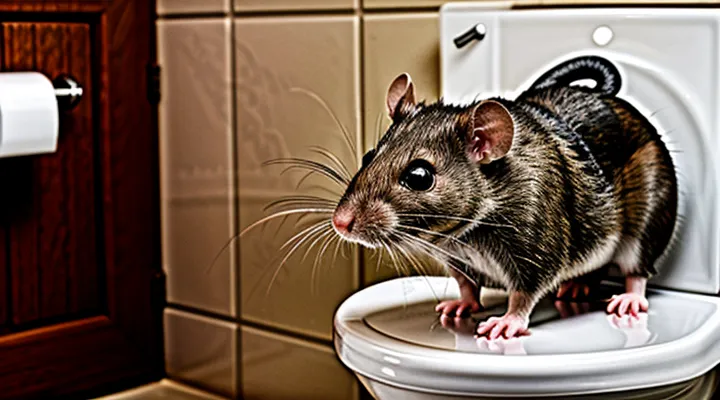
«Understanding Rat Behavior and Potty Training Basics»
«Why Train Your Rat to Use a Toilet?»
«Benefits for Rat Owners»
Training rats to use a toilet produces measurable advantages for owners. The practice reduces the need for traditional bedding cleanup, limits odor, and simplifies habitat maintenance.
- Eliminates daily spot‑cleaning of droppings, saving time.
- Decreases ammonia buildup, improving air quality.
- Lowers costs for replaceable litter and cleaning supplies.
- Enhances the rat’s sense of autonomy, encouraging consistent bathroom habits.
- Facilitates easier observation of health indicators, as waste appears in a single, accessible location.
A toilet‑trained rat also integrates more seamlessly into household routines. Owners can maintain a cleaner environment without compromising the animal’s welfare, and the reduced maintenance workload allows for greater focus on enrichment and interaction.
«Enhancing Rat Welfare»
Training rats to use a toilet presents an opportunity to improve their overall well‑being. Proper welfare measures reduce stress, promote natural behaviors, and increase the likelihood of successful conditioning.
- Provide a spacious, clean enclosure that allows movement and exploration.
- Install a small, stable platform positioned over the toilet bowl to give the animal a secure foothold.
- Use a gradual adaptation schedule: start with a shallow water source, then slowly raise the platform height over several days.
- Apply positive reinforcement, such as brief food rewards, immediately after the rat eliminates on the target surface.
- Maintain consistent hygiene by cleaning the toilet area daily and monitoring for signs of infection or irritation.
- Offer environmental enrichment (nesting material, chew toys) to satisfy instinctual needs and prevent boredom.
Regular health checks and observation of behavior patterns ensure that the training process does not compromise the rat’s physical or psychological condition. Implementing these welfare‑focused practices supports both humane treatment and effective toilet training outcomes.
«Rat Physiology and Instincts Related to Elimination»
Rats possess a compact urinary system that enables rapid fluid turnover. Kidneys filter blood efficiently, producing concentrated urine that the bladder stores until a pressure threshold triggers the micturition reflex. The bladder wall contains smooth muscle capable of strong contractions, while the internal sphincter remains under involuntary control and the external sphincter responds to somatic signals, allowing voluntary retention when external cues are present.
The gastrointestinal tract ends in a short colon and rectum designed for frequent, small fecal deposits. Peristaltic waves move waste toward the rectum, where stretch receptors signal readiness for defecation. Rats typically expel feces in brief, rapid bouts, often immediately after a brief pause for inspection of the surrounding area.
Key instinctual behaviors influence elimination patterns:
- Territorial marking: Rats deposit urine and feces to delineate space, favoring corners, edges, and vertical surfaces.
- Substrate preference: Soft, absorbent materials such as bedding or soil are preferred for deposition, reducing effort and minimizing contamination of food sources.
- Nocturnal activity: Peak elimination occurs during the dark phase, aligning with heightened foraging and exploration.
- Grooming sequence: After elimination, rats engage in self‑grooming to remove residual scent and maintain hygiene, reinforcing a clean environment.
Understanding these physiological mechanisms and innate habits provides a foundation for conditioning rats to direct waste toward a designated receptacle. By presenting a suitable surface that mimics preferred substrates, timing training sessions to coincide with natural nocturnal peaks, and reinforcing voluntary sphincter control through consistent cues, trainers can align the animal’s internal drive with the external apparatus.
«Prerequisites for Successful Training»
«Choosing the Right Rat»
Selecting a rat that can successfully learn to use a toilet is the first critical step in any toilet‑training program. The animal’s innate characteristics determine how quickly it will grasp the behavior and how reliably it will perform it.
A suitable candidate typically meets the following criteria:
- Age: Young adults (8–12 weeks) possess enough maturity to follow cues while still retaining the adaptability of juveniles.
- Temperament: Calm, inquisitive individuals respond better to positive reinforcement than highly skittish or aggressive rats.
- Health status: Free of respiratory or urinary infections; a clean bill of health ensures comfort during the training process.
- Size: Medium‑sized rats (approximately 300–350 g) can comfortably balance on a miniature toilet seat without risking injury.
- Previous litter habits: Rats already accustomed to a designated litter area adapt more readily to a similar confined space.
Once a rat satisfies these parameters, introduce it to the training apparatus gradually. Begin with a familiar scent on the toilet surface, then reinforce successful attempts with treats and brief sessions. Consistency, proper selection, and careful monitoring of the animal’s response form the foundation for reliable toilet use.
«Essential Supplies for Toilet Training»
Effective rat toilet training depends on a well‑chosen set of tools. Each item should support the animal’s natural behavior while minimizing stress.
- Small, shallow litter box designed for rodents; plastic material prevents absorption of urine and eases cleaning.
- Adjustable ramp or step that connects the cage floor to the litter box, allowing rats to climb comfortably.
- Disposable training pads or newspaper strips placed under the ramp to capture accidents during the learning phase.
- Low‑odor, enzymatic cleaner for quick sanitation without leaving harmful residues.
- High‑value treats (e.g., small pieces of dried fruit or specialized rodent reward) for immediate reinforcement when the rat uses the designated area.
- Light‑weight, non‑slippery mat to line the ramp, providing traction and preventing falls.
- Miniature water bottle or dish positioned away from the toilet area to discourage mixing of waste and drinking water.
Supplementary supplies enhance consistency. A timer or schedule board helps maintain regular training intervals. A quiet, low‑traffic location reduces distractions, allowing the rat to focus on the task. A notebook for recording progress—date, time, success rate—facilitates adjustments to the training plan.
By assembling these components and applying them consistently, caretakers create a controlled environment that encourages rats to adopt the toilet habit efficiently.
«Step-by-Step Toilet Training Guide»
«Initial Setup and Acclimation»
«Introducing the Litter Box»
Introduce a litter box as the initial stage of toilet training for rats. The box provides a defined area where the animal can develop a habit of eliminating away from food and bedding, creating a predictable pattern that later can be transferred to a taller fixture.
Select a container that fits the rat’s size yet allows free movement. Plastic boxes with smooth interiors prevent chewing damage; metal options are acceptable if coated. Dimensions should accommodate the rat’s length plus a few centimeters for comfort.
Choose an absorbent substrate that encourages digging and scent masking. Paper‑based bedding, recycled wood pellets, or fine corn cob granules work well. Place the box in a low‑traffic corner of the cage, close to the rat’s normal activity zone, but away from food dishes and water bottles.
Training procedure:
- Position the box and fill it with a thin layer of substrate.
- Observe the rat’s natural elimination spots; relocate the box gradually toward those areas.
- When the rat uses the box, deliver an immediate, small food reward—e.g., a piece of seed or a brief treat.
- Repeat the reward consistently for each successful use to reinforce the behavior.
- After several days of reliable box use, raise the substrate level and introduce a shallow ramp leading to a higher platform that mimics a toilet seat.
- Reduce the substrate depth in the box, encouraging the rat to aim for the ramp and eventually the platform.
- Continue rewarding each correct attempt until the rat reliably eliminates on the elevated surface.
Consistent placement, appropriate substrate, and prompt reinforcement are the three variables that determine the speed of transition from a ground‑level box to a standing toilet. Once the rat reliably uses the box, the subsequent steps toward a full toilet system become straightforward.
«Establishing a Designated Area»
Creating a specific zone for litter training is the first critical step in guiding rodents toward toilet use. The area must be clearly demarcated, consistently accessible, and positioned near the animal’s regular activity space.
- Choose a flat surface that can be easily cleaned, such as a shallow tray or a piece of smooth acrylic.
- Install a low‑profile ramp or step to allow the rat to reach the zone without difficulty.
- Place a small, open‑top container that mimics a toilet bowl; the opening should be just large enough for the rat’s hindquarters to fit comfortably.
- Line the container with a thin layer of absorbent material (e.g., paper towel) to encourage initial use, then gradually reduce the lining as the habit forms.
Maintain the designated zone by removing waste promptly and refreshing any scent cues (e.g., a drop of urine from the rat) to reinforce the association. Consistency in location and accessibility accelerates the learning process and reduces accidental elimination elsewhere.
«The Scent Method: Encouraging Use»
«Using Rat Scent to Guide Behavior»
Rats rely heavily on olfactory cues to navigate their environment and to communicate social information. Introducing a familiar scent into the training area can direct a rat’s attention toward a designated toilet location and reinforce the desired behavior.
First, collect scent material from a conspecific that has already been conditioned to use a toilet. This may include urine, glandular secretions, or bedding that carries the animal’s odor. Place a small amount of the material on the rim of the toilet bowl or on a pad positioned directly under the bowl. The presence of a known scent signals a safe and appropriate place for elimination, encouraging the subject to approach and investigate.
Second, use scent trails to guide movement. Apply a thin line of the collected odor from the cage’s entry point to the toilet. Rats tend to follow continuous scent paths, increasing the likelihood that they will reach the target before seeking alternative sites.
Third, reinforce successful use with a fresh scent cue. After the rat eliminates in the toilet, add a brief dab of the same scent to the interior of the bowl. The immediate association between the odor and the act of toileting strengthens the learned pattern.
Practical steps:
- Obtain scent from a trained rat (urine, bedding, gland secretions).
- Apply scent to the toilet rim and a small pad beneath the bowl.
- Create a continuous scent trail from the cage entrance to the toilet.
- After each successful use, refresh the scent inside the bowl.
- Rotate scent sources weekly to prevent habituation.
Consistent application of these olfactory cues reduces exploratory elimination and accelerates the transition from cage corners to the toilet apparatus. The method leverages the rat’s natural reliance on scent for spatial orientation and social signaling, providing a reliable pathway to reliable toilet training.
«Reinforcing Desired Actions»
Effective reinforcement transforms a rat’s occasional bathroom use into a reliable habit. The process hinges on timing, consistency, and reward relevance. Deliver the reward within seconds of the correct action; delay erodes the association. Apply the same stimulus each time the rat eliminates on the designated surface to prevent confusion. Select a reward the individual values—typically a small portion of preferred food or a brief, gentle petting session.
Implementation steps:
- Position a shallow tray or litter box adjacent to the toilet apparatus.
- Observe the rat’s natural elimination pattern; note the moments it approaches the tray.
- When the rat urinates or defecates on the tray, immediately present the chosen reward.
- After several successful attempts, gradually elevate the tray toward the toilet seat, encouraging the rat to transition.
- Once the rat consistently uses the toilet, maintain occasional reinforcement to solidify the behavior and prevent regression.
Monitoring progress involves recording each successful event and the corresponding reward. A steady increase in correct usage without additional prompts indicates that the reinforcement schedule has been internalized. Adjust reward size or type if performance plateaus, ensuring the incentive remains motivating.
«Gradual Transition to a Mini Toilet»
«Selecting an Appropriate Mini Toilet»
Choosing a mini toilet that suits a rat’s physiology and behavior is a prerequisite for successful housetraining. The device must accommodate the animal’s size, encourage natural posture, and withstand frequent use.
- Dimensions: interior length 2–3 cm, width 1.5–2 cm, height 1.5 cm; enough space for the rat to sit upright without stretching.
- Material: smooth, non‑porous plastic or stainless steel; easy to clean, resistant to chewing, and free of toxic coatings.
- Entrance design: low‑profile rim or cut‑out that allows easy access from the cage floor; avoids steep ramps that deter entry.
- Drainage: built‑in sloped floor or removable tray to separate waste from the substrate; prevents accumulation of moisture that could cause odor or health issues.
- Stability: weighted base or secure attachment to the cage grid; eliminates wobbling that could startle the animal.
- Compatibility: fits standard rodent cage dimensions; does not obstruct other enrichment items or impede ventilation.
After selecting a model that meets these specifications, place the mini toilet in a quiet corner of the enclosure, close to the rat’s usual sleeping area, to promote consistent use. Regular cleaning—once daily for solid waste, weekly for thorough sanitization—maintains hygiene and reinforces the behavior.
«Adapting the Litter Box Approach»
Adapting the litter‑box method provides a practical bridge between conventional rodent housing and toilet use. The strategy replaces a traditional cage liner with a small, shallow tray that mimics a bathroom fixture, encouraging the animal to associate the surface with elimination.
The transition proceeds in three stages:
- Introduce the tray – Place a plastic tray filled with a thin layer of absorbent substrate near the cage corner where the rat naturally urinates. Ensure the tray is stable and easily accessible.
- Condition the rat – Scatter a few droppings from the cage onto the tray to create a scent cue. Observe the rat’s behavior; most will investigate and begin to eliminate on the familiar surface within a few days.
- Upgrade to a toilet seat – Replace the tray with a miniature toilet bowl or a shallow cup positioned over a water‑filled container. Maintain a small amount of substrate to preserve the scent link while the rat learns to balance on the rim.
Key considerations:
- Keep the tray or bowl at the same height as the cage floor to avoid unnecessary climbing.
- Clean the surface daily to prevent odor buildup, which can deter use.
- Use positive reinforcement, such as brief handling or a preferred treat, immediately after a successful elimination on the target surface.
Gradual removal of the substrate after consistent performance accelerates the shift to a fully water‑based system. Once the rat reliably uses the miniature toilet, the cage can be reduced to a standard size without a separate litter area, simplifying maintenance and improving hygiene.
«Troubleshooting Common Challenges»
«Dealing with Accidents»
When a rat urinates or defecates outside the designated toilet area, immediate corrective action prevents the behavior from becoming habitual. First, remove the soiled substrate promptly to eliminate the scent trail that reinforces the location. Clean the affected surface with an enzymatic cleaner that breaks down organic residues; avoid ammonia‑based products, which can attract the animal. After cleaning, place a fresh piece of the same substrate in the toilet to maintain consistency.
Next, observe the rat’s movements to identify patterns that precede accidents. If the animal repeatedly attempts to eliminate near a feeding station, relocate food dishes farther from the toilet and provide a separate, quiet corner for waste. Reinforce successful toilet use by delivering a small treat within seconds of the correct action; timing is critical for associative learning.
If accidents persist despite environmental adjustments, consider the following steps:
- Verify that the toilet’s dimensions accommodate the rat’s size; a cramped space may cause avoidance.
- Ensure the substrate depth is sufficient to allow comfortable digging and covering of waste.
- Reduce stressors such as loud noises, sudden lighting changes, or overcrowding, which can disrupt training progress.
- Gradually increase the interval between reinforcement deliveries to encourage independent use.
Consistent application of these measures curtails unwanted elimination, accelerates the learning curve, and solidifies the rat’s reliance on the toilet as the sole waste outlet.
«Addressing Reluctance to Use the Toilet»
Rats often resist moving from a traditional nesting area to a designated toilet station. Reluctance stems from unfamiliar surfaces, fear of falling, and lack of association between the station and elimination. Recognizing these triggers allows precise intervention.
Begin by matching the toilet station’s texture to the rat’s preferred bedding. Soft, absorbent material reduces anxiety and encourages exploration. Position the station near the cage’s established activity zone; proximity increases the likelihood of trial use.
Implement a structured exposure protocol:
- Place a small amount of soiled bedding in the toilet bowl to create a scent cue.
- Offer a high‑value treat only when the rat approaches or contacts the bowl.
- Gradually reduce the treat frequency while maintaining the scent cue.
- Introduce a gentle slope or ramp to prevent falls, adjusting angle as confidence grows.
- Monitor behavior for signs of stress; pause the program if excessive avoidance persists.
Consistent reinforcement, environmental alignment, and incremental habituation eliminate hesitation and establish reliable toilet use.
«Advanced Techniques and Maintenance»
«Fading Out Rewards»
Reward fading is a systematic reduction of reinforcement that preserves a newly acquired behavior while eliminating dependence on continuous incentives. In the context of teaching rodents to use a toilet, the method prevents relapse when rewards are withdrawn.
Initially, deliver a food pellet each time the rat deposits waste in the designated receptacle. The rat associates the act with a tangible benefit, establishing a reliable response pattern. Once the association is stable, introduce a schedule that supplies the reward less frequently—e.g., one reward for every two successful uses. This intermittent reinforcement creates expectation uncertainty, strengthening the behavior’s intrinsic motivation.
Continue the process by extending the interval between rewards. A typical progression includes:
- Continuous reinforcement: reward every occurrence.
- Fixed‑ratio schedule: reward after a set number of successful deposits (e.g., every 3‑5 instances).
- Variable‑ratio schedule: reward after an unpredictable count, averaging a predetermined number.
- Extinction phase: cease rewards entirely while monitoring compliance.
During each phase, observe latency between the act and the reward, ensuring the interval does not exceed the rat’s short‑term memory window (approximately 5–10 seconds). Adjust the schedule if performance declines; a brief return to a higher‑frequency schedule can re‑establish the behavior before resuming fading.
Successful implementation yields rats that reliably use the toilet without external incentives, allowing caretakers to maintain hygiene standards while reducing reliance on constant food reinforcement.
«Maintaining a Clean and Hygienic Environment»
Cleanliness directly influences a rat’s willingness to adopt a toilet. A sanitary cage reduces stress, prevents disease, and encourages the animal to associate the designated area with a safe, odor‑free environment.
Maintain the habitat by following these actions:
- Remove waste from the enclosure at least twice daily; use disposable pads or a dedicated tray to simplify disposal.
- Disinfect the toilet apparatus with a mild, rodent‑safe solution (e.g., diluted vinegar or a commercial pet‑safe sanitizer) every 24 hours. Rinse thoroughly before each training session.
- Replace bedding regularly; choose low‑dust, absorbent material that can be shaken out or swapped without disturbing the rat’s nest.
- Keep food and water containers separate from the toilet zone; clean them daily to avoid cross‑contamination.
- Monitor humidity and temperature; maintain levels within the species‑specific comfort range (20‑25 °C, 40‑60 % relative humidity) to inhibit bacterial growth.
Inspect the enclosure each morning for signs of urine splatter, fecal buildup, or mold. Immediate removal of contaminants prevents lingering odors that could deter the rat from using the toilet. Consistent sanitation creates a predictable, healthy setting, reinforcing the desired behavior and accelerating the training process.
«Long-Term Success and Consistency»
«Continuing Reinforcement»
Continuing reinforcement sustains the behavior of rats using a toilet after the initial training phase. It prevents extinction by delivering rewards each time the animal successfully eliminates in the designated apparatus.
Key elements of effective ongoing reinforcement:
- Consistent reward – provide a small food pellet or a brief sucrose solution immediately after each correct voiding event.
- Variable schedule – after a stable pattern is established, shift to a variable‑ratio schedule (e.g., reward after 2‑4 successful uses) to maintain motivation while reducing dependence on a fixed ratio.
- Environmental cues – keep the toilet station clean, maintain the same lighting and scent cues, and ensure the water source remains accessible.
- Monitoring – record each use, reward, and any missed attempts; adjust the schedule if performance declines.
Potential pitfalls and corrective actions:
- Reward fatigue – if the rat shows reduced interest, lower the reward size temporarily and re‑introduce a higher value reward intermittently.
- Context shift – moving the toilet apparatus or altering its surroundings often leads to regression; replicate the original training environment as closely as possible.
- Over‑reinforcement – delivering a reward for every void can create dependence; transition gradually to a schedule that rewards a proportion of correct uses.
By applying these principles, trainers ensure that the learned toileting behavior persists, enabling reliable long‑term use of the toilet by laboratory rats.
«Observing for Regression»
Observing regression is a critical component of any program that teaches rats to use a toilet. When animals revert to previous elimination habits, the training process stalls and may backtrack, jeopardizing overall success.
Regression refers to the reappearance of undesired toileting behavior after an initial period of correct use. It often manifests as increased accidents on the cage floor, refusal to approach the toilet apparatus, or inconsistent timing of elimination. Detecting these patterns early prevents loss of progress.
Effective observation relies on systematic data collection:
- Record each elimination event with timestamp, location, and context (e.g., presence of food, handling, environmental change).
- Use a standardized checklist to note signs of hesitation, sniffing, or avoidance near the toilet.
- Review logs daily to calculate the proportion of correct eliminations versus accidents.
- Apply statistical thresholds (e.g., a 10 % rise in floor accidents over three consecutive days) to trigger intervention.
Interpretation of the data should focus on trend direction rather than isolated incidents. A sustained upward trend in accidents signals regression; a single outlier may be disregarded. Once regression is confirmed, immediate corrective measures include:
- Reinforcing the association between the toilet and reward by increasing positive reinforcement frequency.
- Adjusting the toilet’s placement to reduce stressors such as drafts or noisy equipment.
- Re‑establishing a consistent schedule for feeding and cleaning to stabilize the animal’s routine.
Best practice dictates maintaining a visual dashboard of key metrics, conducting weekly reviews, and documenting any protocol modifications. Consistent, objective observation eliminates ambiguity, allowing rapid response to regression and preserving the integrity of the toilet‑training program.