
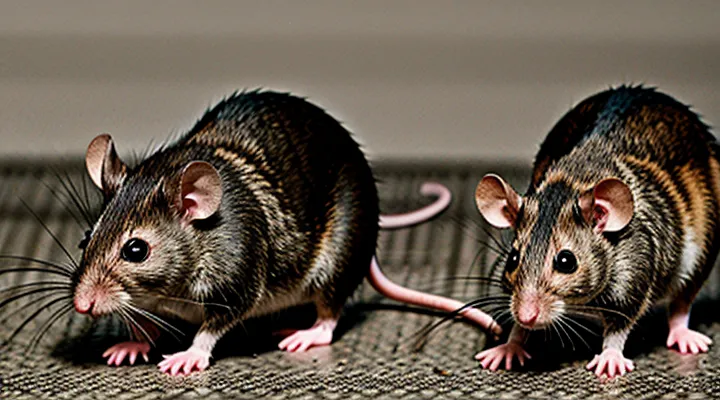
«Physical Characteristics»
«Size and Weight»
«Length of Body and Tail»
The adult house mouse typically measures 6–10 cm from nose to the base of the tail, while the common rat ranges from 18–25 cm for the same segment. Tail length follows a similar proportion: mouse tails are 7–10 cm long, often equal to or slightly longer than the body, whereas rat tails extend 15–20 cm, generally surpassing body length by a factor of 1.2–1.5.
- Mouse body: 6–10 cm
- Mouse tail: 7–10 cm
- Rat body: 18–25 cm
- Rat tail: 15–20 cm
These dimensions reflect the larger overall size of rats and the relatively longer tail relative to body length, distinguishing the two rodent groups in morphological studies.
«Adult Weight Range»
Adult weight provides a clear metric for distinguishing the two rodent species. A fully grown house mouse generally weighs between 15 g and 30 g. In contrast, an adult Norway rat commonly falls within 250 g to 500 g, with females averaging 250 g–300 g and males 300 g–500 g; exceptionally large individuals may reach 600 g. The black rat, another common species, usually weighs 150 g to 250 g. These ranges illustrate the substantial size disparity that separates mice from rats.
«Head and Facial Features»
«Snout Shape»
Mice possess a short, triangular snout that tapers sharply toward the tip. The overall length is roughly one‑third of the head’s total height, giving the face a compact appearance. In contrast, rats exhibit a longer, more cylindrical snout that extends nearly half the head’s height, creating a noticeably elongated profile.
The structural differences are evident in bone and cartilage composition. Mice have a broader nasal bone that merges quickly with the maxilla, while rats display an extended premaxillary region that supports a deeper nasal cavity. Soft‑tissue thickness also varies: mice show a thinner layer of fur and skin over the snout, whereas rats have a denser, more muscular covering.
These morphological traits affect feeding and sensory function:
- Food handling – the mouse’s blunt snout facilitates rapid gnawing of small seeds; the rat’s elongated snout accommodates larger food items and more forceful chewing.
- Olfactory capacity – a longer nasal passage in rats increases surface area for scent receptors, enhancing detection of distant odors.
- Tactile exploration – the rat’s extended whisker array, anchored on a longer rostrum, provides greater spatial resolution during navigation.
Overall, snout shape provides a reliable criterion for distinguishing between the two rodent groups and reflects adaptations to their respective ecological niches.
«Ear Size and Shape»
Mice possess relatively small, rounded ears that measure approximately 6–9 mm in length, with a thin, pliable cartilage framework. The auricle forms a smooth contour, providing limited surface area for auditory reception but enhancing maneuverability within confined burrows.
Rats exhibit larger, more angular ears, typically 15–20 mm long, supported by robust cartilage that creates distinct ridges and a pronounced outer edge. The increased ear surface improves sound capture, especially at lower frequencies, and contributes to thermoregulation.
Key distinctions:
- Size: mouse ears are roughly half the length of rat ears.
- Shape: mouse auricles are smooth and rounded; rat auricles are elongated with defined folds.
- Cartilage density: mouse ear cartilage is softer; rat ear cartilage is thicker and more rigid.
- Functional impact: larger rat ears enhance low‑frequency detection and heat dissipation; smaller mouse ears favor agility in tight spaces.
«Eye Prominence»
Eye prominence provides a clear visual cue for separating the two common rodent species. In mice, the orbital region is relatively small; the eyes sit close to the skull and are partially concealed by fur. Rat eyes are larger, more protruding, and positioned farther forward on the head, giving a noticeably bulged appearance.
Key comparative points:
- Size: mouse ocular diameter averages 2–3 mm; rat ocular diameter ranges 3–4 mm.
- Position: mouse eyes are set deeper within the skull cavity; rat eyes project outward, creating a broader field of vision.
- Visibility: the mouse’s eye rim is often hidden by surrounding whisker pads; the rat’s eye rim remains exposed, even when the animal is at rest.
- Functional implication: the more prominent rat eyes support enhanced low‑light detection, consistent with their nocturnal foraging habits, whereas mice rely more on whisker sensation.
These morphological distinctions allow rapid identification in field studies, laboratory settings, and pest‑control operations without recourse to genetic testing.
«Fur and Coloration»
«Common Coat Colors»
Mice and rats exhibit a limited palette of natural coat colors, each linked to specific genetic loci. The most frequently observed hues include:
- Agouti – a banded hair pattern producing a brown‑gray overall appearance; common in wild mice and many rat strains.
- Black – uniform dark pigmentation caused by the dominant melanistic allele; prevalent in laboratory mouse lines and certain rat breeds.
- White – lack of pigment resulting in an albino phenotype; arises from mutations in the tyrosinase gene and is widely used in research colonies.
- Brown – solid chocolate or cinnamon coloration; less common than agouti, appears in both species through recessive alleles.
- Gray – uniform slate coloration, often termed “dun” in mice; occurs in specific wild populations and selective breeding programs.
Distribution of these colors differs between the two rodents. In wild environments, agouti dominates the mouse population, providing camouflage in grassy habitats, whereas rats more frequently display black or brown coats, reflecting adaptation to urban and subterranean settings. Laboratory strains manipulate coat color to facilitate genetic tracking; for example, C57BL/6 mice are black, while Sprague‑Dawley rats are typically albino. Understanding these common coat colors aids in species identification, breeding management, and experimental design.
«Fur Texture»
Fur texture provides a reliable criterion for separating two common rodent species.
Mice possess a soft, fine coat that feels silky to the touch. Individual hairs are short, typically 2–4 mm in length, and lie flat against the body, giving the animal a smooth appearance. The under‑fur is dense, while guard hairs are minimal, resulting in a uniform surface that facilitates rapid heat loss in colder environments.
Rats display a markedly different pelage. Their outer layer consists of coarse, stiff guard hairs that can reach 6–8 mm, interspersed with a moderate amount of under‑fur. The overall texture feels rougher and more bristly, offering better protection against abrasions and aiding in thermoregulation.
Key distinctions in fur characteristics:
- Length: mice ≈ 2–4 mm, rats ≈ 6–8 mm.
- Hair type: mice = predominantly fine under‑fur, rats = prominent guard hairs.
- Surface feel: mice = silky, rats = bristly.
- Functional role: mice = enhanced heat dissipation, rats = improved barrier against physical wear.
These attributes assist researchers, pest control professionals, and pet owners in accurate species identification and in selecting appropriate handling or grooming practices.
«Feet and Paws»
«Forelimb Structure»
Mice and rats share the basic mammalian forelimb plan, yet distinct morphological traits reflect their different ecological niches.
The humerus in mice is proportionally shorter, resulting in a more compact forearm. Rats possess a longer humerus and radius‑ulna complex, providing greater reach and leverage for digging and handling larger objects.
Digit morphology also diverges. Mice have five relatively slender digits with a reduced, blunt terminal phalanx that limits grip strength. Rat digits are more robust, featuring an enlarged fifth digit and a pronounced ungual sheath that enhances claw penetration in soil.
Muscle composition varies. The flexor digitorum profundus in mice exhibits a higher fiber density, favoring fine, rapid movements. Rats display a larger extensor carpi radialis, supporting stronger forepaw extension during burrowing.
Key comparative points:
- Bone length: mouse forearm shorter; rat forearm longer.
- Digit robustness: mouse digits slender; rat digits stout with stronger claws.
- Muscle development: mouse forelimb muscles optimized for speed; rat muscles favor force generation.
These anatomical differences influence locomotion, foraging behavior, and habitat exploitation, underscoring the functional specialization of each species’ forelimb.
«Hindlimb Structure»
The hindlimb anatomy of the laboratory mouse differs markedly from that of the laboratory rat, reflecting adaptations to distinct locomotor strategies. Morphometric measurements show that the mouse femur is proportionally shorter and more gracile, whereas the rat femur exhibits greater robustness and length relative to body size. Tibial length follows the same pattern, with the rat possessing a longer, sturdier tibia that supports higher stride forces.
Skeletal composition also varies in the distal segment. The mouse foot contains elongated metatarsals and reduced phalangeal elements, producing a narrow, agile paw suited for rapid maneuvering. The rat foot displays broader metatarsals and more massive distal phalanges, providing enhanced stability on uneven terrain. Joint articulation angles differ: the mouse hip joint permits a larger range of flexion, while the rat hip favors extended postures that sustain longer bursts of speed.
Muscle groups attached to the hindlimb reflect these structural distinctions. The mouse gastrocnemius and soleus are comparatively slender, delivering high-frequency contractions for swift, short-distance hops. In the rat, these muscles are hypertrophied, generating greater force for sustained running. Tendon elasticity is higher in the mouse, enabling efficient energy storage during rapid strides; the rat’s tendons are stiffer, supporting prolonged locomotor endurance.
Key comparative points:
- Femur: mouse – short, gracile; rat – longer, robust.
- Tibia: mouse – relatively short; rat – elongated, sturdy.
- Foot: mouse – narrow, elongated metatarsals; rat – broad, massive phalanges.
- Hip joint: mouse – greater flexion range; rat – extended posture.
- Muscle mass: mouse – slender, high-frequency; rat – hypertrophied, high-force.
- Tendon elasticity: mouse – high; rat – lower, stiffer.
«Behavioral and Biological Differences»
«Habitat and Social Structure»
«Preferred Environments»
Mice and rats occupy distinct ecological niches despite sharing the same order.
Mice favor confined spaces with abundant soft material for nesting, such as grain stores, field margins, and residential attics. They thrive in environments where temperature remains moderate and food sources are dispersed in small quantities. Their small size allows access to narrow crevices, under floorboards, and within seed heads.
Rats prefer larger, open habitats that provide substantial water and bulk food supplies. Typical settings include sewers, waterfronts, agricultural runoff areas, and commercial kitchens. Their robust physiology tolerates wider temperature fluctuations and supports longer foraging ranges.
Key environmental preferences:
- Mice
- Dense vegetation or stored grain.
- Warm, stable microclimates.
- Limited exposure to predators.
- Rats
- Proximity to standing water.
- Access to high‑calorie waste.
- Structural features enabling burrowing and swimming.
Urban environments often host both species, but mice dominate interior compartments while rats dominate exterior infrastructure. Rural landscapes see mice concentrating in crop fields and barns, whereas rats concentrate near livestock pens and irrigation channels. Understanding these habitat tendencies informs control strategies and ecological assessments.
«Social Grouping Patterns»
Mice typically form small, fluid groups that fluctuate with environmental conditions. Their social structure emphasizes brief, frequent interactions such as grooming and scent marking, allowing rapid re‑organization when resources shift. Dominance hierarchies are weak; individuals often coexist without a clearly defined alpha.
Rats establish larger, more stable colonies. Within a colony, a clear dominance hierarchy emerges, maintained through aggressive displays, biting, and consistent scent communication. Subordinate members benefit from shared burrows and cooperative foraging, while dominant individuals secure preferential access to food and mates.
Key distinctions in social grouping:
- Group size: mice – 2‑5 individuals; rats – 10‑30 individuals.
- Stability: mice – transient, re‑forming; rats – persistent, long‑term.
- Hierarchy: mice – minimal, egalitarian; rats – pronounced, linear.
- Communication: mice – primarily ultrasonic vocalizations and brief scent exchanges; rats – extensive ultrasonic calls, urine marking, and tactile grooming.
These patterns influence experimental design, husbandry practices, and disease transmission dynamics. Understanding the differing social architectures ensures appropriate cage density, enrichment provision, and welfare monitoring for each species.
«Diet and Feeding Habits»
«Primary Food Sources»
Mice and rats share a general omnivorous classification, yet their staple foods differ in composition and preference.
Mice primarily consume:
- Grains such as wheat, barley, and oats
- Seeds from various plants
- Fresh fruits and vegetables, especially leafy greens
- Insects and small arthropods when available
Rats rely on a broader range of resources, with emphasis on:
- Cereals and processed grains
- Protein‑rich items like meat scraps, fish, and eggs
- Fruit and vegetable waste
- Human‑generated refuse, including discarded food and grease
The divergence stems from size and foraging behavior. Mice favor lightweight, easily stored items, while rats exploit larger, higher‑calorie sources and can access deeper waste deposits. Both species adapt to human environments, but their primary dietary selections reflect distinct ecological niches.
«Foraging Behavior»
Mice and rats exhibit distinct foraging strategies that reflect their ecological niches and sensory adaptations. Mice tend to explore a wide area of ground cover, relying heavily on olfactory cues to locate scattered seeds, insects, and plant material. Their search pattern is characterized by frequent changes in direction and short bouts of activity, which reduce exposure to predators in open environments. Rats, by contrast, favor more linear routes along established pathways such as burrow systems, sewer lines, or human structures. They combine olfactory detection with tactile whisker input to identify larger food items, including grains, meat scraps, and refuse.
Key differences in foraging behavior include:
- Diet breadth – Mice consume a higher proportion of plant-derived foods; rats incorporate a larger share of animal protein and anthropogenic waste.
- Spatial memory – Rats retain detailed maps of complex networks, enabling efficient revisits to productive sites; mice display limited route fidelity, relying on immediate sensory feedback.
- Risk assessment – Mice exhibit heightened sensitivity to predator scent, prompting rapid retreat; rats show greater tolerance of risk, often foraging in close proximity to human activity.
- Social dynamics – Rats frequently forage in groups, sharing information about resource locations; mice generally forage solitarily, with minimal recruitment.
These behavioral distinctions affect how each species exploits resources in urban and rural settings, influencing population density, disease transmission potential, and competition outcomes. Understanding the foraging nuances of mice versus rats informs pest management strategies and ecological research.
«Reproduction and Life Cycle»
«Gestation Period»
Mice and rats, although both belonging to the Muridae family, exhibit distinct gestation lengths that affect breeding cycles and litter development.
The gestation period for the common house mouse (Mus musculus) ranges from 19 to 21 days. This short interval enables rapid population turnover, with females capable of producing multiple litters within a single breeding season.
In contrast, the brown rat (Rattus norvegicus) carries embryos for 21 to 23 days. The slightly extended duration contributes to larger offspring at birth and aligns with the species’ tendency toward fewer, but more robust, litters.
Key comparative points:
- Duration: mouse ≈ 19‑21 days; rat ≈ 21‑23 days.
- Litter size: mice typically produce 5‑8 pups; rats average 6‑12.
- Reproductive frequency: mice may breed every 3‑4 weeks; rats generally require 4‑5 weeks between litters.
- Developmental maturity: rat neonates are proportionally larger and more developed at birth, reflecting the longer intra‑uterine period.
Understanding these gestational differences informs laboratory animal management, pest control strategies, and ecological studies of rodent population dynamics.
«Litter Size»
Litter size refers to the number of offspring produced in a single birth event. In rodents, this metric varies markedly between species commonly studied or encountered.
- House mouse (Mus musculus): average 5–8 pups; maximum reported 14.
- Norway rat (Rattus norvegicus): average 8–12 pups; maximum reported 20.
The disparity stems from physiological and ecological differences. Mice reach sexual maturity earlier, often reproducing at 6 weeks, which supports smaller but more frequent litters. Rats mature around 8–10 weeks, allowing longer gestation (≈22 days) and larger uterine capacity, resulting in higher offspring counts per litter.
Key factors influencing litter size include:
- Genetic strain or subspecies – selective breeding can increase or decrease pup numbers.
- Maternal age – prime‑age females (2–4 months) produce larger litters than juveniles or seniors.
- Nutrition – protein‑rich diets correlate with higher pup counts; caloric restriction reduces them.
- Environmental stressors – overcrowding, temperature extremes, or disease lower reproductive output.
Understanding these differences guides laboratory colony management, where mouse colonies require more frequent cage turnover, while rat colonies demand larger housing per breeding pair. In pest control, knowledge of reproductive potential informs population modeling and intervention timing.
«Lifespan in the Wild and Captivity»
Mice and rats differ markedly in how long they survive outside human environments compared with controlled settings.
In natural habitats, both species face predation, disease, and food scarcity that limit longevity. Wild house mice (Mus musculus) typically live 10–12 months, rarely exceeding 14 months. Wild brown rats (Rattus norvegicus) achieve slightly longer lives, averaging 12–18 months, with occasional individuals reaching two years under favorable conditions.
Captivity extends life expectancy through stable nutrition, veterinary care, and protection from predators. Laboratory or pet mice often reach 2–3 years, and some strains surpass 4 years with optimal husbandry. Captive rats commonly survive 3–4 years; well‑managed breeding colonies report lifespans of 5 years and occasional outliers approaching 6 years.
Key factors influencing the disparity:
- Predator pressure: eliminates a large proportion of wild individuals before reproductive maturity.
- Disease exposure: higher pathogen load in the wild accelerates mortality.
- Nutritional variability: inconsistent food sources reduce energy reserves.
- Environmental stressors: temperature extremes and habitat loss increase physiological strain.
- Veterinary intervention: routine health monitoring and treatment prolong captive life.
- Controlled diet: balanced nutrition supports organ function and immune competence.
Overall, the transition from wild to captive conditions adds roughly one to two years to the average lifespan of both rodents, with rats benefiting marginally more due to their larger size and lower metabolic rate.
«Intelligence and Trainability»
«Problem-Solving Abilities»
Mice and rats exhibit distinct capacities for solving novel tasks, reflecting differences in cognition and neural architecture. Laboratory experiments using maze navigation, object manipulation, and reversal learning consistently reveal that rats achieve higher success rates and adapt more quickly when task parameters change. This advantage correlates with larger hippocampal and prefrontal regions, which support spatial memory and flexible decision‑making.
Key observations include:
- In T‑maze alternation tests, rats reach the correct arm after fewer trials than mice, indicating superior working memory.
- When presented with a puzzle box requiring lever presses to obtain food, rats reduce latency across successive attempts, while mice often persist with ineffective strategies.
- In touchscreen discrimination tasks, rats demonstrate higher accuracy in shifting between rewarded stimuli, suggesting better cognitive flexibility.
Neurochemical analyses support behavioral findings. Rats display elevated dopamine turnover in the striatum during problem‑solving, enhancing reward‑based learning, whereas mice show lower dopaminergic responses, which may limit reinforcement efficiency. Additionally, rats possess denser cortical connections facilitating rapid integration of sensory input and motor output.
These disparities have practical implications for experimental design. Researchers selecting a rodent model for studies of learning, memory, or neuropharmacology must consider that rats generally provide more robust data on complex problem‑solving, whereas mice may be appropriate for investigations focusing on simpler associative tasks or genetic manipulations.
«Response to Training»
Mice and rats exhibit distinct patterns of learning and adaptation when subjected to standardized training protocols. Comparative studies consistently show that the two species differ in acquisition speed, retention durability, and sensitivity to reinforcement schedules.
- Acquisition: Rats typically reach criterion performance in operant tasks within fewer sessions than mice, reflecting faster initial learning curves.
- Retention: Mice retain conditioned responses longer after a single exposure, whereas rats display superior performance after spaced repetitions.
- Reinforcement sensitivity: Rats respond more robustly to variable‑ratio schedules, while mice show higher motivation under fixed‑ratio conditions.
- Stress impact: Acute stress impairs rat learning rates more markedly than mouse performance, indicating divergent stress‑resilience mechanisms.
These differences influence experimental design, data interpretation, and translational relevance. Selecting the appropriate species aligns training parameters with the specific cognitive or behavioral endpoint under investigation, thereby enhancing reproducibility and validity of rodent research.
«Impact on Humans»
«Disease Transmission»
«Common Pathogens Carried»
Mice and rats differ markedly in the spectrum of microorganisms they commonly transmit, influencing both laboratory safety and public‑health risk assessments.
Common bacterial agents
- Salmonella spp. – frequently isolated from wild rats; occasional carriage in laboratory mice.
- Leptospira interrogans – primary reservoir in rats; rare in mice.
- Streptobacillus moniliformis – associated with rat bite fever; infrequent in mice.
- Clostridium difficile – documented in both species, with higher prevalence in mice housed in intensive research facilities.
Viral agents
- Hantavirus – primarily harbored by rats (e.g., Seoul virus) and certain mouse species (e.g., Sin Nombre virus); species‑specific strains dominate.
- Lymphocytic choriomeningitis virus (LCMV) – endemic in house mice; sporadic detection in rats.
- Mouse adenovirus – confined to mice; absent in rat populations.
Parasitic organisms
- Heligmosomoides polygyrus – common intestinal nematode of mice; rarely found in rats.
- Capillaria hepatica – liver fluke prevalent in rats; occasional infection in mice.
- Giardia duodenalis – reported in both, with higher infection rates in rat colonies.
Fungal pathogens
- Candida albicans – opportunistic colonizer in immunocompromised mice; less common in rats.
- Aspergillus spp. – environmental contaminant affecting both, but incidence higher in mouse breeding rooms due to dense caging.
These distinctions guide containment strategies, diagnostic testing, and therapeutic interventions tailored to each rodent species.
«Modes of Transmission»
Mice and rats serve as reservoirs for a wide range of pathogens, and transmission to humans or other animals occurs through distinct pathways. Direct contact with contaminated fur, urine, or feces enables the spread of bacterial agents such as Leptospira spp. Inhalation of aerosolized particles from dried droppings or nesting material transmits hantaviruses and Salmonella species. Oral ingestion of food or water tainted with rodent excreta facilitates the passage of Yersinia pestis and Campylobacter spp. Indirect transmission arises when parasites, including fleas and mites, acquire pathogens from the rodents and subsequently bite secondary hosts. Environmental persistence of viral particles on surfaces allows fomite-mediated spread, particularly in laboratory or residential settings.
Key transmission routes:
- Direct contact with bodily fluids
- Inhalation of aerosolized contaminants
- Ingestion of contaminated consumables
- Vector-borne transfer via ectoparasites
- Fomite-mediated exposure through contaminated surfaces
«Pest Control and Management»
«Challenges in Extermination»
Effective rodent management requires recognizing that mice and rats present distinct obstacles. Their size, reproductive cycles, and foraging patterns influence the success of extermination programs.
Mice reproduce more quickly, with gestation periods of about three weeks and litters of up to ten offspring. Their small stature allows entry through minute openings, making seal‑up efforts more labor‑intensive. Rats, by contrast, breed more slowly but produce larger litters and can navigate larger gaps, often establishing burrows in deeper soil layers. These biological traits dictate different monitoring frequencies and trap placements.
Environmental factors further complicate control. Urban settings provide abundant food waste and concealed pathways, favoring mouse populations. Rural farms offer abundant grain stores and extensive ground cover, supporting rat colonies. Seasonal temperature shifts affect activity levels; colder months drive rodents indoors, altering exposure to bait stations.
Chemical interventions encounter resistance mechanisms. Both species develop tolerance to anticoagulant rodenticides after repeated exposure, demanding rotation of active ingredients and careful dosage calculations. Non‑target wildlife and pets increase the risk of accidental poisoning, requiring precise bait placement and secure containment.
Key challenges summarized:
- Rapid mouse reproduction demands frequent inspection and replacement of control devices.
- Rat burrowing depth necessitates ground‑penetrating traps or targeted bait placement.
- Structural gaps require comprehensive sealing, often beyond standard pest‑proofing measures.
- Anticoagulant resistance forces regular assessment of efficacy and strategic product rotation.
- Non‑target exposure obliges strict adherence to safety protocols and monitoring.
Addressing these factors with tailored strategies improves the likelihood of long‑term suppression across diverse habitats.
«Prevention Strategies»
Effective prevention of rodent infestations requires distinct measures for mice and rats because their behaviors, habitats, and reproductive cycles differ. Understanding these differences enables targeted actions that reduce the likelihood of entry, nesting, and population growth.
Physical barriers form the first line of defense. Seal gaps larger than ¼ inch to block mice, which can squeeze through very small openings. Use steel wool or cement to close cracks around utility pipes and foundation seams. Install heavy-duty, chew‑resistant metal flashing around vents and chimneys to deter rats, which possess stronger jaws and can gnaw through softer materials.
Sanitation practices remove food sources that attract both species. Store dry goods in airtight containers made of glass or thick plastic. Clean spills promptly and dispose of waste in sealed bins. Eliminate standing water and fix leaks, as rats require more moisture than mice but will exploit any available source.
Environmental management reduces shelter opportunities. Trim vegetation and remove debris within a three‑meter radius of the building to limit cover for rats, which prefer dense foliage. Keep indoor and outdoor storage areas orderly; avoid stacking cardboard or fabric piles that provide nesting sites for mice.
Monitoring and early detection support rapid response. Place snap or electronic traps along established travel routes, such as walls and baseboards, and check them daily. Use non‑toxic monitoring stations with pheromone lures to identify species presence without causing harm. Document trap activity to assess the effectiveness of interventions and adjust strategies accordingly.
Chemical controls should complement, not replace, the above measures. Apply rodenticide baits in tamper‑resistant stations located away from non‑target animals and children. Rotate active ingredients to prevent resistance, and follow label instructions precisely to ensure safety and efficacy.
Regular maintenance reinforces all preventive actions. Conduct quarterly inspections of the building envelope, waste management systems, and landscaping. Promptly repair identified deficiencies to sustain a hostile environment for both mice and rats, limiting the risk of infestation.
«Research and Pet Trade»
«Roles in Scientific Studies»
Rodents dominate biomedical research because they combine physiological similarity to humans with manageable size and breeding speed. Among them, the small rodent and the larger rodent serve complementary purposes, each aligning with particular experimental demands.
- Genetic engineering: the smaller species benefits from well‑established embryonic stem cell lines, allowing precise genome editing; the larger species relies more on transgenic techniques such as pronuclear injection.
- Lifespan: the shorter lifespan of the smaller species accelerates longitudinal studies; the longer lifespan of the larger species permits chronic disease modeling.
- Behavioral repertoire: the larger species exhibits complex social hierarchies and exploratory patterns, useful for studies of cognition and stress; the smaller species provides robust data in high‑throughput behavioral screens.
- Physiological scale: organ size and metabolic rate differ, influencing drug dosing and pharmacokinetic measurements.
Research fields exploit these distinctions. Disease modeling frequently employs the smaller species for cancer genetics, immunology, and metabolic disorders, while the larger species is preferred for cardiovascular physiology, neurodegeneration, and trauma research. Pharmacological testing often uses the larger species to assess safety margins before human trials, whereas the smaller species facilitates early‑stage efficacy screening.
Operational factors also shape model selection. The smaller species requires less cage space, reduces housing costs, and supports larger cohort sizes. The larger species demands more extensive facilities but yields richer physiological data per animal. Regulatory guidelines treat both species as standard laboratory models, yet documentation requirements may vary with species‑specific welfare considerations.
Choosing between the two rodent models hinges on aligning experimental objectives with the inherent biological and logistical attributes of each species.
«Popularity as Companion Animals»
Mice and rats occupy distinct positions in the pet market. Surveys show that rats attract a larger share of companion‑animal owners, while mice remain a niche choice. The disparity reflects differences in size, temperament, and care requirements.
Factors influencing the higher demand for rats include:
- Social nature; rats frequently interact with multiple humans and other rats.
- Cognitive ability; rats learn tricks and respond to training.
- Size; larger body facilitates handling and observation of health signs.
- Longevity; rats typically live 2–3 years, providing a longer companionship period than most mice.
Prospective owners should consider:
- Housing space; rats need larger cages with multiple enrichment items, whereas mice thrive in compact environments.
- Health monitoring; rats exhibit visible signs of illness earlier, simplifying veterinary care.
- Legal restrictions; some jurisdictions limit mouse ownership more strictly than rat ownership.
These elements shape the relative popularity of each species as household companions.