
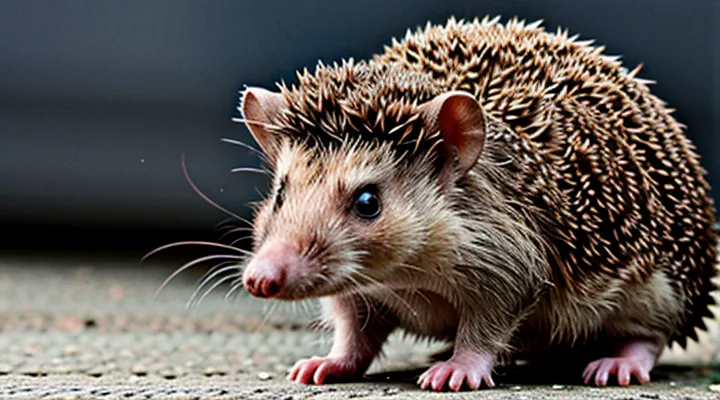
Debunking the Hedgehog-Rat Myth
The Origin of the Misconception
Visual Similarities and Misidentification
Hedgehogs and rats occasionally appear together in low‑light photographs, leading observers to mistake one for the other. Both mammals possess a compact body outline, short limbs, and a tail that may be partially concealed by fur or spines, creating a superficial resemblance that fuels the misconception.
Key visual traits that contribute to misidentification include:
- Rounded silhouette with a length of roughly 15–30 cm.
- Dark, coarse hair covering most of the surface.
- Small, rounded ears positioned near the head’s top.
- Eyes that lack prominent coloration, appearing as simple dark dots.
Distinctive features separate the species unequivocally. Hedgehogs display a dorsal array of rigid spines, each anchored to a follicle and clearly visible when the animal is stationary. Rats lack such structures, exhibiting smooth fur and a more elongated, flexible body. Additionally, hedgehog snouts are short and blunt, while rat muzzles extend into a pointed nose. Recognizing these differences eliminates confusion and disproves the notion that the two animals are interchangeable.
Lack of Public Knowledge About Hedgehogs
Public understanding of hedgehogs remains limited, despite their presence in many urban and rural environments. Most people confuse hedgehogs with rodents, assuming similar habits and health risks. This misconception stems from insufficient exposure to accurate information about hedgehog biology, behavior, and ecological role.
Key gaps in knowledge include:
- Taxonomic classification: hedgehogs belong to the order Erinaceomorpha, not Rodentia.
- Diet: hedgehogs are insectivores, consuming insects, worms, and small invertebrates, whereas rats are omnivorous.
- Disease transmission: hedgehogs rarely carry zoonotic pathogens common to rats, such as leptospirosis.
- Habitat preferences: hedgehogs favor gardens, hedgerows, and woodland edges; rats thrive in sewage systems and densely populated areas.
Educational initiatives can address these gaps by distributing concise fact sheets, incorporating hedgehog modules into school curricula, and promoting citizen‑science projects that document local hedgehog populations. Accurate public perception reduces unwarranted pest control measures and supports conservation of native hedgehog species.
Understanding Hedgehogs
Biological Classification of Hedgehogs
Order: Eulipotyphla
The order Eulipotyphla groups hedgehogs, shrews, moles and related insectivorous mammals. Members share a dental formula with sharp, pointed teeth adapted for an invertebrate diet, and a skull structure lacking the extensive cheek teeth seen in rodents. Genetic analyses place Eulipotyphla within the superorder Laurasiatheria, distinct from the order Rodentia, which includes rats and mice.
Hedgehogs possess spines formed from modified hairs, a feature absent in any rodent species. Their reproductive biology differs markedly: hedgehogs have a gestation period of 35–45 days and typically give birth to a small litter, whereas rats gestate for about 21–23 days and produce larger litters. Metabolic rates, sensory adaptations and ecological niches also diverge; hedgehogs are nocturnal foragers of soil invertebrates, while rats are omnivorous and highly adaptable to human environments.
Consequently, the classification of hedgehogs within Eulipotyphla disproves the notion that they belong to the rat family. The taxonomic separation is supported by:
- Distinct order-level placement (Eulipotyphla vs. Rodentia)
- Unique morphological traits (spines, dental patterns)
- Divergent genetic markers identified in molecular studies
These facts eliminate the myth that hedgehogs are a type of rat.
Family: Erinaceidae
Hedgehogs belong to the family Erinaceidae, a distinct mammalian lineage separate from the order Rodentia. Members of Erinaceidae are characterized by spiny dorsal coats, a compact body shape, and a diet that includes insects, small vertebrates, and plant material. Unlike rodents, which possess continuously growing incisors, erinaceids have a full set of teeth without the specialized gnawing apparatus.
Key traits of Erinaceidae include:
- Presence of keratinous spines covering the back and sides.
- Ability to roll into a defensive ball, exposing only spines.
- Seasonal hibernation in temperate regions.
- Olfactory and auditory senses adapted for nocturnal foraging.
Taxonomically, the family comprises two subfamilies:
- Erinaceinae – true hedgehogs, found across Europe, Asia, and Africa.
- Galericinae – moon‑shaped hedgehogs or gymnures, native to Southeast Asia.
Genetic analyses place Erinaceidae within the order Eulipotyphla, alongside shrews and moles. This classification reflects evolutionary divergence that occurred over 70 million years ago, predating the radiation of modern rodents.
The misconception that hedgehogs are rats stems from superficial similarities such as small size and nocturnal habits. However, anatomical differences—spines versus fur, dentition, and skeletal structure—clearly separate the two groups. Erinaceidae remains a unique family defined by its spiny armor and specialized ecological niche.
Key Physical Characteristics of Hedgehogs
Spines
Hedgehog spines are modified hairs composed of keratin, the same protein that forms human nails and hair. Each spine grows from a follicle anchored in the skin and terminates in a sharp tip. The base of the spine is reinforced by a bony plate that connects to the underlying dermal tissue, providing structural rigidity. When threatened, hedgehogs contract muscles attached to the spine bases, causing the spines to stand erect and form a protective shield.
Rats possess a coat of soft fur lacking the hardened keratinized tips characteristic of hedgehog spines. Rat hair serves primarily for insulation and tactile sensing; it does not provide a defensive barrier. The following points illustrate the fundamental differences:
- Composition: hedgehog spines = dense keratin with bony support; rat fur = keratinized hair without reinforcement.
- Function: hedgehog spines = defense; rat fur = temperature regulation and camouflage.
- Growth pattern: hedgehog spines emerge from specialized follicles that produce a single, stiff shaft; rat hair follicles produce multiple fine, flexible strands.
- Morphology: hedgehog spines are pointed, rigid, and can be retracted; rat hairs are blunt, pliable, and continuously shed.
The evolutionary pathway of hedgehog spines traces back to the order Eulipotyphla, where selective pressure favored individuals capable of deterring predators through a mechanical barrier. Rats, belonging to the order Rodentia, evolved different survival strategies, such as rapid reproduction and burrowing, without developing defensive spines.
Consequently, the notion that a hedgehog could be classified as a rat based on external appearance is unsupported by anatomical evidence. Spines constitute a distinct, specialized adaptation absent in rodent species, confirming the myth’s inaccuracy.
Snout and Paws
The hedgehog’s snout differs fundamentally from that of a rat. Hedgehogs possess a short, tapered muzzle equipped with a highly developed olfactory epithelium, allowing precise scent detection of insects and earthworms. Their nasal cavities are lined with moist, hair‑less skin that supports rapid moisture exchange, a feature absent in rats. Rats have a longer, more cylindrical snout with prominent whiskers that serve tactile functions; their olfactory capacity, while strong, is adapted to a broader diet that includes grains and seeds.
Hedgehog paws are specialized for digging and burrowing. Each foot contains five short, robust claws that can exert considerable force to loosen soil. The paw pads are thick, keratinized, and covered with a protective layer of fur that reduces abrasion. Rats, by contrast, have elongated hind feet with relatively slender claws designed for climbing and rapid locomotion on varied surfaces. Their forepaws feature dexterous digits suited for handling objects, a capability hedgehogs lack.
Key morphological distinctions:
- Snout length: hedgehog short and tapered; rat long and cylindrical.
- Sensory focus: hedgehog olfactory; rat tactile (whiskers).
- Claw structure: hedgehog short, robust; rat long, slender.
- Paw pad composition: hedgehog thick, keratinized; rat thin, flexible.
These anatomical differences invalidate the notion that hedgehogs belong to the same taxonomic group as rats.
Size and Weight
Hedgehogs and rats differ markedly in physical dimensions, eliminating any basis for the claim that they belong to the same species group.
A European hedgehog (Erinaceus europaeus) typically measures 20–30 cm from nose to tail tip and weighs 400–1 200 g. The common brown rat (Rattus norvegicus) averages 20–25 cm in body length, with a tail adding another 15–20 cm, and its mass ranges from 250 g to 500 g. The size overlap is limited to the lower end of the hedgehog’s spectrum, while the hedgehog’s maximum weight exceeds that of most rats by a factor of two or more.
Key distinctions:
- Body shape: hedgehogs possess a compact, rounded torso covered in spines; rats have an elongated, hair‑covered form.
- Tail length: hedgehogs have a short, stubby tail (1–2 cm); rats feature a long, hairless tail proportionate to body length.
- Weight distribution: hedgehogs carry a higher proportion of body mass in muscle and skeletal structure; rats allocate more to adipose tissue relative to size.
These measurable differences confirm that hedgehogs are neither rats nor members of the Muridae family, rendering the myth scientifically untenable.
Behavioral Traits of Hedgehogs
Nocturnal Habits
Hedgehogs and rats share a nocturnal schedule, but their nightly activities differ markedly. Hedgehogs emerge after dusk, relying on keen olfactory and tactile senses to locate insects, earthworms, and snails. Their foraging routes are solitary, and they retreat to a self‑made nest of leaves or burrows before sunrise.
Rats also become active at night, yet they operate in flexible social groups, exploit a broader range of food sources, and display pronounced gnawing behavior. Their territories often overlap, leading to frequent encounters with conspecifics and competition for resources.
Key distinctions in nocturnal habits:
- Sensory focus: Hedgehogs prioritize smell and touch; rats emphasize hearing and whisker vibration.
- Dietary breadth: Hedgehogs specialize in invertebrates; rats consume grains, fruits, waste, and occasional meat.
- Social structure: Hedgehogs are solitary foragers; rats form colonies with hierarchical interactions.
- Resting sites: Hedgehogs construct insulated nests; rats occupy burrows, sewers, or building voids.
These differences demonstrate that sharing a night‑time activity pattern does not equate hedgehogs with rats, thereby refuting the misconception that the two species are interchangeable.
Diet and Foraging
Hedgehogs obtain nutrition primarily from invertebrates. Earthworms, beetles, slugs, and snails dominate their natural intake. Small vertebrates such as frogs and baby mice are consumed opportunistically, but they constitute a minor portion of the diet. When available, hedgehogs also eat fruits, berries, and fungi, supplementing protein with carbohydrates and fiber.
Foraging behavior follows a nocturnal pattern. Hedgehogs leave their nests after dusk, covering up to five kilometers per night in search of prey. Their keen sense of smell guides them to moist soil where earthworms surface, while tactile whiskers detect hidden insects beneath leaf litter. Digging paws and strong forelimbs enable excavation of burrows and rotten wood, exposing concealed food sources.
Key dietary components can be summarized:
- Earthworms
- Beetles and larvae
- Slugs and snails
- Small amphibians and reptiles
- Fruit, berries, and mushrooms
Comparative analysis shows that rats rely heavily on grains, seeds, and human refuse, with a higher tolerance for plant material and a broader omnivorous scope. Hedgehogs, by contrast, specialize in protein‑rich invertebrates, reflecting distinct digestive physiology and foraging strategies. This divergence disproves the notion that hedgehogs share the same ecological niche as rats.
Defense Mechanisms
The belief that hedgehogs belong to the same taxonomic group as rats is inaccurate. Hedgehogs (family Erinaceidae) and rats (family Muridae) differ markedly in anatomy, behavior, and survival strategies.
Hedgehog defense mechanisms:
- Sharp keratinous spines covering the back.
- Ability to curl into a tight ball, exposing only spines.
- Release of a mild, unpleasant odor when threatened.
- Nocturnal activity reducing encounters with predators.
Rat defense mechanisms:
- Rapid sprinting and agile climbing.
- Extensive burrow networks offering escape routes.
- Social grouping that enables collective vigilance.
- High reproductive rate ensuring population resilience.
The contrasting defenses illustrate divergent evolutionary paths. Spines and ball formation are unique to hedgehogs, whereas speed, burrowing, and social behavior characterize rats. These differences confirm that hedgehogs are not rodents and dispel the misconception linking the two species.
Understanding Rats
Biological Classification of Rats
Order: Rodentia
Rodents belong to the order Rodentia, a mammalian group defined by continuously growing incisors that must be worn down by gnawing. Members possess a single pair of upper incisors and a corresponding pair of lower incisors, a dental formula typically expressed as 1/1, 0/0, 0/0, 3/3. Their skulls feature a diastema separating the incisors from the molars, and most species exhibit a high reproductive rate and omnivorous or herbivorous diets.
Hedgehogs are classified in the order Erinaceomorpha, not Rodentia. Their dentition lacks the characteristic rodent incisors; instead, they have a mixture of sharp premolars and molars suited for an insectivorous diet. The skeletal structure includes spines derived from modified hairs, a feature absent in all rodents. Phylogenetic analyses place hedgehogs closer to shrews (order Eulipotyphla) than to any rodent lineage.
The misconception that hedgehogs are a type of rat arises from superficial visual similarities, such as small body size and nocturnal habits. Taxonomic evidence refutes this claim:
- Dental pattern: rodent incisors vs. hedgehog premolars/molars.
- Skeletal adaptations: gnawing jaw mechanics vs. spined integument.
- Evolutionary lineage: Laurasiatheria (Rodentia) vs. Eulipotyphla (Erinaceomorpha).
Consequently, hedgehogs and rats occupy distinct orders, each with unique morphological and genetic signatures. The myth lacks scientific support.
Family: Muridae
The misconception that hedgehogs belong to the same taxonomic group as rats stems from superficial similarity in size and nocturnal habits. Hedgehogs are members of the family Erinaceidae, a distinct order of insectivorous mammals, whereas rats are classified within the family Muridae, which comprises true rodents.
Muridae is the largest mammalian family, encompassing over 1,500 species, including typical house mice, brown rats, and numerous wild varieties. Key characteristics of Muridae include:
- Continuously growing incisors that require constant gnawing.
- A dental formula of 1.0.0.3/1.0.0.3.
- A skull morphology adapted for gnawing, with a pronounced infraorbital foramen.
- Reproductive strategies featuring short gestation periods and large litters.
- Distribution across diverse habitats, from urban environments to remote grasslands.
These traits contrast sharply with Erinaceidae, which possess spines for defense, lack ever‑growing incisors, and primarily consume insects, worms, and small vertebrates. Consequently, hedgehogs and rats occupy separate evolutionary lineages, rendering the label “rat” biologically inaccurate for hedgehogs.
Key Physical Characteristics of Rats
Fur and Tail
Hedgehogs possess a covering of keratinized spines rather than true fur. Each spine is a modified hair, stiff and sharp, emerging from a thin skin layer that lacks the dense undercoat typical of rodents. The skin between spines is relatively hairless, allowing the animal to curl into a tight ball for defense. In contrast, rats are covered with a uniform coat of soft fur, composed of guard hairs and a plush underlayer that provides insulation and sensory function. The rat’s fur extends over the entire body, including the tail, which is covered with fine, short hairs that increase surface area for thermoregulation.
The tail structures differ markedly:
- Hedgehog tail: short, tapered, covered only by a sparse fringe of soft hairs; primarily a skeletal extension with limited sensory function.
- Rat tail: long, flexible, fully enveloped in fine fur; rich in blood vessels and sensory receptors, aiding balance and heat exchange.
These anatomical distinctions confirm that hedgehogs and rats belong to separate taxonomic groups and that the notion of a hedgehog being a rat lacks scientific basis.
Teeth and Whiskers
Hedgehogs and rats differ fundamentally in dental structure. Hedgehogs possess a set of sharp, needle‑like incisors and a single pair of robust, grinding molars designed for crushing insects and small vertebrates. Their teeth lack the continuously growing enamel found in rodents, preventing overgrowth and eliminating the need for constant gnawing. Rats, by contrast, have a pair of ever‑growing incisors that must be worn down by chewing hard materials; their molars are flatter and suited for grinding plant matter.
Whisker morphology further distinguishes the two species. Hedgehogs bear long, stiff vibrissae arranged in a dense facial network, providing precise tactile feedback for navigating through leaf litter and detecting prey. Each whisker is anchored in a deep follicle with a rich supply of nerve endings, enabling rapid detection of subtle air currents. Rats exhibit shorter, more flexible whiskers that form a broader sensory field around the nose and cheeks, optimized for exploring confined tunnels and locating food sources.
Key differences can be summarized:
- Dental growth: hedgehog teeth are finite; rat incisors are continuously growing.
- Tooth function: hedgehog incisors pierce; rat incisors gnaw.
- Whisker length: hedgehog vibrissae are longer and stiffer; rat vibrissae are shorter and more pliable.
- Sensory focus: hedgehog whiskers emphasize precise, localized detection; rat whiskers support broader environmental scanning.
These anatomical contrasts invalidate the notion that a hedgehog qualifies as a rat. The distinct dental and vibrissal adaptations reflect separate evolutionary pathways, confirming that the two animals belong to unrelated taxonomic groups.
Size and Weight
Hedgehogs and rats differ markedly in dimensions and mass. A typical European hedgehog measures 15–30 cm from nose to tip of spines and weighs 400–1,200 g. In contrast, the common brown rat reaches 20–25 cm body length (excluding a 15–20 cm tail) and averages 200–500 g.
Key comparative figures:
- Length (excluding tail):
- Hedgehog: 15–30 cm
- Rat: 20–25 cm
- Tail length:
- Hedgehog: absent
- Rat: 15–20 cm
- Body mass:
- Hedgehog: 0.4–1.2 kg
- Rat: 0.2–0.5 kg
The hedgehog’s bulk exceeds that of most rats, while its overall shape is compact and rounded, lacking the elongated torso and tail characteristic of rodents. Consequently, size and weight alone disprove any classification of hedgehogs as rats.
Behavioral Traits of Rats
Social Structures
The belief that hedgehogs belong to the same group as rats is inaccurate; hedgehogs are insectivorous mammals of the order Erinaceomorpha, while rats are rodents of the order Rodentia. Taxonomic separation reflects distinct evolutionary pathways and divergent behavioral patterns.
Hedgehogs maintain a solitary lifestyle. Adults occupy individual burrows, defend personal foraging areas, and interact with conspecifics primarily during the breeding season. Parental care is limited to a brief nesting period, after which juveniles disperse to establish independent territories.
Rats exhibit complex colony organization. Groups form hierarchical structures with dominant and subordinate individuals. Social bonds are reinforced through mutual grooming, communal nesting, and coordinated foraging. Reproductive activity occurs year‑round, with multiple litters supported by group members.
Key contrasts in social organization:
- Group size: hedgehogs – single individuals; rats – colonies of dozens.
- Interaction frequency: hedgehogs – occasional, seasonal; rats – continuous, daily.
- Cooperative behavior: hedgehogs – minimal; rats – extensive (grooming, shared nests).
These differences demonstrate that hedgehogs and rats possess fundamentally unlike social systems, invalidating the notion that they are equivalent species. The myth rests on superficial resemblance and ignores critical biological evidence.
Reproduction and Lifespan
Hedgehogs and rats belong to distinct biological orders; the former are erinaceids, the latter rodents. Their reproductive systems reflect this separation.
Female hedgehogs reach sexual maturity at 8‑12 months, depending on species and nutrition. Estrous cycles occur roughly every two weeks during the breeding season, typically from April to September in temperate regions. Mating is brief, and a single litter contains 4‑7 offspring after a gestation of 35‑45 days. Newborns are altricial, blind and hairless, gaining full fur within ten days and weaning at three weeks.
Key reproductive parameters:
- Sexual maturity: 8–12 months
- Breeding season: spring–early autumn
- Estrous interval: ~14 days
- Litter size: 4–7
- Gestation: 35–45 days
- Weaning age: ~21 days
Lifespan differs markedly from that of common rats. In the wild, hedgehogs average 2–4 years, facing predation, disease, and habitat loss. Captive individuals, provided with balanced diets and veterinary care, frequently exceed 7 years, with records of 10 years or more. By contrast, the average laboratory rat lives 2–3 years, and wild rats rarely surpass 1 year due to high mortality rates.
The divergence in reproductive timing, litter size, and longevity underscores the taxonomic separation between hedgehogs and rats, refuting the notion that they are interchangeable species.
Habitat and Diet
Hedgehogs occupy a range of temperate environments, from deciduous woodlands and scrubby hedgerows to suburban gardens and agricultural margins. They favor areas with dense ground cover, fallen leaves, and loose soil that permits shallow burrowing. Seasonal movement toward sheltered sites occurs during colder months, where nests are constructed from dry vegetation and leaf litter. Populations thrive where human‑altered landscapes retain natural features such as hedgerows and compost heaps, providing both refuge and foraging opportunities.
The species’ diet is primarily insectivorous, yet it includes a broader spectrum of prey and occasional plant matter. Typical food items are:
- Earthworms and larvae
- Slugs and snails
- Beetles, caterpillars, and other arthropods
- Small amphibians and reptiles when available
- Fallen fruit and seeds in limited quantities
Feeding occurs mainly at night; hedgehogs locate prey by scent and tactile cues. Water intake is satisfied through dew, moisture in prey, and occasional drinking from shallow sources. Their digestive system efficiently extracts nutrients from high‑protein, low‑fat meals, supporting the energy demands of nocturnal activity and winter torpor.
Distinguishing Hedgehogs from Rats
Evolutionary Divergence
The misconception that hedgehogs belong to the rat family stems from superficial similarity in size and nocturnal habits. Scientific classification places hedgehogs in the order Eulipotyphla, while rats are members of the order Rodentia. This taxonomic separation reflects a deep evolutionary split.
Key points of evolutionary divergence:
- Common ancestor: The last shared ancestor of eulipotyphlans and rodents lived over 70 million years ago, during the early Cretaceous period.
- Morphological traits: Hedgehogs possess spines derived from modified hairs, a feature absent in rodents. Rodents exhibit continuously growing incisors adapted for gnawing, a trait not found in hedgehogs.
- Genomic evidence: Comparative genomics reveals distinct gene families governing enamel formation, sensory perception, and metabolic pathways, supporting separate evolutionary lineages.
- Reproductive strategies: Hedgehogs give birth to relatively few, well‑developed offspring, whereas many rodents produce large litters with rapid maturation.
These differences confirm that hedgehogs and rats diverged early in mammalian evolution, occupying separate branches of the phylogenetic tree. The claim that a hedgehog is a type of rat lacks any taxonomic or genetic support.
Genetic Differences
Hedgehogs belong to the order Eulipotyphla, while rats are members of the order Rodentia. Their evolutionary split occurred over 100 million years ago, resulting in distinct genomic architectures. The hedgehog genome comprises approximately 2.9 billion base pairs organized into 48 chromosomes, whereas the rat genome contains about 2.75 billion base pairs distributed across 42 chromosomes.
Key genetic distinctions include:
- Protein‑coding gene families: Hedgehogs possess expanded keratin‑associated genes that produce spines, a feature absent in rats. Rats show enrichment of olfactory receptor genes, supporting their reliance on scent detection.
- Mitochondrial DNA: Hedgehog mitochondrial sequences diverge by more than 20 % from those of rats, reflecting separate maternal lineages.
- Regulatory elements: Hedgehog enhancers drive expression of Hedgehog‑specific developmental pathways (e.g., Sonic hedgehog signaling), while rat enhancers regulate rapid reproductive cycles.
These differences confirm that hedgehogs and rats are genetically unrelated, invalidating any claim that they belong to the same species or share a common genetic identity.
Ecological Roles and Habitats
Hedgehog Habitats
Hedgehogs occupy a range of environments across Europe, Asia, and parts of Africa, adapting to both natural and human‑altered landscapes. In forests, they favor deciduous and mixed woodlands with abundant leaf litter, fallen logs, and dense undergrowth that provide cover and a steady supply of insects, earthworms, and snails. Open grasslands and meadows support populations where short vegetation and scattered hedgerows offer foraging opportunities and shelter from predators.
Urban and suburban settings host sizable hedgehog communities. Gardens, parks, and allotments supply food sources such as garden snails, slugs, and beetles, while compost heaps and log piles create suitable nesting sites. Connectivity between green spaces—through hedgerows, wildlife corridors, or low fences—enhances movement and genetic exchange, reducing the risk of local isolation.
Agricultural areas present mixed suitability. Arable fields with minimal pesticide use can sustain hedgehog activity, especially when adjacent to field margins, hedgerows, or uncultivated patches. However, intensive farming, heavy machinery, and frequent tillage diminish habitat quality and increase mortality.
Key habitat components for thriving hedgehog populations include:
- Cover: leaf litter, brush, stone piles, and dense vegetation.
- Food availability: abundant invertebrates, especially during dusk and night.
- Nesting sites: shallow depressions, compost heaps, log piles, or purpose‑built hedgehog houses.
- Safe passage: uninterrupted corridors linking feeding and nesting areas.
Conservation efforts that preserve or restore these elements directly counter the misconception that hedgehogs share the ecological niche of rats, emphasizing their distinct habitat preferences and behaviors.
Rat Habitats
Rats thrive in environments that provide shelter, food, and water, regardless of human presence. Urban settings offer abundant waste, hidden crevices, and underground infrastructure; these conditions support large, stable colonies. Agricultural lands present grain stores, livestock facilities, and irrigation channels, which supply a constant food source and nesting sites. Natural habitats such as forests, grasslands, and wetlands contain burrows, fallen timber, and dense vegetation that protect against predators and extreme weather.
- Sewer and drainage systems – dark, moist tunnels with steady temperature.
- Residential buildings – attics, basements, wall voids where food residues accumulate.
- Farm structures – barns, silos, and feed bins that attract rodents.
- Wild ecosystems – root systems, rock piles, and riverbanks offering natural shelters.
Hedgehogs occupy markedly different niches. They favor open ground, leaf litter, and low vegetation where insects are plentiful. Their dens are shallow, temporary burrows rather than permanent, hidden networks. This ecological separation underscores why the notion of a hedgehog being a rat lacks factual basis. Understanding rat habitats clarifies the biological distinctions that invalidate the misconception.
Dietary Disparities
What Hedgehogs Eat
Hedgehogs are primarily insectivores, relying on a diet rich in protein and low in fat. In the wild they consume a variety of invertebrates, including beetles, caterpillars, earthworms, and slugs. These prey items provide the essential amino acids required for growth, immune function, and energy metabolism.
Domestic hedgehogs can thrive on a balanced regimen that mimics natural intake. Recommended components are:
- Commercial hedgehog dry kibble formulated for high protein (30‑35 %) and moderate fat (10‑15 %).
- Live or frozen insects such as mealworms, crickets, and waxworms, offered 2–3 times weekly.
- Small portions of cooked lean meat (chicken, turkey) without seasoning.
- Fresh, pesticide‑free fruits and vegetables in limited quantities: apple slices, blueberries, carrots, and leafy greens.
- Calcium supplement (powdered) mixed into dry food to support bone health.
Foods that must be avoided include dairy products, high‑sugar treats, raw potatoes, chocolate, and any item containing garlic or onion. These substances can cause digestive upset or toxicity.
Hydration is maintained through constant access to fresh water. For indoor hedgehogs, a shallow water dish or a drip bottle prevents spillage and encourages regular drinking.
Monitoring body condition weekly—checking for a thin waist and a visible spine—allows early adjustment of portions. Adequate protein, controlled fat, and the exclusion of harmful items ensure that hedgehogs maintain healthy weight, robust immunity, and active behavior, dispelling misconceptions that associate them with rodent dietary patterns.
What Rats Eat
Rats belong to the family Muridae, a group of true rodents, whereas hedgehogs are members of the family Erinaceidae. Their biology, behavior, and dietary requirements differ markedly, dispelling the erroneous belief that hedgehogs are a type of rat.
Rats are omnivorous mammals capable of exploiting a wide range of food sources. Their diet reflects opportunistic feeding habits and includes:
- Grains and cereals (wheat, oats, rice)
- Seeds and nuts (sunflower seeds, peanuts, almonds)
- Fresh fruits (apples, berries, grapes)
- Vegetables (carrots, lettuce, peas)
- Protein sources (insects, eggs, meat scraps)
- Processed human foods (bread, cheese, pet food)
In addition to solid foods, rats regularly consume water and may ingest small amounts of dairy products. Their gastrointestinal tract efficiently processes both plant and animal matter, allowing rapid adaptation to urban, agricultural, or laboratory settings.
Nutritional balance influences growth, reproduction, and disease resistance. Excessive fat or sugar intake predisposes rats to obesity and metabolic disorders, while a diet rich in fiber supports digestive health and reduces the risk of gastrointestinal blockage.
Accurate knowledge of rat feeding habits clarifies their ecological niche and reinforces the distinction between rodents and hedgehogs, confirming that the two groups are unrelated.
Why the Distinction Matters
Conservation Efforts for Hedgehogs
Hedgehogs are experiencing a measurable decline across their native range, a trend often obscured by the mistaken belief that they are simply another form of rodent. Clarifying their taxonomic status highlights the need for species‑specific protection measures.
Primary pressures include fragmentation of hedgerows, increasing traffic fatalities, widespread pesticide application, and predation by free‑roaming domestic animals. Each factor reduces breeding success and survivorship, accelerating population loss.
Targeted conservation actions consist of:
- Restoring and connecting hedgerow networks to provide foraging corridors.
- Installing low‑impact road crossing structures in high‑mortality zones.
- Implementing pesticide regulations that safeguard invertebrate prey.
- Promoting responsible pet ownership through mandatory containment and vaccination.
- Funding long‑term monitoring programs that record population trends and habitat quality.
National wildlife agencies, charitable trusts, and community groups coordinate funding streams, legal frameworks, and volunteer initiatives to deliver these measures. Collaborative projects have already yielded measurable increases in local hedgehog densities where interventions are applied.
Sustained implementation of the outlined strategies directly counters the drivers of decline, ensuring that hedgehogs remain a distinct and viable component of the ecosystem rather than being conflated with unrelated species.
Pest Control for Rats
Rats cause structural damage, contaminate food, and transmit diseases; effective control relies on a systematic approach.
First, eliminate conditions that attract rodents. Store food in sealed containers, repair leaks, and remove clutter that provides shelter. Regularly inspect basements, attics, and crawl spaces for signs such as droppings, gnaw marks, and nesting material.
Second, block entry points. Use steel wool, concrete, or metal flashing to seal gaps around pipes, vents, and foundation cracks. Install door sweeps on exterior doors and ensure windows close tightly.
Third, implement trapping and baiting. Choose from the following methods:
- Snap traps: positioned along walls, baited with peanut butter or dried fruit, checked daily.
- Live‑catch traps: release captured rats at least 100 m from the property, following local regulations.
- Electronic traps: deliver a rapid, humane kill, suitable for indoor use.
- Anticoagulant baits: placed in tamper‑resistant stations, monitored to prevent non‑target exposure.
Fourth, consider professional pest‑management services for severe infestations. Certified technicians assess the scope, apply integrated pest‑management strategies, and ensure compliance with safety standards.
Finally, maintain ongoing vigilance. Conduct quarterly inspections, repeat exclusion measures after repairs, and keep sanitation practices consistent. A disciplined, multi‑step program prevents re‑infestation and protects health and property.
Public Understanding and Wildlife Interaction
Public perception often conflates hedgehogs with rodents, leading to inaccurate labeling and inappropriate handling. This confusion stems from superficial similarities—size, nocturnal habits, and a spiny exterior—that mask fundamental biological differences. Hedgehogs belong to the family Erinaceidae, possess a unique defensive curl, and consume insects, while rats are murids with highly adaptable diets and social structures.
Misidentification influences wildlife interaction in three measurable ways:
- Habitat disturbance – Individuals who mistake hedgehogs for pests may relocate or eradicate them, disrupting local invertebrate control.
- Health risk assessment – Assuming hedgehogs carry the same disease profile as rats prompts unnecessary quarantine measures, diverting resources from genuine threats.
- Conservation support – Erroneous classification reduces public advocacy for hedgehog-friendly initiatives, such as garden refuges and road crossing structures.
Effective communication strategies address these issues by presenting clear taxonomic facts, visual identification guides, and evidence‑based risk assessments. Educational campaigns that separate hedgehog ecology from rodent stereotypes improve community engagement and promote coexistence. When the public recognizes hedgehogs as distinct wildlife, interaction practices shift toward protection rather than eradication, enhancing urban biodiversity.