
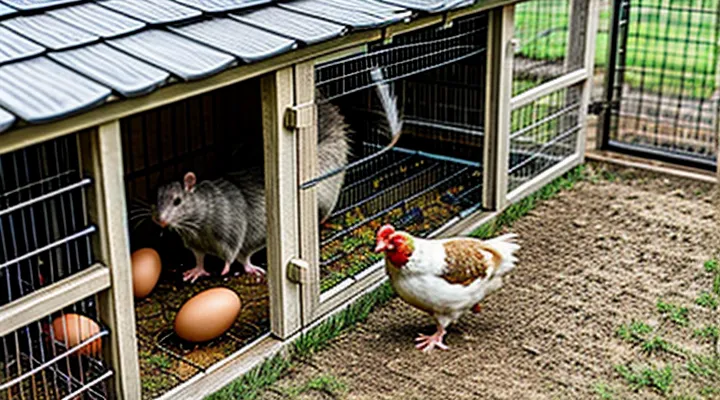
Understanding the Rat Threat
Why Rats Target Chicken Coops
Nutritional Value of Eggs
Eggs provide a concentrated source of high‑quality protein, essential amino acids, and a range of micronutrients that support growth, repair, and metabolic functions. When rodents infiltrate a poultry enclosure and remove eggs, the loss translates directly into a deficit of these nutrients for both humans and livestock that rely on the product.
- Protein: approximately 6 g per large egg, delivering about 12 % of the daily requirement for an average adult.
- Vitamin D: 40 IU, contributing to calcium absorption and bone health.
- Vitamin B12: 0.6 µg, critical for nerve function and red‑blood‑cell formation.
- Riboflavin (B2): 0.2 mg, involved in energy‑production pathways.
- Selenium: 15 µg, an antioxidant trace element.
- Choline: 125 mg, essential for liver function and brain development.
- Lutein and zeaxanthin: 250 µg combined, supporting ocular health.
The egg yolk supplies the majority of fat‑soluble vitamins (A, D, E, K) and cholesterol, which, in moderation, serve as building blocks for hormone synthesis. The egg white contains most of the protein and is low in calories, making it valuable for weight‑management diets. Loss of eggs to rodent theft reduces the availability of these nutrients, potentially affecting dietary quality and economic returns for producers.
Easy Accessibility of Food and Shelter
Rats infiltrate poultry housing because food and shelter are readily available. Eggs left unsecured and feed scattered on the ground provide a constant source of nourishment, while gaps in the coop’s structure offer safe nesting sites. The combination of abundant calories and protected resting places creates a low‑effort pathway for rodents to enter, locate, and remove eggs.
Easy access to food results from:
- Uncovered egg trays that allow direct handling.
- Feed bins without tight lids, spilling grain onto the floor.
- Improper storage of supplemental feed outside the coop.
Shelter is facilitated by:
- Holes in wire mesh or damaged panels.
- Loose roofing material that creates hidden cavities.
- Clutter such as straw or nesting boxes that serve as temporary hideouts.
Mitigation measures focus on eliminating these attractions:
- Install solid, predator‑grade wire and seal all openings larger than ¼ inch.
- Use lockable, elevated feed containers to prevent spillage.
- Collect eggs into sealed baskets immediately after laying.
- Maintain a clean environment by removing debris and excess bedding daily.
- Conduct regular inspections to detect and repair structural weaknesses.
By removing the easy availability of nourishment and protected resting areas, the incentive for rodents to target egg production diminishes sharply.
Common Rat Species in Agricultural Settings
Norway Rats
Norway rats (Rattus norvegicus) are the primary rodent species responsible for pilfering eggs from poultry houses. Their large size, strong forelimbs, and keen sense of smell enable them to locate and extract eggs concealed within nesting boxes.
The species exhibits nocturnal foraging patterns, allowing access to coops when chickens are roosting. Their omnivorous diet includes protein‑rich sources such as eggs, which provide a high‑calorie reward. Individual rats can weigh up to 500 g, giving them the strength to lift and carry whole eggs.
Typical entry and theft techniques include:
- Climbing ladders, fence rails, or vegetation to reach elevated coop openings.
- Squeezing through gaps as small as 2 cm due to flexible ribcage and muscular neck.
- Gnawing through wood, wire mesh, or plastic panels weakened by moisture or rust.
- Dragging eggs along the floor or through burrows to concealed storage sites outside the coop.
Effective countermeasures focus on eliminating access points and reducing attractants:
- Seal all openings larger than 1 cm with metal flashing or hardware cloth.
- Install reinforced roofing and secure lid locks on nesting boxes.
- Maintain a clean environment by removing spilled feed and egg shells promptly.
- Deploy snap traps or electronic bait stations in proximity to known rat pathways, rotating placement to prevent habituation.
- Conduct regular inspections for gnaw marks, droppings, and burrow entrances, addressing any breach immediately.
By understanding the physical capabilities and behavioral drivers of Norway rats, producers can implement targeted barriers that prevent egg loss and protect flock health.
Roof Rats
Roof rats (Rattus rattus) are agile climbers that frequently exploit the upper structures of poultry houses. Their slender bodies and long tails allow them to navigate rafters, vent pipes, and wire mesh with ease. When a coop’s roof or attic space contains gaps, roof rats can enter, locate nesting material, and detect the warm, protein‑rich environment surrounding laying hens.
Once inside, roof rats use their sharp incisors to gnaw through thin wood, insulation, or wiring to reach the interior. They are attracted to freshly laid eggs because the membranes provide moisture and nutrients. A typical sequence includes:
- Detecting an egg through scent and heat cues.
- Positioning on the edge of a nest box.
- Biting the shell at a weak point.
- Extracting the contents with their forepaws.
The damage extends beyond egg loss. Roof rats often contaminate feed and water with urine and droppings, introduce pathogens such as Salmonella, and cause structural wear by chewing on wiring, which can lead to fire hazards.
Effective control measures focus on eliminating entry routes and reducing attractants. Seal all roof penetrations with steel wool and metal flashing, install tight‑fitting hardware cloth around vent openings, and maintain a clean coop interior. Regular inspections of the attic and roof space can reveal gnaw marks, droppings, or nesting material, allowing prompt removal before infestations become severe.
House Mice (as secondary concern)
House mice often appear near chicken coops, attracted by discarded feed and the occasional stray egg. Their small size allows entry through gaps as narrow as a quarter‑inch, making them difficult to exclude with the same barriers that stop larger rodents.
- Mice gnaw on wiring and insulation, creating fire hazards that indirectly affect egg production.
- Their foraging behavior includes nibbling on cracked eggs, resulting in loss of yolk and increased contamination risk.
- Unlike rats, mice rarely transport whole eggs; they focus on remnants and soft tissue, which can still compromise flock health.
- Populations expand quickly; a single female can produce up to ten litters per year, each with five to six offspring, amplifying the threat to coop integrity.
Effective control measures for mice differ from those used for rats. Seal openings smaller than 1/4 in., remove all feed sources at night, and employ snap traps or bait stations designed for small rodents. Regular inspection of coop foundations and perimeters prevents mouse ingress and reduces the secondary impact on egg security.
The Art of Egg Theft: Rat Strategies
Surveillance and Reconnaissance
Observing Chicken Routines
Observing chicken routines provides the data needed to anticipate when rats are most likely to attempt egg theft. Chickens follow a predictable daily cycle: early‑morning feeding, mid‑day foraging, late‑afternoon nesting, and night‑time roosting. Each phase creates a specific window of vulnerability for the coop.
Key observations include:
- Feeding times – Rats are attracted to spilled grain; note the exact moments feed is delivered and any leftovers on the floor.
- Nesting behavior – Record the hours when hens settle in the nest boxes, as this is when eggs are most exposed.
- Movement patterns – Track the paths chickens use to enter and exit the coop; frequent traffic may conceal rat activity or, conversely, provide cover for nocturnal incursions.
- Roosting period – Identify the time when all birds are perched and the coop is quiet; reduced activity often coincides with increased rat foraging.
Documenting these patterns in a log enables the identification of anomalies, such as sudden changes in feeding schedule or irregular nesting times, which often precede rat intrusion. Correlating the timing of egg loss with recorded chicken behavior isolates the most critical periods for implementing preventive measures, such as sealing entry points before the late‑afternoon nesting window or reinforcing nest box lids after the final feeding.
Identifying Entry Points
Rats reach a chicken coop through any opening larger than a quarter‑inch. Detecting these gaps prevents egg loss.
Common entry points include:
- Gaps around doors, windows, and ventilation shutters
- Cracks in foundation walls or floorboards
- Holes in roofing material or eaves
- Unsealed pipe, cable, and conduit penetrations
- Open or damaged wire mesh on predator guards
- Loose siding, trim, or roofing underlayment
Inspection should involve:
- Visual sweep of the exterior at ground level and up to the roofline
- Tactile probe of seams, joints, and fasteners with a flashlight and a small mirror
- Placement of tracking powder or flour near suspected gaps to reveal rodent footprints
- Monitoring for gnaw marks, droppings, or urine stains around potential openings
Sealing measures:
- Install stainless‑steel mesh (¼‑inch) over all ventilation openings
- Apply expanding polyurethane foam or cement to fill cracks and holes
- Fit self‑closing hinges and weatherstripping on doors and windows
- Use metal flashing around pipe and cable entries, securing with stainless steel screws
- Replace damaged roofing or siding sections with rodent‑resistant materials
Regular re‑inspection after weather events or structural repairs ensures that new entry points do not develop, maintaining a secure environment for the flock and their eggs.
Infiltration Techniques
Gnawing Through Barriers
Rats access chicken coops by exploiting structural weaknesses, primarily through gnawing. Their incisors generate continuous pressure, allowing them to cut through wood, plastic, and thin metal. The bite force, combined with relentless chewing cycles, reduces barrier thickness to the point of collapse, creating entry points no larger than a quarter‑inch opening.
Material selection determines resistance. Soft‑wood panels yield after 12–18 hours of sustained gnawing, whereas hardwoods such as oak resist for up to 48 hours before fractures appear. Thin‑walled PVC pipe can be breached within 6–8 hours, while galvanized steel mesh of 1 mm gauge requires over 72 hours of constant chewing. Moisture accelerates degradation, softening fibers and facilitating tooth penetration.
Preventative actions focus on strengthening vulnerable components and eliminating attractants:
- Replace soft‑wood framing with hardwood or metal studs.
- Install steel or reinforced aluminum latches that require two‑handed operation.
- Seal gaps with metal flashing or hardware cloth (minimum 0.5 mm mesh).
- Apply rodent‑resistant coatings containing bitter agents to exposed surfaces.
- Remove food spillage and secure feed in rat‑proof containers.
By reinforcing barriers and reducing incentive, egg loss due to rodent intrusion can be substantially lowered.
Squeezing Through Small Openings
Rats possess a flexible skeletal structure and highly mobile ribcage, allowing the skull and shoulders to compress independently. This morphology reduces the minimum body width to roughly 2 cm, enabling passage through gaps that would block larger predators.
When scouting a poultry enclosure, rats test perimeter seams, ventilation slots, and wire mesh joints. They apply pressure with their forepaws, assess resistance, and, if the opening yields, wedge their bodies forward while their hind limbs push from behind. The process repeats until the animal reaches the interior.
Typical entry points and corresponding rat actions include:
- Gap ≤ 2 cm – direct entry without additional manipulation.
- Gap 2–4 cm – forelimb lever to widen the aperture, followed by body compression.
- Mesh holes 1 cm – teeth gnaw at adjacent wires to create a larger passage.
- Ventilation ducts – rat aligns body lengthwise, slides forward, and reorients inside the coop.
Successful infiltration grants access to nesting boxes where eggs are stored. Once inside, rats use their incisors to crack shells, retrieve yolk, and retreat through the same or a newly created opening. Their ability to navigate minute spaces makes sealing all potential gaps essential for protecting poultry assets.
Climbing and Jumping Abilities
Rats exploit exceptional climbing and jumping capacities to breach poultry enclosures and acquire eggs. Their sharp claws and flexible spine generate upward thrust, allowing ascent on smooth wooden slats, wire mesh, and vertical bars. Muscular hind limbs produce rapid, powerful leaps that clear gaps as wide as 10 cm, enabling access to lofts, nesting boxes, and ventilation openings.
Key physical traits that facilitate egg theft:
- Curved, retractable claws that grip irregular surfaces and embed into thin wood.
- Strong forelimb flexor muscles that pull the body upward while the tail balances.
- Hind‑leg extensors that generate explosive force for jumps over barriers.
- Low body mass combined with high agility, reducing load on support structures.
These attributes allow rats to navigate three‑dimensional pathways within a coop, bypassing typical predator‑proof designs and reaching egg‑holding compartments with minimal disturbance.
Methods of Egg Transportation
Rolling Eggs with Noses and Paws
Rats exploit the smooth curvature of eggs by applying pressure with their noses and forepaws, causing the shells to roll toward the coop’s opening. The motion reduces the need for climbing or squeezing through narrow gaps, allowing the rodents to transport multiple eggs in a single, continuous push.
Key aspects of the technique:
- Nasal pressure: Rats press the egg’s apex against the ground, generating a forward thrust.
- Paw leverage: Forepaws grip the shell near the equator, stabilizing the egg while the nose drives it.
- Sequential rolling: After each roll, the rat repositions its body, repeats the push, and advances the egg a few centimeters.
- Collective effort: In groups, individuals synchronize pushes, moving larger eggs faster than a solitary rat could.
Observations indicate that the method works best with freshly laid, unblemished shells. Rough or cracked eggs resist rolling, prompting rats to bite or drag them instead. Understanding this behavior helps poultry keepers design barriers that interrupt the rolling path, such as textured flooring or angled surfaces that deflect the egg’s trajectory.
Carrying Eggs in Mouths
Rats acquire eggs by grasping them with their incisors and holding the shells against the roof of their mouths. The dental structure allows a firm bite without breaking the delicate membrane, while the flexible jaw accommodates the egg’s curvature. This method minimizes damage and preserves the egg’s nutritional value for later consumption or transport.
Key aspects of mouth‑carrying behavior include:
- Grip strength: Muscular contraction secures the egg against the palate, preventing slippage.
- Silhouette reduction: By keeping the egg inside the mouth, the rat presents a compact profile, facilitating movement through narrow burrows and fence gaps.
- Stealth: Internal carriage eliminates external noise and visual cues that could alert chickens or predators.
- Energy efficiency: Transporting a single egg at a time reduces the load, allowing rapid trips between the coop and the nest site.
Observations confirm that rats preferentially select eggs that are already cracked or have softened shells, as these require less force to manipulate. Once an egg is secured, the rat retreats to a concealed location, often a hidden burrow or a nearby storage chamber, where it can consume the contents or store the item for later use. This behavior demonstrates a specialized adaptation for exploiting poultry resources.
Working in Pairs or Groups
Rats that target a chicken coop rarely act alone; cooperation increases success rates and reduces individual risk. When two rats enter the enclosure, one typically distracts the hens while the other retrieves the egg, allowing rapid extraction before the birds react.
In larger groups, roles become more specialized. A scouting pair identifies vulnerable areas, a transport team carries the eggs to a hidden cache, and lookout individuals monitor for predators or human interference. This division of labor streamlines the operation and maximizes the number of eggs stolen per night.
Key cooperative tactics include:
- Coordinated entry: simultaneous breach through separate holes to overwhelm the coop’s defenses.
- Signal exchange: tail flicks or vocalizations indicate when an egg is ready for collection.
- Shared burden: multiple rats share the weight of larger eggs, preventing drops and damage.
- Rotating watch: members alternate between foraging and vigilance, ensuring continuous situational awareness.
The efficiency of paired and group actions directly influences the overall yield of eggs obtained from the coop, demonstrating that collective behavior is a decisive factor in rodent egg‑theft strategies.
Breaking Eggs for Easier Consumption on Site
Rats that infiltrate a chicken coop often target whole eggs, which are difficult to transport and eat quickly. By cracking the shells immediately after removal, they reduce the weight and size of the prey, making it easier to carry back to their nests.
- Cracking creates a liquid interior that can be swallowed without additional handling.
- Broken shells prevent the egg from rolling away, keeping the food within reach.
- The process eliminates the need for a secondary tool, allowing the rat to use its incisors alone.
The behavior also minimizes exposure time in the coop, decreasing the chance of detection by the birds or human caretakers. Rapid consumption of the liquid contents provides a high‑energy meal while the empty shell is discarded, often left behind as evidence of the intrusion.
Impact on Poultry Operations
Economic Losses
Direct Egg Loss
Rats entering a chicken enclosure cause immediate loss of eggs through direct removal, consumption, or damage. Their small size allows them to slip through gaps in wire mesh, ventilation openings, or damaged doors, reaching nesting boxes where hens lay. Once inside, rats grasp eggs with their forepaws, pull them out of the nest, and carry them to hidden corners or burrows. In many cases, the eggs are cracked and the contents eaten, reducing the clutch size available for collection.
Typical indicators of direct egg loss include:
- Missing eggs from nesting boxes despite regular laying patterns.
- Cracked shells or egg contents scattered on the coop floor.
- Rat droppings or gnaw marks near nesting areas.
- Increased activity of rats observed on camera traps or during nighttime inspections.
Prevention focuses on eliminating access points and reducing attractants. Seal all openings larger than ¼ inch, reinforce wire mesh, and install metal flashing around doors. Remove food residues, store feed in rat‑proof containers, and maintain clean bedding. Regular inspections for signs of rodent activity enable swift intervention before substantial egg loss occurs.
Reduced Laying Production Due to Stress
Rats entering a chicken coop create a persistent source of disturbance that triggers chronic stress in laying hens. The presence of rodents, their noises, and occasional attacks on eggs activate the birds’ hypothalamic‑pituitary‑adrenal axis, elevating corticosterone levels and diverting energy from reproduction to survival.
Elevated stress hormones suppress ovarian follicle development, shorten the ovulation cycle, and impair calcium metabolism. The result is a measurable decline in egg output, thinner shells, and longer intervals between layings. Producers often observe a drop of 10‑30 % in daily production when rat activity intensifies.
Reduced egg numbers translate directly into lower revenue and higher feed‑cost per unit. The loss is compounded by increased waste, as hens may discard eggs they perceive as compromised.
Effective mitigation focuses on eliminating the rodent threat and minimizing stressors:
- Seal all openings larger than a quarter inch; install hardware cloth on ventilation shafts.
- Deploy snap traps or bait stations in a rotation to prevent population rebound.
- Remove food spillage and store feed in rodent‑proof containers.
- Provide nesting boxes that are secure, clean, and insulated from drafts.
- Introduce environmental enrichment (perches, dust baths) to lower baseline anxiety.
Consistent implementation of these measures restores hormonal balance, stabilizes laying rates, and protects the economic viability of the operation.
Health Risks
Disease Transmission to Chickens
Rats entering a poultry enclosure can introduce pathogens that jeopardize flock health and egg safety. Direct contact with rat saliva, urine, or feces allows microbes to contaminate feed, water, and nesting material. Once established, infections spread rapidly through the flock, reducing productivity and increasing mortality.
Common zoonotic agents transmitted by rodents to chickens include:
- Salmonella spp. – survives in rodent droppings; contaminates feed and eggs, leading to gastroenteritis in birds and potential food‑borne illness in humans.
- Leptospira interrogans – shed in urine; penetrates skin lesions or mucous membranes, causing renal failure and reproductive loss.
- Streptobacillus moniliformis – causes rat‑bite fever; may produce septicemia in chickens through contaminated wounds.
- Hantavirus – carried in rodent excreta; can infect birds via inhalation of aerosolized particles, resulting in respiratory distress.
Transmission pathways are:
- Feed contamination – rodents gnaw containers, leaving droppings that mix with grain.
- Water source pollution – rats splash urine into troughs, introducing pathogens directly to drinking water.
- Nesting material exposure – shredded bedding becomes a reservoir for bacterial growth, increasing contact with hatchlings.
Preventive actions:
- Seal all openings larger than 1 cm with metal mesh to block entry.
- Install bait stations and snap traps in a perimeter buffer, maintaining a minimum 10‑meter zone free of debris.
- Store feed in rodent‑proof containers; rotate stock regularly to discourage hoarding.
- Clean coop daily, removing droppings and replacing bedding weekly to disrupt microbial cycles.
- Conduct regular health screenings for the flock, focusing on symptoms of salmonellosis and leptospirosis.
Implementing rigorous rodent exclusion and sanitation protocols limits disease introduction, preserves egg quality, and safeguards both animal and public health.
Contamination of Feed and Water
Rats entering a chicken coop frequently contaminate feed and water, creating conditions that facilitate egg loss. Their droppings, urine, and fur become mixed with stored grain and water containers, introducing pathogens that degrade the nutritional quality of the feed and compromise the safety of drinking water. Contaminated resources attract more rodents, increasing the likelihood of repeated incursions and egg theft.
Typical contamination routes include:
- Direct contact of rodents with uncovered feed bins, leaving fecal matter on the surface.
- Chewing through plastic or wire mesh, allowing access to feed bags and water troughs.
- Carrying pathogens from external environments into the coop via their paws and fur.
- Spilling feed while foraging, creating a moist, nutrient‑rich substrate that supports bacterial growth.
These factors diminish flock health, reduce egg production, and make it easier for rats to locate and remove eggs from weakened hens. Effective control measures must target feed and water protection to interrupt the contamination cycle.
Prevention and Mitigation Strategies
Securing the Coop Perimeter
Hardware Cloth Barriers
Hardware cloth, a tightly woven galvanized steel mesh, provides an effective physical barrier against rodent intrusion in poultry housing. Its mesh size, typically 1/4‑inch or smaller, prevents rats from squeezing through openings that larger predators cannot navigate. When installed around the coop’s perimeter, under the floor, and over ventilation slots, the material blocks entry points without compromising airflow.
Key installation points:
- Secure the cloth to the coop frame with rust‑resistant staples or self‑drilling screws; overlap seams by at least 2 inches and seal with stainless steel wire mesh tape.
- Extend the barrier outward at ground level by 12‑18 inches, anchoring it into the soil to deter burrowing.
- Cover any existing gaps around feeding troughs, water lines, and nesting boxes with a separate piece of hardware cloth, fastening it tightly to eliminate pinch points.
Maintenance considerations:
- Inspect the mesh quarterly for rust, tears, or loose fasteners; replace compromised sections promptly.
- Clean accumulated debris from the barrier’s exterior to avoid providing shelter for rodents.
- Apply a protective coating of zinc-rich paint to exposed edges in high‑moisture environments to extend lifespan.
By integrating hardware cloth into the coop’s structural design, owners create a durable, low‑maintenance defense that significantly reduces the likelihood of rats accessing eggs. The mesh’s strength, combined with proper sealing of all potential entryways, forms a comprehensive deterrent that protects both the flock and the harvest.
Sealing Gaps and Cracks
Sealing every opening in a poultry enclosure is the most reliable method to stop rodents from accessing nests and stealing eggs. Small rodents can fit through gaps as narrow as a quarter‑inch, so comprehensive inspection and repair are essential.
Begin by walking the perimeter of the coop and identifying any visible cracks, holes, or gaps in walls, doors, windows, and ventilation openings. Pay special attention to the following areas:
- Gaps around pipe and wire entries
- Spaces beneath the foundation or floor joists
- Openings at roof eaves and vent covers
- Loose or warped door frames
Repair work should use materials that rodents cannot chew through. Recommended options include:
- Steel wool packed tightly into gaps, then covered with a layer of caulk or expandable foam.
- Hardware cloth (½‑inch mesh) stapled over larger openings, secured with stainless‑steel screws.
- Silicone or polyurethane sealant applied to seams and cracks, ensuring a smooth, airtight finish.
After sealing, conduct a second inspection to verify that no gaps remain. Apply a final coat of weather‑resistant paint or sealant to protect the repairs from moisture and corrosion, which could create new entry points over time.
Regular maintenance, performed at least twice a year, maintains the integrity of the barrier and prevents rodents from re‑establishing access routes to the egg‑laying area.
Trenching Around Foundations
Trenching around the base of a chicken enclosure creates a physical barrier that deters rodents from burrowing under the structure. By excavating a continuous ditch at least 12 inches deep and 6 inches wide, any attempt by rats to tunnel beneath the coop meets an impassable obstacle. The trench should encircle the entire perimeter, following the exact outline of the foundation to eliminate gaps.
Key considerations for an effective trench:
- Depth must exceed the typical digging depth of house rats (approximately 10 inches).
- Width should allow easy placement of a solid liner, such as hardware cloth, to prevent soil collapse.
- The trench floor should be leveled and compacted before installing the liner to maintain stability.
- After lining, backfill with coarse gravel to discourage re‑excavation and improve drainage.
Regular inspection of the trench ensures that erosion or debris does not create new entry points. Maintaining the barrier, combined with proper coop sanitation, reduces the likelihood of rodents accessing eggs.
Eliminating Food and Water Sources
Proper Feed Storage
Rats are attracted to the scent and accessibility of poultry feed; unsecured feed encourages them to explore the coop, increasing the likelihood of egg theft. Proper feed storage eliminates the primary food source, reducing rodent traffic around nesting boxes.
- Store feed in metal containers with tight-fitting lids.
- Keep containers off the ground on pallets or shelving to prevent gnawing on the base.
- Position feed stations at least ten feet from the coop, behind a barrier such as a concrete wall.
- Use low‑odor, high‑quality feed; avoid spillage by filling containers only to the level required for daily consumption.
- Seal any gaps in the storage area with steel wool or metal mesh to block entry points.
Inspect containers weekly for signs of damage, moisture, or rodent activity. Replace compromised lids immediately and rotate stock to maintain freshness. Maintaining a clean, rodent‑proof feed environment directly limits rats’ incentive to breach the coop and pilfer eggs.
Cleaning Up Spills
Spilled feed or water inside a chicken enclosure creates a scent trail that attracts rodents, increasing the risk that they will breach the coop and take eggs. Prompt removal of liquids eliminates the olfactory cues rats use to locate vulnerable areas, thereby reducing the likelihood of intrusion.
Effective spill management includes:
- Immediate absorption of liquid with absorbent pads or rags.
- Disposal of contaminated material in sealed containers.
- Thorough drying of the affected surface using fans or heat lamps.
- Inspection of nearby walls and openings for signs of rodent activity after cleaning.
- Routine sanitation schedule to prevent accumulation of residues.
Consistent application of these steps maintains a dry environment, discourages rodent foraging behavior, and protects egg production from loss.
Managing Waterers
Proper waterer management reduces the attraction of rodents to a chicken coop and limits the conditions that enable egg theft. Secure containers prevent rats from accessing moisture, a primary driver of their presence. Regular cleaning eliminates residue that can serve as a food source and a nesting material.
Key practices include:
- Install waterers with tight‑fitting lids or sealed nipples; avoid open trays.
- Position containers at least 12 inches above the ground to hinder climbing.
- Use heavy‑duty, rust‑resistant materials that rats cannot chew through.
- Empty and refill waterers daily; discard any spilled water promptly.
- Clean all surfaces with a diluted bleach solution weekly to remove biofilm.
- Inspect seals and connections for wear; replace damaged parts immediately.
Maintaining a dry environment around the water source further discourages rat activity. Ensure that drip lines are directed away from the coop foundation and that any excess moisture is absorbed by sand or gravel beds. By implementing these measures, the coop remains less inviting to rodents, decreasing the likelihood of egg loss.
Rodent Control Measures
Trapping Methods (snap, live, electronic)
Rats infiltrate chicken coops primarily in search of eggs, prompting the need for effective trapping solutions. Three principal trap categories address this problem: snap traps, live‑catch traps, and electronic devices.
-
Snap traps: Constructed from spring‑loaded metal bars, these devices deliver instantaneous lethal force. Placement near known entry points or along the perimeter of nesting boxes maximizes capture rates. Bait with hard‑boiled egg fragments or peanut butter enhances attraction. Regular inspection prevents the buildup of dead rodents, which can attract predators and spread disease.
-
Live‑catch traps: Wire cages equipped with a trigger mechanism allow rats to enter but not exit. Use the same bait as snap traps, positioning the trap along established runways. Once captured, relocate the animal at least two miles from the farm to reduce the chance of return. Clean the cage after each use to avoid scent contamination that could deter future captures.
-
Electronic traps: Battery‑powered units emit a high‑voltage pulse that kills instantly upon contact. Models often include a sensor that activates only when a rodent’s weight is detected, minimizing accidental discharge. Bait chambers accept soft food items; replace them weekly to maintain potency. Electronic traps require periodic battery checks and a safe disposal method for the deceased rodent, typically a sealed container.
Choosing the appropriate trap depends on farm management goals. Snap traps provide rapid population reduction but generate carcasses that must be handled promptly. Live‑catch traps align with humane relocation policies but demand daily monitoring. Electronic traps combine swift lethality with reduced manual labor, though they entail higher initial costs and maintenance of power sources. Proper integration of any trap type—strategic placement, effective baiting, and consistent upkeep—significantly lowers the incidence of egg theft by rats.
Baiting Programs (with safety precautions)
Effective baiting programs are essential for preventing rodents from infiltrating poultry enclosures and pilfering eggs. The strategy relies on attractants that lure rats away from the coop, combined with measures that protect both the birds and the people handling the bait.
A successful program begins with identifying the most active foraging routes. Place bait stations along these pathways, ensuring they are at least two feet above ground to avoid accidental contact by chickens. Use non‑toxic, palatable baits such as grain‑based formulations enriched with low‑dose anticoagulants, which allow for rapid ingestion but minimize risk to non‑target species.
Safety precautions must be strictly observed:
- Wear disposable gloves when handling bait to prevent skin absorption of chemicals.
- Store unused bait in sealed containers, labeled with hazard information, and keep out of reach of children and pets.
- Inspect stations daily; remove any damaged or overturned units that could expose bait.
- Rotate bait types every 30 days to reduce the chance of rat resistance developing.
- Maintain a log of bait placement dates, locations, and observed rodent activity to track effectiveness.
Regular monitoring of the coop’s perimeter complements baiting. Seal gaps larger than a quarter inch, trim vegetation that offers cover, and maintain clean feeding areas to reduce alternative food sources. When these practices are applied consistently, the incidence of rats accessing the nest boxes declines sharply, protecting egg production without compromising safety.
Integrated Pest Management (IPM) Approaches
Rats regularly infiltrate chicken houses and remove eggs, causing economic loss and animal stress. Effective control requires a systematic, multi‑tactic strategy that minimizes reliance on chemicals while protecting poultry health.
Key components of an integrated pest management program include:
- Sanitation and habitat modification – eliminate feed spillage, store grain in sealed containers, and maintain a clear perimeter around the coop to reduce shelter opportunities.
- Physical barriers – install sturdy wire mesh (minimum ¼‑inch gauge) on all openings, use self‑closing doors, and seal cracks with metal flashing or cement.
- Trapping and removal – place snap traps or live‑catch cages along identified runways; check and reset devices daily to maintain pressure on the rat population.
- Biological agents – encourage natural predators such as barn owls by installing nesting boxes; consider safe use of rodent‑specific pathogens only under veterinary guidance.
- Targeted rodenticides – apply low‑toxicity baits in tamper‑proof stations, positioned away from chickens and feed, as a supplemental measure when other tactics prove insufficient.
Continuous monitoring is essential. Deploy motion‑activated cameras or tracking plates to verify activity levels, adjust control measures, and document reductions in egg loss. Record trap counts, bait consumption, and any signs of reinfestation to refine the program over time.
A disciplined IPM approach reduces rat incursions, safeguards egg production, and aligns with best practices for sustainable poultry management.
Natural Deterrents and Predators
Barn Cats
Rats regularly infiltrate chicken coops, breach barriers, and remove eggs, creating losses for producers. Barn cats serve as a biological control agent, directly reducing rodent activity through predation and deterrence.
Barn cats possess innate hunting instincts, are active during low‑light periods when rats are most mobile, and can operate independently of human supervision. Their presence alone can alter rat behavior, forcing rodents to avoid areas frequented by felines.
Effective use of barn cats requires proper placement, health management, and supplemental feeding to maintain vigor without encouraging dependence on human food. Regular veterinary checks prevent disease transmission to poultry and ensure the cats remain fit for hunting.
- Select cats with proven hunting records; avoid purely companion‑type breeds.
- Provide shelter adjacent to the coop, allowing quick access while protecting the cats from weather.
- Offer high‑protein food in limited quantities; excess feeding reduces hunting motivation.
- Monitor rodent activity with traps or visual inspections to assess cat impact.
- Rotate or introduce additional cats if rat pressure escalates, maintaining sufficient predation density.
When integrated correctly, barn cats diminish the frequency of egg theft, lower the need for chemical rodenticides, and contribute to a more sustainable coop environment.
Maintaining a Clean Environment
A clean coop limits rat activity and protects egg production. Rats are attracted to food residues, damp bedding, and clutter that provide hiding places. Removing these incentives reduces the likelihood of nocturnal raids.
Key practices for maintaining hygiene:
- Sweep and rake the floor daily to eliminate feed spillage.
- Replace bedding weekly; use absorbent material that dries quickly.
- Store supplemental feed in sealed containers away from the coop.
- Clean water containers each morning; scrub with a mild disinfectant weekly.
- Inspect structural gaps; seal openings larger than ¼ inch to block entry.
Consistent sanitation creates an environment where rodents cannot locate food or shelter, thereby preventing them from accessing nests and stealing eggs.