
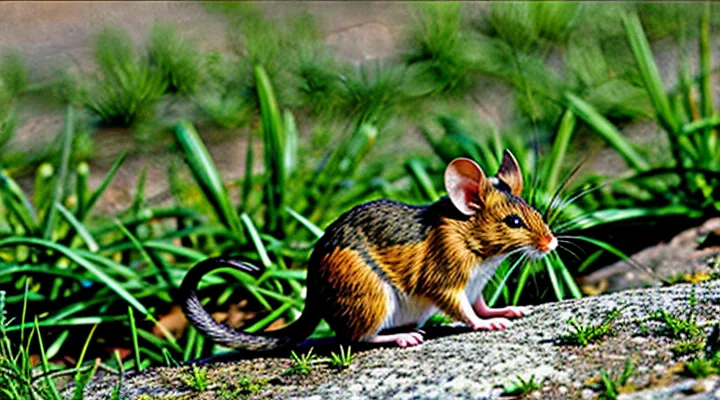
Typical Dorsal Fur Colors
Shades of Brown and Grey
Field mice display a limited palette dominated by brown and grey pigments, each appearing in distinct tonal ranges that aid camouflage across varied habitats.
The brown spectrum includes:
- Light tan, matching dry grasses and leaf litter.
- Chestnut, resembling freshly fallen leaves.
- Reddish‑brown, blending with woody debris.
- Dark brown, suited to shadowed burrow entrances.
Grey tones comprise:
- Soft silver, reflecting moonlit fields.
- Ash grey, merging with stone surfaces.
- Slate, mirroring wet soil patches.
- Charcoal, useful in densely vegetated areas.
Pigment distribution results from melanocyte activity, which adjusts during seasonal molts to align fur coloration with prevailing environmental backgrounds. Northern populations often shift toward darker greys in winter, while southern groups retain lighter browns throughout the year.
Geographic factors influence shade prevalence: arid regions favor pale tans and light greys, whereas forested zones exhibit richer chestnut and slate hues. These variations arise from selective pressure rather than random mutation, ensuring that field mice maintain effective concealment against predators.
Seasonal Variations in Color
Field mice display distinct coat coloration that shifts with the seasons, aligning their appearance with changing habitats and climatic conditions. During spring and summer, the pelage typically becomes lighter, featuring reddish‑brown or tawny tones that blend with fresh vegetation and sun‑warmed soil. In autumn, the fur often darkens, acquiring richer brown or gray shades that match dying foliage and leaf litter. Winter coats turn paler, frequently exhibiting gray‑white or silvery hues that provide camouflage against snow and frost‑covered ground.
Key factors influencing these seasonal changes include:
- Photoperiod: Longer daylight in warmer months triggers hormonal responses that promote lighter pigmentation.
- Temperature: Cooler temperatures stimulate the growth of denser, darker fur for insulation and concealment.
- Molting cycles: Field mice undergo biannual molts, shedding summer coats for winter coats and vice versa.
- Predator pressure: Color adjustments enhance cryptic coloration, reducing detection by visual hunters.
Geographic variation modifies the pattern. Populations in temperate zones with pronounced seasonal contrast exhibit the full range of color shifts, whereas individuals in milder climates may retain a more uniform hue year‑round due to reduced selective pressure for dramatic camouflage.
Overall, the seasonal modulation of field mouse coloration reflects an adaptive strategy that balances thermoregulation, camouflage, and reproductive timing across the annual cycle.
Ventral Fur and Other Markings
White or Off-White Underparts
Field mice commonly display a dorsal coat ranging from brown to gray, while the ventral side is frequently white or off‑white. This contrast enhances camouflage by breaking the animal’s outline against the ground and foliage.
Species in which the underparts are distinctly pale include:
- Wood mouse (Apodemus sylvaticus) – ventral fur almost pure white, sometimes tinged with gray.
- Bank vole (Myodes glareolus) – creamy‑white belly extending to the throat.
- Harvest mouse (Micromys minutus) – light beige to off‑white underparts, darker on the back.
- Yellow‑bellied mouse (Peromyscus maniculatus) – pale ventral fur, often with a subtle yellow hue.
The pale ventral coloration results from reduced melanin deposition in the hair shafts of the belly region. This pattern is consistent across populations, though slight variations in shade may occur due to geographic factors, diet, and seasonal molting.
Distinctive Patches and Stripes
Field mice display a range of color patterns that go beyond uniform brown or gray coats. In many species, individuals possess clearly defined patches of contrasting pigment on the back, sides, or flanks. These patches often appear as darker brown or black markings against a lighter, ochre or reddish‑brown background. The contrast serves as a visual cue for species identification and can aid in camouflage by breaking up the animal’s outline among grasses and leaf litter.
In addition to patches, several field mouse species exhibit longitudinal stripes running from the head toward the tail. Typical stripe configurations include:
- A central dorsal stripe of darker fur that aligns with the spine, often flanked by lighter lateral zones.
- Paired lateral stripes that extend from the shoulder region to the hindquarters, frequently merging with the dorsal stripe near the mid‑back.
- Ventral stripes that may be faintly visible on the belly, providing subtle contrast when the mouse is viewed from below.
The combination of patches and stripes varies with age, sex, and geographic population. Juvenile mice frequently show less pronounced markings, which intensify as the coat matures. Seasonal molting can alter the hue of both patches and stripes, shifting toward richer earth tones in autumn and lighter shades in spring. These distinctive markings contribute to the overall palette of field mice, illustrating the complexity of their natural coloration.
Factors Influencing Coat Color
Genetics and Heredity
Field mice display a limited palette of coat colors that reflects the action of a few pigment genes. The primary pigments are eumelanin, producing black or brown tones, and pheomelanin, generating reddish‑brown shades. A third, less common, pigment—phylloquinone—can impart a pale, yellowish hue in some populations.
Genetic mechanisms governing these colors include:
- Melanocortin‑1 receptor (MC1R) alleles: dominant variants increase eumelanin synthesis, resulting in dark coats; recessive alleles reduce eumelanin, allowing pheomelanin expression.
- Agouti signaling protein (ASIP) variants: regulate the spatial distribution of pigment, creating banded or dorsally lighter patterns.
- Tyrosinase‑related protein 1 (TYRP1) mutations: modify eumelanin intensity, producing intermediate shades between black and brown.
- Dilution genes (e.g., D locus): recessive alleles dilute pigment concentration, yielding gray or cream coats.
Inheritance follows Mendelian principles. When two heterozygous individuals for MC1R (D/d) mate, offspring ratios approximate 3 dark : 1 light. The presence of multiple loci leads to epistatic interactions; for example, a strong Agouti allele can mask MC1R‑driven darkness, producing a dorsal‑ventral gradient despite underlying dark pigment genes.
Population studies reveal geographic variation. Northern habitats, where darker fur confers thermal advantage, show higher frequencies of dominant MC1R alleles. Southern, arid regions exhibit greater prevalence of dilution and Agouti alleles, matching lighter substrate colors.
Overall, coat coloration in meadow-dwelling rodents results from a concise set of pigment genes, their allelic interactions, and selective pressures that shape allele distribution across environments.
Environmental Adaptation
Field mice exhibit coat colors that closely match the vegetation and substrate of their habitats, thereby reducing detection by predators. In grasslands and meadows, individuals typically display brown or tan pelage with subtle speckling that blends with dried grasses and soil. In areas dominated by dense, dark leaf litter, the same species may develop a darker, almost gray‑brown hue, enhancing concealment among shadows and decomposing material. When inhabiting regions with light, sandy soils, lighter, ochre‑toned coats become prevalent, mirroring the surrounding ground.
Key adaptive mechanisms influencing coloration include:
- Genetic variation that supplies a range of pigment alleles, allowing natural selection to favor individuals whose hues best match local conditions.
- Seasonal molting, which replaces summer coats with winter pelage that often shifts toward gray or white tones in snowy environments, providing camouflage during periods of reduced cover.
- Diet‑derived pigments, where consumption of certain seeds or insects can subtly alter fur shade, especially in populations with limited genetic diversity.
These factors operate together to optimize visual concealment, directly affecting survival rates and reproductive success across diverse field mouse populations.
Camouflage against Predators
Field mice exhibit a limited palette that maximizes concealment in the habitats they occupy. Their dorsal fur typically ranges from light brown to dark gray, matching the soil, leaf litter, and grasses of temperate meadows and woodland edges. Ventral surfaces are often paler, reducing contrast when the animal is viewed from below.
The effectiveness of this coloration stems from several mechanisms:
- Background matching – dorsal hues replicate the dominant tones of the immediate environment, decreasing detection by visual predators such as owls and foxes.
- Disruptive patterning – subtle variations in shading create irregular edges that break the outline of the body, hindering predator recognition.
- Countershading – lighter belly fur offsets shadows cast by overhead light, flattening the three‑dimensional appearance and further obscuring the mouse’s silhouette.
Seasonal shifts can trigger molting, producing a slightly grayer coat in winter when snow cover reduces ground coloration. This adaptive change preserves the principle of background matching despite altered substrate colors.
Predator avoidance relies on the integration of these color traits with behavior. Field mice remain motionless when threatened, aligning their bodies with surrounding debris to exploit the camouflage provided by their fur. The synergy of coloration and posture yields a high survival rate in predator‑rich ecosystems.
Geographic Distribution and Localized Colors
Field mice display distinct pelage coloration that corresponds closely to their geographic range. Variation arises from selective pressures such as camouflage, temperature regulation, and substrate type, resulting in recognizable regional phenotypes.
Across the continent, the species occupies temperate woodlands, grasslands, and agricultural margins. In western Europe, individuals possess a dark brown‑gray dorsal coat with a stark white ventral surface, matching the shadowed forest floor. Populations in the Mediterranean basin exhibit a richer reddish‑brown hue, reflecting the prevalence of ochre soils and dry vegetation. Northern Scandinavia hosts mice with a pale gray‑brown pelage, allowing concealment in snow‑covered habitats during winter months. Eastern Europe and western Asia show a gradient from medium brown to dusky gray, mirroring mixed forest and steppe environments. In North America, the western coastal range presents a slate‑gray dorsal color, while inland prairie populations retain a more uniform brown coat.
Key regional color patterns:
- Western Europe: dark brown‑gray dorsal, white ventral.
- Mediterranean region: reddish‑brown dorsal, light belly.
- Northern Scandinavia: pale gray‑brown dorsal, muted ventral.
- Eastern Europe/Western Asia: medium brown to dusky gray dorsal, lighter underside.
- Western North America (coastal): slate‑gray dorsal, pale ventral.
- Central North American prairies: uniform brown dorsal, whitish belly.
These localized color adaptations enhance survival by aligning mouse coloration with the dominant visual background of each habitat.
Variations Among Field Mouse Species
Common Vole (Microtus arvalis)
The common vole (Microtus arvalis) displays a coat that ranges from reddish‑brown to gray‑brown, with the dorsal surface typically darker than the ventral side. Seasonal molting produces a lighter, more ochre hue in spring and a richer brown during autumn. Individual variation reflects habitat moisture, soil color, and genetic factors.
Key color characteristics:
- Dorsal fur: dark brown to reddish‑brown, sometimes with a blackish tint along the spine.
- Lateral flanks: lighter brown, often with a subtle grayish wash.
- Ventral fur: pale gray‑white, contrasting with the back.
- Tail: sparsely haired, matching the dorsal shade but may appear darker due to reduced pigmentation.
Pigmentation is primarily melanin‑based, providing camouflage against grassland and agricultural fields where voles forage. In arid regions, the coat may shift toward a more subdued, tan coloration, enhancing concealment among dry vegetation. The species does not exhibit the vivid or multicolored patterns seen in some other small mammals; its palette remains within the brown‑gray spectrum, optimized for concealment from predators.
Wood Mouse (Apodemus sylvaticus)
The wood mouse (Apodemus sylvaticus) displays a distinctive coat that blends with its temperate habitats. Dorsal fur ranges from gray‑brown to reddish‑brown, often interspersed with darker hairs that create a subtle, mottled appearance. The ventral side is markedly lighter, typically white to pale gray, providing a clear contrast with the back.
Color variation occurs according to several factors:
- Seasonal molt: winter coats become duller, with reduced reddish tones.
- Age: juveniles exhibit a paler, more uniform hue before developing the adult’s mottled pattern.
- Geographic location: populations in southern Europe show stronger reddish tones, while northern groups tend toward cooler gray‑brown shades.
These chromatic traits aid camouflage in diverse environments, from woodland leaf litter to grassland edges, and contribute to the species’ successful adaptation across its range.
Yellow-necked Mouse (Apodemus flavicollis)
The Yellow‑necked Mouse (Apodemus flavicollis) exhibits a distinctive color scheme that contributes to the overall palette observed in wild European rodents. Dorsally, the fur is a rich brown to reddish‑brown, often with a subtle grayish tint that blends with leaf litter and forest floor debris. The characteristic “yellow‑neck” appears as a bright, creamy‑yellow band extending from the ears across the nape, providing a clear field mark for identification. The sides of the body transition to lighter, ochre‑brown tones, while the ventral surface is uniformly pale gray‑white, lacking the darker pigmentation seen in some related species. The tail is bicolored, dark brown on the dorsal side and lighter on the ventral side, and is relatively long, reaching up to 80 % of body length.
Key coloration features:
- Dorsal fur: reddish‑brown to dark brown, with occasional gray undertones.
- Neck band: vivid yellow‑cream, extending from ears across nape.
- Lateral flanks: ochre‑brown, lighter than dorsal region.
- Ventral fur: uniform pale gray‑white.
- Tail: dorsally dark brown, ventrally pale, proportionally long.
These traits differentiate the Yellow‑necked Mouse from other field mice such as the Wood Mouse (Apodemus sylvaticus), which lacks the yellow neck band and displays a more uniform gray‑brown dorsal coat. The color pattern serves both camouflage within deciduous and mixed forests and a diagnostic function for researchers assessing species composition in rodent surveys.
Observing Field Mouse Coloration
Ethical Observation Techniques
Field mice display a range of coat hues, from muted browns to speckled grays, which can vary with species, season, and habitat. Accurate documentation of these colors demands observation methods that protect animal welfare and preserve natural behavior.
- Use motion‑activated cameras positioned at a distance that prevents disturbance.
- Apply live‑trap designs with soft bedding and ventilation; check traps at intervals no longer than fifteen minutes.
- Record visual data with high‑resolution macro lenses to capture subtle color variations without handling.
- Employ photographic standards: neutral lighting, calibrated white balance, and reference color cards placed in the frame.
- Release captured individuals immediately after brief measurements, ensuring they return to their original location.
Maintain detailed logs of each observation session, noting environmental conditions, trap placement, and time of day. Store images in a secured database with metadata that includes species identification, geographic coordinates, and observer credentials. This systematic approach yields reliable color records while adhering to ethical standards for wildlife research.
Photography Tips for Capturing Color
Capturing the subtle hues of field mice demands precise control of light, focus, and color balance. Their fur ranges from muted browns to reddish tinges, often blending with grass and soil, which makes accurate reproduction difficult without deliberate technique.
- Use a macro lens with a focal length of 90 mm or longer to isolate the subject while maintaining a shallow depth of field that separates the mouse from background clutter.
- Set aperture between f/2.8 and f/4 to achieve sharpness on the animal’s fur while allowing enough background blur to reduce distracting tones.
- Choose a low ISO (100–200) to minimize noise that can corrupt delicate color information.
- Prefer natural daylight during early morning or late afternoon; the soft, diffused light preserves the true palette of the mouse’s coat. If artificial light is necessary, employ a daylight-balanced flash (5600 K) and diffuse it with a softbox or a white umbrella.
- Apply white balance manually or shoot in RAW and adjust the temperature in post‑processing to match the ambient light, preventing unwanted color casts.
- Employ a tripod or a stable platform to eliminate camera shake, especially when using slower shutter speeds required for lower ISO settings.
- Focus on the eye; accurate focus ensures the fur’s texture and color are rendered sharply, enhancing overall image quality.
- In post‑processing, use selective color adjustments to fine‑tune the browns, grays, and rust tones without oversaturating the image. Preserve detail by avoiding extreme contrast boosts that can wash out subtle shades.
By adhering to these practices, photographers can faithfully document the natural palette of field mice, providing images that reflect the true diversity of their coloration.
The Importance of Color in Survival
Blending with the Habitat
Field mice display a palette that mirrors the environments they inhabit, allowing them to remain concealed from predators. Their fur typically ranges from light brown to reddish‑tan, with occasional gray or buff tones that match the surrounding vegetation and soil. Darker individuals may possess a dorsal stripe or a subtle dorsal patch, providing additional disruption against the backdrop of shadowed grass stems.
Key aspects of their camouflage include:
- Dorsal coloration – brown, reddish‑tan, or gray, matching dried grasses and leaf litter.
- Ventral shading – lighter, often creamy or whitish, reducing contrast when viewed from below.
- Tail and ear markings – muted hues that blend with surrounding stalks and stems.
- Seasonal variation – thicker, darker coats in winter; lighter, more reddish coats in summer, reflecting changes in plant coloration.
These color adaptations result from selective pressure favoring individuals whose fur blends seamlessly with the meadow, field edge, or woodland floor. The alignment of pigment with substrate texture reduces visual detection by both avian raptors and terrestrial mammals, enhancing survival rates across diverse habitats.
Role in Species Identification
Field-dwelling mice exhibit a spectrum of pelage hues that function as diagnostic characters for separating species. Coloration patterns differ enough to allow observers to assign individuals to taxonomic groups without immediate genetic analysis.
- Apodemus sylvaticus: reddish‑brown dorsal coat, pale ventral belly, occasional dark dorsal stripe.
- Microtus agrestis: gray‑brown back with a faintly lighter flanks, darker tail tip.
- Peromyscus maniculatus: tawny to brown dorsal fur, distinct white or cream underparts, occasional black ear tips.
- Clethrionomys glareolus: rich brown dorsal fur, sharply contrasting gray‑white ventral side, darker tail.
Field identification relies on visual assessment of these color traits combined with body size, tail length, and skull morphology. Researchers record pelage shade using standardized color charts, enabling quantitative comparison across populations. When color patterns overlap—such as between Apodemus species in mixed habitats—additional morphological measurements or DNA barcoding resolve ambiguity.
Color variation can result from seasonal molting, age, or local environmental factors, reducing reliability as a sole criterion. Integrating coloration with morphometric data and molecular markers yields robust species determinations, especially in regions where sympatric field mice coexist.