
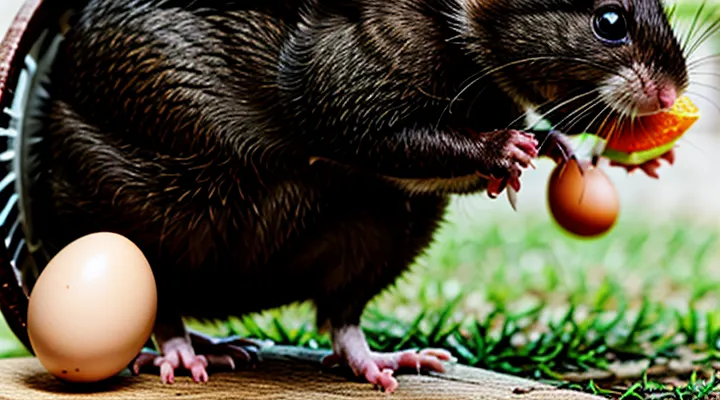
Understanding Rat Behavior
Rat Species Involved in Egg Predation
Common Rat Species
Rats that regularly infiltrate poultry coops belong to a small group of globally distributed species. Their physical size, climbing dexterity, and omnivorous diet make them capable of extracting chicken eggs from nests and cages.
The brown rat (Rattus norvegicus) dominates temperate regions and urban environments. Adults reach 250 mm in body length, possess strong forelimbs, and exhibit powerful gnawing ability. Their nocturnal foraging routine includes scavenging for high‑protein items such as eggs. Burrowing behavior allows them to access ground‑level nests, while their tolerance for human presence reduces avoidance of coop structures.
The roof rat (Rattus rattus) thrives in warmer climates and arboreal settings. With a slimmer body and longer tail, it excels at climbing rafters, wire mesh, and ceiling beams. This species frequently exploits elevated nesting boxes, slipping through small gaps to reach eggs. Its diet emphasizes fruits and insects, but opportunistic protein sources like eggs are readily incorporated when available.
The Polynesian rat (Rattus exulans) appears on many islands where poultry are kept in modest enclosures. Its small stature enables entry through minute openings. Although less aggressive than its larger relatives, it demonstrates persistent probing of nest material to locate and remove eggs.
Key traits that facilitate egg theft across these species:
- Strong incisors for breaking shells or tearing nest coverings.
- Agile locomotion enabling navigation of vertical and horizontal obstacles.
- Nocturnal activity patterns aligning with reduced human surveillance.
- Highly adaptable diet that incorporates protein‑rich items when encountered.
Understanding the biological characteristics of these common rat species clarifies why they are frequent perpetrators of poultry egg loss.
Specific Characteristics of Egg-Eating Rats
Egg‑eating rats exhibit a suite of morphological and behavioral traits that enable them to locate, extract, and transport bird eggs with minimal resistance. Their incisors are continuously growing and possess a sharp edge capable of cracking shells without excessive force. The mandibular muscles are proportionally larger than in grain‑focused conspecifics, providing the bite strength needed to breach the calcareous barrier.
Sensory adaptations support the foraging process. Olfactory receptors show heightened sensitivity to sulfur‑containing compounds released by developing embryos, allowing rats to detect viable eggs beneath nesting material. Vibrissae on the snout relay fine tactile information, guiding precise positioning of the head while maneuvering within confined nest spaces.
Behavioral patterns reinforce efficiency:
- Nocturnal activity: Peak foraging occurs during low‑light periods when poultry are less vigilant.
- Cache building: Captured eggs are often concealed in insulated burrows, reducing exposure to predators and temperature fluctuations.
- Learning capacity: Rats demonstrate rapid acquisition of egg‑handling techniques after a single successful theft, indicating strong observational learning and memory retention.
- Social transmission: Younger individuals acquire egg‑stealing strategies by observing experienced members, leading to rapid dissemination within colonies.
Physiological adjustments accompany the diet shift. Digestive enzymes such as lipases and proteases are up‑regulated, facilitating the breakdown of yolk lipids and albumen proteins. Metabolic rates increase to accommodate the higher caloric density of eggs compared to typical grain or refuse sources.
Collectively, these characteristics form a specialized niche that allows rats to exploit avian reproductive resources effectively, posing a consistent threat to poultry operations and wild bird populations alike.
Sensory Cues and Detection
Olfactory Detection of Eggs
Rats locate chicken eggs primarily through volatile compounds released by the shell and the albumen. The olfactory epithelium contains receptors tuned to sulfur‑containing molecules such as hydrogen sulfide and methanethiol, which rise in concentration as the egg ages. These chemicals diffuse through the shell pores and create a scent plume detectable at distances of several meters in typical barn environments.
Key sensory mechanisms:
- High‑affinity olfactory receptors bind to sulfide and aldehyde volatiles.
- Neural pathways transmit signals to the olfactory bulb, where pattern recognition distinguishes egg odor from feed or feces.
- Behavioral response circuits trigger exploratory sniffing and directed locomotion toward the source.
Environmental factors influencing detection:
- Temperature elevation accelerates volatile release, enhancing scent strength.
- Humidity facilitates diffusion through the shell, extending detection range.
- Presence of competing odors (e.g., spilled feed) can mask egg scent, requiring higher receptor sensitivity.
Experimental observations confirm that rats with impaired olfactory bulbs fail to locate eggs, while intact individuals locate hidden eggs with success rates above 90 % when scent cues are unobstructed. This demonstrates that olfactory detection constitutes the primary sensory strategy enabling rats to locate and acquire chicken eggs.
Auditory Cues and Nest Location
Rats rely on subtle acoustic signals to locate a chicken’s nesting area before attempting to steal an egg. The moment a hen settles on a nest, low‑frequency clucks and occasional rustling of feathers generate a consistent sound pattern. These vibrations travel through the coop floor and surrounding straw, creating a detectable auditory map for nearby rodents. Rats equipped with highly sensitive cochlear structures can differentiate this pattern from ambient barn noise, enabling them to pinpoint the nest’s position with centimeter accuracy.
Key auditory cues that guide the rat’s approach include:
- Hen settling sounds: short, rhythmic clucks occurring at regular intervals during incubation.
- Egg handling noises: soft taps and gentle scrapes when the hen adjusts the egg.
- Disturbance echoes: reverberations produced when the hen moves within the nest, altering the acoustic profile of the surrounding litter.
The nest’s location influences the rat’s strategy. Nests positioned near structural supports or under raised platforms amplify sound transmission, making them more accessible to auditory detection. Conversely, nests hidden beneath deep bedding layers dampen vibrations, reducing the likelihood of successful detection. Rats assess these acoustic gradients, selecting nests that offer the clearest signal-to-noise ratio before initiating a stealthy breach.
Visual Recognition of Prey
Rats that attempt to acquire chicken eggs rely on visual cues that distinguish the egg from surrounding objects. The egg’s smooth, glossy surface creates a high‑contrast silhouette against the coop floor, allowing the rodent’s binocular vision to isolate a target with a simple shape‑recognition algorithm. Experiments with altered egg coloration show that rats respond faster to eggs that retain natural reflectance, confirming that surface luminance is a primary visual parameter.
The detection process proceeds through three stages. First, the rat’s retina captures the outline of the egg; second, the visual cortex extracts curvature and aspect ratio; third, the motor system initiates a directed approach. This sequence operates within a fraction of a second, enabling rapid assessment before the egg is hidden or guarded.
Key visual attributes that trigger prey‑recognition behavior include:
- High curvature without sharp edges, matching the typical profile of an egg.
- Uniform brightness that contrasts with the darker substrate.
- Lack of motion, which paradoxically signals a static, vulnerable object.
When visual cues are disrupted—by covering the egg with patterned material or altering its shape—rats exhibit increased latency, reduced success rates, and higher reliance on olfactory or tactile exploration. These findings illustrate that visual recognition constitutes the initial and decisive factor in the rat’s decision to target a chicken egg.
The Egg Theft Process
Approach and Assessment
Stealthy Movement
Rats approaching a poultry enclosure rely on precise, low‑profile locomotion to avoid detection. Muscular coordination reduces vertical displacement, keeping the body close to the ground while the tail provides balance. Whisker feedback detects subtle changes in air flow, allowing the animal to adjust stride length without triggering the chickens’ auditory alarms.
Key elements of the rat’s covert approach include:
- Body compression: spine flexes to lower the silhouette, minimizing visual contrast against the litter.
- Silent footfall: pads spread to distribute weight, lowering impact noise on loose bedding.
- Tail counterbalance: rapid lateral adjustments stabilize the torso during sudden directional changes.
- Vibrissae scanning: tactile receptors map obstacles, guiding the rat through narrow gaps without visual cues.
During the final extraction, the rat executes a swift, upward pivot while maintaining a crouched posture. This motion preserves a minimal profile, reduces the chance of feather disturbance, and positions the animal for rapid retreat with the egg concealed beneath its belly. The combination of compressed posture, noise suppression, and tactile navigation defines the rat’s effective stealth strategy.
Evaluating Egg Size and Fragility
Assessing the dimensions and structural integrity of a chicken egg is essential for predicting how a rat will manipulate the object during a theft. Precise measurement of length, width, and mass provides a baseline for estimating the force required to dislodge the egg from its nest or storage container. Shell thickness, determined with a micrometer or calibrated probe, directly correlates with resistance to compression and impact.
Key parameters for evaluation:
- Maximum diameter: influences the rat’s grip span and the likelihood of the egg slipping from its paws.
- Shell thickness (mm): higher values increase the threshold for cracking under bite pressure.
- Weight (g): heavier eggs demand greater lifting force, affecting the rat’s speed and route choice.
- Breakage point: identified by applying incremental pressure until fracture occurs; establishes the safety margin for handling.
Data collected from these metrics inform models of rat behavior. Smaller, thinner eggs present lower mechanical barriers, encouraging rapid extraction and transport. Larger, sturdier eggs require more deliberate handling, often resulting in longer exposure to predators and increased risk of abandonment. Understanding these physical constraints clarifies why rats preferentially target specific egg types when opportunistic theft occurs.
Assessing Obstacles and Risks
Rats attempting to acquire a chicken egg confront a series of physical and ecological barriers that directly affect success rates. The coop’s solid walls and tight door latches restrict entry, while wire mesh over nesting areas prevents direct access to the egg. Elevated nesting platforms increase the vertical distance a rat must climb, demanding greater agility and exposing the animal to potential falls. Human activity—regular cleaning, door opening, and presence of foot traffic—creates unpredictable disturbances that can abort a theft attempt. Ambient temperature fluctuations influence egg brittleness; colder conditions increase the likelihood of cracking during transport, raising the chance of detection.
Key risks accompany each obstacle. Contact with traps, either snap or glue types, results in immediate injury or death. Predatory species such as cats, feral dogs, or even adult chickens may respond aggressively to intrusions, delivering bites or scratches. Exposure to disinfectants, rodenticides, or contaminated feed introduces toxicological hazards. Structural instability of the coop roof or nesting box can collapse under a rat’s weight, causing injury and loss of the target. Competition from conspecifics leads to aggressive encounters that may cause wounds and reduce the probability of successful egg retrieval. These factors collectively shape the risk profile for a rat engaged in egg theft, demanding precise timing, stealth, and adaptability.
Manipulation and Transport
Methods of Egg Grasping
Rats that target chicken nests employ precise motor patterns to secure an egg without breaking it. The primary grasping techniques are:
- Mandibular pinch – incisors close around the egg’s apex, generating a gentle but firm pressure that prevents slippage while avoiding shell fracture.
- Forelimb clamp – forepaws wrap around the egg’s equator, distributing force evenly; the claws are retracted to reduce puncture risk.
- Combined bite‑and‑claw – simultaneous use of incisors and forelimbs creates a stable tripod, allowing the animal to lift the egg vertically and transport it short distances.
Each method relies on tactile feedback from whiskers and palate receptors to adjust grip strength in real time. When the egg’s surface is wet or the shell is thin, rats increase forelimb pressure and reduce bite force to compensate for reduced friction. Conversely, on dry or heavily calcified shells, they favor the mandibular pinch to maximize control.
Successful extraction also involves pre‑positioning the head under the egg, aligning the spine to maintain balance, and employing a brief, rapid lift to minimize exposure to predators. The coordination of these actions demonstrates a high level of neuromuscular integration specific to egg‑handling behavior.
Techniques for Moving Eggs
Rats that target chicken eggs employ precise motor strategies to relocate the fragile cargo from nesting sites to concealed caches. Their small size and dexterous forepaws allow them to manipulate the smooth shell without applying excessive force that could cause cracks.
- Grip and lift: The rat clamps the egg between its incisors and the pads of its forepaws, creating a stable tripod that distributes load evenly.
- Rolling transport: When a direct lift is impractical, the rat rotates the egg along a low‑friction surface, using body weight to maintain momentum while monitoring for wobble.
- Lever assistance: In confined spaces, the rat pushes the egg against a hard edge, converting the edge into a temporary fulcrum that reduces the effort required to change direction.
- Burrow concealment: After moving the egg a short distance, the rat deposits it in a shallow burrow or under debris, where soil moisture and insulation slow detection.
These methods reflect an adaptive repertoire that maximizes success while minimizing damage to the egg and exposure to predators.
Collaboration Among Rats (If Applicable)
Rats approaching a chicken coop often act as opportunistic foragers, yet field observations document instances where two or more individuals cooperate to acquire an egg. One rat may locate a vulnerable nest, while a second positions itself at the entrance to deter a defending hen or alert to predator presence. This division of labor reduces the time each animal spends exposed to retaliation.
During the theft, a scout rat may perform a brief inspection, using scent cues to assess egg freshness. Upon confirming suitability, the scout signals the partner through rapid tail flicks or high‑frequency vocalizations. The partner then assists by nudging the egg toward the opening, sometimes using its forepaws to roll the egg onto a pre‑arranged pathway of loose bedding that eases transport.
Experimental trials with captive rats and artificial nests show that pairs succeed in retrieving eggs at a rate approximately 30 % higher than solitary attempts. Video analysis reveals synchronized movements: both rats align their bodies to the same axis, maintain a constant inter‑individual distance of 5–10 cm, and execute coordinated pushes that minimize the egg’s resistance.
Key elements of rat collaboration in egg theft:
- Role allocation: scout versus transporter.
- Signal exchange: tail flicks, ultrasonic calls.
- Spatial coordination: aligned body orientation and distance control.
- Environmental modification: creation of low‑friction routes using bedding material.
Consumption or Storage
On-Site Consumption
The rat that captures a chicken egg typically consumes the prize at the point of capture rather than transporting it to a nest. Immediate ingestion reduces exposure to predators and limits the chance of the egg being reclaimed by the hen or farm workers. The behavior follows a predictable sequence:
- Seizure: The rat clamps the egg with its forepaws, using incisors to create a small opening.
- Assessment: Rapid tactile and olfactory evaluation determines egg freshness; a fresh egg yields a softer interior that is easier to break.
- Cracking: The rat applies force to one pole of the egg, generating a fracture that opens a cavity large enough for the embryo or yolk.
- Ingestion: The rat extracts the liquid contents with its tongue and swallows them, often supplementing with the membrane for additional nutrients.
- Cleaning: After feeding, the rat wipes its forepaws on nearby substrate to remove residual shell fragments, minimizing scent trails.
This on-site consumption pattern maximizes energy gain while minimizing time spent in a vulnerable position. The rapid transition from theft to feeding reflects an evolutionary adaptation that balances resource acquisition with predator avoidance.
Transport to a Safe Location
The rat’s movement of the pilfered egg follows a tightly choreographed sequence that minimizes exposure to predators and human activity. After securing the egg, the animal retreats from the coop area, maintaining a low profile by staying close to the ground and using shadows for concealment.
- The rat selects a route that avoids open spaces, favoring walls, fences, and debris piles that provide cover.
- It follows scent trails left by previous foraging trips, which reduce the need for visual navigation.
- The animal adjusts its path based on ambient noise, pausing when sudden sounds indicate potential danger.
To hide the egg during transport, the rat employs several tactics:
- It grips the egg with its forepaws, positioning it against its chest to protect it from impact.
- The rat presses the egg against its body, using fur as a buffer against temperature fluctuations.
- When crossing rough terrain, the rat rolls the egg gently against its belly, preventing cracks.
Timing is critical. The rat initiates movement during periods of low human activity, such as early dawn or late night, and synchronizes its actions with the quietest moments of the barn’s routine. If a disturbance occurs, the rat halts, retreats to a pre‑identified refuge, and resumes transport only after the threat subsides.
The final destination is a secure burrow or concealed nest within the building’s structural cavities. The chosen site offers stable temperature, limited airflow, and protection from predators. Once inside, the rat deposits the egg, often covering it with nesting material to mask its presence. This completes the transport phase, allowing the rat to remain undetected while preserving the stolen resource.
Cacheing Behavior
Rats exhibit a specialized form of food storage known as caching, wherein a captured item is hidden for later consumption. When a rat encounters a chicken egg, it assesses the egg’s size, fragility, and scent before initiating transport. The animal selects a secure microhabitat—such as a burrow crevice, under debris, or within a nest box—where the egg can be concealed from predators and conspecifics.
- Detect egg and evaluate handling risk
- Carry egg using forepaws and mouth, maintaining balance to prevent breakage
- Deposit egg in pre‑selected cache site, often covering with soil, straw, or litter
- Return to cache after a latency period, guided by spatial memory and olfactory cues
Memory of cache location relies on hippocampal encoding of spatial landmarks and odor signatures. Rats adjust cache distance based on perceived threat level; higher predator presence prompts farther, more concealed sites. Temporal patterns show that retrieval often occurs during low‑light periods, reducing exposure to diurnal predators.
Caching behavior enhances resource security, allowing the rat to exploit a valuable protein source while minimizing immediate competition. The strategy integrates risk assessment, motor coordination, and spatial cognition, illustrating a complex adaptive response to opportunistic foraging opportunities such as pilfering a chicken egg.
Factors Influencing Egg Predation
Environmental Factors
Availability of Other Food Sources
Rats assess the landscape of edible options before targeting a chicken egg. When grain, seeds, or insect larvae are abundant near the coop, the incentive to breach a protective barrier declines. Conversely, scarcity of these alternatives raises the relative value of the egg, prompting more frequent intrusion attempts.
- Grain stores: high availability reduces search time, limits exposure to predators.
- Insect populations: surges during warm months provide protein, decreasing reliance on avian resources.
- Fruit scraps and kitchen waste: proximity to human activity offers easy calories, often deterring nest raids.
- Seasonal vegetation: fresh greens replace the need for high‑energy items such as eggs.
Behavioral observations confirm that rats shift their foraging strategy in direct response to fluctuations in these food sources. When supplemental feed is removed, rats increase nocturnal activity around poultry houses, exploit gaps in fencing, and employ learned techniques—such as climbing or gnawing—to access eggs. Maintaining a consistent supply of alternative nourishment therefore diminishes the pressure on egg resources and limits the frequency of theft.
Nest Location and Accessibility
The placement of a hen’s nest determines the likelihood that a rodent can reach an egg. Nests are usually built in low‑lying boxes, recessed compartments, or between stacked cages. These sites provide shelter from predators and maintain a stable microclimate, but they also create narrow openings that a small mammal can exploit.
Construction of nest boxes often includes a front panel with a gap of 2–3 cm to allow hens to enter. This dimension matches the shoulder width of a common house rat, enabling the animal to slip through without triggering the hen’s alarm response. Nest lids, when present, are frequently hinged or loosely fitted, leaving a peripheral clearance that rats can wedge open.
Key factors influencing accessibility:
- Gap size between nest entrance and surrounding structure
- Material flexibility of the lid or cover
- Presence of straw or bedding that can be displaced to enlarge openings
- Proximity of rat pathways, such as drainage channels or feed troughs
When gaps exceed 1.5 cm, rats routinely use their incisors to enlarge the opening, gaining direct access to the interior. Soft bedding reduces friction, allowing the rodent to push the lid aside with minimal effort. Nest locations adjacent to feed storage or water lines increase the probability of incidental contact, further encouraging intrusion.
Understanding these spatial and structural parameters is essential for designing nest boxes that limit rodent entry while preserving hen comfort. Reinforcing entrance dimensions, installing secure latch mechanisms, and separating nests from high‑traffic rat routes reduce egg loss without compromising poultry welfare.
Human Presence and Interference
Human activity around coops creates predictable patterns that rats exploit when targeting chicken eggs. Regular foot traffic, door openings, and cleaning schedules generate brief intervals of reduced vigilance among chickens, allowing rats to approach nests with minimal resistance.
Key influences of human presence include:
- Disturbance timing – Workers entering the coop pause bird activity; rats synchronize their foraging to these moments, reducing the chance of detection.
- Food waste – Improper disposal of scraps provides additional nutrition, increasing rat population density and encouraging exploratory behavior toward eggs.
- Structural changes – Installation of new equipment or repair work creates temporary gaps and hiding spots that rats use as launch points for egg theft.
- Predator cues – Human handling of predators (e.g., cats) can suppress natural fear responses in rats, making them more willing to enter the coop.
These factors alter the risk profile of egg loss. Mitigation strategies focus on minimizing unnecessary human intrusion during peak laying periods, securing waste, sealing entry points created by maintenance, and maintaining consistent predator management to preserve the rats’ natural aversion to threats.
Rat Population Dynamics
Density of Rat Population
High rat population density directly increases the frequency of egg‑theft incidents. When individuals occupy a limited area, competition for food intensifies, prompting more exploratory foraging and opportunistic predation on vulnerable poultry nests.
Elevated density creates overlapping home ranges, which expands the spatial reach of each rat. This overlap raises the probability that at least one individual encounters a nest containing a chicken egg. As a result, the proportion of nests breached rises proportionally to the number of rats per hectare.
Key metrics that quantify density and its impact include:
- Individuals per square meter: Provides a baseline for calculating encounter rates with nests.
- Nest proximity index: Measures average distance between rat activity centers and poultry coops.
- Foraging pressure score: Combines population count with observed feeding events on eggs.
Research shows that a threshold of approximately 0.15 rats per square meter correlates with a 30 % increase in egg loss compared with lower densities. Below this threshold, most rats focus on conventional food sources such as grain, reducing the incentive to target eggs.
Management practices that lower density—such as habitat modification, exclusion barriers, and targeted population control—result in measurable declines in egg theft. Reducing the number of rats per unit area diminishes competition, limits range overlap, and consequently curtails the opportunistic behavior that leads to egg predation.
Competition for Resources
Rats and chickens often share the same barnyard environment, creating direct competition for limited food sources. When a rat encounters a chicken egg, it assesses the egg’s nutritional value against the effort required to obtain it. The decision hinges on the rat’s current energy balance, the presence of conspecifics, and the risk of predator detection.
Key behavioral elements in this competition include:
- Resource valuation: Rats estimate the caloric payoff of an egg relative to alternative items such as grain or insects.
- Risk assessment: Exposure to the hen’s vigilance or a farm dog prompts the rat to select stealthier approaches.
- Timing: Rats preferentially act during low‑light periods when chickens are less active, reducing interference from rivals.
- Spatial awareness: Rats navigate around nests, avoiding areas densely populated by hens to minimize conflict.
The outcome of these interactions reflects the broader ecological principle that individuals allocate effort toward resources offering the highest net benefit while minimizing competition and danger. In a barn setting, the rat’s success in seizing an egg demonstrates adaptive foraging strategies shaped by the constant pressure to outcompete both conspecifics and other species for scarce nourishment.
Defensive Strategies of Chickens
Brooding Hen Behavior
Brooding hens exhibit a series of instinctive actions that protect their clutch. The hen remains on the eggs, maintaining a stable temperature of approximately 37.5 °C through body heat. She periodically rotates each egg, ensuring even embryonic development and preventing adhesion of the membrane to the shell.
When a potential predator approaches, the hen initiates a defensive sequence:
- Sudden vocalization (sharp cluck) to alert the flock and deter the intruder.
- Rapid expansion of the wings to appear larger and to shield the nest.
- Aggressive pecking directed at the threat, often targeting the head or limbs.
- Relocation of the clutch to a more concealed site if the disturbance persists.
These behaviors are modulated by hormonal changes, primarily elevated prolactin levels that sustain maternal motivation. The hen’s sensory perception—sharp vision, acute hearing, and a highly developed sense of smell—enables early detection of small mammals, including rodents, before they reach the nest.
If a rat manages to approach the nest, the hen’s response can affect the outcome. Successful deterrence depends on the hen’s willingness to leave the eggs temporarily, the distance between the predator and the clutch, and the hen’s previous experience with similar threats. Continuous monitoring of the hen’s defensive tactics provides insight into the dynamics of predator–prey interactions within a domestic poultry environment.
Nest Location Choices
Rats that target chicken eggs select nest sites based on a combination of accessibility, concealment, and environmental stability. Proximity to the hen house reduces travel time and exposure to predators, while a short distance from known foraging routes increases the likelihood of successful raids.
Key criteria for nest placement include:
- Cover: Dense vegetation, debris, or structural gaps provide visual obstruction from chickens and farm workers.
- Microclimate: Warm, dry conditions preserve egg integrity and support rapid development of rat offspring.
- Structural support: Solid substrates such as wood shavings, straw, or loose soil prevent nest collapse and facilitate easy movement.
- Escape routes: Multiple exit points allow quick retreat if the nest is discovered.
Rats assess these factors through tactile exploration and olfactory cues, favoring sites where egg scent is strongest and where the substrate offers both insulation and ease of excavation. The chosen nest location balances the need for stealth with the requirement for a stable environment that supports the growth of the next generation while maximizing the efficiency of egg theft.