
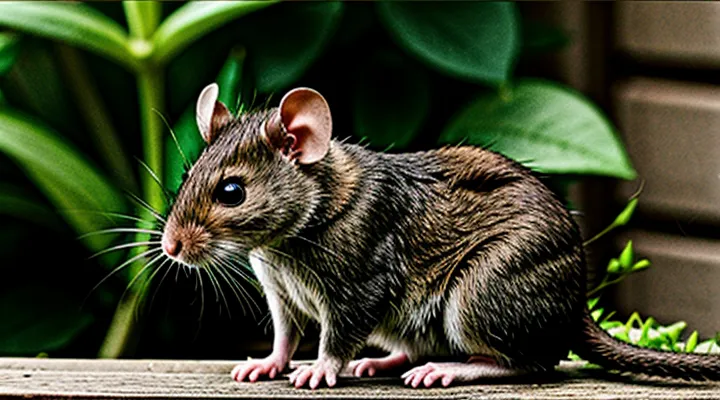
What is a Garden Rat?
Physical Characteristics
The garden rat, a medium‑sized rodent commonly found in cultivated plots, measures 15–20 cm in head‑body length, with a tail extending an additional 12–18 cm. Body mass ranges from 120 g to 250 g, depending on age and nutrition.
Fur presents a dense, coarse coat that varies from brownish‑gray on the dorsal side to a lighter, almost white hue ventrally. The dorsal coloration often includes faint, irregular speckles that aid camouflage among soil and mulch. Tail skin is sparsely haired, with a slightly scaly texture that enhances grip on rough surfaces.
Key anatomical features include:
- Large, rounded ears positioned laterally, each covered with fine hair and capable of rotating up to 180° for acute sound detection.
- Prominent, whisker‑laden rostrum; vibrissae extend several centimeters forward, providing tactile feedback while navigating dense vegetation.
- Strong, curved incisors that continuously grow, adapted for gnawing fibrous plant material and breaking seed coats.
- Hind limbs longer than forelimbs, supporting powerful leaps and swift burrowing; each hind foot bears five toes with sharp, retractable claws.
Sexual dimorphism is subtle; males typically exhibit slightly larger body dimensions and a more pronounced scent gland on the lower abdomen, used for territorial marking. Overall morphology reflects adaptation to a ground‑dwelling lifestyle, emphasizing agility, sensory acuity, and efficient foraging within garden ecosystems.
Common Species
Garden rats commonly encountered in cultivated areas belong to two primary species, each identifiable by distinct physical traits and habitat preferences.
-
Norway rat (Rattus norvegicus) – robust body, brown to gray fur, blunt snout. Typically inhabits low‑lying garden beds, compost piles, and burrows near water sources. Size ranges from 20 cm to 30 cm including tail. Photographs show a thick tail with a relatively uniform scale pattern and a pronounced body mass.
-
Roof rat (Rattus rattus) – slender build, dark brown to black fur, pointed nose. Prefers elevated vegetation, fruit trees, and trellises, often climbing to access food. Length averages 16 cm to 25 cm, tail longer than body. Visual records display a long, hairless tail with a scaly appearance and a lean silhouette.
Both species exhibit nocturnal activity, opportunistic feeding on seeds, fruits, and garden waste. Distinguishing features in images include tail proportion, head shape, and fur coloration, enabling reliable identification for gardeners and pest‑management professionals.
Habitat and Behavior
Preferred Environments
The garden rat, a small rodent frequently captured in photographs and described in field reports, shows a clear preference for habitats that combine abundant cover with easy access to food sources. Typical environments include:
- Suburban backyards where dense groundcover, such as mulches or leaf litter, provides concealment.
- Community gardens featuring a mixture of vegetable plots, compost piles, and irrigation channels that supply both shelter and nourishment.
- Fruit orchards with low-hanging branches and fallen fruit, offering seasonal foraging opportunities.
- Urban parks containing shrubbery, grassy edges, and occasional debris, which serve as safe travel corridors.
- Riverside floodplains where moist soil and riparian vegetation support a steady supply of insects and seeds.
Key environmental factors influencing site selection are:
- Presence of thick vegetation or debris that reduces exposure to predators.
- Consistent availability of plant material, seeds, and insects.
- Moderate moisture levels that maintain soft soil for burrowing.
- Proximity to human activity that inadvertently creates food waste or shelter structures.
These conditions collectively define the optimal range where garden rats thrive, guiding both photographic documentation and ecological assessment.
Diet and Feeding Habits
The garden rat exhibits an opportunistic diet, consuming a wide range of plant and animal material available in cultivated areas. Primary food sources include:
- Seeds from cereals, grasses, and wildflowers
- Fresh fruits such as berries, grapes, and melons
- Vegetables, especially leafy greens, carrots, and squash
- Invertebrates, including beetles, larvae, and earthworms
- Detritus and discarded garden waste
Feeding occurs primarily during twilight and nighttime hours, aligning with reduced predator activity. Foraging behavior is characterized by rapid movement across the ground surface and low vegetation, followed by brief pauses to assess food patches. The species demonstrates selective chewing, stripping husks and discarding inedible parts before ingestion.
Water intake is obtained from dew, rain-soaked foliage, and shallow puddles. The rat stores excess food in shallow burrow chambers, creating caches that sustain individuals through periods of scarcity. Seasonal adjustments include increased consumption of high‑energy seeds in autumn and reliance on stored provisions during winter months.
Social Structure
Garden rats living in cultivated spaces form small, stable groups that revolve around a dominant individual. The dominant rat maintains priority access to food caches and nesting sites, while subordinate members cooperate in foraging and predator vigilance. Group size typically ranges from three to eight individuals, allowing efficient resource exploitation without excessive competition.
Key components of the social organization include:
- Dominance hierarchy: Established through brief aggressive encounters; the highest-ranking rat exerts control over shared resources.
- Cooperative foraging: Subordinates follow the leader to known food sources, reducing exposure to predators.
- Territorial boundaries: Groups defend a limited area marked by scent deposits; overlap with neighboring groups triggers brief confrontations.
- Reproductive allocation: The dominant female produces the majority of offspring; subordinate females may assist in nest building and pup care.
- Communication: Olfactory signals, ultrasonic vocalizations, and body postures convey status, alarm, and affiliative intent.
Photographic documentation reveals consistent body postures that correspond to rank: elevated stance and forward‑facing tail indicate dominance, while crouched posture and tail tucked against the body denote submission. Observations of grooming patterns show that higher‑ranking individuals receive more grooming, reinforcing social bonds and hierarchy stability.
Overall, the garden rat’s social structure balances competition and cooperation, optimizing survival in environments where food availability fluctuates and predation pressure remains high.
Identifying Garden Rat Activity
Signs of Presence
Garden rats leave unmistakable traces that can be confirmed without visual confirmation. Their activity alters the environment in predictable ways, allowing observers to identify occupancy even when animals are hidden.
Typical indicators include:
- Fresh gnaw marks on plant stems, roots, or wooden structures.
- Small, irregularly shaped burrows near garden edges, often concealed by debris.
- Scattered pellets resembling dark, cylindrical seeds, commonly found beneath vegetation.
- Trails of shredded foliage or chewed leaf litter leading to concealed nests.
- Presence of tracks with four toe pads and a distinctive heel pad impression, visible on soft soil or mulch.
Additional evidence may appear as damage to seed packets, chewed irrigation tubing, or occasional vocalizations heard at dusk. Consistent observation of these signs confirms the presence of garden rats and guides effective management strategies.
Damage Caused
The garden rat, a small omnivorous rodent frequently encountered in cultivated areas, inflicts several distinct forms of damage that directly affect the productivity and health of gardens.
Physical damage to vegetation includes gnawing on stems, leaves, and fruit. Young seedlings are especially vulnerable because the rats can sever stems at the base, preventing further growth. Repeated chewing creates entry points for pathogens, accelerating tissue decay.
Root disturbance occurs when rats burrow near plant roots. Their tunnels loosen soil structure, reducing the plant’s ability to absorb water and nutrients. In severe cases, root systems become exposed, leading to desiccation and increased susceptibility to fungal infections.
Structural harm to garden infrastructure is evident in damaged irrigation lines, storage containers, and protective netting. Rats chew through plastic tubing and rubber hoses, causing leaks and water loss. They also undermine compost piles, dispersing organic material and attracting additional pests.
Disease transmission is a secondary concern. Garden rats carry bacteria such as Salmonella and parasites like roundworms, which can contaminate produce and soil, posing health risks to humans and livestock.
Typical manifestations of rat‑induced damage can be summarized as:
- Chewed foliage and fruit
- Severed seedlings and stunted growth
- Soil disruption and root exposure
- Compromised irrigation and storage equipment
- Contamination with pathogens and parasites
Effective management requires prompt identification of these signs, followed by integrated pest‑control measures to protect garden assets.
Health Risks and Concerns
Disease Transmission
The garden rat, commonly observed in suburban and agricultural settings, serves as a carrier for multiple pathogens that can spread to humans, domestic animals, and crops. Transmission occurs through direct contact, contaminated food sources, and aerosolized particles from droppings.
Key pathogens associated with garden rats include:
- Salmonella spp. – transmitted via ingestion of contaminated grain or produce.
- Leptospira interrogans – spread through contact with urine‑tainted soil or water.
- Hantavirus – inhaled from dried fecal matter or urine aerosols.
- Yersinia pestis – historically linked to flea vectors that feed on rats and subsequently bite humans or pets.
- Campylobacter jejuni – passed to livestock through shared feeding areas.
Mechanisms of spread:
- Fecal contamination – rats deposit droppings on vegetation, leading to surface contamination.
- Urine deposition – creates moist environments that support bacterial growth and facilitate skin exposure.
- Ectoparasite vectors – fleas and mites acquire pathogens while feeding on rats and migrate to other hosts.
- Carcass decomposition – decaying bodies release pathogens into the surrounding soil and water.
Risk mitigation strategies:
- Install rodent‑proof barriers around storage facilities and garden beds.
- Conduct regular sanitation of feeding zones, removing droppings and urine promptly.
- Employ integrated pest management to reduce rat populations without reliance on broad‑spectrum chemicals.
- Monitor livestock and pets for signs of infection, especially after exposure to rat‑infested areas.
- Use protective equipment when handling rodent carcasses or cleaning contaminated sites.
Understanding these transmission pathways enables effective control measures, reducing the likelihood of outbreaks linked to garden rat activity.
Pests Associated
Garden rats commonly coexist with a range of agricultural and horticultural pests, creating challenges for garden management. Their foraging habits draw them into areas where insects, rodents, and fungal pathogens thrive, often amplifying damage to crops and ornamental plants.
- Seed‑eating insects – Grasshoppers and beetles exploit the disturbed soil left by rats, increasing seed loss.
- Plant‑parasitic nematodes – Rat burrows provide entry points for nematodes that attack root systems, reducing plant vigor.
- Fungal spores – Organic debris accumulated in rat nests promotes fungal growth, leading to leaf spot and root rot diseases.
- Other rodents – Species such as voles and mice share the same habitat, intensifying competition for food and shelter.
- Predatory insects – Rats may attract predatory wasps and beetles that target both the rats and the surrounding plant pests, creating a complex predator‑prey dynamic.
Effective control measures require integrated monitoring of rat activity alongside regular scouting for the associated pests listed above. Early detection of burrow patterns and debris accumulation reduces the likelihood of secondary infestations, preserving plant health and yield.
Management and Prevention
Humane Deterrents
Humane deterrents for garden rats focus on preventing entry and encouraging relocation without causing injury. Effective methods combine sensory disruption, habitat modification, and exclusion techniques.
- Ultrasonic emitters produce frequencies uncomfortable to rodents, reducing activity in targeted zones. Position devices near burrows, pathways, and feeding stations; replace batteries annually for consistent output.
- Motion‑activated sprinklers release brief water bursts when movement is detected. Install at garden edges and low‑lying vegetation where rats travel. Adjust sensitivity to avoid triggering by birds or insects.
- Natural repellents such as crushed pepper, garlic oil, or predator urine create unpleasant odors. Apply to soil surfaces, mulch, and plant bases. Reapply after rain or irrigation.
- Physical barriers include hardware cloth (minimum ¼‑inch mesh) wrapped around tree trunks, raised beds, and garden fences. Secure edges with staples or wire ties to eliminate gaps.
- Habitat alteration removes attractants. Clear fallen fruit, secure compost bins, and store feed in sealed containers. Trim dense ground cover to eliminate hiding spots.
Regular monitoring confirms deterrent performance. Replace or reposition devices if rats adapt, and maintain a clean environment to sustain long‑term exclusion.
Exclusion Techniques
Garden rats, commonly featured in photographic records and detailed descriptions, often become unwanted guests in cultivated areas. Effective exclusion prevents damage to plants, reduces disease risk, and safeguards the aesthetic value of garden spaces.
Key exclusion techniques include:
- Physical barriers – Install fine-mesh fencing or hardware cloth around garden beds; ensure gaps are no larger than ¼ inch to block entry.
- Soil and mulch management – Keep mulch shallow, remove debris, and maintain compacted soil near plant roots to eliminate shelter.
- Habitat modification – Trim low vegetation, prune overgrown shrubs, and eliminate standing water to reduce attractive habitats.
- Trap placement – Deploy live-catch traps along known travel routes; check and release captured animals promptly to comply with humane standards.
- Predator encouragement – Install raptor perches, owl boxes, or attract feral cats in a controlled manner to increase natural predation pressure.
- Chemical deterrents – Apply rodent-repellent granules or sprays labeled for outdoor use, focusing on entry points and perimeters.
- Sanitation practices – Remove fallen fruit, seed heads, and excess feed; store compost in sealed containers to limit food sources.
Consistent application of these measures creates an environment where garden rats are unable to establish footholds, ensuring long-term protection of horticultural assets.
Professional Pest Control
Garden rats frequently appear in residential yards, attracted by vegetation, compost, and easy shelter. Their size, coloration, and long tail distinguish them from mice and squirrels; photographs typically show a brownish coat, a pointed snout, and a proportionally long, hairless tail. These rodents gnaw on plant stems, consume seedlings, and contaminate soil with droppings, leading to reduced plant vigor and potential disease transmission.
Professional pest control services assess infestation levels through visual inspection, trap placement, and evidence collection. Technicians employ species‑specific knowledge to select appropriate control measures, ensuring compliance with local regulations and minimizing impact on non‑target wildlife.
Effective interventions include:
- Integrated baiting programs using anticoagulant or non‑anticoagulant formulations.
- Installation of tamper‑resistant snap traps positioned along runways and near food sources.
- Habitat modification, such as clearing dense ground cover, securing compost bins, and sealing entry points around structures.
- Ongoing monitoring to verify eradication and adjust tactics as needed.
Clients receive a detailed report documenting rat activity, photographic evidence, and a customized management plan. The professional approach reduces recurrence, safeguards garden health, and limits exposure to harmful pathogens.
Coexisting with Garden Wildlife
Ecological Role
The garden rat, a small omnivorous rodent frequently observed in cultivated areas, influences ecosystem dynamics through several mechanisms.
- Consumes seeds, fruits, and insects, thereby regulating plant populations and reducing herbivore pressure.
- Transports viable seeds in fur or digestive tract, facilitating dispersal across fragmented habitats.
- Burrows in soil, enhancing aeration, water infiltration, and nutrient mixing, which supports microbial activity.
- Serves as prey for avian raptors, snakes, and mammalian carnivores, sustaining predator populations and contributing to food‑web stability.
- Generates waste that enriches the soil with organic matter, promoting microbial decomposition and nutrient cycling.
Balancing Nature and Nuisance
Garden rats appear frequently in garden photography, offering visual records that support accurate identification and behavioral observation. Their presence reflects a dual reality: they contribute to seed dispersal and soil aeration, yet they also consume seedlings and damage crops.
Key ecological functions:
- Transport of fungal spores and plant seeds across garden patches.
- Creation of burrows that increase soil porosity and water infiltration.
Primary concerns for gardeners:
- Consumption of tender shoots, leading to reduced yields.
- Gnawing of plant stems, which can introduce disease pathways.
- Competition with beneficial insects for limited food resources.
Effective management combines observation and targeted action:
- Monitor activity through regular visual checks and photographic documentation.
- Install physical barriers such as fine mesh or low-profile fencing around vulnerable plots.
- Employ habitat modification by removing debris and excess mulch that provide shelter.
- Apply humane traps in areas of high activity, releasing captured individuals far from the garden.
- Encourage natural predators, including owls and snakes, by preserving nesting sites and maintaining a balanced ecosystem.
Balancing the rat’s ecological contributions with the need to protect cultivated plants requires precise assessment, consistent documentation, and the selective use of control measures that minimize collateral impact on non‑target species.