
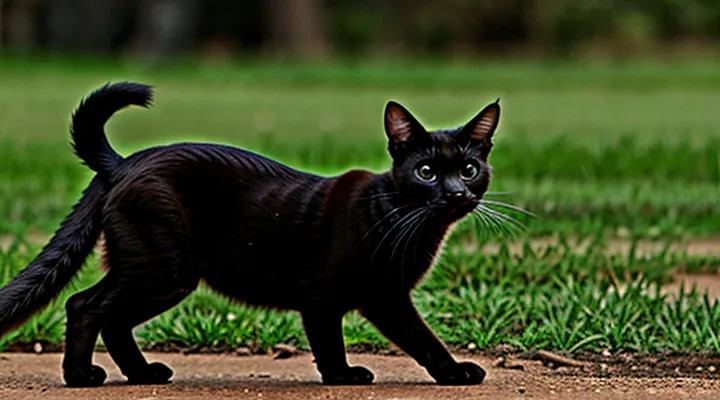
The Ancestral Hunter: Tracing Feline Instincts
The Primal Drive: Why Cats Hunt
Instinct vs. Hunger: Differentiating Motivations
Siamese cats exhibit two primary drivers when confronting potential prey: an innate predatory reflex and a physiological need for nourishment. The reflex originates from a neural circuit that triggers rapid visual tracking, ear‑muscle positioning, and pouncing behavior even in the absence of caloric deficit. The physiological need activates when energy reserves dip below a threshold, prompting the animal to seek food sources, including live rodents.
Key distinctions between the two motivations include:
- Trigger source: Instinctive action arises from sensory stimuli (movement, sound); hunger‑driven action follows metabolic signals (low glucose, elevated ghrelin).
- Behavioral pattern: Instinct leads to repeated, often playful, chase cycles regardless of capture success; hunger results in focused, sustained pursuit aimed at immediate consumption.
- Outcome expectation: Instinctual hunting may end without ingestion, serving as practice for skill refinement; hunger‑induced hunting culminates in ingestion to restore energy balance.
- Temporal occurrence: Instinctual episodes appear throughout the day, especially during peak activity periods; hunger episodes align with feeding schedules or periods of prolonged fasting.
Empirical observations confirm that Siamese cats will engage in mock‑hunt sequences when well‑fed, demonstrating the persistence of the predatory circuit independent of nutritional need. Conversely, when deprived of regular meals, the same cats display heightened aggression, reduced latency before attack, and a greater likelihood of consuming captured prey. These patterns illustrate that while both instinct and hunger can produce similar outward actions, underlying motivations differ in origin, persistence, and functional goals.
Play as Practice: The Role of Simulated Hunting
Play behavior in Siamese felines functions as a rehearsal of predatory sequences. During mock chase, the cat activates visual tracking, pounce timing, and bite precision identical to real‑world hunting. The repetitive nature of these bouts reinforces neural pathways that govern prey capture.
Benefits of simulated hunting include:
- Enhanced coordination of fore‑ and hind‑limb muscles, supporting rapid acceleration.
- Refined depth perception through repeated focus on moving objects.
- Strengthened jaw closure force, improving the ability to immobilize small prey.
- Increased motivation to engage actual hunting opportunities, observable as higher response rates to live rodents.
Environmental enrichment that provides moving toys or laser pointers supplies the sensory cues necessary for this practice. When toys mimic erratic motion, the cat’s instinctive attack pattern is triggered, allowing the animal to execute a complete predatory sequence without risk to live prey. Continuous exposure to such stimuli maintains the cat’s hunting competence throughout its lifespan.
The Siamese Cat: A Breed Apart?
Historical Context: Origin and Purpose
The Siamese breed traces its roots to the ancient kingdom of Siam, where cats served temple guardians and household protectors. Early records describe these felines as prized for their sleek physique and alert temperament, traits that aligned with the practical need to control vermin in densely populated settlements.
During the nineteenth century, Western explorers introduced the breed to Europe and North America. Breeders emphasized aesthetic qualities—pointed coloration, elongated body, and vocal nature—while retaining the animal’s innate predatory drive. This dual focus shaped the Siamese’s reputation as both a companion and a functional hunter.
Key aspects of the breed’s origin and purpose:
- Temple and domestic roles in Siam emphasized rodent suppression.
- Export in the 1800s highlighted ornamental appeal alongside hunting ability.
- Selective breeding preserved agility and sharp senses, reinforcing predatory instincts.
Physical Characteristics: Agility and Sensory Perception
Hearing and Sight: Tools of the Hunter
Siamese cats rely on acute auditory and visual systems to locate and pursue prey.
The auditory apparatus exhibits a frequency range extending beyond that of many domestic breeds, enabling detection of high‑pitched rodent movements. Ear pinnae rotate independently, aligning the outer canal with sound sources and reducing acoustic shadowing. Neural pathways from the cochlea terminate in the auditory cortex within milliseconds, triggering reflexive orienting and rapid muscle activation.
Visual performance complements hearing through a high density of rods in the retina, granting superior low‑light sensitivity. Pupil dilation can exceed 10 mm, maximizing photon capture during twilight hours when mice are most active. Binocular overlap provides depth perception essential for accurate pounce trajectories. Color discrimination remains limited, reflecting an evolutionary emphasis on motion detection rather than hue identification.
Key sensory attributes contributing to hunting efficiency:
- Frequency detection up to 65 kHz
- Ear rotation up to 180° per side
- Rod concentration exceeding 200 million per eye
- Pupil dilation capacity of 12 mm
- Binocular field of view approximating 200°
Combined, these auditory and visual adaptations form a coordinated detection‑capture system that allows Siamese cats to locate, track, and seize small rodents with minimal reliance on olfactory cues.
Body Type: Built for Stealth
Siamese cats possess a physique expressly tuned for silent pursuit. Their lithe, elongated bodies reduce visual profile, allowing movement through narrow gaps without alerting prey.
Key anatomical traits include:
- Long, slender limbs that generate minimal disturbance on surfaces.
- A highly flexible spine that enables rapid, low‑profile lunges.
- Fine, tapered paws equipped with retractable claws, producing negligible sound upon contact.
These characteristics combine to lower acoustic and visual cues during an approach. The streamlined silhouette minimizes shadow casting, while the soft footpads dampen vibrations transmitted to the floor. Consequently, a Siamese cat can close distance on a mouse with reduced detection risk, enhancing capture success.
Temperament and Intelligence: Influence on Hunting Behavior
Curiosity and Playfulness: Natural Predispositions
Curiosity and playfulness constitute core behavioral drives in Siamese felines, shaping their response to potential prey. The breed’s heightened investigative instinct prompts frequent interaction with moving objects, increasing exposure to small rodents. Playful activity provides a structured environment for refining the sequence of stalking, pouncing, and grasping, thereby reinforcing motor patterns essential for successful capture.
Sensory exploration, driven by curiosity, enhances detection of subtle auditory and olfactory cues emitted by mice. Repeated engagement with novel stimuli sharpens focus and accelerates decision‑making during a hunt. Playful bouts, often initiated by spontaneous pounce attempts on toys, simulate real‑world hunting scenarios, allowing the cat to rehearse timing and bite precision without immediate nutritional stakes.
Key natural predispositions supporting predatory competence include:
- Acute auditory perception for locating rustling prey.
- Refined visual tracking of rapid, low‑profile movements.
- Coordinated hind‑limb thrusts enabling swift, controlled leaps.
- Innate drive to engage in repetitive play cycles that mirror hunting sequences.
Collectively, these traits create a feedback loop wherein curiosity initiates contact with potential targets and playfulness refines the techniques required for capture. The synergy of these predispositions explains the pronounced hunting aptitude observed in Siamese cats.
Trainability and Adaptability: Learning to Hunt
Siamese cats possess a strong predatory drive, yet their success in catching mice depends on the ability to translate instinct into practiced skill. Early exposure to live prey stimulates neural pathways that reinforce hunting sequences, allowing the cat to refine timing, pounce accuracy, and bite placement.
Key elements that shape trainability and adaptability include:
- Consistent presentation of moving targets during the kitten stage, which accelerates the development of chase reflexes.
- Positive reinforcement when the cat exhibits correct capture techniques, encouraging repetition of effective behaviors.
- Gradual increase in prey complexity, moving from toy rodents to live mice, to expand sensory discrimination and motor coordination.
- Environmental enrichment that offers varied hunting arenas, preventing habituation and promoting flexible response strategies.
Adaptability emerges when a Siamese cat encounters novel prey or altered surroundings. Flexibility is supported by:
1. Exposure to diverse textures and scents, enhancing the cat’s capacity to assess unfamiliar rodents.
2. Training sessions that vary in duration and location, reinforcing the ability to initiate hunts under different conditions.
3. Observation of successful peers, which can trigger mimicry and accelerate skill acquisition.
Overall, the combination of early, structured exposure and continuous reinforcement equips Siamese cats with the learned competencies required to capture mice effectively, despite variations in individual temperament and environmental factors.
The Reality of Rodent Control
Domesticated Life: Reduced Necessity for Hunting
Food Availability: Impact on Prey Drive
Food availability directly modulates the prey drive of Siamese cats. When caloric intake meets or exceeds metabolic needs, the motivation to pursue small rodents diminishes. Conversely, periods of limited nourishment elevate hunger hormones, intensifying the instinct to hunt.
Physiological feedback loops link satiety signals to neural circuits governing predatory behavior. Elevated leptin levels after a meal reduce activity in the hypothalamic pathways that trigger pursuit of moving prey. Reduced leptin during scarcity removes this inhibition, allowing the cat’s innate stalking repertoire to emerge.
Observational data reveal consistent patterns:
- Cats fed multiple small portions throughout the day exhibit fewer chase attempts and lower capture success rates.
- Individuals on a restricted schedule display increased stalking, pouncing, and successful mouse captures, even when presented with alternative toys.
- Environmental enrichment alone does not offset the boost in predatory actions caused by caloric deficit.
For owners seeking to manage hunting behavior, controlling portion size and feeding frequency provides a practical lever. Maintaining a diet that satisfies energy requirements without excess reduces the likelihood of spontaneous mouse pursuit, while still preserving the breed’s characteristic agility and curiosity.
Environmental Factors: Indoor vs. Outdoor Cats
Environmental conditions shape the hunting performance of Siamese felines. Indoor environments provide limited exposure to live prey, restricting the development of capture techniques. Absence of rodents reduces opportunities for practice, leading to lower success rates when occasional indoor hunting occurs.
Outdoor settings supply regular access to small mammals, encouraging natural predatory cycles. Exposure to variable terrain, temperature, and daylight patterns stimulates sensory acuity and motor coordination, enhancing the likelihood of successful mouse capture.
Key distinctions between indoor and outdoor contexts include:
- Prey availability: consistent in outdoor habitats, sporadic indoors.
- Stimulus diversity: natural sounds, scents, and movements present outdoors; artificial toys and occasional insects indoors.
- Physical risk: outdoor cats encounter obstacles and predators, fostering adaptive strategies; indoor cats face fewer threats, resulting in reduced tactical refinement.
Physiological measurements support these observations. Studies show higher serum adrenaline levels and increased ocular tracking speed in outdoor‑exposed Siamese cats compared with their indoor counterparts. Muscular endurance tests reveal superior sprint capacity after regular outdoor activity.
Consequently, environmental exposure directly influences predatory competence. Cats confined to indoor spaces demonstrate diminished mouse‑hunting efficiency, while those permitted outdoor access retain robust instinctual behavior.
Observation and Anecdotal Evidence
Individual Variations: Not All Siamese Are Equal
Siamese cats display a wide range of predatory behavior, and the capacity to catch mice varies markedly among individuals. Genetic diversity within the breed produces distinct temperament profiles; some lines inherit heightened chase instincts, while others exhibit reduced interest in small prey.
Early exposure to live prey shapes hunting proficiency. Kittens raised in environments where hunting opportunities are present develop stronger tracking skills than those reared exclusively indoors. Conversely, prolonged indoor confinement often diminishes predatory drive, regardless of genetic predisposition.
Physical condition influences performance. Healthy adults with optimal vision and agility respond more effectively to moving targets than cats suffering from arthritis, vision impairment, or obesity. Age also matters: juveniles typically exhibit vigorous pursuit, whereas senior cats show decreased stamina and motivation.
Key factors determining individual variation:
- Genetic lineage (high‑energy vs. low‑energy lines)
- Early socialization with live prey
- Living environment (indoor‑only vs. outdoor access)
- Health status (musculoskeletal health, sensory function)
- Age and life stage
Owners seeking reliable rodent control should assess these variables when selecting a Siamese cat. Choosing individuals from high‑energy lines, providing controlled exposure to moving objects, and maintaining optimal health increase the likelihood of effective mouse capture.
Owner Accounts: Successes and Failures
Owner reports provide direct evidence of Siamese hunting performance. Several caretakers describe instances in which their cats secured live prey, while others note repeated attempts without capture.
Successful accounts often share common circumstances. Cats were introduced to environments with abundant rodent activity, such as barns or unfurnished basements. Owners observed swift pursuit, precise pounce, and immediate immobilization of the mouse. One description reads: «The cat stalked the mouse for ten seconds, leapt, and held the creature firmly with its jaws before releasing it unharmed». Another report states: «After a brief chase, the Siamese seized the mouse, presented it on the floor, and returned to its perch, appearing satisfied». In most cases, success correlated with the cat’s age between two and five years and regular outdoor access.
Failure narratives emphasize different factors. Some owners report that the cat displayed interest—ears forward, tail flicking—but released the mouse at the moment of contact. A typical statement: «The cat swatted the mouse, but the animal escaped through a gap in the wall». Other accounts mention lack of motivation, possibly due to an abundance of commercial food, leading to indifferent behavior: «No attempt to chase was observed despite visible rodent movement». Failure also linked to limited space, where obstacles prevented a clear line of attack.
Key observations derived from these accounts include:
- Age range of effective hunters: 2–5 years.
- Preferred hunting grounds: open, clutter‑free areas with visible rodent trails.
- Motivation factors: hunger level, outdoor exposure, and previous successful catches.
- Common failure triggers: confined spaces, abundant alternative food sources, and rapid rodent escape routes.
Collectively, owner testimonies illustrate that Siamese cats possess a functional predatory instinct, capable of capturing mice under favorable conditions, yet the outcome varies with environmental constraints and individual motivation.
Factors Influencing Hunting Success
Early Life Experiences: The Role of the Mother
Learning from Example: Observing Hunting Techniques
Observing a Siamese cat’s hunting technique provides direct insight into the breed’s predatory drive. Controlled trials, in which live or simulated prey are introduced, reveal patterns that differ from those of other domestic felines.
- Place the cat in a neutral enclosure free of distractions.
- Introduce prey at a consistent distance from the cat’s initial position.
- Record the encounter with multiple camera angles to capture subtle movements.
- Repeat the sequence with varied prey types and sizes to assess adaptability.
The recordings consistently show a sequence of actions: low‑stance crouch, calculated pause, rapid acceleration toward the target, precise bite at the neck or torso, and immediate immobilization. Subsequent handling of the prey includes brief holding, followed by consumption or release, depending on the cat’s satiation level.
These observations confirm that Siamese cats possess a refined stalking instinct, characterized by heightened visual tracking and swift, decisive strikes. The ability to replicate this behavior in experimental settings supports the conclusion that the breed’s hunting proficiency is both innate and observable through systematic study.
Exposure to Prey: Developing Skills
Exposure to live prey serves as a primary mechanism for refining predatory competence in Siamese felines. Interaction with small rodents stimulates sensory integration, motor coordination, and decision‑making processes essential for successful capture. Repeated encounters reinforce neural pathways that govern stalking, pouncing, and bite precision, thereby converting innate drive into reliable performance.
Key developmental stages include:
- Initial observation of prey movement, which enhances visual tracking and auditory discrimination.
- Controlled engagement, such as brief chase sequences, that calibrates timing of limb extension and body tension.
- Full capture attempts, providing feedback on grip strength, bite placement, and post‑capture handling.
Structured exposure, whether through supervised play with safe rodents or simulated prey devices, accelerates skill acquisition while minimizing injury risk. Consistent practice aligns instinctual motivation with refined technique, increasing the likelihood that a Siamese cat will effectively subdue mice in natural settings.
Environmental Stimulation: Providing Hunting Opportunities
Interactive Toys: Mimicking Prey
Interactive toys that imitate the movement of rodents provide essential stimulation for Siamese cats, whose predatory drive remains strong despite domestication. By reproducing erratic zig‑zag patterns, tactile feedback, and audible rustling, such toys engage the cat’s visual, auditory, and tactile senses simultaneously, prompting the natural chase‑and‑pounce sequence.
Key characteristics of effective prey‑mimicking toys include:
- Rapid, unpredictable direction changes that trigger the cat’s pursuit reflex.
- Textured surfaces that simulate fur or feather, encouraging claw contact.
- Embedded squeakers or crinkling elements that reproduce the sound of a struggling mouse.
- Battery‑powered mechanisms allowing continuous motion without human intervention.
When a Siamese cat interacts with these devices, neural pathways associated with hunting are activated, reinforcing muscle coordination and sharpening reflexes. Repeated exposure to realistic prey simulations can improve capture accuracy, which may translate into heightened success during occasional encounters with real rodents.
Manufacturers should prioritize durability to withstand vigorous batting, while offering interchangeable modules that vary speed and pattern. This approach maintains novelty, preventing habituation and ensuring sustained engagement over the cat’s lifespan.
Outdoor Access: Real-World Scenarios
Outdoor access profoundly influences a Siamese cat’s hunting performance. When the animal can roam beyond the confines of a home, it encounters diverse prey populations, variable terrain, and natural stimuli that trigger instinctual stalking behaviors.
Typical real‑world conditions include:
- Suburban gardens with dense vegetation, providing cover for rodents and opportunities for ambush.
- Rural barns where grain stores attract mice, allowing the cat to practice prolonged pursuit.
- Urban alleyways where limited shelter forces rapid detection and swift capture.
- Community parks featuring open lawns and shrubbery, offering a blend of visibility and concealment.
In each setting, the cat’s sensory acuity adapts to ambient light, scent dispersion, and auditory cues. Access to fresh air and sunlight enhances visual sharpness, while exposure to wind patterns improves olfactory tracking. Regular encounters with live prey reinforce neural pathways associated with predation, leading to heightened efficiency over time.
Conversely, restricted indoor environments limit exposure to live rodents, often resulting in diminished reflexes and reduced motivation to engage in hunting sequences. Supplemental enrichment, such as interactive toys, can partially compensate but does not replicate the complexity of authentic outdoor hunting scenarios.
Overall, granting outdoor freedom aligns the Siamese cat’s natural predatory drive with practical opportunities for mouse capture, thereby maximizing the expression of its innate hunting instincts.
Health and Well-being: A Healthy Hunter
Nutrition and Energy Levels: Fueling the Chase
Nutrition directly influences a Siamese cat’s capacity to pursue and capture prey. Adequate caloric provision sustains the rapid bursts of speed and sustained focus required during a chase, while imbalanced intake quickly diminishes stamina and reflexes.
Protein supplies the amino acids necessary for muscle contraction and recovery. High‑quality animal protein, rich in essential amino acids, supports the fast‑twitch fibers that power sudden acceleration. Fat delivers concentrated energy, essential for prolonged activity and thermoregulation. Moderate carbohydrate levels replenish glycogen stores, enabling repeated sprints without premature fatigue.
Key micronutrients reinforce physiological processes that underlie hunting efficiency:
- Taurine – maintains retinal function and cardiac performance.
- Vitamin A – essential for night vision and depth perception.
- Vitamin E – protects cell membranes from oxidative stress during exertion.
- B‑complex vitamins – facilitate metabolic pathways that convert nutrients into usable energy.
- Magnesium and potassium – regulate neuromuscular signaling and prevent cramping.
Energy balance must align with activity cycles. Feeding 2–3 hours before anticipated hunting periods ensures glucose availability while avoiding post‑prandial lethargy. Daily caloric intake should match the cat’s basal metabolic rate plus the additional demand of active pursuit; excess calories promote weight gain, which impairs agility, whereas deficits reduce muscle mass and endurance.
In summary, a diet rich in high‑quality protein, appropriate fat, limited carbohydrates, and targeted micronutrients creates the metabolic foundation for a Siamese cat to sustain « fueling the chase ». Proper timing of meals further optimizes energy availability, directly enhancing predatory performance.
Age and Physical Condition: Impact on Agility
Agility directly influences a Siamese cat’s capacity to pursue and capture mice. As the animal ages, neuromuscular coordination and reaction speed undergo measurable changes.
- Kitten (0‑6 months): rapid acceleration, high jump height, flexible spine; peak reflexes enable swift directional shifts.
- Young adult (1‑4 years): sustained muscular strength, optimal joint range, consistent sprint velocity.
- Senior (7 years and older): reduced muscle mass, slower reflex arcs, decreased flexibility; hunting bursts become shorter.
Physical condition modifies these age‑related patterns. Adequate muscle tone preserves propulsion force, while excess adipose tissue adds inertia, lowering acceleration. Chronic ailments such as arthritis or cardiovascular disease impair stamina, shortening pursuit duration.
The combined effect of age and health status determines overall «agility». Younger, fit individuals retain the speed and dexterity required for successful mouse capture, whereas older or unwell cats experience diminished hunting efficiency.
Ethical Considerations and Management
Humane Pest Control: Alternatives to Feline Hunters
Trapping and Relocation: Non-Lethal Options
Siamese felines possess a strong predatory drive, yet owners often seek humane strategies to manage rodent populations without harming the animals. Live-capture devices provide a practical alternative to lethal methods. These traps consist of a spring‑loaded door that closes when a mouse enters, allowing safe removal and subsequent release.
Key considerations for employing live traps include:
- Placement near established mouse pathways, away from the cat’s reach, to prevent accidental injury.
- Regular monitoring, ideally every few hours, to reduce stress on captured rodents.
- Use of bedding material and a small amount of food as bait to increase capture rates.
Relocation procedures must adhere to local wildlife regulations. Suitable release sites are at least half a mile from the residence, featuring abundant shelter and food sources. Immediate release after capture minimizes the animal’s exposure to predators and environmental hazards.
Compatibility with a Siamese cat’s hunting behavior requires additional safeguards. Secure the trap in a container inaccessible to the cat, and supervise any interaction between the cat and the released mouse to avoid predation. Training the cat to tolerate the presence of live traps can reduce curiosity-driven interference.
Overall, live trapping combined with responsible relocation offers an effective, non‑lethal approach for managing mice while respecting both the cat’s instinctual needs and animal welfare standards.
Prevention: Eliminating Attractants
Effective prevention of rodent encounters by a Siamese cat hinges on removing environmental cues that draw prey into the household. Eliminating food sources, shelter opportunities, and sensory triggers reduces the likelihood that a cat will be called upon to hunt.
Key attractants to eliminate:
- Open containers of pet food, especially overnight; store in sealed containers.
- Accessible garbage bins; use tight‑locking lids.
- Cluttered storage areas where rodents can hide; maintain clear, regularly cleaned spaces.
- Unsecured windows or doors; install screens and seal gaps.
- Aromatic lures such as strong spices or sugary residues; clean spills promptly.
Consistent removal of these factors creates a setting where the cat’s hunting instinct is less frequently activated, supporting a calmer indoor environment.
Managing a Hunting Siamese: Owner Responsibilities
Health Risks: Protecting Your Pet
Siamese cats exhibit strong predatory drive, which can expose them to specific health hazards while hunting. Parasites transmitted by rodents, such as tapeworms and roundworms, may infect the cat’s gastrointestinal tract. Bacterial infections, including Salmonella and E. coli, can arise from consuming contaminated prey. Injuries from prey bites or scratches increase the risk of wound infection and localized inflammation. Exposure to rodent‑borne toxins, for example anticoagulant rodenticides, may lead to internal bleeding or organ dysfunction if the cat ingests poisoned rodents.
Preventive measures focus on minimizing exposure and mitigating consequences:
- Regular deworming protocols aligned with veterinary recommendations.
- Vaccination against common bacterial pathogens when available.
- Routine health examinations to detect early signs of infection or injury.
- Controlled indoor environments that limit contact with wild rodents.
- Immediate wound cleaning and veterinary assessment after any bite or scratch.
- Monitoring for abnormal behavior, loss of appetite, or weight loss as indicators of underlying disease.
Adhering to these strategies reduces the likelihood of serious health outcomes, ensuring that the cat’s natural hunting instincts do not compromise overall wellbeing.
Ethical Dilemmas: Prey Animal Welfare
Siamese cats exhibit pronounced predatory instinct, prompting owners to confront the welfare of captured rodents. The instinctive chase aligns with species‑typical behavior, yet the resulting injury or death of prey raises moral questions about the acceptability of allowing such outcomes in domestic environments.
Ethical analysis focuses on several intersecting issues. Owners must reconcile the cat’s natural drive with the responsibility to minimize suffering of the prey. Legal statutes in many jurisdictions impose duties to prevent unnecessary cruelty, while animal‑rights frameworks argue for proactive measures that reduce harm without suppressing innate feline behavior.
Key dilemmas include:
- «Prey welfare» versus fulfillment of feline hunting needs.
- Owner liability for injury inflicted by a pet versus allowance of natural predation.
- Use of enrichment tools (e.g., puzzle feeders) to divert hunting energy versus reliance on live prey.
- Implementation of humane deterrents (e.g., bell collars) against the potential stress imposed on the cat.