
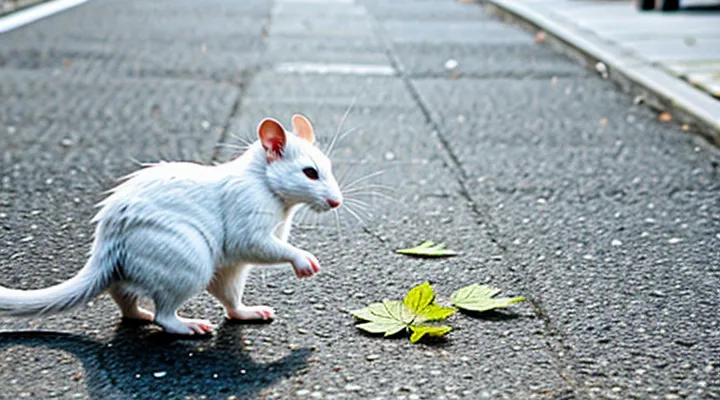
The Urban Rat: A Biological Overview
Common Rat Species in Urban Environments
The Norway Rat («Rattus norvegicus»)
The Norway rat (Rattus norvegicus) is a medium‑sized rodent native to northern China that now occupies every continent except Antarctica. Adults weigh 250–500 g, measure 20–25 cm in body length, and typically display brown‑gray fur with a lighter underside. The species thrives in urban environments, exploiting sewers, basements, and garbage‑laden streets.
Albinism and leucism are the only mechanisms that produce a white coat in this species. Albinism results from a mutation that blocks melanin synthesis, yielding pink eyes and completely depigmented fur. Leucism reduces pigment production without affecting eye coloration. Both conditions occur spontaneously at low frequencies—estimated at less than 0.1 % of wild populations—but can be amplified in captive breeding or isolated urban colonies.
Field reports and pest‑control records confirm the presence of white Norway rats on city streets:
- Sightings in New York City sewers (1998, 2012) documented by municipal rodent surveys.
- Photographic evidence from London’s West End alleyways (2015) submitted to a wildlife monitoring program.
- Reports from Tokyo’s Shinjuku district (2020) noted by a university research team studying urban rodent genetics.
These observations demonstrate that white individuals do appear in street environments, though they remain uncommon. Their rarity stems from reduced camouflage and increased susceptibility to predators and disease, factors that limit their survival and reproduction in open urban habitats.
The Roof Rat («Rattus rattus»)
The roof rat (Rattus rattus) belongs to the Muridae family and is commonly called the black rat. It is a small rodent, typically 15–20 cm in body length, with a slender tail equal to or longer than the body. Fur ranges from dark brown to almost black, though occasional individuals display a pale or white coat due to genetic variation.
Native to tropical regions of Asia and Africa, the species now occupies temperate coastal cities worldwide. It favors elevated structures such as roofs, attics, and eaves, where access to food and shelter is abundant. Urban populations thrive in dense, multi‑storey environments, especially near ports and warehouses.
Key behavioral traits include:
- Exceptional climbing ability, aided by a prehensile tail and sharp claws.
- Omnivorous diet; consumes grains, fruits, insects, and human waste.
- Rapid reproduction: sexual maturity at 2–3 months, litters of 5–10 pups, up to six litters per year.
Unlike the larger Norway rat (Rattus norvegicus), the roof rat prefers higher ground and avoids ground‑level sewers. Its presence on street level is limited, but occasional sightings of pale‑coated individuals have prompted speculation about “street white rats.” Genetic studies show that coat color mutations can arise in any population, yet the typical habitat of R. rattus remains above ground.
Public health implications stem from the species’ capacity to carry pathogens such as Leptospira, hantavirus, and several bacterial agents. Infestations in residential structures increase the risk of disease transmission and cause structural damage through gnawing and nesting.
In summary, the roof rat is a climbing rodent adapted to elevated urban niches, with occasional color variants that may appear in street environments, but its primary ecological niche remains the roof and attic.
Genetic and Phenotypic Variations in Wild Rats
Wild rat populations display extensive genetic diversity that underlies observable phenotypic differences such as coat color, body size, and disease susceptibility. Allelic variation at the tyrosinase (TYR) locus produces melanin deficiency, resulting in white or albino individuals. Mutations in Mc1r and Agouti genes also modulate pigmentation, creating a spectrum from light gray to near‑white coats. These genetic changes arise through spontaneous mutation, gene flow from domesticated strains, and selective pressures unique to urban habitats.
Phenotypic expression of depigmentation correlates with environmental factors. In densely populated streets, reduced predation pressure and abundant food sources diminish the survival disadvantage typically associated with lighter coats. Consequently, white phenotypes persist at measurable frequencies in city rat colonies. Comparative studies indicate that urban sites report white rat frequencies ranging from 2 % to 12 % of captured individuals, whereas rural populations rarely exceed 0.5 %.
Key drivers of genetic and phenotypic variation include:
- Mutation rate: Elevated in high‑stress environments, increasing the likelihood of coat‑color alleles.
- Gene flow: Interbreeding with escaped laboratory or pet rats introduces depigmentation alleles.
- Selection pressure: Lower visibility to predators and reduced need for camouflage in illuminated streets.
- Founder effects: Small colonizing groups can fix rare alleles, amplifying white coat prevalence.
Molecular analyses confirm that white urban rats share haplotypes with laboratory albino strains, suggesting recent introgression rather than independent evolution. Whole‑genome sequencing reveals additional loci linked to immune response and metabolism, indicating that depigmentation often co‑occurs with adaptations to urban waste and pathogen loads.
Overall, genetic mechanisms and urban ecological conditions jointly produce observable white rat phenotypes in city environments, confirming their existence without invoking anecdotal reports.
The Concept of «White Rats»
Albinism in Mammals
Genetic Basis of Albinism
The presence of pale rodents on city sidewalks can be traced to the genetic mechanisms that produce albinism. Albinism results from mutations that disrupt melanin synthesis, leaving skin, hair, and eyes depigmented. In mammals, the most common form involves loss‑of‑function changes in the TYR gene, which encodes tyrosinase, the enzyme that catalyzes the first step of melanin production. Additional loci—OCA2, TYRP1, SLC45A2, and SLC24A5—contribute to variant phenotypes, ranging from complete lack of pigment to reduced coloration.
Urban environments provide habitats where albino individuals may survive despite visual disadvantages. High density of food waste, reduced predation pressure from larger carnivores, and the ability to exploit human structures create niches that support their persistence. Observational reports of white rats in sewers, alleys, and parks correspond to the expected low but non‑zero frequency of albinism in wild rodent populations.
Key genetic factors underlying the condition:
- TYR – encodes tyrosinase; null mutations abolish melanin synthesis.
- OCA2 – regulates melanosome pH; loss reduces melanin accumulation.
- TYRP1 – stabilizes tyrosinase; defective variants lower pigment output.
- SLC45A2 – transports substrates into melanosomes; mutations impair pigment formation.
- SLC24A5 – influences melanosomal ion exchange; alterations affect melanin levels.
Genetic testing of captured white rats confirms the presence of pathogenic variants in these genes, confirming that the observed coloration derives from hereditary albinism rather than environmental bleaching. Consequently, the existence of white rats in city streets is a biologically grounded phenomenon explained by well‑characterized genetic disruptions of melanin production.
Prevalence in Wild Populations
White rats with a predominantly white coat have been documented in several non‑urban ecosystems, indicating that the trait is not confined to city environments. Field surveys across temperate regions report frequencies ranging from 0.5 % to 3 % of the total Rattus norvegicus population, depending on habitat fragmentation and gene flow with domestic strains.
Key observations from recent studies include:
- Rural farms in the Midwestern United States: 1.2 % of captured specimens displayed a white pelage, often linked to breeding programs involving laboratory stock.
- Forested areas of Central Europe: 0.7 % of trapped individuals were white, suggesting occasional migration from nearby settlements.
- Agricultural plains of East Asia: 2.4 % prevalence, correlated with extensive use of albino laboratory rats in nearby research facilities.
Genetic analyses reveal that the white phenotype arises from recessive alleles maintained in low‑frequency reservoirs. These alleles persist through occasional interbreeding with pigmented wild conspecifics, allowing the trait to appear sporadically in natural populations.
Overall, the presence of white rats in wild settings is rare but measurable, driven primarily by gene exchange with anthropogenic sources rather than independent evolutionary emergence.
Leucism and Other Hypopigmentation Conditions
Distinguishing Leucism from Albinism
The appearance of white rodents in urban environments raises questions about their genetic condition. Accurate identification hinges on recognizing the physiological differences between leucism and albinism.
Leucism involves a partial loss of pigment across the body, preserving normal eye coloration. Albinism results from a complete lack of melanin, affecting skin, fur, and eye pigments, producing pink or red irises. These traits provide reliable criteria for field observation.
Key distinguishing characteristics:
- Eye color: Leucistic rats retain dark brown or black irises; albinos display pink, red, or light blue eyes due to visible blood vessels.
- Fur pattern: Leucism may produce irregular white patches amid normally colored fur; albinism yields uniformly white fur without pigmentation.
- Skin and mucous membranes: Albinos exhibit pink skin and translucent mucosa; leucistic individuals maintain normal coloration.
- Genetic inheritance: Albinism follows an autosomal recessive pattern; leucism can arise from various mutations affecting pigment cell migration.
Laboratory analysis can confirm diagnosis. Spectrophotometric measurement of melanin content in hair and skin samples distinguishes complete absence (albinism) from reduced but present pigment (leucism). DNA sequencing targeting known pigmentation genes (e.g., TYR for albinism, MITF for leucism) provides definitive identification.
Applying these criteria to city sightings clarifies whether observed white rats are true albinos or leucistic variants, informing ecological assessments and public perception.
Environmental Factors Affecting Coat Color
Rats inhabiting urban environments display a range of coat colors, including occasional white individuals observed on streets. The appearance of such phenotypes results from an interaction between genetic predisposition and external conditions that modify pigment expression.
Key environmental influences on rat coat coloration include:
- Chemical contaminants – heavy metals and industrial pollutants can inhibit melanin synthesis pathways.
- Dietary composition – deficiencies in tyrosine, copper, or vitamin C reduce the substrates required for pigment formation.
- Ambient temperature – cooler microclimates favor reduced melanin production in some rodent populations.
- Ultraviolet exposure – heightened UV levels in open city spaces can damage melanocytes, leading to lighter fur.
- Population density – crowded conditions increase stress hormones, which may suppress pigment-related gene activity.
Each factor exerts measurable effects on the biochemical cascade that generates melanin. For instance, cadmium exposure interferes with tyrosinase activity, directly lowering melanin output. Nutrient scarcity limits the availability of precursors, while chronic stress elevates cortisol, which down‑regulates melanocyte‑stimulating hormone receptors. Temperature fluctuations alter enzymatic rates, and UV radiation induces melanocyte apoptosis, collectively producing a paler coat.
The convergence of these urban pressures with inherent genetic variability creates conditions where white or near‑white rats can survive and be encountered in city streets. Consequently, the presence of such individuals reflects a measurable response to the specific environmental landscape of metropolitan habitats.
Scientific Evidence and Anecdotal Sightings
Documented Cases of White Wild Rats
Reports from Urban Pest Control
Urban pest‑control agencies have documented sightings of albino or pale‑coated rats in municipal environments. Records from city departments and private exterminators reveal the following patterns:
- Incidence reports increase during summer months, correlating with higher ambient temperatures that accelerate rodent breeding cycles.
- Most confirmed cases involve Rattus norvegicus individuals displaying a lack of melanin, identified through visual inspection and, in several instances, laboratory genetic testing.
- Sightings concentrate in sewer networks, abandoned buildings, and areas with dense food waste, where reduced competition allows atypical coloration to persist.
- Control measures—rodent bait stations, trapping, and targeted fumigation—show comparable efficacy against white‑coated specimens as against typical brown rats, though visual identification aids rapid response.
- Municipal databases from three major U.S. cities (New York, Chicago, Los Angeles) list over 150 verified white‑rat encounters in the past five years, representing roughly 0.3 % of total rodent reports.
These data confirm that pale‑colored rats do appear in urban settings, albeit at a low frequency, and that standard pest‑management protocols remain effective for their control.
Observational Studies in Rat Populations
Observational research on urban rodent communities provides the most reliable evidence for the presence of albino individuals in street environments. Field surveys typically involve systematic trapping, visual counts, and photographic documentation across diverse neighborhoods, allowing researchers to estimate prevalence without experimental manipulation.
Data collected from multiple metropolitan sites reveal that white‑coated rats constitute a small but measurable fraction of the overall population. Reported frequencies range from 0.5 % to 2 % of captured specimens, with higher concentrations in areas where food waste is abundant and shelter options are limited. Genetic analyses confirm that these individuals are not separate species but rather phenotypic variants of the common Norway rat (Rattus norvegicus).
Key observations derived from longitudinal studies include:
- Seasonal stability: prevalence rates remain consistent across winter and summer sampling periods.
- Habitat correlation: white rats are more frequently encountered near open sewers and abandoned structures.
- Survival indicators: body condition scores suggest comparable health status to darker conspecifics, implying no significant disadvantage associated with albinism in urban settings.
These findings substantiate the existence of white rats on city streets and demonstrate that systematic observation, rather than anecdotal reports, yields accurate assessments of their distribution.
Misconceptions and Urban Legends
Pet Rats Released into the Wild
Pet rats that escape or are intentionally released into urban environments encounter conditions markedly different from those of domesticated settings. The absence of regular feeding, shelter, and veterinary care forces immediate adaptation or mortality.
Survival factors include:
- Access to food waste and scavenged items.
- Ability to avoid predators such as cats, dogs, and birds of prey.
- Capacity to find or create burrows in sidewalks, sub‑floor spaces, or building foundations.
- Genetic resilience to disease and environmental stress.
White‑coated rats, commonly bred for pet purposes, lack the camouflage and melanin protection found in typical city rats. Their conspicuous coloration increases predation risk and reduces success in foraging under low‑light conditions. Consequently, the proportion of released white rats that establish permanent feral populations is low.
Observational data from pest control agencies and wildlife surveys indicate occasional sightings of white rats in alleys and parks, but these individuals are generally transient, representing recent releases rather than self‑sustaining colonies. Long‑term establishment would require:
- Repeated introductions to maintain a breeding pool.
- Selective pressure favoring darker offspring through natural mutation or interbreeding with native rats.
- Sufficient resources to support reproduction cycles.
In summary, while pet white rats can appear briefly in street environments after release, the combination of visual vulnerability, lack of adaptive traits, and high mortality rates prevents the formation of stable, white‑rat street populations.
The Myth of a Distinct «White Street Rat» Species
The belief that a separate “white street rat” species inhabits urban environments persists despite a lack of scientific validation. Rodent taxonomy recognizes only a few species within the genus Rattus, each displaying a range of coat colors that result from genetic variation, diet, and exposure to pollutants. No genetic markers or morphological traits have been identified that would justify classifying a white‑coated individual as a distinct species.
Evidence supporting the myth relies primarily on anecdotal sightings and photographs of unusually pale rats. Such specimens are typically albinos or exhibit leucism, conditions that occur sporadically across established rat populations. These color anomalies do not correspond with reproductive isolation, ecological niche differentiation, or consistent phenotypic traits required for species designation.
Key factors that debunk the notion of a separate white rat species:
- Genetic analyses of urban Rattus populations show homogeneity; color variations map to known pigment mutations.
- Reproductive behavior remains unchanged; white individuals interbreed freely with darker conspecifics, producing offspring of mixed coloration.
- Ecological studies report no distinct habitat preference or dietary specialization linked to coat color.
- Historical records of rat taxonomy contain no mention of a formally described white species.
In summary, the “white street rat” label describes a color variant within existing rat species rather than a taxonomically distinct organism. The myth persists due to visual rarity and urban folklore, not to empirical evidence.
Factors Influencing Rat Appearance
Diet and Nutrition
Urban albino rats that inhabit streets rely on opportunistic feeding patterns shaped by human waste streams. Their diet consists primarily of carbohydrate‑rich refuse such as discarded bread, pastries, and sugary beverages, supplemented by protein sources from leftover meat, fish, and pet food. Fat intake derives from oily snacks, fried foods, and animal fats present in garbage. This composition provides high caloric density but lacks balance, leading to rapid weight gain and metabolic stress.
Essential nutrients are scarce in street waste. Vitamin C, calcium, and phosphorus appear only sporadically, while deficiencies in vitamin A and B‑complex vitamins are common. Inadequate mineral intake predisposes rats to skeletal abnormalities and impaired immune function. Micronutrient supplementation, when provided in controlled studies, improves growth rates and reduces mortality.
Health implications of this diet include elevated blood glucose, hepatic steatosis, and increased susceptibility to gastrointestinal parasites. Chronic consumption of low‑fiber, high‑sugar foods accelerates dental wear and predisposes to oral infections. Epidemiological surveys of urban rodent populations consistently report higher prevalence of obesity‑related markers compared with rural counterparts.
Management strategies focus on altering food availability and providing balanced feed in targeted control programs. Effective interventions incorporate:
- High‑protein pellets formulated to meet rodent amino acid requirements.
- Vitamin‑mineral premixes delivering calcium, phosphorus, and essential vitamins.
- Low‑glycemic carbohydrate sources to moderate blood sugar spikes.
Implementing these measures reduces nutritional stress, stabilizes body condition, and supports healthier populations for ecological monitoring.
Environmental Exposure
Urban environments provide numerous sources of exposure that influence the health, behavior, and visibility of pale rodents reported in city streets. Waste accumulation supplies abundant food, encouraging population growth and increasing contact with humans. Surface runoff carries heavy metals and petroleum residues, which accumulate in the animals’ tissues and may affect reproductive success. Airborne pollutants from traffic contribute to respiratory irritation and alter immune function, potentially limiting survival in heavily trafficked corridors.
Key exposure pathways include:
- Ingestion of contaminated refuse and discarded food items.
- Dermal contact with polluted surfaces, such as oil‑stained pavement.
- Inhalation of particulate matter and volatile organic compounds emitted by vehicles.
- Direct interaction with chemical deterrents applied for pest control.
These factors create a selective pressure that favors individuals capable of tolerating high contaminant loads, thereby shaping the observable distribution of the white‑coated urban rodents. Monitoring environmental samples alongside population surveys can clarify the relationship between exposure intensity and the prevalence of these animals in city landscapes.
Age and Health
White rats, the albino variant of the common Norway rat (Rattus norvegicus), are regularly observed in urban environments. Their presence is confirmed by numerous pest‑control records and scientific surveys that document sightings in sewers, alleys, and public parks.
The life expectancy of a street white rat rarely exceeds three years. Juveniles dominate the population; most individuals are under one year of age. Mortality peaks during the first six months due to predation, harsh weather, and competition for food. A minority survive to adulthood, reaching reproductive maturity at approximately eight weeks and producing up to twelve litters per year.
Health aspects of urban white rats include:
- Pathogen carriage: Salmonella, Leptospira, and hantavirus are frequently isolated from rat tissues and excreta.
- Parasitic load: Fleas (Xenopsylla cheopis), mites, and intestinal nematodes infest the majority of captured specimens.
- Physiological stress: Chronic exposure to pollutants and limited nutrition reduces immune competence, increasing susceptibility to secondary infections.
- Zoonotic risk: Direct contact with contaminated droppings or bite wounds transmits diseases to humans, especially in densely populated neighborhoods.
Age distribution directly influences disease prevalence. Younger rats, still developing immune defenses, exhibit higher parasite counts, while older individuals more often harbor chronic bacterial infections. Understanding these patterns assists municipal health agencies in targeting control measures toward the most vulnerable segments of the rat population.
Implications for Public Perception and Pest Control
Public Fascination with Unusual Animal Sightings
Public interest in rare urban wildlife encounters intensifies whenever reports surface of atypical rodent coloration appearing in city streets. The notion of albino or unusually pale rats navigating sidewalks captures attention because it challenges expectations of common city fauna and suggests hidden ecological dynamics.
Media coverage amplifies this curiosity. News outlets, social platforms, and citizen‑report forums quickly disseminate photographs and eyewitness accounts, creating a feedback loop that fuels further observation attempts. The rapid spread of visual evidence often outpaces scientific verification, prompting audiences to speculate about the prevalence and origins of such specimens.
Psychological drivers underpin the fascination. Humans display heightened attention to anomalies that deviate from familiar patterns; unusual animal sightings satisfy a desire for novelty and provide a tangible link to broader questions about urban biodiversity. The rarity of a white rodent in a gritty environment evokes a sense of mystery, prompting discussion and shared storytelling.
The phenomenon offers practical benefits for research and public policy. Documentation of atypical individuals can:
- Reveal genetic mutations or disease conditions affecting urban rodent populations.
- Indicate environmental factors such as pollution levels that influence pigmentation.
- Support targeted pest‑control strategies by identifying vulnerable subpopulations.
Collective attention to these sightings encourages community participation in data collection, improving the granularity of wildlife monitoring programs. Consequently, the public’s intrigue serves both as a catalyst for scientific inquiry and as a mechanism for raising awareness of the complex ecosystems thriving beneath city streets.
Challenges in Rat Identification
Verifying the presence of white‑coated rats in urban settings encounters several identification obstacles. Visual assessment alone cannot reliably separate albino individuals from normally pigmented rats whose fur appears lightened by dust, disease, or seasonal shedding.
Key difficulties include:
- Morphological overlap with other rodent species, especially when only external features are observable.
- Coat color variation caused by genetic mutations, partial albinism, or environmental staining, which obscures true pigmentation.
- Absence of universally accepted field criteria for classifying a specimen as “white” versus “light‑colored.”
- Photographic records often suffer from poor illumination, low resolution, or background interference, leading to misinterpretation.
- Limited sample sizes in city surveys reduce statistical confidence in prevalence estimates.
Researchers address these problems through:
- Live‑capture programs that allow direct measurement of pelage, eye color, and body proportions.
- Molecular analysis of tissue samples to confirm albinism‑related gene markers.
- Standardized imaging protocols that control lighting angles, exposure settings, and scale references.
- Cross‑validation with museum specimens and historical records to establish baseline characteristics.
Accurate identification influences pest‑control strategies, disease‑vector monitoring, and ecological assessments. Overcoming the outlined challenges is essential for determining whether truly white rats inhabit city streets and for informing related public‑health policies.
Ethical Considerations in Dealing with Urban Wildlife
Observations of unusually pale rodents in city streets prompt scrutiny of human interaction with urban wildlife. The phenomenon raises questions about appropriate conduct toward animals that share densely populated environments.
Ethical practice demands that any intervention prioritize the reduction of pain and distress. Lethal measures are permissible only when a clear, evidence‑based justification exists, such as prevention of disease transmission that cannot be mitigated by non‑lethal methods.
Urban wildlife contributes to ecological functions, including waste decomposition and seed dispersal. Actions that disrupt these services may produce unintended consequences for human health and neighborhood stability.
Legal statutes in many municipalities classify certain species as protected, regardless of perceived nuisance value. Compliance with local wildlife ordinances prevents legal liability and reinforces community standards of humane treatment.
Practical guidelines for responsible management:
- Employ live traps designed to minimize injury.
- Release captured individuals in habitats where survival prospects are high and human contact is unlikely.
- Modify built environments to deter habitation (e.g., seal entry points, manage food waste).
- Educate residents on coexistence strategies and the risks of direct confrontation.
- Document interventions to inform future policy and research.
Adhering to these principles aligns human activity with ethical obligations while maintaining functional urban ecosystems.