
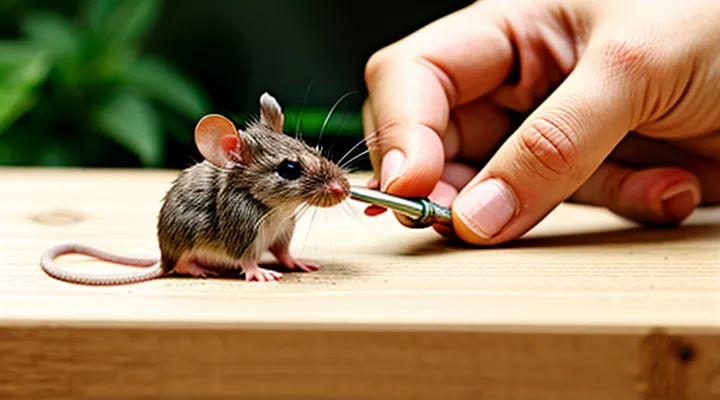
Preparation for Successful Taming
Essential Supplies and Habitat Setup
A reliable environment is the foundation for encouraging a mouse to interact calmly with human hands. Proper equipment and a well‑designed enclosure reduce stress and promote trust.
- Small animal carrier or transport box with secure latch
- Soft bedding (paper strips or aspen shavings)
- Hideout (ceramic tunnel or wooden cube)
- Chewing block or untreated wood toys
- Water bottle with stainless‑steel tube
- Nutrient‑dense pellet or seed mix, supplemented with fresh vegetables
- Hand‑feeding syringe or low‑volume droppers for gradual exposure
- Light‑weight gloves for initial handling, if needed
The habitat should mimic a natural burrow while remaining easy to clean. Begin with a sturdy plastic or glass cage at least 12 × 12 × 12 inches; larger space allows more movement. Layer bedding to a depth of 2–3 inches, then place the hideout on one side, ensuring a clear line of sight from the opposite wall. Position the water bottle and food dispenser opposite the hideout to create a defined feeding zone. Introduce chewing toys near the center to encourage exploration. Maintain temperature between 68–75 °F and humidity around 40–60 %. Clean the enclosure weekly, replacing soiled bedding and disinfecting surfaces with a mild, rodent‑safe solution.
With these supplies assembled and the habitat arranged as described, a mouse will more readily accept hand contact, paving the way for successful taming.
Understanding Mouse Behavior and Stress Signals
Understanding a mouse’s natural behavior is essential before attempting hand handling. Mice are prey animals; they rely on rapid flight and keen hearing to avoid predators. Their default response to unfamiliar contact is to freeze, flee, or emit high‑frequency vocalizations. Recognizing these instincts helps differentiate curiosity from fear.
Typical stress indicators include:
- Rigid posture, tail tucked tightly against the body
- Rapid, shallow breathing visible at the flank
- Frequent grooming of the same area, often accompanied by biting at the fur
- Vocalizations above 20 kHz detectable with a specialized recorder
- Escape attempts, such as climbing the enclosure walls or digging.
When any of these signs appear, the handler should pause, lower the voice, and reduce sudden movements. Providing a predictable routine—consistent feeding times, gentle scent transfer using a cloth, and brief exposure to a gloved hand—conditions the mouse to associate human contact with safety.
Gradual desensitization follows a three‑stage protocol:
- Acclimation: Place a clean hand inside the cage without touching the mouse for several minutes each day. Observe for calm behavior before proceeding.
- Contact: Gently scoop the mouse using both hands, supporting the hindquarters and allowing the animal to rest on the palm. Limit the hold to 10–15 seconds initially.
- Extension: Increase handling duration by 5 seconds per session, monitoring stress signals continuously. End each session with a treat placed in the cage to reinforce a positive experience.
Consistent application of this method reduces cortisol spikes, promotes trust, and ultimately enables reliable hand manipulation without compromising the mouse’s welfare.
Establishing a Consistent Routine
A reliable schedule conditions the mouse to anticipate interaction and reduces stress. Feed the animal at the same times each day, preferably before handling sessions, to associate food with calm behavior. Keep lighting, temperature, and cage cleaning on a fixed timetable; predictable surroundings reinforce trust.
During each handling period follow identical steps:
- Approach the cage slowly, speak in a low, steady tone.
- Offer a treat from an outstretched hand, allowing the mouse to sniff before nibbling.
- Gently scoop the mouse using both thumbs and index fingers, supporting its body fully.
- Hold the mouse for 10–15 seconds, then release onto a safe surface.
Repeat the sequence daily, increasing hold duration by 5‑second increments after the mouse shows no signs of panic. Record the time of each session and any behavioral cues; consistent documentation highlights progress and identifies setbacks promptly.
Maintain the routine for at least two weeks before introducing variations such as new handling locations or additional tactile stimuli. The mouse’s adaptation relies on the predictability of these practices, producing a gradual acceptance of human hands.
Phase One: Building Initial Trust
Acclimating the Mouse to Your Scent
The Scent Introduction Technique
The scent introduction technique conditions a mouse to associate a human’s hands with a pleasant odor, facilitating voluntary contact. The method relies on transferring a familiar, safe scent onto the handler’s skin and gradually exposing the animal to that scent during brief, controlled interactions.
- Choose a scent that is non‑irritating and easily detectable by rodents, such as a diluted vanilla extract or a mild herb oil.
- Apply a small amount to the fingertips, avoiding excess that could overwhelm the mouse’s olfactory receptors.
- Place the scented hand near the cage entrance for several seconds, allowing the mouse to investigate without forced contact.
- Increase exposure time by gently guiding the mouse onto the scented hand, supporting its body with the opposite hand.
- Repeat the process two to three times daily, maintaining consistent scent concentration.
Consistency in application prevents habituation to the odor and reinforces the association between the scent and the handler’s presence. Clean the hands before each session to remove residual food or debris that could mask the chosen scent. Over several days, the mouse typically approaches the hand voluntarily, reducing fear and establishing a reliable foundation for further handling techniques.
Speaking Softly to Your Pet
Speaking softly creates a calm environment that encourages a mouse to approach human hands. Low‑volume, steady tones reduce stress hormones and increase the animal’s willingness to interact.
Key vocal characteristics:
- Pitch: a gentle, mid‑range voice avoids startling the mouse.
- Volume: keep sound below 60 dB; louder sounds trigger flight responses.
- Rhythm: consistent cadence signals predictability, fostering trust.
Practical steps:
- Begin each session with a brief, soft greeting while the mouse is in its enclosure.
- Maintain a quiet tone while offering a treat within reach of the hand.
- Speak calmly as the mouse explores the hand, reinforcing proximity with brief, soothing phrases.
- End the interaction with a quiet farewell, preserving the calm atmosphere.
Regular application of these techniques conditions the mouse to associate human speech with safety and reward. Over weeks, the animal typically permits gentle handling, enabling direct hand contact without fear.
Offering Treats Through the Bars
Best «Bridge» Treats for Encouragement
Training a mouse to accept hand contact relies on consistent positive reinforcement. Small, highly rewarding treats serve as a behavioral bridge, linking the moment the mouse is captured to the instant it feels safe in a hand.
Effective bridge treats share three attributes: miniature size, strong flavor, and minimal residue. Size ensures the mouse can consume the reward quickly without dropping debris. Flavor drives motivation, prompting the animal to associate hand proximity with a pleasant experience. Low residue prevents contamination of the handler’s skin and maintains a clean environment.
- Sunflower seed kernels (unsalted, shelled) – dense energy source, easy to grasp, low dust.
- Freeze‑dried mealworms – protein‑rich, strong scent, dissolves quickly if dropped.
- Tiny pieces of soft fruit (e.g., banana, apple) – high moisture, immediate palatability, negligible crumbs.
- Commercial rodent “gel” treats – gelatinous texture, adheres to the mouse’s mouth, reduces spillage.
- Pet‑grade peanut butter drops (≈0.1 g) – aromatic, sticky enough to linger briefly, encourages longer handling periods.
When applying these treats, follow a stepped protocol. Present the treat on a fingertip as soon as the mouse is gently scooped. Allow the mouse to nibble for 2–3 seconds before lifting it higher. Gradually increase the duration of hand contact while maintaining a steady flow of treats. If the mouse withdraws, pause, lower the hand, and resume with a fresh treat once the animal re‑engages.
Monitor the mouse for signs of overfeeding or allergic reaction. Limit total daily treat intake to no more than 5 % of the animal’s regular diet. Replace stale treats promptly to preserve scent potency. Consistent use of the outlined treats accelerates the transition from capture to comfortable handling, establishing a reliable foundation for further training.
Phase Two: Hand Training
Introducing the Hand Inside the Cage
Keeping Movement Slow and Predictable
When a mouse feels threatened, rapid or erratic motions trigger its escape response. Maintaining a deliberate pace reduces perceived danger, allowing the animal to assess the hand as a stable element rather than a predator. Slow movement also gives the mouse time to process visual cues, decreasing stress and increasing the likelihood of approaching.
Practical guidelines for achieving slow, predictable motion:
- Extend the hand toward the mouse no faster than one inch per second.
- Keep the palm parallel to the floor, avoiding sudden rotations.
- Pause briefly (2–3 seconds) after each incremental advance.
- Use smooth, continuous trajectories; avoid starting and stopping abruptly.
- Maintain a consistent distance between the fingertips and the mouse’s body, adjusting only in small increments.
Applying these principles creates a predictable environment. The mouse learns that the hand’s behavior follows a repeatable pattern, which facilitates trust and enables gentle handling without triggering flight.
Encouraging the Mouse to Approach
Training a mouse to accept your hands begins with creating a low‑stress environment. Keep the cage quiet, avoid sudden movements, and maintain a consistent temperature. Place the enclosure in a location free from predators, loud noises, and bright lights.
To draw the animal toward your hand, follow these steps:
- Offer a favorite treat directly on your fingertips; seed mixes, small pieces of fruit, or mealworms work well.
- Position your hand near the cage opening without touching the mouse, allowing it to sniff the scent.
- Move the treat gradually closer to the mouse’s nose, pausing after each small advance.
- When the mouse reaches for the food, keep your hand steady and refrain from rapid gestures.
- Repeat the sequence several times daily, gradually reducing the distance between the treat and your palm.
Timing matters. Conduct sessions when the mouse is naturally active, typically during the early evening. Limit each attempt to one to two minutes to prevent fatigue. Consistency across days reinforces the association between your hand and a reliable food source.
Maintain hygiene and safety. Wash your hands before each session to eliminate foreign odors. Inspect the mouse for signs of stress—excessive grooming, rapid breathing, or attempts to escape—and pause training if such indicators appear. Regular cleaning of the cage and feeding tools reduces disease risk and supports a calm demeanor.
The Scoop Method vs. The Climb Method
Rewarding Positive Interaction
Rewarding positive interaction establishes a clear association between gentle handling and desirable outcomes for the mouse. Immediate, predictable reinforcement signals safety, encouraging the animal to approach the hand voluntarily.
To implement effective reinforcement:
- Offer a small piece of seed, fruit, or specialized rodent treat within seconds of the mouse’s calm approach.
- Deliver the reward while maintaining a steady, low‑stress posture; avoid sudden movements.
- Limit each session to a few minutes, repeating the cycle until the mouse consistently seeks contact.
- Gradually reduce treat size as the mouse becomes comfortable, maintaining the pattern of praise and gentle petting.
Consistent timing, identical reward type, and a quiet environment prevent confusion and reinforce the desired behavior. Monitoring the mouse’s body language—relaxed whiskers, slow breathing—provides feedback on progress and indicates when to adjust the reinforcement schedule.
Handling Reluctant or Fearful Mice
Handling reluctant or fearful mice requires a systematic approach that minimizes stress and encourages trust. Begin by assessing the mouse’s behavior; signs of avoidance, rapid breathing, or freezing indicate high anxiety. Adjust the environment accordingly: lower ambient noise, dim lighting, and provide a secure, escape‑proof enclosure.
- Acclimation – Place the mouse in a familiar cage for several minutes before any direct contact. Allow it to explore while you remain still and silent.
- Gentle scent transfer – Rub a clean cloth on the mouse’s fur, then place the cloth in your hand. The familiar scent reduces perceived threat.
- Progressive hand exposure – Extend a relaxed hand into the cage without attempting to touch. Wait until the mouse approaches or sniffs the hand voluntarily.
- Soft capture – When the mouse shows curiosity, cup your hand around its body, supporting the hindquarters and avoiding pressure on the spine. Maintain a calm, steady grip.
- Brief handling – Hold the mouse for no longer than 10–15 seconds initially. Release it back into the cage and observe its reaction.
- Repetition – Conduct short handling sessions daily, gradually extending duration as confidence grows.
Key considerations include avoiding sudden movements, keeping fingers away from the mouth and whisker region, and monitoring for signs of injury or excessive stress. Consistency in routine and a quiet environment accelerate habituation, enabling the mouse to accept hand contact with reduced fear.
Phase Three: Reinforcing and Maintaining the Bond
Extended Hand-Time Sessions
Safe Areas for Supervised Exploration
When introducing a mouse to hand interaction, designate zones where the animal can move without risk of escape or injury. These zones must be enclosed, free of sharp objects, and quiet enough to prevent sudden stress responses.
A secure cage equipped with a removable top provides the primary containment area. Ensure the cage has a solid floor, no wire mesh gaps larger than ¼ inch, and a latch that cannot be opened by the mouse. Place the cage on a stable surface away from high‑traffic pathways.
A supervised exploration arena extends the learning environment. Construct the arena from a shallow plastic tray or a playpen with smooth sides. Line the bottom with a non‑slip mat and remove any accessories that could be chewed or knocked over. Position the arena on a table that remains stationary during the session.
A hand‑holding station offers direct contact. Use a padded, low‑profile board, such as a silicone mouse pad, placed on a sturdy table. Keep the board free of cords and clutter. The mouse can be gently guided onto the pad, allowing the handler to observe its movements while maintaining control.
Key characteristics of safe areas:
- Enclosed boundaries that prevent escape.
- Smooth, non‑abrasive surfaces.
- Absence of small gaps or protruding objects.
- Low ambient noise and minimal foot traffic.
- Easy access for the handler to intervene quickly.
By consistently using these defined zones, the mouse learns to associate hand proximity with a secure environment, facilitating gradual trust and reliable handling.
Dealing with Nipping or Fear Responses
When a mouse bites or retreats, the behavior signals stress rather than aggression. Recognize the bite as a warning sign; pause immediately, lower your hand, and avoid sudden movements that could reinforce the fear response.
To reduce nipping and fear, follow a systematic approach:
- Keep sessions short (one to two minutes) and repeat several times daily.
- Approach the mouse from the side, not from above, to minimize perceived threat.
- Offer a gentle scent, such as a dab of unscented baby oil on your fingertips, to create a familiar odor.
- Use a soft, warm cloth to initially cover the mouse’s body; gradually remove the cloth as the animal relaxes.
- Reward calm behavior with a tiny piece of seed or a drop of fruit juice placed near the hand.
- If a bite occurs, withdraw the hand calmly, wait until the mouse settles, then resume at a slower pace.
Consistency, patience, and a calm demeanor gradually replace the mouse’s defensive reflex with trust, allowing the animal to stay comfortably in your hands.
Recognizing Signs of Over-Handling
When handling a mouse during the taming process, observable stress indicators reveal when interaction exceeds the animal’s tolerance. Recognizing these signals prevents injury and maintains the mouse’s willingness to cooperate.
- Rapid, shallow breathing or audible squeaking
- Rigid posture, stiff tail, or clenched paws
- Attempted escape, frequent darting or climbing
- Excessive grooming of the same area, indicating irritation
- Loss of appetite or refusal to approach the hand
- Visible bruising, redness, or hair loss at contact points
If any of these behaviors appear, reduce handling duration immediately. Allow the mouse to rest in a secure enclosure for at least 30 minutes before resuming gentle contact. Monitor the animal for recovery; repeat observations after each session to ensure stress levels decline before progressing to more advanced handling techniques. This disciplined approach sustains the mouse’s health and enhances the effectiveness of the training regimen.
Continuing the Trust-Building Process
Consistent gentle contact reinforces the mouse’s confidence. Begin each session by placing the hand near the cage, allowing the animal to sniff and explore without pressure. Offer a small treat from the fingertips; the mouse learns to associate the hand with a reliable reward.
Maintain a predictable schedule. Daily interactions at the same time create an expectation that the hand will appear safely. When the mouse approaches, pause briefly before providing food, then slowly lift it onto the palm. Keep the lift brief—no more than a few seconds—until the mouse shows relaxed posture, indicated by a calm body and whisker position.
Gradually increase handling duration. Extend the time the mouse spends on the hand in small increments, observing signs of stress such as rapid breathing or frantic movements. If any appear, return the mouse to the cage and resume at a shorter interval later.
Use positive reinforcement consistently. Each successful contact should be rewarded with a treat or a soft vocal cue. Record the mouse’s response to identify preferred incentives and adjust the reward schedule accordingly.
Respect the mouse’s limits. When the animal retreats or vocalizes, cease interaction immediately. This restraint prevents fear conditioning and preserves the trust already established.
Steps for continued trust development
- Place hand near cage, allow sniffing.
- Offer treat from fingertips.
- Lift mouse briefly onto palm, observe calm posture.
- Extend handling time incrementally, monitoring stress signals.
- Reward each successful interaction.
- Stop immediately if avoidance behavior occurs.
Adhering to these practices sustains the bond, enabling the mouse to accept hand contact as a routine, low‑risk activity.