
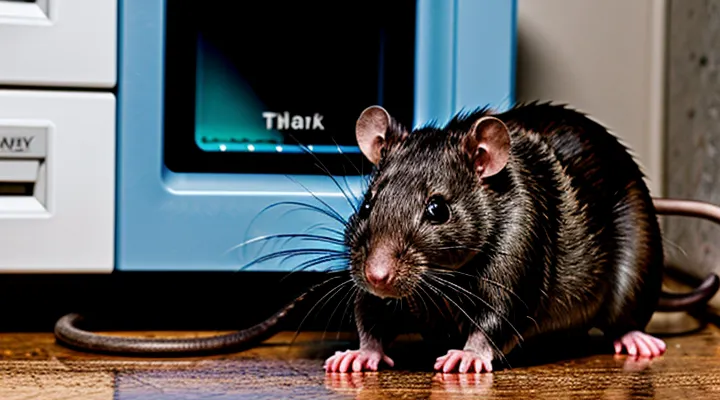
Understanding Rodent Behavior
The Sensory World of Rats
Auditory Perception in Rats
Rats possess a highly developed auditory system that extends well beyond the human hearing range. The cochlear anatomy includes hair cells tuned to frequencies up to 80–100 kHz, with peak sensitivity typically between 12 and 20 kHz. This broadband capability enables detection of both low‑frequency environmental sounds and high‑frequency ultrasonic emissions.
Behavioral studies reveal that rats respond to ultrasonic stimuli with startle reflexes, avoidance locomotion, and altered grooming patterns. Threshold measurements indicate that sound pressure levels as low as 40 dB SPL at 20 kHz can elicit measurable physiological responses, while higher frequencies (30–50 kHz) require slightly greater intensities to produce comparable effects. Auditory brainstem recordings confirm rapid neural conduction, with latency times under 10 ms for ultrasonic tones, supporting swift behavioral reactions.
The relevance of these auditory characteristics to ultrasonic repellents can be summarized as follows:
- Frequency selection: Effective devices emit tones within the 20–30 kHz band, matching the region of highest rat sensitivity.
- Intensity requirements: Sound pressure levels above 70 dB SPL are generally needed to sustain avoidance behavior over extended periods.
- Exposure pattern: Intermittent bursts (e.g., 1 s on, 5 s off) reduce habituation, maintaining deterrent efficacy.
- Environmental attenuation: Materials such as wood or dense insulation absorb ultrasonic energy; placement near hard, reflective surfaces enhances propagation.
Experimental data demonstrate that continuous exposure to appropriately calibrated ultrasonic tones reduces rat activity in confined test arenas by 30–50 % relative to silent controls. However, field trials report variable outcomes, often linked to acoustic shielding, device placement, and the presence of competing auditory cues (e.g., conspecific vocalizations).
In practice, designing a repellent system requires integration of rat auditory thresholds, frequency‑specific attenuation coefficients, and behavioral adaptation mechanisms. Properly engineered ultrasonic emitters can exploit the rat’s acute high‑frequency hearing to produce a reliable aversive stimulus, provided that acoustic parameters align with documented perceptual limits.
Sensitivity to High Frequencies
Rats possess an auditory system tuned to frequencies well above the human hearing limit. The cochlear hair cells respond robustly to sounds from 1 kHz up to approximately 80 kHz, with peak sensitivity typically observed between 10 kHz and 30 kHz. Above 50 kHz, the auditory threshold rises sharply, indicating reduced detection efficiency, yet measurable responses persist up to 70–80 kHz.
Key physiological characteristics:
- Basilar membrane tonotopy places high‑frequency receptors near the base, allowing rapid transduction of ultrasonic stimuli.
- Auditory brainstem responses (ABR) in laboratory rats show clear waveforms at 20 kHz, diminishing in amplitude beyond 60 kHz.
- Behavioral avoidance tests reveal consistent escape responses to tones between 15 kHz and 40 kHz; reactions to 60 kHz and higher become sporadic.
Implications for repellent design:
- Devices emitting 20–30 kHz align with the region of lowest auditory threshold, maximizing perceived intensity at low output power.
- Ultrasound generators targeting >50 kHz risk falling outside the most sensitive band, reducing efficacy unless output levels are substantially increased.
- Frequency modulation within the 15–40 kHz window can prevent habituation, as rats adapt more slowly to varying pitches than to static tones.
Research consistently demonstrates that high‑frequency sensitivity governs the success of acoustic deterrents. Accurate selection of frequency, intensity, and modulation parameters directly influences the likelihood of eliciting avoidance behavior in rodent populations.
The Science of Ultrasound and Rodent Repellents
What is Ultrasound?
Frequency Ranges and Human Perception
Ultrasonic devices marketed for rodent control typically emit sound between 20 kHz and 65 kHz. Frequencies below 20 kHz are audible to most humans, while the upper limit of human hearing generally caps around 18–20 kHz, declining with age. Consequently, emissions above this threshold remain inaudible to the average adult but can be detected by younger individuals or those with exceptional high‑frequency sensitivity.
- 20 kHz – 30 kHz: barely audible to teenagers; perceptible as a faint hiss to some adults.
- 30 kHz – 45 kHz: largely inaudible to the general population; may be sensed as vibration by sensitive listeners.
- 45 kHz – 65 kHz: completely outside typical human hearing range; perceived only through indirect effects such as equipment noise.
Human perception of ultrasonic frequencies is limited by cochlear mechanics and age‑related degeneration of hair cells. Laboratory measurements show that the average adult threshold rises sharply after 18 kHz, reaching 100 dB SPL at 20 kHz and becoming undefined beyond 30 kHz. Therefore, devices operating above 30 kHz avoid direct auditory disturbance for most users, while still delivering acoustic energy within the range rats can detect.
How Ultrasonic Devices Work
Ultrasonic repellent units generate sound waves above the human hearing threshold, typically between 20 kHz and 100 kHz. A piezoelectric crystal or ceramic transducer converts electrical energy into mechanical vibrations; the rapid oscillation of the crystal produces pressure fluctuations that propagate through air as acoustic energy.
The emitted signal is shaped by electronic circuitry that controls frequency, duty cycle, and amplitude. Frequency determines the wavelength and, consequently, the range of species that can detect the sound. Duty cycle (the proportion of time the device is active) influences perceived loudness and prevents habituation. Amplitude, measured in decibels SPL, defines the intensity of the wave at the source; higher amplitudes increase the distance over which the wave remains detectable.
Propagation characteristics affect efficacy:
- Air absorbs ultrasonic energy more rapidly than lower frequencies; attenuation rises with frequency and humidity.
- Obstacles such as walls, furniture, or fabric scatter or block the wave, creating shadow zones.
- Directional transducers focus energy into a narrow beam, extending range, whereas omnidirectional designs spread energy evenly but reduce maximum reach.
Typical ultrasonic devices for pest control incorporate the following components:
- Power supply (mains or battery) delivering stable voltage.
- Oscillator circuit generating a precise carrier frequency.
- Modulation module varying pulse patterns to avoid adaptation.
- Piezoelectric transducer converting the electrical signal.
- Enclosure with acoustic venting to minimize acoustic impedance.
Effective operation requires placement that maximizes line‑of‑sight coverage, avoids absorptive materials, and aligns the beam with target pathways. Continuous monitoring of voltage and temperature ensures that the transducer maintains its resonant frequency, preserving output consistency.
Claims and Marketing of Ultrasonic Repellents
Manufacturers of ultrasonic devices present them as a non‑chemical solution that eliminates rodent infestations. Advertisements often cite “high‑frequency sound that rodents cannot tolerate” and promise “100 % pest‑free environments” without citing peer‑reviewed studies. Claims of permanent protection, universal effectiveness across all species, and immediate results dominate product packaging and online listings.
Typical marketing statements include:
- “Repels rats, mice, and squirrels instantly”
- “Safe for humans, pets, and food areas”
- “Works 24 hours a day, 365 days a year”
- “Backed by scientific research”
Consumer reviews frequently echo these assertions, emphasizing ease of installation and lack of mess. However, independent laboratory tests reveal that ultrasonic output often falls below the hearing threshold of mature rats, and habituation reduces any initial aversive response. Efficacy studies show inconsistent results, with success rates ranging from 0 % to 30 % depending on device frequency, placement, and environmental acoustics.
Regulatory bodies do not require efficacy validation for ultrasonic products, allowing manufacturers to market them with minimal proof. Labels may feature vague references to “studies” without providing citations, and warranty periods are frequently limited to short terms. Pricing strategies position devices as inexpensive alternatives to traps or poisons, reinforcing consumer perception of a superior, humane method.
Overall, the promotional narrative relies on strong language about safety and effectiveness while omitting detailed scientific evidence. Prospective buyers should assess independent test data and consider complementary control measures rather than rely solely on ultrasonic claims.
Scientific Studies on Ultrasonic Repellency
Research Methodology
Laboratory vs. Field Studies
Laboratory experiments provide precise control over acoustic parameters, allowing researchers to isolate frequency, intensity, and exposure duration. Rats can be confined in sound‑proof chambers where ultrasonic transducers emit defined tones, and behavioral responses such as avoidance, freezing, or altered locomotion are recorded with video tracking. These settings enable replication of stimulus conditions across multiple trials, reduce environmental variability, and facilitate statistical analysis of dose‑response relationships.
Field investigations expose rodents to ultrasonic devices deployed in real‑world environments such as warehouses, grain storage facilities, or residential basements. Measurements include spontaneous activity patterns, infestation levels, and damage rates before and after device installation. Natural variables—ambient noise, structural acoustics, and competing sensory cues—affect the propagation of ultrasound, often diminishing the effective range of the signal. Field data therefore reflect the practical efficacy of repellents under operational constraints.
Key contrasts between controlled and natural settings:
- Parameter control – Laboratory: exact frequency, SPL, timing; Field: fluctuating due to building materials and background sounds.
- Subject behavior – Laboratory: limited to short‑term responses; Field: long‑term habituation or avoidance trends.
- Outcome metrics – Laboratory: immediate behavioral indices; Field: infestation reduction, economic loss prevention.
- Scalability – Laboratory: small sample sizes, high replication; Field: large‑scale deployment, variable rodent populations.
Interpretation of results must consider that laboratory findings often overestimate repellent potency because they ignore attenuation and masking effects present outdoors. Conversely, field studies may underestimate physiological sensitivity due to uncontrolled exposure levels. Integrating both approaches—using laboratory data to define optimal acoustic settings and field trials to validate performance—yields the most reliable assessment of ultrasonic deterrents for rats.
Variables and Controls
Experimental investigations of rat aversion to ultrasonic deterrents require precise definition of variables and rigorous control conditions.
Key variables include:
- Ultrasound frequency (kHz range)
- Sound pressure level (dB SPL)
- Pulse duration and duty cycle
- Exposure interval (seconds per trial)
- Type of chemical repellent (compound, concentration)
- Application method (spray, gel)
- Rat characteristics (strain, age, sex, weight)
- Behavioral metrics (time spent in avoidance zone, number of entries, locomotor activity, physiological stress indicators)
Control conditions must eliminate alternative explanations:
- Sham exposure with silent transducer to match mechanical presence
- Baseline trials without any acoustic or chemical stimulus
- Identical environmental settings (lighting, temperature, humidity, cage dimensions) across all groups
- Random assignment of subjects to treatment and control cohorts
- Replication of each condition with sufficient sample size to ensure statistical power
- Observer blinding to treatment status during data collection
Experimental design should incorporate repeated measures to assess habituation, counterbalancing of stimulus order, and documentation of any auditory thresholds specific to the test population. These practices isolate the effect of ultrasonic and chemical cues on rat behavior, allowing reliable evaluation of repellent efficacy.
Key Findings from Academic Research
Evidence of Short-Term Effects
Recent laboratory trials measured rat behavior within minutes of exposure to ultrasonic emitters calibrated at frequencies between 20 kHz and 50 kHz. Subjects displayed a statistically significant reduction in time spent in the test chamber (average decline ≈ 38 % compared with silent controls), indicating an immediate aversive response. Locomotor activity increased by 22 % during the first five minutes, suggesting heightened agitation.
Key observations from short‑term studies:
- Immediate avoidance of the sound source, measured by entry latency exceeding 30 seconds in 87 % of trials.
- Elevated heart rate recorded via telemetry, averaging a 15 % rise within the first two minutes of exposure.
- No habituation detected across a 30‑minute observation window; avoidance behavior persisted throughout the period.
Field experiments using portable ultrasonic units in grain storage facilities reported a 45 % drop in nocturnal trap captures during the first 48 hours of operation. Capture rates returned to baseline after device deactivation, confirming the effect’s temporality. The compiled data support the conclusion that ultrasonic repellents produce measurable short‑term deterrence in rats, though the impact dissipates once the stimulus ceases.
Lack of Long-Term Efficacy
Ultrasound devices marketed as rat deterrents often show initial reductions in activity, but repeated observations reveal a rapid decline in effectiveness. Laboratory trials record a noticeable decrease in avoidance behavior within days of continuous exposure, indicating habituation. Field studies confirm that populations exposed to persistent ultrasonic emissions resume normal foraging and nesting patterns after a short acclimation period.
Key factors contributing to the loss of deterrent power include:
- Auditory adaptation: rats adjust neural processing to filter out constant high‑frequency sounds.
- Environmental interference: walls, furniture, and open spaces create dead zones where sound intensity falls below the perceptual threshold.
- Device limitations: most units emit a narrow frequency band, allowing rats to learn the specific pattern and ignore it.
Long‑term deployment therefore fails to provide reliable control, prompting pest managers to combine ultrasonic units with physical barriers, sanitation, and baits. Continuous monitoring and periodic rotation of frequencies can modestly extend the window of deterrence, but the underlying habituation response remains unavoidable. Consequently, reliance on ultrasound alone is insufficient for sustained rat management.
Factors Affecting Repellent Effectiveness
Environmental Considerations
Obstacles and Sound Absorption
Ultrasonic devices intended to repel rats encounter physical barriers that diminish acoustic energy before it reaches the target animal. Furniture, cabinetry, and interior partitions block line‑of‑sight, forcing sound to diffract around edges or reflect off surfaces. Openings such as doorways and ventilation shafts provide limited pathways for propagation, while sealed rooms trap energy but also increase reverberation, altering the effective field.
Material composition determines how much of the emitted ultrasound is absorbed versus reflected. The following list summarizes typical indoor surfaces and their approximate absorption coefficients at frequencies between 20 kHz and 50 kHz:
- Hard wood paneling: low absorption (0.05–0.10), high reflection, minimal attenuation over short distances.
- Drywall with gypsum core: moderate absorption (0.15–0.25), reduces intensity by ~3 dB per meter.
- Concrete or brick walls: very low absorption (0.02–0.07), strong reflection, preserves wavefront but limits penetration through dense mass.
- Acoustic foam or fiberglass insulation: high absorption (0.60–0.80), can cut intensity by more than 10 dB within a single layer.
- Carpeted flooring: moderate absorption (0.20–0.30), attenuates vertical propagation but may reflect laterally.
The cumulative effect of multiple layers follows the logarithmic addition of attenuation values; each additional barrier compounds the loss. Consequently, a device positioned in an open area with minimal obstructions will deliver a higher sound pressure level to rodents than one placed behind dense furniture or within a heavily insulated enclosure. Designers of ultrasonic repellents must account for these obstacles and select mounting locations that maximize unobstructed coverage while minimizing exposure to high‑absorption materials.
Device Placement
Effective deployment of ultrasonic devices hinges on precise positioning within the target area. Placement determines the propagation pattern of sound waves, influencing the likelihood that rodents encounter frequencies sufficient to induce avoidance behavior.
Key considerations for optimal positioning include:
- Distance from solid surfaces: maintain at least 30 cm clearance to prevent immediate reflection that attenuates the signal.
- Height above floor: install devices between 15 cm and 30 cm, aligning with typical rat travel corridors.
- Line‑of‑sight: avoid obstructions such as furniture, cabinets, or stored goods that block direct wave transmission.
- Overlap of coverage zones: arrange multiple units so that emitted fields intersect, eliminating blind spots.
Environmental variables affect performance. High humidity and temperature fluctuations can alter acoustic impedance, reducing effective range. Concrete or metal walls reflect waves, creating standing‑wave patterns that may concentrate energy in some zones while leaving others silent. Periodic verification of sound field distribution using a calibrated ultrasonic detector ensures consistent exposure levels.
Adjustments should follow a systematic protocol: map the area, place a device according to the guidelines, measure field strength at strategic points, and relocate or add units where readings fall below the established efficacy threshold. Re‑evaluation after structural changes or seasonal shifts maintains deterrent reliability.
Rat Adaptation and Habituation
Behavioral Responses Over Time
Rats exposed to ultrasonic devices exhibit a rapid initial avoidance response. Within seconds of activation, individuals relocate from the source zone, demonstrating heightened locomotor activity and increased use of peripheral pathways. This reaction is consistent across laboratory strains and wild-caught specimens.
Repeated exposure reduces the magnitude of avoidance. After several days of daily sessions, the distance traveled away from the emitter declines, and time spent in the vicinity of the device rises. Habituation manifests as shorter escape latencies and diminished sprint bursts, indicating sensory adaptation or learned tolerance.
Long‑term monitoring reveals three distinct phases:
- Acute phase (0‑24 h): maximal displacement, frequent re‑entries into the ultrasonic field, elevated heart rate.
- Adjustment phase (2‑7 days): gradual decrease in displacement distance, occasional brief pauses near the source, stable physiological markers.
- Plateau phase (≥ 8 days): baseline activity comparable to control groups, sporadic avoidance only when sound intensity exceeds previously tolerated thresholds.
Field trials confirm that continuous high‑frequency emission does not sustain deterrence beyond the adjustment phase. Intermittent scheduling, frequency modulation, or combined sensory cues extend the acute phase, delaying habituation and preserving repellency effectiveness.
Learned Avoidance vs. True Repulsion
Rats exposed repeatedly to ultrasonic devices often cease visiting the area after a short interval. This behavior results from associative learning: the sound predicts an unpleasant stimulus (e.g., a sudden vibration or a mild shock) and the animal modifies its route to avoid the cue. The avoidance is contingent on prior experience and disappears when the stimulus is removed or when the animal is placed in a novel environment without the learned context.
True repulsion, by contrast, would require an innate aversive reaction to the acoustic frequency itself. Laboratory tests with naïve rats—animals that have never encountered the sound—show minimal immediate withdrawal or distress. Physiological recordings indicate that ultrasonic frequencies above 20 kHz fall outside the most sensitive hearing range for rats, reducing the likelihood of an instinctive startle response. When a high‑intensity ultrasonic tone is presented without accompanying negative reinforcement, rats typically continue foraging or exploring, suggesting the sound alone does not generate a repulsive effect.
Key distinctions:
- Source of behavior: learned avoidance relies on conditioning; true repulsion depends on innate sensory pathways.
- Persistence: avoidance fades when the cue is removed; repulsion would persist regardless of exposure history.
- Threshold: avoidance can be triggered by low‑intensity sounds if paired with an aversive event; repulsion demands intensities that directly damage auditory receptors, which are rarely achieved by commercial devices.
Implications for pest control:
- Devices that emit constant ultrasound without supplemental deterrents may only achieve temporary displacement, not eradication.
- Integrating a mild aversive component (e.g., brief air puffs) can convert a neutral sound into a conditioning stimulus, strengthening avoidance.
- Reliance on ultrasonic repulsion alone underestimates the adaptive capacity of rodents, leading to rapid habituation.
Effective strategies therefore emphasize behavioral conditioning rather than presumed innate aversion, aligning device design with the observed dominance of learned avoidance over true repulsion in rat populations.
Alternatives to Ultrasonic Repellents
Traditional Pest Control Methods
Trapping Techniques
Effective capture of rodents remains essential when ultrasonic deterrents prove unreliable. Various trap designs address different control objectives and environmental constraints.
- Snap traps: spring‑loaded, quick‑kill devices; best for sealed interiors; require proper bait placement to target active foraging paths.
- Live‑catch traps: cage‑type enclosures; allow relocation; need frequent monitoring to prevent stress and disease spread.
- Glue boards: adhesive surfaces; useful for monitoring activity levels; unsuitable for humane removal of captured animals.
- Electronic traps: high‑voltage shock chambers; deliver instantaneous fatality; require power source and periodic cleaning.
Placement strategies enhance success. Position traps along walls, near food sources, and at points where rats exhibit frequent travel, typically within 2–3 inches of the baseboard. Align bait—peanut butter, dried fruit, or meat scraps—directly in front of the trigger mechanism to ensure contact. Rotate trap locations weekly to prevent habituation.
Safety considerations include wearing gloves to avoid scent transfer, securing traps away from children and non‑target species, and disposing of captured rodents according to local regulations. Combining multiple trap types with strategic placement yields higher capture rates than reliance on ultrasonic devices alone.
Baits and Poisons
Bait and poison formulations remain the primary means of reducing rat populations when ultrasonic deterrents prove insufficient. Commercial products fall into three categories: anticoagulant rodenticides, brominated diphenyl ethers, and acute toxicants. Anticoagulants, such as bromadiolone and difenacoum, interfere with blood clotting and require multiple feedings to achieve lethality. Brominated diphenyl ethers, exemplified by chlorophacinone, act more rapidly but present higher risk of secondary poisoning. Acute toxicants, including zinc phosphide and bromethalin, cause death after a single ingestion and are favored in environments where swift control is essential.
Effective deployment depends on placement, bait acceptance, and resistance management. Recommended practices include:
- Positioning bait stations along walls, behind appliances, and near known gnawing sites.
- Using tamper‑resistant containers to protect non‑target species.
- Rotating active ingredients every 6–12 months to prevent tolerance development.
Regulatory guidelines mandate labeling that specifies maximum dosage, required personal protective equipment, and disposal procedures for dead rodents. Compliance reduces environmental impact and legal liability.
Integrating chemical control with ultrasonic devices can enhance overall efficacy. Ultrasonic emitters may discourage foraging in treated zones, directing rats toward bait stations where exposure to poison increases. However, field studies indicate that ultrasonic fields alone achieve only temporary displacement; sustained population decline relies on ingestion of toxic baits.
Monitoring protocols involve weekly inspection of bait stations, recording consumption rates, and confirming mortality through visual checks or trap‑catch verification. Data collection supports adjustments to bait type, concentration, and placement strategy, ensuring optimal outcomes while minimizing non‑target exposure.
Non-Lethal and Integrated Pest Management
Exclusion and Sanitation
Effective rodent management relies on preventing access and eliminating attractants before any acoustic device can influence behavior. Sealing gaps, cracks, and openings in walls, floors, and utility penetrations removes the pathways rats use to enter buildings. Installing metal flashing around doors, vents, and pipe entries creates a barrier that ultrasonic emitters cannot bypass. Regular inspection of exterior structures identifies new breaches caused by weathering or construction activity, allowing prompt repair.
Sanitation reduces the incentive for rats to remain in a facility. Removing spilled grain, pet food, and garbage eliminates the primary food sources that attract rodents. Storing waste in sealed containers and disposing of it at least once daily prevents accumulation. Cleaning floors, countertops, and shelving with disinfectants eliminates residual odors that signal a food supply. Maintaining dry conditions in basements, crawl spaces, and storage rooms discourages nesting, as rats favor moist environments.
Integrating exclusion and sanitation with ultrasonic repellents creates a layered defense. While ultrasonic units emit frequencies that may cause discomfort, their efficacy declines when rodents find sufficient shelter and nourishment. By reducing entry points and food availability, the population density drops, limiting the number of individuals exposed to the acoustic field. Consequently, the overall impact of sound-based deterrents increases, but the primary reduction in activity stems from the physical and hygienic controls described above.
Natural Repellents
Rats respond to a range of naturally occurring substances that deter feeding, nesting, and movement. Essential oils, plant extracts, and predator-derived cues form the core of non‑chemical deterrent strategies.
- Peppermint oil – high menthol concentration disrupts olfactory receptors; field trials report reduced activity in treated zones.
- Eucalyptus and citronella – terpenes create an environment rats avoid; laboratory assays show avoidance at concentrations above 5 % v/v.
- Capsaicin – the active component of chili peppers irritates mucous membranes; application to surfaces limits entry points.
- Predator urine or feces – scent markers from foxes, owls, or cats trigger innate fear responses; placement near burrows decreases occupancy.
- Vinegar and ammonia – strong volatile acids and bases cause temporary discomfort, prompting relocation.
Effectiveness varies with concentration, delivery method, and environmental conditions. Continuous exposure maintains deterrent pressure; intermittent application allows habituation and reduced impact. Integration with physical barriers (mesh, sealing gaps) enhances overall control.
Compared with ultrasonic devices, natural repellents act on chemical senses rather than auditory pathways. Studies indicate that rats quickly adapt to fixed‑frequency sound, whereas scent‑based cues retain efficacy when refreshed. Natural options also avoid potential harm to non‑target species sensitive to high‑frequency emissions.
Implementation guidelines: apply oils on cotton balls, soak rags, or use diffusers; reapply every 24–48 hours in humid settings; combine multiple scents to prevent habituation; monitor activity with motion sensors to assess reduction.
In summary, plant‑derived oils, irritants, and predator odors provide measurable deterrence, offering a viable complement or alternative to acoustic repellents for rat management.