
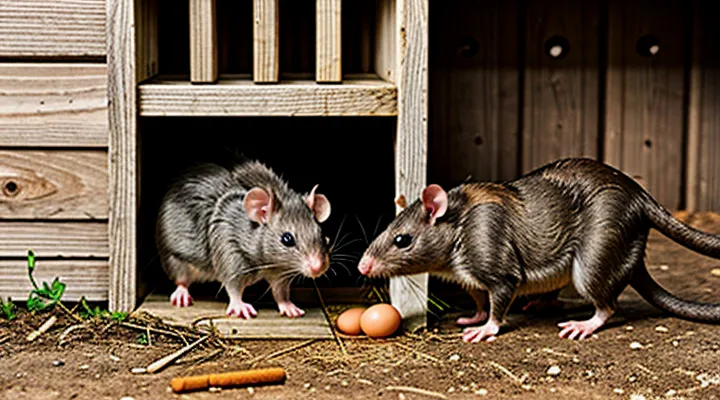
Understanding Rat Behavior and Diet
What Attracts Rats to Chicken Coops?
Rats are drawn to chicken coops primarily because the structures provide easy access to food, water, shelter, and warmth. The presence of these resources creates an environment that supports rat survival and reproduction.
- Feed spillage, cracked feed bags, and scattered grain
- Open water containers or leaking troughs
- Gaps, holes, and loose wiring that allow entry
- Nesting material such as straw, wood shavings, or hay
- Warmth generated by hens, especially during colder months
Feed spillage offers a high‑calorie source that rats can consume with minimal effort. Open water supplies satisfy their hydration needs and often serve as a gathering point. Structural defects act as entry points; even small openings accommodate adult rats and their offspring. Nesting material provides the fibers required to build safe nests, while the body heat of chickens creates a comfortable microclimate that reduces the energy rats expend to stay warm.
Preventive measures focus on eliminating each attractant. Secure feed in sealed containers, clean the coop floor daily, and use metal or heavy‑duty feeders that rats cannot chew through. Replace leaking troughs with sturdy, rat‑proof waterers and regularly inspect the coop for gaps, sealing them with hardware cloth or metal flashing. Store bedding outside the coop and provide only the amount needed for daily cleaning. Finally, maintain a clean perimeter, removing debris and vegetation that could conceal rat activity.
By removing food residues, protecting water sources, sealing entry points, and managing bedding, the coop becomes an inhospitable environment for rats, reducing the likelihood of egg theft and protecting flock health.
Common Rat Species Found Near Poultry
Rats that frequent poultry environments belong mainly to two species. Both are adaptable, thrive in human‑modified habitats, and readily exploit the food and shelter offered by chicken coops.
- Norway rat (Rattus norvegicus) – larger, stockier body; prefers ground‑level nesting sites such as litter, feed bins, and burrows under coop foundations. Strong swimmers, capable of entering coops through low‑lying gaps. Frequently responsible for gnawing feed bags and contaminating eggs with urine and droppings.
- Roof rat (Rattus rattus) – slimmer, agile climber; occupies elevated structures like rafters, vent pipes, and roof spaces. Uses ropes, wires, and vegetation to access the coop interior. More likely to steal eggs directly from nesting boxes due to its climbing ability.
- Black rat (Rattus rattus) – regional synonym for roof rat – shares the same habits and poses identical risks in warmer climates where it outcompetes the Norway rat.
Identification relies on size, tail length, and habitat preference. Norway rats exhibit a thick tail covered in sparse hair, while roof rats have a longer, hair‑covered tail and a pointed head. Tracking signs include gnaw marks on wooden components, droppings near feed stations, and burrow entrances around the coop perimeter.
Control measures focus on exclusion and sanitation. Seal all openings larger than ¼ inch, reinforce doors with metal latches, and install hardware cloth on vents. Remove standing water, store feed in sealed containers, and regularly clean spilled grain. Trapping should target each species’ preferred pathways: ground‑level snap traps for Norway rats, elevated live‑capture traps for roof rats. Monitoring devices such as chew‑proof bait stations provide early detection and help evaluate the effectiveness of interventions.
Signs of Rat Presence in a Coop
Visual Clues of Rat Activity
Rats leave unmistakable marks that reveal their presence in a chicken enclosure. Fresh gnaw marks on wooden slats, wire mesh, or feed containers indicate active chewing, a behavior that often precedes attempts to reach eggs. Scattered droppings, especially near feeding stations, nesting boxes, or entry points, confirm recent activity; rat feces are dark, cylindrical, and approximately one inch long. Chewed or displaced insulation, shredded bedding, and torn hay signal that rodents have explored the coop interior.
Typical visual evidence includes:
- Small, irregular holes (1‑2 mm) in walls, roofs, or vent screens, created by incisors.
- Grease or oily streaks along walls and baseboards, left by a rat’s fur.
- Tracks in dust, sand, or loose substrate, forming a pattern of four‑toed prints.
- Nests constructed from shredded material, often found in concealed corners or under roosting bars.
Early detection allows swift intervention. Install motion‑activated cameras focused on suspected entry zones to capture activity patterns. Repair all openings larger than a quarter inch with steel mesh or hardware cloth. Regularly clean the coop, removing droppings and debris that attract rodents. Replace damaged components promptly to eliminate pathways that enable rats to reach eggs.
Evidence of Egg Predation by Rats
Rats frequently target poultry nests, and multiple lines of evidence confirm their role in egg loss. Field observations record torn shells, partially consumed yolks, and fresh rat droppings inside or adjacent to nesting boxes. Laboratory analysis of damaged eggs often reveals bite marks consistent with rodent incisors, while necropsies of captured rats show egg residues in their stomachs.
Evidence supporting rat‑driven egg predation includes:
- Photographic or video documentation of rats entering coops and handling eggs.
- Direct counts of missing eggs that correlate with increased rat activity.
- Presence of characteristic gnaw marks on shells and coop structures.
- Detection of rat DNA or fecal material on egg surfaces during forensic testing.
Specific cases document rats breaking shells, extracting yolk, and discarding shell fragments. Camera traps placed at night capture rats climbing ladders, slipping through gaps, and carrying whole eggs to concealed locations. Post‑incident inspections frequently uncover clusters of broken shells near rat burrows or feeding stations.
Verification of these indicators establishes rats as legitimate egg predators, underscoring the need for targeted rodent control and coop fortification to protect poultry productivity.
The Mechanics of Egg Theft by Rats
How Rats Transport Eggs
Rats acquire eggs from a coop by exploiting gaps, broken wire, or open doors. Once an egg is within reach, the rodent employs one of several transport techniques.
- Mouth carriage – The rat grips the egg with its incisors, tilting it to balance while moving toward a nest or burrow. This method allows rapid removal over short distances.
- Paw support – Larger rats use forepaws to cradle the egg against the body, freeing the mouth for navigation through tight spaces.
- Rolling – When the egg is too heavy for a single rat, the animal nudges it onto a smooth surface and rolls it along a pre‑made tunnel or ramp.
- Drag and pull – The rat bites a corner of the shell and drags the egg while walking backward, a tactic useful for moving eggs across uneven ground.
- Collaborative transport – In rare cases, two rats cooperate, each holding opposite ends of the egg to carry it farther than one individual could manage.
These behaviors depend on the rat’s size, the coop’s layout, and the availability of nearby shelter. Preventative measures—such as sealing entry points, maintaining sturdy wire mesh, and removing debris that could serve as a staging area—disrupt the transport process and reduce egg loss.
Damage Patterns on Eggs Stolen by Rats
Rats that infiltrate a poultry enclosure often leave distinct marks on the eggs they pilfer. Recognizing these signs helps producers assess loss severity and implement preventive measures.
Typical damage patterns include:
- Gnaw marks: crescent‑shaped bite impressions on the shell, usually near the pole where rats grasp the egg.
- Shell cracks: irregular fractures radiating from a single point, indicating forced removal or dropping.
- Pecked holes: small, circular perforations created when rats attempt to access the yolk before discarding the shell.
- Surface abrasions: fine scratches or scuffing caused by rat teeth rubbing against the shell during transport.
- Egg contents leakage: white or yolk remnants on nest material, suggesting the egg was broken inside the coop.
The location and frequency of these injuries reveal the method of theft. Gnaw marks and pecked holes imply active manipulation, while simple cracks often result from the animal dropping the egg while fleeing. Multiple damage types on a single egg indicate prolonged handling.
To mitigate losses, secure the coop with rodent‑proof barriers, eliminate food sources that attract rats, and install traps or bait stations near entry points. Regular inspection of nesting boxes for the described damage patterns enables early detection of a rat intrusion and prompt corrective action.
Preventing Rat Infestations in Chicken Coops
Coop Maintenance and Sanitation Strategies
Effective coop maintenance reduces the likelihood of rodents accessing nests and eggs. Regular inspection identifies gaps, worn wire, and damaged doors that rats exploit. Seal all openings with hardware‑cloth or metal mesh; reinforce vent covers and feed troughs. Position the coop on a raised platform, at least 12 inches off the ground, to hinder climbing.
Sanitation measures remove attractants. Store feed in sealed containers; discard crumbs and spilled grain daily. Keep water containers clean, refilling with fresh water each morning. Remove droppings, mud, and debris promptly, using a shovel and a disinfectant solution (e.g., diluted bleach 1:10). Replace bedding weekly and store it in a dry, rodent‑proof area.
Rodent control integrates physical barriers and environmental management:
- Install a continuous perimeter of ½‑inch hardware cloth buried 6 inches deep around the coop.
- Trim vegetation and eliminate standing water within a 20‑foot radius.
- Use snap traps or electronic traps inside the coop, checking them each evening.
- Apply non‑chemical deterrents such as peppermint oil or ultrasonic devices near entry points.
Routine cleaning schedules sustain a hostile environment for rats. Perform a deep clean monthly: dismantle nesting boxes, wash with hot water, and dry thoroughly before reassembly. Record inspection dates, repairs, and trap checks in a log to track compliance and detect patterns.
By combining structural reinforcement, diligent sanitation, and targeted rodent deterrents, coop owners create conditions that discourage rats from infiltrating nests and stealing eggs.
Secure Egg Collection Practices
Rats are attracted to warm, accessible eggs; preventing their entry requires a systematic approach to egg collection. Secure the coop at night with sturdy wire mesh that closes over all openings, and inspect the perimeter for gaps larger than one inch. Replace any damaged sections promptly to maintain an airtight barrier.
Design nest boxes to discourage intrusion. Install removable trays that slide out without lifting the entire box, reducing handling time and exposure. Line trays with smooth, washable material that rats cannot grip, and position them at least six inches above the coop floor to eliminate hiding spots.
Implement a routine that minimizes egg availability to pests. Collect eggs at least twice daily, preferably early morning and late afternoon, and store them in sealed containers inside a cool, dry room. Clean nest boxes after each collection, removing shell fragments and feed residues that could lure rodents.
- Use heavy‑duty hardware cloth (¼‑inch gauge) for all vent covers.
- Fit latch‑secured doors on every access point.
- Apply non‑toxic rodent repellent around the coop foundation.
- Rotate bedding weekly to prevent buildup of scent trails.
Consistent application of these measures reduces the risk of rats reaching eggs, protects flock health, and ensures a reliable supply of clean eggs.
Rat-Proofing Your Chicken Coop
Physical Barriers and Construction Tips
Rats can infiltrate a chicken coop through any opening larger than a quarter‑inch. A solid, continuous barrier eliminates this pathway. Install hardware cloth with a ¼‑inch mesh on all walls, doors, and windows; it resists gnawing better than standard chicken wire. Secure the cloth to a wooden or metal frame using stainless‑steel staples or self‑drilling screws to prevent rats from prying it loose.
Seal the coop’s foundation by extending the hardware cloth at least 12 inches below ground level. Backfill the extension with compacted soil or concrete to block burrowing. If a concrete slab is used for the floor, embed a metal strip around the perimeter and embed the barrier within the slab before it cures.
Doors and access panels require tight‑fitting latches. Use a double‑locking mechanism: a primary latch for daily use and a secondary lock that engages when the coop is unattended. Align the latch with a reinforced metal strike plate to resist forced entry.
Ventilation openings must remain functional while staying rodent‑proof. Fit each vent with a metal grate or mesh of the same ¼‑inch specification, securing it with rivets. Position the grate so that any potential entry angle is blocked by an overhang or flashing.
Roof construction should include a solid covering, such as corrugated metal or shingles, with no gaps at eaves or seams. Apply a metal flashing strip along the roof edges and fasten it with roofing screws equipped with rubber washers to deter chewing.
Regular maintenance enhances barrier integrity. Conduct a monthly walk‑around inspection, looking for:
- Loose or corroded fasteners
- Tears or holes in mesh
- Signs of gnawing at corners or joints
- Gaps where walls meet the floor or roof
Promptly repair any damage with appropriate materials—replace compromised mesh sections, tighten screws, and reapply sealant where needed.
By combining a sub‑inch mesh, buried extensions, reinforced latches, and meticulous sealing, the coop becomes a physical fortress that effectively prevents rats from reaching eggs.
Eliminating Entry Points for Rodents
Rats enter chicken coops through gaps that provide shelter, food, or a route to nesting material. Sealing these openings removes the incentive for rodents to explore the structure.
- Inspect the coop’s foundation, walls, and roof for cracks larger than ¼ inch; fill with metal flashing, cement, or hardware cloth.
- Install hardware cloth (¼‑inch mesh) over ventilation openings, windows, and any drainage holes; secure with rust‑proof staples.
- Fit doors and access panels with tight‑closing latches; add a self‑closing hinge or a magnetic catch to prevent accidental gaps.
- Cover feed storage containers with airtight lids; place them on raised platforms to keep them out of reach.
- Trim vegetation, vines, and overhanging branches within two feet of the coop; remove debris that could serve as a bridge for climbing rodents.
Regular maintenance confirms the integrity of barriers. Replace damaged hardware cloth promptly, and re‑seal any new cracks observed after weather events or structural adjustments. Consistent monitoring reduces the likelihood that rats will find a path to the eggs.
Non-Lethal Rat Control Methods
Repellents and Deterrents
Rats are attracted to the warmth, shelter, and readily available food in chicken coops. Effective repellents and deterrents reduce the likelihood of egg loss and property damage.
- Physical barriers: Install sturdy hardware cloth (¼‑inch mesh) over ventilation openings and around the coop’s perimeter. Seal gaps with metal flashing to prevent gnawing.
- Secure feed storage: Keep grain, pellets, and scraps in airtight containers made of metal or heavy‑duty plastic. Remove leftover feed after each feeding.
- Predator scent products: Apply commercially available synthetic fox or owl urine around the coop’s exterior. Refresh every two weeks to maintain potency.
- Ultrasonic devices: Deploy units calibrated for rodent frequencies (20–50 kHz). Position them at least 12 inches from metal surfaces to avoid signal reflection.
- Natural repellents: Sprinkle dried peppermint, cayenne pepper, or clove oil on the ground surrounding the coop. Reapply after rain or cleaning.
- Trap placement: Set snap or live‑catch traps along known rodent pathways. Use bait such as peanut butter or dried fruit; check traps daily to prevent suffering.
- Environmental management: Trim vegetation within three feet of the coop, eliminate standing water, and remove debris that could serve as nesting material.
Combine multiple methods for sustained protection. Regular inspection of the coop’s structure and prompt repair of any damage are essential components of an integrated rodent‑deterrence strategy.
Trapping and Relocation Techniques
Rats enter chicken coops seeking eggs, nest material, and grain. Effective control begins with trapping and proper relocation to remove the animals without harming the flock.
Live-catch traps provide a humane option. Place them along wall edges, near feed bins, or close to suspected entry points. Use attractive bait such as peanut butter, dried fruit, or bits of chicken feed. Check traps at least twice daily; release captured rats at a minimum of five miles from the property, preferably in a wooded area with abundant cover. Ensure released animals are not confined to another farm, complying with local wildlife regulations.
Snap traps deliver rapid mortality. Select models with a secure trigger and a sturdy base to prevent accidental release. Position traps perpendicular to the wall, with the trigger end facing the anticipated travel path of the rat. Bait with a small amount of oily food to reduce spillage. Inspect traps daily, dispose of dead rodents according to sanitary guidelines, and reset promptly.
When deploying traps, follow these steps:
- Identify active runways by observing droppings, gnaw marks, and fresh burrows.
- Seal obvious gaps in the coop structure using hardware cloth or steel mesh.
- Install traps at least 12 inches apart to cover multiple pathways.
- Rotate bait types weekly to maintain interest.
After removal, improve coop sanitation to deter reinfestation. Store feed in sealed containers, clean spilled grain promptly, and eliminate standing water. Regularly inspect the perimeter for new openings and repair them immediately.
Relocation must observe legal limits on distance and habitat suitability. Discharging rats into urban environments or protected wildlife zones can create ecological problems and violate statutes. Contact local animal control agencies if uncertainty exists about permissible release sites.
Lethal Rat Control Options (When Necessary)
Understanding Rodenticides and Their Risks
Rodenticides are chemical agents applied to reduce rat populations that can infiltrate poultry enclosures and damage eggs. Their effectiveness depends on proper selection, dosage, and deployment.
Common categories include anticoagulant compounds that inhibit blood clotting, neurotoxic agents such as bromethalin that disrupt nerve function, zinc phosphide which releases phosphine gas upon ingestion, and vitamin‑D3 derivatives that cause hypercalcemia. Each class exhibits a distinct mode of action and variable persistence in the environment.
Risks associated with rodenticide use are significant. Secondary poisoning can occur when chickens consume contaminated bait or dead rats, leading to hemorrhage, organ failure, or death. Predatory birds, mammals, and humans may also be exposed through the food chain. Residual chemicals can leach into soil and water, affecting non‑target organisms and soil health. Repeated exposure may foster resistance in rat populations, reducing long‑term efficacy.
Safe application practices reduce these hazards:
- Install tamper‑resistant bait stations outside the coop, away from feed and water sources.
- Use the lowest effective concentration approved for the target species.
- Rotate active ingredients periodically to prevent resistance.
- Monitor bait consumption and inspect for dead rodents daily; remove carcasses promptly.
- Complement chemical control with physical barriers, regular coop cleaning, and mechanical traps.
Adhering to these protocols protects poultry, preserves ecosystem balance, and maintains the effectiveness of rodenticides in managing rat threats.
Safe and Humane Trapping Methods
Rats entering a chicken coop can take eggs, damage nesting material, and spread disease. Preventing loss without harming the rodents requires traps that capture live animals and allow safe release.
Effective humane traps meet three criteria: they capture without injury, they do not use poison or lethal mechanisms, and they enable quick inspection and release.
- Wire-mesh live cage – a sturdy frame with a one-way door; the rat enters for bait and cannot exit.
- Bucket trap with ramp – a smooth ramp leads to a shallow bucket containing bait; the rat falls in and cannot climb out.
- Multi‑compartment live‑catch box – separate chambers allow placement of multiple baits, increasing capture probability while keeping the animal confined.
- Snap‑free wooden box – a wooden box with a hinged door that closes when the rat steps on a trigger plate; the interior remains spacious to avoid injury.
Placement matters. Position traps along walls, near known rat pathways, and close to feed or water sources. Secure traps to the ground to prevent displacement by the animal or other livestock. Check traps at least twice daily; release captured rats at least five miles from the property to reduce the chance of return.
Maintain trap hygiene by cleaning and disinfecting after each capture. Replace bait regularly to retain attractiveness. Ensure compliance with local wildlife regulations, which may restrict the release of captured rodents in certain areas.
Protecting Your Flock from Rats
Impact of Rats on Chicken Health
Rats introduce pathogens that directly threaten poultry welfare. Salmonella, Streptococcus, and various parasites can be carried on fur, saliva, and droppings, leading to respiratory infections, gastrointestinal distress, and mortality among chickens. Contamination of feed and water supplies accelerates disease spread, reducing flock immunity and increasing veterinary costs.
Physical interaction with rats creates stress that impairs egg production. Frequent disturbances provoke elevated corticosterone levels, which suppress ovulation and thin shell quality. Damage to nesting boxes and coop structures forces hens to relocate, resulting in irregular laying patterns and higher breakage rates.
Specific risks include:
- Transmission of bacterial and viral agents through contaminated feed.
- Competition for grains, causing nutrient deficiencies in birds.
- Gnawing of wiring and ventilation components, leading to poor air quality and temperature fluctuations.
- Direct predation on chicks, resulting in loss of offspring and reduced flock replacement rates.
Mitigation measures such as secure coop sealing, regular baiting, and prompt removal of rat droppings limit exposure, protect egg output, and preserve overall chicken health.
Preventing Disease Transmission from Rodents
Rats entering a chicken coop can carry pathogens that threaten flock health and human safety. Direct contact with droppings, urine, or contaminated feed introduces bacteria such as Salmonella, Campylobacter, and Leptospira, which may cause severe illness in birds and be transmitted to people handling eggs or meat.
Effective prevention relies on three core actions:
- Physical barriers: Seal all openings larger than ¼ inch with metal mesh or hardware cloth. Install a tight‑fitting door and cover ventilation gaps with fine‑mesh screens. Elevate feed bins on concrete pads to keep them out of reach.
- Sanitation and waste management: Remove spilled feed and manure daily. Store feed in sealed, rodent‑proof containers. Dispose of waste in locked metal bins away from the coop.
- Population control: Place snap traps or electronic traps along established runways. Use bait stations only where non‑target species are excluded. Conduct regular inspections to identify new burrows or gnaw marks.
Monitoring should include weekly visual checks for droppings, gnaw damage, and unusual bird behavior such as decreased appetite or respiratory distress. Positive findings warrant immediate rodent eradication and a veterinary health assessment.
Vaccination of chickens against common bacterial diseases reduces the impact of accidental exposure. Maintaining a vaccination schedule, combined with the physical and sanitary measures above, creates a comprehensive defense against rodent‑borne infections.
Integrated Pest Management for Chicken Coops
A Holistic Approach to Rodent Control
Rats enter chicken coops seeking eggs, nesting material, and food remnants. A holistic rodent‑control program reduces this risk by addressing the problem from several angles.
First, eliminate attractants. Store feed in sealed containers, clean spilled grain daily, and remove compost piles or pet food near the coop. Second, deny entry. Install hardware‑cloth mesh over ventilation openings, seal gaps with steel wool and caulk, and ensure doors and latches close tightly. Third, modify the environment. Keep the coop area free of dense vegetation, debris, and standing water that provide shelter. Maintain a clear perimeter of at least three meters to expose potential pathways.
Implement monitoring and control measures:
- Place snap traps or live‑catch traps along established runways, checking them each morning.
- Use motion‑activated deterrents, such as ultrasonic devices, to discourage nocturnal activity.
- Introduce natural predators, for example barn owls, by installing nesting boxes nearby.
Finally, schedule regular inspections. Record trap catches, note new entry points, and adjust sanitation practices accordingly. Consistent application of these integrated steps creates a hostile environment for rats, protecting eggs and maintaining coop health.
Regular Monitoring and Prevention
Rats are attracted to chicken coops by easy access to feed, nesting material, and vulnerable eggs. Their presence can lead to egg loss, contamination, and health hazards for the flock.
Consistent observation is essential. Inspect the coop daily for droppings, gnaw marks, and disturbed bedding. Record findings in a log to identify patterns and to gauge the effectiveness of control measures.
Effective prevention combines structural, environmental, and mechanical strategies:
- Seal all openings larger than ¼ inch with steel mesh or hardware cloth.
- Elevate feeders and waterers to prevent spillage that draws rodents.
- Remove leftover grain, fruit, and vegetable scraps each night.
- Store feed in airtight containers made of metal or heavy‑duty plastic.
- Install a smooth, overhanging perch that blocks climbing.
- Place snap traps or electronic bait stations along known runways, checking and resetting them regularly.
- Encourage natural predators such as barn owls by installing nesting boxes.
Maintain the routine. A disciplined schedule of inspection and upkeep reduces rat activity, protects egg production, and safeguards flock health.