
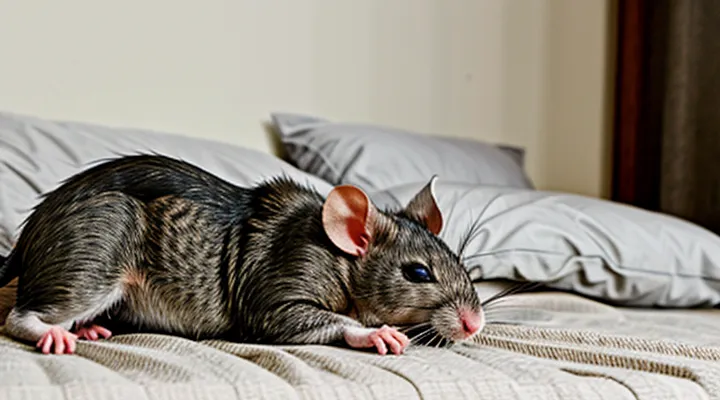
The Circadian Rhythm of Domestic Rats
Diurnal vs. Nocturnal Activity
Domestic rats exhibit a predominantly nocturnal pattern, engaging in most foraging, social interaction, and exploratory behavior during the dark phase. Their circadian system aligns peak locomotor activity with low-light conditions, resulting in extended bouts of wakefulness that can last 6–8 hours after lights off. During the light period, rats enter consolidated sleep episodes, typically comprising rapid eye movement (REM) and non‑REM stages in cyclical sequences.
Key distinctions between diurnal and nocturnal activity in rats include:
- Activity timing: Nocturnal rats concentrate movement and feeding after dusk; diurnal species are active during daylight.
- Sleep distribution: Nocturnal rats allocate the majority of sleep to the light phase, whereas diurnal animals sleep primarily at night.
- Hormonal profile: Melatonin peaks during the dark period for nocturnal rats, supporting wakefulness; cortisol and corticosterone patterns reverse in diurnal mammals.
- Environmental responsiveness: Light exposure suppresses activity in nocturnal rats, while darkness stimulates it; diurnal mammals show the opposite response.
Laboratory observations confirm that altering light‑dark cycles can shift rat behavior toward a more diurnal rhythm, but the innate nocturnal bias persists unless genetic or pharmacological interventions target the suprachiasmatic nucleus. Consequently, understanding the nocturnal orientation of domestic rats is essential for designing experiments that accurately capture natural sleep architecture and avoid misinterpretation of activity data.
Factors Influencing Sleep-Wake Cycles
Domestic rats exhibit polyphasic sleep patterns, alternating brief bouts of rapid eye movement (REM) and non‑REM sleep throughout the 24‑hour cycle. Understanding the variables that modulate these cycles is essential for interpreting behavioral experiments and welfare assessments.
- Light‑dark schedule: exposure to a 12 h light/12 h dark regime synchronizes circadian rhythms; darkness promotes longer non‑REM episodes, while light exposure shortens REM bouts.
- Ambient temperature: temperatures near the thermoneutral zone (28–30 °C) increase total sleep time; colder or hotter environments trigger arousal and fragmented sleep.
- Food availability: scheduled feeding aligns activity peaks with meal times, reducing sleep during anticipated access periods.
- Social context: solitary housing extends sleep duration, whereas group housing introduces competition and frequent awakenings.
- Stressors: handling, predator cues, or novel objects elevate corticosterone levels, suppressing REM sleep and shortening overall sleep bouts.
- Age: juveniles display higher REM proportion and shorter sleep cycles; older rats show consolidated non‑REM periods and reduced total sleep time.
Environmental and physiological factors interact to shape the timing, duration, and architecture of rat sleep. For instance, a stable light‑dark cycle combined with optimal temperature maximizes non‑REM consolidation, while concurrent stressors can override circadian drives and fragment sleep.
Accurate control of these variables enhances reproducibility in laboratory studies and supports the development of husbandry protocols that align with the natural sleep‑wake dynamics of domestic rats.
Stages of Rat Sleep
Non-Rapid Eye Movement (NREM) Sleep
Characteristics of NREM Sleep
Domestic rats exhibit a well‑defined non‑rapid eye movement (NREM) sleep phase that occupies roughly 70 % of their total sleep time. During NREM, cortical electroencephalogram (EEG) recordings show high‑amplitude, low‑frequency (0.5–4 Hz) slow waves, indicating synchronized neuronal firing. Muscle tone remains moderate, allowing the animal to maintain posture while remaining immobile.
Key characteristics of rat NREM sleep include:
- Duration: Episodes last from a few minutes to over an hour, with longer bouts occurring during the light phase when rats are naturally less active.
- Cycle structure: NREM precedes rapid eye movement (REM) sleep in a stereotyped cycle lasting 10–15 minutes; the cycle repeats multiple times throughout the rest period.
- Homeostatic regulation: Sleep pressure, measured by slow‑wave activity, rises during wakefulness and declines progressively across successive NREM bouts, reflecting recovery processes.
- Physiological markers: Heart rate and respiration decrease relative to wakefulness, while body temperature drops modestly, supporting energy conservation.
- Neurochemical profile: Elevated levels of adenosine and reduced acetylcholine characterize the NREM state, promoting neuronal silence and metabolic restoration.
These properties collectively define the NREM stage in laboratory rats and provide a framework for comparative sleep research.
Physiological Changes During NREM
During non‑rapid eye movement (NREM) sleep, domestic rats display a distinctive set of physiological alterations that differentiate this stage from wakefulness and REM sleep.
Electroencephalographic activity shifts to high‑amplitude, low‑frequency waves (0.5–4 Hz), reflecting synchronized neuronal firing. Muscle tone rises relative to REM, resulting in reduced but detectable electromyographic activity. Heart rate declines by 10–20 % compared with the awake state, while respiratory frequency slows proportionally, producing more regular breathing cycles. Core body temperature drops modestly, supporting energy conservation.
Metabolic processes adjust accordingly: cerebral glucose utilization falls by approximately 15 %, and overall oxygen consumption decreases. Hormonal milieu changes; plasma corticosterone levels reach a nadir, whereas growth hormone secretion peaks during the early NREM bouts. Synaptic activity shows reduced excitatory postsynaptic potentials, facilitating synaptic down‑scaling and memory consolidation.
Key physiological changes observed in NREM sleep of lab rats include:
- High‑amplitude, low‑frequency EEG patterns
- Moderate electromyographic tone
- Decreased heart rate and respiratory rate
- Slight reduction in core temperature
- Lower cerebral glucose uptake and oxygen consumption
- Minimal corticosterone, elevated growth hormone
- Attenuated excitatory synaptic transmission
These changes collectively create a low‑energy, restorative state that supports neural plasticity and physiological homeostasis.
Rapid Eye Movement (REM) Sleep
Characteristics of REM Sleep
Domestic rats exhibit a distinct rapid eye movement (REM) phase that differs markedly from non‑REM sleep. During REM, electroencephalographic recordings show low‑amplitude, high‑frequency activity comparable to wakefulness, while muscle tone is profoundly reduced, producing characteristic atonia. Bilateral eye movements are detectable with infrared video, confirming the behavioral hallmark of this stage.
Key physiological traits of rat REM sleep include:
- Duration: Episodes last 10–30 seconds in adult animals; total REM time occupies roughly 15 % of the 12‑hour light phase.
- Cycle placement: REM follows each non‑REM bout, with a latency of 30–60 seconds after the onset of slow‑wave sleep.
- Thermoregulation: Core temperature drops by 0.3–0.5 °C, reflecting diminished autonomic control.
- Heart rate and respiration: Both increase relative to non‑REM, displaying irregular patterns synchronized with eye movements.
- Neurochemical profile: Elevated acetylcholine and reduced norepinephrine concentrations accompany REM, mirroring findings in other mammals.
- Developmental trajectory: Juvenile rats allocate a larger proportion of sleep to REM (up to 30 %); the proportion declines with age.
- Pharmacological sensitivity: Muscarinic antagonists suppress REM entry, whereas serotonergic agonists shorten episode length.
These attributes collectively define the REM component of domestic rat sleep architecture, providing a reliable framework for comparative studies of mammalian sleep physiology.
Brain Activity During REM
Domestic rats exhibit rapid eye movement (REM) sleep characterized by distinct electroencephalographic (EEG) signatures. During REM bouts, the EEG displays low‑amplitude, high‑frequency activity predominantly in the theta band (6–9 Hz) across the hippocampal formation and neocortical regions. This pattern replaces the slow‑wave, high‑amplitude activity observed in non‑REM stages.
Brain regions engaged in REM show coordinated activation:
- Hippocampus: theta oscillations increase, supporting memory consolidation processes.
- Prefrontal cortex: desynchronized activity mirrors cortical arousal.
- Brainstem nuclei (e.g., pedunculopontine tegmental nucleus): generate cholinergic bursts that drive cortical activation.
Physiological correlates accompany the EEG changes. Muscle tone drops sharply, producing atonia detectable by electromyography (EMG). Phasic bursts resembling ponto‑geniculo‑occipital (PGO) waves appear in the lateral geniculate nucleus, indicating heightened visual system engagement despite closed eyelids.
Quantitative observations from rodent sleep studies report:
- REM episodes last 10–30 seconds in adult house mice, extending up to 1 minute in larger rats.
- Total REM proportion occupies 20–25 % of the 12‑hour light phase, increasing to 30 % during the dark phase.
- Theta power peaks at 8 Hz, with a bandwidth of ±1 Hz, and correlates positively with heart rate variability.
These findings delineate the neural dynamics that define REM sleep in domestic rats, providing a benchmark for comparative analyses of mammalian sleep architecture.
Sleep Architecture and Patterns
Sleep Fragmentation
Sleep fragmentation in domestic rats denotes the interruption of continuous sleep by brief awakenings or transitions between sleep stages. Researchers quantify fragmentation by counting sleep bouts, measuring the latency between episodes, and calculating the fragmentation index (total wake time divided by total sleep time). Typical laboratory observations report 12–18 sleep bouts per hour during the light phase, with mean bout duration of 3–5 minutes, whereas the dark phase shows 8–10 bouts and longer episodes of 6–9 minutes.
Fragmentation varies with several controllable variables:
- Ambient noise levels above 40 dB increase wake episodes by 20 % on average.
- Cage enrichment (nesting material, tunnels) reduces bout frequency by 15 % and prolongs episode length.
- Age progression from 2 to 12 months elevates fragmentation index by approximately 30 %.
The pattern of fragmented sleep directly influences the architecture of rapid eye movement (REM) and non‑REM (NREM) stages. Frequent interruptions shorten REM periods, limiting the total REM time to 10–12 % of total sleep, whereas NREM continuity declines, reflected in elevated delta power variability. Hormonal assays reveal increased corticosterone levels following highly fragmented sleep, indicating stress‑related physiological responses.
Overall, sleep fragmentation serves as a reliable metric for assessing the quality of rest in laboratory rats, providing insight into environmental, developmental, and experimental factors that modulate sleep integrity.
Polyphasic Sleep
Domestic rats exhibit a polyphasic sleep pattern, dividing rest into multiple short episodes across the 24‑hour cycle. Each episode lasts between 2 and 10 minutes, interspersed with periods of wakefulness that include foraging, grooming, and social interaction. This fragmented schedule aligns with the species’ high metabolic rate and need for frequent food intake.
Key physiological markers of each sleep bout include:
- Rapid eye movement (REM) phases lasting 20–30 seconds, identifiable by low-amplitude, high-frequency EEG activity.
- Non‑REM (NREM) stages characterized by synchronized slow waves, constituting the majority of the episode duration.
- Muscle atonia during REM, confirmed by electromyographic silence.
Laboratory observations reveal that rats maintain an average total sleep time of 12–14 hours per day, yet never consolidate this amount into a single prolonged period. Instead, the cumulative sleep is distributed over 8 to 12 distinct bouts, reflecting a strictly polyphasic organization.
Environmental factors modulate the frequency and length of these bouts. Light exposure suppresses REM occurrence, while enriched cages increase the number of NREM episodes by providing additional stimuli for brief rest intervals. Temperature shifts of ±2 °C produce measurable changes in bout duration, with cooler conditions extending NREM periods by up to 15 %.
Genetic studies indicate that mutations affecting the orexin system disrupt the polyphasic schedule, leading to extended wake periods and reduced overall sleep time. Pharmacological blockade of adenosine receptors similarly shortens NREM episodes, confirming the role of neuromodulators in maintaining the fragmented pattern.
In summary, domestic rats rely on a highly segmented sleep architecture, with each fragment displaying distinct neurophysiological signatures. The pattern supports continuous activity, rapid response to environmental cues, and efficient energy management.
Environmental and Social Influences on Sleep
Impact of Cage Environment
Domestic rats rely on uninterrupted sleep cycles to maintain metabolic balance, immune function, and cognitive performance. The physical conditions of the cage directly shape these cycles.
Key cage characteristics that modify sleep patterns include:
- Size – cages that provide at least 0.5 m² per pair reduce sleep fragmentation.
- Bedding depth – 5–7 cm of soft, absorbent material lowers arousal frequency during rapid eye movement (REM) phases.
- Material – non‑reflective, non‑metallic walls diminish visual disturbances that interrupt light‑dark transitions.
- Enrichment – removable shelters and nesting tubes create micro‑habitats where rats can retreat, extending total sleep time by 10–15 %.
Environmental controls further influence sleep quality. Stable ambient temperature (22 ± 2 °C) prevents thermoregulatory stress that otherwise shortens non‑REM bouts. Consistent low‑intensity lighting (12 h light/12 h dark) aligns circadian rhythms, while abrupt light spikes trigger immediate awakenings. Background noise below 45 dB avoids frequent awakenings; sudden sounds reduce REM duration by up to 20 %.
Optimal cage design combines spacious layout, adequate bedding, and controlled lighting and temperature. Regular cleaning that preserves bedding integrity and minimizes odor maintains a stable sleep environment. Implementing these parameters yields measurable improvements in sleep continuity and REM proportion, supporting overall health in domestic rats.
Social Dynamics and Sleep
Domestic rats exhibit sleep patterns that are strongly influenced by their social environment. When housed in groups, individuals synchronize their active and resting phases, resulting in coordinated bouts of rapid eye movement (REM) and non‑REM sleep. This synchrony reduces the likelihood of prolonged wakefulness caused by social disturbances.
Group composition determines the distribution of sleep depth across the colony. Dominant rats tend to occupy peripheral nesting sites, where they experience more fragmented sleep, while subordinate individuals often secure central positions that provide longer uninterrupted non‑REM periods. The hierarchy thus creates a spatial gradient of sleep quality.
Key effects of social dynamics on rat sleep include:
- Increased frequency of short awakenings during periods of heightened social interaction.
- Alignment of circadian rhythms among cage mates, leading to shared onset of sleep.
- Variation in sleep architecture linked to dominance status, with subordinates showing higher percentages of deep sleep stages.
- Modification of stress‑related hormone levels, which correlate with alterations in REM duration.
Disruption of normal social structures, such as isolation or sudden changes in group composition, leads to measurable changes in sleep architecture. Isolated rats display longer latency to sleep onset, reduced total sleep time, and elevated corticosterone concentrations. Re‑establishing stable group dynamics restores typical sleep patterns within 48–72 hours.
Health Implications of Sleep
Effects of Sleep Deprivation
Sleep deprivation in laboratory‑bred rodents produces measurable alterations across multiple biological systems. Acute loss of sleep (4–6 h) elevates corticosterone levels, disrupts glucose homeostasis, and reduces body temperature regulation. Chronic restriction (≤6 h per day for weeks) leads to persistent hyperphagia, weight gain, and impaired insulin sensitivity, indicating a direct link between insufficient rest and metabolic dysregulation.
Behavioral consequences appear rapidly. Rats deprived of sleep display increased locomotor activity during the usual rest phase, heightened irritability, and reduced exploration of novel environments. Cognitive performance declines as evidenced by longer latencies and lower correct responses in maze tests, reflecting impaired spatial memory and attention.
Physiological stress markers rise in a dose‑dependent manner. Prolonged deprivation elevates inflammatory cytokines (IL‑1β, TNF‑α) and reduces lymphocyte proliferation, suggesting compromised immune function. Cardiac output and blood pressure show transient spikes during the deprivation period, with potential long‑term cardiovascular risk.
Key outcomes can be summarized:
- Metabolic: hyperphagia, weight gain, insulin resistance, altered lipid profiles.
- Neurocognitive: impaired learning, memory deficits, reduced synaptic plasticity.
- Behavioral: increased agitation, reduced exploratory behavior, altered circadian activity.
- Immune: elevated pro‑inflammatory cytokines, diminished adaptive response.
- Cardiovascular: transient hypertension, increased heart rate variability.
Mortality rates increase when sleep restriction is combined with additional stressors such as high‑fat diet or environmental noise. These findings underscore the necessity of adequate rest periods in experimental designs involving domestic rats, as sleep loss profoundly influences physiological integrity and experimental validity.
The Role of Sleep in Cognition and Memory
Domestic rats exhibit polyphasic sleep patterns, alternating brief episodes of rapid eye movement (REM) and non‑REM sleep throughout the 24‑hour cycle. Experimental recordings reveal that periods of non‑REM sleep consolidate synaptic connections, while REM intervals facilitate synaptic remodeling. These dynamics directly affect tasks that require spatial navigation, object recognition, and associative learning.
Key observations linking sleep to cognitive performance in rats:
- Non‑REM dominance during slow‑wave activity correlates with improved retention of maze solutions learned earlier in the day.
- REM bursts following training sessions enhance the integration of newly acquired information into existing memory networks.
- Sleep deprivation for 6–12 hours leads to measurable deficits in reversal learning and increased error rates in discrimination tasks.
- Pharmacological manipulation that suppresses REM sleep reduces the rate of long‑term potentiation in hippocampal circuits, indicating a mechanistic link between REM physiology and memory consolidation.
Neurophysiological studies demonstrate that sleep‑dependent changes in hippocampal place cell firing patterns support the reactivation of experience‑related ensembles. During non‑REM slow oscillations, coordinated replay of neuronal sequences observed during waking behavior strengthens synaptic pathways, thereby stabilizing spatial maps. Subsequent REM phases appear to integrate these replayed patterns with cortical networks, facilitating the abstraction of relational information.
Overall, the interplay between distinct sleep stages in rats constitutes a regulatory framework for learning efficiency and memory durability. Disruption of this framework compromises performance on tasks that depend on hippocampal‑cortical communication, underscoring the necessity of balanced sleep architecture for optimal cognitive function.