
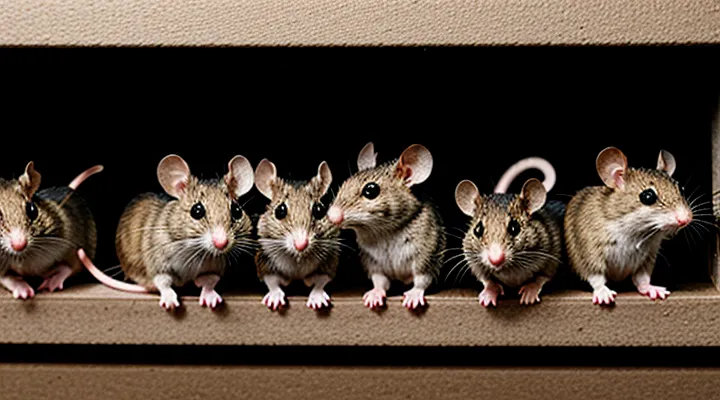
The Kingdom Animalia: A Starting Point
The Kingdom Animalia encompasses all multicellular eukaryotic organisms that obtain nutrients by ingestion and possess specialized tissues. Members of this kingdom exhibit development from a blastula stage, display locomotion at some life stage, and maintain internal organization into distinct organ systems.
Within Animalia, the subcategory Chordata gathers animals with a dorsal nerve cord, a notochord, and, in most cases, a vertebral column. The class Mammalia, a division of Chordata, is defined by the presence of mammary glands, hair, and three middle ear bones. Mammals occupy a narrow segment of the animal kingdom, yet they represent a critical group for understanding vertebrate diversity.
Mice belong to the order Rodentia, the most species‑rich order of mammals. Rodentia is characterized by continuously growing incisors adapted for gnawing, a single pair of upper incisors, and a generally herbivorous or omnivorous diet. The family Muridae, nested within this order, contains the genus Mus, to which the common house mouse (Mus musculus) is assigned.
A hierarchical view of mouse classification illustrates the role of the animal kingdom as the foundational tier:
- Domain: Eukarya
- Kingdom: Animalia
- Phylum: Chordata
- Class: Mammalia
- Order: Rodentia
- Family: Muridae
- Genus: Mus
- Species: M. musculus
Understanding the broad characteristics of Animalia provides the context needed to trace the taxonomic pathway that leads from the kingdom level down to the specific order that includes mice.
Phylum Chordata: The Vertebrate Connection
Mice are mammals situated within the vertebrate lineage of the animal kingdom. As members of the phylum Chordata, they possess a notochord, dorsal nerve cord, pharyngeal slits, endostyle, and post‑anal tail at some stage of development—features that define chordates and distinguish them from invertebrate groups.
The taxonomic hierarchy for the common house mouse (Mus musculus) proceeds as follows:
- Kingdom: Animalia
- Phylum: Chordata
- Subphylum: Vertebrata
- Class: Mammalia
- Order: Rodentia
- Family: Muridae
- Genus: Mus
- Species: M. musculus
The order Rodentia encompasses all rodents, characterized by continuously growing incisors adapted for gnawing. This order groups mice with squirrels, beavers, and many other species that share similar dental and skeletal adaptations.
Key chordate traits present in mice include:
- A vertebral column that protects the central nervous system.
- A well‑developed cranial structure housing complex sensory organs.
- Muscular and skeletal systems supporting locomotion and manipulation of the environment.
These characteristics illustrate how mice, as chordates, integrate the fundamental vertebrate blueprint with specialized mammalian features, situating them firmly within the order Rodentia.
Class Mammalia: Warm-Blooded and Furry
Key Characteristics of Mammals
Mice are warm‑blooded vertebrates placed in the order Rodentia, a subgroup of mammals. Recognizing this classification depends on the fundamental features that unite all mammalian species.
- Presence of hair or fur covering the body
- Production of milk by specialized mammary glands for offspring nourishment
- Three ossicles (malleus, incus, stapes) in the middle ear enabling precise sound transmission
- Highly developed neocortex responsible for advanced sensory processing and cognition
- Predominantly viviparous reproduction with a placenta supporting fetal development
- Skeletal structure including a single lower jaw bone (dentary) and a secondary palate
These characteristics distinguish mammals from reptiles, birds, amphibians, and fish, confirming the taxonomic position of mice within the mammalian order that encompasses rodent species.
Mammary Glands and Live Birth
Mice are classified within the mammalian order that includes rodents, a group distinguished by permanent dentition, a single pair of continuously growing incisors, and a highly adaptable physiology. Among the defining mammalian traits, the presence of functional mammary glands and viviparity are essential for reproductive success.
Mammary glands in this order exhibit the following characteristics:
- Paired structures located along the ventral surface, each terminating in a single teat.
- Development of secretory tissue during gestation, culminating in lactation after parturition.
- Hormonal regulation primarily by prolactin and oxytocin, which initiates milk synthesis and ejection.
Live birth in these mammals follows a consistent pattern:
- Fertilization occurs internally, with embryos implanted in the uterine lining.
- Gestation periods range from three to four weeks, reflecting rapid developmental cycles.
- Neonates are born altricial, possessing limited sensory and motor abilities, and rely on maternal milk for nutrition and thermoregulation.
Hair or Fur Covering
Mice belong to the order Rodentia, a group distinguished by continuously growing incisors and a gnawing lifestyle. Their external covering consists of dense hair, commonly referred to as fur, which serves several physiological functions.
The hair of rodents exhibits a uniform structure: a protective outer guard layer, a middle insulating undercoat, and a fine downy inner layer. Guard hairs resist abrasion and repel moisture, while the undercoat retains heat. The downy layer assists in thermoregulation by trapping a thin layer of air close to the skin.
Key attributes of mouse fur include:
- Composition: keratinized protein fibers arranged in parallel bundles.
- Growth pattern: cyclical shedding followed by rapid regrowth, synchronized with seasonal temperature changes.
- Coloration: pigment distribution varies among species, providing camouflage and signaling.
- Sensitivity: innervated follicles detect tactile stimuli, contributing to navigation and predator avoidance.
These characteristics differentiate mouse hair from the pelage of larger mammals, whose guard hairs are often coarser and undercoats less dense. The combination of fine, flexible fibers and a layered arrangement enables mice to maintain body temperature in diverse environments while preserving mobility and stealth.
Order Rodentia: The Gnawing Mammals
Defining Features of Rodents
Mice are members of the taxonomic order that comprises all rodent species. This order is defined by a set of morphological and physiological traits that distinguish rodents from other mammals.
- Continuously growing incisors in both the upper and lower jaws, each pair equipped with a sharp enamel front and softer dentine behind, creating a self‑sharpening edge.
- Absence of true canines, resulting in a pronounced diastema separating the incisors from the cheek teeth.
- Dental formula typically expressed as 1/1, 0/0, 0/0, 3/3, reflecting the reduced number of premolars and molars.
- Robust, gnawing‑adapted jaw musculature with a well‑developed masseter and a specialized arrangement of the temporomandibular joint.
- Skull featuring a short rostrum, large infraorbital foramen, and a highly developed auditory bulla.
- Presence of a high metabolic rate and corresponding adaptations such as efficient thermoregulation and rapid reproductive cycles.
These characteristics collectively form the diagnostic framework for identifying members of the rodent order, confirming that mice share the same defining features as all other rodents.
Unique Dental Structure
Mice are classified within the order Rodentia, a group distinguished primarily by a specialized dentition. Their dental formula typically reads 1.0.0.3 / 1.0.0.3, indicating a single pair of incisors in each jaw and three molars, while premolars are absent. The incisors are hypselodont, meaning they grow continuously throughout life, a feature supported by a self‑sharpening mechanism: the upper incisors possess a flat, chisel‑shaped cutting edge, whereas the lower incisors are curved, creating a scissor‑like action during gnawing.
Key characteristics of this dental arrangement include:
- Enamel distribution: Enamel coats only the front surface of the incisors, leaving the back composed of softer dentine. This differential wear maintains a sharp edge.
- Rootlessness: Lack of true roots allows perpetual eruption, compensating for wear incurred during gnawing on hard materials.
- Germination pattern: The incisors develop from a single germinal bud, ensuring synchronized growth and alignment.
These features enable mice to exploit a wide range of food sources and construct nests, reinforcing their ecological success within Rodentia.
High Reproductive Rates
Mice are classified within the order Rodentia, a group distinguished by continuously growing incisors and a highly adaptable physiology. Their reproductive strategy contributes significantly to their ecological success.
Mice reach sexual maturity within six to eight weeks. Gestation lasts approximately 19–21 days, after which a litter of three to twelve offspring is typical. Females can produce a new litter every three to four weeks under favorable conditions, leading to exponential population growth when resources are abundant.
Key reproductive parameters:
- Age at first breeding: 0.5–0.75 months
- Gestation period: 19–21 days
- Litter size: 3–12 pups
- Inter‑litter interval: 21–28 days
- Potential litters per year: up to 10
High reproductive rates enable mice to colonize diverse habitats rapidly, recover quickly from mortality events, and maintain stable populations despite predation pressure. This capacity also influences their role as model organisms in research, where predictable breeding cycles facilitate experimental planning.
Suborders Within Rodentia
Mice are classified within the order Rodentia, a diverse group of mammals distinguished by a single pair of continuously growing incisors in each jaw. Within this order, taxonomy is organized into several suborders that reflect evolutionary relationships and morphological traits.
The primary suborders of Rodentia are:
- Sciuromorpha – includes squirrels, chipmunks, and prairie dogs; characterized by a deep, sciuroid cheek‑bone arrangement.
- Myomorpha – encompasses mice, rats, hamsters, and voles; identified by a myomorphous jaw musculature and a specific arrangement of the masseter muscles.
- Hystricomorpha – contains porcupines, guinea pigs, and capybaras; marked by a hystricomorphous skull with an enlarged infraorbital foramen.
- Castorimorpha – comprises beavers, kangaroo rats, and pocket gophers; noted for specialized gnawing adaptations and burrowing behaviors.
- Anomaluromorpha – includes scaly-tailed squirrels and springhares; distinguished by unique tail scales and hopping locomotion.
Mice fall under Myomorpha, the suborder defined by a particular configuration of jaw muscles that supports efficient gnawing and rapid chewing. This placement aligns with morphological and genetic evidence that groups mice with other small, omnivorous rodents sharing similar dental and cranial features.
Sciuromorpha: Squirrel-like Rodents
Mice are classified within the order Rodentia, specifically in the suborder Myomorpha. The group Sciuromorpha comprises rodents that share squirrel‑like features and occupy a separate evolutionary branch.
Sciuromorpha includes families such as Sciuridae (tree and ground squirrels), Aplodontiidae (mountain beaver), and Gliridae (dormice). Common traits are:
- Robust, ever‑growing incisors with a distinctive enamel pattern
- Strong forelimbs adapted for climbing or digging
- Large, often bushy tails that aid balance
- Dental formula 1/1, 0/0, 1/1, 3/3
These morphological adaptations distinguish squirrel‑like rodents from myomorphic mice, whose skull and jaw structure favor gnawing on seeds and grains rather than arboreal locomotion. Phylogenetic analyses based on mitochondrial DNA place Sciuromorpha and Myomorpha as sister clades within Rodentia, confirming that mice do not belong to the squirrel‑like group.
Myomorpha: Mouse-like Rodents
Myomorpha is a suborder of the order Rodentia that comprises the mouse‑like rodents. It groups together families whose members share a distinctive jaw musculature that produces a forward‑sliding chewing motion, an adaptation that differentiates them from other rodent lineages.
Key morphological traits of Myomorpha include:
- Dental formula : 1/1 incisors, 0/0 canines, 0/0 premolars, 3/3 molars.
- Well‑developed masseter muscles anchored to the infraorbital foramen.
- Small, elongated bodies with relatively long tails.
The suborder contains two principal superfamilies:
- Muroidea – families Muridae (true mice and rats) and Cricetidae (voles, hamsters, New World mice).
- Dipodoidea – families Dipodidae (jerboas) and Platacanthomyidae (spiny dormice).
In the taxonomic hierarchy, mouse‑like rodents are placed as follows:
Order Rodentia → Suborder Myomorpha → Superfamily Muroidea (or Dipodoidea) → Family Muridae, Cricetidae, etc. This classification clarifies the order to which all typical mice belong.
Hystricomorpha: Porcupine-like Rodents
Hystricomorpha represents a distinct clade within the order Rodentia, characterized by a specialized skull morphology in which the masseter muscles pass through an enlarged infraorbital foramen. This anatomical adaptation enables powerful gnawing and chewing, a trait shared by members that resemble porcupines in appearance and defensive behavior.
The clade comprises several families, including:
- Hystricidae (true porcupines)
- Erethizontidae (New World porcupines)
- Chinchillidae (chinchillas and viscachas)
- Caviidae (guinea pigs, capybaras, and maras)
- Bathyergidae (African mole‑rats)
All Hystricomorpha species exhibit hystricognathous jaw structure, a high‑arched palate, and often possess quills or dense fur for protection. Their distribution spans Africa, South America, and parts of Asia, reflecting a broad ecological adaptability.
Mice, by contrast, belong to the suborder Myomorpha, which includes families such as Muridae and Cricetidae. While both Myomorpha and Hystricomorpha reside within Rodentia, they diverge at the subordinal level, each possessing unique cranial and dental features that define their evolutionary pathways.
Family Muridae: The True Mice and Rats
Distinguishing Murids
Mice belong to the order Rodentia, specifically to the family Muridae. This family encompasses the true mice, rats, gerbils and related species, and it is distinguished from other rodent families by a combination of morphological, dental and genetic traits.
Morphological criteria that separate murids from other rodents include:
- A pair of continuously growing incisors in each jaw, each bearing a single enamel ridge on the outer surface.
- A relatively elongated rostrum and a narrow interorbital region.
- A well‑developed infraorbital foramen that transmits the masseter muscle, a feature more pronounced than in families such as Sciuridae.
- Tail length typically equal to or exceeding body length, with sparse hair covering.
Dental patterns provide further resolution. Murids display a three‑molars per quadrant arrangement, with the first molar bearing a characteristic cusp pattern (the so‑called “murid molar” morphology). In contrast, cricetids possess a different cusp configuration and a reduced number of premolars.
Molecular analyses reinforce the distinction. Mitochondrial cytochrome b sequences and nuclear genes (e.g., IRBP, RAG1) consistently group murids together, separating them from other rodent lineages. Phylogenetic studies using these markers confirm the monophyly of Muridae and clarify relationships among its subfamilies.
Together, skeletal structure, dental formula, tail proportion, and DNA evidence provide a reliable framework for identifying murid specimens and differentiating them from other members of Rodentia.
Small Body Size
Mice are classified within the order Rodentia, a group characterized by a single pair of continuously growing incisors. Their diminutive stature distinguishes them from many other rodents and influences several biological aspects.
- Body length typically ranges from 6 to 10 cm, excluding the tail.
- Mass seldom exceeds 30 g, allowing rapid acceleration and agile maneuvering.
- High surface‑to‑volume ratio results in elevated metabolic rates, necessitating frequent feeding.
Small size facilitates exploitation of narrow microhabitats, enhances predator evasion through swift bursts of movement, and supports efficient thermoregulation in variable environments. These traits collectively reinforce the ecological success of mice within the Rodentia order.
Pointed Snout and Large Ears
Mice are classified within the order Rodentia, a group distinguished by specialized cranial and auditory structures. Their elongated, pointed snout houses incisors that grow continuously, allowing constant gnawing without damage. The shape concentrates bite forces along a narrow axis, enhancing efficiency when processing seeds, insects, and plant material.
Large, mobile ears augment auditory sensitivity across a broad frequency range. The expanded pinna captures sound waves, while the thin tympanic membrane transmits vibrations to the inner ear, facilitating detection of predators and conspecific calls. These features contribute to the ecological success of rodents.
- Pointed snout: supports continuous incisor growth, concentrates bite force, enables diverse diet.
- Large ears: increase sound capture area, improve frequency detection, aid in predator avoidance.
Genera and Species: A Closer Look
Mice belong to the order Rodentia, the largest mammalian order characterized by continuously growing incisors. Within Rodentia, they are classified in the family Muridae, subfamily Murinae, which encompasses several genera that include the species most commonly recognized as mice.
The genus Mus contains the majority of laboratory and domestic mice. Representative species are:
- Mus musculus – house mouse, worldwide distribution, primary model organism.
- Mus spretus – Algerian mouse, native to the western Mediterranean region.
- Mus spicilegus – steppe mouse, inhabits grasslands of Eastern Europe.
- Mus macedonicus – Macedonian mouse, found in the Balkans and adjacent areas.
Other genera that feature mouse-like species include:
- Apodemus – Eurasian field mice, e.g., Apodemus sylvaticus (wood mouse) and Apodemus flavicollis (yellow-necked mouse).
- Peromyscus – North American deer mice, such as Peromyscus maniculatus (deer mouse) and Peromyscus leucopus (white-footed mouse).
- Rattus – while primarily rats, some smaller species exhibit mouse-sized morphology, for example Rattus rattus (black rat) in its juvenile form.
These genera illustrate the taxonomic diversity of mouse species across continents, each adapted to specific ecological niches while sharing the defining dental and skeletal traits of the order Rodentia.
Mus: The Common House Mouse
The common house mouse, Mus musculus, belongs to the order Rodentia, the largest mammalian order characterized by continuously growing incisors.
- Order: Rodentia
- Suborder: Myomorpha
- Family: Muridae
- Subfamily: Murinae
- Genus: Mus
- Species: Mus musculus
Rodents possess a single pair of upper incisors and a matching lower pair, both adapted for gnawing. Mus musculus exhibits a compact body, short fur, and a tail length comparable to its torso. Dental formula 1.0.0.3/1.0.0.3 reflects the typical rodent arrangement.
The species thrives in human‑dominated environments worldwide, exploiting stored food and shelter in buildings. It displays nocturnal activity, high reproductive rates, and flexible diet preferences, enabling rapid population expansion under favorable conditions.
In biomedical research, Mus musculus serves as a primary model organism. Its genome is fully sequenced, genetic manipulation techniques are well established, and its physiological responses closely mirror those of humans, facilitating studies in genetics, immunology, and pharmacology.
Rattus: The Common Rat
Rattus, commonly known as the brown or black rat, belongs to the order Rodentia, the largest mammalian order characterized by continuously growing incisors. Within Rodentia, Rattus is placed in the family Muridae, subfamily Murinae, and the genus Rattus. This taxonomic placement aligns rats with other murine rodents, including house mice (genus Mus), which share the same order and family but differ at the genus level.
Key taxonomic ranks for the common rat:
- Order: Rodentia
- Family: Muridae
- Subfamily: Murinae
- Genus: Rattus
- Species: R. norvegicus (brown rat), R. rattus (black rat), among others
Rodentia encompasses over 2,000 species, all possessing a single pair of ever‑growing incisors in each jaw. The Muridae family represents the most diverse lineage within this order, containing the majority of mouse and rat species. Rattus species exhibit adaptations such as high reproductive rates, omnivorous diets, and strong gnawing abilities, which contribute to their global distribution and frequent association with human habitats.
Evolutionary History of Rodents
Diversification and Adaptation
Mice are classified within the order Rodentia, the most species‑rich mammalian order. Diversification in this group stems from early evolutionary splits that produced distinct families, genera, and species adapted to a broad spectrum of ecological niches.
Morphological variation illustrates this diversification. Dental architecture evolved to accommodate different diets, ranging from seeds and grains to insects and carrion. Limb proportions and tail length adjusted to locomotor demands, enabling burrowing, climbing, and swimming. Sensory systems expanded, with enhanced olfactory receptors and whisker arrays supporting nocturnal foraging and tactile navigation.
Adaptation to environmental pressures reinforced the success of rodents. Rapid reproductive cycles permit swift population recovery after predation or climatic fluctuations. Metabolic flexibility allows exploitation of seasonal food availability, while physiological mechanisms such as torpor mitigate extreme temperatures. Behavioral plasticity, including social organization and territoriality, further facilitates colonization of diverse habitats, from arid deserts to temperate forests and urban landscapes.
Genomic analyses reveal that gene families linked to immunity, detoxification, and sensory perception have undergone expansion and positive selection, underpinning the capacity of mice to thrive amid pathogens, novel toxins, and complex sensory environments. These genetic innovations, combined with phenotypic plasticity, constitute the primary drivers of the order’s extensive diversification and adaptive breadth.
Global Distribution
Mice belong to the order Rodentia, a taxonomic group characterized by continuously growing incisors. Their global distribution reflects the adaptive success of this order, with representatives found on every continent except Antarctica.
The majority of mouse species inhabit temperate and tropical regions, occupying a range of ecosystems:
- North America: Peromyscus spp., Mus musculus in urban and agricultural settings.
- South America: Akodon and Oligoryzomys species in grasslands and forests.
- Europe and Asia: Mus musculus and Apodemus spp. across rural, suburban, and forested landscapes.
- Africa: Mastomys spp. in savannas and wetlands.
- Australia and Oceania: Introduced Mus musculus populations in coastal and inland areas.
Island colonization demonstrates the order’s dispersal capacity; Mus musculus has established populations on remote islands through human-mediated transport, while endemic mouse species such as Rattus spp. occupy isolated archipelagos.
Population density correlates with habitat suitability, resource availability, and human activity. In agricultural zones, mouse numbers can exceed several hundred individuals per hectare, whereas natural habitats typically support lower densities, reflecting predator pressure and resource constraints.
Ecological Roles
Mice are members of the order Rodentia, a group characterized by continuously growing incisors and a high reproductive rate. Their biological traits translate into several ecosystem functions that shape community dynamics and nutrient cycles.
- Seed predation and dispersal: consumption of seeds reduces plant recruitment, while transport of cached seeds to new locations promotes germination away from the parent plant.
- Soil modification: burrowing activity aerates soil, improves water infiltration, and mixes organic material into deeper layers.
- Prey provision: mice constitute a primary food source for a range of predators, including owls, snakes, and small carnivorous mammals, thereby supporting higher trophic levels.
- Pathogen transmission: individuals can harbor parasites and bacteria, influencing disease prevalence within wildlife populations and occasionally affecting human health.
- Competition: foraging overlap with other small mammals creates competitive pressure that regulates population densities and resource allocation.
Through these mechanisms, rodents such as mice exert measurable influence on plant community composition, soil health, predator survival, and disease dynamics. Their abundance and adaptability make them a pivotal component of many terrestrial ecosystems, reinforcing energy flow and material recycling.
The Importance of Correct Classification
Scientific Research and Understanding
Mice are placed in the order Rodentia, the most diverse mammalian order. Scientific inquiry into this classification relies on morphological examination, fossil records, and molecular phylogenetics. Comparative anatomy reveals characteristic gnawing incisors and a specific dental formula, while paleontological discoveries trace the emergence of rodent traits to the early Paleogene.
Molecular techniques refine the placement of mice within Rodentia. Analyses of mitochondrial DNA, nuclear genes, and whole‑genome sequences produce phylogenetic trees that confirm the relationship of Mus and related genera to the family Muridae. These data also clarify divergence times, indicating that modern mouse lineages arose approximately 12–15 million years ago.
Key research methods include:
- Morphometric assessment of skull and skeletal features.
- Sequencing of conserved genetic markers (e.g., cytochrome b, RAG1).
- Comparative genomics to identify orthologous genes across rodent species.
- Radiometric dating of fossil sites to anchor evolutionary timelines.
The integration of anatomical, genetic, and fossil evidence establishes a robust framework for understanding mouse taxonomy. Continuous advancements in sequencing technology and computational phylogenetics promise finer resolution of rodent evolutionary relationships, reinforcing the classification of mice within Rodentia.
Disease Transmission
Mice belong to the order Rodentia, a taxonomic group characterized by continuously growing incisors. Members of this order serve as reservoirs and vectors for a range of pathogens that affect humans and domestic animals.
Key diseases linked to rodent carriers include:
- Hantavirus pulmonary syndrome, transmitted through aerosolized rodent excreta.
- Leptospirosis, spread by contact with urine-contaminated water or soil.
- Salmonellosis, resulting from ingestion of food contaminated with rodent feces.
- Lymphocytic choriomeningitis, acquired via exposure to infected mouse droppings or nesting material.
- Plague, maintained in wild rodent populations and transmitted by flea bites.
Control measures focus on habitat reduction, sanitation, and rodent population management to interrupt transmission cycles. Effective surveillance of rodent colonies provides early detection of emerging pathogens and informs public‑health interventions.
Pest Control Strategies
Mice belong to the order Rodentia, a classification that shapes effective control measures because of their gnawing habits, rapid reproduction, and attraction to food sources.
An integrated approach combines several actions that target the pest’s biology and environment.
- Sanitation: Remove food residues, store grain in sealed containers, and clean spills promptly.
- Exclusion: Seal gaps larger than ¼ inch in walls, foundations, and utility openings; install metal flashing around doors and vents.
- Trapping: Deploy snap or live traps along established runways, near walls, and in concealed areas; check and reset traps daily.
- Baiting: Use anticoagulant or non‑anticoagulant rodenticides in tamper‑resistant stations; rotate active ingredients to prevent resistance.
- Biological control: Introduce predatory species such as barn owls or feral cats where appropriate; apply entomopathogenic fungi formulated for rodents.
- Structural modification: Replace damaged wiring, insulation, and building materials that provide nesting sites.
- Monitoring: Conduct regular inspections, record trap catches, and adjust tactics based on population trends.
Coordinating these tactics reduces mouse infestations while minimizing non‑target impacts and complying with regulatory standards.