
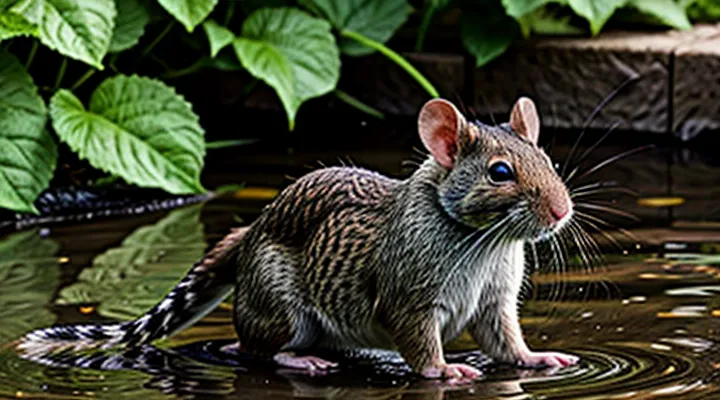
Understanding the Water Rat
Identification of Water Rats
Physical Characteristics
The garden‑dwelling water rat is a medium‑sized rodent, typically measuring 20–30 cm in body length with a tail of comparable length. Its weight ranges from 150 to 300 g, reflecting a robust build adapted for both swimming and terrestrial movement.
A dense, water‑repellent coat covers the animal; the dorsal fur is dark brown to black, while the ventral side appears lighter, often grayish‑white. The fur’s oily secretions reduce water absorption, enabling prolonged submersion.
The tail is laterally flattened, a key adaptation for propulsion in water. Muscular, scaly skin on the underside enhances grip on slippery surfaces. Hind feet are webbed, each bearing five toes with sharp claws for digging and climbing.
Eyes are relatively large, positioned high on the skull to provide a wide field of vision above water. Whiskers (vibrissae) are long and highly sensitive, detecting vibrations and aiding navigation in murky environments.
Dentition includes continuously growing incisors with orange‑tinged enamel, suited for gnawing vegetation and soft bark. The molar pattern is low‑crowned, reflecting an herbivorous diet.
Behavior and Habits
The garden water rat (Rattus norvegicus) is semi‑aquatic; it frequents ponds, irrigation channels and moist soil patches. It moves primarily at night, traveling along water edges to locate food and shelter. When water levels rise, individuals swim short distances to connect separate garden zones, creating a network of pathways that facilitate rapid colonisation.
Feeding habits focus on plant material, insect larvae, and small amphibians. The species shows a preference for tender seedlings, ornamental herbs and vegetable leaves, especially those near water sources. Consumption peaks during early morning and late evening, coinciding with cooler temperatures and reduced human activity. Waste deposition occurs near burrow entrances, often leaving visible droppings and gnawed plant stems.
Control strategies rely on disrupting these behavioural patterns:
- Install rigid barriers (e.g., metal mesh) around pond margins to prevent swimming access.
- Reduce moisture by improving drainage and eliminating standing water.
- Apply deterrent plants (e.g., strong‑scented herbs) along garden borders to discourage foraging.
- Set motion‑activated traps at known travel routes during nocturnal periods.
- Remove debris and fallen fruit that serve as attractants, maintaining a clean perimeter.
Signs of Water Rat Presence
Damage to Plants and Structures
The presence of water rats in garden environments leads to direct damage to both vegetation and built elements. Their burrowing activity destabilizes soil, creating voids that cause plant roots to lose anchorage and wilt prematurely. Repeated trampling by the animals breaks stems, tears leaves, and removes protective mulch layers, exposing seedlings to desiccation and pathogen invasion.
Structural components suffer similar effects. Burrows under paving stones or garden pathways produce uneven surfaces, increasing the risk of cracks and breakage. Wooden decks, fences, and raised beds experience gnawing damage as rats seek shelter, compromising integrity and accelerating rot. Waterlogged tunnels near irrigation systems can obstruct flow, resulting in localized flooding and erosion of foundations.
Typical manifestations of this damage include:
- Root exposure and loss of stability
- Stem breakage and leaf loss
- Mulch displacement and soil compaction
- Cracked or shifted paving and stepping stones
- Gnawed wooden supports and fixtures
- Blocked drainage channels leading to water accumulation
Identifying these symptoms promptly enables targeted mitigation measures before extensive loss occurs.
Burrows and Tunnels
Burrows and tunnels serve as the primary refuge for garden-dwelling water rats, allowing concealment, travel, and access to food sources. Identifying and interrupting these underground networks is essential for effective control.
- Conduct a systematic inspection of moist soil, mulched beds, and compost piles; look for fresh soil mounds, loose edges, and visible entry holes.
- Mark each opening with a durable flag to track activity and prevent accidental disturbance during garden work.
- Apply a targeted, non‑toxic repellent (e.g., liquid garlic or predator urine) directly into the entrance; repeat every 7–10 days during peak activity periods.
- Fill confirmed tunnels with a mixture of sand and fine gravel, compacting firmly to collapse the passage and deter re‑excavation.
- Install a physical barrier—hardware cloth or metal mesh with 1 mm openings—around the perimeter of vulnerable plant beds, burying it 30 cm deep to block subterranean entry.
- Maintain soil moisture at moderate levels; excessive dampness attracts water rats and facilitates burrow stability.
Regular monitoring after intervention confirms the success of these measures. Persistent signs of new openings require immediate repetition of the above steps to prevent re‑colonization.
Preventive Measures
Garden Design and Maintenance
Eliminating Food Sources
Eliminating food sources deprives water rats of the sustenance they need to thrive in garden environments. Remove standing water that collects in birdbaths, pet dishes, or clogged gutters, as it supports the growth of aquatic plants and insects that attract the rodents. Keep compost piles covered with tight‑fitting lids and turn them regularly to discourage foraging. Store garden produce, seeds, and pet feed in sealed containers; avoid leaving fallen fruit or vegetables on the ground. Trim dense vegetation, especially near water edges, to reduce shelter and foraging opportunities.
- Clear debris, leaf litter, and mulch that retain moisture.
- Harvest ripe produce promptly and discard overripe items.
- Use metal or concrete barriers around garden beds to prevent burrowing.
By systematically reducing accessible nourishment and shelter, the habitat becomes unsuitable for water rats, limiting their population growth and preventing further damage.
Reducing Shelter
Water rats thrive in garden areas that provide cover, moisture, and easy access to food. Limiting the structures that serve as refuge directly reduces the population’s ability to establish a stable presence.
Key measures to eliminate shelter include:
- Cutting back dense grass, shrubs, and groundcover to expose soil and prevent nesting.
- Removing piles of leaves, compost, and wood debris that create hidden burrows.
- Installing barriers such as fine‑mesh fencing around water features and raised beds to block entry points.
- Filling low‑lying depressions and sealing cracks in garden walls to eliminate damp cavities.
Regular maintenance of these elements removes the habitats water rats require for shelter, discouraging re‑colonization and supporting long‑term garden health.
Physical Barriers
Fencing Solutions
Water rats frequently breach garden borders, causing damage to plants and soil structure. An effective barrier prevents entry and protects cultivated areas.
Recommended fence types:
- Solid wooden panel: 1.2 m height, 30 cm buried, resistant to gnawing.
- Metal sheet: 1.5 m height, 40 cm buried, corrosion‑treated, suitable for long‑term use.
- Welded wire mesh (½ in. gauge): 1.5 m height, 30 cm buried, allows visual inspection while deterring burrowing.
- Concrete curb with integrated steel strip: 1 m height, 20 cm buried, provides permanent, low‑maintenance solution.
Key selection criteria:
- Height must exceed the animal’s climbing ability (minimum 1.2 m above ground).
- Subsurface extension prevents digging under the fence.
- Material durability dictates replacement interval and maintenance effort.
- Seamless joints and reinforced corners eliminate weak points.
Installation guidelines:
- Excavate a trench along the intended perimeter, matching the required burial depth.
- Lay a compacted base of crushed stone before placing the fence material.
- Secure panels or mesh with corrosion‑resistant fasteners at 30‑cm intervals.
- Backfill the trench with soil, compacting in layers to maintain fence integrity.
- Inspect the barrier annually for gaps, rust, or damage, and repair immediately.
Protecting Specific Plants
Aquatic rodents frequently target tender foliage, root crowns, and seed heads, causing rapid decline of vulnerable garden plants. Effective protection requires a combination of physical barriers, habitat modification, and targeted deterrents.
Install durable mesh or hardware cloth around the base of susceptible perennials, shrubs, and young trees. The mesh should have openings no larger than 0.5 cm and be buried 15 cm deep to prevent burrowing. Secure the material tightly to the trunk or stem, then cover with a layer of mulch or soil to conceal the barrier.
Maintain a clean garden environment to reduce attractants. Remove standing water, fallen fruit, and decaying organic matter that provide food and shelter. Trim low-lying vegetation that creates cover for rodents, and keep the perimeter free of dense hedges that facilitate access.
Apply repellents directly to foliage and soil. Commercial products containing capsaicin, predator urine, or bittering agents can be sprayed weekly during peak activity periods. Rotate formulations to prevent habituation.
Implement trapping only where legal and humane methods are required. Place snap traps or live-catch cages near known runways, using fresh vegetable or grain bait. Check traps daily, and relocate captured animals promptly according to local regulations.
Key actions per plant type
- Vegetable crops (e.g., lettuce, carrots): Use floating row covers, reinforce raised beds with fine mesh, and rotate crops every season.
- Fruit-bearing shrubs (e.g., raspberries, blueberries): Install cylindrical guards around stems, prune to improve air flow, and apply bitter-tasting sprays before fruit set.
- Ornamental perennials (e.g., hostas, irises): Surround with buried barrier, mulch with coarse material to deter digging, and apply predator scent granules around the root zone.
- Young trees and saplings: Wrap trunks with protective sleeves, stake to prevent leaning, and place metal flashing at ground level to block entry points.
Regular monitoring completes the strategy. Inspect barriers for damage, note fresh gnaw marks, and adjust deterrents based on observed activity. Consistent application of these measures minimizes loss and preserves the health of targeted garden plants.
Combatting Water Rats: Non-Lethal Methods
Repellents
Natural Repellents
Natural repellents offer a practical way to discourage water‑bound rodents from invading garden areas. These substances exploit the animals’ sensory aversions without harming the ecosystem.
- Strong mint oil applied to the edges of planting beds creates an odor that water rats avoid. Dilute one part oil in ten parts water, spray onto soil and mulch, and reapply after rain.
- Crushed garlic cloves scattered around water sources release sulfur compounds that irritate the rodents’ nasal passages. Replace the material weekly to maintain potency.
- Neem seed powder mixed with compost deters feeding activity. Incorporate a thin layer into the topsoil before planting.
- Chili pepper flakes dispersed on pathways and near burrow entrances cause a burning sensation on contact. Wear gloves during handling and avoid excessive amounts that could affect beneficial insects.
- Vinegar‑based sprays (one cup white vinegar to two cups water) applied to garden fences and trellises disrupt scent trails. Reapply every few days in hot weather.
Successful use requires consistent application and monitoring. Remove standing water, trim overgrown vegetation, and seal any gaps in garden structures to reduce shelter options. Combining several natural repellents enhances overall effectiveness while preserving a chemical‑free environment.
Commercial Repellents
Commercial repellents provide a practical alternative to trapping when managing water rat activity in garden environments. Formulations fall into three main categories: scent‑based, taste‑based, and ultrasonic devices.
- Scent‑based repellents contain predator urine, ammonia, or essential‑oil blends (e.g., peppermint, eucalyptus). Application involves spraying the solution around water sources, vegetable beds, and entry points. Effectiveness depends on re‑application every 7‑10 days, as volatility reduces potency.
- Taste‑based repellents are granular or liquid additives mixed into soil or mulch. Ingredients such as capsaicin or bittering agents discourage foraging. Uniform distribution is essential; uneven coverage creates safe zones for the rodents.
- Ultrasonic devices emit frequencies above 20 kHz, targeting the auditory sensitivity of water rats. Placement near burrow entrances and irrigation lines maximizes coverage. Power sources range from mains‑connected units to solar‑charged models; battery life influences maintenance frequency.
Key considerations for selection:
- Active ingredient safety – Choose products certified for use around edible plants and non‑target wildlife. Verify compliance with local pesticide regulations.
- Persistence – Products with longer residual activity reduce labor but may increase risk of accumulation in soil. Balance re‑application intervals against environmental impact.
- Cost efficiency – Initial purchase price, required quantities per square meter, and frequency of re‑application determine overall expense. Bulk formulations often lower per‑unit cost.
- Integration with other measures – Repellents work best when combined with habitat modification (removing standing water, trimming dense vegetation) and physical barriers (mesh fencing).
Performance data from field trials indicate that scent‑based products achieve a 45‑60 % reduction in nocturnal activity, while taste‑based options report a 30‑50 % decline in foraging damage. Ultrasonic units exhibit variable results, with effectiveness ranging from 20 % to 70 % depending on device placement and ambient noise levels.
In practice, a layered approach—applying a scent‑based spray around water features, distributing a taste‑based granular repellent in planting beds, and installing an ultrasonic emitter at the perimeter—delivers the most consistent suppression of water rat presence in garden settings. Regular monitoring and timely re‑application sustain the deterrent effect throughout the growing season.
Trapping and Relocation
Live Traps
Live traps provide a humane method for removing water‑loving rodents that frequent garden areas. They capture the animal without killing it, allowing for relocation or disposal according to local regulations.
A typical live trap consists of a sturdy cage with a spring‑loaded door. When the target enters and triggers the trigger mechanism, the door snaps shut, confining the animal inside. The design must prevent escape, resist chewing, and allow easy access for inspection.
Key considerations when using live traps in a garden setting:
- Size selection: Choose a trap large enough for the target species; a 12‑inch square cage accommodates most garden water rats.
- Placement: Position traps near known activity zones, such as the edge of water features, dense vegetation, or along wall footings. Align the entrance toward the water source to increase encounter rate.
- Baiting: Use attractants that appeal to the species’ diet—fresh vegetables, fruit slices, or small pieces of fish. Place bait at the far end of the cage to encourage full entry.
- Secure anchoring: Anchor the trap to the ground or a sturdy object to prevent the animal from dragging it away.
- Monitoring frequency: Check traps at least twice daily. Prompt removal reduces stress and prevents the captured animal from damaging the trap or the garden.
- Release protocol: Relocate the animal at least 10 kilometers from the garden, in a habitat suitable for its survival. Follow local wildlife regulations regarding permitted species and release sites.
Maintenance steps ensure trap effectiveness:
- Clean the cage after each capture to remove scent marks and debris.
- Inspect the trigger mechanism for wear; replace springs or hinges as needed.
- Replace bait regularly to maintain freshness and attractiveness.
When live traps are integrated into a broader garden pest‑management plan—combined with habitat modification, water source control, and exclusion techniques—they significantly reduce water‑rat populations while adhering to humane standards.
Safe Relocation Practices
Effective removal of garden-dwelling water rodents requires a methodical approach that minimizes stress to the animal and prevents ecological disruption. Prior to any action, identify the species and assess its population size. Confirm that relocation complies with local wildlife regulations and that the intended release site offers suitable habitat, adequate water sources, and no risk of conflict with native species.
Capture should employ humane traps designed for semi‑aquatic mammals. Place traps near known activity zones, such as pond edges or damp soil, and bait with appropriate food items (e.g., fresh vegetables or grains). Check traps at regular intervals—no longer than two hours—to reduce exposure to heat or cold.
Transport procedures include:
- Wearing disposable gloves to avoid disease transmission.
- Placing captured individuals in ventilated containers with moist bedding to maintain humidity.
- Keeping containers in a shaded, temperature‑controlled environment during movement.
Release must occur at a location at least several kilometers away from the original garden, preferably within a natural wetland or riparian corridor that supports the species’ dietary and shelter needs. Upon release, observe the animal briefly to ensure it adapts to the new surroundings and does not exhibit signs of injury.
Post‑relocation monitoring enhances success. Record the release site’s coordinates, date, and environmental conditions. Conduct follow‑up observations at regular intervals (e.g., weekly for the first month) to verify habitation and detect any adverse effects.
Implement preventive measures to discourage future incursions:
- Eliminate standing water in garden beds and install proper drainage.
- Secure compost piles and remove accessible food waste.
- Install low‑profile fencing around water features to limit entry.
By adhering to these protocols, garden owners can address water‑rodent issues responsibly, safeguarding both the property and the broader ecosystem.
Combatting Water Rats: Lethal Methods
Trapping
Snap Traps
Snap traps provide a direct, mechanical solution for controlling water-dwelling rodents in garden environments. Their design delivers a rapid, lethal strike, minimizing suffering and preventing prolonged exposure to disease carriers.
Effective deployment requires attention to location, bait selection, and safety measures. Place traps along the perimeter of ponds, near vegetation that offers cover, and on established runways where activity signs are evident. Secure traps on stable ground to avoid displacement by water splash or wind.
Bait should be fresh and attractive to the target species. Preferred options include:
- Small pieces of fish or amphibian meat
- Nutritive seed mixtures
- Commercial rodent attractants formulated for aquatic pests
Set the trigger mechanism according to manufacturer instructions, ensuring the spring is fully tensioned before loading the bait. Check traps daily; remove captured rodents promptly, disinfect the device, and reset it with fresh bait.
Safety considerations include wearing gloves when handling traps, positioning them out of reach of children and non‑target wildlife, and storing unused units in a locked container. For areas with high non‑target activity, consider bait stations with protective covers to reduce accidental captures.
Regular monitoring of trap efficacy informs adjustments in placement density and bait type. When snap traps reach diminishing returns, integrate complementary methods such as habitat modification, water flow enhancement, and predator encouragement to sustain long‑term control.
Other Lethal Traps
Effective lethal traps for garden‑dwelling water rats focus on rapid action, minimal non‑target risk, and compliance with local wildlife regulations.
Snap‑type traps constructed from heavy‑gauge steel provide instant kill when positioned along established runways. Bait with fish or meat paste increases attraction. Set traps at ground level, conceal with natural debris, and check daily to prevent decomposition.
Electric killing stations deliver a high‑voltage shock upon contact. Place devices near water sources or burrow entrances, ensuring the grid is insulated from vegetation to avoid accidental discharge. Power sources should be weather‑proofed, and safety switches installed for human handling.
Glue boards coated with strong adhesive capture rodents, causing fatal immobilization. Use boards with a pheromone lure, locate in damp corners, and replace promptly to avoid suffering. Dispose of captured animals according to sanitary guidelines.
CO₂‑filled chambers create an asphyxiation environment. Construct airtight enclosures with a one‑way entry, bait the interior, and allow sufficient exposure time. Verify that the chamber is sealed and monitor for successful capture.
Fulcrum‑lever traps combine a spring‑loaded arm with a weighted cage, delivering a lethal blow when the animal triggers the release mechanism. Position these traps near burrow exits, calibrate the spring tension for the target size, and inspect after each activation.
All lethal devices must be inspected regularly, cleaned to maintain effectiveness, and stored out of reach of children and pets. Record placement locations and outcomes to evaluate control efficiency and adjust strategies as needed.
Baits and Rodenticides
Types of Baits
Effective pest control for water rats in garden settings relies on selecting appropriate bait formulations. Understanding the characteristics of each bait type enables precise targeting and minimizes non‑target impacts.
- Grain‑based baits – blend of wheat, corn, and oats; high palatability for omnivorous rodents; suitable for placement in discreet stations.
- Protein‑rich baits – fish meal, dried meat, or soy hydrolysate; attracts water‑associated individuals seeking protein; effective in moist microhabitats.
- Oil‑seed baits – peanut butter, sunflower oil; provide strong scent and energy density; useful in winter when natural food sources decline.
- Rodenticide baits – anticoagulant compounds (warfarin, bromadiolone) incorporated into solid matrix; require strict compliance with local regulations and proper labeling to prevent accidental poisoning.
- Live‑trap attractants – scented cotton or shredded cheese placed inside humane traps; encourages capture without chemical exposure.
- Natural attractants – crushed fruit shells, fermented vegetable waste; biodegradable and low risk to wildlife; best for short‑term monitoring.
When deploying baits, follow these core practices: position stations near burrow entrances, conceal from rain, rotate bait types to prevent habituation, and inspect regularly for consumption signs. Combine baiting with habitat modification—removing excess water, trimming dense vegetation—to enhance overall efficacy.
Safe Application and Disposal
Effective control of semi‑aquatic rodents in garden environments demands precise handling of pesticides, baits, and mechanical devices. Improper use jeopardizes non‑target wildlife, water quality, and human health.
When applying chemical agents, follow these procedures:
- Wear certified protective gear (gloves, goggles, respirator) before contact.
- Dilute formulations exactly as the label specifies; do not exceed recommended concentrations.
- Apply only to targeted burrow entrances or feeding stations, avoiding runoff into ponds or irrigation lines.
- Record date, location, and product details for future reference and regulatory compliance.
- Store unused product in a locked, temperature‑controlled cabinet, away from food and pets.
Disposal of used materials and contaminated waste must adhere to strict protocols:
- Collect spent bait containers, trap carcasses, and contaminated soil in sealed, puncture‑resistant bags.
- Label each bag with contents, collection date, and hazard level.
- Transfer bags to a licensed hazardous‑waste facility; do not discard in regular household trash or compost.
- Rinse equipment with water, then soak in a biodegradable detergent solution for at least 15 minutes before rinsing again.
- Decontaminate work clothing by washing separately on a hot cycle; discard gloves and disposable coveralls after single use.
Implementing these measures ensures that rodent management remains effective while protecting ecosystem integrity and complying with environmental regulations.
Integrated Pest Management for Water Rats
Combining Strategies
Water rats frequently colonize garden water features, causing plant damage and contaminating soil. Their presence results from abundant food, shelter, and easy access to water.
Effective control requires integrating multiple measures rather than relying on a single tactic. Combining actions creates synergistic effects, reduces the chance of population rebound, and limits environmental impact.
- Modify habitat: trim overgrown vegetation, remove standing water, and install steep banks to discourage entry.
- Install physical barriers: mesh screens around ponds, fine‑mesh fences along shorelines, and squirrel‑proof lids on water troughs.
- Deploy traps: snap or live‑capture devices placed near burrows, checked daily, and emptied responsibly.
- Apply biological control: introduce predatory fish such as koi or catfish that feed on juvenile rodents, and encourage raptor nesting sites.
- Use targeted repellents: apply environmentally safe, scent‑based deterrents around entry points, reapply after rain.
- Conduct regular monitoring: track activity with motion‑activated cameras, record signs of gnawing, and adjust tactics accordingly.
Synchronize interventions to cover all life stages. Begin with habitat alteration to reduce attractiveness, follow with barriers to block access, then introduce traps and predators while maintaining repellent coverage. Continuous monitoring informs timely adjustments and prevents re‑infestation.
A coordinated plan that blends environmental modification, physical exclusion, mechanical removal, biological pressure, and chemical deterrence delivers the most reliable reduction of water rat populations in garden settings. Implement the combined strategy, evaluate outcomes quarterly, and refine components as needed for sustained control.
Monitoring and Evaluation
Effective control of water rats in garden environments depends on systematic monitoring and evaluation. Establish a baseline by quantifying rat activity: count burrows, track signs of damage, and record sightings over a defined period. Use motion‑activated cameras and bait stations to gather objective data, ensuring consistent placement and operation times.
Define performance indicators that reflect progress toward reduction goals. Typical metrics include:
- Number of active burrows per square meter
- Frequency of nocturnal sightings
- Amount of vegetation loss measured in square centimeters
- Trap success rate expressed as captures per trap night
Collect data at regular intervals—weekly for high‑risk zones, monthly for peripheral areas. Record observations in a centralized log, applying standardized codes for ease of analysis.
Analyze trends using simple statistical methods such as moving averages or percentage change calculations. Compare current figures against the baseline to determine if interventions—trapping, habitat modification, or exclusion barriers—are delivering the intended impact. Identify any deviations promptly and adjust tactics accordingly.
Conclude each evaluation cycle with a concise report summarizing results, recommending corrective actions, and setting targets for the next period. Maintain the cycle of measurement, analysis, and adaptation to sustain long‑term suppression of garden water rat populations.
Long-Term Solutions
Effective control of water rats in a garden requires measures that persist beyond seasonal treatments. Sustainable outcomes arise from altering the environment, enhancing natural predation, and establishing systematic monitoring.
- Reduce standing water by improving drainage, sealing low spots, and installing runoff channels. Persistent moisture removal eliminates the primary resource that supports rat populations.
- Install physical barriers such as fine-mesh fencing or buried wire screens around planting beds. A continuous barrier prevents entry without relying on chemical deterrents.
- Encourage native predators by providing shelter for owls, hawks, and snakes. Nest boxes, perches, and rock piles create habitats that maintain a self‑regulating rat population.
- Manage vegetation to remove dense cover and prune overgrown shrubs. Open ground reduces hiding places and discourages nesting.
- Apply integrated waste management: store compost in sealed containers, remove fallen fruit promptly, and keep feed for pets in locked bins. Consistent sanitation limits food availability.
Implement a quarterly inspection schedule to record signs of activity, assess barrier integrity, and adjust water management structures. Documentation of observations supports timely interventions and validates the effectiveness of long‑term strategies.