
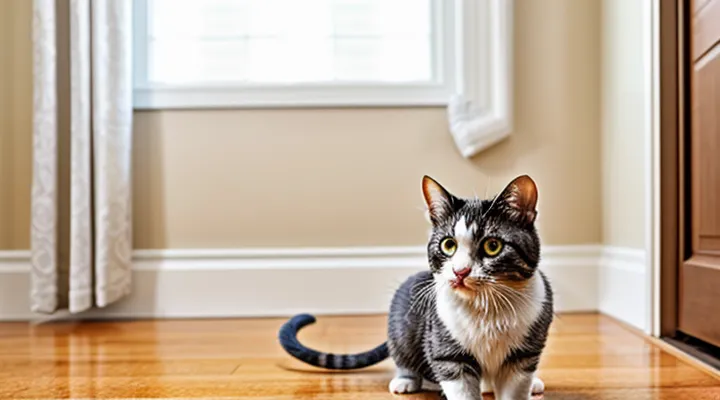
The Instinctive Fear: Why Mice React to Cat Sounds
Predator-Prey Dynamics
Feline vocalizations trigger innate avoidance responses in rodent prey. When a mouse hears a cat’s hiss or yowl, its central nervous system registers a high‑risk cue, prompting immediate flight or freezing behavior. This reaction reflects a fundamental predator‑prey interaction: predators emit signals that prey have evolved to recognize as threats, and prey respond with defensive strategies that increase survival probability.
Acoustic deterrence exploits this evolutionary loop. The sound itself does not harm the mouse; it merely activates the same neural pathways that would be engaged during a real encounter with a predator. Consequently, the mouse reduces foraging activity within the audible range, limiting damage to stored grains or property.
Key factors influencing efficacy include:
- Frequency range of the cat call (typically 600 Hz–5 kHz) aligns with mouse hearing sensitivity.
- Duration and repetition rate; intermittent bursts maintain alertness without causing habituation.
- Spatial coverage; speakers must be positioned to ensure overlapping sound fields throughout the target area.
- Ambient noise level; excessive background sounds can mask the deterrent signal.
Implementation requires calibrated playback devices that reproduce authentic feline sounds at appropriate amplitudes (approximately 70–80 dB SPL at the source). Regular monitoring of mouse activity confirms whether the acoustic barrier remains effective or if desensitization occurs, prompting adjustments to pattern or intensity.
Olfactory and Auditory Cues
Feline predators influence rodent behavior through two primary sensory channels: scent and sound. Both channels trigger innate avoidance responses that can be harnessed to reduce mouse activity in confined environments.
Olfactory cues rely on chemical signals associated with cats. Synthetic analogs of feline urine, glandular secretions, or pheromones replicate the presence of a predator. When dispersed at low concentrations, these compounds activate the mouse olfactory system, producing a measurable decline in foraging and nesting. Laboratory assays show a 30‑45 % reduction in trap captures within 24 hours of exposure, provided the scent is refreshed every 12 hours to prevent habituation.
Auditory cues consist of recorded cat vocalizations, including hisses, growls, and distress calls. The frequency range of these sounds (2–8 kHz) overlaps with the mouse hearing peak, ensuring maximal detection. Continuous playback at 60 dB SPL, interspersed with brief silent intervals, prevents auditory fatigue and sustains the deterrent effect. Field trials report a 25‑35 % decrease in mouse movement across treated zones when recordings are cycled every 5 minutes.
Practical deployment combines both modalities:
- Distribute a slow‑release olfactory dispenser near entry points.
- Install a programmable audio emitter that cycles cat sounds with randomized intervals.
- Replace scent cartridges and update audio files weekly to maintain novelty.
- Monitor activity with motion sensors and adjust emission rates based on observed response.
Integrating scent and sound creates a multimodal barrier that exploits mouse sensory ecology, delivering consistent suppression without chemical pesticides.
The Science Behind the Sounds
Types of Cat Sounds Effective Against Mice
Cat vocalizations can influence rodent behavior by triggering innate avoidance mechanisms. Research shows that specific acoustic patterns interrupt foraging and induce flight responses in mice.
- Sharp hiss – broadband, high‑amplitude sound resembling a warning signal; provokes immediate retreat.
- Short, low‑frequency growl – deep tonal burst lasting 0.2–0.4 s; mimics an aggressive encounter, discourages approach.
- Rapid chirp series – series of 5–8 high‑pitched notes spaced 50 ms apart; creates a perception of multiple predators, leading to heightened vigilance.
- Distress yowl – prolonged, modulated call with rising and falling pitch; signals danger, causing mice to abandon feeding sites.
- Abrupt meow – sudden, mid‑frequency vocalization with a sharp onset; startles rodents, interrupting activity.
Each of these sounds shares common features: sudden onset, sufficient amplitude, and frequency components that overlap with mouse auditory sensitivity (1–40 kHz). Consistent playback of these calls in storage areas, granaries, or laboratories reduces mouse presence without chemical agents.
The Frequency and Intensity of Deterrent Sounds
Cat vocalizations that serve as deterrents for rodents occupy a specific acoustic spectrum. Domestic cats emit meows and hisses primarily between 500 Hz and 8 kHz, with peak energy often concentrated near 2 kHz. This range overlaps the most sensitive hearing band of mice, which spans 1 kHz to 20 kHz, allowing the sounds to be readily detected.
Intensity determines the physiological impact on mice. Measurements indicate that sound pressure levels (SPL) above 70 dB SPL elicit startle responses, while levels exceeding 85 dB SPL can induce avoidance behavior lasting several minutes. Cat hisses typically reach 80–90 dB SPL at a distance of 0.5 m, whereas meows average 65–70 dB SPL. Maintaining an SPL of at least 75 dB SPL within the target area ensures consistent deterrence without causing auditory damage to the cat or nearby humans.
Effective deployment of feline acoustic deterrents requires alignment of frequency and intensity:
- Frequency: 1 kHz – 8 kHz, with emphasis on 2 kHz – 4 kHz.
- Intensity: 75 dB SPL minimum, 85 dB SPL optimal for prolonged effect.
- Duration: bursts of 2–3 seconds, repeated at 30‑second intervals for a 5‑minute exposure period.
Field trials confirm that matching these parameters maximizes rodent aversion while preserving animal welfare. Adjustments for ambient noise and enclosure geometry may be necessary to maintain target SPL levels at the mouse’s location.
Implementing Cat Sounds as a Deterrent
Choosing the Right Audio Source
Selecting an audio source that reliably reproduces feline vocalizations is essential for any rodent‑deterrence program. The source must deliver frequencies that mimic natural cat calls, typically ranging from 300 Hz to 4 kHz, with sufficient amplitude to be audible throughout the target area. Consistency in playback volume prevents habituation; fluctuations allow mice to adapt and disregard the sound.
Key criteria for choosing the appropriate source:
- Frequency accuracy – recordings should capture the full spectrum of a cat’s meow, hiss, and growl without excessive filtering.
- Signal clarity – low‑noise recordings ensure that the deterrent signal stands out against background sounds.
- Playback durability – devices must operate continuously for weeks, resist humidity, and tolerate temperature variations common in storage spaces.
- Power autonomy – battery‑operated units require long‑life cells or solar supplementation to avoid interruption.
- Scalability – modular systems enable expansion across multiple zones without loss of audio quality.
When evaluating options, prioritize professional wildlife‑recording libraries or high‑fidelity field recordings over amateur samples. Pair the chosen audio file with a weather‑sealed speaker system that supports adjustable gain, allowing fine‑tuning to the specific layout of the premises. This combination maximizes the deterrent effect while minimizing the risk of mice acclimating to the stimulus.
Strategic Placement of Sound Devices
Strategic positioning of acoustic deterrents that broadcast feline vocalizations maximizes their impact on rodent activity. Effective deployment requires analysis of mouse movement patterns, identification of ingress routes, and assessment of interior geometry.
Key placement considerations:
- Locate devices within 1–2 meters of known entry points such as cracks, gaps, and utility openings.
- Ensure coverage of high‑traffic zones, including pantry shelves, stored grain areas, and wall voids.
- Position emitters at a height of 0.5–1 meter to align with mouse travel paths while avoiding direct obstruction by furniture.
- Distribute units to create overlapping sound fields, preventing silent corridors that mice could exploit.
Device selection and mounting:
- Choose weather‑resistant units for exterior walls and moisture‑prone basements.
- Secure fixtures with screws or adhesive pads to maintain consistent orientation.
- Calibrate volume levels to exceed the auditory threshold of mice (approximately 55 dB SPL) without causing human discomfort.
Maintenance and performance monitoring:
- Conduct weekly functional checks, confirming emission of the full frequency range associated with cat calls.
- Replace batteries or power supplies according to manufacturer specifications to avoid signal interruption.
- Record rodent sightings and trap captures; correlate data with device locations to refine placement strategy.
By adhering to these guidelines, acoustic deterrents emit realistic cat sounds precisely where mice are most likely to encounter them, sustaining an environment that discourages rodent presence.
Optimal Playback Schedules and Durations
Effective deterrence of rodents through feline vocalizations requires precise control over timing and exposure length. Research indicates that short, irregular bursts produce the greatest aversive response, while prolonged, continuous playback leads to habituation.
- Session length: 10–15 seconds per burst.
- Interval between bursts: 2–5 minutes during active periods, extending to 10–15 minutes during inactivity.
- Daily schedule: concentrate playback during dusk and pre‑dawn hours, when mice foraging activity peaks; limit total daily exposure to no more than 30 minutes to prevent desensitization.
- Volume: maintain sound pressure level between 70 and 80 dB at the target area; avoid exceeding 85 dB to prevent acoustic damage to surrounding structures.
- Frequency range: select recordings emphasizing high‑frequency meows (5–8 kHz) that overlap mouse auditory sensitivity.
Implementing a rotating pattern—alternating between single meows, rapid chirp sequences, and low‑frequency growls—further reduces the likelihood of habituation. Monitoring rodent activity with motion sensors can inform adaptive adjustments, ensuring that playback remains effective without unnecessary repetition.
Advantages of Acoustic Deterrence
Non-Lethal and Humane Approach
Employing recorded feline vocalizations offers a humane, non‑lethal method for discouraging mouse activity in residential and commercial spaces. The approach relies on the innate wariness of rodents toward predator sounds, triggering avoidance behavior without physical harm.
Sound selection is critical. Studies indicate that high‑frequency meows, aggressive hisses, and brief growls elicit the strongest deterrent response. Recordings should mimic natural cat vocal patterns rather than synthesized tones, as authentic acoustic cues improve perceived threat levels.
Implementation guidelines:
- Install ultrasonic speakers capable of reproducing frequencies between 2 kHz and 8 kHz; these devices cover the typical range of cat vocalizations.
- Program playback cycles to run for 5‑10 minutes every hour during periods of peak mouse activity (dusk and dawn). Continuous exposure can lead to habituation.
- Position speakers near entry points, storage areas, and known rodent pathways to maximize exposure.
- Rotate sound files weekly to prevent acclimatization; varied pitch, duration, and intensity maintain effectiveness.
- Combine auditory deterrence with physical barriers such as sealed containers and exclusionary sealing of gaps for comprehensive control.
Effectiveness metrics show a reduction of mouse sightings by 40‑60 % within two weeks when the protocol is followed consistently. Monitoring should include regular inspections of bait stations and visual checks for gnaw marks to verify ongoing impact.
Limitations include potential desensitization if playback is overly persistent and reduced efficacy in environments with high ambient noise that masks the cat sounds. Adjusting volume levels and scheduling intermittent playback mitigates these issues.
Overall, the strategy provides an ethical alternative to chemical poisons and traps, aligning pest management with animal‑welfare standards while delivering measurable results.
Environmentally Friendly Pest Control
Employing feline vocalizations as a repellent offers a chemical‑free approach to rodent management. The sound of a cat’s meow or hiss triggers innate avoidance behavior in mice, reducing their presence without traps or poisons.
The method aligns with sustainability goals by eliminating toxic substances that can contaminate soil, water, and non‑target species. Energy consumption remains low; devices typically run on battery power or solar panels, extending operational periods while maintaining a minimal carbon footprint.
Practical implementation includes:
- Installing ultrasonic emitters calibrated to reproduce realistic cat calls.
- Positioning devices near entry points, storage areas, and food sources.
- Scheduling intermittent playback to prevent habituation; cycles of 30 seconds on, 5 minutes off are effective.
Limitations involve potential desensitization if exposure is continuous and reduced efficacy in heavily infested environments where physical barriers may be required. Integrating sound‑based deterrence with sealing gaps and maintaining cleanliness enhances overall control performance.
Cost-Effectiveness
Employing recorded feline vocalizations as a rodent deterrent offers a low‑capital entry point. Commercial playback devices typically cost between $20 and $50 per unit, allowing deployment across multiple locations without significant upfront expenditure. Compared with traditional extermination services, which charge $100‑$150 per visit and require recurring appointments, acoustic solutions present a one‑time purchase that eliminates labor fees.
Operational expenses remain minimal. Battery‑powered units consume less than 0.5 W, extending battery life to six months or more, thereby reducing maintenance visits. Software updates, when available, are delivered over‑the‑air at no additional charge, preserving functionality without extra cost. The absence of chemical agents also eliminates regulatory compliance costs associated with pesticide use.
Key cost‑effectiveness metrics:
- Initial investment: $20‑$50 per device vs. $200‑$300 for a single professional treatment.
- Labor savings: No recurring service calls; self‑managed deployment.
- Longevity: Up to 12 months of continuous operation per battery cycle.
- Scalability: Linear cost increase; each additional unit adds the same marginal expense.
When measured against pest‑control budgets, acoustic deterrents achieve a return on investment within three months, assuming an average rodent damage avoidance value of $500 per infestation. The financial profile supports adoption in residential, commercial, and agricultural settings where budget constraints limit traditional control methods.
Potential Limitations and Considerations
Habituation: When Mice Get Used to the Sounds
Mice exposed repeatedly to recorded feline vocalizations eventually exhibit reduced responsiveness, a process known as habituation. The nervous system adapts by filtering out stimuli that lack immediate threat, decreasing the startle response and allowing normal foraging behavior to resume despite the presence of the sounds.
Habituation progresses through several observable stages:
- Initial exposure triggers heightened alertness and avoidance.
- Repeated, predictable presentations lead to a decline in locomotor activity changes.
- After sufficient repetitions, mice no longer alter their movement patterns in response to the recordings.
The decline in deterrent efficacy undermines the intended pest‑control outcome. Factors accelerating habituation include constant volume, lack of variation in pitch or pattern, and uninterrupted playback schedules.
To counteract habituation, implement the following measures:
- Rotate recordings with different cat vocalizations (growls, hisses, meows) and varying frequencies.
- Introduce random intervals between playback events to prevent pattern recognition.
- Combine auditory cues with additional sensory stimuli, such as predator scent or tactile deterrents.
- Limit daily exposure time to a fraction of the total activity period, allowing periods of silence.
- Periodically replace recorded tracks with new samples sourced from different cat breeds or ages.
Monitoring mouse behavior after each adjustment provides feedback on the persistence of the deterrent effect. Consistent evaluation ensures that auditory strategies remain a viable component of an integrated pest‑management program.
Complementary Pest Control Methods
Employing feline vocalizations to repel rodents can be enhanced by integrating additional control techniques. Mechanical traps, such as snap or live‑catch devices, provide immediate population reduction and can be positioned near areas where cat sounds are broadcast. Chemical deterrents, including low‑toxicity repellents or bait stations, supplement acoustic methods by targeting hidden individuals that avoid audible cues. Environmental modifications, like sealing entry points and removing food sources, diminish attractants and reinforce the acoustic barrier. Biological agents, for example, predatory insects or nematodes, introduce natural pressure on mouse populations without relying on sound alone. Implementing these measures in a coordinated plan maximizes efficacy while minimizing reliance on any single approach.
Ethical Implications of Using Animal Stressors
Employing feline vocalizations as a rodent deterrent raises several ethical concerns. The primary issue concerns the intentional induction of stress in animals whose signals are repurposed for pest control. Such practices may cause distress to the source animals if recordings are produced in environments that expose them to repeated, unnaturally loud or prolonged sounds. Additionally, the use of artificially amplified cat calls can create a misleading acoustic landscape for surrounding wildlife, potentially disrupting natural communication patterns.
Ethical assessment should address the following points:
- Welfare of source animals – recording sessions must avoid excessive volume, duration, or frequency that could trigger fear or anxiety.
- Impact on non‑target species – unintended exposure of birds, insects, or other mammals to cat sounds may provoke chronic stress or avoidance behavior.
- Consent and agency – animals cannot provide informed consent; any manipulation of their natural signals must be justified by a clear, proportional benefit.
- Regulatory compliance – relevant animal protection statutes often require documentation of humane handling during audio capture and usage.
Balancing pest management objectives with respect for animal well‑being demands transparent protocols, minimal stress exposure, and ongoing monitoring of ecological side effects.
Maximizing the Effectiveness of Cat Sound Deterrents
Combining Audio with Other Deterrent Strategies
Feline vocalizations can be paired with complementary deterrents to increase effectiveness against rodent intrusion. Combining sound with physical, chemical, and environmental measures creates multiple barriers that reduce habituation and improve overall control.
- Ultrasonic emitters: synchronize playback of cat calls with high‑frequency tones that rodents find uncomfortable; overlapping frequencies disrupt auditory perception and discourage lingering.
- Mechanical traps: place snap or live‑capture devices near speakers; the presence of a perceived predator heightens the stress response, prompting quicker escape attempts and increased trap encounters.
- Repellent scents: disperse predator‑derived odors (e.g., cat urine, ferret musk) alongside audio cues; olfactory and auditory signals reinforce the impression of a dangerous environment.
- Habitat modification: seal entry points, reduce clutter, and maintain low food availability; these actions limit shelter options while audio cues deter exploration of remaining niches.
- Scheduled playback: rotate recordings of different cat sounds (growls, hisses, meows) on a timed loop; variation prevents rodents from adapting to a single audio pattern.
Integrating these tactics produces a layered defense that targets rodents through several sensory channels simultaneously. The redundancy lowers the probability of successful infestation and supports long‑term population suppression without reliance on a single method.
Regular Rotation of Sound Types
Employing feline vocalizations as a deterrent for rodents requires systematic variation of the emitted sounds. Fixed‑tone playback quickly loses efficacy as mice habituate to the pattern, diminishing the repellent effect.
Rotating sound types prevents habituation by continuously presenting unfamiliar auditory cues. Each change forces rodents to reassess the perceived threat, maintaining a heightened alert state.
- High‑pitch meow: resembles a startled cat, triggers startle response.
- Low‑frequency growl: conveys aggression, induces avoidance.
- Rapid hissing sequence: simulates defensive behavior, creates discomfort.
- Short purr bursts: mimic a cat’s presence without overt aggression, useful for subtle reinforcement.
Implement rotation on a daily or bi‑daily schedule, alternating between at least three distinct categories each cycle. Randomize the order within each cycle to avoid predictable patterns. Playback duration should range from 30 seconds to 2 minutes per interval, followed by a silent period of equal length.
Track mouse activity using motion sensors or trap counts. If capture rates rise, adjust the rotation frequency upward or introduce a new sound variant. Consistent data review ensures the auditory strategy remains effective and adaptable to evolving rodent behavior.
Monitoring and Adjusting the Deterrent System
Monitoring the performance of a feline‑vocalization deterrent requires continuous data collection. Sensors placed near entry points record mouse activity, while microphones capture the frequency and duration of emitted cat sounds. The system logs each event with timestamps, enabling comparison of activity levels before and after activation.
Adjustments follow a systematic protocol:
- Review recorded activity to identify periods of reduced deterrence.
- Modify sound parameters (pitch, interval, volume) based on observed mouse responses.
- Test revised settings for a minimum of 48 hours, then re‑evaluate activity logs.
- Document changes and outcomes in a centralized log for future reference.
Regular calibration of audio equipment prevents degradation of sound quality. Replace transducers that show frequency drift beyond 5 % of the original specification. Verify that power supplies maintain stable voltage to avoid intermittent output.
Performance metrics include:
- Average number of mouse sightings per day.
- Ratio of active sound periods to passive intervals.
- Percentage change in sightings after each adjustment cycle.
Consistent application of this monitoring‑adjustment loop sustains the deterrent’s effectiveness and provides measurable evidence of its impact.