
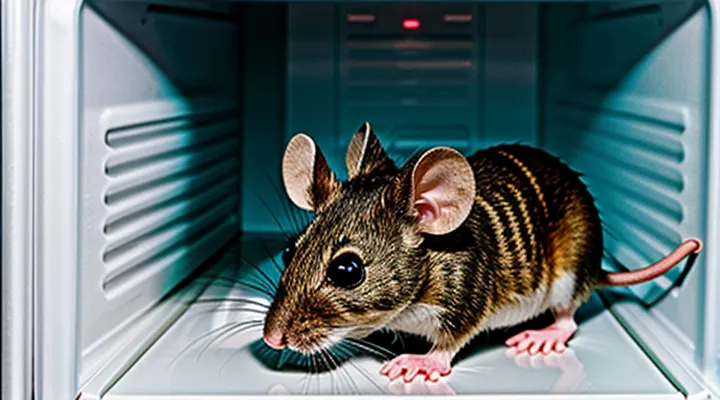
The Discovery
A Morning Surprise
The refrigerator was opened at dawn, revealing a small gray mouse curled on the middle shelf. The animal’s presence interrupted the usual routine of retrieving milk and eggs, prompting immediate safety and hygiene considerations.
First response actions included:
- Turning off the appliance to prevent electrical hazard.
- Removing all perishable items and sealing them in a secondary container.
- Using a humane trap to capture the intruder without injury.
- Cleaning the interior with a food‑grade sanitizer after removal.
The incident highlighted common entry points such as gaps around the door seal and vents. Inspection confirmed a worn gasket, which allowed the rodent to slip inside while seeking shelter from cooler nighttime temperatures.
Preventive measures recommended for similar households are:
- Inspect and replace door seals annually.
- Maintain a clean environment around the kitchen to deter pests.
- Store food in airtight containers.
- Conduct quarterly visual checks of interior surfaces for signs of activity.
Prompt resolution restored the refrigerator’s functionality and eliminated contamination risk, ensuring the kitchen returned to normal operation for the day’s meals.
Initial Reaction
Disbelief and Amusement
The unexpected presence of a rodent inside a household refrigerator sparked a rapid shift from routine chores to a moment of collective astonishment.
Witnesses reported an immediate sense of disbelief, expressed through questions about how a small animal could navigate sealed compartments and evade typical deterrents. The scenario challenged assumptions about food storage safety, prompting a reassessment of structural integrity and pest‑control protocols.
Simultaneously, the absurdity of the situation generated spontaneous amusement. Laughter emerged as a coping mechanism, highlighting the contrast between the seriousness of potential contamination and the surreal image of a mouse perched among dairy products. The humor served to diffuse tension while reinforcing vigilance against future incursions.
Key emotional responses observed:
- Initial shock and questioning of plausibility
- Rapid transition to light‑hearted commentary
- Reinforced awareness of hygiene standards through shared experience
The Investigation
How Did It Get There?
Possible Entry Points
A mouse discovered inside a refrigerator indicates a breach in the kitchen’s protective barrier. Identifying how the rodent entered helps prevent recurrence and protects food safety.
- Gaps around the refrigerator door seal: worn or misaligned gasket, torn foam, or debris preventing a tight closure.
- Openings beneath the appliance: gaps between the floor and the fridge base, often larger than ¼ inch, provide direct access from the crawl space.
- Unsealed utility penetrations: holes for water lines, electrical cords, or ventilation ducts that lack proper flashing or mesh.
- Adjacent wall or cabinet cracks: deteriorated drywall, loose trim, or damaged cabinet backs create pathways from neighboring rooms.
- Ventilation grilles and condenser coils: external vents without insect screens can be used as shortcuts, especially when located near the floor.
- Drain holes and defrost channels: improperly covered drainage openings may connect to the interior cavity.
Each identified aperture should be inspected, measured, and sealed using appropriate materials—silicone caulk, steel wool, metal flashing, or hardware cloth—followed by a functional door gasket. Regular maintenance checks will verify the integrity of these barriers and reduce the likelihood of future intrusions.
Previous Food Storage Habits
The refrigerator mouse episode highlights how earlier storage routines can create vulnerabilities. Most households rely on loosely covered dishes, open bags, and irregular shelf organization. These practices permit odors to escape, attracting rodents seeking food sources.
Key habits that often precede such events include:
- Storing perishable items without airtight containers.
- Placing raw meat near ready‑to‑eat foods.
- Neglecting regular cleaning of spills and crumbs.
- Overloading shelves, which reduces airflow and masks scent trails.
- Failing to rotate stock, allowing forgotten items to decay.
When food is not sealed, moisture and scent accumulate, forming a predictable pathway for rodents. Open packaging on the lower shelves gives easy access to the cold environment, where mice can hide and groom. Inadequate cleaning leaves residue that sustains interest, while poor stock rotation leaves stale products that emit stronger odors.
Adopting stricter storage measures—such as using sealed containers, separating raw and cooked foods, maintaining a clean interior, and implementing a first‑in‑first‑out system—reduces the likelihood of rodent intrusion. Consistent application of these protocols directly addresses the weaknesses exposed by the refrigerator mouse incident.
What Was It Doing?
Evidence of Nibbling
The refrigerator inspection revealed clear signs of rodent activity. Chewed edges on the vegetable drawer lid indicate repeated gnawing. Plastic containers displayed bite marks consistent with incisors of a small mammal. Food remnants bore irregular bite patterns, each bite measuring approximately 2 mm in diameter, matching the expected size of a mouse’s teeth. Several dark pellets, identified as mouse droppings, were found near the cooling coils. Swabs taken from the nibble sites tested positive for rodent DNA, confirming the source.
Key observations include:
- Fractured seal on a yogurt cup, with clean cuts typical of incisors.
- Scattered grain kernels with missing sections, suggesting selective feeding.
- Presence of shredded paper packaging, showing parallel gnaw lines.
- Fresh droppings measuring 5 mm in length, located on the interior wall.
- Positive DNA results from swab samples taken at bite locations.
These findings collectively constitute concrete evidence of nibbling activity inside the appliance.
Behavioral Observations
The discovery of a rodent inside a domestic refrigerator prompted systematic observation of its behavior under atypical, low‑temperature conditions.
Initial response included rapid cessation of movement, followed by brief bouts of shivering, indicating acute thermal stress. The animal tested the interior environment by extending its forepaws toward the cold walls, then retreated to the central compartment where ambient temperature was marginally higher.
Feeding attempts were limited to sniffing the interior surfaces and probing any visible residues. The mouse displayed selective gnawing on plastic shelving, suggesting exploratory foraging rather than sustained consumption. No ingestion of stored food items was recorded during the observation period.
Locomotor activity consisted of short, deliberate sprints toward the door seal, interspersed with pauses for orientation. The animal utilized the vertical space by climbing the inner wall to reach the upper shelf, demonstrating adaptability to confined three‑dimensional environments.
Stress indicators comprised frequent tail flicks, elevated ultrasonic vocalizations, and increased self‑grooming. These behaviors correlated with moments of perceived enclosure, such as when the door was briefly opened.
Key behavioral observations:
- Immediate immobility followed by shivering
- Targeted probing of cooler surfaces
- Minimal feeding, focused on structural components
- Utilization of vertical space for escape attempts
- Elevated stress signals (tail flicks, vocalizations, grooming)
These findings delineate the mouse’s physiological and ethological adjustments when confronted with an unexpected, refrigerated habitat.
The Capture and Release
Planning the Extraction
Tools and Techniques
The unexpected discovery of a rodent inside a domestic refrigerator requires a systematic approach that combines immediate removal, thorough sanitation, and long‑term prevention. Prompt action prevents contamination of food supplies and limits the spread of pathogens.
Effective removal relies on a set of specialized tools.
- Small‑handheld trap designed for confined spaces, featuring a spring‑loaded door that captures the animal without damage.
- Flexible grabber tool with padded jaws, allowing safe extraction of the mouse from tight corners.
- Disposable gloves and face shield to protect personnel from direct contact and aerosolized particles.
Sanitation techniques focus on eliminating biological residues and odors that attract further infestation.
- High‑temperature steam cleaner applied to interior surfaces for at least five minutes, ensuring bacterial kill.
- Food‑grade disinfectant spray, applied according to manufacturer’s contact time, followed by a wipe‑down with a clean microfiber cloth.
- Activated charcoal sachets placed inside the compartment for 24 hours to absorb lingering scents.
Prevention depends on monitoring and structural modifications.
- Install magnetic door seals to maintain a tight closure, reducing entry points.
- Deploy ultrasonic repellents calibrated to frequencies that deter rodents without affecting human occupants.
- Conduct quarterly inspections using a flashlight and mirror to identify gaps, damaged gaskets, or debris accumulation.
Adhering to this toolkit and procedural framework minimizes health risks and restores the refrigerator’s integrity after a rodent intrusion.
Safety Precautions
The discovery of a rodent inside a household refrigerator demands immediate corrective action to protect food safety and prevent equipment damage.
First, isolate the appliance. Disconnect power, remove all contents, and discard any items that show signs of contamination. Clean interior surfaces with a food‑grade sanitizer, then dry thoroughly before restoration.
Next, identify and eliminate entry routes. Inspect door seals, gasket condition, and surrounding cabinetry for gaps or wear. Apply weather‑strip material or replace damaged seals to restore a continuous barrier. Seal cracks in walls, floors, and baseboards using appropriate pest‑proof caulk.
Implement ongoing preventive measures:
- Schedule monthly visual inspections of the refrigerator interior and surrounding area.
- Maintain a regular pest‑control program that includes bait stations and trap monitoring placed away from food storage zones.
- Store food in sealed containers; avoid leaving open packages that attract rodents.
- Keep the kitchen floor clean of crumbs and spills; sweep and mop after each meal preparation.
- Verify that temperature settings remain within safe refrigeration ranges (2–4 °C) to discourage pest activity.
Finally, establish a response protocol for future incidents. Document findings, actions taken, and any equipment repairs. Review the protocol quarterly to incorporate new best practices and ensure compliance with health‑safety regulations.
The Eviction Process
The Delicate Operation
The situation involves a small rodent discovered inside a domestic cooling appliance. Immediate containment, preservation of food safety, and humane removal constitute the core objectives of the operation.
Execution proceeds in three phases:
- Isolation – Disconnect power to prevent accidental injury and close the refrigerator door to limit the animal’s movement.
- Assessment – Observe the mouse’s position using a flashlight; identify potential escape routes and any obstacles that could cause damage to shelving or stored items.
- Extraction – Employ a soft‑tipped trap or a gentle hand‑held net, guiding the creature toward the opening. Transfer the animal to a secure container for release outside the residence, then inspect the interior for droppings or damage.
Post‑procedure actions include thorough sanitation of all surfaces, disposal of compromised food, and a visual inspection of seals to ensure no further ingress points remain. Documentation of the incident and corrective measures supports future prevention.
Mouse’s Reaction
The mouse entered the refrigerator unexpectedly, triggering an immediate stress response. Its heart rate accelerated, respiration became shallow, and muscles tensed in preparation for rapid movement. Blood circulation redirected toward the limbs, enhancing the potential for escape.
Observations of the mouse’s behavior include:
- Immediate scurrying toward the nearest opening, often the door hinge or a vent.
- Frequent pauses to assess temperature and air quality, indicated by head lifts and whisker sweeps.
- Rapid grooming of fur, a self‑soothing action that reduces tactile irritation from cold surfaces.
- Vocalizations such as high‑pitched squeaks, signaling alarm to any conspecifics nearby.
These reactions align with established mammalian survival mechanisms, demonstrating the animal’s capacity to recognize and respond to hostile, atypical environments promptly.
Releasing into the Wild
A mouse was discovered inside a domestic refrigerator, prompting the need for an immediate decision about its fate. The most humane option often involves returning the animal to its natural environment, provided that the process follows established wildlife‑management protocols.
Key considerations for releasing the rodent into the wild include:
- Legal compliance: Verify local wildlife regulations to ensure that removal and release are permitted without a permit.
- Health assessment: Examine the animal for injuries or disease that could affect native populations.
- Habitat suitability: Select an area with adequate shelter, food sources, and low predator density.
- Timing: Release during dusk or early morning to reduce exposure to predators.
- Transportation: Use a secure, ventilated container to minimize stress during transit.
Preparation steps:
- Quarantine the mouse for a minimum of 24 hours to observe signs of illness.
- Provide water and a small amount of food to maintain hydration without encouraging dependence.
- Acclimate the animal to outdoor conditions by exposing it briefly to ambient temperature and natural light.
Release procedure:
- Transport the mouse to the chosen site, preferably a field or woodland edge away from residential structures.
- Place the container on the ground, open the lid, and allow the animal to exit voluntarily.
- Remain at a distance until the mouse disappears into cover, then depart without lingering.
Post‑release monitoring is optional but advisable. Record the date, location, and observable behavior to inform future decisions about similar incidents.
Aftermath and Prevention
Cleaning and Sanitizing
Food Safety Protocols
A rodent discovered inside a refrigeration unit triggers immediate activation of food safety protocols. The presence of a mouse compromises the integrity of the cold chain, introduces biological hazards, and creates a pathway for cross‑contamination.
First, isolate the affected appliance. Power it down, label it as “out of service,” and prevent any product from being placed inside. Remove all stored items, inspect each for signs of contamination, and discard any that show evidence of contact with the animal or its excreta.
Second, conduct a thorough sanitation cycle. Follow these steps:
- Remove all removable components (shelves, drawers, gaskets).
- Clean surfaces with a detergent approved for food‑contact equipment.
- Apply an approved sanitizer at the concentration specified by the manufacturer.
- Rinse with potable water and allow to air dry.
Third, perform a pest‑control assessment. Verify that existing traps, baits, and monitoring devices are functional. If gaps are identified, implement additional measures such as:
- Sealing entry points around the refrigeration unit.
- Installing perimeter traps to capture potential intruders.
- Scheduling regular inspections by a certified pest‑management professional.
Fourth, document the incident in the HACCP (Hazard Analysis and Critical Control Points) log. Record the date, location, corrective actions taken, and the personnel involved. Review the corrective action plan to determine whether any critical limits were breached and adjust the monitoring schedule accordingly.
Finally, retrain staff on hygiene practices and equipment inspection routines. Emphasize routine visual checks of refrigeration doors, seals, and interior surfaces before each use. Reinforce the requirement to report any signs of pest activity immediately, ensuring rapid response and preservation of product safety.
Odor Removal
The discovery of a small rodent inside a household refrigerator often leaves a lingering, unpleasant smell that can compromise food safety. Immediate action focuses on eliminating the odor while preventing recurrence.
- Remove all contents; discard any items that contacted the animal or show signs of contamination.
- Wash interior surfaces with hot water and a detergent solution, then rinse thoroughly.
- Apply a solution of one part white vinegar to one part water; wipe shelves, walls, and door seals.
- Sprinkle baking soda on the interior, let stand for 30 minutes, then vacuum or wipe away.
- Place an open box of activated charcoal or a commercial odor absorber inside the empty fridge for 24–48 hours.
- Run the refrigerator on a low‑temperature setting for several hours to dry residual moisture.
After cleaning, inspect door gaskets for tears, seal gaps, and ensure proper temperature regulation. Regularly schedule deep cleaning to maintain a neutral environment and deter future infestations.
Securing the Refrigerator
Sealing Gaps
A mouse found its way into a refrigerator, exposing a breach in the appliance’s enclosure. The intrusion points to gaps that permit small rodents to bypass ordinary seals.
Typical openings include:
- Space between the door frame and the cabinet body
- Clearance beneath the refrigerator where the floor meets the base
- Vents used for condensation drainage
- Penetrations for water lines, power cords, or defrost sensors
Effective sealing requires material suited to each location. Flexible silicone caulk fills irregular cracks around the door and frame. Adhesive-backed weatherstripping compresses against the door edge, maintaining contact during repeated opening cycles. Expanding polyurethane foam expands to fill larger voids under the unit. Metal or rigid polymer plates cover vent openings and pipe sleeves, preventing rodent passage while allowing airflow.
The sealing process follows a repeatable sequence:
- Disconnect power and remove contents to access the interior perimeter.
- Clean surfaces of dust, grease, and debris to ensure adhesion.
- Apply the chosen sealant or barrier, following manufacturer instructions for cure time.
- Reassemble the appliance, verify door alignment, and test closure pressure.
Routine inspection sustains protection. Examine seals monthly for wear, cracks, or displacement. Replace deteriorated components promptly. Document any recurring gaps to adjust sealing strategy and prevent future incursions.
Implementing Deterrents
The unexpected refrigerator mouse incident requires immediate action to prevent recurrence. Effective deterrence relies on a combination of physical barriers, environmental modifications, and monitoring tools.
- Seal all gaps around the refrigerator, including the back panel, floor vents, and door hinges, using steel wool or copper mesh backed by silicone caulk.
- Install a magnetic door latch that requires a deliberate press to open, reducing accidental access for small rodents.
- Place sealed containers for food items; airtight packaging eliminates scent trails that attract pests.
- Deploy ultrasonic repellents calibrated for frequencies that rodents find uncomfortable but do not affect human hearing.
- Set up motion‑activated LED lights inside the compartment; sudden illumination discourages nocturnal activity.
- Use non‑toxic, odor‑based repellents such as peppermint oil on cotton pads positioned near entry points; replace weekly to maintain potency.
- Integrate a low‑cost temperature sensor that alerts via smartphone when the interior temperature deviates, indicating potential door misuse.
Regular inspection of seals and deterrent devices ensures continued efficacy. Documentation of any sightings, combined with prompt maintenance, completes a comprehensive prevention strategy.
Lessons Learned
Reassessing Home Pest Control
The recent discovery of a rodent inside a domestic refrigerator highlights a breach in conventional pest‑prevention measures. The presence of a mouse within a sealed cooling compartment indicates that entry points exist beyond the obvious gaps around doors and vents. Moisture, food residues, and temperature gradients create an attraction that standard traps and repellents may not address.
A systematic review of household pest control should incorporate the following actions:
- Conduct a comprehensive inspection of all potential ingress sites, including seams around insulation panels, wiring chases, and pipe penetrations.
- Seal identified openings with steel wool, silicone caulk, or metal flashing to prevent gnawing.
- Implement a sanitation protocol that eliminates food debris on interior shelves, drip trays, and door seals.
- Deploy monitoring devices such as infrared motion sensors or non‑toxic bait stations positioned near suspected entry routes.
- Schedule quarterly professional assessments to verify the integrity of barriers and update control tactics.
Integrating these steps into a maintenance schedule reduces the likelihood of similar incidents. The incident serves as empirical evidence that pest‑management plans must evolve from reactive to proactive, emphasizing structural fortification and continuous monitoring rather than reliance on isolated traps.
Humorous Anecdotes
The discovery of a small rodent inside a household refrigerator sparked a series of amusing stories that quickly spread among friends and coworkers.
One account describes the mouse slipping into the vegetable drawer, only to emerge moments later with a piece of lettuce clutched in its teeth, as if auditioning for a culinary competition. The owner, startled, watched the creature scurry across the chilled shelves, leaving a trail of tiny footprints in the condensation.
Another anecdote recounts the rodent pressing the freezer’s temperature dial, causing a sudden surge of frost that coated the interior walls. When the owner opened the door, a miniature iceberg greeted the surprised visitor, prompting a spontaneous “ice‑cream” joke that lingered for weeks.
A concise collection of related jokes includes:
- The mouse attempted to negotiate a trade: a crumb for a cold soda can.
- A neighbor, hearing the commotion, offered the rodent a “room with a view” of the kitchen counter.
- The family cat, upon learning of the intruder, declared a “no‑entry policy” and posted a tiny “Do Not Disturb” sign on the fridge door.
These narratives illustrate how an unexpected animal encounter can transform a routine appliance into a source of lighthearted conversation and memorable humor.