
Understanding Underground Rats
Types of Underground Rats Common in Gardens
Norway Rats
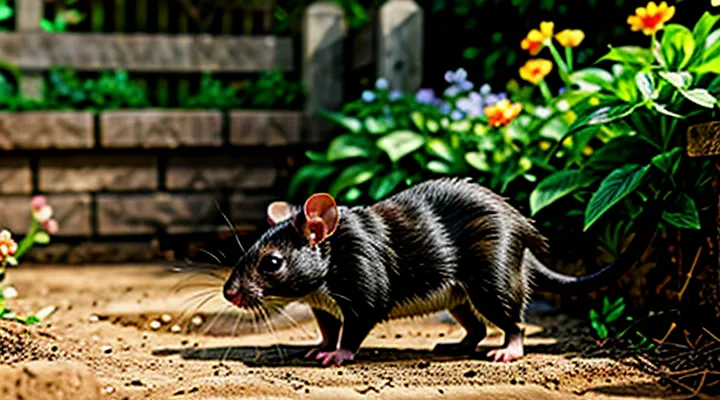
Norway rats (Rattus norvegicus) are the most common subterranean rodents encountered in garden environments. Their robust body, brown to gray fur, and blunt snout differentiate them from other species. Adult individuals weigh 300–500 g and can travel several hundred meters underground, creating extensive tunnel networks that undermine plant roots and soil structure.
Signs of presence appear above ground as well as below. Detectable indicators include:
- Fresh gnaw marks on plant stems, roots, or wooden garden fixtures.
- Small, dark, greasy droppings (2–3 mm in length) clustered near burrow entrances or along pathways.
- Visible burrow openings, often 5–10 cm in diameter, with loose soil and a circular mound of displaced earth.
- Chewed or missing seeds, bulbs, and tender seedlings.
- Unexplained wilting or stunted growth of foliage adjacent to tunnel systems.
Effective detection relies on systematic inspection. Begin by walking the garden perimeter, probing suspect soil with a hand trowel to locate active tunnels. Use a flashlight to examine the interior of burrows for fresh soil displacement and urine stains, which fluoresce under ultraviolet light. Deploy motion‑activated cameras at burrow entrances to confirm activity during nocturnal hours. Soil moisture meters can reveal localized dry zones caused by rat excavation, providing indirect evidence of tunnel presence.
Control measures should focus on eliminating shelter and food sources. Remove debris, compost, and fallen fruit that attract foraging. Install sturdy metal or concrete barriers around tree trunks and raised beds, extending at least 30 cm below ground to block entry. Employ snap traps or electronic kill devices within verified tunnel networks, positioning them perpendicular to the tunnel axis for maximum contact. Bait stations containing anticoagulant pellets must be placed in sealed containers to prevent non‑target exposure.
Regular monitoring, combined with prompt removal of identified signs, reduces the risk of extensive damage. Maintaining garden hygiene and reinforcing physical barriers creates an environment where Norway rats cannot establish sustainable underground colonies.
Roof Rats
Roof rats (Rattus rattus) are agile climbers that frequently exploit garden structures such as trellises, pergolas, and low‑lying trees to access food and shelter. Their slender bodies and long tails enable movement along vertical surfaces, making them a common problem for gardeners seeking to protect plants and compost.
Typical indicators of roof‑rat activity include:
- Dark, cylindrical droppings measuring 1‑1.5 cm, often found near fruiting vines, bird feeders, or compost bins.
- Gnaw marks on bark, wooden stakes, and garden furniture, characterized by clean, parallel cuts.
- Fresh footprints in soft soil or mulch, displaying a distinct four‑toed pattern with a pronounced heel pad.
- Scratching sounds on ceilings of garden sheds or under eaves, especially at night.
- Presence of shredded plant material or chewed seed heads near feeding stations.
Effective detection strategies rely on systematic inspection:
- Conduct a visual sweep of all vertical supports, focusing on joints, cracks, and gaps where rats may conceal themselves.
- Place motion‑activated cameras or infrared sensors near suspected pathways to capture nocturnal movement.
- Install non‑toxic bait stations with tracking powder; examine powder transfers on captured specimens to confirm species.
- Use a fine‑toothed brush to collect and examine droppings for size, shape, and odor; roof‑rat feces are typically softer than those of Norway rats.
- Deploy chew‑resistant wire mesh around vulnerable plants and storage areas to limit access and provide a physical barrier for observation.
Regular monitoring, combined with prompt removal of food sources and sealing of entry points, reduces the likelihood of a roof‑rat infestation establishing in a garden environment.
Voles and Moles (Distinction from True Rats)
Voles and moles are often mistaken for true rats because all three create visible disturbances in garden soil. Accurate identification prevents ineffective control measures and protects beneficial wildlife.
Voles belong to the family Cricetidae. Their activity produces surface runways, shallow burrows, and small, round mounds of soil. Damage includes gnawed seedlings, stripped bark, and clipped grass tips. Voles leave fresh, moist droppings about the size of a grain of rice.
Moles are insectivores, not rodents. Their presence is signaled by raised molehills—cone‑shaped piles of displaced earth—and a network of shallow, tunnel‑like ridges. Moles consume earthworms and soil insects, rarely harming plant roots directly. Their tunnels are smoother and less extensive than those of rodents.
True rats (Rattus spp.) create deep, extensive burrow systems with multiple chambers. Surface signs include larger, irregular holes, extensive gnawing on stems and roots, and droppings the size of a fingertip. Rat fur and urine odor are additional indicators.
Key distinctions for garden monitoring:
- Burrow depth: Voles (shallow, <10 cm); moles (very shallow, surface molehills); rats (deep, >30 cm).
- Soil mounds: Voles produce low, irregular piles; moles create conical molehills; rats generate larger, irregular excavations.
- Feeding damage: Voles gnaw vegetation; moles rarely affect plants; rats chew stems, roots, and fruits.
- Droppings size: Voles – rice‑grain; moles – rarely visible; rats – fingertip‑sized.
- Odor: Rats emit a strong musky scent; voles and moles are virtually odorless.
Detecting the correct species allows targeted interventions: vole traps, mole barriers, or professional rat control. Accurate identification reduces unnecessary pesticide use and preserves soil health.
Why Rats Choose Gardens
Food Sources
Rats that burrow beneath garden beds locate food through scent and opportunistic foraging. Their primary attractants include:
- Fresh vegetable roots such as carrots, radishes, and beetroot.
- Fruit that has fallen to the ground, especially berries, apples, and stone fruits.
- Organic mulch and compost piles that retain moisture and provide easy access to decaying matter.
- Pet food left outdoors, including dry kibble and canned portions.
- Birdseed spillage from feeders and seed trays.
- Garden debris, such as shredded leaves and garden waste, that conceal edible material.
These sources create a reliable energy supply, encouraging rats to establish tunnel networks. Detection of activity often coincides with the presence of these foods; gnaw marks on roots, droppings near compost, and disturbed mulch indicate active foraging. Reducing availability involves removing fallen produce promptly, securing pet food in sealed containers, covering compost with wire mesh, and maintaining a clean feeding area for birds. By eliminating or protecting these food sources, the incentive for underground rat activity diminishes, simplifying subsequent detection and control measures.
Shelter and Nesting
Underground rodents in a garden create burrows that serve as both refuge and breeding sites. Burrows are typically found in loamy soil, under dense vegetation, or near garden structures such as compost bins and stone walls. The entrance is a small, circular opening, often concealed by leaf litter or grass roots.
Nesting activity leaves distinct evidence:
- Chewed plant stems or roots near the entrance.
- Accumulated soil mounds, known as spoil heaps, surrounding the tunnel mouth.
- Small piles of shredded organic material, including dried leaves and garden waste, used as bedding.
- Presence of droppings, dark and rod-shaped, concentrated near the tunnel.
Detecting these shelters involves systematic inspection:
- Walk the garden perimeter, focusing on shaded, damp zones where soil remains soft.
- Use a handheld flashlight at low angles to highlight entrance rims and shadowed spoil heaps.
- Probe suspicious openings with a thin probe or stick; resistance indicates active tunneling.
- Set up motion‑activated cameras or infrared sensors at identified entrances to confirm activity during nocturnal hours.
Regular monitoring of these indicators enables early identification of subterranean rod habitats, allowing targeted management before populations expand.
Water Availability
Water sources in a garden create favorable conditions for subterranean rodents. Moisture concentrates around irrigation lines, drip emitters, and leaking containers, drawing rats to these areas in search of drinking water and soft soil for burrowing.
Rats leave distinct signs where water is present:
- Damp soil patches near plant roots indicate frequent digging.
- Fresh droppings on wet surfaces suggest recent activity.
- Chewed irrigation tubing or plastic mulch points to moisture‑seeking behavior.
Detecting rats through water availability involves systematic observation:
- Inspect irrigation equipment for leaks; repair or replace faulty components promptly.
- Monitor soil moisture levels with a probe; record areas where moisture exceeds normal levels.
- Place motion‑activated cameras near water‑rich zones to capture nocturnal movement.
- Deploy bait stations with water‑based attractants in identified wet spots; check for bite marks and urine stains.
Reducing excess moisture limits habitat suitability. Adjust watering schedules, install drip emitters with shut‑off timers, and ensure proper drainage to maintain dry soil around garden borders. These measures diminish water‑driven attraction and improve detection accuracy.
Signs of Rat Presence
Visual Evidence
Burrows and Tunnels
Burrows and tunnels are the primary means by which subterranean rodents navigate garden soils. They consist of a main passage that descends to a depth of 12‑24 inches, branching into lateral chambers for nesting and food storage. The walls are compacted by repeated traffic, creating smooth surfaces that differ from surrounding loose earth.
In a cultivated plot, burrow entrances appear as circular or oval openings 1‑2 inches wide, often surrounded by raised soil rims. Lateral tunnels may intersect, forming a network that follows the contour of planting beds, irrigation lines, and root zones. Typical tunnel diameters range from 0.5 inches for exploratory shafts to 2 inches for main routes.
Detectable signs include:
- Fresh soil mounds or collapsed openings.
- Whisker‑sized droppings near the surface.
- Scorched or wilted foliage adjacent to entry points.
- Disturbed mulch or compost layers.
Effective detection methods:
- Conduct systematic visual sweeps of the garden perimeter, focusing on low‑lying areas where soil is moist.
- Insert a thin probe (e.g., a bamboo stick) vertically at suspected openings; resistance indicates tunnel depth.
- Apply non‑toxic tracking powder around entrances; footprints reveal movement patterns.
- Use a handheld acoustic detector tuned to low‑frequency gnawing sounds; listen for continuous activity.
- Deploy soil moisture sensors; abrupt fluctuations often correspond to tunnel passages.
After confirming burrow locations, seal openings with a sturdy barrier (e.g., metal mesh) and introduce appropriate control measures. Continuous monitoring of the identified network prevents re‑infestation and protects plant health.
Droppings
Droppings are one of the most reliable signs of subterranean rats inhabiting a garden. Fresh pellets are dark brown to black, 5–10 mm in length, and have a cylindrical shape with pointed ends. Older droppings become lighter, may crumble, and develop a stronger odor due to bacterial activity.
Typical locations where droppings accumulate include:
- Near entry tunnels or burrow openings, often at the base of shrubs, vegetable rows, or garden borders.
- Along pathways that connect food sources, such as compost piles, fruit trees, or seed beds.
- Inside raised beds or under mulch, where moisture retains droppings and enhances visibility.
The presence of droppings indicates active foraging. A concentration of pellets within a 1‑meter radius of a suspected tunnel suggests a high‑traffic corridor. Consistent findings across multiple garden zones point to an established colony.
To confirm rat activity, collect a few fresh droppings with gloves and examine them under a magnifying lens. Rat feces contain distinctive hard, segmented cores and lack the fine, silky texture of mouse droppings. Laboratory analysis can further differentiate species by measuring size and checking for hair or bone fragments.
Regular monitoring of droppings, combined with visual inspection of tunnels and gnaw marks, provides a clear picture of rat presence and helps prioritize control measures.
Gnaw Marks
Gnaw marks appear as clean, crescent‑shaped incisions on roots, stems, and woody plant material. The cuts are typically 2–5 mm deep, with smooth edges that reveal fresh tissue underneath. Unlike insect chewing, which leaves ragged or irregular holes, rodent gnawing produces parallel, symmetrical bites that match the shape of the animal’s incisors.
Location of marks provides clues to underground activity. Marks are most common near the base of plants, along irrigation lines, and at the edge of mulch where soil moisture is higher. Presence of parallel bite pairs on a single root indicates repeated feeding by the same individual or a small group.
To confirm rat presence through gnaw marks, follow these steps:
- Inspect plant bases weekly, focusing on tender roots and lower stems.
- Record the size, depth, and orientation of each bite; consistent dimensions suggest rodent origin.
- Compare marks with reference images of typical rodent gnawing patterns.
- Look for accompanying signs: fresh droppings, burrow entrances, and disturbed soil near the damage.
- If marks are confirmed, map their distribution to identify activity hotspots.
Documented gnaw marks enable targeted control measures, such as placing traps or bait stations near identified hotspots, and adjusting garden layout to reduce shelter opportunities. Regular monitoring of these signs prevents extensive damage and supports effective management of underground rodent populations.
Runways and Tracks
Detecting subterranean rodents in a garden relies on recognizing the pathways they create and interpreting the evidence left behind. Runways—smooth, flattened tunnels connecting burrows to food sources—appear as raised, linear depressions on the soil surface. Their orientation often follows the shortest route between shelter and feeding zones, typically aligning with rows of vegetables, compost piles, or moisture-rich areas. Observing these structures provides a direct indication of active populations.
Tracks complement runway inspection. Rodent footprints consist of small, paired impressions with a characteristic heel-to-toe spacing of 1–2 cm. When soil remains damp, tracks retain shape long enough for detailed analysis. Distinguishing rodent tracks from those of insects or larger mammals requires attention to toe count (four toes on the front foot, five on the rear) and the presence of a clear central pad.
Effective detection combines visual assessment with systematic sampling:
- Survey the garden perimeter and interior at dawn when soil moisture is highest.
- Mark each runway with a flag or chalk to map network density.
- Record track locations using a grid reference system.
- Collect soil samples adjacent to runways for laboratory identification of rodent hair or droppings.
- Repeat observations weekly to monitor changes in activity patterns.
By documenting runway architecture and track morphology, gardeners acquire reliable evidence of underground rodent presence, enabling timely and targeted control measures.
Olfactory Clues
Ammonia-like Odor
Ammonia‑like odor often signals the presence of subterranean rodents in garden beds. The smell originates from concentrated urine and fecal matter, where bacterial action breaks down nitrogenous compounds into volatile ammonia. Detecting this scent provides an early warning before visible damage appears.
Observation should focus on areas with moist soil, as dampness intensifies the odor. Early morning or after rain offers the clearest scent, when air temperature is lower and volatile compounds are less dispersed. Walk slowly, inhaling lightly near plant roots, compost piles, and near the base of shrubs. A sharp, pungent whiff indicates active burrowing activity.
To verify the source, combine odor detection with physical evidence: fresh gnaw marks on roots, clean entry holes about 2–3 cm in diameter, and droppings resembling small dark grains. When the odor is strong, set snap or live traps directly over the suspected tunnel, using bait that emits a complementary scent, such as peanut butter, to increase capture probability.
Mitigation begins with eliminating the odor’s food supply. Remove fallen fruit, secure compost in sealed containers, and keep mulch dry. Repair garden borders, install metal mesh beneath soil layers, and apply rodent‑repellent granules that degrade ammonia‑producing bacteria. Regular monitoring of scent intensity helps assess the effectiveness of control measures and determines when further action is required.
Auditory Indicators
Scratching or Squeaking Sounds
Rats that live beneath garden beds generate audible cues that can confirm their presence without visual confirmation.
Scratching noises typically arise when rodents excavate tunnels or move through loose soil. The sounds are short, repetitive bursts occurring at irregular intervals, often intensified after rain or during cooler evenings when activity peaks. A high‑pitch, rapid series of scratches suggests active burrowing in a confined space, while deeper, resonant thuds indicate movement through compacted earth.
Squeaking sounds differ in tone and timing. High‑frequency squeaks accompany social interactions, territorial displays, or distress. These vocalizations are brief, usually lasting less than a second, and are most common at dawn and dusk. Low‑frequency chirps may accompany feeding activity, especially when rats chew on roots or garden debris.
Practical steps for detecting these acoustic signs:
- Conduct listening sessions for 10‑15 minutes at sunrise, midday, and sunset; note the duration and pattern of each noise.
- Use a directional microphone or a simple wildlife recorder to capture sounds for later analysis.
- Compare recordings against known rat acoustic profiles: repetitive scratching bursts vs. isolated high‑pitched squeaks.
- Correlate sound locations with visible signs such as fresh soil mounds, gnawed plant stems, or droppings.
Consistent monitoring of scratching and squeaking noises provides reliable evidence of underground rat activity, enabling timely intervention in garden environments.
Plant Damage
Chewed Vegetables and Fruits
Chewed vegetables and fruits provide direct evidence of subterranean rodent activity in garden beds. The damage appears as irregular bite marks, missing sections, and ragged edges that differ from insect feeding patterns.
Typical characteristics include:
- Holes irregular in shape, often 1–2 cm wide, with smooth inner surfaces.
- Stems or roots partially severed, leaving exposed tissue.
- Presence of soft, shredded plant material near the bite site.
- Fresh droppings or urine stains close to the damaged produce.
These signs distinguish rats from insects, slugs, and rabbits, which leave more uniform or superficial marks. Rats gnaw continuously, resulting in progressive enlargement of the damage as the animal revisits the same plant.
To confirm infestation, inspect soil around affected plants for burrow entrances, test tunnels with a thin probe, and set motion‑activated cameras at ground level. Combining visual evidence from chewed produce with subterranean signs yields reliable detection of underground rodents in the garden.
Damaged Roots or Bulbs
Damaged roots or bulbs often signal the presence of burrowing rodents in a garden. Rats gnaw on tender tissue, causing visible cuts, missing sections, or wilted growth. The damage typically appears near the soil surface where tunnels intersect plant bases.
Key indicators include:
- Clean, straight cuts on roots, distinct from fungal rot.
- Bulbs with chewed or exposed layers.
- Soil displacement that reveals partially exposed tubers.
- Sudden wilting of plants without visible above‑ground pests.
Inspection steps:
- Gently excavate around affected plants, preserving as much root structure as possible.
- Examine the cut surfaces for tooth‑mark patterns; rat bites are irregular and uneven.
- Look for fresh droppings or urine stains near the damage, confirming recent activity.
- Trace nearby tunnels; their proximity to the injured roots often confirms the source.
Addressing the problem requires removing the damaged plant parts, reinforcing soil with mesh or hardware cloth, and setting appropriate bait stations. Prompt identification of root or bulb injury prevents further spread and protects the garden’s productivity.
Locating Rat Activity Hotspots
Garden Beds and Planted Areas
Garden beds and planted areas provide the most reliable locations for spotting subterranean rodent activity because they concentrate soil disturbance and plant damage in a confined space.
Typical signs include:
- Freshly chewed roots or stems emerging near the soil surface.
- Small mounds of displaced soil, often shaped like shallow volcanoes.
- Thin, smooth tunnels running parallel to planting rows.
- Presence of droppings that are dark, pellet‑shaped, and found near leaf litter or mulch.
Effective inspection techniques:
- Insert a thin, sturdy probe (e.g., a garden rod or metal awl) at regular intervals (30‑50 cm) along each row to feel for hollow channels or sudden changes in soil density.
- Lay a thin sheet of white fabric or paper over the soil overnight; rat movement will leave clear footprints and drag marks.
- Use motion‑activated infrared cameras positioned at tunnel entrances to confirm activity without disturbing the habitat.
- Apply non‑toxic scent lures (e.g., peanut butter mixed with a small amount of cornmeal) in bait stations placed at the base of suspected tunnels; check stations each morning for fresh tracks.
Protective measures for planted zones:
- Install low‑profile, chew‑resistant wire mesh around the perimeter of each bed, burying the lower edge 10 cm deep to block tunnel entry.
- Maintain a clean mulch layer, removing excess debris that can conceal tunnel openings.
- Rotate crops annually, avoiding continuous planting of the same species that may attract rodents for food and shelter.
- Deploy snap or live‑capture traps directly within identified tunnels, positioning them perpendicular to the tunnel axis for maximum contact.
By systematically observing soil alterations, employing targeted probing, and integrating physical barriers, gardeners can reliably locate and manage hidden rat populations within their beds and planted areas.
Compost Piles
Compost piles create warm, moist environments that attract subterranean rodents, making them a focal point when searching for hidden rats in a garden. Their presence can obscure other clues, so careful examination of the pile is essential.
Typical indicators of rat activity within a compost heap include:
- Fresh gnaw marks on wood chips, straw, or cardboard.
- Small, dark droppings scattered among the material.
- Burrow entrances near the base of the pile, often concealed by loose compost.
- Trails of shredded plant matter leading toward or away from the heap.
- Unusual odors, such as a musky scent distinct from normal decomposition.
Effective monitoring techniques are:
- Conduct visual inspections weekly, focusing on the pile’s perimeter and underside.
- Place motion‑activated cameras at low angles to capture nocturnal movement.
- Install short sections of fine mesh around the base to prevent burrowing while allowing airflow.
- Use non‑toxic tracking powder around suspected entry points; footprints will appear on the surface.
- Record findings in a log to identify patterns over time.
To reduce the likelihood of rat colonization, maintain the compost at temperatures above 55 °C, turn the material regularly to disrupt nests, and avoid adding meat, dairy, or oily foods that provide high‑calorie incentives. Seal the compost container tightly and keep surrounding vegetation trimmed to eliminate shelter. These practices enhance detection accuracy and discourage rats from establishing a foothold in the garden’s organic waste.
Under Sheds and Structures
Detecting rats that have taken refuge beneath garden sheds, tool sheds, or other permanent structures requires focused inspection and systematic monitoring.
First, examine the exterior of each building for signs of activity. Look for gnaw marks on wooden beams, chewed wires, and fresh droppings near the base. Pay attention to any irregularities in paint or siding where rodents may have entered.
Next, assess the interior of the structures. Open doors and panels to inspect corners, insulation, and storage areas. Record the presence of:
- Small, dark pellets (approximately 0.5 cm in length)
- Gnaw holes, typically 6–10 mm in diameter, on wood, plastic, or metal
- Scratch marks along walls and the underside of shelves
- Fresh urine stains, which appear as yellowish rings on surfaces
Use motion‑activated infrared cameras or thermal imaging devices to capture nocturnal movement. Position devices near suspected entry points and run them for several nights to confirm activity patterns.
Implement a baiting strategy only after confirming rat presence. Place tamper‑resistant bait stations beneath the shed floorboards, ensuring they are inaccessible to non‑target animals. Replace bait regularly and monitor stations for removal or disturbance.
Finally, seal identified entry routes. Apply steel wool or copper mesh to gaps larger than 4 mm, then cover with cement or metal flashing. Reinforce foundation walls with concrete sealant to prevent future infiltration.
By combining visual inspection, evidence collection, technological monitoring, and targeted exclusion, gardeners can reliably detect and control rat populations hidden under sheds and similar garden structures.
Near Water Sources
Underground rodents often establish colonies close to irrigation lines, birdbaths, and natural runoff areas because moisture supports burrow stability and food availability. Moist soil around these water sources retains scent trails, making detection more reliable than in dry sections of the garden.
Visible indicators include:
- Fresh soil mounds or loose patches within a foot of a drip emitter or sprinkler head.
- Small piles of discarded plant material or seed husks near the water outlet.
- Thin, smooth tunnels that intersect the wet zone, identifiable by a faint, dampened surface.
- Presence of droppings that are darker and more moist than those found on dry ground.
Technical methods enhance accuracy:
- Install motion‑activated infrared cameras aimed at the perimeter of the watering system; rodents generate heat signatures even in low‑light conditions.
- Use a handheld moisture meter to map soil humidity; sudden spikes often correspond to active burrows.
- Apply non‑toxic, scent‑based tracking powder along the water line; footprints become visible after a short interval.
- Conduct a systematic probe with a thin, flexible rod, inserting it at regular intervals (30 cm) along the wet area to locate hidden tunnels.
Preventive measures focus on water management. Seal leaks in hoses, redirect runoff away from garden beds, and place physical barriers such as metal mesh or concrete edging around permanent water fixtures. Regularly inspect and clean water sources to eliminate debris that could attract foraging rodents.
Along Fences and Walls
Rats that burrow beneath garden soil often use the edges of fences and walls as travel corridors and nesting sites. Their activity leaves distinct clues that can be identified without extensive excavation.
- Fresh, smooth tunnels emerging from the base of a fence post or the foot of a wall, typically 2–3 cm in diameter.
- Small piles of loose soil (soil casts) deposited near fence gaps, stone foundations, or at the junction of a wall and the ground.
- Chewed or gnawed wooden slats, plastic fence ties, or mortar joints, indicating repeated gnawing for access or shelter.
- Tracks or droppings on the surface of a low wall, especially in damp, shadowed sections where rats feel protected.
- Occasional scent marks or urine stains on the lower portion of fences, detectable by a faint ammonia odor.
Inspecting these structures during early morning or after rain improves visibility of fresh signs. Use a flashlight to examine the underside of fence rails and the base of walls, and gently probe suspected tunnels with a thin rod to confirm occupancy. Regular monitoring of these perimeter features enables early detection and timely intervention.
Methods for Detection
Direct Observation
Direct observation involves watching the garden surface and immediate surroundings for concrete evidence of subterranean rodents. This method relies on visual cues that appear above ground, allowing immediate confirmation without specialized equipment.
Key indicators include:
- Fresh, shallow burrow openings near plant roots or along pathways.
- Small piles of displaced soil, often semicircular, surrounding a hole.
- Visible tracks or scuff marks in damp soil, especially after rain.
- Droppings resembling dark, cylindrical pellets near feeding sites.
- Gnawed plant stems, leaves, or garden tools left near suspected tunnels.
To apply direct observation effectively, follow these steps:
- Conduct a systematic walkaround, scanning the garden in a grid pattern to avoid missed areas.
- Inspect soil surface for fresh mounds; use a hand to gently lift loose soil and reveal hidden entrances.
- Examine plant foliage for bite marks; focus on low‑lying crops and tender shoots.
- Look for droppings on the ground, mulch, or near compost piles; collect samples for species verification if needed.
- Record the location of each finding with coordinates or landmark references to map activity zones.
Consistent visual monitoring, combined with careful note‑taking, provides reliable detection of underground rodents in a garden setting.
Trail Cameras
Trail cameras provide a reliable method for monitoring subterranean rodents in garden environments. By capturing motion‑triggered images, they reveal activity that would otherwise remain hidden beneath the soil surface.
When deploying a camera, position it near known entry points such as burrow openings, runways, or areas with fresh digging. Mount the device at ground level or slightly above to maximize the field of view across the surface where rats emerge. Use a model equipped with infrared LEDs to obtain clear night‑time footage without disturbing the animals.
Key settings for effective surveillance include:
- Sensitivity adjusted to detect small movements while ignoring wind‑blown vegetation.
- Photo burst mode to record several frames per trigger, ensuring the entire passage is captured.
- Extended battery life and high‑capacity memory cards to sustain continuous operation over weeks.
Bait placement can improve detection rates. Scatter a small amount of attractive food (e.g., grain or peanut butter) near the camera, but keep it away from the lens to prevent obscuration. Regularly inspect the site for fresh droppings, gnaw marks, or soil displacement, which indicate active burrows and help refine camera placement.
After the recording period, review the images for characteristic signs of rat activity: tail movement, whisker twitching, or rapid scurrying across the frame. Tag each occurrence with time and location data to map activity patterns and identify peak foraging periods.
Limitations include the inability to see below the surface and potential false triggers from non‑target species. Complement trail camera data with other detection tools, such as ground‑penetrating sensors or track plates, to achieve a comprehensive assessment of underground rodent presence.
Flour or Dust Tracking
Flour or dust tracking offers a straightforward way to confirm the presence of burrowing rodents in a garden. The method relies on a fine, loose medium that reveals activity through displacement and residue.
Prepare a thin layer of plain wheat flour, talc, or powdered charcoal on surfaces likely to be traversed by rats—near suspected entry points, along burrow tunnels, and around vegetable beds. Apply no more than a quarter‑inch thickness to avoid compacting the material, which could mask movement.
Observe the treated areas after dusk and before sunrise. Indicators of activity include:
- Disturbed or scattered flour patterns.
- Small footprints or paw marks.
- Droppings embedded in the dust.
- Fresh gnaw marks on nearby plant stems.
Record findings on a simple chart, noting location, time, and type of disturbance. Repeat the process weekly during dry weather, as moisture can obscure markings. Wear gloves and a mask when handling powders to prevent inhalation and contamination.
Integrate flour tracking with additional signs—such as runways, burrow openings, and audible noises—to build a comprehensive picture of rodent activity and to guide targeted control measures.
Bait Station Monitoring
Bait stations are the most reliable method for confirming the presence of subterranean rodents in garden environments. Proper monitoring of these stations yields actionable data that guides control measures.
Installation must follow a systematic grid. Place stations at 10‑ to 15‑meter intervals along suspected runways, near burrow entrances, and adjacent to vegetable beds. Secure each unit flush with the soil surface to prevent disturbance by non‑target animals.
Inspection schedule should be strict. Check stations every 24 hours for the first three days, then every 48 hours for the following week. Record the following information on each visit:
- Date and time of inspection
- Number of bait pieces removed or disturbed
- Type and condition of target carcasses or droppings
- Evidence of non‑target interference (e.g., squirrels, birds)
- Environmental conditions (rainfall, temperature)
Data collection should be entered into a standardized log or digital spreadsheet. Use consistent units and abbreviations to facilitate trend analysis. Plotting removal rates over time highlights peak activity periods and helps pinpoint core infestation zones.
Maintenance actions are required when bait is depleted, station damage is observed, or non‑target activity exceeds 20 % of total removals. Replace bait with fresh, appropriately sized portions and reseal any compromised units. Rotate stations periodically to prevent habituation by the rodents.
Safety protocols demand the use of gloves and protective eyewear when handling bait and carcasses. Dispose of all waste according to local regulations to avoid secondary contamination.
By adhering to these monitoring practices, garden managers obtain precise evidence of underground rat activity, enabling timely and targeted intervention.
Water Bowl Tracking
Water bowls placed on garden soil provide a simple, non‑intrusive method for confirming the presence of burrowing rodents. When a rat enters a bowl to drink, it leaves a distinct pattern of footprints, whisker marks, and droppings that can be examined without disturbing the tunnel system.
Key observations:
- Footprint clarity – Moist soil retains the shape of the rat’s paws, showing a compact, four‑toed imprint with a central pad.
- Dropping identification – Small, dark pellets appear near the bowl’s rim; their size and shape differ from those of other garden pests.
- Whisker and fur traces – Light fur clumps or whisker fragments may cling to the bowl’s interior, especially if the animal brushes against the sides while drinking.
To maximize detection reliability, follow these steps:
- Position the bowl in an area where surface activity is already suspected, such as near fresh burrow openings or vegetable rows showing damage.
- Fill the bowl with shallow water, ensuring the surface remains calm; turbulence can obscure prints.
- Leave the bowl undisturbed for several hours during dusk or early morning, when rats are most active.
- After the observation period, carefully lift the bowl and examine the soil and interior for the indicators listed above.
Repeated placement of water bowls at multiple garden points creates a map of active tunnels. Correlating the locations of positive signs with visible damage allows gardeners to target control measures precisely, reducing unnecessary soil disruption.
Differentiating Rat Signs from Other Pests
Squirrels
Squirrels frequently inhabit garden ecosystems where underground rodents also occur. Their activity can be mistaken for that of burrowing rats, making accurate identification essential for effective monitoring.
Visible indicators that differentiate squirrels from subterranean rats include:
- Presence of gnawed bark on trees and shrubs, a typical squirrel feeding pattern.
- Accumulation of small, flattened droppings near feeding stations, contrasting with the larger, cylindrical pellets left by rats.
- Scattered, shallow nests constructed from twigs and leaves in low branches or under eaves, whereas rats create deeper tunnel systems.
- Tracks displaying five-toed prints with distinct claw marks, unlike the four-toed, pad‑only impressions of rats.
Understanding these characteristics allows garden managers to isolate squirrel activity, refine detection methods for underground rodents, and apply targeted control measures without conflating the two species.
Raccoons
Raccoons frequently visit garden beds in search of insects, eggs, and small mammals. Their activity can obscure the evidence used to locate subterranean rodents, making accurate detection more difficult.
When raccoons forage, they turn over soil, scatter mulch, and create shallow depressions. These disturbances may be mistaken for rat burrows or hide the entrances that rats use. Observing the pattern of soil displacement helps differentiate between the two: raccoon‑induced patches are irregular, often clustered near fruiting plants, while rat tunnels are linear and extend several centimeters underground.
Key indicators that raccoons are influencing detection efforts include:
- Scattered fruit shells and insect remains on the surface.
- Multiple shallow pits with loose soil, lacking the smooth tunnel walls typical of rodent burrows.
- Tracks showing five‑toed front paws and a distinctive, broader stride compared to the narrow, four‑toed prints of rats.
- Presence of raccoon feces, which are larger, more cylindrical, and contain undigested seeds.
To mitigate raccoon interference, gardeners should:
- Install motion‑activated lights or ultrasonic deterrents around the garden perimeter.
- Secure compost bins and fruit trees with tight‑fitting covers.
- Use bait stations that target rats while limiting access for larger omnivores.
By recognizing raccoon behavior and separating their signs from those of underground rodents, reliable identification of rat activity becomes achievable.
Opossums
Opossums are nocturnal mammals that frequently forage in garden environments where burrowing rodents reside. Their presence often correlates with active rat populations because opossums hunt small mammals, including rats, and are attracted to areas where prey is abundant.
Observing opossums can provide indirect evidence of subterranean rodent activity. Typical indicators include:
- Fresh tracks crossing mulch or soil, especially near garden beds.
- Scat containing rodent bone fragments or fur.
- Scraped or disturbed soil near burrow entrances, suggesting predation.
- Increased vocalizations or aggressive behavior at dusk, often triggered by prey encounters.
Direct signs of opossum activity also help locate rat habitats. Look for:
- Nesting material such as leaves and twigs in concealed corners.
- Chewed plant stems or fruits left near opossum foraging routes.
- Piles of discarded shells or insect exoskeletons, which opossums transport from rat nests.
Distinguishing opossum evidence from that of other wildlife requires attention to size and shape. Opossum tracks display five distinct toe prints with a characteristic heel pad, while rat tracks are smaller and lack a heel impression. Scat analysis can separate opossum droppings, which are larger and contain coarse hair, from those of smaller mammals.
Integrating opossum observations with conventional detection methods—such as bait stations, motion‑activated cameras, and soil disturbance surveys—enhances the reliability of identifying underground rat activity in a garden.
Other Rodents
Other rodent species often inhabit garden soils alongside subterranean rats, creating identification challenges. Accurate recognition prevents misdirected control measures and safeguards non‑target wildlife.
Common garden rodents include:
- Voles (Microtus spp.): small bodies, blunt noses, shallow, branching tunnels, gnaw marks on roots.
- House mice (Mus musculus): slender frames, pointed snouts, narrow burrows, fine droppings measuring 3–5 mm.
- Field mice (Apodemus spp.): larger than house mice, dark dorsal pelage, occasional surface runways.
- Harvest mice (Micromys minutus): exceptionally small, delicate whiskers, minimal soil disturbance.
Differentiating indicators:
- Burrow diameter: rats 2–3 cm, voles 1–2 cm, mice ≤1 cm.
- Dropping size and shape: rat pellets 18–20 mm, vole pellets 6–8 mm, mouse pellets 5–7 mm, all conical.
- Gnaw patterns: rats produce clean, straight cuts; voles create ragged, root‑chewing damage.
- Trail markings: rats leave multiple parallel tracks; mice often use single, narrow paths.
Detection methods applicable to all garden rodents:
- Track plates coated with soot or fluorescent powder to capture footprints.
- Motion‑activated cameras positioned near suspected entry points.
- Systematic soil inspection for fresh casts, noting tunnel architecture.
- Baited snap or live traps placed at ground level, using species‑specific attractants.
- Molecular analysis of collected droppings for DNA confirmation.
Correct species identification informs targeted management, reduces unnecessary pesticide use, and aligns interventions with ecological best practices.
Next Steps After Detection
Prevention Strategies
Effective prevention of subterranean rodents in a garden requires a combination of habitat modification, physical barriers, and population control measures.
First, eliminate conditions that attract rodents. Remove excess organic debris, such as fallen leaves and compost piles, that provide shelter and food. Keep grass trimmed and prune dense vegetation to reduce cover. Store feed and pet food in sealed containers and avoid leaving scraps on the ground.
Second, install barriers that block entry into planting areas. Lay a ½‑inch thick galvanized hardware cloth beneath the soil surface around beds, extending at least 12 inches outward and 12 inches deep. Seal gaps around irrigation lines, fence posts, and garden structures with expandable foam or metal flashing.
Third, apply population control responsibly. Use snap traps or live‑capture devices positioned along known runways, checking them daily. If chemical control is necessary, select rodenticides approved for outdoor use, place them in tamper‑proof stations, and follow label instructions to protect non‑target wildlife.
Finally, monitor the garden regularly. Look for fresh burrow openings, gnawed roots, and droppings. Early detection of activity allows immediate reinforcement of preventive actions, maintaining a rodent‑free environment.
Removal Options
Effective removal of subterranean rats in a garden requires a combination of mechanical, chemical, and ecological measures.
Trapping remains the most direct method. Snap traps placed near active burrow entrances capture individuals quickly. Live‑catch cages allow relocation, but require prompt release to prevent stress. Both trap types should be baited with high‑protein foods such as peanut butter or dried meat.
Exclusion prevents re‑entry. Install hardware cloth or metal mesh with a minimum ½‑inch opening around garden beds, raised beds, and root zones. Seal gaps around irrigation pipes, drainage tiles, and garden structures with steel wool or expanding foam.
Chemical control involves rodenticides applied in tamper‑resistant bait stations. Choose products approved for outdoor use, follow label dosage, and monitor stations regularly to avoid non‑target exposure.
Habitat modification reduces attraction. Remove fallen fruit, compost, and excess mulch that provide shelter and food. Maintain a clean perimeter, mow grass to a short height, and keep soil surface free of debris.
Professional pest‑management services offer integrated programs that combine the above techniques with expert monitoring. They can conduct burrow mapping, apply targeted baiting, and provide follow‑up assessments.
Biological options are limited but include encouraging natural predators such as owls, hawks, and feral cats. Installing nesting boxes for raptors can increase predation pressure on rodent populations.
Selecting the appropriate combination depends on infestation severity, garden layout, and local regulations. Implementing multiple tactics simultaneously yields the highest probability of long‑term success.