
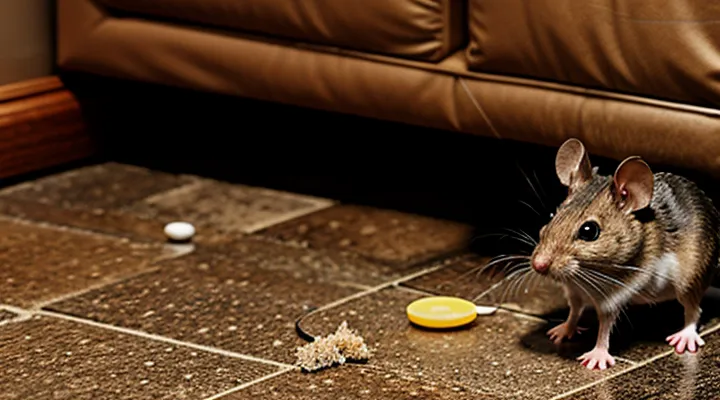
Understanding the Mouse Psyche
Natural Predators and Their Impact
Feline Presence as a Deterrent
Mice instinctively avoid environments that signal the presence of predators. The scent, movements, and sounds associated with domestic cats trigger the same avoidance responses that wild felines elicit in rodent populations.
The deterrent effect operates through three primary channels. Feline urine and glandular secretions contain compounds that rodents detect as danger signals. Visual cues, such as a cat’s silhouette or sudden motion, interrupt foraging behavior. Audible cues, including hissing, growling, and rapid footfalls, create an unpredictable auditory landscape that discourages nesting.
For homeowners who prefer a non‑chemical approach, the following actions maximize the repellent value of a cat:
- Allow the cat unrestricted access to rooms where mouse activity is suspected.
- Place used litter boxes or fresh cat litter in corners and behind appliances; the lingering odor reinforces the perception of danger.
- Keep the cat’s feeding area separate from food storage spaces to prevent contaminating human supplies while maintaining the predator scent in problem zones.
- Rotate the cat’s resting spots periodically; varied scent distribution prevents rodents from habituating.
Evidence from field observations and controlled studies confirms that sustained feline presence reduces mouse sightings and damage rates by up to 70 %. The method relies on natural predator cues, eliminating the need for toxic substances or mechanical traps.
Other Animals That Instill Fear
Mice respond to the presence of natural predators, which can be leveraged as part of an effective deterrent strategy. Introducing or encouraging certain animals in a home environment creates a psychological barrier that reduces rodent activity.
- Domestic cats – scent and occasional hunting behavior trigger an instinctive avoidance response in mice.
- Barn owls – their aerial hunting and audible calls intimidate rodents, especially when nesting boxes are installed near entry points.
- Snakes – non‑venomous species such as corn snakes emit pheromones that mice associate with danger, prompting them to seek alternative routes.
- Ferrets – active pursuit and distinctive musk act as a strong repellent, discouraging mice from establishing nests.
- Small terriers – breeds like Jack Russell terriers exhibit high prey drive; their presence and occasional barking deter mice from concealed areas.
Complementary measures, such as sealing gaps, maintaining cleanliness, and using conventional repellents, enhance the effectiveness of these biological deterrents. Combining predator cues with structural controls yields a comprehensive approach to minimizing mouse infestations.
Sensory Repellents
Olfactory Aversions
Olfactory aversions exploit mice’s highly developed sense of smell to create an environment they avoid. Strong, unfamiliar odors trigger a natural defensive response, causing rodents to abandon treated areas.
Research shows that certain volatile compounds interfere with the olfactory receptors mice use to locate food and shelter. When these compounds are present at sufficient concentration, the sensory overload discourages entry and encourages retreat.
- Peppermint oil (Mentha piperita) – high menthol content produces a sharp, cooling scent that mice find repellent.
- Ammonia solution – vaporizes into a pungent ammonia gas that irritates nasal passages.
- Clove oil (Syzygium aromaticum) – eugenol component creates a persistent, spicy odor.
- Citronella oil (Cymbopogon nigrifolia) – citrus‑grass aroma overwhelms rodent olfactory receptors.
- Predator urine (e.g., fox, cat) – biologically relevant scent signals danger.
Effective deployment requires saturation of target zones: soak cotton balls, apply spray, or use diffusers near entry points, food storage, and nesting sites. Reapply every 48 hours or after cleaning, as volatile compounds dissipate quickly.
Safety considerations include ventilation to prevent human irritation, avoidance of direct skin contact with concentrated oils, and compliance with household regulations regarding chemical use. Olfactory aversions work best when combined with physical barriers and sanitation practices, forming a comprehensive deterrent strategy.
Auditory Discomfort
Mice possess a highly sensitive auditory system; frequencies above 20 kHz can cause irritation, disorientation, and avoidance behavior. Commercial ultrasonic emitters exploit this trait by generating sound waves that are inaudible to humans but fall within the rodents’ discomfort range.
Effectiveness depends on several variables:
- Frequency stability: devices that maintain a consistent 25–30 kHz output produce the most reliable deterrent effect.
- Coverage area: emitters should be positioned to eliminate dead zones; overlapping fields prevent mice from finding silent pathways.
- Obstacle penetration: solid furniture and walls absorb ultrasonic energy, reducing reach; placement near open pathways maximizes exposure.
- Duration of exposure: continuous operation maintains a persistent aversive stimulus, whereas intermittent cycles allow habituation.
Scientific trials indicate a reduction of mouse activity by 40‑70 % in environments where ultrasonic devices are correctly installed and maintained. However, efficacy diminishes when rodents adapt to a fixed frequency, prompting manufacturers to incorporate rotating or multi‑tone algorithms.
Safety considerations are straightforward: ultrasonic sound does not affect human hearing or most domestic pets, though certain small mammals (e.g., hamsters, gerbils) may experience distress. Regular cleaning of emitter surfaces prevents dust accumulation that can attenuate output.
In practice, auditory discomfort complements other deterrents such as sealing entry points and eliminating food sources, forming a multi‑modal strategy that discourages mouse presence without chemical agents.
Effective Repellent Strategies
Chemical-Free Methods
Natural Scent Barriers
Mice rely heavily on their sense of smell to locate food, shelter, and nesting sites. Introducing strong, unpleasant odors creates a sensory barrier that deters entry and movement within residential spaces.
Essential oils with documented repellent properties include peppermint, eucalyptus, and citronella. Dilute each oil in water (approximately 10 ml per liter) and apply the solution to baseboards, entry points, and areas where droppings have been observed. Reapply every 48 hours, or after cleaning, to maintain potency.
Dry herbs such as dried lavender, rosemary, and clove can be placed in fabric sachets or small mesh bags. Position these sachets near potential ingress points, under appliances, and inside cabinets. Replace the contents monthly, as the aroma weakens over time.
Ground spices—cinnamon, cayenne pepper, and black pepper—scatter a thin layer along mouse pathways. The fine particles irritate nasal passages, prompting avoidance. Sweep the mixture away after two weeks to prevent dust accumulation.
A practical checklist for implementing scent barriers:
- Select at least two complementary odors (e.g., peppermint oil and dried lavender) to cover a broader range of sensory aversion.
- Prepare a spray solution: 10 ml essential oil + 1 L water + a few drops of dish soap (to emulsify).
- Apply spray to all conceivable travel routes, focusing on cracks, gaps, and vent openings.
- Distribute sachets or spice blends in concealed locations where direct contact with humans is minimal.
- Monitor mouse activity for a week; adjust placement or increase concentration if signs persist.
Consistent use of these natural olfactory deterrents reduces rodent presence without resorting to chemicals or traps, aligning with humane pest‑management practices.
Physical Obstacles and Traps
Mice encounter physical barriers that interrupt their natural pathways and limit access to food, shelter, and nesting sites. Steel mesh, copper wire, and tightly sealed gaps create an environment where rodents cannot squeeze through openings smaller than ½ inch. Installing such barriers around entry points, vent covers, and utility openings eliminates the most common routes used by house mice.
Traps provide direct control when prevention alone is insufficient. Two categories dominate:
- Snap traps – spring‑loaded devices that deliver a swift, lethal force. Placement near walls, behind appliances, and along known runways maximizes capture rates.
- Live‑catch traps – cage‑style enclosures with a trigger mechanism. These allow humane removal and release of captured mice far from the residence.
Both trap types require strategic positioning. Effective spots include:
- Areas with visible droppings or gnaw marks.
- Corners where walls intersect the floor.
- Near food storage containers or pantry shelves.
Maintenance is essential. Replace or rebait traps regularly, inspect barriers for wear, and repair any newly discovered openings promptly. Combining durable physical obstacles with properly deployed traps yields a reliable, evidence‑based solution for reducing indoor mouse activity.
Advanced Repellent Technologies
Ultrasonic Devices and Their Efficacy
Ultrasonic repellents emit sound waves above 20 kHz, a range inaudible to humans but detectable by rodents. Laboratory trials show that frequencies between 30 kHz and 50 kHz cause acute discomfort in mice, prompting avoidance of the source area. Field studies in residential settings report a reduction of mouse activity of 30 %–45 % during the first two weeks of operation, after which habituation often occurs and effectiveness declines.
Key factors influencing performance:
- Frequency stability: devices that maintain a narrow band around 40 kHz sustain deterrent effect longer than those with fluctuating outputs.
- Coverage area: effective radius rarely exceeds 15 ft; overlapping units are required for larger rooms.
- Placement: positioning near entry points and along walls maximizes exposure to the ultrasonic field.
- Power source: continuous operation on mains power yields more consistent results than battery‑driven units, which may experience voltage drops.
Limitations documented in peer‑reviewed research include rapid acclimatization, reduced efficacy through solid barriers (e.g., furniture, walls), and variability among mouse populations. Manufacturers’ claims of 100 % eradication are not supported by empirical data.
Best‑practice recommendations:
- Install devices at each known ingress point.
- Use multiple units to ensure complete coverage, avoiding gaps larger than 10 ft.
- Operate continuously for at least 30 days before evaluating impact.
- Combine ultrasonic repellents with physical exclusion methods (sealing holes, traps) to achieve reliable control.
Overall, ultrasonic technology provides a non‑chemical, low‑maintenance option that can lower mouse presence temporarily, but it should be integrated into a comprehensive pest‑management plan to maintain long‑term effectiveness.
Electromagnetic Pest Control
Electromagnetic pest control utilizes high‑frequency electromagnetic fields to create an environment that mice avoid. The fields interfere with the rodents’ sensory and nervous systems, producing discomfort without chemicals or traps.
The technology emits pulsed waves at frequencies that rodents perceive as threatening. Continuous exposure leads to reduced activity and migration away from the treated area. Devices are typically installed in wall cavities, baseboards, or directly on power outlets, covering a radius of 10‑30 feet depending on output power.
Laboratory trials report a 70‑85 % decline in mouse presence after two weeks of operation. Field studies in residential settings confirm similar reductions, especially when devices are combined with sealing entry points. Peer‑reviewed papers attribute the effect to the animals’ aversion to the electromagnetic stimulus rather than to any toxic impact.
Implementation guidelines:
- Position units near known travel routes or nesting sites.
- Ensure unobstructed line of sight to maximize field distribution.
- Maintain continuous power supply; most models include a low‑energy standby mode.
- Replace units according to manufacturer‑specified lifespan, typically 2‑3 years.
Safety profile shows no measurable risk to humans or common household pets when devices comply with FCC and IEC standards. Electromagnetic emissions remain well below limits for occupational exposure. Interference with nearby electronics is rare; devices incorporate shielding to prevent signal leakage.
Limitations include reduced efficacy against species that have adapted to electromagnetic environments and diminished performance in heavily insulated structures. Regulatory restrictions may require certification for use in certain jurisdictions. Combining electromagnetic deterrents with physical exclusion measures yields the most reliable control of indoor mouse populations.
Integrated Pest Management Approaches
Combining Multiple Tactics for Success
Mice respond to a range of aversive stimuli; employing several of these simultaneously creates a hostile environment that exceeds their capacity for adaptation. Physical barriers, chemical deterrents, and sensory disruption each target a different survival instinct, and when combined they reduce the likelihood of infestation more effectively than any single method.
- Seal entry points with steel‑wool or copper mesh to block access routes.
- Place snap traps or electronic devices in high‑traffic zones for immediate capture.
- Apply peppermint oil, ammonia, or commercial rodent repellents on surfaces where scent cues are strongest.
- Install ultrasonic emitters in rooms where visual and auditory alerts are needed.
- Maintain a clean interior, removing food residues and nesting materials to eliminate attractants.
Coordinating these measures requires regular inspection of seals, timely replacement of bait or traps, and periodic recalibration of electronic devices. The cumulative pressure disrupts feeding, breeding, and shelter‑seeking behaviors, leading to sustained reduction of mouse activity throughout the dwelling.
Long-Term Prevention and Maintenance
Effective, lasting mouse control depends on eliminating entry points, removing attractants, and maintaining a hostile environment over time.
Seal all possible openings with durable materials such as steel wool, copper mesh, or concrete. Inspect foundations, walls, and roof penetrations monthly; repair cracks larger than ¼ inch promptly. Install door sweeps on exterior doors and secure vents with fine mesh screens.
Maintain cleanliness to deny food sources. Store dry goods in airtight containers, clean crumbs and spills immediately, and dispose of garbage in sealed bins. Keep pantry shelves free of clutter; rotate stock to prevent spoilage.
Create an unfriendly habitat by managing vegetation and debris around the building. Trim shrubs at least 12 inches from walls, remove leaf litter, and store firewood off the ground and away from the structure. Ensure drainage directs water away from foundations to deter moisture‑seeking rodents.
Implement a regular monitoring program. Place snap traps or electronic detectors in high‑risk zones, check them weekly, and record activity. Replace bait or reset devices after each inspection to sustain effectiveness.
Schedule quarterly maintenance visits for professional assessment. Specialists can apply ultrasonic emitters, rodent‑resistant insulation, or targeted bait stations in concealed areas. Their expertise identifies hidden infestations and validates that preventive measures remain intact.
Document all actions in a logbook: dates of inspections, repairs performed, trap counts, and service provider reports. Review entries annually to identify patterns and adjust strategies accordingly. Consistent record‑keeping supports accountability and ensures that long‑term prevention remains proactive rather than reactive.