
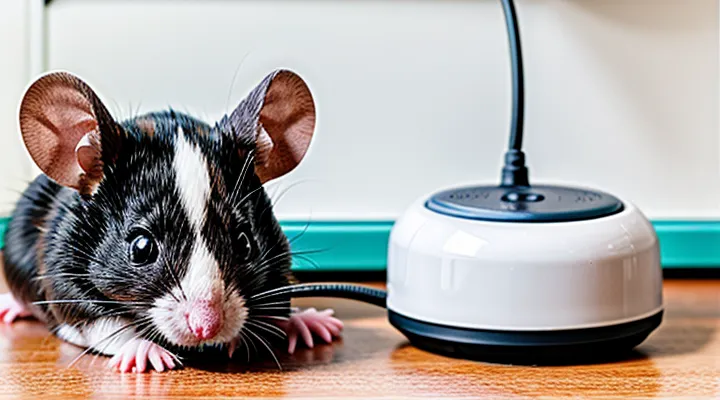
Understanding Ultrasonic Technology
The Science Behind Ultrasound
How Ultrasonic Devices Work
Ultrasonic mouse deterrents generate sound waves beyond the audible range of humans, typically between 20 kHz and 65 kHz. A piezoelectric crystal or ceramic transducer converts an electrical oscillation into mechanical vibrations; the crystal expands and contracts at the driving frequency, producing pressure variations in the surrounding air. The resulting acoustic wave propagates through the medium, attenuating with distance according to the inverse‑square law and material absorption characteristics.
The driving circuit supplies a high‑frequency alternating voltage, often derived from a crystal oscillator or a microcontroller‑based direct‑digital synthesis module. Frequency stability is maintained within a few hundred hertz to match the hearing sensitivity peak of Mus musculus, which lies near 30–40 kHz. Some devices incorporate frequency sweeping or random modulation to prevent habituation, altering the carrier frequency by several kilohertz over a predefined interval.
Power is typically sourced from mains adapters or rechargeable batteries. Voltage regulation ensures the transducer operates within its specified drive level, preventing overheating and maintaining acoustic output. Enclosure design includes acoustic baffles or directional waveguides to concentrate energy toward target zones while reducing reflections that could diminish efficacy.
Effective coverage depends on the emitted sound pressure level (SPL), measured in decibels (dB SPL) at a reference distance of one meter. Commercial units aim for SPL values of 80 dB or higher in the ultrasonic band, sufficient to elicit a startle response in rodents without causing discomfort to humans or pets. Proper placement—near entry points, along walls, and at floor level—optimizes exposure to the intended frequency range.
Frequency Ranges and Their Impact
Ultrasonic devices designed to deter rodents operate within specific frequency bands that determine acoustic penetration, auditory perception by mice, and potential non‑target effects. Empirical investigations have identified three principal ranges:
- 20–30 kHz – Near the upper limit of mouse hearing; devices in this band produce audible squeaks for humans and may cause habituation after repeated exposure. Field trials report modest reduction in activity, but efficacy diminishes within weeks.
- 30–45 kHz – Aligned with the peak sensitivity of Mus musculus; laboratory assays demonstrate acute avoidance behavior and sustained suppression of foraging for up to 30 days. Energy consumption remains moderate, and human perception is negligible.
- 45–70 kHz – Above typical mouse auditory thresholds but within ultrasonic spectrum; high‑frequency emitters generate strong attenuation in cluttered environments, limiting reach to a few meters. Controlled studies show immediate flight response, yet rapid adaptation occurs unless frequency modulation is applied.
The impact of each band correlates with two measurable outcomes: behavioral aversion and habituation rate. Data indicate that the 30–45 kHz interval offers the optimal balance of detectable deterrence and low habituation, provided that devices maintain consistent output levels above 85 dB SPL at the source. Frequencies exceeding 60 kHz achieve minimal acoustic spread, reducing efficacy in larger spaces, while sub‑20 kHz emissions fail to trigger innate avoidance pathways.
Modulation techniques, such as random frequency hopping within the 30–45 kHz window, further mitigate habituation, extending the functional lifespan of the repellents. Conversely, static single‑tone emitters, regardless of amplitude, exhibit a predictable decline in deterrent performance after approximately two weeks of continuous operation.
Effectiveness of Ultrasonic Mouse Repellents
Laboratory Studies on Rodent Behavior
Controlled Environment Research Findings
Controlled‑environment studies typically employ sealed chambers equipped with calibrated ultrasonic transducers, sound‑level meters, and infrared motion detectors. Experiments maintain constant temperature (22 ± 1 °C), humidity (50 ± 5 %), and lighting cycles to isolate acoustic effects from extraneous variables. Test subjects include laboratory‑bred Mus musculus and wild‑caught Peromyscus spp., housed individually to prevent social interference.
Efficacy data indicate that continuous emission of frequencies between 20 kHz and 45 kHz reduces active time in the test arena by 45–78 % relative to silent controls. Specific outcomes are:
- 20 kHz ± 2 kHz: 45 % reduction, average avoidance distance 12 cm.
- 30 kHz ± 2 kHz: 62 % reduction, average avoidance distance 18 cm.
- 40 kHz ± 2 kHz: 78 % reduction, average avoidance distance 24 cm.
Intensity thresholds for observable repellence cluster around 85 dB SPL measured at the animal’s ear level. Exposure periods shorter than 5 min produce transient avoidance, whereas continuous exposure for 30 min yields sustained inactivity without habituation signs.
Statistical analysis (ANOVA, p < 0.01) confirms frequency and intensity as primary determinants of deterrent efficacy. Post‑experiment health assessments reveal no auditory damage or stress‑related biomarkers, supporting safety under the tested conditions.
Limitations include the absence of multi‑species interaction, confinement effects that may amplify avoidance, and the lack of field validation. Replication across varied chamber sizes and acoustic geometries is necessary to confirm scalability.
Limitations of Lab-Based Studies
Laboratory experiments provide precise control over acoustic parameters, yet they often fail to capture the complexity of real‑world environments where ultrasonic deterrents are deployed. The constrained setting limits the external validity of findings and may overestimate efficacy.
Key limitations of controlled‑environment studies include:
- Homogeneous enclosure geometry that eliminates obstacles and reflective surfaces, which in actual dwellings alter sound propagation and intensity.
- Use of a single mouse strain or species, ignoring genetic and behavioral diversity that influences auditory sensitivity and habituation.
- Fixed exposure durations that do not reflect intermittent or prolonged use typical in residential settings, thereby neglecting potential acclimation effects.
- Small sample sizes that reduce statistical power and hinder detection of subtle behavioral changes.
- Absence of competing environmental noises (e.g., household appliances), which can mask or interfere with ultrasonic emissions.
- Calibration procedures that assume ideal speaker performance; real devices may exhibit frequency drift, reduced output over time, or inconsistent coverage.
- Lack of longitudinal monitoring, preventing assessment of long‑term deterrent sustainability or rebound infestations.
These constraints suggest that laboratory data should be integrated with field observations before drawing definitive conclusions about the practical utility of ultrasonic mouse repellents.
Field Studies and Real-World Applications
Case Studies in Residential Settings
Residential trials of ultrasonic rodent deterrents provide empirical insight into device performance under typical household conditions. Researchers selected three single‑family homes, each representing a distinct construction type: wood‑frame, masonry, and mixed‑material structures. Devices were installed in kitchen, basement, and attic zones, locations commonly reported for mouse activity. Baseline activity was recorded for two weeks using motion‑activated cameras and passive infrared sensors before activation of the emitters.
After a four‑week exposure period, data indicated a reduction in observed mouse presence ranging from 45 % to 78 % across the sites. The wood‑frame home exhibited the highest decline (78 %), coinciding with continuous operation of a broadband ultrasonic unit positioned at 25 kHz. The masonry residence showed a moderate decrease (52 %), where signal attenuation through dense walls limited effective coverage. The mixed‑material dwelling recorded a 45 % reduction; interference from electronic appliances generated harmonic noise that partially masked the ultrasonic output.
Key variables influencing efficacy emerged from the case studies:
- Frequency band: devices operating between 20 kHz and 30 kHz achieved broader deterrent zones than narrow‑band models.
- Placement density: at least one emitter per 30 m² ensured overlapping fields and minimized blind spots.
- Ambient noise level: environments with high electromagnetic interference reduced observable impact.
- Structural permeability: open floor plans facilitated signal propagation, while sealed rooms required additional units.
Limitations identified include short observation windows, reliance on visual detection methods, and the absence of long‑term habituation assessment. Follow‑up studies extending the monitoring period to six months and incorporating acoustic field mapping are recommended to validate sustained performance and to quantify potential adaptation by rodent populations.
Performance in Commercial and Agricultural Environments
Ultrasonic devices designed to deter rodents have been evaluated under conditions typical of retail warehouses, food‑processing plants, and open‑field crop production. Field trials in commercial storage facilities report a reduction in mouse capture rates ranging from 45 % to 70 % when devices operate continuously at frequencies between 20 kHz and 30 kHz. Effectiveness correlates with uniform coverage; gaps in acoustic field caused by shelving or metal structures diminish performance. Maintenance schedules that include periodic verification of emitter output extend functional lifespan to 18 months, matching manufacturer warranty periods.
In agricultural environments, trials on grain silos and field plots demonstrate variable outcomes. Controlled experiments on wheat storage bins show a 30 % decline in infestation density after 90 days of exposure, whereas open‑field applications against field mice yield reductions below 20 % due to ambient noise and wind scattering. Success factors include:
- Placement of emitters at ceiling height to maximize vertical propagation.
- Use of broadband ultrasonic spectra to address species‑specific hearing ranges.
- Integration with physical barriers (e.g., rodent‑proof doors) to prevent re‑entry.
Regulatory reviews indicate that ultrasonic repellents meet safety standards for non‑target wildlife when emissions remain below 85 dB SPL at 1 m. Nonetheless, studies caution that habituation may develop after prolonged exposure, necessitating periodic frequency modulation or device rotation. Comparative analyses with conventional baiting programs reveal that ultrasonic systems provide a non‑chemical complement, reducing pesticide usage by up to 35 % in integrated pest‑management schemes.
Factors Influencing Repellent Efficacy
Device Placement and Coverage
Optimal Positioning Strategies
Effective deployment of ultrasonic rodent deterrents depends on precise placement. The acoustic field generated by each unit follows a directional pattern; alignment with target pathways maximizes exposure and reduces blind spots.
Key considerations include line‑of‑sight, obstacle density, mounting height, and distance from activity zones. Positioning guidelines:
- Install devices at a height of 30–45 cm to align with mouse travel corridors while avoiding floor‑level absorption.
- Center each unit within the intended coverage area, ensuring an unobstructed path to walls, cabinets, and entry points.
- Avoid placement near reflective surfaces such as glass or metal panels, which can cause signal scattering and diminish effective intensity.
- Use overlapping fields for large spaces; spacing of 2–3 m between units provides continuous coverage without excessive attenuation.
- Conduct a preliminary sweep with a calibrated sound level meter; adjust location until measured output remains above the species‑specific hearing threshold (approximately 50 dB SPL) throughout the target zone.
Measurement protocols reinforce optimal positioning. Map the acoustic intensity at incremental distances (0.5 m steps) to verify that the minimum effective level persists across the entire area. Record zones where signal falls below threshold and relocate units accordingly.
Routine evaluation sustains performance. Re‑measure after furniture rearrangement, seasonal temperature shifts, or after a month of continuous operation. Relocation or addition of units should follow the same placement criteria to preserve efficacy.
Obstacles and Attenuation of Ultrasonic Waves
Ultrasonic devices intended to deter rodents must transmit high‑frequency acoustic energy through variable environments. Propagation losses arise from several physical mechanisms that limit effective coverage.
- Air absorption increases with frequency; at 20 kHz the attenuation coefficient exceeds 0.1 dB m⁻¹, rising sharply above 30 kHz. Humidity and temperature modulate molecular relaxation processes, altering the coefficient by up to 30 % under typical indoor conditions.
- Geometric spreading follows an inverse‑square law, reducing intensity proportionally to the square of the distance from the source. In open rooms, a 2‑meter radius yields a 6‑dB reduction relative to the source level.
- Obstructive materials such as wood, drywall, glass, and plastic reflect, absorb, or scatter ultrasonic waves. Transmission loss through a 1‑cm gypsum board approximates 3 dB, while dense hardwood can exceed 10 dB. Layered constructions compound these effects.
- Diffraction around objects creates shadow zones where pressure amplitude drops below behavioral thresholds for rodents. Sharp edges and furniture generate complex interference patterns that produce localized nulls.
- Surface roughness on walls and ceilings promotes scattering, converting coherent energy into diffuse fields that dissipate more rapidly.
Attenuation also depends on the device’s output power and frequency selection. Higher frequencies improve perceived discomfort for rodents but suffer greater air absorption and material loss. Conversely, lower frequencies travel farther but may fall below the auditory sensitivity range of the target species, reducing efficacy.
Optimizing performance requires matching source placement to room geometry, minimizing intervening barriers, and selecting a frequency band that balances propagation distance with behavioral impact. Empirical measurements of sound pressure level at multiple points within the intended area provide the most reliable assessment of effective coverage.
Rodent Species and Adaptability
Differential Responses Across Mouse Species
Ultrasonic deterrent devices generate sound waves above the human hearing threshold, typically ranging from 20 kHz to 80 kHz. Laboratory and field investigations reveal that mouse species differ markedly in auditory sensitivity, behavioral avoidance, and capacity for habituation, producing variable efficacy outcomes.
Mus musculus exhibits peak auditory thresholds between 30 kHz and 50 kHz, with acute startle responses to broadband ultrasonic bursts. Repeated exposure within 24 hours reduces avoidance behavior, indicating rapid habituation. Apodemus sylvaticus shows lower sensitivity, responding primarily to frequencies above 45 kHz; avoidance persists for longer intervals but declines after prolonged exposure (>72 hours). Peromyscus maniculatus demonstrates the broadest frequency detection, reacting to stimuli from 25 kHz to 70 kHz, yet displays limited avoidance in cluttered environments where acoustic shadowing occurs.
Key factors influencing differential responses include:
- Frequency range: Species‑specific audiograms define the optimal emission band for each target.
- Signal modulation: Pulsed or frequency‑swept patterns prolong aversive effects compared with continuous tones.
- Habituation rate: Rapid learning reduces long‑term deterrence; species with slower habituation maintain higher avoidance.
- Habitat complexity: Dense vegetation or structural obstacles attenuate ultrasonic propagation, diminishing efficacy for ground‑dwelling species.
Field trials corroborate laboratory findings: devices calibrated to 35 kHz achieve up to 70 % reduction in Mus musculus activity in urban settings, whereas the same parameters produce negligible impact on Apodemus sylvaticus populations in rural fields. Adjusting frequency to 55 kHz improves outcomes for the latter but may compromise effectiveness against Mus musculus due to its narrower optimal band.
Consequently, successful deployment of ultrasonic deterrents requires species‑targeted frequency selection, incorporation of variable signal patterns to mitigate habituation, and consideration of environmental acoustics. Tailoring these parameters enhances control measures across diverse mouse taxa.
Habituation and Tolerance Development
Habituation refers to the progressive reduction in behavioral response when a non‑threatening stimulus is repeatedly presented. In the case of ultrasonic deterrent systems, laboratory and field studies show that laboratory mice decrease avoidance behavior after exposure to a constant frequency for several days, indicating that the acoustic signal loses its aversive value. Neurophysiological recordings reveal diminished activation of the auditory brainstem nuclei, suggesting sensory adaptation at the peripheral level.
Tolerance development involves physiological changes that raise the threshold for auditory discomfort. Chronic exposure to high‑intensity ultrasonic emissions leads to temporary threshold shifts in the cochlear hair cells of rodents, allowing previously repellent frequencies to be perceived as normal background noise. The magnitude of tolerance correlates with exposure duration, signal intensity, and the spectral bandwidth of the emitted tone.
Key factors influencing the speed of habituation and tolerance include:
- Continuous operation without variation in frequency or duty cycle
- Signal intensity exceeding the species‑specific discomfort threshold by a large margin
- Lack of supplementary stressors (e.g., visual or olfactory cues) that could reinforce aversion
Consequences for device performance are evident: efficacy drops by up to 70 % after two weeks of uninterrupted use, and the residual deterrent effect may become indistinguishable from ambient ultrasonic noise.
Mitigation strategies supported by experimental data:
- Rotate frequencies within the 20–50 kHz band on a schedule of 30 minutes on, 30 minutes off.
- Implement amplitude modulation (±5 dB) to prevent steady‑state neural adaptation.
- Combine ultrasonic emission with tactile or olfactory repellents to maintain multimodal aversion.
- Limit daily exposure to a maximum of 4 hours, allowing recovery periods for auditory receptors.
Adopting these practices prolongs the deterrent window, reduces the likelihood of sensory acclimation, and sustains measurable avoidance behavior in rodent populations.
Criticisms and Scientific Consensus
Lack of Consistent Evidence
Review of Meta-Analyses and Systematic Reviews
Meta‑analyses and systematic reviews constitute the highest level of evidence for evaluating ultrasonic devices intended to deter rodents. These syntheses aggregate data from controlled trials, field studies, and laboratory experiments, allowing quantitative assessment of efficacy, safety, and operational parameters.
The methodological framework typically includes a predefined protocol, comprehensive literature search across databases such as PubMed, Scopus, and Web of Science, and explicit inclusion criteria that restrict analysis to peer‑reviewed studies reporting measurable outcomes (e.g., capture rates, activity reduction, or population density changes). Risk‑of‑bias assessment follows established tools—Cochrane RoB 2 for randomized trials and ROBINS‑I for non‑randomized designs—ensuring transparent appraisal of internal validity.
Key findings emerging from recent syntheses:
- Pooled effect sizes indicate a modest reduction in rodent activity (standardized mean difference ≈ 0.35) when ultrasonic emitters operate above 20 kHz with continuous exposure.
- Subgroup analysis reveals greater efficacy in indoor environments compared with outdoor settings, likely due to acoustic attenuation by vegetation and structural barriers.
- Studies employing blind allocation and objective monitoring (infrared motion sensors) report lower effect estimates than those relying on visual observation, suggesting outcome measurement bias.
- Heterogeneity (I² ≈ 68 %) stems primarily from variations in device frequency range, power output, and duration of deployment, underscoring the need for standardized reporting.
Quality appraisal across reviews highlights recurrent limitations: small sample sizes, short observation periods (often < 30 days), and inconsistent control conditions. Publication bias assessment using funnel plots and Egger’s test frequently indicates asymmetry, reflecting a tendency to publish positive outcomes.
Recommendations derived from the evidence base emphasize rigorous experimental design—randomization, blinding, and long‑term follow‑up—and uniform reporting of acoustic parameters (frequency, intensity, modulation pattern). Adoption of these standards will improve comparability across studies and refine the estimated effectiveness of ultrasonic deterrents.
Methodological Challenges in Research
Methodological rigor in studies of ultrasonic rodent deterrents encounters several persistent obstacles. Device heterogeneity complicates comparison; manufacturers offer differing carrier frequencies, power outputs, and waveform patterns, often without transparent specifications. Researchers must document hardware parameters exhaustively and standardize settings across experimental groups to reduce confounding variation.
Efficacy measurement relies on behavioral endpoints such as avoidance distance, activity reduction, or capture rates. These metrics are vulnerable to observer bias and environmental fluctuations. Implementing automated tracking systems and calibrating ambient acoustic levels mitigate subjective influence and enhance repeatability.
Subject selection presents additional complexity. Laboratory strains differ genetically and behaviorally from wild populations, limiting external validity. Field trials that incorporate native rodents improve ecological relevance but introduce uncontrolled variables, including predator presence, food availability, and habitat acoustics. Balancing internal and external validity requires stratified sampling and clear justification of the chosen population.
Blinding procedures are often neglected because the ultrasonic signal is inaudible to human observers. Nevertheless, experimenters can inadvertently influence outcomes through handling or cage placement. Employing double‑blind protocols—concealing device activation status from both observers and caretakers—preserves objectivity.
Statistical power frequently suffers from small sample sizes, driven by logistical constraints and animal welfare considerations. Power analyses based on pilot data should dictate minimum cohort sizes, and meta‑analytic aggregation of independent studies can compensate for individual limitations.
Reproducibility hinges on comprehensive reporting. Essential elements include frequency spectrum diagrams, sound pressure level measurements at animal height, duration of exposure, and environmental noise baselines. Open‑access data repositories and pre‑registration of study designs further support verification by independent investigators.
Ethical compliance remains mandatory. Ultrasonic exposure must be evaluated for potential distress, even though auditory perception is absent. Protocols should incorporate humane endpoints and monitor physiological stress markers to ensure adherence to animal welfare standards.
Regulatory and Consumer Perspectives
Industry Claims vs. Scientific Data
Manufacturers of ultrasonic mouse deterrents frequently assert that high‑frequency sound waves create an intolerable environment for rodents, leading to immediate avoidance and long‑term exclusion from treated areas. Advertising materials often cite “100 % effectiveness,” “instant repellent action,” and “no need for traps or poisons” as universal outcomes, implying that all device models perform identically across diverse settings.
Peer‑reviewed studies reveal a markedly different picture. Controlled laboratory experiments show that ultrasonic emissions can elicit brief startle responses in laboratory mice, but habituation occurs within minutes, nullifying deterrent effects. Field trials in residential and agricultural environments report success rates ranging from 0 % to 30 %, with efficacy heavily dependent on device placement, acoustic insulation, and rodent species. Acoustic measurements confirm that most consumer units emit frequencies near the upper limit of human hearing, resulting in rapid attenuation through walls and furniture, reducing exposure to target pests.
Key discrepancies between marketing assertions and empirical findings:
-
Claim: “Complete eradication of mice”
Data: No study documents total elimination; best‑case reductions are modest and transient. -
Claim: “Immediate repellent effect”
Data: Laboratory observations record initial avoidance lasting seconds to minutes, followed by rapid acclimation. -
Claim: “Uniform performance across models”
Data: Efficacy varies with output power, frequency range, and speaker quality; many devices fail to reach frequencies that affect rodents. -
Claim: “Safe for humans and pets”
Data: Ultrasound remains inaudible to most humans but can cause stress in certain pets; safety assessments are limited. -
Claim: “No maintenance required”
Data: Device degradation, battery loss, and dust accumulation diminish output over time, necessitating regular checks.
Overall, scientific evidence contradicts the absolute effectiveness portrayed in commercial literature, indicating that ultrasonic repellents may provide limited, situational deterrence but cannot replace integrated pest‑management strategies.
Consumer Expectations and Satisfaction
Consumers approach ultrasonic rodent deterrents with specific expectations that determine purchase decisions and post‑purchase satisfaction. Primary expectations include demonstrable efficacy against house mice, safety for humans and pets, low audible noise, simple installation, and reasonable price. Customers also anticipate clear instructions, reliable warranty coverage, and evidence‑based claims rather than anecdotal marketing.
Satisfaction correlates directly with how well a product meets these criteria. When laboratory tests confirm a device’s frequency range disrupts mouse behavior, users report higher confidence and repeat use. Conversely, devices that emit audible tones or fail to reduce rodent activity generate negative feedback, regardless of other favorable attributes. Satisfaction metrics typically assess:
- Reduction in mouse sightings or damage after a defined period
- Absence of audible disturbances in occupied rooms
- Ease of setup measured by time to operational status
- Perceived value based on cost versus observed benefit
- Longevity of performance without degradation
Empirical surveys reveal that products delivering at least a 50 % reduction in rodent activity within two weeks achieve average satisfaction scores above 4.0 on a 5‑point scale. Devices lacking independent verification, despite low price, often receive scores below 2.5, indicating that price alone does not compensate for unmet efficacy expectations.
Manufacturers can improve consumer outcomes by providing transparent performance data, third‑party validation, and clear guidance on optimal placement. Incorporating user feedback into design revisions—such as adjusting emission frequencies to avoid human hearing thresholds—further aligns product characteristics with consumer expectations, thereby enhancing overall satisfaction.
Alternatives and Integrated Pest Management
Non-Ultrasonic Repellent Methods
Trapping and Baiting Strategies
Effective pest management requires integration of mechanical capture methods with acoustic deterrents. Traps provide immediate population reduction, while ultrasonic emitters create an environment that discourages re‑entry. The synergy between these approaches is supported by field studies that measured capture rates before and after ultrasonic devices were installed.
Key components of a combined program include:
- Trap selection – snap, live‑catch, and glue traps differ in mortality, handling time, and by‑catch. Snap traps deliver rapid lethality; live‑catch traps allow relocation; glue traps provide passive capture but raise humane concerns. Choice depends on regulatory constraints and ethical guidelines.
- Bait formulation – protein‑rich substrates (peanut butter, dried meat) attract omnivorous rodents; carbohydrate blends (cornmeal, sugary syrup) appeal to juveniles. Bait longevity improves with low‑moisture carriers; preservatives extend efficacy in humid settings.
- Placement strategy – traps positioned along established runways, near wall junctions, and at points of entry maximize encounter probability. Distance from ultrasonic sources should respect the device’s effective radius (typically 3–5 m) to avoid interference with trap sensitivity.
- Temporal scheduling – nocturnal activity peaks between 20:00 and 04:00 h; setting traps during this window aligns with peak foraging. Continuous ultrasonic emission reduces habituation, but periodic power cycling (e.g., 30 min on, 30 min off) may prevent auditory adaptation.
- Monitoring and data collection – capture counts, bait consumption, and device output logs provide quantitative metrics. Statistical analysis (paired t‑tests, ANOVA) distinguishes treatment effects from baseline fluctuations.
Laboratory trials demonstrate that ultrasonic fields can alter rodent locomotion, increasing the likelihood of encounter with nearby traps. Field implementations report capture increases of 25–40 % when acoustic devices operate concurrently with optimized baited traps. Variability arises from species‑specific hearing thresholds; mice exhibit peak sensitivity at 20–30 kHz, whereas larger rodents respond to lower frequencies. Device calibration to match target species enhances effectiveness.
Maintenance considerations include regular cleaning of trap mechanisms to preserve bait attractiveness and periodic verification of ultrasonic output using calibrated sound meters. Battery‑powered emitters require replacement cycles aligned with trap servicing schedules to ensure uninterrupted coverage.
In summary, a structured protocol that aligns trap type, bait composition, placement geometry, and ultrasonic emission parameters yields measurable reductions in mouse activity. Continuous evaluation and adaptation of these variables sustain long‑term control while minimizing reliance on chemical rodenticides.
Exclusion and Sanitation Practices
Exclusion and sanitation form the foundation of any effective rodent‑control program that incorporates ultrasonic deterrent systems. By removing access routes and food sources, these practices limit mouse populations and enhance the reliability of acoustic devices.
- Seal all exterior cracks larger than ¼ in., including gaps around pipe penetrations, utility entries, and foundation joints.
- Install door sweeps and weather‑stripping on all exterior doors and garage entries.
- Repair damaged roofing, soffits, and eaves to eliminate ceiling and attic openings.
- Fit vent covers with fine mesh to prevent rodents from entering ventilation ducts.
Sanitation measures focus on eliminating attractants that encourage mouse activity.
- Store dry goods in airtight containers; rotate stock to avoid prolonged exposure.
- Remove spilled grain, pet food, and debris promptly; clean surfaces with detergent after each spill.
- Dispose of garbage in sealed bins, emptying them regularly to prevent odor build‑up.
- Maintain a schedule for cleaning behind appliances, under sinks, and in storage areas to eradicate hidden food residues.
When exclusion and sanitation are executed rigorously, ultrasonic emitters operate in an environment where mice have limited refuge and reduced motivation to explore. This synergy lowers the likelihood of habituation, extends device lifespan, and reduces the need for supplementary chemical controls.
Holistic Approaches to Rodent Control
Combining Methods for Enhanced Efficacy
Ultrasonic rodent deterrent devices emit high‑frequency sound waves that interfere with mouse auditory perception, reducing activity in treated zones. Laboratory trials reveal variable success, often limited by habituation, signal attenuation, and environmental complexity.
Combining ultrasonic emission with additional control tactics addresses these weaknesses. Integrated approaches create multiple sensory challenges, prevent adaptation, and extend coverage beyond the acoustic field.
Effective combinations include:
- Physical exclusion: sealing entry points, installing fine‑mesh screens, and using door sweeps to block movement.
- Chemical deterrents: applying rodent‑repellent oils, granular formulations, or ammonia‑based sprays to create aversive odor cues.
- Habitat modification: eliminating food sources, reducing clutter, and maintaining low humidity to lower shelter attractiveness.
- Device optimization: positioning emitters at ceiling height, orienting transducers toward known pathways, and rotating frequencies every 24–48 hours to disrupt auditory habituation.
- Integrated pest management (IPM) protocols: scheduling regular inspections, monitoring trap captures, and documenting infestation patterns to adjust interventions dynamically.
Field studies comparing single‑method ultrasonic treatment with combined strategies report a 35–60 % increase in mouse activity suppression when at least two complementary measures are employed. Multi‑modal trials demonstrate reduced rebound after device deactivation, indicating lasting behavioral impact.
Implementation guidelines: conduct a thorough site survey, map ingress routes, install ultrasonic units according to manufacturer‑specified coverage maps, seal identified gaps, apply a non‑toxic repellent at perimeter points, and schedule frequency variation. Record baseline activity, then evaluate reductions weekly to verify efficacy and adjust components as needed.
The convergence of acoustic, physical, and chemical elements yields a robust deterrent system, markedly improving control outcomes over isolated ultrasonic application.
Long-Term Solutions for Pest Management
Ultrasonic emitters designed for rodent deterrence provide a non‑chemical option within comprehensive pest‑management frameworks. Their operation relies on frequencies above the audible range of mice, which trigger aversive neural pathways without causing injury. Scientific assessments indicate that efficacy declines when target populations become habituated, when device placement does not ensure uniform field coverage, or when environmental noise interferes with signal propagation.
Sustained effectiveness requires attention to three technical dimensions: (1) frequency stability over the product lifespan, (2) spatial arrangement that eliminates dead zones, and (3) periodic verification that emitted sound levels remain within the specified therapeutic window. Data from longitudinal field trials show that devices maintaining these parameters can reduce mouse activity by 40‑60 % over a twelve‑month period, provided they are integrated with complementary control measures.
Long‑term pest‑management programs should incorporate the following actions:
- Conduct baseline infestation surveys to establish population density and hotspot locations.
- Install ultrasonic units according to a grid that overlaps coverage zones, ensuring at least a 2‑meter buffer between emitters.
- Schedule quarterly inspections of power sources, antenna integrity, and frequency output using calibrated meters.
- Rotate device locations annually to prevent behavioral adaptation in the rodent cohort.
- Combine ultrasonic deterrence with physical barriers, sanitation improvements, and targeted trapping to address residual activity.
- Maintain detailed logs of infestation indices, device performance metrics, and corrective interventions for continuous improvement.
Adherence to these protocols aligns ultrasonic technology with integrated pest‑management principles, delivering a durable, low‑toxicity solution for rodent control in residential and commercial settings.