
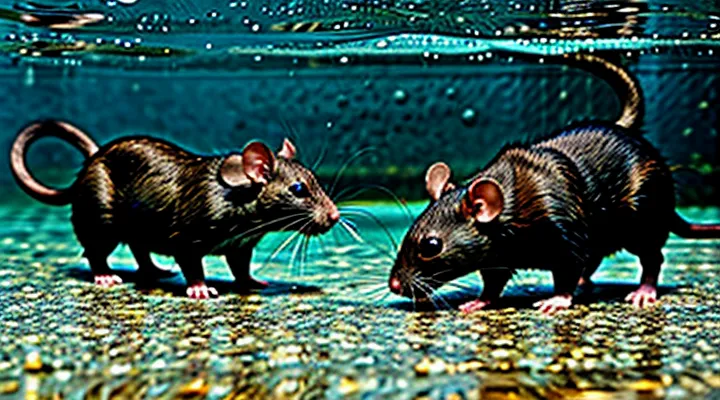
The Aquatic Prowess of Rats
Natural Instincts and Adaptations
Evolutionary Perspective
Rats belong to the Muridae family, which evolved primarily as terrestrial scavengers. Fossil records indicate that early murids inhabited flood‑prone habitats, exposing them to periodic immersion. Natural selection favored individuals capable of brief submersion, allowing escape from predators and access to dispersed food resources.
Key anatomical features support aquatic movement. Dense fur provides insulation, reducing heat loss during immersion. The laterally flattened tail functions as a rudder, while elongated hind limbs generate thrust. Muscular coordination enables rapid, alternating strokes that maintain buoyancy without specialized webbing.
Selective pressures that reinforced swimming ability include:
- Seasonal flooding that temporarily expands terrestrial niches into waterlogged zones.
- Predatory birds and mammals that force rodents to seek refuge in shallow water.
- Availability of aquatic insects, seeds, and algae as supplemental food sources.
- Increased dispersal opportunities across water barriers, facilitating gene flow between isolated populations.
Comparisons with obligate semi‑aquatic rodents, such as the water vole (Arvicola) and capybara (Hydrochoerus), reveal that rats retain only the minimal adaptations necessary for short‑term immersion. Unlike these specialists, rats lack extensive webbing or respiratory modifications, confirming that swimming remains a facultative rather than a dedicated behavior.
From an evolutionary standpoint, the capacity to swim represents a flexible response to environmental variability. It does not constitute a primary ecological niche but provides a survival advantage under specific conditions, allowing rats to exploit transient aquatic habitats while maintaining their core terrestrial lifestyle.
Physical Traits Aiding Swimming
Rats possess several anatomical features that enhance their capacity to move through water. Their streamlined torso reduces drag, allowing efficient forward thrust. Muscular hind limbs generate powerful strokes, while flexible forelimbs assist in steering and stabilizing the body. The tail, elongated and muscular, functions as a rudder, providing balance and directional control during swimming.
A dense, water‑repellent coat traps air close to the skin, improving buoyancy and limiting heat loss. Lung volume relative to body size supplies sufficient oxygen for extended submersion. Additionally, the skeletal structure includes elongated vertebrae that increase spinal flexibility, enabling rapid undulating movements that complement limb propulsion.
Key physical traits include:
- Streamlined body shape minimizing resistance
- Strong, agile hind limbs for powerful propulsion
- Muscular, prehensile tail acting as a steering device
- Water‑resistant fur that aids buoyancy and thermal regulation
- High lung capacity supporting prolonged underwater activity
- Flexible spine facilitating coordinated swimming motions
How Well Do Rats Swim?
Speed and Endurance
Underwater Abilities
Rats possess a suite of physiological adaptations that enable efficient underwater movement. Their dense fur provides buoyancy, while a streamlined body reduces drag. Muscular hind limbs generate powerful strokes, allowing rapid propulsion. The tail functions as a rudder, stabilizing direction during submersion.
Respiratory control is critical for extended dives. Rats can voluntarily suspend breathing, achieving breath-hold periods of 30–45 seconds on average, with some individuals reaching up to 90 seconds under experimental conditions. Their blood contains elevated hemoglobin levels, enhancing oxygen transport. Additionally, a high concentration of myoglobin in skeletal muscle stores oxygen for use during immersion.
Behavioral observations demonstrate purposeful swimming. In laboratory water mazes, rats navigate toward escape platforms within seconds, displaying spatial memory and obstacle avoidance. In natural settings, they use water channels to traverse terrain, escape predators, and locate food sources.
Key underwater capabilities:
- Buoyancy from water‑repellent fur
- Streamlined morphology for reduced resistance
- Powerful hind‑limb propulsion and tail steering
- Controlled apnea with breath‑hold up to 90 seconds
- Elevated hemoglobin and myoglobin concentrations for oxygen storage
- Spatial cognition enabling directed swimming
These traits collectively allow rats to exploit aquatic environments effectively, supporting foraging, dispersal, and predator evasion.
Breath-Holding Capacity
Rats can remain submerged for several seconds, a capacity that determines how far they can travel underwater. Their breath-holding ability depends on lung volume, metabolic rate, and the reflexes that protect the airway.
- Typical submersion time ranges from 10 to 30 seconds in laboratory strains; wild specimens may reach up to 45 seconds under optimal conditions.
- During apnea, heart rate drops by 30‑50 % (bradycardic response), conserving oxygen for vital organs.
- Blood flow is redirected from peripheral muscles to the brain and heart, a process known as the diving reflex.
- Oxygen consumption decreases by approximately 20‑25 % compared to surface respiration, extending the available air store.
The limit of breath-holding is not fixed; it varies with temperature, stress level, and prior activity. Warmer water accelerates metabolism, reducing submersion time, while calm, cold environments allow longer dives. Training or repeated exposure can improve tolerance, as the animal adapts by enhancing hemoglobin affinity for oxygen and increasing myoglobin reserves in skeletal muscle.
Overall, the rat’s ability to hold its breath for short intervals enables it to navigate water hazards, escape predators, and explore submerged environments, but the physiological ceiling remains well below that of aquatic mammals.
Different Species, Different Skills
Common Rat Species
Rats encountered in most urban and rural environments belong to a limited set of species whose swimming capacity influences their distribution and survival.
- Norway rat (Rattus norvegicus) – widespread across continents, thrives near water sources, frequently crosses streams and sewers; strong swimmer, capable of sustained submersion.
- Black rat (Rattus rattus) – common in tropical and subtropical regions, prefers elevated habitats but can navigate short water obstacles; moderate swimming ability, typically avoids prolonged immersion.
- Brown rat (Rattus brunneus) – native to parts of Asia, inhabits wetlands and rice paddies; exhibits efficient paddling motions, tolerates cold water temperatures.
- Polynesian rat (Rattus exulans) – found on islands throughout the Pacific, often encounters coastal environments; limited swimming endurance, relies on floating debris for short crossings.
Species differ in body mass, fur density, and limb morphology, factors that directly affect buoyancy and propulsion. Larger, muscular rats such as the Norway rat generate greater thrust with their hind limbs, while smaller island species conserve energy by limiting exposure to water. These physiological variations explain the observed range of swimming performance across common rat taxa.
Semi-Aquatic Rodents
Rats belong to a broader group of mammals that exhibit adaptations for both terrestrial and aquatic environments. These semi‑aquatic rodents possess morphological and physiological traits that enable efficient movement in water, including streamlined bodies, dense fur that repels moisture, and partially webbed hind feet that generate thrust. Muscular development in the limbs and a flexible spine provide the undulating motion necessary for propulsion, while a high concentration of myoglobin in muscle tissue supports sustained aerobic activity underwater.
Key examples of semi‑aquatic rodents illustrate the range of swimming capabilities within the order:
- Water rats (genus Nectomys) – inhabit tropical streams; can dive for up to 30 seconds while foraging for aquatic insects.
- North American beaver (Castor canadensis) – construct lodges and swim long distances; tail serves as a rudder and buoyancy aid.
- Capybara (Hydrochoerus hydrochaeris) – the largest rodent; spends considerable time submerged, capable of swimming at 8 km/h.
- European water vole (Arvicola amphibius) – uses swimming to escape predators and locate food along riverbanks.
- Australian water rat (Hydromys chrysogaster) – excels in fast‑flowing rivers; demonstrates rapid surface swimming and underwater foraging.
Rats share several of these adaptations, albeit to a lesser degree than specialized species. Their ability to navigate water surfaces stems from a combination of tail balance, flexible joints, and a propensity for exploratory behavior. Experiments measuring swim endurance reveal that laboratory rats can maintain surface swimming for 5–10 minutes before fatigue sets in, while wild Norway rats (Rattus norvegicus) often exceed this duration when motivated by food or escape.
The evolutionary pressure driving semi‑aquatic traits includes predator avoidance, access to aquatic food sources, and habitat expansion into flood‑prone regions. Morphological convergence—such as the development of water‑repellent fur and enhanced limb musculature—appears across unrelated rodent lineages, indicating a consistent selective advantage for swimming proficiency.
Why Do Rats Enter Water?
Survival Instincts
Escaping Predators
Rats possess a natural propensity for aquatic movement that serves as an effective escape mechanism against terrestrial and aerial predators. When threatened, they instinctively seek water sources, entering streams, puddles, or sewers to distance themselves from pursuers. Their streamlined bodies, strong hind limbs, and flexible spine generate thrust that propels them swiftly; a typical laboratory rat can maintain a speed of 1.5 m s⁻¹ for several minutes, sufficient to outpace most predators on land.
Key factors that enhance this defensive behavior include:
- Sensory detection: Vibrissae and acute hearing alert rats to predator approach, prompting immediate flight toward the nearest water.
- Physiological adaptation: Dense fur traps air, providing buoyancy, while a high concentration of myoglobin in forelimb muscles supports sustained swimming.
- Cognitive flexibility: Rats remember successful escape routes; repeated exposure to predation risk reinforces the association between water and safety.
Field observations confirm that urban rat populations exploit drainage systems to evade cats, foxes, and birds of prey. In controlled experiments, rats presented with a predator model chose a water-filled maze over a dry alternative in 78 % of trials, demonstrating a strong preference for aquatic refuge.
Overall, swimming functions as a critical survival strategy, allowing rats to circumvent predation pressures through rapid, energy‑efficient locomotion in an environment where many hunters cannot follow.
Foraging for Food
Rats routinely exploit water bodies when searching for food, using swimming as a tactical extension of their terrestrial foraging range. Their small size, dense fur, and buoyant body composition enable rapid immersion and sustained movement, allowing access to submerged seeds, insects, and discarded organic matter that would be unreachable on dry ground.
Aquatic foraging relies on several physiological and behavioral traits:
- Strong forelimb strokes generate forward thrust while hind limbs provide stability.
- Whisker receptors detect vibrations and chemical cues beneath the surface, guiding rats toward edible items.
- Vision adapts to low‑light water conditions, enhancing detection of moving prey.
Experimental observations confirm that rats can locate and retrieve food from depths of up to 30 cm, maintaining a swimming speed of 0.3–0.5 m s⁻¹. Success rates increase when food is presented with strong odorants, indicating that olfactory cues dominate over visual information in submerged environments.
In natural habitats, water‑linked foraging expands dietary diversity, supporting populations in flood‑prone areas and urban settings where drainage systems concentrate waste. Consequently, swimming capability directly influences rats’ ability to exploit aquatic food sources and sustain their omnivorous diet.
Accidental Submersion
Flooding and Displacements
Rats possess a natural ability to navigate water, a trait that becomes decisive when flooding occurs. Their streamlined bodies, waterproof fur, and strong hind limbs enable sustained swimming, allowing individuals to traverse currents and remain buoyant for extended periods.
Physiological factors supporting this capability include:
- Dense, oily fur that repels water and reduces drag.
- Muscular hind limbs that generate propulsion comparable to small mammals’ sprinting mechanics.
- Respiratory efficiency that sustains oxygen intake during submersion.
During flood events, these swimming skills trigger rapid displacement. Rats abandon low‑lying burrows, ascend to elevated terrain, and infiltrate human shelters via submerged pathways. The resulting migration produces several direct impacts:
- Heightened human–rodent contact, increasing the risk of disease transmission.
- Contamination of stored food and water supplies with droppings and urine.
- Structural damage caused by gnawing on building materials weakened by moisture.
- Competition with native wildlife for newly available habitats.
Effective response measures rely on integrating rodent‑control strategies into flood‑risk planning. Recommendations include sealing potential entry points before flood season, deploying bait stations in anticipated migration corridors, and designing drainage systems that limit water flow into residential zones. Implementing these actions reduces the likelihood of rat populations establishing footholds after flooding, thereby protecting public health and property.
Plumbing Systems and Sewers
Rats possess a natural affinity for water, enabling them to navigate confined channels within municipal plumbing and underground drainage networks. Their streamlined bodies, strong hind limbs, and instinctive paddling motion allow them to traverse pipes as narrow as 2 cm in diameter, a size commonly found in residential waste lines.
Key factors that facilitate rat movement through sewer systems include:
- Buoyancy control: Dense fur traps air, providing temporary buoyancy that counteracts sinking in stagnant water.
- Grip adaptation: Rough pads on the feet generate traction on wet interior surfaces, preventing slippage.
- Sensory navigation: Vibrissae detect water flow direction, guiding rats toward areas of lower pressure or open junctions.
These physiological traits enable rats to exploit leaks, blockages, and maintenance openings, extending their reach throughout urban drainage infrastructures. Consequently, plumbing integrity assessments must account for potential rodent intrusion, incorporating sealed access points and regular inspection protocols to mitigate contamination and structural damage.
Risks and Dangers of Swimming for Rats
Hypothermia
Cold Water Exposure
Rats possess metabolic and thermoregulatory mechanisms that enable brief immersion in cold water, yet exposure triggers rapid physiological adjustments. Peripheral vasoconstriction reduces heat loss, while shivering generates additional heat. These responses sustain core temperature for a limited period, after which hypothermia develops if the environment remains below thermoneutral levels.
Cold stress influences locomotor performance. Muscle contractile speed declines as temperature drops, leading to slower strokes and reduced propulsion. Oxygen consumption rises to compensate for decreased efficiency, increasing the risk of fatigue during prolonged swimming.
Key physiological changes during cold water immersion include:
- Decrease in skin temperature by 5–10 °C within the first minute.
- Elevation of plasma catecholamines, indicating heightened sympathetic activity.
- Onset of hypothermic bradycardia after 3–5 minutes in water below 10 °C.
Experimental data show that rats can maintain surface breathing for 2–4 minutes in near‑freezing water before loss of coordination forces submersion. The threshold for successful escape depends on body mass, fur density, and prior acclimation to low temperatures.
Prolonged Submersion
Rats possess a set of physiological mechanisms that enable them to remain submerged for extended periods, though the duration is limited by oxygen reserves and metabolic rate. When placed underwater, rats close their nostrils, rely on pulmonary air stored in the lungs, and exhibit a reflex bradycardia that reduces heart rate to conserve oxygen. Their peripheral vasoconstriction redirects blood flow toward vital organs, further supporting survivability.
Experimental observations indicate that adult laboratory rats can sustain immersion for 30–45 seconds without surfacing, with some individuals reaching up to one minute under controlled conditions. Juvenile rats display shorter submersion times, typically 15–25 seconds, reflecting smaller lung capacity and higher metabolic demand. Factors influencing endurance include:
- Ambient water temperature (cold water accelerates hypothermia, reducing tolerance)
- Body condition (fat reserves provide thermal insulation and energy)
- Stress level (agitation increases oxygen consumption)
Beyond the initial breath-hold, rats initiate involuntary movements to locate the surface. Prolonged submersion beyond one minute leads to rapid depletion of arterial oxygen, onset of hypoxia, loss of motor control, and eventual drowning. The upper limit of survivable immersion aligns with the duration of the mammalian diving reflex observed across small rodents.
Understanding these constraints informs laboratory safety protocols, pest‑control strategies, and comparative studies of mammalian aquatic adaptations.
Drowning Hazards
Strong Currents
Rats possess a natural aptitude for moving through water, yet the presence of strong currents imposes distinct physiological and behavioral challenges. Their streamlined bodies, flexible limbs, and dense fur provide buoyancy and reduce drag, allowing efficient propulsion even when flow rates increase modestly. Muscular coordination between forelimbs and hindlimbs enables rapid adjustments to maintain orientation against lateral forces.
When current velocity exceeds approximately 0.5 m s⁻¹, rats must elevate stroke frequency and engage their tail as a stabilizing rudder. Above 1.0 m s⁻¹, respiratory strain rises sharply; oxygen consumption can double, limiting endurance to a few minutes. Currents stronger than 1.5 m s⁻¹ often trigger instinctive escape behavior, prompting rats to seek shelter or climb out of the water rather than continue swimming.
Empirical observations from laboratory flume experiments confirm these thresholds:
- 0.3–0.5 m s⁻¹: sustained swimming for 10–15 minutes, normal gait.
- 0.5–1.0 m s⁻¹: increased stroke rate, occasional pauses for breath.
- 1.0–1.5 m s⁻¹: rapid fatigue, reliance on tail for steering.
-
1.5 m s⁻¹: frequent attempts to exit water, high mortality in prolonged exposure.
Field reports of urban rats navigating stormwater channels demonstrate that, while capable of brief forays through fast‑moving streams, prolonged exposure to strong currents exceeds their physiological limits and results in reduced survival prospects.
Exhaustion
Rats demonstrate strong aquatic capability, yet prolonged submersion triggers physiological fatigue that limits performance. Muscle glycogen depletion, reduced heart rate, and impaired coordination emerge as primary indicators of exhaustion during extended swimming bouts. When oxygen consumption surpasses metabolic reserves, rats exhibit slower strokes, increased surface breathing, and eventual loss of buoyancy control.
Key factors contributing to fatigue in swimming rats:
- Temperature stress – cold water accelerates heat loss, demanding extra energy for thermoregulation.
- Hydration loss – immersion promotes fluid shift, decreasing plasma volume and cardiovascular output.
- Metabolic strain – continuous paddling elevates lactate production, impairing muscle contraction efficiency.
Recognizing these exhaustion markers enables accurate assessment of a rat’s swimming endurance and informs experimental protocols that avoid undue distress.
Predation in Water
Aquatic Predators
Rats that enter water encounter a range of aquatic predators, which shape their swimming behavior and survival strategies. Predatory species exploit the same habitats where rats may seek refuge or food, creating a selective pressure for rapid, efficient locomotion.
- Fish such as pike, catfish, and bass pursue prey through burst speed and sharp turns.
- Amphibians, notably large salamanders, capture small vertebrates with suction feeding.
- Waterbirds, including herons and kingfishers, attack from above, relying on visual acuity and swift strikes.
- Semi‑aquatic mammals—otters, mink, and raccoons—combine agility with powerful jaws to seize rodents.
When rats detect predator cues—movement, vibrations, or chemical signals—they initiate escape responses characterized by increased tail thrust, higher stroke frequency, and tighter body posture. These adjustments reduce exposure time and improve maneuverability, allowing rats to navigate currents and obstacles more effectively. Studies show that individuals with superior swimming proficiency exhibit lower predation rates, confirming a direct link between locomotor performance and predator avoidance.
Understanding the interaction between rats and aquatic predators informs broader assessments of rodent ecology, risk assessment in floodplain environments, and the development of humane pest‑control measures that consider natural predation dynamics.
Human Intervention
Rats possess a natural affinity for water, yet their swimming performance often intersects with human activities. Researchers employ controlled aquatic tests to quantify endurance, speed, and recovery rates, providing data that informs both scientific understanding and practical applications. Experimental designs typically involve standardized tanks, temperature regulation, and timed observations, ensuring reproducibility across laboratories.
Public health agencies intervene when rat populations invade waterways, employing capture‑and‑relocate programs to reduce disease transmission. These operations rely on traps designed for aquatic environments, allowing safe extraction without harming the animals. Post‑capture monitoring tracks relocation success and assesses any impact on local ecosystems.
Urban planners incorporate rat‑resistant drainage systems to limit accidental immersion. Design features include smooth surfaces, sealed joints, and overflow mechanisms that prevent rats from entering sewers or storm drains. Maintenance protocols mandate regular inspection and prompt repair of breaches.
Key human‑driven actions include:
- Laboratory assessment of swimming metrics.
- Rescue and relocation initiatives in flood‑prone areas.
- Infrastructure modifications to deter water‑borne ingress.
- Ongoing surveillance of rat movement within aquatic networks.
Practical Implications for Humans
Pest Control Strategies
Water Traps
Water traps are specialized devices designed to capture rodents that enter aquatic environments. Their purpose aligns with investigations of rat swimming capabilities, providing a controlled method for observation and data collection.
Typical water trap construction includes:
- A buoyant outer chamber that remains afloat on the water surface.
- An entry funnel positioned just below the water line, allowing a rat to swim in while preventing exit.
- A sealed interior compartment that isolates the animal once entry occurs.
- A bait station placed near the funnel to attract the target.
The mechanism relies on the animal’s natural tendency to explore water sources. After a rat swims into the funnel, the design’s one‑way entrance blocks retreat, allowing researchers to record duration of immersion, swimming speed, and behavior without external interference.
Experimental protocols require careful adjustment of trap dimensions to match the size of the test subjects, as well as regulation of water depth and temperature to avoid stress‑induced bias. Ethical guidelines mandate prompt humane handling after capture and immediate release or euthanasia according to approved standards.
Water traps thus serve as essential tools for quantifying rodent aquatic performance and for implementing targeted pest‑management strategies in environments where water access is a factor.
Preventing Entry to Water Sources
Rats can reach open water containers, sewers, and drainage systems, creating contamination risks. Physical barriers such as sealed lids, mesh screens, and concrete covers block entry points. Regular inspection of seals and fasteners ensures gaps do not develop.
Sanitation practices reduce attraction. Prompt removal of spilled liquids, proper storage of feed, and elimination of standing water deprive rats of resources that encourage intrusion. Waste containers must be kept airtight and positioned away from water sources.
Environmental modifications limit access. Grading the ground away from foundations prevents water pooling near building perimeters. Installing gutter extensions directs runoff away from potential entry zones.
Key preventive actions
- Fit tamper‑proof lids on all water tanks and barrels.
- Install stainless‑steel mesh (minimum 1 mm opening) over drains and vents.
- Apply concrete or metal flashing to seal cracks in walls and floors.
- Conduct monthly audits of barrier integrity and repair deficiencies immediately.
- Maintain a dry perimeter by clearing debris and fixing leaks.
Implementing these measures confines rats to dry habitats, thereby reducing the likelihood of water source contamination.
Understanding Rat Behavior
Public Health Concerns
Rats frequently access standing water, sewers, and flood‑affected streams, creating direct pathways for pathogens to enter human water supplies. Their swimming ability expands the geographic range of exposure beyond typical terrestrial habitats, especially during heavy rainfall or infrastructure failure.
Pathogen transmission linked to aquatic rat activity includes:
- Leptospira spp. – bacteria shed in urine that survive in moist environments and contaminate drinking water.
- Salmonella enterica – capable of persisting in water and causing gastrointestinal illness after ingestion.
- Hantavirus – aerosolized from water‑borne rodent droppings, posing inhalation risk in damp indoor spaces.
- Giardia duodenalis – cysts released in feces can survive in surface water, leading to diarrheal disease.
Contamination of municipal water systems occurs when rats breach pipe seals, deposit waste in storage tanks, or introduce biofilm on interior surfaces. Flood events amplify these risks by dispersing rodent waste over large areas, overwhelming treatment facilities and increasing the likelihood of untreated water distribution.
Mitigation strategies focus on infrastructure integrity, environmental management, and surveillance:
- Reinforce sewer and pipe junctions to prevent rodent ingress.
- Implement routine water quality testing for rodent‑associated indicators.
- Conduct targeted rodent control in flood‑prone zones before and after heavy precipitation.
- Educate communities about avoiding contact with standing water that may be contaminated by rodent activity.
Urban Environments
Rats thrive in metropolitan settings where water accumulates in both natural and engineered structures. Their presence in cityscapes creates frequent contact with liquid environments that demand aquatic competence.
Physiological traits support this competence. Muscular hind limbs generate propulsion, while a flattened tail provides steering. Dense fur repels water, and a high metabolic rate sustains activity in cold currents.
Urban water features serve as regular habitats:
- Sewer tunnels and storm‑drain pipes
- Retaining ponds in parks
- Flooded basements and sub‑levels
- Open gutters and drainage ditches
- Rooftop rainwater tanks with overflow
These sites supply accessible routes for movement, foraging, and shelter. However, urban water often contains contaminants, high flow velocities, and temperature fluctuations that test rat endurance. Exposure to toxic runoff can impair health, while rapid currents may exceed locomotor capacity, limiting range.
Understanding rat swimming performance informs control strategies. Targeted sealing of drainage entry points reduces ingress, while monitoring of water quality helps predict population hotspots. Effective management relies on recognizing the interplay between rat physiology and the aquatic niches embedded within city infrastructure.