
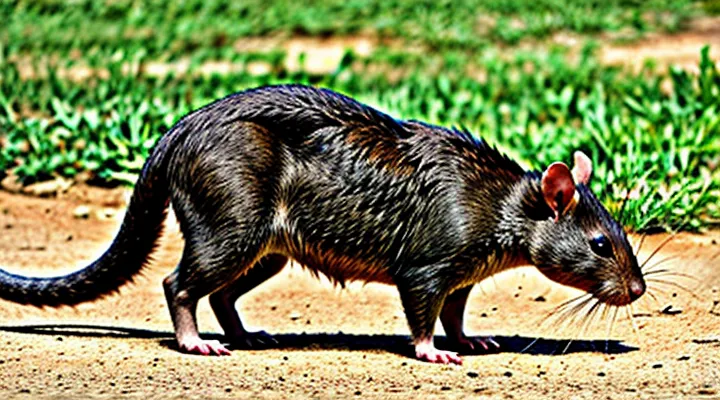
Understanding « Big Rodents »
Defining « Large Rat »
Size Spectrum of Rodents
The size spectrum of rodents ranges from the diminutive African pygmy mouse, measuring roughly 5 cm in body length, to the exceptionally large species commonly referred to as the giant rat, whose body can exceed 50 cm. This breadth reflects adaptive strategies across diverse habitats, with body mass spanning from under 2 g to more than 2 kg.
Key points illustrate the extremes:
- Smallest representatives: Species such as Mus minutoides and Baiomys exhibit compact skeletal structures, high surface‑to‑volume ratios, and rapid reproductive cycles. Their limited size enables exploitation of narrow ecological niches and reduces predation risk through concealment.
- Intermediate forms: Members of the Rattus genus typically reach 20–30 cm in total length and weigh 200–300 g. These rodents balance mobility with foraging efficiency, occupying urban, agricultural, and forested environments.
- Largest specimens: The giant rat, exemplified by Cricetomys gambianus and related taxa, attains body lengths of 50–60 cm and masses approaching 2 kg. Enlarged musculature and robust dentition support a diet of hard‑shelled fruits and larger invertebrates, while increased body mass provides resilience against predators and climatic fluctuations.
Morphological trends correlate with ecological pressures: smaller species prioritize rapid growth and high reproductive output, whereas larger rodents invest in defensive capabilities and broader dietary options. Understanding this continuum clarifies how size influences behavior, physiology, and habitat utilization across the Rodentia order.
Distinguishing Rats from Other Large Rodents
Rats belong to the genus Rattus and are distinguished from other large rodents by a combination of anatomical, genetic, and ecological traits.
- Skull and dentition – elongated skull, narrow rostrum; incisors with a single, continuous enamel band extending to the tip, unlike the multi‑band pattern seen in many capybaras and beavers.
- Tail – proportionally long, hairless, and scaly, typically equal to or longer than body length; other large rodents, such as porcupines, possess short, fur‑covered tails.
- Body size – adult Rattus species range from 150 g to 500 g, smaller than the 30–70 kg mass of capybaras but larger than common house mice.
- Foot structure – plantigrade stance with five toes, each bearing a small claw; beavers exhibit broader, webbed hind feet adapted for swimming.
- Genetic markers – mitochondrial cytochrome b sequences unique to Rattus differentiate it from other murids and caviids.
Habitat preferences further separate rats from their larger relatives. Rats thrive in urban and peri‑urban environments, exploiting human waste and shelter, whereas capybaras occupy wetlands, and beavers construct dams in freshwater systems. Behavioral patterns, such as nocturnal foraging and high reproductive rates (up to 12 litters per year), contrast with the seasonal breeding cycles of most other large rodents.
These criteria provide a reliable framework for field identification, laboratory classification, and ecological monitoring of rat populations distinct from other sizeable rodent taxa.
Common Large Rat Species
The Brown Rat « Rattus norvegicus »
Physical Characteristics
The sizable rodent exhibits a robust body plan that distinguishes it from typical Rattus species. Adults reach a head‑body length of 30–45 cm, with an additional tail measuring 35–55 cm, resulting in an overall length exceeding 80 cm. Body mass ranges from 1.2 kg to 2.5 kg, reflecting a dense musculature adapted for powerful locomotion.
Key physical traits include:
- Fur: coarse, brown‑gray pelage covering the dorsal surface; ventral side displays a lighter, softer coat.
- Head: broad skull with pronounced frontal bones; ears proportionally large, rounded, and sparsely haired.
- Eyes: relatively small, positioned laterally, providing a wide field of vision suited for nocturnal activity.
- Dentition: hypsodont incisors with orange‑pigmented enamel; molars exhibit complex occlusal patterns for efficient grinding of fibrous material.
- Limbs: forelimbs equipped with strong, clawed digits for digging; hind limbs longer than forelimbs, enhancing sprint speed and agility.
- Tail: tapered, scaly, and prehensile, enabling balance during climbing and rapid directional changes.
Skeletal structure shows reinforced vertebrae and enlarged lumbar vertebrae, supporting the animal’s considerable weight while maintaining flexibility. Skin thickness averages 2–3 mm, offering protection against abrasions in rugged habitats. These characteristics collectively define the physical profile of this exceptionally large murine mammal.
Habitat and Distribution
The giant rat occupies a range of environments that supply abundant food, cover, and water. Primary settings include tropical rainforests with dense understory, riverine floodplains where seasonal inundation creates moist soils, and agricultural landscapes where grain storage provides easy sustenance. The species also adapts to urban outskirts, exploiting sewers and waste deposits.
Geographically, populations concentrate in:
- Southeast Asian archipelagos (Indonesia, Philippines, Malaysia)
- Northeastern Indian subcontinent (Assam, Bangladesh)
- Coastal regions of East Africa (Kenya, Tanzania)
- Select Pacific islands (Fiji, New Caledonia)
Within these zones, the rodent favors elevations from sea level to 1,200 m, preferring areas with moderate humidity and temperature stability. Seasonal migrations occur toward higher ground during extreme rainfall, while breeding peaks align with periods of increased food availability.
Behavioral Traits
The large rat exhibits a complex suite of behavioral traits that enable survival in diverse habitats.
Individuals form structured colonies in which a dominant pair controls access to nesting sites and resources. Subordinate members maintain defined positions within the hierarchy, reducing intra‑group conflict and promoting cooperative activities such as shared burrow maintenance.
Foraging behavior combines opportunistic scavenging with selective herbivory. Rats exploit human‑derived waste, seed caches, and underground plant parts, adjusting diet composition according to seasonal availability. Nighttime activity peaks correspond with reduced predator presence, while occasional crepuscular forays expand resource acquisition windows.
Communication relies on multimodal signals. High‑frequency vocalizations coordinate movement and alert kin to danger. Scent glands deposit pheromonal markers on tunnel walls, establishing territorial boundaries and conveying reproductive status. Tactile grooming reinforces social bonds and facilitates disease detection.
Reproductive cycles are synchronized with environmental cues. Females reach sexual maturity within three months, producing litters of four to eight offspring after a gestation period of approximately 22 days. Parental care includes nest construction, thermoregulation, and progressive weaning, after which juveniles integrate into the colony’s labor pool.
Problem‑solving capacity manifests in obstacle navigation and food retrieval. Rats manipulate objects, remember spatial layouts, and exhibit trial‑and‑error learning, allowing rapid adaptation to novel challenges such as novel traps or altered shelter configurations.
Key behavioral characteristics:
- Hierarchical colony structure
- Nocturnal foraging with dietary flexibility
- Multimodal communication (vocal, olfactory, tactile)
- Seasonally timed reproduction and intensive parental care
- Advanced learning and environmental adaptability
The Black Rat « Rattus rattus »
Physical Characteristics
The massive rodent exhibits a robust build, with an average body length of 45–60 cm and a tail extending an additional 30–45 cm. Adult weight ranges from 1.2 to 2.5 kg, reflecting dense musculature and a thick layer of subcutaneous fat.
- Coat: coarse, coarse‑toothed guard hairs overlay a soft underfur; coloration varies from dark brown to mottled gray, providing camouflage in urban and rural habitats.
- Head: broad skull with pronounced zygomatic arches; incisors are continuously growing, enamel‑clad, and self‑sharpening.
- Eyes: relatively small, positioned laterally, granting a wide field of vision but limited depth perception.
- Ears: large, thin‑skinned, highly vascularized, facilitating thermoregulation and acute auditory detection.
- Limbs: powerful forelimbs equipped with dexterous digits, each bearing sharp, retractable claws for climbing and manipulation; hind limbs are elongated, supporting swift locomotion.
- Tail: scaly, muscular, capable of balancing during arboreal movement and serving as a fat reservoir.
- Skeletal structure: reinforced vertebral column with expanded vertebrae to bear substantial body mass; rib cage is expanded, protecting enlarged lung capacity.
These attributes collectively enable the creature to thrive in diverse environments, from sewers to agricultural fields, and to sustain high metabolic demands.
Habitat and Distribution
The giant rat inhabits a range of moist environments where dense ground cover provides shelter and abundant food sources. Primary settings include temperate forests with thick leaf litter, riparian zones featuring flooded meadows, and subtropical wetlands rich in aquatic vegetation. In each locale, the animal exploits burrows or natural crevices for nesting, favoring areas with soft soil that facilitates excavation.
Geographic distribution spans several biogeographic zones:
- Eastern Europe: Poland, Belarus, western Ukraine
- Central Asia: Kazakhstan, southern Siberia, northern Mongolia
- East Asia: northeastern China, Korean Peninsula, northern Japan
- North America: Pacific Northwest, particularly coastal Oregon and Washington
Field observations confirm stable populations in these regions, with density peaks correlating to proximity to permanent water bodies and undisturbed understory. Seasonal movements are limited; individuals typically remain within a 5‑km radius of their natal burrow system.
Behavioral Traits
The sizable rodent exhibits a distinct set of behavioral characteristics that differentiate it from smaller relatives. Social organization revolves around stable colonies, each led by a dominant individual who regulates access to resources and nesting sites. Daily activity peaks at twilight, when members forage in groups, reducing predation risk through collective vigilance.
- Foraging strategy: opportunistic omnivory, preference for high‑calorie plant matter and discarded human food; food caches are created near burrow entrances.
- Territoriality: scent marking with glandular secretions defines the perimeter of each colony’s range; incursions trigger aggressive displays.
- Communication: ultrasonic vocalizations convey alarm, while low‑frequency chirps coordinate movement during foraging.
- Reproductive pattern: year‑round breeding with a gestation period of approximately 22 days; litters average six offspring, and parental care is shared among colony members.
- Adaptability: rapid habituation to urban environments, utilization of sewers and abandoned structures for shelter, and flexible diet allow sustained population growth.
Other Notable Large Rodents Often Mistaken for Rats
Nutria « Myocastor coypus »
Nutria (Myocastor coypus) is a sizable semiaquatic rodent native to South America but now established on many continents. Adults reach 40–60 cm in body length, with an additional 30–45 cm tail, and weigh 5–9 kg, making them among the largest members of the order Rodentia.
Physical traits include dense, water‑repellent fur ranging from brown to reddish‑brown, webbed hind feet for swimming, and continuously growing incisors adapted for gnawing vegetation. The species exhibits a robust skull, strong jaw muscles, and a distinctive orange‑brown patch behind the eyes.
Ecologically, nutria occupy wetlands, riverbanks, and marshes, where they construct burrows and lodges from plant material. Their diet consists primarily of aquatic and emergent plants such as cattails, reeds, and water hyacinths; occasional consumption of crops and small invertebrates occurs.
Key biological characteristics:
- Reproduction: up to three litters per year; each litter contains 2–13 young after a 130‑day gestation.
- Longevity: 3–5 years in the wild, up to 8 years under optimal conditions.
- Dispersal: capable of swimming several kilometers, facilitating rapid colonisation of new water bodies.
Economic and environmental impacts are significant. Heavy grazing leads to erosion of riverbanks, loss of native vegetation, and degradation of water quality. Agricultural damage includes loss of crops such as rice and sugarcane. In regions where nutria are invasive, control programs employ trapping, hunting, and habitat modification.
Distribution now includes North America (southern United States), Europe (France, Spain, Italy), Asia (China, Japan), and various islands. Monitoring efforts focus on population density, spread patterns, and mitigation effectiveness.
Understanding nutria’s biology and ecological role is essential for managing its presence in both native and introduced environments.
Capybara « Hydrochoerus hydrochaeris »
Capybara (Hydrochoerus hydrochaeris) is the world’s largest living rodent, belonging to the family Caviidae. Adults reach a head‑body length of 105–130 cm, stand 50–60 cm tall at the shoulder, and weigh 35–66 kg. Their body is robust, with a short, hair‑less tail and webbed feet adapted for swimming. The coat is coarse, brown to reddish‑brown, providing camouflage in wetland vegetation.
The species inhabits South American lowland tropical forests, savannas, and riverbanks. It thrives in areas with abundant water, where it can submerge for up to five minutes to evade predators. Capybaras are herbivores; their diet consists mainly of grasses, aquatic plants, fruits, and bark. They practice coprophagy, re‑ingesting soft feces to extract additional nutrients and maintain gut flora.
Social organization is characterized by stable groups of 10–20 individuals, often comprising a dominant male, several females, and offspring. Communication includes vocalizations such as purrs, whistles, and alarm calls. Reproduction occurs year‑round, with gestation lasting 150 days and litters of 2–8 young.
Key characteristics
- Body length: 105–130 cm; weight: 35–66 kg
- Webbed hind feet for efficient swimming
- Coarse, water‑repellent fur; hairless tail
- Herbivorous diet; includes grasses and aquatic vegetation
- Group living: 10–20 members, hierarchical structure
- Vocal repertoire for social interaction and predator alerts
- Gestation period: 150 days; litter size: 2–8 offspring
- Conservation status: Least Concern, but local populations affected by habitat loss and hunting.
Gambian Pouched Rat « Cricetomys gambianus »
The Gambian pouched rat (Cricetomys gambianus) ranks among the largest murine rodents. Adult individuals reach body lengths of 40–50 cm, with tails extending an additional 30 cm. Weight varies from 1.0 kg in females to 1.5 kg in males. The species possesses a distinctive large cheek pouch, capable of storing up to 200 g of food, and a robust skull with pronounced incisors adapted for gnawing tough vegetation and carrion.
Geographically, the species inhabits sub‑Saharan Africa, preferring savanna woodlands, riverine forests, and agricultural fields. Its range includes Ghana, Nigeria, Kenya, and Tanzania, where it exploits both natural and human‑altered habitats. Nocturnal activity patterns dominate; the rat forages on the ground and in trees, employing keen olfactory senses to locate seeds, fruits, insects, and small vertebrates.
Reproductive biology features a gestation period of approximately 25 days, yielding litters of 2–4 offspring. Juveniles attain independence within three weeks and reach sexual maturity at eight months. Longevity in captivity extends to six years, while wild individuals typically survive two to three years.
Human interactions include:
- Detection work: trained individuals identify explosives and tuberculosis in laboratory settings.
- Research utility: employed as model organisms for neurological and immunological studies.
- Pest status: occasional crop damage in grain storage facilities.
Conservation status is listed as Least Concern by the IUCN, reflecting a stable population across its extensive range. Threats consist primarily of habitat alteration and localized hunting for meat.
Biological Features and Adaptations
Anatomy and Physiology
Skeletal Structure and Size
The giant murine specimen exhibits a skull length of up to 6 cm, nearly double that of typical urban rats. The cranium displays reinforced frontal bones and expanded zygomatic arches, providing attachment sites for powerful masseter muscles. Dental formula remains 1/1, 0/0, 0/0, 3/3, with incisors that grow continuously and possess enamel only on the anterior surface, a trait that enhances gnawing efficiency.
The axial skeleton is elongated, comprising 13 thoracic vertebrae and a proportionally extended lumbar region. Each vertebra features enlarged transverse processes, increasing leverage for the longissimus dorsi and other spinal muscles. Rib count remains consistent with smaller relatives, but ribs are thicker and exhibit additional ossification, contributing to overall rigidity.
Key dimensions of the post‑cranial skeleton:
- Total body length (head‑to‑base of tail): 45–55 cm
- Tail length: 30–40 cm, supported by 20–22 caudal vertebrae with robust chevron bones
- Hind‑limb bone lengths: femur 7.5 cm, tibia 9.0 cm, providing a stride length suitable for rapid locomotion across open terrain
- Fore‑limb bone lengths: humerus 6.0 cm, radius 5.5 cm, enabling strong forefoot grip for burrowing
Overall mass ranges from 0.8 kg to 1.2 kg, reflecting the combined effect of a dense skeletal framework and enlarged musculature. The structural adaptations support both powerful digging and swift escape responses.
Dental Adaptations
The oversized rodent possesses a set of dental traits that enable efficient processing of tough vegetation and hard seeds. Both upper and lower incisors are open‑rooted, allowing perpetual growth that compensates for constant wear. Enamel covers only the anterior surface of each incisor, creating a self‑sharpening edge as softer dentin behind the enamel erodes during gnawing.
Molars are hypsodont, with high crowns that extend well beyond the gum line. This structure provides additional grinding surface for fibrous material. The molar occlusal pattern consists of complex ridges and cusps that interlock, producing a shearing action that fragments resistant food items. Rootless premolars are absent, reinforcing the separation between incisors used for gnawing and molars used for grinding.
Key dental adaptations include:
- Continuous incisor eruption matched by enamel‑dentin differential wear.
- High‑crowned molars with pronounced ridges for crushing.
- A pronounced diastema separating incisors from molars, preventing interference during mastication.
- Reinforced mandibular musculature attachment points that increase bite force.
These features collectively support a diet that comprises coarse plant matter, hard-shelled nuts, and occasional animal protein, allowing the large rat to exploit ecological niches where smaller rodents cannot survive.
Sensory Organs
The giant rat possesses a well‑developed sensory suite adapted to nocturnal foraging and complex burrow navigation. Vision relies on large, forward‑facing eyes with a high density of rod cells, granting sensitivity to low light levels while sacrificing color discrimination. The ocular musculature enables rapid pupil constriction, protecting the retina from sudden illumination.
Auditory capability centers on elongated external pinnae that funnel sound waves toward a spacious middle ear cavity. The ossicular chain amplifies vibrations, and the cochlea contains an expanded basilar membrane, allowing detection of a broad frequency range, including ultrasonic emissions used in social communication.
Tactile perception is dominated by facial whiskers (vibrissae). Each whisker is anchored in a follicle richly innervated by mechanoreceptors that transmit precise spatial information to the somatosensory cortex. This system maps three‑dimensional structures within the dark environment, supporting obstacle avoidance and prey detection.
Olfactory and gustatory systems complement the above senses:
- Nasal epithelium hosts millions of olfactory receptors, providing acute detection of volatile compounds from food and conspecifics.
- The olfactory bulb occupies a proportionally large brain region, enhancing signal processing speed.
- Taste buds on the tongue and palate register bitter, sweet, salty, sour, and umami stimuli, guiding dietary choices and toxin avoidance.
Collectively, these organs create an integrated sensory network that enables the large rodent to thrive in diverse habitats.
Diet and Foraging Behavior
Omnivorous Nature
The large rodent exhibits a true omnivorous feeding strategy, incorporating plant and animal matter into its diet. This dietary flexibility enables survival across diverse habitats and seasonal resource fluctuations.
Key components of its consumption pattern include:
- Grains, seeds, and tubers providing carbohydrates and essential nutrients.
- Insects, small vertebrates, and carrion supplying protein and lipids.
- Fruit, leaves, and bark offering vitamins, minerals, and fiber.
Seasonal shifts influence the proportion of each category, with higher animal intake during breeding periods to meet increased energetic demands. Foraging behavior combines ground scavenging, nocturnal hunting, and opportunistic grazing, reflecting an adaptive response to resource availability.
Hoarding and Storage Habits
The massive rodent exhibits a systematic approach to gathering and preserving resources, a behavior essential for survival in fluctuating environments. Individuals collect edible items, nesting materials, and occasional non‑food objects, arranging them in concealed chambers beneath burrow systems. Storage sites are constructed with compacted soil and reinforced with fibrous debris, creating stable microhabitats that protect contents from moisture and predators.
Key characteristics of the hoarding strategy include:
- Selective accumulation: Preference for high‑calorie seeds, tubers, and insect larvae; occasional inclusion of discarded human waste when available.
- Spatial segregation: Food stores are kept separate from nesting zones to reduce contamination and limit scent trails that could attract competitors.
- Temporal rotation: Older provisions are consumed first, while newer acquisitions are placed deeper within the cache, extending overall availability.
- Cache maintenance: Regular inspection and repositioning of items prevent spoilage and maintain structural integrity of the storage chamber.
These practices enable the large murid to endure periods of scarcity, support reproductive cycles, and sustain colony cohesion across seasonal shifts.
Reproduction and Life Cycle
Breeding Patterns
The sizable murine species exhibits a defined reproductive cycle aligned with temperate climate fluctuations. Breeding peaks during the spring and early summer months when ambient temperatures rise and food availability increases, prompting heightened hormonal activity in both sexes.
Mating behavior follows a polygynous pattern: dominant males establish territories, emit ultrasonic vocalizations, and engage in brief copulatory bouts lasting 30–45 seconds. Female receptivity is signaled by estrus cycles of approximately four days, with ovulation occurring spontaneously rather than being induced by copulation.
Key reproductive parameters are:
- Gestation period: 21–23 days.
- Litter size: 6–12 offspring, average of eight.
- Neonatal development: altricial young are born hairless, eyes closed, and dependent on maternal care for the first two weeks.
- Weaning: occurs at 21 days, after which juveniles attain sexual maturity by 8–10 weeks.
Parental investment is limited to the mother, who constructs a nest of shredded vegetation and provides thermoregulation, nourishment, and protection until weaning. Paternal involvement is absent, and post‑weaning offspring disperse to establish independent territories, contributing to rapid population turnover.
Lifespan and Mortality
The large rat, a giant rodent species, typically reaches 5 to 7 years in captivity, where nutrition, veterinary care, and protection from predators are guaranteed. In natural habitats, average lifespan declines to 2 to 4 years due to environmental pressures and limited resources.
Mortality in wild populations stems from several primary sources:
- Predation by birds of prey, carnivorous mammals, and reptiles.
- Infectious diseases such as leptospirosis, hantavirus, and parasitic infestations.
- Extreme weather events, including drought, flooding, and temperature extremes.
- Intraspecific competition leading to injuries and stress‑induced health decline.
Survival rates improve markedly in managed environments, where controlled diet, regular health monitoring, and shelter from predators extend longevity and reduce mortality causes.
Ecological Impact and Human Interaction
Role in Ecosystems
Predator-Prey Relationships
The sizable murine species known for its impressive body mass occupies a distinct niche within temperate and subtropical ecosystems. Its size permits exploitation of food resources unavailable to smaller rodents, while simultaneously attracting a range of carnivorous predators.
Predators that regularly target this large rodent include:
- Medium-sized felids (e.g., bobcats, lynxes) that rely on ambush tactics.
- Canids such as coyotes and wolves, which hunt in packs to subdue the animal.
- Avian raptors like golden eagles, capable of striking from altitude.
- Mustelids (e.g., martens, wolverines) that employ stealth and strength.
The rodent’s diet consists primarily of:
- Seeds and nuts from hardwood forests, providing high caloric content.
- Root vegetables and tubers uncovered by digging behavior.
- Invertebrates, including beetles and earthworms, supplementing protein intake.
- Occasionally carrion, taken when scavenging opportunities arise.
Adaptations supporting these interactions involve powerful jaw musculature for processing hard seeds, robust forelimbs for excavation, and heightened vigilance facilitated by acute hearing and whisker sensitivity. Predator pressure has driven the evolution of rapid sprint bursts and burrow complexity, reducing capture success rates. Conversely, the availability of diverse food sources sustains population growth, influencing predator population dynamics through top‑down regulation.
Seed Dispersal
The large rat species functions as an effective agent of seed dispersal across forested and agricultural landscapes. Individuals consume fruits and nuts that contain viable seeds, retain them briefly in the gastrointestinal tract, and excrete them at locations removed from the parent plant. This process enhances germination probability by reducing competition and predation pressure near the source tree.
Key aspects of the rat’s dispersal behavior include:
- Selective foraging – Preference for fleshy fruits with high nutrient content, which often contain large seeds suited to the animal’s gape size.
- Gut passage time – Average retention of 12–18 hours, allowing seeds to be deposited several hundred meters from the intake site.
- Habitat traversal – Daily movement patterns that span forest edges, riparian corridors, and cultivated fields, creating a network of dispersal routes.
- Cache abandonment – Occasional hoarding of seeds that are later forgotten, providing additional sowing points.
Physiological adaptations support this role: robust molars crush tough seed coats, while a relatively long intestine permits partial scarification, which can break seed dormancy. The species’ high population density in disturbed areas amplifies seed redistribution during seasonal fruiting peaks.
Ecologically, the rat’s activity contributes to plant community regeneration, especially for pioneer species that rely on animal-mediated dispersal. By moving seeds into open microsites, the rodent indirectly shapes successional trajectories and promotes genetic exchange among isolated plant populations.
Vector for Diseases
Common Pathogens Carried
The sizable rodent commonly referred to as the large rat serves as a reservoir for a range of zoonotic microorganisms that affect both animal and human health. Surveillance data identify the following agents as regularly associated with this species:
- Leptospira interrogans – spirochete causing leptospirosis; transmitted through contaminated urine.
- Salmonella spp. – facultative intracellular bacteria responsible for salmonellosis; shed in feces.
- Yersinia pestis – bacterium behind plague; maintained in flea vectors that infest the host.
- Hantavirus – RNA virus linked to hemorrhagic fever with renal syndrome; spread via aerosolized excreta.
- Campylobacter jejuni – gram‑negative rod inducing gastroenteritis; present in intestinal flora.
- Streptobacillus moniliformis – causative agent of rat‑bite fever; introduced through bites or scratches.
- Bartonella henselae – organism associated with cat‑scratch disease; occasionally isolated from rat blood.
These pathogens underscore the epidemiological relevance of the large rat in public‑health monitoring and disease‑prevention strategies.
Public Health Implications
The sizable rodent known for its considerable mass presents several direct threats to human health. Its extensive foraging range brings it into contact with food storage facilities, sewage systems, and residential waste, creating pathways for pathogen transfer.
Key health hazards associated with this animal include:
- Transmission of bacterial agents such as Salmonella spp. and Leptospira spp., leading to gastroenteritis and leptospirosis.
- Carrying viral pathogens, notably hantavirus, which can cause severe respiratory illness.
- Hosting ectoparasites (fleas, mites) that serve as vectors for additional infections.
- Contamination of water supplies with urine and feces, increasing the risk of waterborne diseases.
Effective public‑health responses rely on integrated measures:
- Systematic surveillance to detect rodent population spikes and pathogen prevalence.
- Environmental management that eliminates food sources, blocks entry points, and ensures proper waste disposal.
- Targeted rodent control programs employing traps, bait stations, and, where appropriate, chemical controls under regulatory oversight.
- Public education campaigns that inform communities about sanitation practices and signs of rodent‑related disease.
Monitoring and rapid response to outbreaks linked to this large rodent reduce morbidity and safeguard community health.
Pest Management Strategies
Prevention Methods
Effective control of the oversized rodent requires a systematic approach that combines environmental management, physical barriers, and targeted removal techniques.
- Eliminate food sources by securing waste containers, removing fallen fruit, and cleaning spills promptly.
- Reduce shelter opportunities through regular trimming of vegetation, clearing debris, and sealing cracks in building foundations.
- Install rodent-proof materials such as metal flashing, concrete lintels, and steel mesh around entry points.
- Deploy snap traps or electronic devices in high-activity zones, positioning bait at least 10 cm from walls to encourage contact.
- Apply rodenticides only where non‑target exposure is impossible, following label instructions and safety regulations.
- Introduce natural predators, including barn owls and feral cats, in suitable habitats to augment population pressure.
- Conduct periodic inspections to verify barrier integrity, monitor trap success, and adjust tactics based on observed behavior.
Consistent implementation of these measures limits population growth, prevents property damage, and reduces health risks associated with the large rodent.
Control Techniques
Effective management of an oversized rat requires a combination of physical, chemical, and ecological interventions. Direct capture methods include snap traps, live-catch cages, and multi-catch devices. Placement follows patterns of nocturnal activity and proximity to food sources; bait selection favors high‑protein attractants. Regular inspection and prompt removal of captured individuals prevent population rebound.
Exclusion strategies focus on denying entry to structures. Seal gaps larger than 2 cm with steel mesh, cement, or weather‑strip material. Install sturdy door sweeps and reinforce vent openings. Landscaping adjustments eliminate shelter by trimming dense vegetation and removing debris piles within a 10‑meter radius of buildings.
Chemical control employs rodenticides formulated for low secondary toxicity. Use anticoagulant blocks or grain‑based baits in tamper‑proof stations. Rotate active ingredients to mitigate resistance development. Record dosage, placement, and retrieval dates for regulatory compliance.
Habitat modification reduces resource availability. Secure waste containers with tight lids, store feed in sealed containers, and schedule frequent cleaning of spillages. Limit water sources by repairing leaks and managing irrigation schedules.
Biological approaches introduce natural predators or competitors. Encourage barn owl nesting by installing nesting boxes, and support feral cat populations under controlled conditions. Monitor predator impact to avoid unintended ecological effects.
Integrated pest management (IPM) coordinates these techniques. Conduct baseline population assessments, set quantitative thresholds for action, and evaluate outcomes quarterly. Adjust the mix of methods based on efficacy data and environmental considerations.