
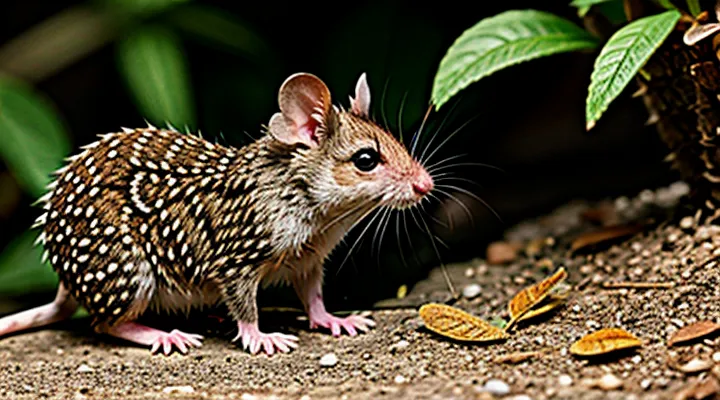
Origins and Classification
Taxonomy and Species
The spiny mouse belongs to the order Rodentia, family Muridae, and subfamily Deomyinae. Its genus, Acomys, is distinguished by the presence of stiff, bristle‑like guard hairs that replace the typical soft fur of most rodents. The genus is placed within the superfamily Muroidea, reflecting its close evolutionary relationship to true mice and rats while retaining unique morphological traits.
Within Acomys, several species are recognized based on geographic distribution, chromosomal patterns, and morphological details:
- Acomys cahirinus – North African spiny mouse, widespread across the Sahara fringe and the Levant.
- Acomys kempi – Kenya spiny mouse, inhabits high‑altitude grasslands of East Africa.
- Acomys russatus – South African spiny mouse, found in arid savanna and semi‑desert regions.
- Acomys spinosissimus – Arabian spiny mouse, restricted to the Arabian Peninsula’s rocky outcrops.
- Acomys percivali – Percival’s spiny mouse, limited to the Horn of Africa’s dry shrublands.
Taxonomic revisions frequently rely on mitochondrial DNA sequencing, which has clarified phylogenetic relationships among these taxa and identified cryptic lineages. Recent studies suggest that some populations previously assigned to A. cahirinus may represent distinct species, prompting ongoing reassessment of species boundaries.
The current classification reflects both morphological specialization—particularly the dermal spines that provide protection against predators and harsh environments—and genetic divergence across the genus’s wide Afro‑Arabian range. This systematic framework underpins comparative research on the group’s ecological adaptations and physiological resilience.
Geographical Distribution
The spiny mouse occupies a broad swath of arid and semi‑arid terrain across North Africa, the Horn of Africa, and the Middle East. Populations are concentrated in Morocco, Algeria, Tunisia, Libya, Egypt, Sudan, Ethiopia, Somalia, Kenya, Tanzania, and extending eastward into Saudi Arabia, Yemen, Oman, United Arab Emirates, Qatar, and Iraq. Isolated occurrences have been recorded in Israel, Jordan, and the Levantine coastal strip.
Within these regions the species prefers dry savanna, rocky outcrops, and scrubland where loose soil facilitates burrowing. Elevational limits range from sea level up to approximately 2,500 m, with higher densities in low‑to‑mid altitude zones where vegetation provides cover and foraging opportunities.
Human‑altered landscapes such as agricultural fields, peri‑urban gardens, and abandoned structures also support viable colonies, indicating a tolerance for moderate habitat modification. Introduced populations have not been documented beyond the native range, suggesting limited dispersal beyond natural barriers.
Key points of distribution:
- North Africa: Morocco, Algeria, Tunisia, Libya, Egypt
- East Africa: Sudan, Ethiopia, Somalia, Kenya, Tanzania
- Arabian Peninsula: Saudi Arabia, Yemen, Oman, UAE, Qatar, Iraq
- Levant: Israel, Jordan, coastal Lebanon and Syria
The overall pattern reflects adaptation to hot, dry environments with scattered vegetation, enabling the spiny mouse to maintain stable populations across a diverse but climatically consistent geographic corridor.
Physical Characteristics
Distinctive Spines
The spiny mouse possesses a coat of keratinized spines that differ markedly from the soft fur of most rodents. Each spine measures 2–4 mm in length, tapers to a sharp tip, and is anchored in a dense follicular matrix that allows rapid erection when threatened. The spines are composed of a central medulla surrounded by a thick cortex, providing both flexibility and resistance to breakage.
Spines serve as a primary defensive mechanism. Upon tactile stimulation, the mouse contracts the arrector pili muscles, causing the spines to stand erect and create a bristling barrier. This response deters predators by increasing apparent size and delivering painful punctures. The spines also facilitate escape; the animal can wedge itself into narrow crevices, the bristled surface preventing smooth sliding of potential attackers.
In addition to protection, spines influence social behavior. During aggressive encounters, individuals display a raised dorsal spine array as a visual threat, reducing the likelihood of physical combat. Grooming behavior includes the careful removal of debris from the spines, maintaining their structural integrity and preventing infection.
Key characteristics of the spiny mouse’s spines:
- Length: 2–4 mm, proportionate to body size.
- Composition: keratin core with reinforced cortex.
- Muscular control: arrector pili muscles enable rapid erection.
- Functional roles: predator deterrence, territorial signaling, and self‑maintenance.
The combination of structural specialization and behavioral integration distinguishes the spiny mouse’s spines as an adaptive trait that enhances survival in arid and predator‑rich environments.
Size and Appearance
The spiny mouse measures between 6 and 10 cm in head‑body length, with an additional tail length of 5 to 8 cm. Adult weight ranges from 12 to 25 g, placing the species among the smallest murids yet larger than many other desert rodents.
Body fur consists of stiff, bristle‑like hairs interspersed with softer undercoat. The spines, up to 5 mm long, give the animal a distinctive rough texture and serve as a defensive barrier. Dorsal coloration varies from sandy‑brown to grayish‑olive, matching arid habitats, while the ventral surface is markedly lighter, often white or pale gray. The tail is hairless, covered by thin, translucent skin, and typically lacks the tuft seen in related species.
- Head‑body length: 6–10 cm
- Tail length: 5–8 cm
- Weight: 12–25 g
- Dorsal spines: up to 5 mm, stiff, keratinous
- Color palette: sandy‑brown, gray‑olive (dorsal); white‑pale (ventral)
These dimensions and coat characteristics enable the spiny mouse to navigate rocky crevices, conserve moisture, and evade predators in its native semi‑arid environments.
Sensory Organs
Spiny mice possess highly developed sensory systems that enable precise navigation of complex habitats and efficient foraging.
-
Vision: Large, laterally placed eyes provide a wide field of view; retinal structure includes a high density of rod cells, supporting low‑light activity. Visual acuity is sufficient for detecting movement of predators and conspecifics at short distances.
-
Auditory system: Extended ear pinnae amplify sound waves, while the cochlea contains a broad frequency range, allowing detection of ultrasonic calls used in social communication and predator avoidance.
-
Vibrissae: Prominent facial whiskers are richly innervated, delivering tactile information about surface texture and spatial orientation. Whisker movement synchronizes with head motions to construct a three‑dimensional map of the immediate environment.
-
Olfactory apparatus: Enlarged olfactory epithelium and a high number of odorant receptors facilitate discrimination of food odors, territorial scents, and pheromonal cues. The vomeronasal organ processes non‑volatile chemicals critical for mate recognition.
-
Somatosensory receptors: Dense mechanoreceptors in the forepaws and hindlimbs detect substrate vibrations, assisting in the detection of prey movement and the avoidance of hazardous surfaces.
Collectively, these sensory modalities create a robust information network that supports the spiny mouse’s adaptive behavior in arid and semi‑arid ecosystems.
Behavioral Patterns
Social Structure
Colony Dynamics
The spiny mouse forms stable colonies that exhibit complex social organization. Individuals occupy distinct positions within a hierarchy that influences access to mates, shelter, and food resources. Dominant adults typically secure prime nesting sites, while subordinate members contribute to brood care and foraging.
Reproductive dynamics reflect cooperative breeding. Females within a group may synchronize estrus cycles, increasing the likelihood of multiple litters during favorable seasons. Males frequently assist in nest construction and pup grooming, enhancing offspring survival rates.
Resource distribution follows a negotiated pattern. Colonists allocate food caches through shared foraging trips, reducing competition and promoting group cohesion. When external supplies dwindle, individuals adjust activity ranges to maintain a balanced intake across the colony.
Communication mechanisms support coordination. Vocalizations, scent markings, and tactile signals convey information about territory boundaries, predator presence, and reproductive status. These cues enable rapid response to environmental changes and internal social shifts.
Key aspects of colony dynamics include:
- Hierarchical structuring that regulates reproductive opportunities
- Cooperative breeding that raises pup survival
- Shared foraging that stabilizes food access
- Multimodal communication that synchronizes group behavior
Understanding these components clarifies how spiny mouse populations maintain resilience in variable habitats.
Communication Methods
The spiny mouse employs a multimodal communication system that integrates acoustic, chemical, tactile, and visual channels.
- Acoustic signals: Adults emit a range of vocalizations, from low‑frequency chirps during social grooming to high‑frequency ultrasonic clicks used in predator avoidance. Ultrasonic emissions are detectable only with specialized equipment, indicating a sophisticated auditory repertoire.
- Chemical cues: Scent glands located on the flank and abdomen release volatile compounds that convey individual identity, reproductive status, and territorial boundaries. These pheromonal markers persist on nesting material and within burrow systems.
- Tactile interactions: Direct body contact, including nose‑to‑nose touches and forepaw grooming, transmits immediate information about hierarchy and emotional state. The species’ dense, spiny coat enhances the tactile feedback during such exchanges.
- Visual displays: Subtle body postures, ear orientation, and tail positioning serve as visual signals, particularly in well‑lit environments. Rapid tail flicks accompany aggressive encounters, while relaxed limb posture indicates affiliative intent.
These communication modalities operate concurrently, allowing spiny mice to maintain complex social structures, coordinate foraging activities, and respond swiftly to threats.
Nocturnal Activity
The spiny mouse exhibits a pronounced preference for nighttime activity. Its circadian rhythm aligns with low-light conditions, reducing exposure to diurnal predators and competition for resources. Vision adapted to dim environments, combined with enhanced auditory and tactile senses, enables efficient navigation through complex habitats after dusk.
Nocturnal foraging focuses on seeds, insects, and plant material that become more accessible during cooler hours. This temporal niche lowers metabolic demand, as ambient temperatures drop, allowing the animal to conserve energy while maintaining high levels of activity. Additionally, nighttime movement minimizes water loss through evaporative cooling, an advantage in arid regions where the species often resides.
Key aspects of nocturnal behavior include:
- Peak activity periods: Emergence occurs shortly after sunset, with a secondary surge before sunrise.
- Social interactions: Vocalizations and scent marking intensify during night hours, facilitating territory establishment and mate attraction.
- Predator avoidance: Reliance on cryptic coloration and rapid, erratic locomotion reduces detection by nocturnal raptors and snakes.
- Thermoregulatory strategies: Body temperature fluctuates minimally due to the stable thermal environment of night, supporting sustained foraging bouts.
These characteristics collectively define the spiny mouse’s nocturnal lifestyle, underpinning its survival and reproductive success in variable ecosystems.
Diet and Foraging
The spiny mouse consumes a diet that balances protein, carbohydrates, and moisture, reflecting its adaptation to arid habitats. Primary food items include seeds, grains, and insects; occasional ingestion of plant shoots and bark supplements nutrient intake when seed availability declines. Seasonal shifts drive changes in foraging priorities, with a greater reliance on insects during the wet season and increased seed caching during dry periods.
Foraging activity is primarily nocturnal, reducing exposure to predators and extreme temperatures. Individuals exhibit the following behaviors:
- Rapid, exploratory runs across open ground to locate scattered seeds.
- Precise handling of food items using dexterous forepaws.
- Temporary storage of surplus seeds in shallow depressions or under vegetation.
- Consumption of moisture‑rich prey and succulent plant parts to meet water requirements without drinking.
Metabolic efficiency is enhanced by selective feeding on high‑energy seeds and by extracting water from prey, allowing the species to thrive where free water is scarce. Cache retrieval is guided by spatial memory, enabling the mouse to recover stored resources after periods of scarcity.
Reproductive Biology
Mating Rituals
The spiny mouse displays a complex courtship sequence that begins with scent marking. Males deposit urine and glandular secretions along the perimeter of a female’s burrow, creating a chemical gradient that signals readiness and genetic compatibility. Females respond by increasing vocalizations and by positioning themselves near the marked area, indicating receptivity.
Physical interaction follows the olfactory exchange. Males approach the female, engage in rapid grooming of the whisker region, and execute a series of short, high‑frequency chirps. The grooming serves both as a tactile stimulus and as a means of transferring pheromonal cues. The female typically initiates a reciprocal grooming bout, after which the pair adopts a side‑by‑side posture, aligning their bodies for copulation.
Key elements of the mating ritual include:
- Scent marking: establishes territorial boundaries and conveys reproductive status.
- Vocal communication: high‑frequency calls synchronize partner activity.
- Grooming behavior: reinforces pair bonding and facilitates pheromone transfer.
- Postural alignment: positions the animals for successful copulation.
Successful mating culminates in a brief copulatory event lasting 30–45 seconds, after which the female isolates herself to construct a nest for gestation. This sequence reflects the species’ adaptation to arid environments, where efficient partner recognition and rapid reproduction are essential for survival.
Parental Care
The spiny mouse exhibits a highly developed system of parental care that distinguishes it from many other small rodents. Both sexes participate in nest construction, with females typically selecting soft, insulated materials while males assist by gathering additional bedding. After birth, parents maintain constant proximity to the litter, providing thermoregulation through huddling and frequent grooming that removes debris and stimulates circulation.
Key aspects of the caregiving routine include:
- Frequent feeding: Mothers deliver milk rich in protein and lipids at intervals of 2–3 hours during the first week, gradually reducing frequency as pups mature.
- Temperature regulation: Adults adjust nest positioning and body contact to maintain optimal microclimate, preventing hypothermia in neonates.
- Protection: Both parents respond to potential threats by emitting alarm calls and repositioning the litter deeper within the nest.
- Weaning support: Around day 12, parents introduce solid food, encouraging exploration and gradual independence while continuing to supervise and intervene when necessary.
These behaviors collectively ensure high offspring survival rates and reflect the spiny mouse’s adaptation to arid environments where early development and rapid growth are critical.
Ecological Role
Habitat Preferences
The spiny mouse demonstrates a strong association with dry, open environments where shelter and foraging opportunities coexist. Populations concentrate in regions characterized by low annual precipitation, sparse vegetation, and abundant rocky substrates that provide crevices for nesting and protection from predators.
Typical habitats include:
- Semi‑arid scrublands with scattered shrubs and grasses.
- Rocky outcrops and limestone cliffs offering natural cavities.
- Low‑elevation deserts where temperature fluctuations are moderate.
- Agricultural fields adjacent to natural scrub, especially where grain residues are present.
- Urban peripheries with debris piles or dilapidated structures that mimic natural cover.
Preference for these settings reflects the species’ physiological adaptation to high temperatures and limited water availability. Burrowing activity is confined to loose soils that facilitate tunnel construction, while foraging behavior targets seeds, insects, and plant material abundant in the described habitats. Seasonal movements are limited; individuals generally remain within a defined home range that encompasses the preferred microhabitats.
Predator-Prey Relationships
The spiny mouse, a small nocturnal rodent native to arid regions of Africa and the Middle East, occupies a distinct niche within predator‑prey networks. Its defensive spines, rapid sprint, and agile climbing reduce vulnerability, yet the species remains a frequent target for a range of carnivores.
- Mammalian predators: African wildcats, small felids, and mongooses capture individuals using stealth and speed. These predators rely on the mouse’s activity patterns, attacking during crepuscular hours when the rodent forages near ground cover.
- Avian predators: Barn owls, kestrels, and buzzards exploit the mouse’s nocturnal habits, employing silent flight and keen eyesight to locate prey in low‑light conditions. Owl attacks often focus on juveniles emerging from burrows.
- Reptilian predators: Sand snakes and monitor lizards use ambush tactics, positioning themselves near burrow entrances to seize escaping mice.
The spiny mouse also influences prey dynamics. It consumes seeds, insects, and arthropods, contributing to seed dispersal and regulating invertebrate populations. Its foraging behavior alters soil composition, indirectly affecting plant germination and the availability of food for other herbivores.
Predator pressure drives the evolution of the mouse’s anti‑predator traits. Studies show higher spine density and increased nocturnal activity in populations exposed to greater predation risk. These adaptations, in turn, shape the hunting strategies of local predators, creating a feedback loop that maintains ecological balance.
Adaptations and Survival
Defensive Mechanisms
The spiny mouse employs several specialized defenses that reduce predation risk and enhance survival.
- Spiny dorsal hair: Rigid, keratinized hairs cover the back and flanks, creating a painful barrier when a predator attempts to grasp the animal. The spines detach easily, allowing the mouse to escape while the predator retains only the irritating hairs.
- Skin shedding: The species can voluntarily release patches of skin when seized, a process known as skin autotomy. The detached tissue distracts the attacker, after which the mouse regenerates the lost area with minimal scarring.
- Tail detachment: In extreme encounters, the tail can break at pre‑formed fracture planes. The severed tail continues to twitch, diverting the predator’s attention while the mouse flees. Regeneration restores most tail length over weeks.
- Aggressive biting: Strong jaw muscles and sharp incisors enable rapid, forceful bites to vulnerable predator regions, such as the eyes or snout. Biting is often accompanied by a high‑frequency alarm vocalization that can startle or warn conspecifics.
- Cryptic coloration: Dorsal fur patterns blend with rocky and desert substrates, reducing detection during both foraging and escape.
These mechanisms operate together, allowing the spiny mouse to confront a wide range of threats with minimal reliance on speed alone.
Water Conservation
The spiny mouse exhibits several physiological adaptations that minimize water loss, allowing survival in arid environments. Its kidneys possess an exceptionally high concentrating ability, producing urine with markedly low volume and elevated solute content. This renal efficiency reduces the need for frequent drinking.
Thermoregulatory behavior further supports water conservation. The animal limits activity during the hottest part of the day, seeking shade or burrow interiors where temperatures remain moderate. By reducing evaporative cooling demands, it curtails respiratory water loss.
Key mechanisms include:
- Production of highly concentrated urine through elongated loops of Henle.
- Reabsorption of moisture from inhaled air via nasal passages.
- Ability to metabolize endogenous water from the oxidation of dietary carbohydrates.
- Preference for dry seeds and insects that contain minimal water, decreasing reliance on external sources.
Collectively, these traits enable the spiny mouse to maintain hydration without regular water intake, illustrating a specialized strategy among small mammals inhabiting water‑scarce habitats.
Desert Survival Strategies
The spiny mouse inhabits arid regions where water is scarce and temperatures fluctuate dramatically. Its survival depends on a suite of physiological, morphological, and behavioral adaptations that minimize water loss, regulate body temperature, and exploit limited resources.
- Efficient renal function – kidneys concentrate urine to near‑maximum osmolality, allowing excretion of waste with minimal fluid loss.
- Moisture‑absorbing fur – stiff, spiny hairs trap a thin layer of humid air close to the skin, reducing evaporative cooling.
- Thermoregulatory burrowing – individuals dig shallow tunnels that remain several degrees cooler than the surface during peak heat, providing refuge without the need for evaporative cooling.
- Nocturnal foraging – activity peaks after sunset, when ambient temperature drops and humidity rises, decreasing water demand.
- Dietary water extraction – consumption of seeds and insects rich in metabolic water supplements intake; digestive enzymes break down carbohydrates efficiently to release additional moisture.
- Behavioral torpor – short periods of reduced metabolic rate lower body temperature and water requirements during extreme heat waves.
Morphologically, the spiny mouse possesses a high surface‑to‑volume ratio that facilitates rapid heat dissipation when ambient conditions permit, while its tail stores fat reserves that can be metabolized for energy and water during prolonged drought. Social structures also contribute to survival; communal nesting conserves heat and reduces individual exposure to desiccating winds.
Collectively, these strategies enable the species to maintain homeostasis, reproduce, and persist in environments where most small mammals would succumb to dehydration and thermal stress.
Spiny Mouse in Research
Biomedical Significance
The spiny mouse possesses physiological traits that directly support biomedical investigations. Its capacity for scar‑free skin regeneration enables detailed study of tissue repair mechanisms. When ear tissue is removed, the animal restores the original architecture within weeks, providing a natural model for mammalian eplication without fibrosis.
Metabolic research benefits from the species’ susceptibility to diet‑induced diabetes. Glucose intolerance develops rapidly under high‑fat feeding, mirroring human type‑2 diabetes progression. Researchers can therefore evaluate therapeutic interventions and monitor pancreatic β‑cell dynamics in a small‑rodent system.
Immune system studies leverage the spiny mouse’s distinctive innate response. Elevated expression of antimicrobial peptides and altered cytokine profiles create a platform for testing vaccine efficacy and pathogen resistance. The animal’s response to viral and bacterial challenges yields data relevant to human infectious disease models.
Genomic resources enhance its utility. A fully sequenced genome, combined with established CRISPR protocols, permits precise gene editing. Creation of knockout and reporter lines allows functional dissection of genes implicated in regeneration, metabolism, and immunity.
Key biomedical applications:
- Scar‑free wound healing research
- Diabetes and obesity modeling
- Vaccine and antimicrobial testing
- Gene‑function studies via genome editing
These attributes position the spiny mouse as a versatile organism for translational research, bridging gaps between rodent models and human clinical outcomes.
Conservation Status
The spiny mouse (genus Acomys) is listed on the IUCN Red List with varying categories across its range. Species such as Acomys cahirinus and Acomys russatus are currently classified as Least Concern, reflecting stable populations in most of their habitats. Conversely, Acomys spinosus is designated as Near Threatened due to habitat fragmentation and localized declines.
Key factors influencing the conservation status include:
- Habitat loss from agricultural expansion and urban development.
- Overgrazing that reduces ground cover and shelter availability.
- Predation pressure intensified by introduced carnivores.
- Climate variability affecting water resources in arid regions.
Legal protections differ by country. Several nations have incorporated spiny mouse species into wildlife protection acts, restricting capture and trade. Conservation programs emphasize:
- Habitat preservation through the establishment of protected areas.
- Restoration of degraded ecosystems using native vegetation.
- Monitoring population trends via standardized trapping surveys.
- Public education campaigns that discourage illegal pet trade.
Research priorities focus on genetic diversity assessments to inform management units and on the species’ resilience to environmental change. Continued data collection and coordinated policy implementation are essential to maintain the current status and prevent escalation to higher threat categories.