
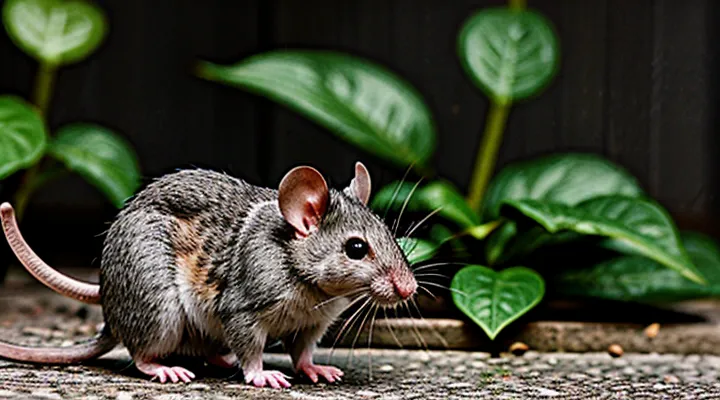
«The Enigmatic World of the Gray Mouse: An Introduction»
«Unveiling the Nocturnal Lives»
«Sensory Adaptation and Survival»
The gray mouse relies on rapid sensory adjustments to navigate complex habitats and evade threats. Its whisker system detects minute air currents, allowing precise mapping of tunnels and immediate reaction to approaching predators. Olfactory receptors register volatile compounds at concentrations below one part per billion, guiding food selection and signaling the presence of conspecifics or danger. Auditory structures amplify frequencies between 10 kHz and 70 kHz, enabling detection of rustling insects and the ultrasonic calls of owls.
Key physiological mechanisms supporting these abilities include:
- Neural gain control – synaptic strength modulates in response to sustained stimuli, preventing sensory overload while preserving detection of novel cues.
- Retinal rod density – high concentration of rod cells enhances vision under dim conditions, facilitating nocturnal foraging.
- Thermal receptors – skin-embedded thermosensors adjust sensitivity to ambient temperature shifts, aiding in energy conservation during cold periods.
Behavioral outcomes of sensory adaptation manifest as:
- Immediate course correction when whisker feedback signals obstruction, reducing collision risk.
- Rapid shift to olfactory search patterns when visual cues diminish, maintaining food acquisition efficiency.
- Heightened startle reflex triggered by sudden ultrasonic sounds, shortening escape latency.
Collectively, these adaptive processes underpin the gray mouse’s capacity to survive in variable environments, reinforcing the covert strategies that define its ecological niche.
«Communication in the Dark»
Gray mice rely on non‑visual channels to exchange information when light is absent. Their communication system integrates ultrasonic vocalizations, tactile feedback through whiskers, and chemical signals deposited on the environment.
Ultrasonic vocalizations occupy the 30–100 kHz range, a spectrum beyond human hearing. Emitted during territorial disputes, mating encounters, and predator avoidance, these calls convey individual identity, emotional state, and spatial orientation. Playback experiments confirm that mice adjust their movement patterns in response to specific frequency modulations, demonstrating a precise acoustic code.
Whisker‑mediated touch provides real‑time spatial mapping of confined spaces. Vibrissae detect minute air currents and surface textures, generating patterns of mechanoreceptor activation that encode the position of nearby conspecifics. Ground‑borne vibrations transmitted through the floor are sensed by the forelimb pads, allowing mice to locate peers even when direct contact is impossible.
Chemical communication persists in darkness through pheromonal deposits on bedding and nest material. Volatile compounds released from the flank glands create scent trails that convey reproductive status and hierarchical rank. Gas‑chromatography analyses reveal distinct molecular signatures associated with dominant versus subordinate individuals.
Key findings on nocturnal interaction:
- Ultrasonic calls encode identity and urgency; frequency shifts correlate with threat level.
- Whisker contact maps three‑dimensional obstacles; rhythmic whisker sweeps synchronize group movement.
- Substrate vibrations enable detection of distant conspecifics; amplitude attenuation follows a predictable inverse‑square law.
- Pheromone gradients persist for hours, guiding navigation and mate selection in the absence of light.
Collectively, these modalities form an integrated network that sustains social cohesion, resource allocation, and predator evasion when visual cues are unavailable.
«Dietary Secrets and Foraging Strategies»
«Omnivorous Tendencies»
The gray mouse exhibits a flexible diet that combines plant material, insects, and occasional vertebrate carrion. This opportunistic feeding pattern allows individuals to thrive in diverse habitats, from agricultural fields to urban sewers.
Nutritional intake is adjusted seasonally. During spring and summer, the mouse consumes:
- Seeds and grains, providing carbohydrates and essential fatty acids.
- Fresh greens and shoots, supplying vitamins and minerals.
- Small arthropods, delivering protein and chitin-derived nutrients.
In autumn, the emphasis shifts toward stored seeds and dried vegetation, while winter diets incorporate:
- Stored grain reserves.
- Insect larvae found in insulation or debris.
- Scavenged tissue from dead small animals when available.
The mouse’s dentition supports this range: incisors continuously grow to process hard seeds, while molars grind softer plant matter. Digestive enzymes adapt to varying macronutrient loads, enabling efficient extraction of energy from both plant and animal sources.
Behavioral observations confirm that individuals will explore novel food sources when traditional supplies dwindle, demonstrating a learned component to omnivory. This adaptability contributes to the species’ resilience and success across human-altered environments.
«Caching Behavior and Food Storage»
Gray mice regularly collect surplus food and conceal it in concealed locations, a practice known as caching. The behavior reduces the risk of starvation during periods when foraging opportunities decline, such as cold weather or reduced seed availability. Individuals select cache sites based on substrate stability, proximity to shelter, and low predator traffic.
Food items are typically stored in shallow depressions, crevices, or under leaf litter. Mice handle each piece with their forepaws, often moistening it to improve pliability before placement. The choice of cache material varies with diet: seeds are buried in dry soil, while insects are hidden in moist microhabitats to prevent desiccation.
Memory plays a critical role in retrieval. Gray mice use spatial cues, scent markers, and visual landmarks to locate caches months later. Experiments demonstrate that individuals can remember the precise position of up to 30 separate stores, adjusting retrieval patterns according to seasonal energy demands.
Key characteristics of gray mouse caching:
- Preference for high‑energy items such as seeds, nuts, and insects.
- Selection of cache sites offering concealment and environmental stability.
- Use of tactile and olfactory cues to encode location.
- Ability to relocate caches after prolonged intervals, even when environmental conditions change.
Understanding these storage strategies provides insight into the species’ survival tactics and its impact on ecosystem seed dispersal and invertebrate populations.
«Social Structures and Hierarchies»
«Territoriality and Dominance»
Gray mice maintain exclusive zones that protect food sources, nesting sites, and mating opportunities. The boundaries are marked by scent deposits, urine trails, and occasional gnawing on objects near the perimeter. When an outsider approaches, the resident mouse often displays a series of aggressive signals: rapid tail flicks, raised fur, and vocalizations in the ultrasonic range. These cues serve to deter intruders without immediate physical confrontation.
Dominance hierarchies develop within overlapping territories. Individuals that secure larger, resource‑rich areas typically occupy higher ranks. Rank is reinforced through:
- Repeated patrols of the perimeter, confirming ownership.
- Frequent scent marking, which increases the chemical signature of the dominant mouse.
- Direct contests, where the victorious mouse gains access to the opponent’s previous range.
Subordinate mice adapt by restricting their movements to peripheral zones, avoiding direct encounters, and exploiting temporal windows when dominant individuals are absent. This spatial segregation reduces the frequency of aggressive interactions and stabilizes the social structure.
Physiological correlates accompany territorial and dominant behavior. Elevated testosterone levels are observed in males that control extensive territories, while cortisol spikes accompany challenges to rank. These hormonal patterns influence both the intensity of scent marking and the propensity for aggressive displays.
Understanding territoriality and dominance in gray mice clarifies how hidden behavioral strategies shape population distribution, resource allocation, and reproductive success.
«Reproductive Cycles and Offspring Care»
The gray mouse (Apodemus sylvaticus) follows a tightly regulated reproductive timetable that maximizes survival in temperate habitats. Females enter estrus during the spring and early summer, with cycles lasting 4–5 days. Ovulation occurs immediately after mating, and gestation endures 19–21 days, producing litters of 4–7 pups. Seasonal photoperiod and ambient temperature trigger hormonal shifts that synchronize breeding events across populations.
Reproductive output adjusts to resource availability. In years of abundant food, females may produce two successive litters, whereas scarcity limits breeding to a single cohort. Litter size correlates with maternal body condition; well‑fed females often exceed the average number of offspring.
Offspring care is intensive during the first three weeks:
- Nest construction: Females gather shredded plant material and soft fur to create insulated chambers that maintain stable temperatures.
- Feeding: Pups receive milk rich in proteins and lipids; the mother increases nursing frequency as pups grow, shifting from continuous to intermittent bouts by day 10.
- Thermoregulation: The mother huddles with the litter, providing warmth until thermogenic capacity develops around day 12.
- Weaning: Begins at day 14, with gradual introduction of solid food; maternal attendance declines, and pups achieve independence by day 21.
Male involvement ends after copulation; however, territorial defense by dominant males reduces predation risk for nearby nesting sites, indirectly supporting juvenile survival. The combination of precise estrous timing, flexible litter production, and concentrated parental investment defines the gray mouse’s reproductive strategy, ensuring rapid population turnover in fluctuating environments.
«Impact and Interaction with Humans»
«Gray Mice in Urban Environments»
«Adapting to Human Habitats»
Gray mice thrive in human dwellings by exploiting resources that domestic environments provide. Their presence in homes, warehouses, and agricultural structures reflects a suite of biological adjustments that enable survival alongside people.
- Flexible diet: consumes grains, processed foods, insects, and organic waste.
- Nocturnal foraging: activity peaks during night hours when human traffic declines.
- Tolerance to contaminants: metabolic pathways neutralize low‑level toxins found in household chemicals.
Behavioral shifts reinforce these physiological traits. Mice construct nests within wall cavities, insulation, or furniture voids, securing shelter that remains insulated from temperature fluctuations. They exploit discarded packaging and food leftovers, reducing the need to travel far from the nest. Escape routes are maintained through small gaps, allowing rapid retreat when disturbances occur.
Reproductive strategy accelerates population growth in confined spaces. Females can produce up to ten litters per year, each containing three to twelve offspring. Juveniles reach sexual maturity within six weeks, ensuring a continuous influx of new individuals even under sporadic control measures.
Human implications stem directly from these adaptations. High reproductive rates and concealed nesting sites challenge eradication efforts, requiring integrated pest‑management approaches that combine exclusion, sanitation, and targeted baiting. Monitoring programs benefit from understanding mouse movement patterns, which concentrate near food storage areas and waste collection points. Recognizing the specific ways gray mice adjust to human habitats informs effective mitigation and reduces the risk of disease transmission.
«Challenges and Mitigation»
The gray mouse’s concealed routines create several obstacles for researchers and pest managers. Limited visibility of nocturnal foraging routes hampers accurate population estimates. Adaptive nesting preferences allow individuals to occupy inaccessible micro‑habitats, reducing the effectiveness of conventional traps. Chemical deterrents lose potency as the species rapidly develops tolerance to commonly used repellents. Social communication through ultrasonic signals remains undetectable without specialized equipment, preventing early detection of colony expansion.
Mitigation measures address each difficulty directly. Deploy infrared motion sensors and low‑light cameras to monitor hidden foraging pathways and refine density calculations. Design modular trap systems with flexible entry points that accommodate varied nesting structures, ensuring capture in otherwise unreachable locations. Rotate active ingredients and incorporate synergistic compounds to counteract resistance development in chemical controls. Install ultrasonic monitoring devices calibrated to the species’ frequency range, enabling real‑time alerts of population shifts and facilitating timely intervention.
«Ecological Role and Significance»
«Prey for Predators»
The gray mouse occupies a central position in many terrestrial food webs, providing a reliable energy source for a range of carnivores. Its nocturnal foraging pattern aligns with the activity peaks of owls, foxes, and snakes, ensuring consistent prey availability. The animal’s small size and rapid metabolism produce a high caloric return per kilogram of biomass, making it an efficient target for predators that require frequent meals to sustain thermoregulation.
Predators exploit several concealed aspects of mouse behavior:
- Scent masking: The mouse secretes a faint, chemically neutral odor that reduces detection by olfactory hunters such as feral cats and mustelids.
- Burrow utilization: Complex tunnel systems provide temporary refuge, yet entrance placement near surface vegetation offers quick escape routes when predators approach.
- Temporal dispersion: Peak activity occurs during the first two hours after sunset, a window when visual predators experience reduced acuity while auditory hunters rely on the mouse’s low-amplitude vocalizations.
In response, predators have evolved specific adaptations to counter these defenses. Owls possess acute low-light vision and silent flight, enabling them to locate mice within dense underbrush. Foxes display heightened whisker sensitivity, allowing detection of subtle ground vibrations generated by mouse movement. Snakes employ heat-sensing pits to perceive the mouse’s body temperature, bypassing visual and olfactory concealment.
Understanding the interplay between these concealed mouse habits and predator strategies clarifies why the gray mouse remains a pivotal, yet often overlooked, component of ecosystem dynamics.
«Seed Dispersal and Ecosystem Health»
Seed dispersal by the gray mouse influences plant community dynamics and supports overall ecosystem resilience. The species transports viable seeds from mature stands to microhabitats where germination conditions differ, thereby expanding genetic diversity across the landscape.
Dispersal mechanisms employed by the mouse include:
- Carrying seeds in cheek pouches to distant caches.
- Dropping seeds during foraging trips, creating scattered deposition patterns.
- Embedding seeds in burrow chambers, where altered soil moisture and temperature promote germination.
These actions affect ecosystem health in several measurable ways. First, seed redistribution mitigates the dominance of any single plant species, preventing monocultures and fostering a mosaic of vegetation types. Second, the spatial heterogeneity introduced by mouse-mediated dispersal enhances habitat complexity, offering niches for insects, birds, and small mammals. Third, the burial of seeds in nutrient‑rich litter layers accelerates decomposition cycles, increasing soil organic matter and improving water retention.
Long‑term observations reveal that areas with active gray mouse populations exhibit higher rates of plant regeneration after disturbance events such as fire or grazing. Consequently, maintaining stable mouse communities becomes a practical component of conservation strategies aimed at preserving functional ecosystems.