
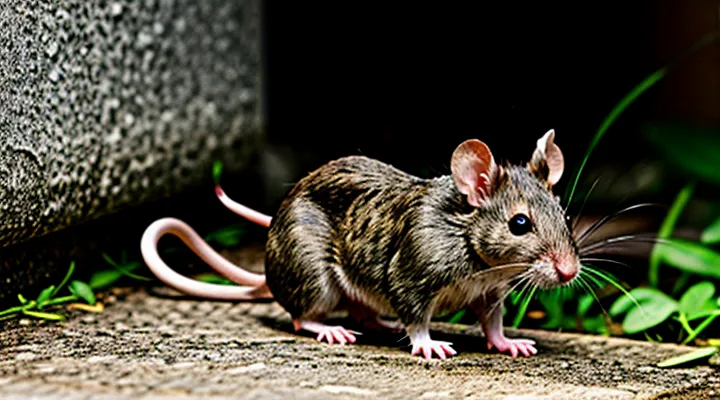
Physical Characteristics: A Head-to-Tail Comparison
Size and Body Shape
Rats are considerably larger than mice. Adult brown rats (Rattus norvegicus) reach body lengths of 20–25 cm, not including the tail, and weigh 300–500 g. Black rats (Rattus rattus) are slightly smaller, 16–20 cm in length and 150–250 g in weight. In contrast, common house mice (Mus musculus) measure 6–10 cm in body length and weigh 15–30 g. Tail length mirrors body size: rat tails equal or exceed the head‑body length, while mouse tails are proportionally longer, often surpassing the body by 10–20 %.
Body shape further distinguishes the two groups. Rats possess robust, thickset bodies with a blunt head, coarse fur, and a relatively short, thick neck. Their ears are small relative to head size, and the snout is broad and blunt. Mice display slender, lightweight frames, a triangular head, large ears set low on the skull, and a pointed, narrow snout. Fur on mice appears finer and more delicate. These morphological traits enable reliable identification without genetic testing.
Key measurements for quick assessment:
- Body length: rat ≥ 16 cm; mouse ≤ 10 cm.
- Weight: rat ≥ 150 g; mouse ≤ 30 g.
- Tail proportion: rat tail ≈ body length; mouse tail > body length.
- Head shape: rat blunt; mouse pointed.
- Ear size: rat small; mouse large relative to head.
Head and Snout Features
The head and snout provide reliable visual cues for distinguishing rats from mice. Rats possess a broader, heavier skull with a blunt, square‑shaped snout; mice display a delicate skull and a pointed, triangular snout.
Rats’ ears are proportionally larger and attach lower on the head, whereas mice have small, rounded ears set high on the skull. The distance between the eyes and the tip of the snout is greater in rats, giving a flatter facial profile; mice show a more pronounced forward tilt of the snout.
Key diagnostic features:
- Skull width: rat > mouse
- Snout shape: blunt, square (rat) vs. pointed, triangular (mouse)
- Ear size and placement: large, low (rat) vs. small, high (mouse)
- Eye‑to‑snout length: longer (rat) vs. shorter (mouse)
- Whisker length: longer and denser in rats, finer in mice
Observing these characteristics enables accurate species identification without reliance on body size or coloration.
Ear Shape and Size
Ear morphology provides a reliable indicator when separating rats from mice. Rats possess relatively large, rounded ears that extend beyond the head’s outline, with a length typically ranging from 2.5 to 3.5 cm in adult specimens. The ear cartilage is thick, giving a firm, less pliable feel. In contrast, mice exhibit small, triangular ears measuring 1.0 to 1.5 cm, which lie close to the skull and appear delicate. The ear edges are fine and the cartilage is thin, resulting in a more flexible structure.
Key differences in ear characteristics:
- Size: rat ears are roughly double the length of mouse ears.
- Shape: rat ears are broadly oval; mouse ears are sharply pointed.
- Position: rat ears sit high on the head and project outward; mouse ears sit lower and are tucked against the skull.
- Texture: rat ear cartilage is dense; mouse ear cartilage is soft.
When examining a specimen, measure ear length with a calibrated ruler, observe the overall contour, and assess cartilage firmness. These criteria, combined with other morphological features, enable accurate species determination.
Tail Length and Appearance
Tail length is a primary visual cue when distinguishing rats from mice. Rats possess tails that are proportionally shorter relative to body size, typically measuring 70–80 % of the head‑body length. The surface of a rat’s tail is relatively thick, covered with sparse, coarse hair, and the skin appears leathery. In contrast, a mouse’s tail usually reaches 90–100 % of the head‑body length, is slender, and is almost entirely naked, revealing a smooth, pinkish skin with a fine line of hair along the dorsal edge.
Key characteristics of tail appearance include:
- Diameter: Rat tails are noticeably thicker (up to 6 mm), while mouse tails are thin (2–4 mm).
- Hair coverage: Sparse, coarse hair on rat tails; minimal hair on mouse tails.
- Color and texture: Rat tails often display a darker, scaly surface; mouse tails are lighter, smoother, and may show a slight pink hue.
- Length proportion: Rat tail ≈ 0.7–0.8 × body length; mouse tail ≈ 0.9–1.0 × body length.
These measurable differences enable reliable identification without reliance on behavioral observations. Accurate assessment of tail metrics supports proper species classification in research, pest control, and veterinary contexts.
Fur Color and Texture
Fur coloration provides a reliable indicator when separating rats from mice. Most common rats display brown, black, or gray coats with a coarser, sometimes mottled appearance; laboratory strains may exhibit a uniform pinkish hue due to lack of pigmentation. In contrast, typical house mice possess lighter fur, ranging from pale gray to tan, often with distinct dorsal stripes or patches of white on the belly. The presence of a darker, glossy sheen on the dorsal side frequently signals a rat, whereas a matte, softer sheen suggests a mouse.
Texture distinguishes the two groups more clearly than color alone. Rat hair is thicker, stiffer, and less pliable, creating a rough surface that resists gentle compression. Mouse hair is finer, more flexible, and yields easily to light pressure. Observers can test texture by lightly pinching a single hair between thumb and forefinger; rat hair will feel rigid, while mouse hair bends without breaking.
Key points for rapid assessment:
- Color: rats – darker, often uniform; mice – lighter, often patterned.
- Texture: rats – coarse, stiff; mice – soft, flexible.
- Sheen: rats – glossy; mice – matte.
Behavioral Distinctions
Habitat and Nesting Habits
Rats typically occupy urban sewers, basements, and outdoor burrows near water sources, while mice favor interior walls, ceilings, and stored‑food areas in both residential and commercial buildings. The larger species tolerates open, damp environments and often establishes colonies in refuse piles or abandoned structures; the smaller species prefers concealed, dry cavities where human activity provides a steady food supply.
Nesting behaviors further separate the two:
- Rats construct deep, complex nests using shredded paper, fabric, and insulation, often lining them with soft material and situating them at the base of burrows or within wall voids.
- Mice build shallow nests of shredded fibers, cotton, and dried plant matter, usually placed in concealed corners, behind appliances, or inside ceiling joists.
These habitat preferences and nest constructions provide reliable criteria for distinguishing the species during field observation.
Dietary Preferences
Rats and mice exhibit distinct feeding habits that aid reliable species discrimination. Rats prefer larger, high‑calorie items; mice favor smaller, low‑fat foods. Recognizing these patterns reduces misidentification in field or laboratory settings.
- Food size: Rats readily consume whole grains, nuts, and chunks of fruit; mice select seeds, grains, and insect fragments.
- Macronutrient balance: Rats show a marked inclination toward protein‑rich sources such as meat scraps and dairy; mice maintain a diet dominated by carbohydrates, especially cereals.
- Foraging behavior: Rats often hoard bulk items in concealed caches; mice scatter food across multiple sites and exhibit rapid, frequent foraging bouts.
- Water intake: Rats drink larger volumes, often from open containers; mice take smaller, frequent sips from narrow sources.
These dietary signatures, when observed alongside morphological cues, provide a practical framework for accurate species identification.
Activity Patterns: Nocturnal vs. Crepuscular
Activity patterns provide a reliable indicator when distinguishing between rats and mice. Rats typically exhibit strictly nocturnal behavior, emerging after sunset and remaining active throughout the night. Mice, by contrast, display crepuscular activity, concentrating movements at dawn and dusk while reducing movement during the deep night hours.
Nocturnal species operate primarily under low‑light conditions, relying on heightened olfactory and tactile senses. Crepuscular species exploit the transitional light periods, balancing visual cues with reduced predation risk. These temporal preferences affect feeding, nesting, and social interactions, creating observable differences in trap captures and field observations.
Key distinctions:
-
Timing of peak activity
• Rats: peak from 20:00 to 04:00.
• Mice: peaks around 05:00‑07:00 and 18:00‑20:00. -
Response to artificial lighting
• Rats continue activity despite low‑intensity lights.
• Mice reduce activity when lights are on, resuming at twilight. -
Foraging behavior
• Rats forage continuously through the night, often near waste sources.
• Mice forage briefly at dawn and dusk, focusing on seeds and insects.
Observing when individuals are most active, especially in controlled trap settings, allows accurate species identification without reliance on morphological nuances alone.
Social Structures and Colonies
Rats and mice exhibit distinct social organization, a factor that aids reliable species identification.
Rats form hierarchical groups with a dominant individual, subordinate members, and occasional breeding pairs. Social bonds are reinforced through communal nesting, grooming, and shared foraging routes. Colonies often occupy extensive burrow systems or occupy multiple interconnected shelters, allowing clear separation of territory among groups.
Mice maintain smaller, more fluid associations. They create loose clusters that dissolve when resources become scarce. Nesting is typically limited to a single chamber, and interactions focus on brief mating encounters rather than long‑term dominance structures.
Key observable differences:
- Group size: rats – dozens to hundreds; mice – a few to tens.
- Nest complexity: rats – multi‑chamber nests; mice – single‑room nests.
- Dominance behavior: rats – pronounced hierarchy; mice – minimal hierarchy.
- Territory usage: rats – extensive, overlapping burrow networks; mice – confined, solitary nests.
Field observation of these social patterns, combined with morphological cues, provides a practical method for distinguishing the two species in natural and laboratory settings.
Sounds and Vocalizations
Rats and mice produce distinct acoustic signals that aid reliable identification. Adult rats emit low‑frequency squeaks and ultrasonic chirps ranging from 20 to 50 kHz; these sounds accompany social interactions, distress, and exploratory behavior. In contrast, mice generate higher‑frequency ultrasonic vocalizations (UUVs) typically between 50 and 100 kHz, especially during mating and territorial displays.
Key acoustic differences include:
- Frequency range: rats – 20–50 kHz; mice – 50–100 kHz.
- Temporal pattern: rats produce longer, modulated squeaks; mice emit brief, rapid pulses.
- Contextual use: rats use audible squeaks for alarm; mice rely on ultrasonic calls for courtship and aggression.
Field recordings should capture both audible and ultrasonic bands. Equipment must support at least 100 kHz sampling to ensure mouse vocalizations are not missed. Analyzing spectrograms reveals species‑specific signatures: rat calls show broader bandwidth and lower pitch, while mouse calls display narrow, high‑pitch peaks.
When evaluating unknown specimens, compare recorded sounds against the criteria above. Consistent presence of low‑frequency squeaks indicates a rat; dominance of high‑frequency ultrasonic bursts confirms a mouse. This acoustic approach complements morphological assessment and improves identification accuracy.
Common Species and Their Traits
Norway Rats («Rattus norvegicus»)
The Norway rat (Rattus norvegicus) is the largest rodent commonly found in human‑occupied environments. Accurate identification separates it from mouse species by examining size, proportions, and anatomical details.
- Body length: 20–25 cm, excluding a tail of similar length.
- Tail: thick, covered with sparse hair, slightly shorter than the body.
- Ears: relatively small, hidden by fur, lacking the prominent pinna seen in mice.
- Fur: coarse, brown to black, with a distinct dorsal‑ventral color gradient.
- Skull: robust, with a blunt snout and large auditory bullae; incisors are orange‑yellow and continuously grow.
Behavioral and ecological indicators further distinguish the species. Norway rats prefer burrows, sewers, and ground‑level nests, often constructing extensive tunnel systems. They display nocturnal activity, social hierarchies, and a diet that includes waste, grains, and carrion. In contrast, mice occupy higher perches, use smaller nests, and exhibit more agile, climbing behavior.
Practical identification steps:
- Measure overall length; a specimen exceeding 20 cm likely belongs to R. norvegicus.
- Observe tail thickness and hair coverage; a thick, sparsely haired tail indicates a rat.
- Examine ear size relative to head; small, concealed ears point to a rat.
- Check fur texture and coloration; coarse, uniform brown‑black fur is characteristic.
- Inspect skull shape if a specimen is available; a blunt snout and large auditory bullae confirm rat identity.
Applying these criteria enables reliable differentiation between Norway rats and mouse species in field and laboratory contexts.
Roof Rats («Rattus rattus»)
Roof rats (Rattus rattus) are slender, agile rodents that prefer elevated habitats. Their bodies measure 15–20 cm in head‑body length, with tails equal to or longer than the body. Fur is typically black or brown, and ears are relatively large and uncovered. The dorsal stripe, common in many rat species, is absent. These characteristics differentiate roof rats from Norway rats (Rattus norvegicus), which are bulkier, have shorter tails, and display a distinct dorsal stripe.
Key identification points:
- Size: 15–20 cm body, tail ≥ body length.
- Tail: hairless, tapered, longer than the body.
- Ears: large, with minimal fur covering.
- Color: uniform dark brown to black, no dorsal stripe.
- Feet: relatively small, adapted for climbing.
Habitat preferences include attic spaces, roof voids, eaves, and any structure that offers height and access to vegetation. Roof rats exploit roof insulation, wiring, and stored food, often entering through gaps as small as ½ inch. Their climbing ability allows movement along trees, vines, and utility lines, linking outdoor and indoor environments.
Health concerns stem from their role as vectors for pathogens such as Leptospira, Salmonella, and hantavirus. Their droppings, urine, and saliva can contaminate food supplies and surfaces, increasing the risk of disease transmission to humans and pets.
Control strategies focus on exclusion and sanitation:
- Seal entry points larger than ½ inch using metal flashing or cement.
- Trim vegetation that contacts the building to reduce bridge pathways.
- Remove accessible food sources and store grain in rodent‑proof containers.
- Deploy snap traps or electronic devices in known activity zones, positioning them perpendicular to walls where rats travel.
Accurate identification of roof rats enables targeted management, reduces misapplication of control measures, and limits the potential for disease spread.
House Mice («Mus musculus»)
House mice (Mus musculus) are the most common small rodent encountered in domestic and urban environments. They measure 6–10 cm in body length, with a tail roughly equal to or slightly longer than the body, a proportion that contrasts with the typically shorter tail‑to‑body ratio of rats. Their ears are proportionally large, extending close to the tip of the snout, and the fur is uniformly soft, ranging from light brown to gray; a distinct darker dorsal stripe may be present but is not as pronounced as the dorsal stripe observed in many rat species.
Key anatomical and behavioral traits that separate house mice from rats include:
- Body size: mice are under 10 cm, rats exceed 20 cm.
- Tail length: mouse tail ≈ body length; rat tail ≈ 0.7–0.9 × body length.
- Ear size: mouse ears large relative to head; rat ears smaller.
- Skull shape: mouse skull narrow with a pointed snout; rat skull broader with a blunt snout.
- Gnawing marks: mice produce fine, shallow chew lines; rats create deeper, broader marks.
- Reproductive rate: house mice can produce 5–10 litters per year, each 4–8 pups; rats average 4–6 litters, each 6–12 pups.
- Habitat preference: mice favor interior spaces, wall voids, and high‑up storage areas; rats tend to occupy basements, sewers, and exterior burrows.
- Activity pattern: mice are primarily nocturnal but may show crepuscular foraging; rats display more flexible activity, often active throughout the night.
These characteristics enable reliable identification of Mus musculus when assessing rodent infestations, supporting accurate control measures and preventing misclassification with larger rodent species.
Deer Mice («Peromyscus maniculatus»)
Deer mice (Peromyscus maniculatus) are small, agile rodents frequently confused with house mice and rats during field surveys. Accurate identification rests on a handful of morphological and ecological traits.
The species exhibits a gray‑brown dorsal coat with a distinct white underbelly, large black eyes, and relatively long, hairless tails that are often tufted at the tip. Tail length typically equals or exceeds body length, contrasting with the shorter, scaly tail of the common house mouse (Mus musculus). Ear size is proportionally larger than in most rats (Rattus sp.) and features a thin, translucent membrane. Hind feet are elongated, supporting powerful jumps; footprints show a pronounced heel pad absent in many rat species.
Key distinguishing characteristics:
- Body length: 3–4 in (7.5–10 cm); tail length 3–4 in, often longer than the body.
- Tail: hairless, sometimes tufted; scaly in rats, sparsely furred in house mice.
- Ears: large, rounded, with a thin membrane; smaller and thicker in rats.
- Whisker arrangement: longer, more widely spaced than in house mice.
- Habitat preference: forest understory, grasslands, and rocky outcrops; rats favor sewers and urban structures, house mice occupy human dwellings.
Behavioral cues support visual identification. Deer mice are nocturnal foragers, displaying rapid, erratic movements and a preference for climbing vegetation. They emit high‑pitched squeaks, whereas rats produce deeper chattering sounds and house mice emit softer chirps.
When collecting specimens, measure tail-to-body ratio, examine fur texture on the tail, and note ear size relative to head width. Combining these metrics with habitat context yields reliable separation of deer mice from other common rodent species.
Identifying Signs of Infestation
Droppings: Size, Shape, and Quantity
Droppings provide the most immediate evidence for distinguishing between rats and mice. Their dimensions, morphology, and production rates differ enough to serve as reliable diagnostic criteria.
Rats produce pellets measuring 0.5–0.75 inches (12–19 mm) in length and 0.2–0.3 inches (5–8 mm) in width. The feces are cylindrical, blunt‑ended, and contain a single, dark core surrounded by a lighter outer coating. Mice generate smaller pellets, 0.25–0.35 inches (6–9 mm) long and 0.1–0.15 inches (3–4 mm) wide, with a tapered tip and a more uniform coloration throughout.
Key morphological distinctions:
- Rat droppings: thick, robust, blunt tip, occasional visible urine stains.
- Mouse droppings: slender, pointed tip, consistently dark.
Quantity also separates the species. A single adult rat can deposit 150–200 pellets per day, often found in clusters near food sources, water lines, or burrow entrances. An adult mouse typically leaves 30–50 pellets daily, scattered along travel routes and nesting areas.
When assessing a site, record:
- Maximum length and width of the largest observed pellets.
- Shape characteristics (blunt vs. tapered tip).
- Pellet count per square foot over a 24‑hour period.
These metrics, applied together, enable accurate species identification without reliance on visual sightings.
Gnaw Marks: Location and Pattern
Gnaw marks provide reliable evidence when separating rats from mice. Both rodents have continuously growing incisors, but the size, depth, and placement of their bite marks differ consistently.
Rats produce larger, broader grooves. The width of a rat’s gnaw scar typically ranges from 4 mm to 6 mm, with a depth of 2 mm or more. These marks appear on sturdy materials such as wooden beams, plastic piping, and thick cardboard. Rats frequently target structural components that support weight, including joist edges, baseboard corners, and pipe insulation. The pattern often shows parallel, overlapping strokes that follow the grain of the substrate.
Mice generate finer, shallower impressions. A mouse’s gnaw line measures 1 mm to 2 mm wide, rarely exceeding 1 mm in depth. Mice prefer softer surfaces: paper, thin drywall, and low‑density foam. Their bites concentrate around entry points, such as gaps around doors, vent openings, and the edges of stored food containers. The trace pattern is usually a single, straight line with occasional slight curvature, reflecting the animal’s small head movement.
Key distinctions summarized:
- Width: rat 4–6 mm; mouse 1–2 mm
- Depth: rat ≥2 mm; mouse ≤1 mm
- Preferred material: rat – hard, structural; mouse – soft, consumable
- Typical location: rat – load‑bearing structures; mouse – access points and food storage
When evaluating gnaw evidence, measure the scar dimensions, note the substrate hardness, and record the exact position within the building. These criteria, applied together, allow precise identification of the responsible species.
Tracks and Runways
Tracks and runways provide reliable evidence when separating rats from mice in field surveys. Both species leave distinct footprints and path structures that reflect their size, gait, and habitat preferences.
Rat tracks are larger, typically 8–10 mm long and 3–4 mm wide, with a blunt toe spread and a deep central impression from the heel. Mouse tracks measure 5–7 mm in length, 2–3 mm in width, and display a sharper toe spread with a shallower central depression. The angle between the fore‑ and hind‑foot prints is narrower for rats (≈45°) than for mice (≈60°).
Runways differ in diameter, surface wear, and placement. Characteristic features include:
- Diameter: Rat runways range from 2 cm to 5 cm; mouse runways are 1 cm to 2 cm.
- Depth: Rat paths show deeper, more pronounced gouging of soil or dust; mouse paths are shallow, often only a faint line.
- Location: Rats favor concealed routes along walls, under debris, or within sewer systems; mice use open floor space, near food sources, and along baseboards.
- Cross‑section shape: Rat runways present a rounded, U‑shaped profile; mouse runways are flatter, with a V‑shaped cross‑section.
When recording evidence, follow these steps:
- Locate fresh tracks by inspecting dust, sand, or soft soil for clear impressions.
- Measure track length and width with a ruler or caliper; compare values to the ranges above.
- Observe toe spread and heel depth to confirm species‑specific patterns.
- Examine nearby runways for diameter and wear; note proximity to structural features.
- Document findings with photographs and precise measurements for later verification.
Applying these criteria yields consistent, species‑level identification without reliance on visual sightings.
Nests and Hiding Places
Rats construct nests from shredded paper, fabric, or insulation, typically located in low‑lying areas such as basements, crawl spaces, or behind large objects. The nests are bulky, often several centimeters high, and may incorporate multiple layers of material. Rats prefer sites with easy access to water and food, and their burrows can extend several meters, connecting to wall voids or utility conduits.
Mice build smaller, compact nests using soft fibers, cotton, or dried plant matter. Nests are usually found in wall cavities, ceiling joists, or under appliances, and are no larger than a few centimeters in diameter. Mice favor tight, concealed spaces that provide protection from predators and temperature fluctuations.
Key distinguishing features of nests and hiding places:
- Size: rat nests are noticeably larger and more three‑dimensional; mouse nests are tiny and spherical.
- Material: rats use coarser, mixed debris; mice select fine, fluffy fibers.
- Location: rat nests appear near ground level or in expansive voids; mouse nests are confined to narrow cavities and elevated structures.
- Complexity: rat burrow systems may include multiple entry points; mouse nests are isolated, with a single access route.
Odor and Scent Trails
Odor detection offers a reliable method for separating rats from mice when visual cues are ambiguous. Both species emit characteristic scents that reflect their size, diet, and urine composition, creating distinct chemical footprints along their movement paths.
Rats produce a stronger, musky odor due to larger glands and higher protein content in urine. The scent persists on surfaces for several days, especially in dark, humid corners where they nest. Mice emit a milder, slightly sweet smell, with urine that dries quickly and leaves faint residues on thin fibers and open shelves.
Key observations for field identification:
- Intensity – Rat trails are noticeably pungent; mouse trails are faint.
- Persistence – Rat scent remains detectable for 48–72 hours; mouse scent fades within 24 hours.
- Location preference – Rats favor low, concealed pathways (basements, crawl spaces); mice use higher routes (attics, wall voids).
- Chemical markers – Rat urine contains higher concentrations of creatinine and specific pheromones (e.g., Rattus norvegicus major urinary protein); mouse urine shows elevated levels of 2‑methoxy‑4‑ethylphenol.
Sampling techniques:
- Collect swabs from suspected trails using sterile gauze.
- Store samples in airtight containers at 4 °C.
- Analyze with gas chromatography–mass spectrometry to identify species‑specific volatile compounds.
Applying these odor‑based criteria alongside visual evidence enhances accuracy in distinguishing the two rodents, supporting targeted control measures.
Why Proper Identification Matters
Effective Pest Control Strategies
Correctly distinguishing rats from mice is essential before any control measures are applied. Rats are larger, have blunt noses, and exhibit a coarse fur texture; mice are smaller, possess pointed noses, and display finer fur. Tail length also differs: rat tails are thick and relatively short, while mouse tails are long and slender. Dental examination confirms species, as rats have robust incisors with a distinct curvature, whereas mouse incisors are finer and more delicate.
Accurate identification guides the selection of appropriate control tactics. Misidentifying a species can lead to ineffective bait placement, unnecessary environmental exposure, and wasted resources. Therefore, field personnel should employ visual inspection, trap captures, and, when needed, laboratory analysis to verify species before proceeding.
Effective pest control strategies include:
- Exclusion: Seal entry points larger than ¼ inch, repair damaged screens, and install door sweeps to prevent ingress.
- Sanitation: Remove food residues, store grain in metal containers, and eliminate water sources that attract rodents.
- Trapping: Deploy snap traps or electronic devices at established runways; position traps perpendicular to walls where gnaw marks appear.
- Baiting: Use anticoagulant or non‑anticoagulant rodenticides in tamper‑proof stations; match bait type to the identified species’ feeding habits.
- Population monitoring: Conduct regular inspections, record capture data, and adjust tactics based on activity trends.
Integrating these measures into a coordinated program reduces infestations while minimizing non‑target impacts. Continuous evaluation ensures that control actions remain aligned with the specific behaviors of the identified rodent species.
Health Risks and Disease Transmission
Accurate distinction between rats and mice directly influences disease‑prevention strategies because each rodent hosts a specific set of pathogens.
Diseases primarily associated with rats
- Plague (Yersinia pestis)
- Leptospirosis (Leptospira spp.)
- Hantavirus pulmonary syndrome (certain hantavirus strains)
- Salmonellosis (Salmonella enterica)
- Rat‑bite fever (Streptobacillus moniliformis)
Diseases primarily associated with mice
- Hantavirus cardiopulmonary syndrome (different hantavirus strains)
- Lymphocytic choriomeningitis virus (LCMV)
- Salmonellosis (Salmonella enterica)
- Ectoparasite‑borne infections (e.g., flea‑transmitted rickettsiae)
Misidentifying the species can result in incorrect risk assessments, inappropriate sanitation protocols, and ineffective medical interventions. For example, control measures targeting rat‑specific habitats may overlook mouse‑infested food storage areas, allowing LCMV transmission to persist.
Key morphological cues for reliable identification:
- Body length: rats 18–25 cm, mice 6–10 cm.
- Tail proportion: rat tail roughly equal to body length; mouse tail longer than body.
- Ear size: rats have larger ears relative to head; mice possess small, rounded ears.
- Fur texture: rat fur coarser, mouse fur finer.
Applying these criteria ensures that health professionals select the correct diagnostic tests, implement targeted vector control, and advise the public on appropriate preventive actions.
Structural Damage Considerations
Structural damage provides reliable clues when differentiating between rats and mice. Larger rodents create gnaw marks up to 6 mm wide, often on beams, joists, and insulation. Smaller species produce narrow, 2–3 mm holes, typically in drywall or cable sheathing. Damage patterns reflect the animal’s size, strength, and nesting habits, allowing accurate identification without visual confirmation.
Key damage indicators include:
- Chewed wood or structural supports: broad, jagged edges suggest the larger species; clean, shallow bites indicate the smaller.
- Burrow entrances in foundations: openings exceeding 1 cm in diameter are characteristic of the larger rodent; narrower tunnels point to the smaller.
- Accumulated debris: shredded insulation and larger amounts of droppings imply the larger animal, while fine, scattered fibers and fewer droppings suggest the smaller.
Assessing these structural signs alongside location and activity timing yields a precise determination of the species responsible for the damage.
Humane Trapping and Removal
Accurately distinguishing between rats and mice is essential before implementing humane removal, because trap selection, bait preferences, and placement differ for each species.
Humane traps must meet three criteria: capture without injury, allow rapid release, and minimize stress. Live‑catch traps constructed of wire mesh or clear plastic meet these requirements when sized correctly—larger cages for rats, smaller chambers for mice.
Effective deployment follows a systematic approach:
- Identify the target species by examining droppings, gnaw marks, and activity patterns; rats produce larger, cylindrical pellets, while mice leave tiny, rice‑shaped droppings.
- Choose a trap appropriate to the size and behavior of the identified animal.
- Bait with species‑specific attractants—peanut butter, dried fruit, or oats for rats; seeds, cheese, or soft bread for mice.
- Position traps along walls, behind appliances, or near known runways; rats prefer low, concealed routes, mice travel along higher edges.
- Check traps at least twice daily to prevent prolonged confinement.
- Release captured animals at least two miles from the property, in a habitat that provides shelter and food sources.
If live traps are impractical, consider exclusion methods: seal entry points, install metal flashing, and maintain a clutter‑free environment to deter re‑entry. Combining accurate species identification with these humane strategies ensures effective, ethical control while complying with local wildlife regulations.
Preventing Future Infestations
Accurate species identification is the foundation for any lasting control program. Knowing whether the intruder is a rat or a mouse determines trap size, bait selection, and placement strategy, which in turn reduces the likelihood of repeat incursions.
- Seal all entry points larger than ¼ inch; use steel wool, cement, or metal flashing for durability.
- Install snap traps or electronic devices appropriate to the identified species; position them along walls, behind appliances, and near suspected runways.
- Apply rodent‑resistant storage practices: keep food in sealed containers, clean crumbs immediately, and eliminate standing water.
- Conduct regular inspections of basement, attic, and crawl‑space voids; document any new gnaw marks or droppings.
Maintain a schedule of quarterly assessments, adjust exclusion measures after renovations, and replace worn traps promptly. Consistent vigilance, combined with species‑specific control tactics, prevents re‑infestation and protects structural integrity.