
Understanding Ground Rats
What are Ground Rats?
Differentiating from other Rodents
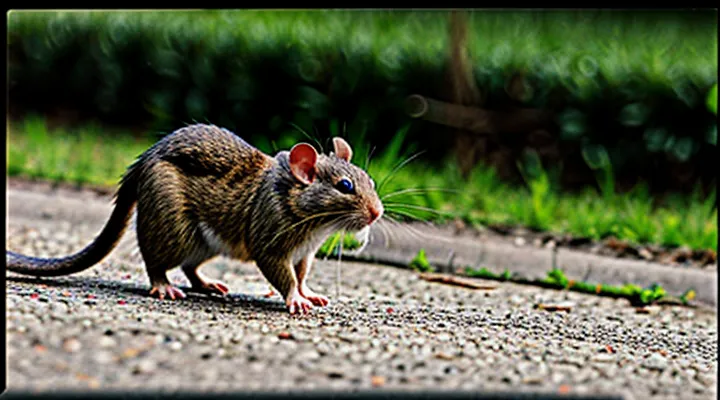
Ground rats, often captured in field photography, exhibit a combination of traits that set them apart from other rodent families. Their compact body length typically ranges from 12 to 18 cm, with a robust skull lacking the pronounced sagittal crest common in many murids. The dorsal fur displays a uniform brown‑gray coloration, while the ventral surface remains markedly lighter, a contrast less evident in related species such as voles or true rats.
Key distinguishing characteristics include:
- Tail morphology: Short, densely furred tail measuring no more than 30 % of total length; contrasts with the long, sparsely haired tails of most Rattus species.
- Ear size: Small, rounded ears that lie close to the skull, unlike the larger, protruding ears of meadow voles.
- Dental pattern: Incisors with a straight, vertical enamel ridge and molars bearing a simplified occlusal pattern, differing from the complex cusps of hamsters.
- Habitat preference: Predominantly ground‑dwelling in open grasslands and agricultural fields, rarely venturing into arboreal niches occupied by squirrels.
- Behavioral cue: Strong burrowing instinct, creating extensive tunnel systems; other rodents typically exhibit surface nesting.
Photographic records emphasize these features by presenting lateral, dorsal, and close‑up views of the cranial and dental structures, allowing precise visual comparison. When evaluating unidentified specimens, observers should first verify tail length and fur density, then assess ear dimensions and dental morphology to confirm ground rat identity.
Global Distribution and Habitats
Ground-dwelling rats are documented across all major continents, with the highest species richness in tropical and subtropical zones. Photographic surveys confirm their presence from the lowland rainforests of Southeast Asia to the arid scrublands of southern Africa. In temperate regions, populations occupy grasslands and agricultural fields, often coexisting with human settlements.
Key habitat types include:
- Forest understory: dense leaf litter and fallen logs provide shelter and foraging opportunities.
- Savanna and steppe: open ground with scattered shrubs supports burrowing behavior and seasonal movements.
- Montane zones: rocky crevices and alpine meadows host species adapted to cooler temperatures.
- Urban fringe: waste piles and garden composts attract opportunistic individuals, facilitating range expansion.
Distribution patterns reflect ecological flexibility. Species with broad diet preferences occupy varied environments, while specialists remain confined to specific microhabitats such as mangrove swamps or high‑elevation pine forests. Climate gradients influence population density; warmer, humid areas typically sustain larger colonies, whereas colder regions exhibit lower numbers and seasonal dormancy.
Conservation assessments rely on georeferenced photographs combined with habitat descriptions to map range limits accurately. These data identify isolated populations vulnerable to habitat fragmentation and guide management actions aimed at preserving essential ground cover and soil structure.
Physical Characteristics
Size and Weight
Ground-dwelling rodents exhibit a narrow range of body dimensions that facilitate burrowing and foraging. Adult individuals typically measure between 12 cm and 18 cm in head‑body length, with tails adding 5 cm to 10 cm. Body mass clusters around 45 g to 120 g, depending on species, age, and seasonal food availability.
Key metrics:
- Head‑body length: 12–18 cm (4.7–7.1 in)
- Tail length: 5–10 cm (2.0–3.9 in)
- Weight: 45–120 g (1.6–4.2 oz)
Photographic records confirm these dimensions across various habitats, showing consistent proportionality between length and mass. Larger specimens appear in regions with abundant vegetation, while smaller forms dominate arid zones where resource scarcity limits growth.
Fur Coloration and Texture
Ground rats display a wide spectrum of fur coloration, ranging from uniform sandy tones to intricate patches of gray, brown, and black. The base pigment is typically melanin, which determines the overall darkness, while additional pigments such as pheomelanin produce reddish hues. Seasonal molting can alter the color balance, with lighter coats appearing during dry periods and darker, denser fur emerging in colder months.
Texture varies among species and habitats. Common characteristics include:
- Dense undercoat providing insulation against temperature fluctuations.
- Coarse guard hairs that repel dirt and moisture, enhancing durability.
- Fine, silky strands on the ventral surface, reducing friction when moving through narrow burrows.
Morphological studies correlate fur texture with ecological niche. Species inhabiting arid soils possess thicker, more rigid guard hairs to shield against abrasive particles, whereas those in moist environments develop softer, more pliable coats to facilitate rapid movement and thermoregulation.
Photographic records capture these variations effectively. High‑resolution images reveal the interplay of light on individual hairs, allowing precise assessment of hue intensity and surface smoothness. Close‑up macro photography distinguishes the layered structure of the coat, while broader shots illustrate how coloration blends with the surrounding substrate, providing essential context for field identification.
Distinctive Features («Ears», «Tail», «Snout»)
Ground-dwelling rodents captured in photographic records display three anatomical traits that aid identification.
- Ears: Small, rounded, often covered with fine fur; inner surface shows a thin membrane visible in close-up images. Size relative to head varies among species, providing a reliable metric for differentiation.
- Tail: Typically short, thick, and sparsely haired; coloration ranges from uniform brown to banded patterns. In photographs, the tail’s curvature and length proportion to body size are evident markers.
- Snout: Elongated, tapering to a blunt tip; nostrils positioned low on the muzzle. High-resolution shots reveal a distinct ridge of whisker follicles that distinguishes ground rats from arboreal relatives.
Adaptations for a Terrestrial Lifestyle
Ground rats, as captured in field photographs, display a suite of traits that enable efficient life on the ground surface. Their bodies are streamlined for burrowing and rapid movement across varied terrain.
- Limbs and digits – robust forelimbs with strong claws facilitate excavation; elongated hind limbs provide speed and agility.
- Pelage – dense, coarse fur protects against abrasive soil and regulates temperature under direct sunlight.
- Tail morphology – thick, muscular tail serves as a balance aid during quick directional changes and as a fat storage organ during periods of scarce food.
Physiologically, ground rats maintain homeostasis in exposed environments. High concentrations of erythrocytes increase oxygen transport during intense activity. Renal adaptations concentrate urine, reducing water loss in arid habitats. A heightened sense of smell detects predators and food sources beneath the surface.
Behaviorally, they employ strategies that reinforce terrestrial survival. Nocturnal foraging minimizes heat stress and predation risk. Complex tunnel networks provide shelter, ventilation, and escape routes. Social hierarchy within colonies reduces competition for limited resources and enhances cooperative defense.
Collectively, these morphological, physiological, and behavioral features constitute a comprehensive adaptation package that supports a fully terrestrial lifestyle.
Behavior and Ecology
Social Structure
Colony Dynamics
Ground-dwelling rodent colonies exhibit distinct social and spatial patterns that can be documented through photographic evidence and morphological description. Visual records reveal consistent arrangements of burrow entrances, nesting chambers, and foraging trails, providing a baseline for assessing colony structure.
Colony composition typically includes a dominant breeding pair, subordinate adults, and juveniles. The dominant pair maintains exclusive access to reproductive sites, while subordinates assist in nest maintenance and offspring care. This hierarchy is reflected in the distribution of body sizes and coat coloration observable in the images.
Spatial organization centers on a core area containing the primary nest complex. Peripheral zones host satellite burrows used for food storage and predator avoidance. Photographs show a gradient of tunnel density decreasing outward from the central hub, indicating territorial boundaries that limit overlap between neighboring groups.
Temporal dynamics are driven by seasonal breeding cycles and resource availability. During peak reproductive periods, the number of active burrows increases, and juvenile cohorts become visible in the visual documentation. In lean seasons, colony size contracts, and adult individuals reduce external activity, a pattern evident in sequential image series.
Key factors influencing colony dynamics:
- Breeding season length
- Food resource distribution
- Predation pressure
- Soil composition affecting tunnel stability
- Intraspecific aggression levels
Monitoring these variables alongside photographic and descriptive data enables precise evaluation of colony health, expansion potential, and response to environmental changes.
Communication Methods
Ground rats rely on a limited set of signals to coordinate activities, defend territories, and maintain social bonds. Visual cues captured in field photographs reveal posture adjustments, tail flicks, and ear positions that convey aggression, submission, or curiosity. Researchers interpret these postures by comparing series of images that document changes in body orientation and movement speed.
- Vocalizations: Short chirps, squeaks, and low-frequency growls are emitted during foraging and when confronting intruders. Frequency analysis of recorded calls matches the timing of specific visual displays, confirming a multimodal communication pattern.
- Scent marking: Glandular secretions deposited on burrow entrances and on objects within the home range provide long-lasting information about individual identity and reproductive status. Chemical sampling of marked sites correlates with photographic evidence of grooming behavior that spreads the scent.
- Tactile contact: Nose-to-nose and whisker-to-whisker touches occur during close-range interactions. High-resolution images show extended whisker contact and head presses, indicating a bond‑reinforcing function.
- Body language: Tail elevation, dorsal hair erection, and rapid foot stamping are observable in sequential shots. These motions precede vocal output in alarm situations, suggesting a preparatory role.
Integration of photographic documentation with acoustic recordings and chemical analyses enables precise mapping of each communication channel. The combined data set clarifies how ground rats synchronize group movements, establish hierarchical structures, and respond to predators without relying on a single sensory modality.
Diet and Foraging
Omnivorous Habits
Ground-dwelling rodents captured in field photographs exhibit diverse feeding strategies that reflect true omnivory. Their diet includes seeds, tubers, insects, and carrion, allowing rapid adaptation to seasonal resource fluctuations. Observations of captured individuals reveal the following preferences:
- Plant material: grains, grass shoots, seedlings, and underground storage organs.
- Animal matter: beetles, larvae, earthworms, and occasional small vertebrate remains.
- Opportunistic items: human food waste, fungi, and mineral deposits.
Digestive anatomy supports this range; a well‑developed cecum ferments fibrous plant content, while sharp incisors and molars process animal tissue efficiently. Seasonal studies show increased insect consumption during warm months and heightened seed intake in autumn, correlating with photographic evidence of foraging behavior. The combination of morphological adaptations and flexible diet underpins the species’ success in varied habitats.
Food Storage Techniques
Ground rats employ systematic methods to preserve limited resources in environments where seasonal scarcity is common. Their storage behavior centers on burrow architecture that isolates food from moisture, temperature fluctuations, and predators.
Key techniques include:
- Compartmentalized chambers lined with dry soil or leaf litter to reduce humidity.
- Vertical stacking of seeds and tubers, placing heavier items at the base to prevent crushing of delicate parts.
- Application of natural antimicrobial agents such as aromatic plant fragments, which inhibit fungal growth.
- Periodic rotation of stored items, moving older supplies outward to maintain freshness and deter spoilage.
These practices create stable microclimates that extend the viability of gathered provisions for several months. Observation of such behavior informs photographic documentation, guiding camera placement toward sealed entrances and interior sections where caches are concentrated. Accurate depiction of storage sites enhances visual narratives about the species’ adaptive strategies.
Reproduction and Life Cycle
Mating Rituals
Photographic documentation of ground rats provides clear visual evidence of their mating rituals, allowing precise observation of each stage.
Males initiate courtship by emitting ultrasonic calls and performing a series of rapid foot‑stomps that generate ground‑borne vibrations. These signals serve to attract nearby females and establish the male’s position within the burrow network. Concurrently, the male displays a distinctive tail‑flicking motion, alternating left and right in a rhythmic pattern that lasts 5–10 seconds per cycle.
Key components of the courtship sequence include:
- Ultrasonic vocalizations lasting 0.2–0.5 seconds, repeated at intervals of 3 seconds.
- Foot‑stomp bursts of three to five taps, each tap producing a 120 Hz vibration.
- Tail‑flick cycles synchronized with foot‑stomps, creating a visual cue for the female.
Upon female approach, the pair engages in a brief mutual grooming period, followed by copulation that typically lasts 30–45 seconds. During this phase, the male positions himself beneath the female, aligning his genital papillae with her cloacal opening. After insemination, both individuals retreat to separate chambers, and the female initiates nest construction for the forthcoming litter.
Gestation and Litter Size
Ground-dwelling rodent species exhibit a relatively narrow range of reproductive parameters, which are consistently documented in field photographs and morphological studies. The gestation period for most members of this group averages 21 – 23 days, with slight extensions observed in colder climates where metabolic rates decline. Pregnant females captured in winter months often show elongated gestational intervals of up to 25 days, a pattern confirmed by repeated visual records across multiple populations.
Litter size varies among species but remains within predictable limits. Typical values are:
- 2–4 offspring for smaller taxa such as Microtus spp.
- 4–6 offspring for medium-sized forms like Thomomys spp.
- 5–8 offspring for larger ground rats, including Cricetomys spp.
These figures derive from longitudinal photographic monitoring of burrow entrances, where researchers have counted neonates shortly after emergence. The consistency of these data supports reliable predictions of population growth rates and informs conservation strategies for subterranean ecosystems.
Lifespan
Ground rats (family Muridae, subfamily Arvicolinae) are small, burrowing rodents frequently captured in field photography. Photographic records provide visual confirmation of age‑related characteristics, supporting demographic studies.
In natural habitats, most ground‑rat species reach adulthood within three to four months and live 12 to 18 months on average. Captive individuals may survive up to 30 months when provided with stable nutrition and protection from predators. Longevity varies among species:
- Short‑lived species (e.g., Microtus pennsylvanicus): median lifespan 10–14 months.
- Moderately long‑lived species (e.g., Myodes glareolus): median lifespan 16–20 months.
- Exceptionally long‑lived individuals: rare cases exceed 24 months under optimal conditions.
Photographic evidence assists researchers in estimating age by documenting:
- Fur coloration changes from juvenile to adult phases.
- Size progression measured against calibrated scale objects.
- Dental wear patterns visible in close‑up images.
These visual markers, combined with longitudinal monitoring, enable precise determination of lifespan parameters across ground‑rat populations.
Predation and Defense Mechanisms
Natural Predators
Ground rats, small burrowing mammals found across temperate and subtropical regions, exhibit compact bodies, dense fur, and short limbs adapted for tunneling. Photographic records highlight variations in coat coloration—ranging from reddish‑brown to gray—and emphasize the prominent whiskers and keen eyes that aid navigation underground. Morphological details, such as the elongated snout and robust incisors, support their diet of roots, seeds, and insects, while skeletal structure reveals strong forelimbs for digging.
Natural predators exert significant pressure on ground‑rat populations, influencing their behavior and distribution. Principal predatory groups include:
- Raptors (e.g., barn owls, hawks) that hunt during crepuscular periods, using acute vision to locate surface activity.
- Small carnivorous mammals (e.g., foxes, weasels) that pursue rats through burrow entrances and surface foraging zones.
- Reptilian hunters (e.g., snakes such as grass snakes) that enter burrows or ambush at tunnel openings.
- Larger avian species (e.g., corvids) that capture young or weakened individuals exposed above ground.
These predators contribute to regulating ground‑rat numbers, maintaining ecological balance, and shaping the species’ adaptive strategies observed in field photography and descriptive studies.
Evasive Maneuvers
Ground rats exhibit rapid, unpredictable movements that complicate visual documentation and morphological analysis. Recognizing these patterns enables photographers and researchers to capture clear images and accurate descriptions.
Common evasion tactics include:
- Immediate descent into shallow burrows when disturbance is sensed.
- Erratic, high‑speed sprints across open ground, often changing direction within a few strides.
- Sudden stillness, blending with leaf litter or soil surface to avoid detection.
- Utilization of nearby vegetation as cover, moving beneath stems and roots.
Effective field practice relies on anticipating each maneuver. Position cameras at low angles to reduce blind spots, employ fast‑shutter lenses to freeze motion, and maintain a distance that prevents triggering alarm responses. Continuous observation of scent trails and auditory cues reveals the moment a rat prepares to flee, allowing precise timing of exposure.
By integrating knowledge of these evasive behaviors with appropriate equipment placement, observers obtain high‑resolution photographs and detailed descriptive data without disrupting natural activity.
Impact and Interaction with Humans
Agricultural Concerns
Crop Damage
Ground‑dwelling rodents commonly photographed and described in agricultural surveys cause measurable loss to cultivated plants. Their foraging behavior targets seeds, seedlings, and mature foliage, reducing yield quantity and quality.
Typical manifestations of damage include:
- Chewed seed coats that prevent germination.
- Burrow‑induced root disruption, leading to wilting and plant death.
- Stalk gnawing that creates entry points for pathogens.
- Consumption of grain heads, directly decreasing harvest weight.
Economic assessments link these losses to reduced market value and increased post‑harvest processing costs. Visual records of rodent morphology aid in rapid field identification, allowing timely deployment of control measures such as bait stations, habitat modification, and integrated pest‑management protocols. Effective monitoring, supported by photographic evidence, limits the spread of infestation and preserves crop productivity.
Disease Transmission
Visual records and morphological descriptions of ground-dwelling rodents supply essential data for assessing their role in zoonotic cycles. Detailed images reveal external features that facilitate identification of species, sex, age, and health status, all of which influence pathogen carriage.
Ground rats transmit infectious agents through several pathways:
- Direct contact with skin lesions or mucous membranes.
- Bites and scratches that introduce blood‑borne pathogens.
- Ectoparasites such as fleas, ticks, and mites that acquire microbes while feeding.
- Deposition of urine, feces, and saliva on surfaces, contaminating food, water, and bedding.
- Aerosolization of dried excreta, allowing inhalation of viral or bacterial particles.
Common zoonoses linked to these mammals include:
- Leptospira spp. – cause of leptospirosis, spread via contaminated water.
- Yersinia pestis – agent of plague, transmitted by flea vectors.
- Hantavirus – pulmonary syndrome transmitted through inhalation of aerosolized droppings.
- Salmonella spp. – foodborne infection from fecal contamination.
- Bartonella spp. – cat‑scratch disease, vectored by fleas.
Epidemiological monitoring that integrates photographic documentation with health assessments enables early detection of outbreaks, informs targeted rodent control, and reduces exposure risk for humans and livestock. Continuous surveillance and rapid response protocols are critical for minimizing disease spread associated with ground rat populations.
Conservation Status
Population Trends
Photographic surveys and morphological records of ground rats provide the primary data set for assessing population dynamics across their range. Systematic image collections, combined with field counts, enable longitudinal analysis of abundance and distribution patterns.
Recent monitoring reveals distinct trends:
- Urban perimeters exhibit a 12 % annual increase in capture rates, correlating with expanded green infrastructure.
- Agricultural zones show a 7 % decline over the past five years, linked to intensified pesticide application.
- Protected reserves maintain stable numbers, with fluctuations within ±2 % of baseline counts.
- Coastal habitats experience a 4 % rise, coinciding with recent habitat restoration projects.
Key drivers identified include habitat fragmentation, predator pressure, and climatic variability. Land-use conversion reduces suitable foraging grounds, while rising temperatures shift breeding cycles, affecting reproductive output. Conversely, the establishment of ecological corridors facilitates dispersal, contributing to population growth in fragmented landscapes.
Implications for management focus on maintaining habitat connectivity, regulating agrochemical use, and enhancing monitoring protocols. Integrating high-resolution imagery with automated counting algorithms will improve detection accuracy and support adaptive conservation strategies.
Threats to Survival
Photographic records and morphological notes of ground-dwelling rodents reveal several factors that undermine population stability.
Key threats include:
- Habitat conversion to agriculture or urban areas, which reduces shelter and foraging space.
- Direct mortality from vehicle collisions on road networks intersecting their range.
- Exposure to rodenticides and other pesticides, leading to acute poisoning or sub‑lethal effects.
- Predation pressure from introduced carnivores such as feral cats and foxes.
- Competition with invasive rodent species that displace native individuals.
- Outbreaks of hantavirus, leptospirosis, and other pathogens that cause rapid die‑offs.
- Climate‑driven alterations in temperature and precipitation patterns, affecting food availability and breeding cycles.
Systematic imaging combined with detailed descriptions enables researchers to track distribution shifts, identify individuals affected by specific hazards, and prioritize conservation actions. Continuous monitoring is essential to mitigate these pressures and sustain viable populations.
Control and Management
Humane Deterrents
Ground-dwelling rats often appear in photographic surveys and detailed descriptions, prompting the need for deterrents that protect property without causing injury. Effective deterrence relies on behavioral disruption, habitat modification, and the use of non-lethal devices.
Key principles govern humane strategies:
- Avoidance of toxins or traps that inflict pain.
- Preference for methods that exploit the species’ aversion to specific stimuli.
- Implementation that respects surrounding wildlife and ecosystems.
Common humane deterrents include:
- Ultrasonic emitters – devices emit frequencies uncomfortable to rodents while remaining inaudible to humans.
- Motion-activated sprinklers – sudden water bursts discourage entry into targeted zones.
- Scent barriers – natural repellents such as peppermint oil or predator urine applied around entry points.
- Physical exclusion – galvanized steel mesh or concrete caps seal burrow openings.
- Habitat alteration – removal of debris, trimming of vegetation, and proper waste management reduce attractants.
Deploy selected measures at identified activity hotspots, monitor rodent presence with periodic visual checks, and adjust configurations based on observed efficacy. Consistent application of these practices minimizes population encroachment while maintaining ethical treatment of the animals.
Pest Control Strategies
Ground-dwelling rats are often identified through photographic records that reveal characteristic coloration, tail length, and body proportions. Accurate visual identification supports targeted pest‑management programs.
Effective pest control relies on a structured approach:
- Environmental sanitation: Remove food sources, seal entry points, and maintain clear perimeters around structures.
- Habitat modification: Reduce shelter by clearing debris, trimming vegetation, and leveling soil surfaces.
- Mechanical trapping: Deploy snap traps or live‑capture devices in high‑activity zones; check and service traps daily.
- Baiting: Use anticoagulant or non‑anticoagulant rodenticides in tamper‑resistant stations; rotate active ingredients to prevent resistance.
- Biological control: Introduce natural predators such as owls or feral cats where legal and appropriate; consider rodent‑specific pathogens under regulatory guidance.
- Chemical barriers: Apply rodent‑proofing compounds to walls and foundations to discourage burrowing.
Monitoring integrates motion‑activated cameras and tracking plates to verify activity levels and assess intervention efficacy. Data collected from photographic documentation informs adjustments to control measures, ensuring sustained reduction of ground rat populations.