
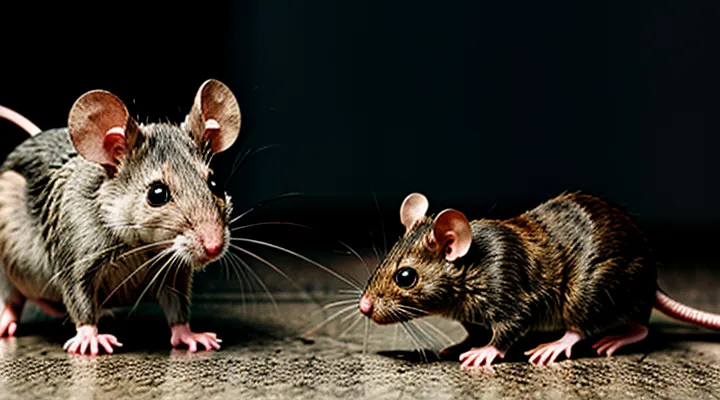
Physical Characteristics
Size and Weight
Body Length
Body length serves as a primary metric for distinguishing two of the most studied rodent species. Precise measurements enable accurate identification in laboratory settings, field surveys, and pest management.
Typical dimensions are as follows:
-
House mouse (Mus musculus)
- Head‑body length: 6–10 cm
- Tail length: 5–9 cm, often equal to or slightly shorter than the head‑body portion
- Total length (including tail): 11–19 cm
-
Norway rat (Rattus norvegicus)
- Head‑body length: 16–20 cm
- Tail length: 15–21 cm, usually comparable to the head‑body portion
- Total length (including tail): 31–41 cm
These ranges reflect species‑specific growth patterns and genetic constraints. Overlap occurs only at the extremes of mouse tail length and the lower bound of rat head‑body length, making combined measurements (head‑body plus tail) more reliable for differentiation.
Sexual dimorphism influences size modestly. Male mice exceed females by roughly 10 % in both head‑body and tail lengths; male rats show a similar but slightly larger disparity, up to 15 % greater total length. Age also affects measurements: juveniles display proportionally longer tails relative to body size, converging toward adult ratios after weaning.
Consequently, body length—recorded as separate head‑body and tail components—provides a robust, quantifiable basis for species discrimination, supporting precise taxonomy, experimental design, and control strategies.
Tail Length
Tail length serves as a primary morphological marker distinguishing the two common laboratory rodents. In most mouse species, the tail measures approximately 75–100 % of head‑body length, often exceeding the body by a few centimeters. In contrast, rat tails typically range from 80 % to 120 % of head‑body length, with adult Norway rats displaying tails that can be up to 30 cm long, surpassing the body length by a greater margin than in mice.
The proportional differences affect locomotion and thermoregulation. A relatively longer tail in rats enhances balance during rapid movements and provides a larger surface for heat dissipation. Mice, with slightly shorter tails, rely more on rapid, agile maneuvers in confined spaces; their tails still contribute to thermal balance but to a lesser extent.
Both rodents share several tail characteristics:
- Covered with dense, fine hairs that aid in sensory perception.
- Possess a vertebral column extending the full length of the tail, enabling flexibility.
- Exhibit a tapered shape that narrows toward the tip, reducing drag during movement.
- Display a pinkish skin surface lacking fur at the distal end, facilitating vasodilation for heat release.
Understanding these measurements and functions clarifies how tail morphology reflects the ecological niches occupied by each species.
Weight Range
Mice typically weigh between 15 g and 35 g, with most laboratory strains clustering around 20 g to 30 g. Rats exhibit a broader spectrum, ranging from 150 g for small juveniles to over 500 g for mature individuals; common laboratory strains often fall between 250 g and 350 g.
- Mouse: 15 – 35 g (average 20 – 30 g)
- Rat: 150 – 500 g (average 250 – 350 g)
Weight differences influence metabolic rate, dietary needs, and handling techniques. The larger mass of rats provides greater resilience to stressors, while the lighter mouse body demands more precise dosing and environmental control.
Head and Facial Features
Snout Shape
Snout morphology provides a reliable criterion for separating mice from rats in taxonomic and ecological studies.
Mice possess a slender, triangular snout that tapers sharply toward the tip. The rostral bones are relatively short, producing a pointed profile that enhances maneuverability in narrow burrows. The nasal opening is narrow, and the upper incisors emerge from a steep angle, contributing to the acute appearance.
Rats exhibit a broader, more robust snout. The rostral region is flattened and expands laterally, giving a blunt silhouette. Nasal openings are wider, and the incisor orientation is less steep, supporting stronger gnawing forces.
Both genera share several structural features:
- Presence of vibrissae arranged in rows along the rostral margin.
- Similar dentition pattern: a single pair of continuously growing upper incisors.
- Comparable bone composition of the premaxilla and maxilla, reflecting shared rodent ancestry.
Ear Size and Shape
Mice and rats exhibit distinct ear morphologies that reflect adaptations to their ecological niches. Both species possess external pinnae, but size, proportion, and surface features differ markedly.
- Mice: pinna length averages 6–8 mm; width is narrow, creating a triangular silhouette. The cartilage framework is relatively delicate, allowing greater flexibility. Sparse fur covers the outer surface, exposing more of the skin and blood vessels.
- Rats: pinna length ranges from 12–15 mm; width is broader, producing a rounded, robust appearance. The cartilage is thicker, providing structural stability. Dense fur coats the pinna, reducing visible skin.
These differences affect auditory sensitivity. Smaller, thinner ears in mice enhance high‑frequency detection, facilitating communication within confined burrows. Larger, thicker ears in rats improve low‑frequency reception, advantageous for detecting distant predators.
Despite the contrast, several traits are shared:
- Both species have a well‑developed auditory canal lined with hair follicles and sebaceous glands.
- The inner ear structures (cochlea, vestibular apparatus) follow the generic rodent blueprint, enabling comparable balance and spatial orientation.
- Vascularization of the pinna supports thermoregulation in both mice and rats, allowing heat exchange through the ears.
Overall, ear size and shape serve as reliable morphological markers for distinguishing mice from rats while retaining core auditory features common to the Muridae family.
Eye Size
Eye size is a primary morphological parameter used to distinguish small rodents.
- Mus musculus (common house mouse) possesses eyes with an axial length of approximately 2.5 mm and a horizontal diameter near 2 mm.
- Rattus norvegicus (Norway rat) exhibits eyes averaging 3.5 mm in axial length and 2.8 mm in horizontal diameter.
The larger ocular dimensions in rats correlate with a wider retinal surface, providing enhanced visual acuity for nocturnal foraging. Mice, with comparatively smaller eyes, rely more heavily on whisker-mediated tactile perception. Both species maintain a similar eye‑to‑head ratio, reflecting conserved cranial architecture despite absolute size differences.
Relative eye size influences field of view: rats achieve a broader peripheral vision field, while mice possess a narrower but more focused central vision. These anatomical variations contribute to distinct behavioral strategies in navigation and predator avoidance.
Fur and Coloration
Texture
Mice and rats share several tactile characteristics, yet distinct features differentiate their integumentary surfaces.
Both species possess a soft, dense pelage that provides insulation and aids in thermoregulation. The fur of each animal is composed of a similar three‑layer structure: guard hairs, undercoat, and downy fibers, resulting in comparable overall texture when examined under low magnification. Their vibrissae are similarly thickened, highly innervated hairs that function as mechanosensory organs for spatial navigation.
Key points of divergence:
- Guard hair length – rats exhibit longer, coarser guard hairs than mice, giving the dorsal coat a rougher feel.
- Undercoat density – mice have a denser undercoat, producing a finer, smoother texture across the body.
- Footpad surface – rat footpads are thicker and exhibit a more pronounced keratinized ridge pattern, whereas mouse footpads are thinner and smoother, influencing grip on various substrates.
- Tail covering – rat tails are sparsely furred with a tougher, leathery skin, while mouse tails are fully covered by fine hair, resulting in a softer, more pliable texture.
These tactile distinctions affect handling, habitat preference, and experimental manipulation, while the shared pelage architecture underlies many common physiological responses across the two rodent groups.
Common Colors
Mice and rats exhibit a relatively narrow range of natural fur colors, each resulting from specific pigment genes and, occasionally, selective breeding. The most frequently observed hues include:
- Brown (agouti) – a mixture of dark and light bands on individual hairs, common in wild house mice and many field rats.
- Grey – uniform or speckled, typical of laboratory mouse strains and some urban rat populations.
- Black – solid, found in certain mouse breeds (e.g., C57BL/6) and in black rat (Rattus rattus) variants.
- White (albino) – lack of pigment, prevalent in laboratory mice and rats used for research.
- Spotted or piebald – patches of white and darker fur, occurring in both species through recessive alleles.
Color distribution differs between the two rodents. Wild mice more often display the agouti pattern, whereas rats show a higher incidence of solid grey or black coats in urban environments. Albino strains dominate laboratory colonies for both species, providing a standardized visual marker for genetic studies.
Hybridization or selective breeding can introduce atypical colors, such as cinnamon, silver, or coat mutations that affect hair texture and density. These variations are documented in breeding programs but remain rare in natural populations.
Behavioral Differences
Habitat and Nesting
Preferred Environments
Mice and rats belong to the same order but occupy different ecological niches, influencing their preferred habitats.
Mice favor compact, concealed spaces where temperature remains stable. Typical environments include:
- Small burrows in soil or under dense vegetation
- Interior corners of buildings, especially near food storage
- Laboratory cages with bedding material that mimics natural cover
Rats demonstrate a tolerance for larger, more open areas and can exploit both natural and urban settings. Their preferred habitats encompass:
- Extensive sewer systems and underground tunnels
- Open fields with abundant ground cover and water sources
- Commercial warehouses and restaurants where waste accumulates
Both species exhibit adaptability to human‑made structures, yet mice prioritize tight, hidden refuges, while rats select larger, resource‑rich locales. This distinction shapes their distribution patterns and influences control strategies.
Nest Construction
Mice and rats construct nests to provide thermal insulation, protection from predators, and a site for raising offspring. Both species gather loose materials such as shredded paper, fabric fibers, and plant debris, arranging them into compact, dome‑shaped structures that fit within confined spaces.
Common features
- Use of soft, readily available items (e.g., cotton, paper, dried vegetation).
- Preference for hidden locations: under furniture, inside wall voids, or within burrows.
- Creation of a central chamber surrounded by layered insulation.
Distinct characteristics
- Size: rat nests are larger, accommodating multiple adults and litters; mouse nests are smaller, often built for a single breeding pair.
- Complexity: rat constructions frequently include separate zones for sleeping, food storage, and waste, whereas mouse nests consist mainly of a single sleeping area.
- Material selection: rats incorporate sturdier objects such as wood chips or plastic fragments, while mice rely more heavily on fine fibers and soft textiles.
- Social structure: rats may build communal nests shared by several individuals, while mice typically construct solitary or pair‑based nests.
These observations illustrate that, despite shared functional goals, the architecture and composition of nests differ markedly between the two rodent groups.
Diet and Feeding Habits
Omnivores vs. Herbivores
Mice and rats, while closely related, exhibit distinct dietary strategies that influence their ecological niches. Both species possess the dental and enzymatic capacity to consume animal protein, yet mice typically rely more heavily on plant material, seeds, and insects, whereas rats demonstrate a broader omnivorous pattern, regularly ingesting carrion, grain, and human waste. This divergence is reflected in the proportion of herbivorous versus omnivorous behavior observed across populations.
- Mice: diet composition 60‑70 % plant matter, occasional insects; shorter gastrointestinal tract suited to rapid processing of carbohydrates.
- Rats: diet composition 40‑50 % animal protein, 50‑60 % plant matter; elongated intestine allowing efficient extraction of nutrients from diverse sources.
- Dental morphology: both have continuously growing incisors, but rats exhibit larger molar surfaces for grinding tougher animal tissues.
- Metabolic adaptation: rats maintain higher basal metabolic rates, supporting greater protein turnover; mice conserve energy through lower protein intake.
Understanding these feeding distinctions clarifies why mice often thrive in seed‑rich habitats, while rats dominate environments with abundant mixed waste. The contrast in omnivorous versus herbivorous tendencies underscores the broader pattern of niche partitioning between the two rodent groups.
Food Storage
Mice and rats both gather and preserve food to survive periods of scarcity, yet the mechanisms they employ differ in scale, organization, and environmental preference.
Both species collect edible items from the surrounding habitat and hide them in concealed locations. Typical caches consist of seeds, grains, insects, and human‑derived scraps. Storage sites are usually situated in burrow chambers, under debris, or within wall voids, providing protection from predators and moisture. The act of caching is driven by instinctual assessment of resource availability and is performed by individual rodents without direct cooperation.
-
Mice
-
Rats
- Cache size: up to several hundred grams, often accumulated over weeks.
- Preferred sites: deeper burrow chambers, sewer systems, or concealed compartments in structures.
- Frequency: periodic, long‑term accumulation during abundant periods.
- Retrieval: systematic inspection of multiple caches, with selective consumption based on spoilage risk.
The contrast in cache magnitude and spatial complexity reflects differences in body size, social organization, and habitat exploitation. Rats, being larger and more socially tolerant, can maintain extensive stores that support colony members, whereas mice rely on modest, individual reserves.
Understanding these storage patterns informs pest‑management strategies. Targeted inspection of likely cache locations—shallow nesting areas for mice and deeper structural voids for rats—enhances detection and removal efficiency. Monitoring seasonal shifts in caching activity aids in predicting peak infestation periods and optimizing intervention timing.
Social Behavior
Solitary vs. Colony Living
Mice and rats exhibit distinct social structures that influence their behavior, physiology, and laboratory handling. In natural settings, most mouse species, such as the common house mouse (Mus musculus), tend toward solitary or small family groups, whereas rats, particularly the brown rat (Rattus norvegicus), form large, stable colonies with hierarchical organization.
Key contrasts in solitary versus colony living include:
- Territory size: solitary mice defend relatively small home ranges; colony rats occupy extensive burrow systems shared among many individuals.
- Stress response: isolated mice display heightened corticosterone spikes when forced into groups; rats show reduced stress markers when integrated into an established colony.
- Reproductive strategy: solitary mice often breed seasonally with limited litter size; colony rats reproduce year‑round, producing larger litters supported by communal nesting.
- Disease transmission: dense rat colonies facilitate rapid pathogen spread; solitary mice experience lower transmission rates but may suffer from increased parasite loads due to limited grooming partners.
Despite these differences, both rodents possess flexible social capacities. Laboratory strains of mice can adapt to group housing under controlled conditions, and certain rat populations exhibit solitary tendencies when resources are scarce. Both species rely on olfactory cues to recognize conspecifics, maintain dominance hierarchies, and coordinate reproductive activities, indicating shared neurobiological mechanisms underlying social interaction.
Understanding the balance between solitary and colony lifestyles informs experimental design, welfare protocols, and ecological management. Accurate assessment of each species’ innate social preferences enables researchers to minimize stress, optimize breeding programs, and predict population dynamics in wild and urban environments.
Communication
Mice and rats employ a range of communication channels that reflect both shared evolutionary origins and species‑specific adaptations.
Mice rely heavily on ultrasonic vocalizations (USVs) for mating, territorial disputes, and pup‑mother interactions. Their USVs typically occupy 40–80 kHz, with brief, high‑frequency bursts. Chemical signals dominate social hierarchy maintenance; major urinary proteins and pheromonal blends convey reproductive status and individual identity. Tactile cues, transmitted through whisker contact, support short‑range navigation and nest coordination.
Rats produce USVs across a broader spectrum (20–100 kHz), differentiating between distress, play, and sexual contexts. Their vocal repertoire includes longer, modulated calls that encode emotional valence. Olfactory communication involves a more complex array of pheromones, enabling nuanced recognition of kin and strangers. Auditory alarm calls supplement visual and tactile alerts during predator threats.
Key distinctions:
- Frequency range: mice ≈ 40–80 kHz; rats ≈ 20–100 kHz.
- Call structure: mice = brief bursts; rats = extended, modulated sequences.
- Pheromone diversity: rats exhibit greater compositional complexity.
Core similarities:
- Both species use USVs for social interaction.
- Olfactory signaling underlies territory marking and reproductive cues.
- Whisker‑mediated tactile communication facilitates close‑range coordination.
Overall, communication in these rodents integrates acoustic, chemical, and tactile modalities, with species‑specific variations shaping their social behavior.
Reproduction
Gestation Period
Mice and rats exhibit distinct gestation lengths despite sharing a similar reproductive strategy. The gestation period for the common house mouse (Mus musculus) averages 19–21 days, while the Norway rat (Rattus norvegicus) typically requires 21–23 days to complete pregnancy. Both species maintain a short prenatal phase that enables rapid population turnover.
Key comparative points:
- Duration: mouse gestation is marginally shorter by 2–4 days.
- Litter size: mice produce 5–12 offspring; rats yield 6–12, reflecting comparable reproductive output.
- Developmental maturity: newborn mice and rats are altricial, lacking fur and open eyes at birth, necessitating extensive maternal care.
The brief gestational intervals in both rodents support their role as opportunistic breeders, allowing swift response to favorable environmental conditions.
Litter Size
Mice and rats produce litters that vary in size according to species, strain, and environmental conditions. A typical laboratory mouse litter contains 5–8 pups, while a laboratory rat litter averages 8–12 pups. Wild populations display broader ranges: mouse litters may fall between 3 and 10, and rat litters between 6 and 14.
- Mice generally have smaller litters than rats, reflecting differences in body size and reproductive strategy.
- Rat females can sustain larger uterine capacity, allowing more embryos to develop simultaneously.
- Both species exhibit a rapid gestation period (≈19–21 days for mice, ≈21–23 days for rats) and can produce multiple litters per year, contributing to high reproductive output.
Litter size in both rodents is influenced by nutrition, age of the dam, and social environment. Adequate protein intake and optimal housing conditions increase the number of viable offspring, while stressors such as overcrowding or poor diet reduce litter size. Despite species-specific averages, the underlying reproductive mechanisms—ovulation rate, implantation efficiency, and postpartum estrus—are fundamentally similar in mice and rats.
Lifespan
Mice and rats share a short natural lifespan relative to larger mammals, yet the exact duration differs between the species.
- Laboratory mouse: average 1.5 – 2.5 years; maximum recorded 4 years under optimal conditions.
- Laboratory rat: average 2 – 3 years; maximum recorded 5 years with intensive care.
- Wild mouse: 0.5 – 1.5 years, limited by predation and environmental stress.
- Wild rat: 1 – 2 years, similarly constrained by external hazards.
Genetic background, diet, housing density, and disease burden modify these figures. Inbred laboratory strains often exhibit reduced longevity compared with outbred stocks because of homozygosity and susceptibility to specific pathologies. Caloric restriction and enriched environments consistently extend lifespan in both rodents, indicating shared physiological mechanisms such as reduced oxidative stress and improved metabolic regulation.
Both species experience age‑related decline in reproductive output, immune competence, and cognitive performance, confirming parallel aging trajectories despite absolute differences in years lived.
Similarities Between Mice and Rats
Classification
Rodent Order
The order Rodentia comprises the largest group of mammals, with over 2,300 species distributed worldwide. Members share a single pair of continuously growing incisors in each jaw, a trait that drives the characteristic gnawing behavior. Mice and rats belong to the family Muridae, occupying the genera Mus and Rattus respectively, and illustrate the order’s adaptive diversity.
Both mice and rats exhibit core rodent features:
- Elongated bodies with short limbs
- Prominent, ever‑growing incisors that self‑sharpen through gnawing
- High reproductive rates and short gestation periods
- Omnivorous diets capable of exploiting human‑derived food sources
Distinctive attributes separate the two genera:
- Size: rats typically exceed 200 g, while mice average 15–30 g
- Lifespan: laboratory rats live 2–3 years; mice average 1–2 years
- Social structure: rats form larger, more hierarchical colonies; mice often remain in smaller, less structured groups
- Habitat preference: rats favor sewers, basements, and outdoor burrows; mice thrive in interior walls, attics, and field environments
Understanding the placement of mice and rats within Rodentia clarifies why they share fundamental biology yet diverge in morphology, behavior, and ecological niches. This taxonomic context underpins comparative research, pest management strategies, and biomedical applications that rely on species‑specific traits.
Family Muridae
The family Muridae comprises the largest group of rodents, encompassing more than 700 species worldwide. Members share a common set of anatomical features: a robust skull with a well‑developed zygomatic arch, continuously growing incisors, and a dental formula of 1/1, 0/0, 0/0, 3/3. Their body size ranges from 5 cm in the smallest dwarf mice to over 30 cm in the largest rat species.
Murids occupy diverse habitats, from arid deserts to tropical forests, and display flexible diets that include seeds, insects, and human‑derived food waste. This ecological versatility underlies the success of both laboratory mice (genus Mus) and common rats (genus Rattus), which are the most studied murids.
Key points of comparison within Muridae:
- Reproductive strategies: Mus species reach sexual maturity at 6–8 weeks and produce multiple litters per year; Rattus species mature slightly later (8–12 weeks) but have larger litter sizes.
- Behavioral patterns: Mus are primarily nocturnal and exhibit strong territoriality; Rattus are more opportunistic, active during both night and twilight, and display higher tolerance for conspecifics.
- Morphological distinctions: Mus possess a slender tail with a relatively uniform coloration, whereas Rattus tails are thicker, often scaly, and may show dorsal‑ventral color variation.
Despite these differences, mice and rats share fundamental murid traits: a high reproductive rate, gnawing adaptations, and a capacity for rapid adaptation to anthropogenic environments. Their genetic similarity is reflected in a conserved set of protein‑coding genes, making them valuable models for comparative biomedical research.
Intelligence and Adaptability
Problem-Solving Abilities
Mice and rats exhibit distinct patterns of problem solving that reflect species‑specific neural architecture and ecological pressures. Laboratory assays reveal that rats generally achieve higher success rates in maze navigation, lever pressing, and object manipulation tasks, whereas mice display rapid adaptation to novel configurations but often employ simpler strategies.
Key observations:
- Learning speed: Rats acquire complex spatial rules within fewer trials; mice reach comparable performance after extended exposure.
- Strategy flexibility: Mice switch between habit‑based and goal‑directed approaches when task demands change; rats maintain a consistent, often more efficient, route selection.
- Neural correlates: Hippocampal place cell stability is greater in rats during prolonged spatial tasks; mice show heightened prefrontal activation during problem re‑evaluation.
- Motivational factors: Food‑restricted rats demonstrate higher persistence on difficult problems; mice exhibit stronger exploratory drive, influencing trial selection.
Both species share fundamental capabilities such as associative learning, error correction, and the capacity to form stimulus‑response mappings. These commonalities arise from shared rodent neurobiology, including comparable cortical‑striatal circuits and dopamine modulation.
Overall, the comparative evidence indicates that rats excel in sustained, high‑precision problem solving, while mice excel in rapid, flexible adaptation to new challenges.
Learning Capacity
Mice and rats are frequently employed as laboratory rodents for assessing learning capacity. Both species acquire information through associative, spatial, and operant paradigms, yet measurable differences emerge in speed, accuracy, and retention.
Experimental data show that rats typically outperform mice in maze navigation. In a standard eight‑arm radial maze, rats reach a criterion of 90 % correct choices within 5–7 sessions, whereas mice require 8–12 sessions to achieve comparable performance. Rats also display higher proficiency in delayed‑matching‑to‑sample tasks, maintaining accuracy over longer intervals.
Conversely, mice excel in tasks demanding fine motor discrimination. In a whisker‑based texture discrimination assay, mice reach learning thresholds after 3–4 sessions, while rats often need additional training days. Mice also demonstrate rapid adaptation to reversal learning, indicating flexible updating of stimulus‑response associations.
Neurobiological factors contribute to these patterns:
- Hippocampal volume: rats possess a larger hippocampus relative to body size, supporting superior spatial mapping.
- Prefrontal cortex development: mice exhibit denser dendritic branching in the medial prefrontal cortex, facilitating rapid rule switching.
- Neurotransmitter receptor density: rats show higher dopamine D1 receptor expression in the striatum, correlating with enhanced operant conditioning performance.
Both species share fundamental mechanisms of synaptic plasticity, such as long‑term potentiation in the dentate gyrus, and rely on comparable signaling cascades (NMDA‑receptor activation, CaMKII phosphorylation). Consequently, findings from one rodent often translate to the other, provided species‑specific parameters are adjusted.
In applied research, selecting the appropriate rodent depends on the learning domain of interest. For investigations centered on spatial navigation and long‑term memory, rats offer a more robust model. For studies focusing on rapid rule acquisition, fine motor discrimination, or genetic manipulations, mice provide distinct advantages.
Impact on Humans
Disease Vectors
Mice and rats serve as reservoirs for a range of pathogens that affect humans and domestic animals. Both species can harbor bacteria, viruses, and parasites, but the spectrum of agents and the efficiency of transmission differ due to ecological preferences, population dynamics, and host‑specific immune responses.
Key distinctions in vector capacity stem from habitat use and behavior. Rats, especially Rattus norvegicus and Rattus rattus, thrive in sewers, grain stores, and urban environments, providing frequent contact with humans. Their larger size and longer lifespan support higher pathogen loads and longer shedding periods. Mice, primarily Mus musculus, occupy more confined indoor niches and exhibit higher reproductive rates, leading to rapid population turnover that can amplify short‑term outbreaks of certain agents.
Similarities include the ability to transmit zoonotic bacteria such as Leptospira spp. and Salmonella spp., and to act as intermediate hosts for parasites like Hymenolepis spp. Both genera can contaminate food and water supplies through droppings, urine, and direct contact, creating indirect transmission pathways.
Typical diseases associated with each rodent:
- Rats
- Leptospirosis
- Plague (Yersinia pestis)
- Hantavirus pulmonary syndrome (certain hantavirus strains)
- Murine typhus (Rickettsia typhi)
- Mice
- Hantavirus hemorrhagic fever with renal syndrome (specific hantavirus strains)
- Lymphocytic choriomeningitis (LCMV)
- Salmonellosis
- Toxoplasmosis (as intermediate hosts)
Effective control measures must address the overlapping risk factors while tailoring interventions to the distinct ecological niches and disease profiles of each rodent type.
Agricultural Pests
Mice and rats are among the most damaging rodent pests in cultivated fields, stored grain facilities, and horticultural environments. Their feeding habits, reproductive capacity, and burrowing behavior directly reduce crop yields and increase post‑harvest losses.
Key differences relevant to agriculture
- Size: rats typically exceed 200 g, allowing them to consume larger quantities of grain per individual; mice average 20–30 g and focus on seedlings and sprouts.
- Habitat preference: rats favor deep burrows and sewers near irrigation channels; mice occupy shallow nests among crop residues and mulch.
- Damage pattern: rats create extensive gnaw marks on storage containers and machinery; mice produce numerous small bite holes in seed heads and seedlings.
- Disease vectors: rats more frequently carry leptospirosis and plague; mice are common carriers of hantavirus and salmonellosis.
Similarities influencing pest management
- High fecundity: both species can produce multiple litters annually, leading to rapid population growth under favorable conditions.
- Nocturnal activity: peak foraging occurs at night, complicating visual detection during routine field inspections.
- Omnivorous diet: consumption includes grains, vegetables, fruits, and insects, enabling adaptation to diverse cropping systems.
- Resistance to rodenticides: repeated exposure can select for tolerant individuals, necessitating integrated control strategies.
Effective control integrates habitat modification, sanitation, and targeted chemical or biological interventions. Reducing crop residues, sealing storage structures, and deploying bait stations positioned along established runways diminish population establishment. Monitoring traps placed at field perimeters provides data for timely action, while encouraging natural predators such as barn owls and feral cats adds biological pressure. Continuous assessment of rodent activity ensures that management measures remain proportionate to infestation levels and prevents secondary damage to non‑target species.
Laboratory Animals
Mice and rats dominate laboratory research because of their genetic tractability, short reproductive cycles, and well‑characterized physiology. Their use spans pharmacology, toxicology, genetics, and disease modeling, providing reproducible data that inform human health studies.
Key distinctions relevant to experimental design include:
- Size and handling: Rats are larger, facilitating surgical procedures and physiological measurements; mice require finer instruments and specialized handling techniques.
- Metabolic rate: Mice exhibit higher basal metabolic rates, influencing drug clearance and dosing intervals.
- Behavioral repertoire: Rats display more complex social interactions and cognitive tasks, while mice excel in high‑throughput behavioral screens.
- Genetic tools: Extensive Cre‑loxP and CRISPR resources exist for mice, offering precise gene manipulation; rat genetic engineering has advanced but remains less comprehensive.
- Housing requirements: Rats need larger cages and enrichment items to prevent stress; mice tolerate higher densities but still require environmental enrichment.
Areas of similarity that justify their interchangeable use in many protocols:
- Mammalian physiology: Both share fundamental organ systems, endocrine pathways, and immune responses, allowing extrapolation of findings across species.
- Reproductive characteristics: Short gestation periods (≈20 days for mice, ≈22 days for rats) and large litter sizes support rapid colony expansion.
- Standardized strains: Inbred lines provide genetic uniformity, reducing variability in experimental outcomes.
- Regulatory acceptance: Institutional and governmental guidelines recognize both as acceptable model organisms for safety and efficacy testing.
Understanding these attributes enables researchers to select the appropriate rodent model, optimize experimental conditions, and ensure data reliability across biomedical investigations.