
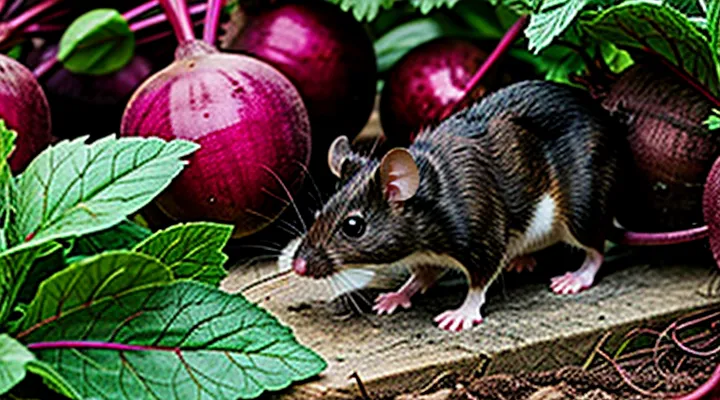
Understanding the Threat: Why Mice Attack Beetroot
Identifying Mouse Damage on Beetroot
Visual Cues of Mouse Activity
Rodent presence on beetroot fields becomes evident through distinct visual indicators. Fresh gnaw marks on foliage, stems, or storage bags reveal active feeding. Characteristic crescent-shaped bite edges differentiate mouse damage from insect or larger animal injury.
Droppings provide reliable evidence. Small, dark, spindle‑shaped pellets concentrate along runways, near seedling rows, and at the base of mature plants. Accumulation of pellets in clusters signals repeated traversal.
Footprints appear as tiny, oval impressions in soft soil or mulch. A pattern of parallel tracks converging toward a single entry point identifies a burrow system. Soil displacement around the entrance often forms a shallow mound or tunnel opening.
Chewed beetroot tops exhibit truncated growth tips and ragged edges. Early‑stage seedlings display missing cotyledons or stunted leaves, indicating mouse interference before emergence of harvestable roots.
Damage to seed packages or planting trays manifests as perforated plastic, torn fabric, or exposed seeds. Inspection of seed storage areas should focus on such perforations and stray seed fragments.
Monitoring protocol:
- Conduct visual sweeps at dawn and dusk when mouse activity peaks.
- Record location, type, and extent of each cue on a field map.
- Correlate cue density with crop stage to prioritize control measures.
- Remove identified burrow entrances and replace disturbed soil with compacted substrate.
- Apply targeted bait stations near confirmed activity zones, avoiding direct contact with the crop.
Prompt recognition of these visual cues enables rapid intervention, reducing loss of beetroot yield and preserving crop integrity.
Differentiating from Other Pests
Rodent activity on beetroot fields produces distinct evidence that separates it from damage caused by insects, slugs, or fungal pathogens. Recognizing these differences enables targeted interventions and prevents unnecessary pesticide applications.
Mice create clean, rounded bite marks at the base of the taproot, often leaving a small hole through which the plant’s inner tissue is exposed. In contrast, insects such as beetle larvae chew irregularly shaped tunnels within the root flesh, while slugs produce ragged, mucus‑coated lesions. Fungal infections manifest as discoloration, soft rot, or mycelial growth rather than physical removal of tissue.
Additional diagnostic clues include:
- Droppings: Dark, cylindrical feces typically found near burrow entrances or along plant rows indicate rodent presence. Insect frass appears as fine, powdery residue, and slug slime is wet and translucent.
- Burrow signs: Fresh soil mounds, gnawed seedling stems, or shallow tunnels near the crop rows signal mice activity. Insect galleries are concealed within the root, and fungal infections leave no soil disturbance.
- Timing: Mice damage peaks during cooler evenings and early mornings when rodents forage. Insect damage often correlates with warm daytime temperatures, while fungal outbreaks increase with high humidity and prolonged leaf wetness.
Effective differentiation relies on systematic field scouting. Inspect each plant’s base for the characteristic bite shape, collect any nearby droppings, and note soil disturbances. Record observations in a simple table to track pest prevalence over time.
Once mouse damage is confirmed, implement control measures such as habitat reduction, physical barriers, and targeted trapping. Avoid applying insecticides or fungicides unless corresponding pest signs are present, thereby preserving crop health and minimizing chemical use.
Factors Attracting Mice to Your Garden
Food Sources Beyond Beetroot
Mice attracted to beetroot can be diverted by offering alternative food sources that satisfy their nutritional requirements while preserving the primary crop. Introducing a diversified food supply reduces the pressure on beetroot plants and limits damage.
Potential alternatives include:
- Cereal grains such as wheat, barley, and oats, which provide high carbohydrate content.
- Leguminous plants like beans, peas, and lentils, offering protein and nitrogen-fixing benefits for soil health.
- Root vegetables including carrots, radishes, and turnips, which compete directly with beetroot for underground space.
- Brassica species such as kale, mustard greens, and rapeseed, delivering attractive foliage and seed pods.
- Cover crops like clover and vetch, which mature quickly and can be harvested before mice reach peak activity.
Implementing these alternatives requires careful timing. Planting should precede the beetroot growth phase to establish a preferred food source, then tapering or removing the alternatives as the beetroot matures. Rotation of crops each season further disrupts mouse foraging patterns and discourages population buildup.
Monitoring mouse activity and adjusting the composition of alternative foods ensures sustained protection without compromising overall yield.
Shelter and Hiding Spots
Rodents seek refuge in dense vegetation, mulch layers, and debris piles near beetroot fields. These shelters provide protection from predators and weather, allowing mice to remain close to the crop and increase feeding pressure.
Reducing available hideouts requires systematic habitat modification. Remove weeds, trim grass to a height of no more than 5 cm, and eliminate standing water. Replace thick mulch with coarse, well‑drained material that discourages nesting. Store farm equipment and containers off the ground, sealing gaps that could serve as entry points.
Implement physical barriers to limit access to shelter zones. Install low‑profile fencing around field perimeters, burying the lower edge 10–15 cm underground to prevent burrowing. Use mesh covers on raised beds and row covers to block entry from above.
Maintain regular sanitation cycles. Collect fallen leaves, harvest residues, and spent plant material daily. Dispose of organic waste in sealed containers or compost piles that reach temperatures capable of destroying rodent nests.
Consider strategic placement of deterrents in remaining potential hideouts. Deploy snap traps or live‑catch devices along fence lines and within dense cover, checking them frequently to ensure effectiveness.
By eliminating preferred refuge areas, the population pressure on beetroot crops diminishes, leading to measurable reductions in gnawing damage. Continuous monitoring of habitat conditions and prompt corrective actions sustain long‑term protection.
Effective Strategies for Beetroot Protection
Cultural and Agronomic Practices
Crop Rotation and Garden Cleanliness
Crop rotation and garden cleanliness form the backbone of an effective defense against rodent damage to beetroot fields. By regularly altering the species planted in a given plot, growers interrupt the food supply that sustains mouse populations, limit the buildup of beetroot residues, and reduce the attractiveness of the site for nesting.
- Rotate beetroot with non‑host crops such as cereals, legumes, or brassicas for at least two seasons before re‑introducing the root vegetable.
- Include a fallow period or a cover crop that discourages rodent foraging.
- Avoid consecutive planting of beetroot in the same rows to prevent seed bank accumulation.
Maintaining a tidy garden eliminates shelter and food sources that encourage mice to remain near the crop. Cleanliness measures target both the immediate planting area and surrounding structures.
- Remove plant debris, fallen leaves, and harvested roots promptly.
- Trim weeds and grass that provide cover near the soil surface.
- Store feed, compost, and tools in sealed containers or off‑ground platforms.
- Install smooth, hard‑surface pathways to hinder burrowing and ease monitoring.
Combining systematic crop rotation with rigorous garden hygiene creates an environment where mice find limited sustenance and refuge, thereby safeguarding beetroot yields without reliance on chemical controls.
Companion Planting for Deterrence
Companion planting creates a biological barrier that reduces mouse activity around beetroot beds. Aromatic herbs emit volatile compounds mice find unpleasant, while dense groundcovers disrupt their foraging routes. Integrating these species into the same row or border forces rodents to search elsewhere, lowering damage rates without chemical intervention.
Effective partners include:
- Marigold (Tagetes spp.) – strong scent deters rodents and attracts beneficial insects.
- Allium species (garlic, onions, chives) – sulfur‑rich vapors repel mice and add marketable yield.
- Lavender (Lavandula angustifolia) – essential oils act as a natural mouse repellent.
- Thyme (Thymus vulgaris) – low‑lying foliage limits mouse movement and offers culinary value.
- Clover (Trifolium spp.) – dense mat reduces soil exposure, making burrowing harder.
Implementation guidelines: plant companions in alternating strips around beetroot rows; maintain a minimum spacing of 12 inches to ensure each plant develops full aromatic potential; rotate species annually to prevent habituation. Monitoring mouse activity after establishment provides feedback for adjusting plant density or adding supplemental deterrents. This systematic use of companion plants offers a sustainable, low‑cost strategy for safeguarding beetroot yields from rodent damage.
Physical Barriers and Exclusion Methods
Fencing and Mesh Solutions
Effective protection of beetroot fields from rodent damage relies on physical barriers that prevent entry and restrict gnawing activity. Fencing and mesh systems provide the most reliable defense when installed correctly.
- Choose galvanized or stainless‑steel mesh with apertures no larger than 6 mm; this size excludes adult mice while allowing water and air flow.
- Install a perimeter fence at least 30 cm deep into the soil to block burrowing; a concrete footing or buried wire mesh enhances stability.
- Attach a continuous skirt of fine mesh around the base of the fence, extending 15 cm below ground level to thwart underground penetration.
- Secure all gates and access points with self‑locking latches; double‑check that hinges are reinforced to resist forced entry.
- Regularly inspect the barrier for tears, corrosion, or displaced sections; repair damaged areas promptly to maintain integrity.
Integrating these measures with routine field sanitation—removing debris, controlling weeds, and managing nearby vegetation—reduces habitat attractiveness for mice and maximizes the efficacy of the fencing and mesh solutions.
Raised Beds and Containers
Raised beds create a physical barrier that deters mice from reaching beetroot roots. By elevating the soil 12–18 inches above ground level, the animal must climb a smooth, vertical surface to access the plants, a behavior it rarely attempts. Use sturdy, untreated lumber or metal frames and line the interior with hardware cloth (¼‑inch mesh) to prevent burrowing underneath.
Containers provide an enclosed environment that isolates beetroot from rodent activity. Choose pots with a minimum diameter of 12 inches and a depth of 10 inches to accommodate root development. Fit each container with a tight‑fitting lid or a double‑layer cover: a rigid lid beneath a breathable fabric screen allows airflow while keeping mice out. Fill the container with a well‑draining mix of compost, sand, and perlite to reduce moisture levels that attract rodents.
Key practices for both systems:
- Install a continuous perimeter of fine mesh (¼‑inch) around the bed or container base.
- Secure all seams and joints with screws or clamps; avoid gaps larger than 2 mm.
- Elevate the structure on concrete blocks or bricks to eliminate ground contact.
- Place traps or bait stations at least 5 feet away from the planting area to avoid contaminating the harvest.
- Rotate crops annually and remove plant debris promptly to eliminate shelter.
Monitoring should include weekly visual inspections of mesh integrity and signs of gnawing. Replace damaged sections immediately to maintain protection. By integrating raised beds or sealed containers with these preventative measures, growers can significantly reduce mouse damage to beetroot crops.
Repellents and Deterrents
Natural Repellents
Mice damage beetroot fields by gnawing roots and foliage, reducing yield and increasing disease risk. Effective deterrence can be achieved without synthetic chemicals by employing natural repellents that exploit sensory aversions and habitat disruption.
Natural repellents suitable for beetroot cultivation include:
- Strong-smelling herbs such as mint, rosemary, and thyme, planted around field margins or intercropped with beetroot to create an odor barrier.
- Essential oil sprays derived from peppermint, clove, or citronella, applied to soil surface and plant stems at weekly intervals.
- Powdered deterrents composed of ground cayenne pepper or powdered garlic, scattered along planting rows to irritate rodent whiskers and nasal passages.
- Physical barriers using shredded steel wool or copper mesh placed around seedbeds, preventing mice entry while allowing water and air flow.
- Habitat modification through removal of debris, regular tillage, and maintenance of clean field edges, reducing shelter and food sources that attract rodents.
Implementation steps:
- Select two or three repellent methods to avoid reliance on a single tactic.
- Prepare a schedule for applying oil sprays and dispersing powdered deterrents, aligning with irrigation cycles to ensure coverage.
- Monitor mouse activity weekly; adjust concentrations or barrier placement if damage persists.
- Record yield data and repellent usage to evaluate cost‑effectiveness and refine the protocol for subsequent seasons.
Combining aromatic plants, targeted sprays, and physical exclusion creates a multi‑layered defense that limits mouse incursions while preserving beetroot quality and soil health.
Commercial Repellents
Rodent activity on beetroot fields leads to significant yield reduction and quality deterioration. Commercial repellents provide a non‑lethal option to deter mice from feeding on the crop.
Repellents marketed for agricultural use fall into three categories:
- Chemical formulations containing capsaicin, piperine or plant‑derived essential oils that trigger sensory irritation.
- Granular bait‑free products with volatile compounds released gradually from polymer matrices.
- Electronic devices emitting ultrasonic frequencies designed to disrupt rodent communication.
Effective deployment requires precise application:
- Apply granules uniformly at a rate of 200‑300 g m⁻² before planting, ensuring coverage of soil surface and row middles.
- Re‑apply after heavy rainfall or irrigation events, as moisture reduces volatilization efficiency.
- Position ultrasonic units at 1‑meter intervals along field edges and within high‑risk zones; maintain power supply for continuous operation.
Key benefits include reduced crop loss, compliance with residue limits, and compatibility with organic certification when using plant‑derived actives. Limitations involve short residual activity for volatile compounds and variable efficacy of electronic devices against habituated populations.
Integrating repellents with habitat management—such as removing debris, sealing storage facilities, and employing predator encouragement—enhances overall protection and minimizes reliance on a single control method.
Trapping and Control
Humane Trapping Techniques
Humane traps provide an effective, non‑lethal solution for safeguarding beetroot fields from mouse damage. Live‑catch cages, constructed from sturdy wire mesh with a smooth interior, allow capture without injury. Bait the entrance with a small amount of grain or apple slice; once the mouse enters, a spring‑loaded door closes automatically. Release captured rodents at least two kilometers from the farm to prevent immediate return.
Bucket traps combine a shallow container, a ramp, and a trigger mechanism. Place a piece of cheese or peanut butter at the far end of the ramp; the mouse’s weight releases a latch, dropping it into the bucket. The bucket’s smooth walls prevent climbing, ensuring safe containment until release.
Box traps equipped with a hinged door function similarly to live‑catch cages but offer a larger interior for adult mice. Use a minimal amount of attractant to avoid over‑baiting, which can encourage multiple entries and increase stress on the animal.
Key practices for humane trapping:
- Inspect traps daily; remove captured mice promptly.
- Clean and disinfect traps after each use to prevent disease transmission.
- Rotate trap locations every few days to avoid habituation.
- Record capture data to identify activity hotspots and adjust placement accordingly.
Integrating these methods into a regular monitoring routine reduces crop loss while adhering to ethical pest‑management standards.
Lethal Trapping Considerations
Lethal trapping is a direct method for reducing mouse pressure on beetroot fields. It removes individuals that cause significant root loss, thereby stabilizing yields when other deterrents prove insufficient.
Effective implementation requires attention to several factors:
- Regulatory compliance – verify that trap types and placement meet local wildlife and pesticide regulations.
- Trap selection – choose models designed for small rodents, featuring quick‑kill mechanisms to minimize suffering.
- Bait choice – use attractants that match mouse dietary preferences, such as grain or peanut butter, and refresh regularly to maintain potency.
- Placement strategy – position traps along established runways, near burrow entrances, and at field margins where activity concentrates.
- Safety measures – install traps out of reach of workers, livestock, and non‑target wildlife; label clearly and provide training on handling.
- Monitoring schedule – inspect traps daily, record captures, and adjust density to avoid over‑trapping, which can disrupt mouse social structures and lead to rapid recolonization.
- Disposal protocol – follow humane disposal guidelines, ensuring carcasses are removed promptly to prevent disease spread.
Integrating these considerations into a pest‑management plan maximizes the efficacy of lethal traps while maintaining compliance, safety, and environmental responsibility.
Post-Protection Care and Prevention
Monitoring and Follow-Up
Regular Garden Inspections
Regular garden inspections are essential for early detection of rodent activity that can compromise beetroot yields. Conduct inspections at least twice a week during the growing season, increasing to three times when seedlings are vulnerable. Walk the perimeter and interior rows, observing soil surface, plant stems, and surrounding vegetation.
Key observations include:
- Fresh gnaw marks on beetroot roots or leaves.
- Droppings near planting beds or in mulch.
- Burrow entrances with loose soil or displaced debris.
- Trails of gnawed seedling stems leading to hidden nests.
Document each finding in a field log, noting date, location, and severity. Correlate data with weather patterns to anticipate spikes in mouse activity. Promptly remove identified debris, repair damaged mulch, and replace compromised plants to eliminate shelter and food sources.
Integrate inspection results with control measures such as physical barriers, trap placement, and habitat modification. Adjust the frequency of checks based on observed pressure; heightened activity warrants daily monitoring until populations decline. Consistent, systematic inspections reduce crop loss and support sustainable beetroot production.
Adjusting Protection Measures
Effective protection of beetroot fields from rodent damage requires a systematic review of existing measures and timely adjustments based on observed pest activity. Initial assessments should identify entry points, feeding hotspots, and population density. When damage exceeds predefined thresholds, modify the strategy as follows:
- Reinforce perimeter barriers with metal mesh or hardware cloth, ensuring a minimum aperture of 0.5 cm to block even juvenile mice.
- Replace or supplement wooden stakes with concrete or metal posts to prevent gnawing at support structures.
- Increase the density of bait stations, positioning them along established runways and near crop edges; rotate active ingredients every 30 days to avoid bait shyness.
- Integrate habitat management by removing weeds, debris, and standing water within a 20‑meter buffer, thereby reducing shelter and water sources.
- Deploy motion‑activated ultrasonic deterrents, calibrating frequency to target small rodents while monitoring for habituation; supplement with visual deterrents such as reflective ribbons if efficacy declines.
- Conduct weekly inspections, documenting damage levels, trap captures, and bait consumption. Use this data to refine placement and quantity of control devices.
If conventional traps yield low capture rates, transition to live‑catch devices equipped with escape‑proof lids, then relocate captured individuals to a distant, unsuitable habitat. In severe infestations, consider a targeted, low‑toxicity rodenticide application, adhering strictly to label dosage and pre‑harvest intervals to protect consumer safety.
Continuous monitoring and rapid response to changes in rodent behavior ensure that protection measures remain aligned with field conditions, minimizing beetroot loss and preserving yield quality.
Long-Term Garden Management
Maintaining a Healthy Ecosystem
A resilient ecosystem reduces pressure from rodent populations that damage beetroot fields. Biodiversity supports natural predators, limits food sources for mice, and stabilizes soil conditions that discourage burrowing.
- Preserve hedgerows and native vegetation to provide habitat for owls, foxes, and snakes.
- Install perches and nesting boxes to attract raptors and barn owls.
- Rotate crops with non‑host species to interrupt mouse breeding cycles.
- Apply mulch layers thick enough to deter tunneling while maintaining moisture balance.
- Maintain water sources away from the crop perimeter to prevent attraction of rodents.
Soil health influences rodent activity. Incorporate organic matter, avoid excessive nitrogen, and monitor pH to create a less favorable environment for mouse proliferation.
Regular monitoring of predator presence and rodent signs enables timely adjustments. Recorded data on trap captures, crop loss, and predator sightings guide management decisions, ensuring that ecological interventions remain effective.
Reducing Mouse Habitats
Reducing mouse habitats directly limits the pressure on beetroot fields. By eliminating shelter and food sources near the crop, rodents lose the incentive to establish colonies, decreasing gnawing damage.
Effective habitat‑reduction measures include:
- Clearing field margins of dense weeds, tall grasses, and fallen debris that provide cover.
- Removing old tractor tires, wooden pallets, and discarded containers that can serve as nesting sites.
- Maintaining a clean perimeter with regular trash collection and proper storage of feed or grain.
- Installing smooth, hard‑surface barriers around irrigation channels to prevent burrow entry.
- Managing compost piles by keeping them covered and turning them frequently to deter rodent occupancy.
Additional practices reinforce these actions:
- Rotating crops and incorporating non‑host plants in border rows reduce attractant residues.
- Applying low‑toxicity rodent repellents on the ground surface creates an unfavourable environment without harming beneficial insects.
- Conducting periodic inspections to identify emerging shelter points and addressing them promptly.
Implementing these steps creates an inhospitable landscape for mice, thereby protecting beetroot yields without relying on chemical control.