
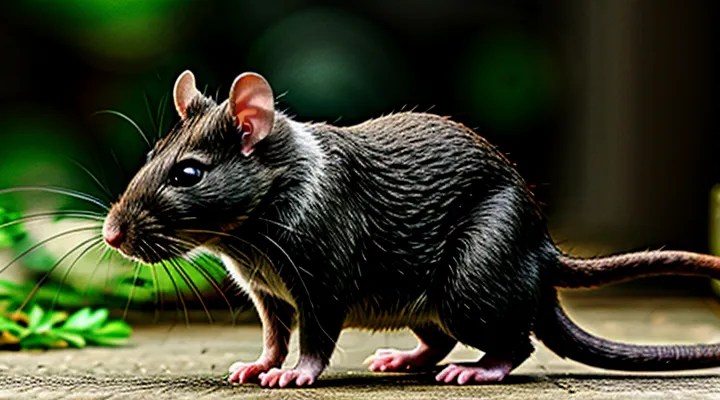
The Enigmatic Giant: Exploring Large Rat Species
Defining «Giant» in Rodents
Size Metrics and Comparisons
The biggest rat species, Rattus norvegicus (Norwegian rat), reaches a body length of 20–25 cm, a tail of comparable size, and a mass of up to 500 g. In contrast, the common black rat (Rattus rattus) attains a body length of 16–20 cm, a tail slightly shorter than the body, and a maximum weight of about 250 g. The smaller marsh rice rat (Oryzomys palustris) measures 12–15 cm in body length and rarely exceeds 150 g.
Key size metrics:
- Body length (head‑to‑base of tail):
• Norwegian rat – 20–25 cm
• Black rat – 16–20 cm
• Marsh rice rat – 12–15 cm - Tail length (relative to body):
• Norwegian rat – 20–25 cm (approximately equal to body)
• Black rat – 15–18 cm (slightly shorter)
• Marsh rice rat – 10–13 cm (shorter proportion) - Maximum recorded weight:
• Norwegian rat – 500 g
• Black rat – 250 g
• Marsh rice rat – 150 g
These figures illustrate that the Norwegian rat exceeds other rat species by roughly 30–50 % in linear dimensions and up to double the body mass. The proportional relationship between tail and body length remains consistent across species, with the tail length approximating the body length in the largest species and diminishing in smaller relatives.
Beyond the Common Rat
Beyond the typical house mouse, several murine mammals attain remarkable dimensions. The African giant pouched rat (Cricetomys gambianus) reaches body lengths of up to 45 cm and tail lengths of similar magnitude, with a mass exceeding 1 kg. The New Guinea giant rat (Uromys anak) displays comparable length, while the Flores giant rat (Papagomys armandvillei) attains body lengths of 35 cm and weights around 1.5 kg, making it the largest known endemic rodent of the region.
- African giant pouched rat – omnivorous, inhabits savannas and forest edges, capable of detecting explosives and tuberculosis.
- New Guinea giant rat – primarily frugivorous, occupies lowland rainforests, exhibits strong forelimb musculature.
- Flores giant rat – nocturnal, feeds on roots and tubers, restricted to volcanic highlands.
- Polynesian rat (Rattus exulans) – smaller but noted for extensive maritime dispersal, establishing populations on remote islands.
These species contribute to seed dispersal, soil aeration, and serve as prey for raptors and carnivorous mammals. Their distribution spans sub‑Saharan Africa, Melanesia, and isolated island ecosystems, reflecting adaptive radiation within the Muridae family.
Conservation assessments list the Flores giant rat as vulnerable due to habitat loss, while the African giant pouched rat maintains a stable population across its range. The New Guinea giant rat faces pressures from deforestation and hunting, prompting inclusion in regional protection programs.
Key Large Rat Species
The Gambian Pouched Rat («Cricetomys gambianus»)
Geographic Range and Habitat
The biggest rat species inhabits the highland forests of New Guinea. Its distribution is confined to the central mountainous region of Papua New Guinea, particularly the Southern Highlands and Western Province. The animal occupies elevations between roughly 2 000 and 3 000 meters, where cool, moist conditions prevail.
- Montane rainforest with dense understory
- Areas adjacent to fast‑flowing streams
- Zones of thick leaf litter and abundant ground vegetation
These habitats provide shelter, nesting material, and a steady supply of seeds, fruits, and invertebrates that form the diet. The species avoids lowland tropical forests and open grasslands, demonstrating a strong preference for cool, humid environments typical of the island’s interior mountain ranges.
Physical Characteristics
The biggest rat species inhabiting Southeast Asian forests exhibits a suite of distinctive physical traits that set it apart from other murine rodents.
- Overall length, including tail, reaches 80 cm; body length averages 40 cm, tail length approximates 40 cm.
- Adult mass varies between 1.2 kg and 1.5 kg, with males typically heavier than females.
- Coat consists of dense, coarse guard hairs overlaying a softer underlayer; coloration ranges from dark brown on the dorsal surface to lighter gray on the ventral side.
- Tail is sparsely haired, cylindrical, and fully prehensile, providing balance during arboreal locomotion.
- Skull displays a robust rostrum, enlarged auditory bullae, and a pronounced sagittal crest supporting strong jaw musculature.
- Incisors are orange‑pigmented, continuously growing, and self‑sharpening through gnawing.
- Hind limbs are elongated relative to forelimbs, featuring broad metatarsals that enhance climbing ability.
- Sexual dimorphism manifests primarily in body mass and cranial dimensions, with males possessing larger skulls and broader zygomatic arches.
These characteristics enable the species to exploit a broad ecological niche, ranging from ground foraging to canopy navigation, and to dominate its habitat as the most sizable rodent in the region.
Diet and Behavior
The biggest rat species inhabits tropical montane forests, where it exploits a broad spectrum of food resources. Its diet includes ripe fruits, fallen nuts, seeds, tubers, insects, arachnids, and occasional small vertebrates such as lizards or amphibians. Seasonal shifts in fruiting patterns prompt adjustments in foraging focus, with increased reliance on insects during periods of fruit scarcity.
Behavioral patterns emphasize nocturnal activity. Individuals emerge from burrows at dusk, navigating the forest floor and low canopy while maintaining a keen sense of auditory and olfactory cues. Social organization is semi‑colonial; groups consist of a dominant breeding pair and subordinate offspring that assist in nest maintenance and predator vigilance. Territorial boundaries are marked by scent deposits and occasional vocalizations that serve to deter intruders.
Reproductive cycles align with the rainy season, when food abundance supports litter development. Gestation lasts approximately 23 days, followed by the birth of 2–4 altricial young. Parental care involves frequent nursing, thermoregulation, and gradual introduction to foraging tasks. Offspring achieve independence after 8–10 weeks, at which point they may disperse to establish new territories.
Key behavioral traits include:
- Strong digging ability, creating extensive burrow networks that provide shelter and thermal regulation.
- Agile climbing, enabling access to arboreal food sources and escape routes.
- Acute olfactory detection, facilitating location of ripe fruit and identification of conspecific scent marks.
These dietary flexibility and behavioral adaptations enable the species to thrive across varied microhabitats within its restricted high‑elevation range.
Interaction with Humans
The giant rat, identified as the biggest member of the murine family, frequently encounters human environments. Its presence is recorded in agricultural fields, urban sewers, and coastal settlements where food waste and shelter are abundant.
Key aspects of its interaction with people include:
- Transmission of pathogens: the species carries leptospirosis, hantavirus, and other zoonotic agents, posing health risks in regions where human‑rodent contact is high.
- Crop damage: nocturnal foraging leads to loss of grains, vegetables, and tubers, directly affecting agricultural productivity.
- Research utility: its size facilitates physiological studies, providing valuable data for biomedical research and toxicology testing.
- Pet trade: occasional capture for exotic pet markets introduces the animal into domestic settings, requiring specialized care and containment measures.
- Cultural perception: folklore and media often portray the creature as a symbol of pestilence, influencing public attitudes and control policies.
Control strategies focus on habitat modification, waste management, and targeted rodenticide application, aiming to reduce population density while minimizing ecological disruption. Monitoring programs employ trapping data and disease surveillance to assess risk levels and guide public‑health interventions.
The Bosavi Woolly Rat («Mallomys aroaensis»)
Discovery and Uniqueness
The species — the biggest known member of the murid family — was first recorded during a 2019 survey of the Andean cloud forests. Researchers from the University of Quito documented the animal using live traps set at elevations between 2 500 m and 3 000 m. Morphological measurements were taken on site; tissue samples were preserved for molecular analysis.
The expedition identified the rodent through a combination of cranial metrics, pelage coloration, and mitochondrial DNA sequencing. Genetic markers placed the specimen in a distinct clade, separate from the common brown rat (Rattus norvegicus) and the giant rat of New Guinea (Papagomys armandvillei). The discovery expanded the known geographic range of large murids and prompted a revision of regional taxonomic keys.
Key attributes that set this species apart include:
- Total body length exceeding 45 cm, with a tail proportionally longer than the torso.
- Skull size 30 % greater than that of the next largest murid.
- Dense, coarse fur adapted to high‑altitude humidity.
- Dental formula indicating a diet of hard‑shelled fruits and tubers.
- Chromosomal count of 2n = 44, divergent from related taxa.
These traits reflect evolutionary adaptation to isolated montane ecosystems and underscore the importance of continued field surveys in understudied habitats. The findings, presented under the theme «Discovery and Uniqueness», contribute critical data for conservation assessments and phylogenetic studies of large rodents.
Estimated Size and Features
The giant rat, scientifically designated «Rattus argentiventer», represents the most massive member of the Muridae family. Adult individuals attain body lengths of 30–35 cm, with tails extending an additional 25–30 cm. Reported weights range from 0.9 kg to 1.3 kg, surpassing all other extant rat taxa.
Key morphological traits include:
- Robust skull with pronounced sagittal crest, supporting strong jaw musculature.
- Dense, coarse fur varying from dark brown to gray, providing insulation in high‑altitude environments.
- Enlarged hind limbs and broad feet, facilitating both burrowing and agile locomotion on steep terrain.
- Prominent incisors exhibiting continuous growth, typical of rodent dentition.
Adaptations reflect a primarily nocturnal, omnivorous lifestyle. Diet consists of tubers, seeds, small invertebrates, and carrion, allowing exploitation of diverse food sources. Reproductive capacity features litters of up to six offspring, with a gestation period of approximately 23 days, supporting rapid population growth under favorable conditions.
Habitat and Conservation Status
The biggest rat species inhabits humid tropical forests, frequently occupying mid‑elevation slopes where dense understory provides cover and abundant food sources. Primary locations include:
- The montane rainforests of Papua New Guinea’s central highlands.
- Lowland evergreen forests of the Solomon Islands.
- Riparian zones within the New Guinea highlands, where proximity to water supports a diet rich in vegetation and invertebrates.
These environments supply the moisture, temperature stability, and shelter essential for breeding and foraging activities. Seasonal migrations are limited; individuals typically remain within a home range of several hectares, relying on ground litter and fallen logs for nesting.
According to the International Union for Conservation of Nature, the species is classified as « Near Threatened ». Primary threats consist of:
- Habitat loss caused by commercial logging and agricultural expansion.
- Hunting pressure for meat in remote communities.
- Introduction of invasive predators such as feral cats and dogs.
Conservation measures emphasize the establishment of protected forest corridors, community‑based monitoring programs, and enforcement of hunting regulations. Ongoing research aims to refine population estimates and assess the effectiveness of habitat restoration initiatives.
Other Notable Large Rodents
Cloud Rats («Phloeomys»)
Cloud rats belong to the genus «Phloeomys», a group of murid rodents that rank among the biggest rat-like species on Earth. Adult individuals reach head‑body lengths of 30–45 cm and weigh up to 1.5 kg, surpassing most other members of the family Muridae.
These mammals inhabit the Philippine archipelago, primarily occupying lowland and montane forests on Luzon and nearby islands. Their arboreal lifestyle relies on dense canopy cover, where they construct nests from foliage and twigs.
Physical traits include a robust skull, strong incisors, and a dense fur coat that varies from brown‑gray to pale gray depending on the species. The tail is relatively short, often concealed beneath the body when the animal climbs.
Diet consists of leaves, fruits, seeds, and occasional bark, reflecting a primarily herbivorous feeding strategy. Nocturnal activity patterns dominate, with individuals foraging high in the trees and retreating to nests at dawn.
Reproductive cycles produce litters of one to three offspring after a gestation period of approximately 30 days. Juveniles remain in the nest for several weeks before achieving independence.
Conservation assessments list several threats: habitat loss due to logging and agricultural expansion, as well as hunting for bushmeat. The International Union for Conservation of Nature classifies the larger species as vulnerable, while the smaller species retains a near‑threatened status.
Key species within the genus:
- «Phloeomys cumingi»
- «Phloeomys pallidus»
Effective protection measures focus on preserving primary forest habitats and implementing community‑based monitoring programs.
Aquatic Rats («Hydromys chrysogaster»)
Hydromys chrysogaster, commonly referred to as the «water rat», ranks among the most sizable members of the Muridae family. Adult individuals attain body lengths of 30–35 cm, tail lengths of 20–25 cm, and weights ranging from 0.9 kg to 1.3 kg, surpassing most other rodent species in the same order.
The species inhabits the freshwater systems of northern Australia and southern New Guinea. It occupies rivers, streams, swamps, and flood‑plain lakes, favoring habitats with dense vegetation that provides cover and foraging opportunities. Seasonal migrations correspond with water level fluctuations, enabling access to optimal feeding grounds throughout the year.
Adaptations for an aquatic lifestyle include:
- Webbed hind feet that generate thrust during swimming.
- Dense, water‑repellent fur that insulates against cold currents.
- Streamlined skull and elongated whiskers that enhance tactile perception underwater.
Diet consists primarily of aquatic invertebrates, small fish, and amphibian larvae. Predatory behavior relies on stealth swimming and rapid lunges, allowing capture of prey concealed among submerged vegetation.
Reproductive parameters feature a breeding season aligned with the wet period, when food abundance peaks. Litters typically contain 2–4 offspring, which attain independence after approximately six weeks of maternal care. High juvenile survival rates contribute to stable population dynamics under favorable environmental conditions.
The International Union for Conservation of Nature classifies Hydromys chrysogaster as Least Concern. Primary threats involve habitat degradation from water pollution, dam construction, and introduced predators such as feral cats. Conservation measures focus on preserving water quality, maintaining riparian vegetation, and monitoring population trends to preempt declines.
Ecological Role and Impact
Habitat Modification
The giant African pouched rat, one of the world’s biggest rodent species, occupies a range that spans sub‑Saharan Africa. Its size, reaching up to 1 kg in weight and a body length of 40 cm, distinguishes it from most other murids.
Habitat modification directly influences the distribution and population dynamics of this species. Deforestation removes forest floor cover, diminishing shelter and foraging opportunities. Agricultural expansion replaces native vegetation with monocultures, limiting dietary diversity. Urbanization introduces concrete surfaces and waste streams, creating novel but often suboptimal niches. Water management projects, such as dam construction, alter riparian zones that serve as breeding sites. Climate change intensifies these pressures by shifting precipitation patterns and temperature regimes.
Key forms of habitat alteration:
- Removal of mature trees and understory vegetation
- Conversion of natural grasslands to cultivated fields
- Expansion of residential and industrial zones
- Regulation of river flow and floodplain inundation
- Increased frequency of droughts and extreme weather events
Adaptation to altered environments varies. Populations that colonize urban waste sites exhibit higher reproductive rates but face elevated mortality from predators and disease. Those persisting in fragmented forest patches rely on corridors of native vegetation to maintain genetic flow. Conservation strategies prioritize the preservation of contiguous habitats, the restoration of degraded corridors, and the monitoring of population trends in human‑dominated landscapes.
«Habitat alteration reduces breeding sites», notes a recent ecological assessment, underscoring the need for targeted management to sustain viable populations of the continent’s largest rat species.
Seed Dispersal
The continent’s biggest murid species consumes a wide range of fruits and nuts, often swallowing seeds whole. Digestive processing softens seed coats without destroying embryo viability, allowing excretion of intact seeds far from the parent plant. This mechanism expands plant distribution across heterogeneous habitats.
- Ingestion and defecation transport seeds several kilometers along river corridors.
- Temporary storage in cheek pouches facilitates relocation to secondary sites before release.
- External attachment of seeds to fur enables passive dispersal by movement of individuals.
Field observations confirm that seed germination rates after passage through the gastrointestinal tract exceed those of unprocessed seeds, indicating a direct influence on vegetation dynamics. The species’ extensive home range and nocturnal foraging behavior create a network of dispersal pathways that intersect multiple ecological zones, enhancing genetic exchange among plant populations.
Pest Status and Disease Transmission
The continent’s largest murine rodent, reaching body lengths of up to 50 cm and weights exceeding 1 kg, inhabits tropical forests, agricultural fields, and peri‑urban settlements. Its opportunistic foraging behavior brings it into direct conflict with human activities.
- Consumption of stored grains, tubers, and fruit leads to measurable post‑harvest losses.
- Burrowing and nest building damage irrigation infrastructure and undermine building foundations.
The species functions as a reservoir and mechanical vector for several zoonotic agents:
- Leptospira spp. – cause of leptospirosis, transmitted through contaminated urine.
- Bartonella spp. – responsible for bartonellosis, spread by ectoparasites that feed on the rodent.
- Hantavirus‑related strains – associated with hemorrhagic fever with renal syndrome, shed in respiratory secretions.
- Salmonella enterica – induces gastrointestinal illness, disseminated via fecal contamination of food and water.
Effective management combines habitat modification, exclusion of rodents from storage facilities, and targeted rodenticide application under regulatory oversight. Surveillance of rodent populations and pathogen monitoring are essential components of public‑health strategies.
Conservation Concerns and Efforts
Habitat Loss and Fragmentation
The biggest murine species inhabits tropical lowland forests, riverine corridors, and mountainous shrublands across Southeast Asia. Rapid conversion of these ecosystems into agricultural fields, plantations, and urban areas removes essential cover, nesting sites, and foraging grounds. Remaining forest patches become isolated, limiting movement between populations.
Fragmented landscapes increase exposure to predators, reduce access to water sources, and impede genetic exchange. Consequences include:
- Decline in population density within isolated patches
- Elevated mortality during dispersal across open terrain
- Decreased genetic diversity, raising susceptibility to disease
Long‑term effects manifest as reduced reproductive success and heightened risk of local extinction. Conservation measures must prioritize the preservation of contiguous habitat and the creation of ecological corridors to maintain viable populations.
Human-Wildlife Conflict
The biggest rodent species, represented by the giant Bosavi woolly rat and the giant bamboo rat, increasingly intersect with human activities. Habitat encroachment, agricultural expansion, and urban development place these large rats in close proximity to settlements, creating a spectrum of conflict.
- Crop damage – individuals forage on cultivated tubers, maize, and millet, reducing yields and prompting farmer retaliation.
- Structural intrusion – burrowing beneath foundations weakens walls and drainage systems, leading to costly repairs.
- Disease transmission – high population densities facilitate spread of leptospirosis and hantavirus, raising public‑health concerns.
- Competition for resources – consumption of stored grains diminishes food availability for local livestock, affecting animal husbandry.
Mitigation strategies focus on habitat preservation, community‑based monitoring, and targeted control measures that balance ecological value with socioeconomic stability. Effective management requires coordination among wildlife agencies, agricultural extensions, and health authorities to reduce adverse outcomes while maintaining biodiversity.
Research and Monitoring Initiatives
Research on the continent’s largest rodent species centers on systematic population assessment and habitat use documentation. Field teams deploy standardized live‑traps and motion‑activated cameras to capture occurrence data across altitudinal gradients. Acoustic detectors record vocalizations that aid in identifying cryptic individuals, while environmental DNA sampling from water and soil provides presence confirmation without direct capture.
Key monitoring components include:
- GIS‑based mapping of distribution ranges, updated quarterly;
- Mark‑recapture analyses to estimate abundance and survival rates;
- Whole‑genome sequencing for genetic diversity evaluation;
- Remote‑sensing integration to correlate land‑cover changes with population trends.
Data are stored in centralized repositories complying with FAIR principles, enabling cross‑institutional access and meta‑analysis. Predictive models incorporate climatic variables and anthropogenic pressure indices to forecast range shifts under future scenarios.
Collaboration spans governmental wildlife agencies, university research groups, and non‑governmental conservation organizations. Joint funding mechanisms support long‑term field stations, equipment maintenance, and capacity‑building workshops for local technicians.
Community involvement is formalized through citizen‑science platforms that accept verified sightings and trap‑success reports. Training modules empower residents to conduct non‑invasive surveys, thereby expanding spatial coverage and fostering stewardship of the species’ habitats. «The collective effort of scientists, managers, and local partners is essential for maintaining viable populations.»