
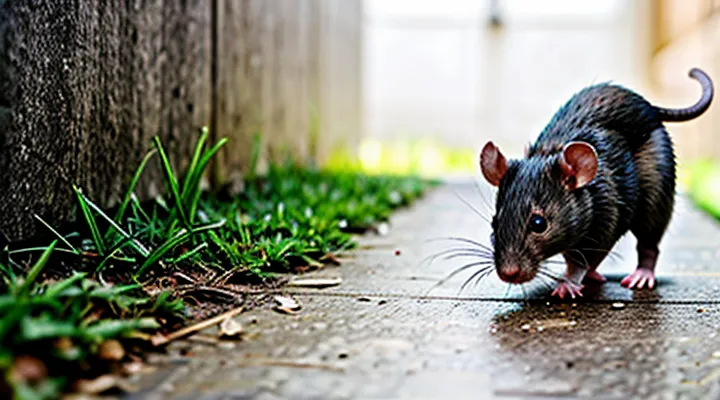
Understanding Rat Behavior and Habitats
Common Rat Species and Their Traits
Norway Rats («Rattus norvegicus»)
Norway rats («Rattus norvegicus») are medium‑sized rodents that thrive in urban and agricultural environments. Adult individuals measure 20‑25 cm in body length, possess a robust build, and exhibit a brownish‑gray coat with a lighter belly. Their nocturnal activity pattern drives most observable evidence to the night hours.
Detectable signs of infestation include:
- Dark, cylindrical droppings approximately 2 cm long, commonly found along walls, near food sources, and in concealed corners.
- Gnawed wood, plastic, or insulation, characterized by clean, crescent‑shaped bite marks.
- Burrow openings at ground level, often accompanied by loose soil or shredded vegetation.
- Fresh footprints in dust, sand, or soft substrate, displaying a distinctive four‑toed pattern with a clear heel pad impression.
Technological tools enhance observation accuracy. Infrared cameras capture nocturnal movement without disturbing the animals, while motion‑activated traps record entry events for later analysis. Acoustic monitors detect ultrasonic vocalizations and footfall frequencies unique to Norway rats, permitting early warning of hidden colonies.
Biological agents provide complementary detection. Trained scent dogs locate active nests by identifying odor signatures from urine, feces, and glandular secretions. In some programs, specially conditioned rats are employed to locate conspecifics, leveraging their natural social behavior for rapid identification of breeding sites.
Effective control relies on precise placement of traps and bait stations. Once signs confirm activity zones, snap traps or live‑capture devices should be positioned along established runways, near burrow entrances, and adjacent to food caches. Bait formulations containing anticoagulant rodenticides must be secured within tamper‑proof containers to prevent non‑target exposure. Continuous monitoring of trap success rates informs adjustments to deployment density and timing, ensuring sustained reduction of Norway rat populations.
Roof Rats («Rattus rattus»)
Roof rats, identified scientifically as «Rattus rattus», prefer elevated habitats such as attics, eaves, and roof spaces. Their agility and ability to climb smooth surfaces enable rapid colonization of building exteriors, making early detection essential for effective control.
Key indicators of infestation include:
- Dark, cylindrical droppings measuring ¼ to ½ inch, often found near food sources or nesting sites.
- Gnawed insulation, wiring, or wood, typically displaying smooth, rounded bite marks.
- Nests constructed from shredded paper, fabric, or insulation, usually located in concealed corners or behind structural beams.
Auditory observations can supplement visual evidence. Roof rats are primarily nocturnal; faint scratching or scurrying sounds in ceiling voids during evening hours often signal activity.
Technological tools enhance detection accuracy. Motion‑activated infrared cameras positioned in attic openings capture movement without disturbing the animals. Heat‑sensing devices reveal localized temperature elevations associated with rodent presence. Electronic tracking tunnels record passage events, providing quantitative data on activity levels.
Inspection procedures should follow a systematic approach. Begin with a thorough visual survey of roof access points, including vents, skylights, and chimney flues. Employ a flashlight with a flexible arm to examine hidden cavities. Deploy bait stations equipped with non‑lethal monitoring tags to confirm species identification and assess population density. Document findings with timestamped photographs to support subsequent remediation planning.
Typical Rat Habitats
Indoor Locations
Rats exploit concealed indoor spaces where food, water, and shelter are readily available. Detection focuses on areas with high moisture, abundant crumbs, and structural gaps.
Common indoor sites where rodents establish activity:
- Kitchen cabinets and pantry shelves, especially behind stored grain products.
- Behind refrigerators, stoves, and dishwashers, where condensation creates favorable humidity.
- Wall voids and ceiling joists, accessed through small openings near utility penetrations.
- Attic insulation, offering warmth and protection from disturbances.
- Basement corners and utility closets, where drainage pipes may leak.
- Crawl spaces beneath flooring, connected to exterior foundation cracks.
Effective identification techniques for each location include:
- Visual inspection of droppings, gnaw marks, and shredded material.
- Placement of non‑toxic tracking powders along suspected pathways to reveal footprints.
- Installation of motion‑activated infrared cameras in concealed spots to capture nocturnal movement.
- Use of electronic ultrasonic detectors calibrated to rodent vocalizations, positioned near wall cavities and attic spaces.
- Deployment of snap or live traps in corners and behind appliances, monitored daily for capture evidence.
Regular monitoring of these indoor zones, combined with prompt sanitation and sealing of entry points, reduces the likelihood of infestation and facilitates early intervention.
Outdoor Locations
Rats frequently inhabit outdoor environments where food, water, and shelter are readily available. Effective detection focuses on identifying signs and conditions that indicate rodent activity.
Typical outdoor sites include:
- Compost piles and trash containers that provide easy access to waste.
- Vegetated areas such as dense shrubs, tall grass, and garden beds offering cover.
- Drainage systems, gutters, and storm sewers that retain moisture and facilitate movement.
- Building foundations, crawl spaces, and under‑deck spaces that remain dark and protected.
- Agricultural structures, feed storage bins, and livestock pens where grain and feed attract rodents.
Detection methods applicable to these locations consist of:
- Visual inspection for droppings, gnaw marks, and nesting material.
- Tracking powders or dust applied along runways to reveal footprints.
- Motion‑activated cameras positioned near suspected pathways.
- Infrared or thermal sensors that detect heat signatures during nocturnal activity.
- Use of bait stations equipped with monitoring trays to confirm presence.
Regular monitoring of the listed sites, combined with the outlined techniques, enables timely identification of rat populations and supports prompt control measures.
Signs of Rat Infestation
Droppings
Rat droppings provide direct evidence of rodent activity and enable precise location of infestations. Their size, shape, color, and distribution patterns reveal species, population density, and movement routes.
Typical characteristics of Rattus norvegicus (Norwegian rat) droppings include:
- Length 1.2–2 cm, diameter 0.5 cm.
- Dark brown to black coloration, glossy surface.
- Cylindrical form with pointed ends, often found in clusters.
Rattus rattus (roof rat) droppings differ:
- Length 0.8–1.5 cm, diameter 0.3 cm.
- Light brown to reddish hue, matte texture.
- Slightly curved shape, frequently located near elevated pathways.
Interpretation guidelines:
- Concentrations of droppings along walls, behind appliances, or in concealed areas indicate active travel corridors.
- Fresh droppings appear moist and retain a faint odor; older specimens become brittle and lose color.
- Presence of urine stains or gnaw marks alongside droppings confirms recent activity.
Safe collection protocol:
- Wear disposable gloves and a mask to prevent disease transmission.
- Use a sealed container or zip‑lock bag for each sample.
- Label containers with location, date, and observed condition.
- Dispose of waste according to local health‑hazard regulations.
Analyzing droppings in conjunction with other signs—such as gnaw marks, tracks, and nesting material—refines the search area and informs targeted control measures. Accurate identification and systematic sampling reduce inspection time and increase the effectiveness of eradication efforts.
Gnaw Marks
Gnaw marks represent a reliable indicator of rodent activity. The term «gnaw marks» describes the distinctive bite patterns left on materials such as wood, plastic, insulation, and metal when a rat gnaws to shape a passage or access food.
Typical features of rat gnaw marks include:
- Parallel, shallow grooves spaced approximately 0.5–1 cm apart
- Rounded edges with a smooth, unfinished appearance
- Consistent depth of 1–3 mm, reflecting the animal’s continuously growing incisors
- Presence on the interior side of walls, near concealed entry points, and on stored food containers
When evaluating gnaw marks, consider the following guidelines:
- Locate the marks at the base of walls or under appliances, where rats commonly travel
- Measure the width of grooves; rat incisors produce a narrower channel than those of larger rodents such as squirrels
- Observe the direction of the marks; a series of overlapping bites indicates active movement rather than a single incidental chew
Distinguishing rat gnaw marks from other pest damage relies on material choice and bite pattern. Squirrel gnaw marks tend to be deeper, irregular, and exhibit a broader spacing, while mouse marks are finer and often found on softer surfaces. Accurate identification of «gnaw marks» assists in confirming infestation severity and directing targeted control measures.
Tracks and Runways
Tracks and runways constitute primary evidence of rodent activity. A track appears as a series of small, evenly spaced impressions left by the animal’s paws, often visible on soft surfaces such as dust, sand, or fresh mulch. Runways are linear pathways worn into the substrate, indicating repeated travel between food sources, nesting sites, or water points.
Tracks reveal size, gait, and direction of movement. Measuring the spacing between toe marks differentiates species; a typical house rat leaves prints with a stride length of 2‑3 cm. Pressure marks may contain droppings or urine stains, confirming recent passage.
Runways indicate established routes. Their width, depth, and orientation help locate central activity zones. A well‑defined runway may be several centimeters deep and persist despite cleaning, suggesting a permanent corridor.
Effective detection of tracks and runways employs the following methods:
- Apply a fine powder (e.g., talc or flour) to suspected areas; footprints become starkly visible against the background.
- Use a low‑angle flashlight to cast shadows that accentuate shallow depressions, facilitating runway identification.
- Install motion‑sensitive cameras along identified pathways to verify traffic and species.
- Lay adhesive tape strips across suspected routes; captured prints provide definitive evidence.
- Conduct systematic visual surveys during low‑traffic periods (dawn or night) when fresh marks are most apparent.
Integrating these techniques yields accurate mapping of rodent movement, enabling targeted control measures.
Nests
Rat nests, frequently called burrows or colonies, serve as central hubs for feeding, breeding, and shelter. Identifying these structures provides a reliable indicator of rodent presence and helps focus subsequent inspection efforts.
Typical nest locations include:
- Wall voids behind baseboards, especially where insulation is accessible.
- Under floorboards or within crawl spaces where moisture accumulates.
- Inside attics, concealed by stored items or insulation material.
- Near utility penetrations such as pipe entries, conduit openings, and vent shafts.
Physical evidence associated with nests comprises:
- Accumulated shredded material, including paper, fabric, and insulation fibers.
- Distinctive urine or fecal deposits, often found in clusters near the nest entrance.
- Chewed structural components, such as wiring, wooden supports, or plastic sheeting.
- Odor of ammonia or a musky scent, especially in enclosed spaces.
Inspection techniques focus on direct visual confirmation and strategic probing. Use a flashlight to examine dark cavities, and employ a flexible inspection camera to reach concealed gaps. Tactile exploration with a thin probe can reveal soft, compacted debris characteristic of a nest chamber.
Environmental factors that attract rats to construct nests include readily available food sources, consistent water supply, and protection from predators. Reducing these attractants—securing waste containers, repairing leaks, and sealing entry points—diminishes the likelihood of nest formation.
By systematically targeting the described locations and evaluating the listed signs, investigators can reliably locate rat nests and implement appropriate control measures.
Odor
Odor detection provides a direct indicator of rodent activity because rats emit characteristic scent compounds from urine, feces, and glandular secretions. These volatile organic compounds persist in confined spaces, accumulate in nesting sites, and travel along ventilation pathways, creating a detectable chemical footprint.
Effective odor‑based techniques include:
- Trained detection dogs that identify rat‑specific scents with high sensitivity, allowing rapid confirmation of presence in large facilities.
- Portable electronic noses equipped with sensor arrays calibrated to recognize key rat volatiles such as phenols, amines, and sulfur‑containing molecules.
- Passive odor traps containing absorbent media; after exposure, the media is analyzed using gas chromatography‑mass spectrometry to verify rat‑related compounds.
- Human inspection of high‑risk zones, focusing on strong musky or ammonia‑like odors that often accompany active burrows and food caches.
Implementation considerations:
- Temperature and humidity influence volatile release; optimal sampling occurs in stable environmental conditions.
- Cross‑contamination from other pests or waste materials may produce overlapping odor profiles; selective sensor tuning reduces false positives.
- Regular calibration of electronic devices ensures consistent detection thresholds and maintains reliability over extended monitoring periods.
Direct Detection Methods
Visual Inspection
Daytime Observations
Daytime observation provides reliable indicators of rodent activity when visual contact is possible. Direct sighting of rats during daylight hours confirms presence and allows assessment of movement patterns. Signs such as gnawed materials, droppings, and urine stains become more apparent under natural light, facilitating accurate identification.
Key observations include:
- Fresh gnaw marks on food containers, wiring, or structural beams.
- Dark, cylindrical droppings near pathways, storage areas, or waste receptacles.
- Streaks of urine on surfaces, especially around entry points and feeding zones.
- Visible tracks in dust or soft soil, showing paw impressions and tail marks.
- Audible sounds of scurrying or gnawing within walls, ceilings, or attic spaces.
Inspecting exterior features during daylight reveals entry routes. Gaps around doors, windows, and utility penetrations often serve as access points. Monitoring these openings for fresh debris or nesting material indicates recent intrusion.
Surveying interior zones at regular intervals establishes activity trends. Recording the location and condition of each sign creates a baseline for evaluating control measures and predicting future movements.
Nighttime Observations
Rats exhibit peak activity after sunset, making darkness the most reliable period for detecting their presence. Observations conducted during night hours reduce interference from human movement and expose patterns that remain hidden in daylight.
Key technologies for nocturnal monitoring include:
- Infrared motion‑activated cameras that capture silhouette movement without illumination.
- Thermal imaging devices that reveal body heat against cool backgrounds.
- Low‑light CCTV equipped with near‑infrared LEDs for continuous recording.
- Acoustic sensors tuned to high‑frequency squeaks and scurrying sounds.
Critical indicators observable at night:
- Fresh droppings with a moist appearance, often found near food sources.
- Gnawed edges on insulation, wires, or stored goods, visible under low‑light lenses.
- Footprints in dust or soft soil, highlighted by side‑lighting techniques.
- Persistent rustling or scratching noises detected by directional microphones.
Effective implementation follows a systematic approach:
- Position cameras and sensors along established runways, near entry points, and adjacent to waste containers.
- Schedule recordings to start 30 minutes before sunset and continue until dawn, ensuring full coverage of activity peaks.
- Review captured footage and audio logs daily, flagging repeated movement patterns and correlating them with physical signs such as droppings or gnaw marks.
- Adjust equipment placement based on identified hotspots, expanding coverage until activity diminishes.
Consistent nighttime surveillance yields precise location data, enabling targeted control measures and reducing the likelihood of infestation spread.
Using Traps for Detection
Snap Traps
Snap traps are mechanical devices that deliver a rapid, lethal force to a rodent when triggered by pressure on the trigger plate. The spring‑loaded bar strikes the neck or spine, causing immediate death and preventing further damage to property.
Effective placement relies on observed rodent pathways. Typical locations include:
- Adjacent to walls where rats travel along edges.
- Near identified droppings, gnaw marks, or grease trails.
- Inside concealed openings such as gaps under appliances or behind cabinets.
- At the interior end of bait stations that have attracted activity.
Integration with detection methods involves confirming activity before deployment. Evidence of recent movement, such as fresh droppings or urine stains, indicates a high‑probability zone. Positioning traps in these zones maximizes capture rates and reduces unnecessary placement.
Key benefits of snap traps include:
- Instant kill eliminates prolonged suffering.
- Low purchase cost compared to electronic or live‑catch options.
- Simple construction requires no power source or ongoing maintenance.
Safety considerations demand careful handling. Traps should be set on stable surfaces away from children and pets. Protective gloves reduce risk of accidental activation. Captured rodents must be disposed of in sealed containers before removal from the premises.
By aligning trap placement with concrete signs of rodent activity, snap traps become a precise tool within broader detection strategies for locating and eliminating rats.
Glue Traps
Glue traps constitute a passive detection tool that captures rodents upon contact with a high‑adhesion surface. The adhesive matrix is typically a clear or amber gel applied to a cardboard or plastic base. When a rat steps onto the trap, the adhesive immobilizes the animal, allowing for immediate confirmation of presence.
Effective deployment relies on strategic placement. Key considerations include:
- Location of known activity: near burrow entrances, along walls, behind appliances, and in dark corners where rats travel.
- Alignment with travel paths: position traps perpendicular to expected movement to maximize contact.
- Height placement: set traps on the floor or low on walls, matching the rat’s natural gait.
- Environmental conditions: avoid excessive moisture or direct sunlight, which can degrade adhesive performance.
Advantages of glue traps
- Immediate visual evidence of capture, confirming infestation without the need for additional inspection.
- Low cost and ease of installation, requiring no wiring or power source.
- Minimal disturbance to surrounding areas, allowing discreet monitoring.
Limitations
- Non‑selective capture may affect non‑target species, necessitating careful site selection.
- Ethical concerns arise from prolonged suffering; rapid removal and humane disposal are recommended.
- Adhesive loses effectiveness in humid environments, reducing reliability over time.
Safety protocols
- Wear disposable gloves when handling traps to prevent skin contact with adhesive.
- Store traps out of reach of children and pets, using sealed containers.
- Dispose of captured rodents in accordance with local regulations, sealing the trap within a plastic bag before discard.
Integrating glue traps into a broader detection strategy provides a straightforward method for confirming rat activity, complementing other techniques such as tracking powders, motion‑activated cameras, and auditory monitoring. By placing traps at validated activity points and adhering to safety guidelines, operators obtain reliable data on rodent presence and movement patterns.
Live Traps
Live traps provide a humane method for confirming rodent activity while allowing for subsequent relocation. The devices consist of a cage or tunnel that restrains the animal without causing injury. Proper selection, placement, and monitoring maximize detection efficiency.
Key considerations for effective use of live traps include:
- Trap type – Wire-mesh cages, plastic box traps, and multi-catch models each offer distinct capture capacities and visibility.
- Bait choice – High‑protein foods such as peanut butter, dried fruit, or cooked meat generate rapid response; freshness enhances attractiveness.
- Placement strategy – Position traps along walls, near known runways, or adjacent to food sources; orient entrances toward the nearest wall to align with rodent travel patterns.
- Trigger sensitivity – Adjust spring mechanisms to respond to the weight of a rat while preventing false releases caused by debris or non‑target species.
- Inspection frequency – Check traps at intervals of one to two hours during active periods; prompt removal reduces stress and prevents escape.
Maintenance protocols require regular cleaning with mild detergent, thorough drying, and inspection for wear. Replace damaged components to preserve trap integrity and ensure consistent performance. When a capture occurs, relocate the animal at a distance of at least three miles from the original site to discourage return, following local wildlife regulations.
Specialized Detection Tools
UV Lights
UV illumination provides a rapid means of identifying rodent activity. When exposed to short‑wave ultraviolet radiation, urine, feces and saliva residues emit a distinct fluorescence that is invisible under normal lighting conditions. This property allows inspectors to locate recent rat movement without extensive visual searching.
The technique offers several operational benefits. Fluorescent traces persist for several hours, enabling detection after the animal has vacated the area. Low‑light conditions reduce disturbance, and portable devices permit use in confined spaces such as crawl spaces, attics and utility tunnels.
Practical deployment follows a concise sequence:
- Activate a portable «UV light» source and adjust output to the recommended wavelength (approximately 365 nm).
- Scan surfaces where rodents are likely to travel: walls, beams, pipe insulation and near food storage.
- Observe any bright green or blue spots, which indicate biological residues.
- Mark identified locations and prioritize them for subsequent control measures, such as trapping or exclusion.
Safety considerations include wearing protective eyewear to prevent retinal exposure and limiting direct skin contact with the UV source. Prolonged use may degrade certain plastics; select equipment rated for rugged environments.
Cameras and Motion Sensors
Cameras provide visual confirmation of rodent activity, allowing precise identification of entry points, pathways, and nesting sites. Infrared or low‑light models capture movement in darkness, eliminating the need for artificial illumination that could alter animal behavior. Continuous recording creates a searchable archive, facilitating pattern analysis over days or weeks.
Motion sensors complement video surveillance by triggering recordings only when activity is detected, conserving storage and power. Common technologies include:
- Passive infrared (PIR) detectors, which sense body heat changes and generate alerts when a warm‑blooded creature crosses the sensor’s field.
- Microwave Doppler units, which emit radio waves and measure frequency shifts caused by moving objects, detecting even subtle motions such as a rat’s whisker twitch.
- Vibration‑based sensors, installed on walls or pipes, that register tremors produced by gnawing or scurrying.
Integrating cameras with motion‑triggered recording creates a feedback loop: the sensor initiates video capture, the footage confirms species, and the data informs targeted mitigation. Placement guidelines emphasize positioning devices along known rodent routes—under cabinets, behind appliances, and near utility penetrations—while maintaining a clear line of sight and avoiding obstructions that could generate false positives. Regular maintenance, including lens cleaning and sensor calibration, ensures reliable performance throughout the monitoring period.
Baits and Tracking Dusts
Baits and tracking dusts constitute essential tools for confirming rat activity and directing control measures. Baits provide a consumable attractant that encourages feeding, while tracking dusts leave a detectable residue on the animal’s paws and fur, enabling precise identification of movement paths.
Common bait formulations include:
- Grain‑based mixtures enriched with protein or fat, suitable for omnivorous rodents.
- Peanut butter or cheese blends, offering strong olfactory cues.
- Commercial blocks containing anticoagulant or non‑chemical active ingredients, designed for long‑term placement.
Tracking dusts are applied to surfaces where rats travel. Effective varieties comprise:
- Fluorescent powders that illuminate under ultraviolet light, allowing rapid visual inspection.
- Colored dusts (red, orange) that adhere to fur and deposit on nearby objects, facilitating manual collection.
- Non‑toxic mineral powders that persist in low‑traffic areas, providing continuous monitoring over extended periods.
Integration of these agents follows a systematic approach: select bait type matching local food preferences, position it in concealed stations along suspected runways, and sprinkle tracking dusts on adjacent surfaces. Regular inspection of bait stations and dust‑covered zones yields concrete evidence of presence, movement direction, and colony size, informing targeted eradication actions.
Indirect Detection Methods and Analysis
Assessing Damage
Property Damage
Rats cause structural compromise through gnawing, contaminating insulation, and breaching electrical wiring. Gnawed wood weakens load‑bearing elements, leading to sagging floors and compromised roof integrity. Contamination of insulation reduces thermal efficiency and creates fire hazards when debris contacts heat sources. Damaged wiring may trigger short circuits, increasing the risk of electrical fires.
Effective identification of rodent activity enables timely intervention before damage escalates. Monitoring devices such as infrared motion sensors, acoustic detectors, and bait‑station cameras provide real‑time evidence of presence. Infrared sensors reveal heat signatures in concealed spaces, while acoustic detectors capture characteristic chewing noises. Camera systems document entry points and movement patterns, facilitating targeted sealing of openings.
A systematic approach to damage assessment includes:
- Visual inspection of gnaw marks on structural components.
- Examination of insulation for droppings, urine stains, and shredded fibers.
- Testing of electrical circuits for intermittent faults or exposed conductors.
- Correlation of detection data with observed damage to prioritize remediation.
Prompt repair of compromised elements prevents further deterioration and reduces long‑term repair costs. Sealing identified entry routes, reinforcing vulnerable structures, and replacing damaged insulation and wiring restore safety and preserve property value.
Food Contamination
Food contamination provides a reliable indicator of rodent presence in a facility. Rat activity leaves characteristic residues that compromise the safety and quality of stored products. Detecting these residues allows rapid identification of infestation zones and guides targeted control measures.
Typical contamination signs include:
- Droppings mixed with food particles, often dark and segmented.
- Gnaw marks on packaging, containers, or shelving.
- Urine stains that appear as yellowish spots, sometimes accompanied by a strong odor.
- Chewed or shredded food items, indicating access and consumption by rodents.
Sampling protocols enhance detection accuracy. Collect representative samples from suspected areas, using sterile tools to avoid cross‑contamination. Submit specimens to a laboratory for microbiological analysis; elevated levels of pathogens such as Salmonella spp. or E. coli frequently correlate with rodent activity. Chemical tests for rodent‑specific proteins in food residues can confirm infestation without visual evidence.
Integrating contamination monitoring with other detection methods—visual inspections, motion‑activated cameras, and bait station checks—creates a comprehensive surveillance system. Early identification of food contamination reduces the risk of product recalls and protects public health while supporting efficient rodent control planning.
Consulting Professionals
Pest Control Experts
Pest control specialists combine field experience with scientific techniques to identify rodent activity. Their assessments begin with systematic visual surveys of potential entry points, nesting sites, and food sources.
Key detection tools employed by professionals include:
- «visual inspection» of structures and surrounding terrain;
- «tracking powder» applied along suspected pathways to reveal movement;
- «electronic monitoring» devices such as motion‑sensing cameras and infrared sensors;
- «canine scent detection» trained to locate droppings and urine traces;
- «acoustic detectors» that capture ultrasonic vocalizations produced by rodents.
Training emphasizes proper placement of sensors, calibration of equipment, and interpretation of data patterns. Professionals also maintain records of findings to map infestation spread and predict future activity.
Engaging qualified experts reduces false positives, accelerates intervention, and minimizes property damage by targeting control measures precisely where rodents are present.
Building Inspectors
Building inspectors are responsible for identifying rodent activity within structures, ensuring compliance with health and safety regulations. Their expertise combines knowledge of building systems with practical detection techniques.
Key detection techniques employed by inspectors include:
- Visual examination of walls, ceilings, and crawl spaces for gnaw marks, droppings, and burrow entrances.
- Installation of non‑lethal tracking stations that record footprints on specialized media.
- Placement of snap or live‑capture traps in high‑traffic zones to confirm presence.
- Utilization of acoustic devices that amplify rodent sounds for precise location.
- Application of infrared or thermal cameras to reveal heat signatures concealed by insulation.
- Collection of swab samples from suspected sites for DNA analysis, providing definitive species identification.
Inspection protocols require systematic coverage of all building areas, documentation of findings with photographs and written notes, and immediate communication of results to property owners or managers. Reports must reference specific evidence, recommended remediation actions, and timelines for follow‑up inspections.
Integrating these methods into routine building assessments reduces the likelihood of infestation escalation, protects structural integrity, and supports regulatory compliance.
Monitoring for Re-Infestation
Regular Inspections
Regular inspections form a core element of any rat‑detection program. Systematic surveys expose entry routes, nesting sites, and foraging activity before infestations become visible.
Inspection frequency depends on building type and risk level. High‑traffic food‑handling facilities require weekly checks, while residential properties may suffice with monthly visits. Seasonal adjustments increase scrutiny during warmer months when rodent activity peaks.
Critical inspection zones include:
- Exterior walls, foundations, and roof eaves for gaps larger than ¼ inch;
- Utility penetrations such as pipe stacks, vent ducts, and cable entries;
- Interior storage areas, especially those containing grain, feed, or waste;
- Waste‑management zones, including dumpsters, trash chutes, and compost piles;
- Drainage systems and sump pits where moisture attracts rodents.
Each visit should generate a concise report documenting observed signs—droppings, gnaw marks, burrows, or live captures—and noting remedial measures taken. Follow‑up actions involve sealing identified openings, enhancing sanitation, and deploying traps or bait stations as appropriate. Consistent record‑keeping enables trend analysis, allowing rapid escalation of control efforts when activity intensifies.
Maintaining Records
Effective rodent surveillance depends on systematic documentation of observations, actions, and outcomes. Accurate records enable pattern recognition, resource allocation, and verification of control measures.
Key information to capture includes:
- Date and time of sighting or trap placement
- Precise location (room, building section, coordinates)
- Detection method employed (visual inspection, bait station, motion sensor)
- Species identification and activity signs (droppings, gnaw marks)
- Intervention details (trap type, bait used, chemical application)
- Result of intervention (capture, non‑target capture, no activity)
- Follow‑up actions and dates
Standardized forms, either paper‑based checklists or digital templates, promote consistency. Fields should be pre‑labeled, allowing rapid entry and minimizing transcription errors. Digital platforms offer searchable databases, automatic timestamps, and backup capabilities; cloud storage ensures accessibility across field teams and central offices.
Regular analysis of compiled records reveals hotspots, seasonal trends, and efficacy of specific detection techniques. Correlating location data with environmental variables supports targeted preventive measures. Periodic audits of the record‑keeping system confirm compliance with regulatory requirements and maintain data integrity.