
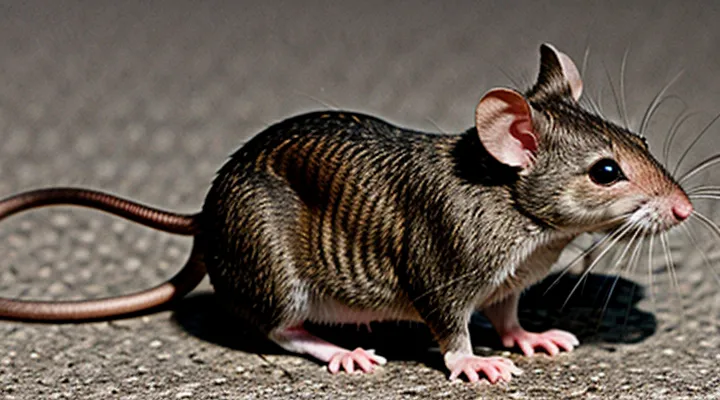
Why It Matters: The Importance of Correct Identification
Health Risks and Disease Transmission
Mice and rats carry distinct pathogens that affect humans and domestic animals; recognizing the differences helps target prevention measures.
-
Mice commonly transmit:
-
Rats are vectors for:
Both rodents shed pathogens through urine, feces, saliva, and ectoparasites. Transmission routes include inhalation of dried droppings, direct contact with contaminated surfaces, and bites. Effective control requires sealing entry points, maintaining sanitation, and using traps or baits appropriate to each species. Personal protective equipment—gloves, masks, and hand hygiene—reduces exposure during removal or cleaning activities.
Property Damage and Infestation Control
Accurate identification of the rodent species present determines the scope of property damage and directs appropriate control actions. Mice and rats differ in size, behavior, and gnawing patterns, which affect structural components, wiring, and stored goods.
Typical damage patterns:
- Mice: chew on thin insulation, plastic tubing, and food packaging; create small, irregular holes in walls and cabinets; contaminate pantry items with urine and droppings.
- Rats: gnaw on thicker electrical cables, wooden beams, and concrete; produce larger entry holes; cause extensive contamination of stored grain and surfaces with feces that can spread disease.
Effective infestation control relies on species‑specific measures. Conduct a thorough inspection to locate nesting sites, seal openings larger than ¼ inch for mice and larger than ½ inch for rats, and deploy traps or bait stations calibrated to the target’s size and feeding habits. Regular monitoring and prompt removal of debris reduce attractants, while professional exterminators can apply targeted rodenticides when necessary to prevent further structural loss.
Key Physical Differences
Size and Body Shape
Length of Body and Tail
Mice typically measure 2–4 inches (5–10 cm) from nose to the base of the tail, while rats range from 7–10 inches (18–25 cm) for the same segment. The difference is evident when the animal is observed in profile.
Tail length further distinguishes the two species. A mouse tail equals about 75–100 % of its body length, often appearing proportionally long and slender. In contrast, a rat tail reaches 60–80 % of its body length, appearing thicker and sometimes shorter relative to the body.
Key measurements:
- Mouse body: 2–4 in (5–10 cm)
- Mouse tail: 1.5–4 in (4–10 cm), roughly equal to body length
- Rat body: 7–10 in (18–25 cm)
- Rat tail: 4–8 in (10–20 cm), shorter proportionally
When evaluating an unknown rodent, compare the overall size and the ratio of tail length to body length. A small animal with a tail matching or exceeding its body length is likely a mouse; a larger animal with a relatively shorter, thicker tail is likely a rat.
Overall Build and Proportions
Mice and rats differ noticeably in overall build and proportions. A mouse typically measures 2–4 inches (5–10 cm) from nose to base of tail, with a slender, lightweight frame. Its body length is roughly equal to its tail length, and the tail appears thin, hairless, and slightly shorter than the body. Ears are proportionally large, often exceeding the size of the eye, and the head is relatively small with a pointed snout.
Rats are substantially larger, ranging from 7–10 inches (18–25 cm) in body length. Their bodies are robust and muscular, giving a bulkier silhouette. The tail is thick, longer than the body, and covered with sparse hair. Ears are modest relative to head size, and the head presents a broader, blunt snout.
Key proportional indicators:
- Body length: mouse ≈ 2–4 in, rat ≈ 7–10 in.
- Tail-to-body ratio: mouse tail ≈ body length; rat tail > body length.
- Tail thickness: mouse tail thin, rat tail thick.
- Ear size: mouse ears large relative to head; rat ears smaller relative to head.
- Head shape: mouse pointed, rat blunt and broader.
Head and Facial Features
Snout Shape
The snout provides a reliable visual cue when separating the two common rodents.
- A mouse exhibits a short, sharply tapered snout; the length from the eyes to the tip is roughly equal to the width of the head.
- A rat possesses a longer snout with a blunt, rectangular profile; the distance from the eyes to the tip exceeds the head’s width by a noticeable margin.
These proportions remain consistent across adult specimens and persist despite variations in coat color or body size. Measuring the snout relative to head width offers a quick, accurate method for identification in field or laboratory settings.
Ear Size and Hairiness
Mice possess ears that are noticeably larger in proportion to the skull, often extending to the tip of the snout. Rat ears are smaller relative to head size and sit lower on the skull. Typical mouse ear length ranges from 8 mm to 12 mm, whereas rat ears rarely exceed 7 mm.
Hair distribution further separates the species. Mice display a dense, soft coat covering the entire body, including a lightly haired tail. Rats have coarser fur concentrated on the back and sides, with a largely hairless tail. The ventral surface of a mouse is uniformly covered with fine hair; a rat’s belly shows sparser, longer hair.
Key distinguishing features:
- Ear size: mouse ears 8‑12 mm, prominent; rat ears ≤7 mm, recessed.
- Ear position: mouse ears sit high on the skull; rat ears sit lower.
- Body hair: mouse fur uniformly dense and soft; rat fur coarser, uneven.
- Tail hair: mouse tail lightly haired; rat tail mostly bare.
Eye Prominence
Eye prominence provides a reliable visual cue when separating mice from rats. Mice have relatively large, protruding eyes that dominate the facial profile; the eye sockets are shallow, creating a noticeable bulge. In contrast, rats possess smaller, recessed eyes set deeper within the skull, giving a flatter appearance.
Key observations:
- Size: Mouse eyes appear larger relative to head size; rat eyes look proportionally smaller.
- Position: Mouse eyes sit near the front of the snout; rat eyes are positioned slightly back, closer to the skull.
- Visibility: In low‑light conditions, mouse eyes reflect more light due to their curvature; rat eyes reflect less.
When evaluating an unknown rodent, focus first on the eye region. Prominent, forward‑facing eyes indicate a mouse; subdued, set‑back eyes suggest a rat. This characteristic, combined with other morphological traits, enhances accuracy in rapid identification.
Fur and Coloration
Texture and Sheen
Texture and sheen provide reliable clues when separating a mouse from a rat. The surface quality of the coat reflects species‑specific hair structure and grooming habits, allowing visual discrimination without capture.
A mouse displays fine, soft fur that appears matte under illumination. Individual hairs are short, densely packed, and lack a glossy overlay. When light strikes the coat, the reflection is diffuse, producing a subtle, non‑shiny appearance.
A rat possesses coarser fur with a noticeable sheen. Hair shafts are longer and less densely arranged, creating a semi‑glossy surface that catches light. The resulting reflection is more directional, giving the coat a faint but perceptible shine.
Key texture and sheen differences
- Fur fineness: mouse – very fine; rat – coarser
- Hair length: mouse – short; rat – longer
- Surface reflectivity: mouse – matte; rat – semi‑glossy
- Light response: mouse – diffuse scattering; rat – specular highlights
Observing these tactile and visual characteristics enables rapid, accurate identification in field or laboratory settings.
Common Color Varieties
Mice and rats display distinct but occasionally overlapping coat colors, making coloration a useful, though not exclusive, identifier.
Common mouse color varieties
- Light brown or “agouti” fur with a darker stripe along the spine
- Gray, ranging from pale to slate, often with a white belly
- White, including pure albino specimens with pink eyes
- Black, uniformly dark with a lighter underbelly
- Spotted or mottled patterns in laboratory strains
Typical rat color varieties
- Brown, ranging from light tan to deep chocolate, with a glossy sheen
- Black, dense and uniformly dark, sometimes with a faint pink nose tip
- White, pure albino with red or pink eyes, common in pet and laboratory populations
- Silver or “steel” gray, featuring a metallic sheen on the dorsal surface
- Brindle, a mix of dark and light hairs creating a striped appearance
Overlap occurs with gray and white individuals, requiring additional criteria—such as body size, tail length, and ear proportion—to confirm species. Color alone cannot guarantee accurate identification, but recognizing the prevalent hues listed above streamlines the distinction process.
Behavioral Clues for Identification
Droppings and Excrement
Size, Shape, and Quantity
A clear distinction between a mouse and a rat relies on measurable traits. Observers can make reliable judgments by focusing on three primary aspects: size, body shape, and typical numbers found in a given environment.
-
Size
- Mice range from 2 to 4 inches (5–10 cm) in body length, with tails of comparable length.
- Rats measure 7 to 10 inches (18–25 cm) in body length, and their tails are proportionally shorter than the body.
- Weight differences are evident: mice weigh 0.5–1 ounce (15–30 g), whereas rats exceed 5 ounces (140 g) and can reach over a pound (450 g).
-
Shape
- Mice display a slender, delicate build, a pointed snout, and relatively large ears in proportion to the head.
- Rats possess a bulkier frame, a blunt muzzle, and smaller ears relative to head size.
- Tail texture differs: mice have smooth, hair‑covered tails; rats exhibit thicker, scaly tails with a slight taper.
-
Quantity
- Mice often appear in larger groups, especially during breeding cycles, with colonies of 10‑30 individuals common in confined spaces.
- Rats tend to establish smaller, more territorial groups, typically 1‑5 individuals per nest, though occasional aggregations occur near abundant food sources.
By measuring length, evaluating morphological features, and noting population density, one can accurately differentiate the two rodent species without ambiguity.
Location and Distribution
Mice and rats occupy distinct ecological niches, and their preferred locations provide reliable clues for identification.
Mice are most common in indoor settings where food sources are readily available, such as kitchens, pantries, and storage rooms. They also thrive in agricultural fields, grain silos, and grassy perimeters of residential properties. Typical mouse habitats include:
- Wall voids and ceiling spaces
- Attics with insulation material
- Ground‑level burrows in gardens or lawns
- Near stored seeds or dried produce
Rats favor larger, wetter environments that support their size and social structure. Urban rats are frequently encountered in:
- Sewer systems and storm drains
- Basement crawl spaces with moisture
- Outdoor trash piles and compost heaps
- Near waterways, ponds, or irrigation channels
Geographic distribution reflects these preferences. House mice (Mus musculus) are found worldwide, especially in temperate zones where human habitation offers shelter. Roof rats (Rattus rattus) are prevalent in warmer climates, often nesting in trees, barns, and upper floors of buildings. Norway rats (Rattus norvegicus) dominate cooler regions, establishing colonies in subterranean habitats and near riverbanks. Recognizing these patterns streamlines the process of telling the two rodents apart.
Gnaw Marks and Damage Patterns
Material Preferences
Mice and rats exhibit distinct material preferences that aid reliable identification.
Mice favor lightweight, flexible substrates. They readily nest in shredded paper, cotton fibers, and fine wood shavings. Their small size allows them to manipulate and compress these materials into compact nests. In laboratory settings, mice prefer corncob bedding and low‑density pine shavings, which retain moisture without becoming overly dense.
Rats select sturdier, coarser materials. They construct nests from cardboard strips, thick newspaper, and coarse wood chips. Their larger bodies accommodate bulkier structures, and they often incorporate plastic or metal debris found in the environment. In commercial facilities, rats show a marked preference for hardwood shavings and dense straw.
Key distinctions:
- Nesting substrate density: mice – low; rats – high.
- Fiber thickness: mice – fine; rats – coarse.
- Material type: mice – paper, cotton; rats – cardboard, thick wood.
Understanding these preferences enables practical separation of the two species in field surveys, pest control, and laboratory environments.
Size and Depth of Marks
Mice leave bite marks that are shallow, typically no deeper than 2 mm, and the edges appear fine and smooth. Rats produce deeper grooves, often exceeding 4 mm, with rougher, more jagged margins.
The size of the impressions also varies. Mouse footprints measure roughly 5–7 mm in length and 3–4 mm in width, while rat prints range from 10–15 mm long and 6–9 mm wide. The depth of the imprint follows the same pattern: mouse tracks are barely indented, whereas rat tracks can be noticeably pressed into soft surfaces.
Key observations for field identification:
- Shallow, precise gnaw marks → mouse
- Deep, irregular gnaw marks → rat
- Footprint length < 8 mm → mouse
- Footprint length > 9 mm → rat
- Impression depth ≤ 2 mm → mouse
- Impression depth ≥ 4 mm → rat
Assessing both dimensions together reduces misidentification and supports accurate pest management decisions.
Nesting Habits
Location and Materials Used
Mice and rats occupy distinct environments, which aids identification. Mice favor confined spaces with easy access to food, while rats prefer larger, open areas that support their size and social habits.
- Typical mouse locations: wall voids, attic insulation, under appliances, pantry shelves, small burrows in garden mulch.
- Typical rat locations: crawl spaces, sewer lines, basements, outdoor garbage piles, dense vegetation near water sources.
Both species construct nests from readily available materials, but the choice reflects their size and habitat. Mice use lightweight, soft items to create compact nests; rats select sturdier, larger components to support their body mass.
- Mouse nest materials: shredded paper, fabric fibers, dried plant matter, cotton batting, fine insulation.
- Rat nest materials: wooden shavings, cardboard, dried leaves, coarse insulation, plastic strips, rope fibers.
Recognizing these habitat preferences and nesting resources provides a reliable basis for distinguishing between the two rodents.
Size and Structure of Nests
Mice construct nests that are noticeably compact. Typical dimensions range from 4 cm to 10 cm in diameter, with a depth of 2 cm to 5 cm. Materials consist of shredded paper, fabric fibers, and dry plant matter, arranged in a loosely woven mass. Nests are often situated in concealed corners of cabinets, wall voids, or under appliances, where limited space forces a tight, single‑layer structure.
Rats build substantially larger and more elaborate nests. Common measurements extend from 15 cm to 30 cm in diameter, with depths reaching 10 cm to 20 cm. Construction incorporates thicker layers of insulation, cardboard, plastic, and building debris, forming multi‑chambered or tiered configurations. Locations include basements, crawl spaces, and attic rafters, where ample room permits extensive architecture.
Key comparative points:
- Size: mouse nests ≤10 cm; rat nests ≥15 cm.
- Depth: mouse nests ≤5 cm; rat nests ≥10 cm.
- Complexity: mouse nests single‑layer; rat nests multi‑layer or multi‑chambered.
- Materials: mouse nests lightweight fibers; rat nests mixed insulation and debris.
- Placement: mouse nests in tight indoor crevices; rat nests in spacious structural cavities.
Sound and Activity Patterns
Squeaks, Chirps, and Scratching
Mice emit high‑pitched squeaks that rise above 20 kHz and often sound like rapid, repetitive chirps when startled. Rats produce lower‑frequency vocalizations, typically between 5 and 12 kHz, sounding more like guttural squeals or brief chirps with a deeper timbre.
The pattern of scratching provides another clue. Mice use delicate, rapid foot‑taps while exploring confined spaces; the resulting sound is a faint, ticking noise. Rats generate heavier, more forceful scratches as they move across hard surfaces, creating a louder, clattering rhythm.
Key distinctions:
- Frequency: mouse squeaks >20 kHz; rat vocalizations 5–12 kHz.
- Tone: mouse chirps are sharp and repetitive; rat sounds are deeper and less melodic.
- Scratch intensity: mouse foot‑taps are light and rapid; rat scratches are heavy and resonant.
Observing these acoustic signatures enables reliable identification without visual confirmation.
Time of Day Activity
Mice and rats exhibit distinct patterns of activity throughout the day, providing reliable clues for identification.
- Mice are predominantly nocturnal; peak movement occurs during the first few hours after sunset and declines sharply before dawn.
- Rats display a broader activity window. While also active at night, they frequently forage in the early evening and may show noticeable activity during daylight, especially in areas with abundant food sources.
These temporal differences arise from species‑specific foraging strategies and predator avoidance. Observing when signs such as droppings, gnaw marks, or fresh tracks appear can confirm the species present. For example, fresh mouse droppings found in the early night suggest a mouse, whereas rat droppings discovered throughout the evening and early morning indicate a rat.
Consistent monitoring of activity cycles, combined with other morphological cues, enhances accuracy in distinguishing the two rodents.
Habitat and Environment
Preferred Living Spaces
Indoor vs. Outdoor Preferences
Mice typically favor indoor environments where food sources are abundant and shelter is easily accessible. They thrive in kitchens, pantries, and wall voids, exploiting crumbs, spilled grain, and stored products. Their small size allows entry through gaps as narrow as ¼ inch, making them common occupants of residential structures.
Rats prefer outdoor settings but will also inhabit basements, crawl spaces, and poorly sealed buildings. They seek water, vegetation, and debris piles that provide cover and foraging opportunities. Entry points for rats are larger, usually ½ inch or more, allowing passage through utility openings, sewer lines, and foundation cracks.
Key distinctions based on habitat preference:
- Entry size: Mice use very small openings; rats require larger gaps.
- Food type: Mice target processed human foods; rats consume a broader range, including garbage, plant material, and animal matter.
- Nesting material: Mice gather soft fibers and paper; rats favor shredded insulation, foliage, and sturdy debris.
- Activity zones: Mice remain close to interior walls and cabinets; rats patrol perimeters, outdoor waste areas, and building foundations.
Observing where signs appear—droppings, gnaw marks, or tracks—helps determine which species is present. Indoor droppings are small, about ¼ inch, and concentrated near food storage; outdoor droppings are larger, up to ½ inch, and found near water sources or vegetation. Recognizing these preferences streamlines identification and guides appropriate control measures.
Access Points and Entryways
Distinguishing a mouse from a rat often begins with examining the access points they use. Mice and rats differ markedly in the dimensions of openings they can exploit, making the size of entryways a reliable indicator of the species present.
Mice can pass through openings as small as 0.25 in (6 mm). Rats require openings of at least 0.5 in (12 mm) in diameter. Consequently, holes measuring between a quarter and a half inch almost certainly belong to mice, while larger gaps suggest rat activity.
Typical entry locations include:
- Cracks in foundation walls
- Gaps beneath doors and windows
- Unscreened vent openings
- Openings around utility lines and pipes
- Damaged or missing weather stripping
Inspection should focus on the following steps:
- Identify all openings within the range described above.
- Examine each opening for fresh gnaw marks; mice produce narrower, cleaner bites, whereas rats leave broader, ragged edges.
- Look for droppings near the opening; mouse droppings are about 0.2 in long, rat droppings range from 0.4 in to 0.6 in.
- Apply a temporary seal (e.g., steel wool, caulk) to openings that match mouse dimensions; observe whether activity ceases to confirm species.
Accurate assessment of access points enables targeted exclusion measures. Sealing gaps that accommodate mice eliminates their entry, while blocking larger openings prevents rats. Properly sized barriers therefore serve both as a diagnostic tool and as an effective control strategy.
Dietary Habits
Food Preferences and Foraging Behavior
Mice and rats exhibit distinct dietary patterns that can aid identification in the field. Mice prefer high‑energy, low‑volume foods such as seeds, grains, and dried fruits. They consume small quantities frequently and are attracted to sweet or oily snacks left on countertops or in pantry corners. Rats favor larger, protein‑rich items, including meat scraps, pet food, and oily waste. Their foraging includes gnawing on tougher materials like cardboard, plastic, and wood, often leaving noticeable bite marks.
Key differences in foraging behavior include:
- Activity timing: Mice are primarily nocturnal, emerging shortly after sunset; rats may be active throughout the night and into early dawn.
- Travel distance: Mice travel short distances (under 10 m) from nesting sites to food sources; rats cover broader ranges, sometimes exceeding 30 m, and can navigate complex pipe networks.
- Food storage: Mice cache small amounts in hidden crevices; rats hoard larger portions in burrows or insulated chambers.
Observation of food remnants further clarifies species identification. Mouse droppings are tiny, pointed, and found near food crumbs. Rat droppings are larger, blunt, and often accompany shredded material from gnawed packaging. Presence of grease stains, oily residues, or meat scraps typically signals rat activity, whereas sugary spills and grain particles suggest mouse foraging.
Understanding these dietary and foraging traits enables reliable discrimination between the two rodents, supporting effective pest management decisions.
Water Requirements
Mice and rats differ markedly in their water consumption, a factor that assists identification when observing captive or wild specimens.
- Average daily intake for a house mouse (Mus musculus) ranges from 3 ml to 5 ml per 30 g body weight.
- Average daily intake for a Norway rat (Rattus norvegicus) ranges from 15 ml to 20 ml per 250 g body weight.
Mice obtain a larger proportion of moisture from food, especially seed‑based diets, and may survive several days without a standing water source. Rats rely more heavily on free water, showing frequent visits to water bottles or puddles. In a controlled environment, a mouse enclosure typically requires a smaller water dispenser, while a rat cage benefits from a larger, continuously available water bottle to prevent dehydration. Monitoring drinking frequency—multiple short sips for rats versus occasional longer sips for mice—provides a practical clue for species discrimination.
Practical Steps for Identification
Visual Observation Techniques
Trapping for Closer Examination
Trapping provides the physical evidence needed to separate small rodents based on size, tail length, ear shape, and fur texture. Capturing an individual allows direct comparison of these characteristics, eliminating reliance on indirect signs such as droppings or gnaw marks.
Safety measures include wearing gloves, using humane snap or live‑catch traps, and placing traps near known activity paths. Check traps every few hours to prevent prolonged distress and to maintain specimen condition for accurate assessment.
Steps for effective trapping
- Identify high‑traffic zones by observing fresh droppings, gnaw marks, or nesting material.
- Position traps perpendicular to walls, with the trigger side facing the wall; rodents prefer to run along edges.
- Bait with a small amount of peanut butter, cheese, or seed to attract both species.
- Set traps at night, when rodents are most active, and inspect them before sunrise.
Once a rodent is secured, examine the following traits: overall body length (mouse ≤ 9 in, rat ≥ 9 in), tail proportion (mouse tail ≈ body length, rat tail shorter relative to body), ear size (mouse ears large relative to head, rat ears small), and fur density (mouse fur finer, rat fur coarser). Record measurements with a ruler or caliper, photograph the specimen, and release or dispose of it according to local regulations. This systematic approach enables reliable differentiation between the two species.
Using Cameras and Sensors
Cameras and sensors provide objective data that enables reliable differentiation between mice and rats. High‑resolution visual recording captures body length, tail proportion, and ear size, while adjustable zoom accommodates varying distances. Infrared illumination reveals nocturnal activity without disturbing the animals, allowing clear images even in low‑light environments.
Motion detection systems register speed and gait patterns. Mice typically display rapid, erratic movements; rats exhibit steadier, more forceful locomotion. By coupling video frames with accelerometer data, algorithms can classify species based on quantified motion signatures.
Weight‑sensitive platforms and pressure mats deliver quantitative mass measurements. A calibrated threshold—approximately 30 g for mice and above 150 g for rats—provides an immediate indicator when an animal steps onto the sensor. Combining mass data with visual cues reduces false identification.
Typical hardware configuration includes:
- 4K RGB camera with varifocal lens
- Near‑infrared LEDs for night vision
- Passive infrared (PIR) motion detector
- Load‑cell scale integrated into a floor tile
- Edge‑computing unit running a trained convolutional neural network
Data from these devices feed into a central processing module that applies predefined criteria and machine‑learning models. Real‑time alerts can be generated when a rat is detected, supporting timely pest‑management actions.
Understanding Local Species
Common Mouse Species
Mice and rats share many habitats, yet accurate identification prevents misdiagnosis of infestations and informs appropriate control measures. Recognizing the most frequently encountered mouse species clarifies the visual differences that separate them from larger rodent relatives.
- House mouse (Mus musculus) – body length 7–10 cm, tail equal to or slightly longer than body, large rounded ears, gray‑brown dorsal fur, light ventral side. Typically found in human dwellings, near food sources.
- Deer mouse (Peromyscus maniculatus) – body length 8–10 cm, tail longer than body, distinct bi‑colored tail (dark on top, light underneath), large eyes, brownish dorsal coat with a white underbelly. Prefers fields, forests, and occasionally structures.
- Field mouse (Apodemus sylvaticus) – body length 9–12 cm, tail slightly shorter than body, pointed snout, brown dorsal fur with a darker stripe, pale belly. Occupies grasslands and woodland edges.
- Pocket mouse (Chaetodipus spp.) – body length 6–9 cm, tail short and hairless, small external cheek pouches, sandy‑gray to reddish dorsal fur. Inhabits arid regions and desert scrub.
- Woodland jumping mouse (Napaeozapus insignis) – body length 10–12 cm, long tail with tufted tip, powerful hind limbs for leaping, gray‑brown dorsal fur, white underparts. Found in moist forest floors.
Each species maintains a body mass well below that of typical rats, a proportionally longer tail relative to body length, and ear size that matches or exceeds head width. These metrics, combined with habitat preference and fur pattern, provide reliable criteria for separating common mice from rat specimens.
Common Rat Species
Rats encountered in residential and agricultural settings belong primarily to three species, each displaying characteristics that help separate them from mice.
-
Brown rat (Rattus norvegicus) – Largest common rat, body length 20–25 cm, tail equal to or slightly shorter than body, coarse dark brown fur, blunt nose, and relatively small ears. Frequently found in basements, sewers, and outdoor burrows.
-
Black rat (Rattus rattus) – Slightly smaller, body length 16–20 cm, tail longer than body, sleek black or dark brown fur, pointed nose, and prominent ears. Prefers attics, upper stories of buildings, and warm climates.
-
Polynesian rat (Rattus exulans) – Smallest of the three, body length 12–15 cm, tail roughly equal to body, grayish fur, and relatively large ears for its size. Often associated with islands and tropical environments, but can appear in stored grain facilities.
Key distinctions from mice include overall size, tail proportion, ear size, and fur texture. Mice typically measure 7–10 cm in body length, possess longer, hairless tails, and have larger ears relative to head size. Recognizing these species traits simplifies identification and informs effective pest management.
Preventing Infestation: Tailored Strategies
Mouse-Specific Prevention
Sealing Small Gaps
Sealing small gaps is a critical step in preventing both mice and rats from entering a building, which directly supports accurate identification by limiting mixed‑species activity. Rodents can squeeze through openings as narrow as ¼ inch for mice and ½ inch for rats; therefore, any breach below these dimensions must be closed.
- Inspect the exterior for cracks around foundations, vents, and utility entries.
- Apply expanding polyurethane foam to gaps up to ½ inch; for larger openings, use steel wool backed with caulk or metal flashing.
- Reinforce door sweeps and weatherstripping to eliminate gaps beneath entryways.
- Seal gaps around pipes, cables, and conduit with silicone sealant or cement‑based mortar.
Materials chosen should resist gnawing; copper mesh, hardware cloth (¼‑inch mesh), and stainless‑steel plates provide durable barriers. After sealing, monitor the area for fresh gnaw marks; persistent activity indicates an overlooked opening. By systematically eliminating entry points, observers can more reliably attribute sightings to either mice or rats, simplifying the differentiation process outlined in the guide.
Food Storage Practices
Proper food storage directly influences the ability to differentiate between mice and rats. Mice prefer small, easily accessible portions; rats target larger, bulkier supplies. Observing which food items are compromised reveals the species present.
- Seal grains, cereals, and dried foods in airtight, metal containers with snap‑tight lids. Mice can infiltrate loosely fitted plastic bags, while rats can chew through thin cardboard.
- Store pet food in heavy‑wall containers equipped with reinforced locks. Rats often gnaw through softer packaging; mice exploit gaps in the lid.
- Keep pantry shelves clear of clutter. Mice hide behind loose items, creating localized damage; rats create extensive pathways along the floor and lower shelves.
- Position food sources away from walls and baseboards. Mice travel along walls but rarely climb high; rats use both wall routes and floor-level passages.
- Inspect stored items weekly for droppings, gnaw marks, and shredded packaging. Mouse droppings are ¼‑inch, dark; rat droppings are ½‑inch, lighter, and appear near larger food sources.
Implementing these storage practices limits access for both rodents, while the pattern of compromised items provides a reliable indicator of whether a mouse or a rat is present.
Rat-Specific Prevention
Larger Entry Point Closure
Sealing larger openings is a critical step when trying to differentiate between mouse and rat activity in a building. Mice can squeeze through gaps as small as ¼ inch, while rats require openings of at least ½ inch. Consequently, any breach wider than half an inch is more likely to admit rats, making its closure essential for accurate assessment.
Identify all structural gaps larger than ½ inch: vents, utility penetrations, foundation cracks, and damaged siding. Prioritize entry points that lead directly to outdoor habitats frequented by rats, such as garbage areas, sewer lines, and dense vegetation. Secure these openings with durable materials—steel mesh, cement, or heavy-duty metal flashing—ensuring no residual space remains.
Implement the following measures:
- Clean the perimeter of each opening to remove debris and nesting material.
- Apply a weather‑resistant sealant around the edges before installing the closure material.
- Attach the closure securely with stainless‑steel screws or rivets to prevent future loosening.
- Inspect the repaired area quarterly for signs of new damage or rodent activity.
By eliminating larger entry points, the likelihood of rat intrusion diminishes, allowing observers to focus on the smaller passages that mice typically exploit. This separation improves the reliability of any identification process based on droppings, gnaw marks, or sighting patterns.
Waste Management Protocols
Effective waste management is essential when conducting rodent identification in field or laboratory settings. Improper disposal can contaminate samples, obscure distinguishing characteristics, and increase health risks.
- Separate biological waste (tissue, feces, urine) from non‑biological debris (nesting material, food remnants).
- Store biological specimens in sealed, leak‑proof containers labeled with species, date, and collection site.
- Decontaminate work surfaces with an approved disinfectant after each handling session.
- Autoclave or incinerate biological waste according to local regulations before final disposal.
Non‑biological waste should be placed in recyclable or landfill bins according to material type. Sharps and broken glass require puncture‑proof containers and must be processed through hazardous‑waste streams.
All personnel must document waste volumes, disposal dates, and disposal methods in a logbook. Periodic audits verify compliance with institutional and governmental standards, ensuring traceability and preventing cross‑contamination during the identification process.