
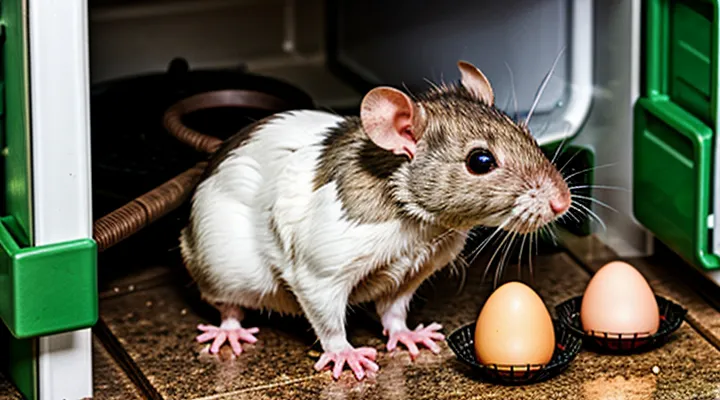
Motivation Behind Egg Theft
Nutritional Value for Rats
Eggs represent a concentrated source of nutrients that satisfy several dietary requirements of commensal rodents. The primary attraction lies in the high-quality protein, which supplies essential amino acids needed for tissue repair and rapid growth. Fat contributes a dense energy supply, supporting the heightened metabolic demands of active foragers. Vitamins and minerals, particularly vitamin D, riboflavin, and calcium, address deficiencies common in grain‑based diets.
Key nutritional components of a typical chicken egg:
- Protein: approximately 6 g per large egg; rich in lysine, methionine, and tryptophan.
- Fat: about 5 g, predominantly unsaturated, providing ~45 kcal.
- Vitamin D: 40 IU, enhancing calcium absorption.
- Riboflavin (B2): 0.2 mg, supporting energy metabolism.
- Calcium: 28 mg, essential for bone development.
- Selenium and choline: trace nutrients that aid antioxidant defenses and liver function.
These nutrients directly influence rat physiology. Protein accelerates juvenile development and sustains reproductive output. Energy from fat reduces the need for extensive foraging, allowing individuals to allocate more time to nesting and predator avoidance. Vitamins and minerals improve immune competence, lowering susceptibility to pathogens encountered in farm environments.
However, egg consumption introduces potential drawbacks. Elevated cholesterol levels may affect cardiovascular health in long‑lived individuals. The soft membrane surrounding the yolk can harbor Salmonella, presenting infection risks. Rats that rely heavily on eggs may develop a nutritional imbalance if alternative food sources become scarce.
In summary, the dense nutrient profile of chicken eggs explains the frequent targeting of poultry nests by rats. The combination of protein, fat, and micronutrients satisfies critical dietary gaps, enhances reproductive success, and provides an efficient energy reserve, while also imposing health considerations that influence foraging strategies.
Opportunistic Foraging Behavior
Rats exploit the vulnerability of poultry nests by detecting the presence of eggs through scent cues and visual observation. Their foraging pattern is driven by immediate resource availability rather than seasonal planning, allowing rapid response to newly laid clutches.
When a nest is exposed, rats employ several opportunistic tactics:
- Approach from the periphery to avoid detection by adult birds.
- Use the cover of straw or bedding to conceal movement.
- Grasp the egg with forepaws, lift it briefly, and retreat to a safe distance before breaking the shell.
- Transport broken yolk and membrane fragments to a concealed feeding site.
The behavior intensifies during periods of high population density, when competition for food increases. In such contexts, rats prioritize high‑energy items, and eggs provide a concentrated source of protein and fat that outweighs the effort required to obtain them.
Adaptive flexibility enables rats to shift from scavenging discarded feed to active predation on eggs. This shift is triggered by reduced availability of conventional food sources and by the ease of access presented by poorly protected nests. Consequently, opportunistic foraging directly translates into measurable losses for poultry operations.
Methods of Pilfering: How Rats Acquire Eggs
Solo Operations: The Art of Egg Rolling
Rats pursuing solitary missions rely on precise manipulation of eggs to remove them from protected nests. The animal positions itself near the rim of the nest, uses its forepaws to nudge the shell, and initiates a controlled roll toward a pre‑selected exit route. The motion minimizes disturbance, allowing the rodent to maintain a low profile while the egg traverses the litter.
Key elements of the rolling technique include:
- Gripping the egg at the equator with the thumb and index finger to generate torque.
- Applying a steady, low‑angle push that causes the shell to rotate without cracking.
- Guiding the rolling path along a cleared corridor of straw or debris to prevent obstruction.
Successful execution depends on the rat’s ability to assess nest geometry, select an optimal direction, and adjust force in real time. Mastery of these actions enables a single rodent to extract multiple eggs without alerting the flock or triggering defensive behaviors.
Grip and Maneuver Techniques
Rats exploit a combination of precise gripping and agile maneuvering to extract eggs from chicken nests. Their forepaws, equipped with sharp, curved claws, lock onto the thin shell while the hind limbs provide stability on the uneven bedding. The forelimb grip is adjusted continuously; pressure is increased just enough to prevent slippage without cracking the shell.
The approach sequence typically involves:
- Entry assessment – the rat surveys the nest opening, identifies the shortest path, and positions its body at a low angle to reduce exposure.
- Claw placement – each forepaw contacts the egg at opposite ends, creating a balanced hold.
- Rotational lift – the rat twists its torso, using the shoulders as a hinge to lift the egg clear of the nest material.
- Transport posture – the animal shifts the egg to its mouth, where incisors grip the shell’s edge, then backs away while maintaining a low profile to avoid detection.
Maneuverability stems from the rat’s flexible spine and lightweight frame, allowing rapid changes in direction and the ability to squeeze through narrow gaps. When navigating the coop interior, rats employ a “wall‑run” technique, pressing their bodies against the coop walls to maintain balance while dragging the egg across slippery surfaces. Their tail acts as a counter‑balance, preventing the egg from rolling off during sudden accelerations.
Effective egg theft requires coordination between grip strength and body dynamics. Any excess force risks shell fracture; insufficient grip leads to loss of the target. Rats have evolved to calibrate this balance instinctively, ensuring a high success rate in pilfering poultry eggs.
Transporting Eggs to Cover
Rats acquire eggs from poultry coops and then relocate them to hidden sites where they can be consumed or stored safely from predators and human detection. The transport phase involves several coordinated actions.
First, rats select a route that minimizes exposure. They favor low‑lying pathways under hay, along fence lines, or through drainage ditches. These corridors provide cover and reduce the chance of being seen by farm workers or guard animals.
Second, the animal secures the egg using its forepaws and mouth. The grip is adjusted to prevent cracking; the rat often rotates the egg to balance weight and maintain stability while moving.
Third, the journey is timed to coincide with periods of reduced activity in the coop area. Nighttime, early dawn, or after a disturbance such as a predator’s presence offers optimal concealment.
Finally, the egg is deposited in a pre‑selected cache. Typical hiding places include:
- Nesting material piles beneath the coop
- Burrows or shallow holes in the soil
- Gaps behind storage crates or feed bins
- Loose vegetation clumps near the perimeter fence
Each cache is chosen for its ability to mask the egg’s shape and scent, thereby preventing detection by chickens, humans, or other scavengers. The entire process is rapid; a rat can complete the transport and concealment within a few minutes, reducing the window for interference.
Collaborative Efforts: Teamwork in Egg Theft
Rats approach chicken coops in small units rather than as solitary foragers. Each unit contains individuals that specialize in locating nests, alerting companions, and extracting eggs. This division of labor increases success rates compared to lone attempts.
Cooperative behavior unfolds in three stages. First, scout rats patrol the perimeter, using whisker and scent cues to detect fresh nests. Second, a scout emits a high‑frequency chirp that draws nearby conspecifics within striking distance. Third, the assembled rats converge on the target, with one or two individuals gripping the nest cover while others lift and transport the egg.
Typical tasks performed by the group include:
- Nest discovery through tactile and olfactory exploration.
- Signal emission to recruit additional members.
- Physical disruption of nest structure.
- Egg retrieval and rapid removal to a concealed hideout.
The coordinated effort reduces exposure time, limits defensive response from chickens, and maximizes the quantity of eggs captured per raid. Observations confirm that groups employing this teamwork achieve higher harvest yields than single rats operating alone.
The «Egg Chain» Method
Rats exploit the proximity of nests to the coop floor by forming a temporary “egg chain.” The method relies on a series of objects that transmit the egg from the nest to a concealed collection point.
- A lightweight platform is positioned just inside the nest opening, allowing an egg to roll onto it without disturbing the hen.
- The platform leads to a narrow wooden or plastic ramp that slopes toward a hidden trough.
- Small pebbles or dried grasses are scattered along the ramp; their uneven surface nudges the egg forward while preventing it from rolling back.
- The trough ends in a concealed cavity beneath the coop, where the rat retrieves the egg and retreats to its burrow.
Key observations:
- Rats initiate the chain only after confirming the nest is unattended, minimizing exposure to the hen.
- The ramp’s angle rarely exceeds 15 degrees, ensuring the egg moves slowly enough to avoid breakage.
- Objects used for the ramp are often sourced from the coop environment, reducing the need for external materials.
Control measures focus on disrupting the chain:
- Install solid barriers at nest openings to block platform placement.
- Replace ramps with smooth surfaces that cause eggs to stop rather than continue.
- Regularly inspect and clear debris that could serve as nudging agents.
By breaking any segment of the egg chain, the theft cycle is interrupted, preventing rats from successfully extracting eggs from chicken nests.
Distraction and Diversion Tactics
Rats exploit the natural vigilance of hens by creating disturbances that draw attention away from nesting areas. By generating noise, scent trails, or motion in peripheral zones, they cause chickens to abandon or guard the nest temporarily, allowing the rodent to approach unnoticed.
Common diversion techniques include:
- Scratching the ground near feed stations to produce rustling sounds that mimic predators.
- Dropping small objects into the coop, prompting chickens to investigate the source.
- Leaving a trail of food particles leading away from the nest, enticing hens to follow the scent.
- Triggering a sudden movement of a stray mouse or insect to startle the flock.
- Using a secondary rat to distract while a partner accesses the egg‑holding site.
These strategies rely on the rats’ ability to coordinate actions and exploit the chickens’ instinctive response to potential threats, ensuring swift and efficient egg retrieval.
Identifying the Culprits: Signs of Rat Activity
Visual Evidence in the Coop
Visual proof collected inside the coop confirms rat intrusion and egg theft. Cameras positioned above nesting boxes capture nocturnal movement, revealing small rodents slipping through gaps and carrying eggs to concealed corners. Infrared footage shows the exact moment a rat lifts an egg, allowing precise identification of vulnerable areas.
- Scratched or gnawed wood around nest frames
- Small footprints in dust or straw, distinct from chicken tracks
- Dark droppings near feeding stations, often grouped near entry holes
- Partial egg shells with clean, beveled edges indicating forced removal
- Camera stills displaying rats dragging eggs along the coop floor
Analysis of these artifacts pinpoints entry points, preferred pathways, and peak activity times. Repeated footprints align with a single opening beneath a vent, while clustered droppings correspond to the same location. The pattern of gnawed wood matches the dimensions of the observed rats, confirming the species responsible for the losses.
Using this visual data, implement targeted countermeasures: seal identified gaps with metal flashing, install motion‑activated deterrents at the vent, and reposition nesting boxes away from the compromised zone. Continuous monitoring through the existing camera system validates the effectiveness of each intervention, ensuring rapid detection of any renewed rat activity.
Gnaw Marks on Eggs and Shells
Rats target chicken nests by breaking through the protective barrier of the eggshell. The most reliable indicator of their activity is the presence of gnaw marks. These marks appear as shallow, crescent‑shaped indentations along the shell surface, often concentrated near the broader end where the air cell is located. In some cases, the marks extend into deeper gouges that expose the albumen, creating a pathway for the rodent to access the yolk.
The pattern of damage distinguishes rat interference from other predators. Unlike predatory birds, which leave clean punctures, rat gnawing produces irregular, ragged edges with visible tooth impressions. The marks are typically spaced at regular intervals, reflecting the animal’s repeated biting motion. Occasionally, small fragments of shell are missing, and the surrounding area shows signs of chewing on the membrane.
Detecting gnaw marks early can prevent loss of fertility and reduce the risk of bacterial contamination. Inspect each egg before collection, focusing on the shell’s curvature and the vicinity of the air cell. Use a magnifying lens to confirm the presence of tooth‑shaped grooves. Record the frequency of affected eggs to assess the severity of the infestation.
Preventive actions rely on eliminating the rats’ access to the nests. Effective measures include:
- Sealing gaps in coop walls and flooring with metal mesh.
- Elevating nests on platforms that are difficult for rats to climb.
- Installing motion‑activated deterrents near nesting areas.
- Maintaining a clean environment free of spilled feed that attracts rodents.
Consistent monitoring of gnaw marks, combined with structural barriers, limits the rats’ ability to compromise egg integrity and safeguards the productivity of the flock.
Rat Droppings and Tracks
Rats leave distinct droppings and tracks that reveal their presence in chicken coops and the likelihood of egg theft. Recognizing these signs enables timely intervention before eggs are compromised.
Typical rat droppings measure 0.3–0.5 cm in length, are dark brown to black, and appear in clusters near feeding stations, nesting material, or entry points. Fresh droppings are moist and may darken as they dry. Scattered droppings along walls, under perches, and in insulation indicate active foraging routes.
Tracks consist of four-toed footprints, each toe spaced about 2 mm apart, forming a narrow, elongated impression. Footprints often align in straight lines or shallow curves, following the shortest path between food sources and hiding spots. The presence of gnaw marks on wooden beams, plastic cages, or wire mesh accompanies the tracks, confirming chewing activity.
Identification checklist
- Dropping size: 0.3–0.5 cm, cylindrical, dark.
- Dropping location: near feed, nest material, entry holes.
- Track pattern: four-toed, evenly spaced, linear or slightly curved.
- Associated damage: gnawed wood, chewed plastic, frayed wires.
Consistent monitoring of droppings and tracks provides reliable evidence of rat intrusion, allowing targeted control measures to protect eggs and maintain flock health.
Behavioral Changes in Chickens
Rats that target chicken eggs force hens to modify their normal routines. Frequent egg loss triggers heightened alertness; chickens spend more time scanning the coop floor and perching near entry points. The presence of rodents also prompts relocation of nests to less accessible corners or to elevated platforms, reducing exposure to ground‑level predators.
Observed behavioral shifts include:
- Increased pecking and aggressive bouts directed at any animal entering the enclosure.
- Shortened laying intervals, with hens laying fewer eggs per day to conserve energy.
- Elevated vocal activity, especially alarm calls when rats are sighted.
- Greater participation in communal nest guarding, where multiple birds surround a single clutch.
These adaptations improve the flock’s chance of preserving offspring but may reduce overall egg production and increase stress‑related health issues. Managing rodent populations therefore restores typical laying patterns and reduces the need for defensive behaviors.
Stress and Reduced Laying
Rats entering coop areas trigger acute stress in laying hens. The presence of a predator activates the hypothalamic‑pituitary‑adrenal axis, raising corticosterone levels within minutes. Elevated corticosterone suppresses the release of gonadotropins, directly impairing ovarian follicle development.
High stress hormones reduce the frequency of ovulation cycles, leading to a measurable decline in daily egg output. Studies show a 15‑30 % drop in production after a single night of confirmed rat activity, with recovery taking several days once the threat is removed.
Behavioral signs accompany the physiological changes:
- Increased agitation, frequent vocalizations, and feather ruffling near nesting boxes.
- Abandonment of nests, resulting in fewer eggs being laid in designated compartments.
- Aggressive pecking at conspecifics, which can cause additional injuries and further hormonal disruption.
Mitigation strategies that lower stress levels—such as secure nesting enclosures, regular trap checks, and prompt removal of intruders—correlate with the restoration of normal laying patterns within 48‑72 hours. Continuous monitoring of corticosterone concentrations provides an objective metric for evaluating the effectiveness of these interventions.
Abandoned Nests
Abandoned chicken nests are structures left empty after the hens have moved on, often still containing residual egg shells, yolk remnants, or cracked eggs. The lack of active guarding birds leaves these nests exposed to opportunistic predators.
Rats are attracted to abandoned nests because they provide concealed entry points and a ready supply of protein-rich material. The soft substrate of straw or wood shavings absorbs moisture, creating a humid micro‑environment that preserves the nutritional value of leftover egg contents.
Typical rat behavior in these settings includes:
- Scouting for scent cues such as broken shells or yolk residue.
- Exploiting gaps in the nesting material to slip inside.
- Using incisors to break remaining shells and extract the inner contents.
- Carrying whole or partially consumed eggs back to burrows for storage.
The presence of unattended nests can increase the frequency of egg loss, spread disease, and encourage rat population growth. Effective control measures focus on:
- Prompt removal of empty nests and debris.
- Regular inspection of coop perimeters for signs of rat activity.
- Installation of sealed nest boxes that limit access points.
- Deployment of rodent‑proof barriers and traps around feed storage areas.
Prevention Strategies: Protecting Your Flock
Securing the Chicken Coop
Rats access chicken nests by exploiting gaps, weak latches, and unsecured feed storage. Effective coop protection eliminates these entry points and removes attractants.
- Install solid, metal‑mesh panels on all walls and ceilings; mesh size no larger than ¼ inch prevents rodent entry.
- Fit latch mechanisms that require two‑hand operation; simple snap bolts are insufficient.
- Seal foundation cracks with concrete or steel flashing; rats can squeeze through openings as small as ½ inch.
- Elevate the coop on a concrete slab at least 6 inches above ground; this impedes burrowing and climbing.
- Store feed in airtight containers made of metal or heavy‑wall plastic; keep containers off the floor and away from nesting boxes.
- Position nesting boxes away from walls and provide a smooth exterior surface; rats cannot climb slick surfaces without footholds.
- Maintain a clean perimeter: remove spilled grain, compost, and debris within a 10‑foot radius; regular removal of droppings reduces scent trails.
Routine inspection is essential. Check latch integrity weekly, replace corroded hardware, and repair any new cracks immediately. Monitoring devices such as motion‑activated cameras or snap traps can confirm the absence of rodent activity.
By combining structural barriers, secure feeding practices, and diligent maintenance, a chicken coop becomes inhospitable to rats, safeguarding eggs and reducing losses.
Rat-Proofing Materials and Construction
Rats gain access to chicken nests through gaps, weak panels, and unprotected openings. Selecting materials that resist gnawing and sealing all potential entry points eliminates the primary pathway for egg theft.
- Metal mesh (hardware cloth) – 1/4‑inch or smaller apertures, welded to frame, prevents chewing.
- Galvanized steel sheeting – corrosion‑resistant, suitable for coop walls and floor panels.
- Concrete slab – poured at least 4 inches thick, with a smooth finish to deny burrowing.
- Sealant compounds – silicone or polyurethane caulking for seams around vents, windows, and pipe penetrations.
- Rigid PVC or polycarbonate panels – strong, lightweight, and easy to cut for custom fittings.
Construction practices reinforce material performance:
- Elevate the coop – raise the structure 12–18 inches above ground on concrete footings; install a metal skirt extending 6 inches outward and 12 inches down to block climbing.
- Seal all joints – apply continuous bead of sealant before attaching panels; inspect for cracks after each cleaning cycle.
- Install a perimeter barrier – wrap the base of the coop with hardware cloth, overlapping seams and fastening to the footings.
- Create a secure door latch – use a spring‑loaded latch that closes automatically, preventing rats from prying the door open.
- Ventilation protection – fit vent covers with metal mesh and secure with stainless‑steel screws to avoid loosening.
Regular maintenance includes visual inspection of mesh integrity, re‑application of sealant where wear appears, and verification that the footings remain free of soil erosion. Combining gnaw‑resistant materials with meticulous construction eliminates the structural weaknesses that rodents exploit to pilfer eggs.
Eliminating Entry Points
Rats reach chicken nests by exploiting gaps in coop construction, ventilation openings, and structural weaknesses. Each opening provides a direct path to the nest area, allowing rodents to enter, locate eggs, and remove them with minimal resistance.
- Inspect walls, roof, and floor for cracks larger than ¼ inch.
- Seal gaps with stainless‑steel mesh, hardware cloth, or expanding foam rated for outdoor use.
- Fit tight‑closing, latch‑equipped doors on all access points, including feed hatches and ventilation ducts.
- Install self‑closing hinges on windows and vents to prevent accidental propping.
- Use concrete or metal flashing around foundation seams to block subterranean routes.
After sealing, conduct weekly visual checks and set motion‑activated cameras to verify that no new entry points appear. Replace worn material promptly; regular maintenance preserves the barrier and reduces the likelihood of rodent egg theft.
Environmental Management
Rats entering poultry houses frequently result in egg loss, compromising farm output and disturbing local ecosystems. The attraction stems from readily available food remnants, nesting materials, and moisture within coop environments.
Effective environmental management mitigates rodent intrusion through three core actions: eliminating attractants, reinforcing physical barriers, and controlling populations.
- Remove spillage, store feed in sealed containers, and dispose of waste daily.
- Install tight-fitting door sweeps, mesh over ventilation openings, and elevate nesting boxes to prevent climb‑on access.
- Deploy live traps or bait stations according to integrated pest‑management guidelines; introduce natural predators such as barn owls where feasible.
Continuous monitoring of rodent activity, combined with periodic assessment of sanitation protocols, ensures adaptive response and long‑term reduction of egg theft.
Food Storage and Waste Disposal
Rats infiltrate chicken coops when food supplies and refuse are left unsecured, creating a direct pathway to nests where eggs are vulnerable. Open feed bins, spilled grain, and loosely covered grain sacks provide an easy food source that sustains rat populations near the coop. When rats have constant access to high‑energy food, they expand their foraging radius and begin targeting egg‑bearing nests.
Improper waste handling amplifies the problem. Accumulated manure, broken shells, and discarded feed attract rats, offering both shelter and supplemental nutrition. Compost piles placed adjacent to coops become breeding grounds, especially when moisture levels remain high. Waste that is not removed promptly allows rat colonies to establish permanent burrows within a short distance of the nest area.
Effective control relies on disciplined storage and disposal protocols. Recommended actions include:
- Store all feed in metal containers equipped with tight‑locking lids.
- Position feed bins on raised platforms to prevent ground‑level access.
- Clean spillages immediately and sweep the coop floor daily.
- Remove manure and broken shells from the coop floor at least twice weekly.
- Locate compost or waste piles at a minimum of 30 meters from any chicken housing.
- Employ sealed, rodent‑proof waste containers for all discarded material.
By eliminating accessible food and reducing waste‑derived shelter, the incentive for rats to breach nests diminishes, leading to a measurable decline in egg loss.
Habitat Modification Around the Coop
Rats exploit gaps, shelter, and food sources near coops, allowing them to reach nesting boxes and steal eggs. Altering the immediate environment reduces the attractiveness of the area and blocks common entry routes.
- Clear vegetation within a three‑meter radius; dense plants conceal rats and provide pathways to the coop.
- Store all feed in sealed metal containers; open bags attract rodents and create foraging trails.
- Elevate water troughs or use drip‑less systems; standing water draws rats and supports their nesting.
- Install metal flashing or hardware cloth around the coop foundation; gaps larger than ¼ inch permit entry.
- Maintain a clean perimeter by removing spilled feed, droppings, and discarded bedding daily.
- Place predator‑type deterrents (e.g., motion‑activated lights or ultrasonic emitters) at known rat pathways.
These measures exploit rat aversion to open, exposed terrain and limit access points. By eliminating cover, securing food, and reinforcing structural barriers, the coop becomes a hostile habitat for rats, decreasing the likelihood of egg loss.
Deterrents and Trapping
Rats infiltrate chicken coops, breach nests, and remove eggs, resulting in significant losses for producers. Effective prevention relies on two complementary strategies: deterrents that reduce rat activity and traps that capture any intruders that bypass barriers.
- Physical barriers: steel mesh or hardware cloth over nest openings; sealed gaps in coop walls; raised nesting boxes on smooth posts.
- Environmental control: eliminate standing water, store feed in rodent‑proof containers, keep the area free of debris and vegetation that provides cover.
- Chemical repellents: apply rodent‑specific deterrent sprays or granules containing capsaicin or peppermint oil around entry points; reapply according to manufacturer guidelines.
- Biological deterrents: encourage natural predators such as barn owls by installing nesting boxes; use feral cat access under controlled conditions.
When deterrents prove insufficient, trapping becomes essential. Choose traps that match the coop’s layout and the target species’ behavior.
- Snap traps: steel spring mechanisms positioned along walls and near nest boxes; bait with peanut butter or dried fruit for immediate kill.
- Live‑catch cages: wire cages with one‑way doors; bait similarly; check daily and relocate captured rats to a distant release site.
- Electronic traps: battery‑powered devices delivering a lethal shock; place on flat surfaces where rats travel; ensure power source is weather‑protected.
Successful implementation demands regular inspection of barriers, prompt replacement of damaged mesh, and systematic trap monitoring. Combining robust deterrent measures with targeted trapping minimizes egg theft and protects flock productivity.
Natural Repellents
Rats frequently raid chicken coops, extracting eggs from nests and causing significant loss. Deploying natural repellents interrupts the rodents’ foraging behavior without introducing chemicals into the environment.
- Peppermint oil: strong menthol scent deters rodents; apply a few drops to cotton balls and place them near nesting boxes.
- Garlic and onion extracts: sulfur compounds create an unpleasant olfactory cue; spray diluted solution around coop perimeter.
- Predator urine (fox, coyote): scent of natural enemies triggers avoidance; disperse granules or spray in hidden corners.
- Diatomaceous earth: abrasive particles damage rat footpads; spread a thin layer on pathways leading to nests.
- Mint or rosemary plants: volatile oils repel rodents; cultivate at coop edges to create a living barrier.
Effective deployment requires regular replacement of scented materials, typically every 7‑10 days, and thorough coverage of all access points. Combining repellents with proper coop sanitation—removing spilled feed, sealing cracks, and securing feed containers—reduces attractants and reinforces the deterrent effect. Continuous monitoring of rodent activity ensures timely adjustments and sustained protection of egg production.
Humane Trapping Methods
Rats frequently infiltrate chicken coops, break nests and remove eggs, leading to economic loss and reduced flock productivity. Effective control requires methods that capture rodents without causing injury or death.
Humane trapping relies on live capture, exclusion of poisons, and prompt relocation. Devices should allow rats to enter easily, prevent escape, and enable safe handling by caretakers.
- Multi‑catch live traps baited with peanut butter or oatmeal; release doors remain closed until the trap is emptied.
- Wooden box traps fitted with a one‑way flap; entry is unrestricted, exit is blocked.
- Bucket traps with a sloped ramp and a narrow entrance; the rat falls into a water‑filled container that can be emptied quickly.
- PVC tube traps with a hinged door that swings shut after entry; the interior is smooth for easy removal.
- Combination of natural deterrents (e.g., peppermint oil, steel wool) placed around trap sites to steer rats toward the devices.
Implementation steps: identify active pathways by tracking footprints or gnaw marks; position traps along these routes; inspect traps at least twice daily; release captured rats at least five miles from the farm; disinfect trap surfaces after each use.
Adopting these practices eliminates lethal outcomes, complies with animal‑welfare guidelines, and sustains the health of the poultry operation.