
Understanding Rodentia: An Evolutionary Overview
Distinguishing Rats from Other Rodents
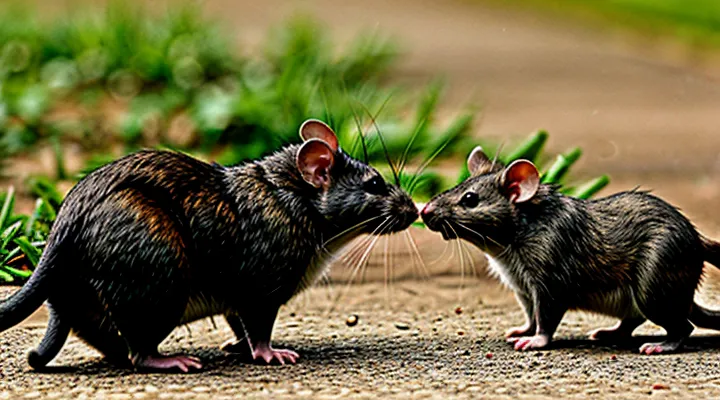
Morphological Characteristics of True Rats
True rats, belonging to the genus Rattus, exhibit a suite of anatomical features that distinguish them from other murine rodents. Their bodies measure 15–25 cm in head‑body length, with a proportionally long, hair‑less tail that typically exceeds the body length and aids balance during arboreal and terrestrial locomotion. The skull is robust, displaying a flattened profile and a pronounced occipital plate that supports powerful jaw muscles. Dental formula is I 1/1 C 0/0 PM 0/0 M 3/3, with ever‑growing incisors possessing enamel restricted to the anterior surface, creating a self‑sharpening edge.
Key morphological traits include:
- Fur: coarse, dense pelage ranging from brown to black, providing insulation and camouflage.
- Ears: large, thin‑skinned, highly vascularized, facilitating thermoregulation and acute auditory perception.
- Whiskers (vibrissae): long, densely packed sensory hairs surrounding the muzzle and cheeks, essential for spatial navigation in low‑light environments.
- Limbs: relatively short forelimbs with five dexterous digits, hind limbs slightly longer, equipped with strong claws for climbing and digging.
- Tail: naked, scaly, capable of rapid movement for balance and heat dissipation.
Skeletal adaptations reinforce the rat’s versatility. The vertebral column is flexible, allowing torsional movement, while the pelvis is broad, supporting a powerful hind‑limb thrust. Muscle attachment sites on the scapula and humerus accommodate strong forelimb flexion, useful for handling food and constructing nests. Collectively, these morphological characteristics enable true rats to thrive in diverse habitats, from forests to urban settlements.
Genetic Divergence of Murinae
The Murinae subfamily, encompassing true rats and mice, diverged from other muroid rodents during the early Oligocene, approximately 30–35 million years ago. Molecular clock analyses of mitochondrial and nuclear genes consistently place the initial split between Murinae and its sister clade at this interval, coinciding with global cooling and the expansion of open habitats in Eurasia.
Subsequent diversification within Murinae accelerated in the Miocene, driven by geographic isolation and ecological specialization. Key divergence events include:
- Emergence of the Rattus lineage (~12 Ma) in Southeast Asia, followed by rapid radiation into temperate and tropical zones.
- Formation of the Mus clade (~10 Ma) in South Asia, with early splits separating African, European, and East Asian species.
- Development of the Niviventer and Bandicota genera (~8 Ma) in the Indo‑Malayan region, reflecting adaptation to montane and grassland environments.
Phylogenomic reconstructions reveal that the majority of murine speciation aligns with tectonic activity that created barriers such as the Himalayas and the uplift of the Tibetan Plateau. These physical obstacles promoted allopatric divergence, while niche differentiation reinforced reproductive isolation.
Genomic signatures of selection—elevated dN/dS ratios in olfactory receptor genes, expanded cytochrome P450 families, and variation in immune‑related loci—demonstrate adaptive responses to distinct diets, pathogen pressures, and climatic conditions across the Murinae radiation. The cumulative genetic divergence observed today underpins the extensive morphological and ecological diversity of rats and mice worldwide.
Early Rodent Ancestry
The First Mammals and Their Diversification
The earliest mammals emerged from therapsid ancestors during the Late Triassic, roughly 210 million years ago. Their small size, nocturnal habits, and endothermy allowed them to exploit ecological niches left vacant by dominant archosaurs. By the Early Jurassic, these primitive forms diversified into several lineages, including the multituberculates, docodonts, and early placentals, each developing distinct dental and skeletal adaptations.
Multituberculates, characterized by complex cheek teeth, dominated Mesozoic ecosystems for over 100 million years. Their dental morphology facilitated the processing of seeds and insects, establishing a dietary foundation later inherited by rodent ancestors. Concurrently, early placental mammals evolved tribosphenic molars, a versatile tooth pattern enabling omnivory and herbivory. This innovation accelerated mammalian radiation during the Cretaceous–Paleogene transition.
Key developments that set the stage for rodent evolution include:
- Expansion of gnawing apparatus: enlargement of incisors and reinforcement of jaw muscles.
- Rapid dental replacement: ability to grow incisors continuously, supporting persistent wear.
- Diversification of dietary strategies: shift from insectivory to granivory and herbivory.
- Adaptation to varied habitats: colonization of forests, grasslands, and arid regions.
These traits converged in the early Paleogene, giving rise to the first true rodents. Their lineage rapidly diversified, exploiting seed-rich environments and establishing the global presence of rodents observed today. The evolutionary trajectory from the first mammals to modern rodents underscores the significance of dental innovation and ecological flexibility in mammalian success.
Emergence of Rodent-like Mammals
Early Eocene Fossils
Early Eocene deposits, dated to approximately 56–47 million years ago, provide the earliest definitive rodent fossils. Specimens from these layers exhibit the characteristic hystricognathous jaw and incisor enamel patterns that define the order, confirming rodents had already diversified by this epoch.
Key fossil sites include:
- Wadi Al-Hitan (Egypt) – yields dental fragments of Paramys relatives, showing primitive molar morphology.
- Messel Pit (Germany) – preserves nearly complete skeletons of Alagomys, revealing post‑cranial adaptations for arboreal locomotion.
- Fur Formation (Colorado, USA) – contains isolated teeth of Eurymylus, indicating early North American colonization.
Morphological analysis of these fossils highlights:
- Simple, high‑crowned molars suited for omnivorous diets.
- Robust incisor roots with enamel restricted to the outer surface, a trait linked to gnawing efficiency.
- Limb proportions suggesting a combination of terrestrial and climbing abilities.
Radiometric dating of volcanic ash layers within the strata provides precise age constraints, while phylogenetic studies using dental characters place these species near the base of the rodent tree. Consequently, early Eocene fossils establish the temporal framework for the emergence of modern rat lineages and illustrate the rapid ecological expansion of rodents shortly after the Paleocene‑Eocene Thermal Maximum.
Evolutionary Links to Primates
Rats belong to the order Rodentia, which diverged from other mammals approximately 80–90 million years ago during the Late Cretaceous. This split placed rodents within the super‑order Euarchontoglires, a clade that also contains primates, colugos, and treeshrews. Molecular analyses of whole‑genome sequences consistently recover rodents as the sister group to primates, confirming a shared ancestry that predates the Cretaceous‑Paleogene boundary.
Comparative genomics identifies several conserved elements that link rodents and primates. Syntenic blocks—large chromosomal segments with preserved gene order—are remarkably similar between mouse, rat, and human genomes. Orthologous genes involved in neurodevelopment, such as FOXP2 and SRGAP2, show parallel evolutionary trajectories, suggesting that regulatory changes occurred in a common ancestor before the two lineages specialized.
The fossil record supports this relationship. Early euarchontoglires fossils, such as Purgatorius and Plesiadapis, appear in Paleocene deposits alongside the first known rodentiform teeth. Dental morphology reveals a transition from primitive, multi‑cusped molars to the hypsodont, continuously growing incisors characteristic of modern rats, while retaining enamel patterns also observed in early primates.
Key genetic and morphological markers that illustrate the rodent‑primate connection include:
- Conservation of the Hox gene clusters governing craniofacial development.
- Parallel expansion of the olfactory receptor repertoire.
- Presence of the MHC class I region with similar organization across both groups.
- Shared microRNA families regulating brain plasticity.
These data collectively demonstrate that rats and primates share a deep evolutionary lineage within Euarchontoglires, with divergence driven by adaptations to distinct ecological niches while retaining a substantial core of genetic and developmental architecture.
Miocene Rodent Radiation
Diversification in Eurasia
Rats and their close relatives diversified extensively across Eurasia during the Miocene, a period marked by the expansion of grasslands and the fragmentation of forests. Fossil assemblages from sites in Mongolia, the Caucasus, and the Mediterranean reveal multiple lineages emerging simultaneously, each adapting to distinct habitats ranging from arid steppe to temperate woodland.
Key phases of diversification include:
- Early Miocene (≈23–16 Ma): emergence of basal murids occupying forest margins; dental morphology indicates a shift toward omnivory.
- Middle Miocene (≈16–11 Ma): radiation of the Rattus stem group into open habitats; limb proportions suggest increased locomotor agility.
- Late Miocene (≈11–5 Ma): appearance of species with specialized dentition for seed predation, coinciding with the spread of temperate grasslands.
Ecological pressures such as climatic oscillations, competition with other small mammals, and the development of complex burrow systems drove niche partitioning. These pressures promoted morphological innovation, including variations in molar cusp patterns and cranial musculature, which facilitated exploitation of diverse food resources. Consequently, Eurasian rodent fauna acquired a high degree of species richness, laying the foundation for the later global success of rats.
Arrival in Africa
Rats entered the African continent during the early Pleistocene, a period marked by fluctuating climates and expanding savanna habitats. Fossil records from sites such as Olduvai Gorge and the Rift Valley reveal the presence of Rattus‑type dentition dating to approximately 1.8 million years ago, indicating a successful colonization event that coincided with the spread of grassland ecosystems.
The dispersal likely occurred via two primary pathways:
- Land bridge migration: Lower sea levels created temporary connections between the Arabian Peninsula and the Horn of Africa, allowing rodent populations to move across the Sinai corridor.
- Anthropogenic transport: Early Homo erectus groups carried commensal rats on clothing and food supplies, facilitating rapid spread into inland regions.
Adaptations that supported the African expansion include:
- Enhanced burrowing ability to cope with arid soils.
- Dietary flexibility, allowing exploitation of both seed caches and insect prey.
- Reproductive acceleration, producing multiple litters per year under favorable conditions.
These traits enabled rats to establish dense populations across diverse African biomes, from the Sahelian scrublands to the tropical rainforests of the Congo basin. Their presence reshaped local food webs, providing a reliable prey source for predators such as barn owls and mongooses, while also competing with native murid species for limited resources.
The Muridae Family Tree
Phylogenetic Relationship of Rats
Rats belong to the family Muridae, subfamily Murinae, which comprises over 700 species of muroid rodents. Within Murinae, the tribe Rattini contains the genus Rattus, the taxonomic group that includes the most widely recognized rat species. Molecular analyses consistently place Rattus as a sister clade to the genera Mus (mice) and Apodemus (field mice), confirming a close evolutionary relationship among these murids.
Genomic data from mitochondrial cytochrome b, nuclear IRBP, and whole‑genome sequencing resolve the divergence of Rattus from its nearest relatives at approximately 12–15 million years ago. Subsequent radiation produced two principal lineages: the Asian clade, which gave rise to species such as Rattus norvegicus (brown rat), and the African‑Indian clade, ancestral to Rattus rattus (black rat) and several island endemics. Divergence time estimates for these lineages range from 3 to 5 million years ago, reflecting adaptation to distinct ecological niches.
Key species within the genus Rattus include:
- Rattus norvegicus – widespread in temperate regions, primary model organism in biomedical research.
- Rattus rattus – historically associated with human settlements, notable for rapid dispersal across maritime routes.
- Rattus exulans – smallest extant rat, endemic to Pacific islands, provides insight into early human‑mediated colonization.
- Rattus argentiventer – native to Southeast Asia, occupies lowland tropical habitats.
- Rattus tanezumi – closely related to R. rattus, often confused in morphological studies.
Beyond the genus, murine rodents share a common ancestor with the squirrel family (Sciuridae) and other myomorphs, diverging around 25 million years ago. This deep split underscores the broader pattern of rodent diversification that has produced the extensive array of species observed today.
Ancestral Habitats and Adaptations
Terrestrial versus Arboreal Lifestyles
Rodents first appeared in the Paleocene, soon after the extinction of non‑avian dinosaurs. Early members diversified into two primary ecological strategies: life on the ground and life among the trees. This split set the stage for the variety of rat species observed today.
Ground‑dwelling rats exhibit traits that enhance burrowing and rapid locomotion across open terrain. Typical adaptations include:
- Robust, flattened skulls that accommodate strong jaw muscles for gnawing tough materials.
- Short, powerful forelimbs with enlarged claws for digging.
- Dense fur that resists abrasion from soil and debris.
- Streamlined bodies that reduce drag while sprinting.
Tree‑living rats display a contrasting suite of features that facilitate climbing and arboreal navigation. Key adaptations comprise:
- Elongated hind limbs and flexible ankle joints that increase reach and grip on branches.
- Prehensile tails equipped with specialized scales for anchoring.
- Larger, forward‑facing eyes that improve depth perception in a three‑dimensional environment.
- Lighter skeletal structure that reduces overall weight without sacrificing strength.
Fossil evidence shows multiple instances where terrestrial lineages gave rise to arboreal descendants and vice versa, indicating a dynamic evolutionary interplay. Shifts between these lifestyles correspond with changes in climate, vegetation cover, and predator pressures, demonstrating that habitat exploitation has been a central driver in the diversification of rat species throughout geological time.
Dietary Shifts and Dental Evolution
Rats emerged from early murid ancestors that inhabited forested environments during the Paleogene. Initial dentition featured simple, low-crowned incisors suited for processing soft seeds and fruits. As climate fluctuations opened grasslands and agricultural niches, selection favored individuals capable of exploiting tougher, fibrous plant material and later, anthropogenic waste.
- Transition from herbivorous to omnivorous diets introduced high‑abrasion foods such as stems, roots, and hard-shelled insects.
- Enamel thickness increased on the labial surface of incisors, providing resistance to wear.
- Crown height elongated, producing ever‑growing incisors that required continuous gnawing to prevent overgrowth.
- Molar morphology shifted from low, rounded cusps to broader, flatter occlusal surfaces, enhancing grinding efficiency for mixed diets.
These dental modifications are genetically linked to changes in cranial musculature. Strengthened masseter and temporalis muscles supplied greater bite forces, allowing rats to crack seeds and gnaw through hard substrates. Concurrently, the development of a robust, hypsodont (high‑crowned) incisor row enabled rapid replacement of worn enamel, a trait absent in early murids.
The correlation between dietary expansion and dental adaptation persists in modern rat species. Populations inhabiting urban waste streams exhibit the most pronounced incisor growth and enamel reinforcement, reflecting ongoing selective pressure from diverse, abrasive food sources. This pattern illustrates a continuous feedback loop: novel diets drive dental evolution, which in turn unlocks further ecological opportunities.
From Wild to Synanthropic
The Spread of Rattus Species
Rattus species originated in the temperate and subtropical zones of South‑East Asia, where fossil records indicate the earliest members of the genus appeared around two million years ago. Genetic analyses link the common ancestors of Rattus norvegicus and Rattus rattus to river valleys and forest edges that provided abundant food and shelter.
Natural expansion followed river systems and coastal plains, allowing populations to colonize adjacent regions of the Indian subcontinent, the Middle East, and the Mediterranean basin. This gradual movement relied on the rodents’ adaptability to diverse habitats and their capacity for rapid reproduction.
Human activity accelerated the distribution of Rattus species. Trade routes, ship ballast, and grain storage created new pathways that bypassed natural barriers. Key vectors of the spread include:
- Overland caravans along the Silk Road, transporting grain and textiles.
- Mediterranean maritime commerce, introducing R. rattus to ports in Europe and North Africa.
- Colonial shipping from the 16th to 19th centuries, carrying R. norvegicus to the Americas, Australia, and New Zealand.
- Modern global freight, spreading both species to urban centers worldwide.
Today, Rattus species occupy virtually every continent except Antarctica. Their presence is strongest in urban and agricultural environments, where they exploit human waste and stored food. Population density correlates with the intensity of transport infrastructure, confirming the lasting impact of historical trade patterns on the current global distribution of these rodents.
Human Influence on Rat Migration
Ancient Trade Routes
Ancient trade networks facilitated the rapid geographic expansion of rat species, linking distant ecosystems and creating pathways for rodent migration long before modern transportation. Merchants, caravans, and seafarers routinely transported grain, textiles, and other commodities in containers that provided shelter and food for commensal rodents, allowing them to survive long voyages and establish populations in new regions.
Major routes that contributed to this dispersal include:
- The Silk Road, connecting East Asia with the Mediterranean, where caravans carried bulk goods across deserts and mountain passes.
- The Red Sea and Indian Ocean trade corridors, linking ports from the Arabian Peninsula to the Indian subcontinent and East Africa, with ships regularly loading and unloading cargoes of rice, wheat, and spices.
- The Trans‑Saharan routes, moving gold, salt, and agricultural products between sub‑Saharan Africa and North Africa, exposing rodents to arid environments and subsequent colonization of oases.
- The Roman road system, extending across Europe and into the Near East, facilitating overland movement of supplies and the incidental spread of rats into temperate zones.
Archaeological evidence demonstrates rat remains in storage facilities, shipwrecks, and market sites along these corridors, confirming their presence alongside human trade goods. Genetic analyses of contemporary rat populations reveal lineages that trace back to distinct ancient routes, indicating multiple, independent introductions rather than a single origin point.
The cumulative effect of these trade arteries reshaped the distribution of rodent species, establishing rats as a globally pervasive group and influencing their evolutionary trajectory through repeated exposure to diverse climates, diets, and predators.
Urbanization and Habitat Expansion
Urban growth has repeatedly reshaped the distribution of commensal rodent populations, accelerating their adaptation to human‑dominated environments. As cities expanded from ancient settlements to sprawling metropolises, waste accumulation, altered water management, and increased structural complexity created continuous corridors that facilitated rat movement and breeding. The proliferation of subterranean infrastructure—sewers, utility tunnels, and basements—provided stable, shelter‑rich habitats, reducing exposure to predators and climatic extremes.
The transformation of natural landscapes into residential and commercial zones directly increased the availability of food sources. Municipal refuse, grain storage, and processed food waste supply high‑calorie diets that support rapid reproduction. Consequently, population turnover rates rose, promoting genetic drift and the fixation of traits favorable to urban living, such as reduced wariness of humans and enhanced climbing abilities.
Key outcomes of urbanization and habitat expansion include:
- Persistent, year‑round food access leading to higher reproductive output.
- Dense networks of man‑made structures offering protection and nesting sites.
- Elevated gene flow among previously isolated colonies, accelerating homogenization of urban‑adapted genotypes.
- Increased contact with humans, fostering the spread of pathogens and influencing public‑health dynamics.
Genetic Footprints of Rat Evolution
Mitochondrial DNA Studies
Mitochondrial DNA (mtDNA) analysis offers a precise molecular clock for tracing rat lineage back to its earliest ancestors. By comparing mtDNA sequences from extant rat species with those of fossil specimens, researchers establish divergence dates that align with major geological and climatic events.
Sequencing of the cytochrome b and control‑region genes across diverse Rattus populations reveals three primary clades: an Asian origin clade, a European clade, and a lineage associated with the African continent. The Asian clade exhibits the greatest genetic diversity, indicating an initial radiation in temperate Asian ecosystems during the late Miocene. Subsequent dispersal events correspond to the formation of land bridges and the emergence of human trade routes, facilitating the spread of rats into Europe and Africa.
Key outcomes from mtDNA studies include:
- Estimated split between the Asian and European lineages at approximately 5 million years ago.
- Identification of a rapid expansion of the African lineage around 1.2 million years ago, coinciding with the expansion of savanna habitats.
- Detection of introgression events between commensal and wild rat populations, reflected in mixed mtDNA haplotypes.
These genetic insights refine the timeline of rat evolution, confirm multiple independent colonization waves, and clarify the role of environmental change and anthropogenic factors in shaping the current global distribution of rodents.
Tracing Ancestral Populations
Genetic Bottlenecks
Genetic bottlenecks have repeatedly shaped the evolutionary trajectory of rats and their relatives. When a small subset of a population survives a drastic environmental shift—such as habitat loss, climate fluctuation, or disease outbreak—the resulting gene pool carries only a fraction of the original diversity. This reduction accelerates the fixation of alleles, influences phenotypic traits, and can set the stage for rapid adaptation or increased vulnerability.
Key bottleneck episodes documented in rodent paleogenomics include:
- Late Miocene aridification that contracted forest‑dwelling murids to isolated refugia, producing distinct mitochondrial lineages.
- Pleistocene glacial cycles that limited temperate rat populations to southern corridors, followed by post‑glacial expansion with reduced heterozygosity.
- Anthropogenic spread during the Holocene, where founder events introduced limited genetic variants into new urban environments, creating city‑specific haplotypes.
Consequences of these events are evident in modern rat genomes: low nucleotide diversity in regions linked to immune response, elevated linkage disequilibrium near loci controlling metabolism, and the presence of unique haplotypes that trace back to historical founder populations. Understanding these bottlenecks clarifies how rats achieved their current global distribution and informs strategies for managing genetic health in pest control programs.
Speciation Events
Rats belong to the subfamily Murinae, a lineage that diverged from other muroid rodents during the early Oligocene, roughly 30–35 million years ago. Fossil evidence from the Asian continent shows the emergence of primitive murines such as Parapodemys and Antemus, which display dental and cranial features that foreshadow modern rat morphology. Molecular clock analyses corroborate this timing, indicating a rapid radiation of murines as they exploited expanding grassland habitats.
The next major speciation pulse occurred in the Miocene, about 12–15 million years ago, when murine ancestors migrated into Europe and Africa. This expansion produced distinct clades, including the Rattus lineage, which later gave rise to the common brown rat (Rattus norvegicus) and the black rat (Rattus rattus). Geological data link this diversification to climatic fluctuations that created new ecological niches, driving adaptive divergence in diet, behavior, and reproductive strategies.
Recent Pleistocene events, dated to 0.5–2 million years ago, refined rat speciation through isolation in island environments and human-mediated dispersal. Key outcomes include:
- Emergence of island endemics such as Rattus exulans (Pacific rat) and Rattus tanezumi (Asian house rat).
- Genetic bottlenecks accompanying maritime trade, leading to reduced heterozygosity in some populations.
- Hybrid zones where overlapping ranges of R. norvegicus and R. rattus produce limited gene flow, preserving species boundaries.
These successive speciation events chart the transformation of early murine forms into the globally distributed rat species observed today.