
Introduction
What is the Australian Swamp Rat?
Taxonomy and Classification
The Australian swamp rat, scientifically designated Rattus lutreolus, belongs to the order Rodentia and the family Muridae. It is classified within the subfamily Murinae, which comprises the true mice and rats. The species occupies a distinct position in the taxonomic hierarchy of mammals.
- Kingdom: Animalia
- Phylum: Chordata
- Class: Mammalia
- Order: Rodentia
- Family: Muridae
- Subfamily: Murinae
- Genus: Rattus
- Species: Rattus lutreolus
Within the genus Rattus, R. lutreolus is closely related to other Australian endemic rats, such as R. fuscipes (the bush rat) and R. villosissimus (the long-haired rat). Molecular analyses place the species in a clade that diverged from its Asian congeners during the Pleistocene, reflecting adaptation to wetland environments across southeastern Australia.
Physical Characteristics
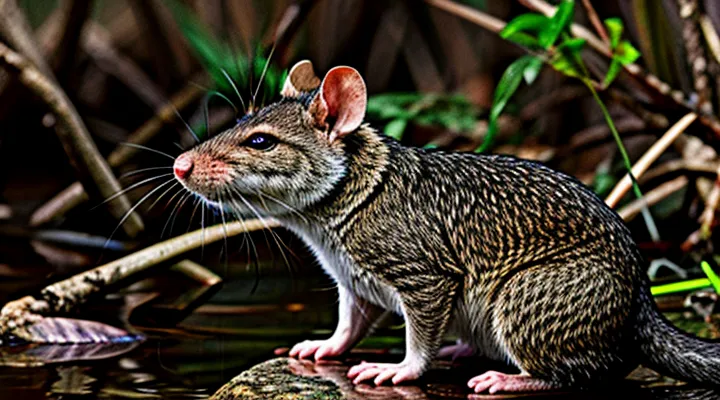
The Australian swamp rat (Rattus lutreolus) exhibits a compact body length of 120–150 mm and a tail ranging from 80 to 110 mm, with total mass typically between 45 and 70 g. Hind‑foot length averages 30 mm, and ear pinnae measure 12–15 mm.
- Dorsal pelage: dense, coarse, dark brown to reddish‑brown; occasional grayish tones in northern populations.
- Ventral pelage: lighter, gray‑white, lacking distinct markings.
- Tail: sparsely haired, semi‑naked, slightly longer than the head‑body length, providing balance during swimming and climbing.
- Limbs: robust fore‑ and hind‑limbs with well‑developed claws; hind‑feet bear fringed hairs that improve traction on soft, muddy substrates.
The skull presents a broad rostrum, strong zygomatic arches, and a dental formula of I 1/1 C 0/0 PM 0/0 M 3/3, reflecting an omnivorous diet. Auditory bullae are enlarged, enhancing low‑frequency sound detection in dense vegetation. Vibrissae are long and densely innervated, facilitating tactile navigation in murky water and thick reeds.
Habitat and Distribution
Geographical Range
The Australian swamp rat occupies a restricted but well‑defined portion of eastern Australia, confined primarily to coastal and sub‑coastal wetland systems. Its distribution extends from the tropical rainforests of northern Queensland southward through the subtropical zones of New South Wales, reaching the temperate marshes of Victoria. Populations are absent from arid interior regions, reflecting the species’ reliance on permanently moist habitats.
Key elements of the range include:
- Coastal floodplains and estuarine mangroves in Queensland’s Cape York Peninsula.
- Low‑lying swamps and riverine wetlands along the Great Dividing Range in northern New South Wales.
- Freshwater marshes and reed beds in the Gippsland region of Victoria.
- Isolated pockets in the Tasmanian highland peat bogs, where suitable habitat persists.
The species’ southernmost records lie near the Otway Ranges, while the northern limit is demarcated by the transition to monsoonal savanna. Altitudinal distribution rarely exceeds 500 m above sea level, with most observations concentrated below 200 m where groundwater tables remain high throughout the year.
Preferred Habitats
Wetland Environments
Wetland ecosystems comprise permanently or seasonally inundated areas where water saturates the soil, supporting hydrophytic vegetation and anaerobic conditions. These habitats include marshes, swamps, floodplain wetlands, and peat bogs, each characterized by distinct water depth, flow regime, and substrate composition.
Marshes feature emergent grasses and sedges in shallow water; swamps are dominated by woody plants such as melaleuca and paperbark; floodplain wetlands experience periodic inundation from river overflows; peat bogs contain acidic, organic-rich soils with low nutrient availability. Water chemistry varies from fresh to brackish, influencing plant community structure and invertebrate abundance.
The swamp rat exploits this mosaic of wetland types for shelter, foraging, and breeding. Dense sedge mats provide cover from predators, while the root zones of aquatic plants supply seeds, insects, and crustaceans that form the core diet. Seasonal water fluctuations create temporary channels that facilitate dispersal and allow access to new feeding grounds. Reproductive nests are constructed in soft, waterlogged soils that retain moisture and protect offspring from desiccation.
Key wetland features supporting the species include:
- Continuous ground-level vegetation for concealment
- High invertebrate productivity supplying protein-rich food
- Soft, saturated soils enabling burrow construction
- Seasonal water level changes that expand habitat connectivity
Understanding the structure and dynamics of these environments is essential for assessing the ecological requirements of the Australian swamp rat and for informing conservation measures that maintain wetland integrity.
Coastal Regions
The Australian swamp rat occupies a range of environments, including the low‑lying coastal zones of eastern and southern Australia. In these areas the species exploits wetland habitats that experience regular tidal influence and seasonal flooding.
Coastal habitats provide dense vegetation such as mangrove thickets, salt‑marsh grasses, and coastal heath. These plant communities supply cover from predators, nesting material, and a steady supply of seeds, insects, and small crustaceans that form the rat’s diet. The proximity of freshwater streams and estuarine channels creates a mosaic of moist soils ideal for burrowing.
Physiological adaptations enable survival in saline environments. The rodent exhibits a higher tolerance for salt in its diet and can regulate water balance through efficient kidney function. Its burrows are reinforced with vegetation, reducing collapse in soft, water‑logged soils. Nocturnal foraging limits exposure to daytime heat and predation.
Reproductive cycles align with the seasonal productivity of coastal wetlands. Breeding peaks during spring and early summer when food resources are abundant, resulting in multiple litters per year. Juvenile dispersal often occurs along shoreline corridors, linking isolated populations and maintaining genetic flow.
Key threats to coastal populations include:
- Habitat loss from urban expansion and infrastructure development.
- Sea‑level rise and increased salinity altering vegetation structure.
- Introduction of feral predators such as cats and foxes.
- Pollution and runoff degrading water quality.
Mitigation measures focus on protecting coastal wetlands through legal safeguards, restoring degraded mangrove stands, and implementing predator‑control programs. Monitoring programs track population trends and habitat condition, providing data for adaptive management.
Ecological Role
The Australian swamp rat (Rattus lutreolus) functions as a primary consumer within wetland ecosystems. By feeding on aquatic grasses, sedges, tubers, and invertebrates, it transfers energy from primary producers and detritus to higher trophic levels. Predators such as owls, snakes, and feral cats rely on the species for a substantial portion of their diet, linking it directly to the stability of predator populations.
Through foraging activity, the rat disturbs soil and leaf litter, enhancing aeration and promoting microbial decomposition. This bioturbation accelerates nutrient cycling, supporting plant growth in marshes and floodplains. The animal’s seed‑handling behavior contributes to plant regeneration; ingestion of seeds followed by excretion often results in dispersal to favorable germination sites.
The species also influences vegetation structure. Selective grazing reduces dominance of aggressive grass species, allowing a more diverse herbaceous community to persist. In areas where rat populations decline, shifts toward monocultures and reduced plant heterogeneity have been documented.
Ecologically, the rat serves as a vector for parasites and pathogens that affect both wildlife and domestic animals. Monitoring its health status provides early indicators of disease emergence within wetland habitats.
Key ecological contributions:
- Energy transfer from primary producers to carnivores
- Soil aeration and enhanced decomposition
- Seed dispersal and promotion of plant diversity
- Regulation of vegetation composition
- Indicator of pathogen dynamics in wetland ecosystems
Biology and Behavior
Diet and Foraging
Herbivorous Nature
The Australian swamp rat (Rattus lutreolus) exhibits a strictly herbivorous feeding strategy. Plant material supplies the majority of its nutritional intake, with grasses, sedges, and aquatic macrophytes forming the core diet. Seasonal shifts in vegetation availability drive variations in consumption patterns, prompting increased reliance on seeds and tubers during dry periods.
Key dietary components include:
- Fresh shoots of native grasses (e.g., Poa spp.)
- Leaf litter of reeds and rushes
- Seed heads of wetland herbs
- Bulbous roots of sedge species
Digestive physiology reflects adaptation to high-fiber content. Enlarged cecum and elongated small intestine facilitate microbial fermentation, converting cellulose into short‑chain fatty acids for absorption. Enzymatic activity peaks for cellulase and hemicellulase, supporting efficient breakdown of plant cell walls.
Foraging occurs primarily at night, with individuals navigating dense marsh vegetation using whisker‑mediated tactile cues. Food is collected and transported to shallow burrow chambers, where it is stored in dry compartments to prevent spoilage. The species’ herbivory reduces competition with sympatric insectivorous rodents and contributes to seed dispersal and vegetation turnover within riparian ecosystems.
Seasonal Variations
The marsh-dwelling rodent inhabiting southeastern Australian wetlands exhibits marked seasonal fluctuations that shape its biology and habitat use. Winter brings lower temperatures and reduced water levels, prompting individuals to retreat into deeper burrows where insulation conserves body heat. Metabolic rates decline, and food intake shifts toward stored seeds and tubers that remain accessible despite surface drying.
Spring triggers a surge in reproductive activity; females enter estrus, and litters emerge within weeks. Increased rainfall raises water tables, expanding vegetated margins that supply abundant insects and tender plant shoots. Males expand their territories, employing scent marking to establish dominance hierarchies.
Summer imposes high ambient temperatures and intermittent flooding. Rats adopt nocturnal foraging patterns to avoid heat stress, and they construct elevated nests above waterlogged ground. Dietary composition broadens to include aquatic invertebrates that proliferate in temporary pools. Body condition peaks as energy reserves are replenished.
Autumn marks a transition to cooler, drier conditions. Breeding ceases, and individuals concentrate on accumulating fat reserves in preparation for winter scarcity. Habitat use contracts to areas with persistent moisture, and burrow maintenance intensifies to ensure shelter integrity.
These seasonal dynamics influence population density, predator–prey interactions, and the resilience of wetland ecosystems. Monitoring temporal shifts in water availability, vegetation cover, and food resources is essential for effective management of the species and its habitat.
Reproduction and Life Cycle
Breeding Season
The breeding season of the Australian swamp rat (Rattus lutreolus) occurs primarily during the austral spring and early summer, spanning from September to December. Hormonal changes triggered by increasing daylight and rising temperatures stimulate reproductive readiness in both sexes.
Males develop enlarged testes and increased sperm production, while females experience follicular development and estrous cycles that align with peak resource availability. Nest construction intensifies during this period; females select dense vegetation near waterlogged margins to provide shelter and thermal stability for offspring.
Key reproductive characteristics include:
- Litter size averaging three to five pups, with occasional larger litters in high‑quality habitats.
- Gestation lasting approximately 21 days, after which pups are born altricial and reliant on maternal care.
- Weaning completed by 3–4 weeks, allowing juveniles to attain independence before the onset of the dry season.
Environmental factors such as floodplain inundation and abundant seed and invertebrate supplies directly influence reproductive success. Populations in wetter regions may exhibit an extended breeding window, while those in marginal habitats often concentrate breeding efforts within the optimal climatic window to maximize offspring survival.
Gestation and Litter Size
The Australian swamp rat (Rattus lutreolus) exhibits a relatively short gestation, lasting 21–23 days under natural conditions. Embryonic development proceeds rapidly, with the placenta providing efficient nutrient transfer that supports fetal growth within the species’ modest body size. Births typically occur during the austral spring and early summer, when ambient temperatures and food availability peak, thereby maximizing offspring survival prospects.
Litter characteristics are as follows:
- Average litter size ranges from 3 to 5 pups; occasional litters contain up to 7 individuals.
- Neonates are altricial, born hairless and blind, gaining fur and opening eyes within 10–12 days.
- Weaning is completed by 4 weeks of age, after which juveniles attain independence.
- Female rats can produce up to three litters per breeding season, contingent on resource abundance.
Parental Care
The swamp-dwelling rat of southeastern Australia exhibits a reproductive cycle tightly linked to regional wet seasons. Breeding peaks occur when water levels rise, providing abundant vegetation and soft soil for nesting. Gestation lasts approximately 21 days, after which litters of three to five altricial young are born.
Females construct shallow burrows lined with dry grasses and sedges near water margins. The nest architecture includes a central chamber insulated with shredded plant material. Throughout the 10‑day incubation period the mother remains inside the chamber, maintaining a constant temperature through body heat and occasional fur placement.
After birth the mother attends the pups continuously. She provides:
- Frequent nursing bouts lasting 2–5 minutes each
- Periodic grooming to stimulate circulation and hygiene
- Relocation of the litter to drier sections of the burrow during heavy rain
- Defensive aggression toward potential predators
Pup growth follows a predictable trajectory. By day 12 the offspring achieve fur development and begin limited surface exploration. At day 18 they display coordinated locomotion and start consuming solid vegetation. Complete weaning occurs around day 25, after which juveniles disperse to establish independent foraging ranges.
Habitat characteristics shape parental strategies. Dense riparian vegetation offers concealment, reducing predation risk and allowing the mother to allocate more time to feeding rather than vigilance. Seasonal fluctuations in water depth dictate nest placement depth, influencing the frequency of nest relocation. Nutrient-rich marsh grasses support higher maternal body condition, correlating with increased litter size and pup survival rates.
Social Structure
The Australian swamp rat (Rattus lutreolus) exhibits a loosely organized social system that fluctuates with seasonal resource availability. Adults form small, fluid groups typically consisting of a dominant male, one or two females, and their offspring. Group size rarely exceeds five individuals; larger aggregations dissolve when food becomes scarce.
Males maintain exclusive access to a core burrow network and defend it against rival males through scent marking and vocal warnings. Female dominance is expressed through priority access to nesting chambers and maternal care of young. Hierarchical rank influences breeding opportunities: dominant pairs produce the majority of litters, while subordinate individuals may delay reproduction or disperse to establish new territories.
Communication relies on a combination of ultrasonic vocalizations, tail‑slaps against substrate, and chemical cues deposited on burrow walls. These signals coordinate foraging, alert group members to predators, and reinforce territorial boundaries.
Reproductive cycles align with the wet season, when abundant vegetation supports rapid juvenile growth. Litters average three to five pups, with weaning occurring after 21 days. Offspring remain within the natal group for several weeks before dispersal, reducing inbreeding risk and facilitating gene flow across the landscape.
Key aspects of the social structure can be summarized:
- Small, dynamic groups centered on a dominant male
- Female priority in nesting and maternal duties
- Scent marking and ultrasonic calls for territory and alarm
- Seasonal breeding synchronized with resource peaks
- Juvenile retention followed by dispersal to new sites
These characteristics enable the species to exploit fluctuating wetland environments while maintaining genetic diversity and population stability.
Predation and Threats
The swamp-dwelling rodent faces continuous pressure from a suite of native and introduced predators. Predation directly reduces population size and influences behavioral adaptations such as nocturnal activity and burrow use.
- Owls (e.g., barn owl, masked owl) capture individuals during night foraging.
- Raptors including hawks and kites hunt from above open water margins.
- Snakes, particularly brown and carpet pythons, enter burrow systems to seize prey.
- Mammalian carnivores such as feral cats and foxes exploit surface activity and shallow burrows.
Beyond direct predation, the species encounters several anthropogenic and environmental threats. Habitat fragmentation caused by agricultural expansion and urban development isolates populations, limiting gene flow and increasing vulnerability to local extinction. Invasive plant species alter vegetation structure, reducing cover and food availability. Climate variability, especially prolonged drought, lowers water levels in wetlands, forcing individuals into suboptimal habitats. Pathogens transmitted by introduced mammals, notably parasites and viruses, add a health burden that can elevate mortality rates.
These pressures combine to produce declining trends in many regions. Effective management requires protecting wetland integrity, controlling feral predator numbers, and monitoring disease prevalence. Conservation actions that maintain contiguous habitats and reduce human-induced disturbances offer the most direct means of mitigating the identified threats.
Conservation Status
Population Trends
The Australian swamp rat (Rattus lutreolus) occupies wetland margins, riparian zones, and marshy grasslands across southeastern Australia. Its distribution is fragmented by land‑use change, water regulation, and climate variability, which directly influence demographic patterns.
Recent surveys reveal three distinct population trajectories:
- Stable populations persist in protected reserves where water regimes remain natural and native vegetation is intact.
- Declining populations occur in agricultural catchments where drainage, pesticide runoff, and habitat loss reduce breeding sites.
- Localized increases have been recorded in newly restored wetlands that provide abundant cover and food resources.
Long‑term monitoring indicates an overall downward trend of approximately 12 % over the past two decades, driven primarily by:
- Hydrological alteration – reduced flood frequency lowers seed and invertebrate availability, limiting reproductive output.
- Habitat fragmentation – isolation of suitable patches hampers dispersal, resulting in reduced genetic diversity and higher local extinction risk.
- Predation pressure – increased presence of introduced predators (e.g., feral cats) in modified landscapes elevates mortality rates.
Effective management requires maintaining natural water cycles, expanding protected wetland corridors, and implementing predator control programs. Continuous population assessments using standardized live‑trapping and mark‑recapture techniques are essential for detecting future changes and guiding conservation actions.
Conservation Efforts
Habitat Protection
The Australian swamp rat inhabits freshwater wetlands, flood‑plain marshes, and riparian zones across southeastern Australia. Its survival depends on dense vegetation that provides cover, foraging grounds rich in grasses and sedges, and stable water tables that maintain soil moisture. Habitat fragmentation, drainage for agriculture, and altered fire regimes reduce the availability of suitable sites, leading to local population declines.
Effective protection requires coordinated actions that address both land use and water management:
- Preserve existing wetlands through legal designations such as nature reserves or conservation covenants.
- Restore degraded marshes by re‑establishing native plant communities and re‑creating natural hydrological patterns.
- Implement buffer zones around wetlands to limit agricultural runoff, sedimentation, and pesticide infiltration.
- Regulate water extraction to maintain groundwater levels that sustain soil moisture essential for burrow stability.
- Monitor fire frequency and intensity to prevent excessive burning of vegetation that shelters the species.
Long‑term monitoring of population trends and habitat quality provides data for adaptive management, ensuring that conservation measures remain effective as environmental conditions evolve.
Research and Monitoring
Research on the swamp‑dwelling rodent focuses on systematic data acquisition to clarify population dynamics, habitat preferences, and ecological interactions. Field teams employ standardized live‑trapping grids, marking each individual with passive integrated transponder (PIT) tags to enable recapture analysis and survival estimates. Concurrently, researchers collect tissue samples for genetic profiling, which reveals connectivity among subpopulations and informs management of genetic diversity.
Monitoring schemes integrate several components:
- Quarterly population censuses using trap‑success rates and camera‑trap indices.
- Habitat quality assessments that record vegetation structure, water table depth, and soil composition.
- Remote‑sensing surveys that map wetland extent and detect seasonal fluctuations.
- Pathogen screening through fecal and blood analyses to track disease emergence.
Data are entered into centralized relational databases, linked to geographic information system (GIS) layers for spatial visualization. Automated scripts generate annual trend reports, highlighting changes in abundance, range contraction, or habitat degradation. These outputs support adaptive management strategies, guide allocation of restoration resources, and provide evidence for regulatory compliance.