
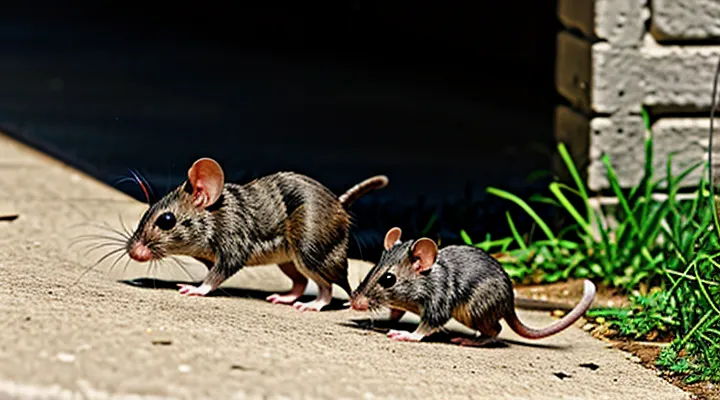
Introduction to Rodent Distinctions
General Overview of Mice
Mice belong to the genus Mus within the family Muridae. The most common species, the house mouse (Mus musculus), measures 6–10 cm in body length, with a tail of similar size, and weighs 15–30 g. Their fur is typically gray‑brown, and their ears are large relative to head size, providing acute hearing.
Physically, mice exhibit a high surface‑to‑volume ratio, enabling rapid heat loss and necessitating constant foraging. Their incisors grow continuously; gnawing maintains proper length. Skeletal structure includes a flexible spine that supports swift, erratic movements.
Behavioral traits include nocturnal activity, strong olfactory communication, and social nesting. Mice establish hierarchical groups, with dominant individuals defending territories and resources. They produce ultrasonic vocalizations for intra‑group signaling, especially during mating and pup care.
Habitat preferences span human dwellings, agricultural fields, and natural grasslands. Adaptability to diverse environments stems from opportunistic feeding habits; diet consists of grains, seeds, insects, and waste material. Reproductive capacity is high: females reach sexual maturity at 5–6 weeks, can produce 5–10 litters per year, each containing 4–12 pups, with gestation lasting about 19–21 days.
Mice serve as primary laboratory models. Their short life cycle, genetic similarity to humans, and well‑characterized genome facilitate studies in genetics, immunology, and pharmacology. Standardized strains enable reproducible experiments across research institutions.
Key points summarizing the overview:
- Taxonomy: Mus genus, family Muridae
- Size: 6–10 cm body, 15–30 g weight
- Physical traits: continuous‑growth incisors, large ears, flexible spine
- Behavior: nocturnal, social hierarchy, ultrasonic communication
- Habitat: domestic, agricultural, wild grasslands
- Diet: omnivorous, opportunistic
- Reproduction: early maturity, multiple large litters annually
- Research role: primary model organism for biomedical studies
General Overview of Rats
Rats belong to the genus Rattus within the family Muridae and are among the most widely distributed rodents worldwide. Adult specimens typically measure 20–25 cm in body length, with tails of comparable size, and weight ranges from 150 g to 500 g depending on species and environment. Their fur is coarse, coloration varies from brown to black, and they possess strong incisors that grow continuously and require constant gnawing to prevent overgrowth.
Key biological and ecological traits include:
- Omnivorous diet: grains, fruits, insects, carrion, and human waste.
- High reproductive capacity: gestation lasts 21–23 days; litters average 6–12 pups; females can breed year‑round.
- Social structure: colonies form hierarchical groups with dominant individuals and subordinate members.
- Adaptability: thrive in urban, agricultural, and wild habitats; capable of exploiting diverse shelter types, from burrows to building interiors.
Rats exhibit keen sensory abilities. Their whiskers detect tactile changes, while large ears and a well‑developed olfactory system aid navigation and foraging. Vision is limited to low‑light conditions, and they rely heavily on scent marking to communicate territory and reproductive status.
Human interactions with rats are significant. They serve as vectors for pathogens such as Leptospira and hantavirus, cause substantial crop loss, and generate structural damage through gnawing. Conversely, laboratory strains provide essential models for biomedical research, contributing to advances in genetics, pharmacology, and disease study.
Physical Characteristics
Size and Weight
Body Length
Mice possess a compact body that typically measures between 2 and 4 inches (5–10 cm) from snout to the base of the tail. This dimension excludes the tail, which generally adds another 2–4 inches (5–10 cm). In contrast, rats exhibit a substantially larger torso, ranging from 6 to 10 inches (15–25 cm) in length, not counting the tail that often contributes an additional 5–8 inches (12–20 cm).
- Common house mouse (Mus musculus): 2.5–3.5 in (6–9 cm) body length.
- Field mouse (Apodemus sylvaticus): up to 4 in (10 cm) body length.
- Norway rat (Rattus norvegicus): 7–9 in (18–23 cm) body length.
- Roof rat (Rattus norvegicus rattus): 6–8 in (15–20 cm) body length.
These measurements illustrate a clear size disparity: rat bodies are roughly twice as long as those of mice. The difference persists across species and influences handling techniques, enclosure design, and predator‑prey dynamics.
Tail Length
Mice possess tails that are proportionally shorter than their bodies, typically measuring 60–80 % of head‑body length. The tail surface is covered with fine hairs and a sparse fur layer, providing limited insulation. In contrast, rats have longer tails, often exceeding 100 % of head‑body length, with a thicker, hair‑less skin that contains a dense network of blood vessels. This vascularization aids thermoregulation and balance during climbing.
Key measurements illustrate the disparity:
- House mouse (Mus musculus): tail length 7–10 cm, body length 7–10 cm.
- Norway rat (Rattus norvegicus): tail length 18–25 cm, body length 20–25 cm.
The structural differences affect locomotion. Mice rely on rapid, agile movements in confined spaces, where a shorter, flexible tail enhances maneuverability. Rats, navigating larger environments and open surfaces, benefit from a longer, sturdier tail that serves as a counterbalance and rudder.
These morphological traits provide reliable criteria for distinguishing the two rodents in field observations and laboratory settings.
Head Shape and Features
Snout Appearance
Mice and rats can be separated by the shape and proportion of their snouts, a reliable field characteristic.
- Mice possess a sharply tapered, triangular snout that extends slightly beyond the lower jaw; the profile appears narrow from a lateral view.
- Rats exhibit a broader, blunter snout that is noticeably shorter relative to overall head length; the profile looks more rectangular.
- In mice, the nostrils are positioned at the tip of the snout and point forward, facilitating precise scent detection.
- Rat nostrils sit slightly higher on the snout and open more laterally, reflecting a different airflow pattern.
- Whisker (vibrissae) arrangement differs: mice have longer, more forward‑oriented whiskers that fringe the snout edge, while rats display shorter, thicker whiskers that emerge from a wider area across the snout surface.
These morphological distinctions provide a quick, visual method for identifying each rodent species without reliance on size or behavior.
Ear Size and Shape
Mice and rats can be separated by the dimensions and contours of their ears, a reliable field marker for species identification.
Mice possess ears that are proportionally larger than their skulls, extending close to the tip of the snout. The pinna is thin, sharply pointed, and largely devoid of fur, allowing clear visibility of the vascular network. In contrast, rat ears are smaller relative to head size, rounded in outline, and frequently covered with a thin layer of hair that masks underlying structures.
Key distinctions:
- Size ratio: mouse ear length ≈ 60‑70 % of head width; rat ear length ≈ 40‑50 % of head width.
- Shape: mouse pinna is elongated and triangular; rat pinna is oval and broader.
- Surface texture: mouse ear skin is smooth and hairless; rat ear skin bears fine fur.
- Coloration: mouse ears often match the body’s dorsal hue; rat ears may appear lighter or pinkish due to thinner fur coverage.
These measurable traits enable quick differentiation without genetic testing, supporting accurate ecological surveys and laboratory animal management.
Eye Prominence
Mice and rats can be distinguished by the prominence of their eyes. In mice, the eyes are relatively large and protrude noticeably from the skull, giving a forward‑facing appearance. Rats have smaller, less protruding eyes that sit lower on the head and are partially hidden by surrounding fur and bone.
- Position: mouse eyes sit higher on the face; rat eyes are positioned lower and more laterally.
- Relative size: mouse eye diameter occupies a larger fraction of the head length than rat eye diameter.
- Visibility: mouse eyes are clearly visible from a side view; rat eyes are less exposed.
- Functional emphasis: mice rely more on acute vision for nocturnal foraging; rats depend more on whisker‑mediated tactile sensing.
Fur Color and Texture
Mice and rats display distinct fur characteristics that aid identification and reflect ecological adaptations.
-
Coloration: Laboratory mice often exhibit uniform coats ranging from white to light brown, while wild mice display mottled shades of gray, brown, or reddish tones that blend with ground cover. Rats, particularly the common brown rat (Rattus norvegicus), possess darker, more uniform brown or black fur; the black rat (Rattus rattus) may present a glossy black or dark brown coat.
-
Texture: Mouse fur is fine, soft, and densely packed, providing insulation for small body size. Rat fur is coarser, longer, and less dense, offering protection against abrasion and environmental elements.
-
Seasonal variation: Many mouse species develop a slightly thicker undercoat in winter, whereas rats typically retain consistent fur thickness year‑round, relying on behavioral thermoregulation.
These differences in hue and feel constitute reliable markers for distinguishing the two rodent groups in field surveys and laboratory settings.
Foot Size and Structure
Mice and rats exhibit distinct foot dimensions that aid rapid identification in laboratory and field settings. A typical adult mouse possesses a foot length of approximately 10–12 mm, while an adult rat’s foot measures 15–20 mm, reflecting a proportional increase aligned with overall body size.
The skeletal framework of the mouse foot contains five toes on the forelimb and five on the hindlimb, each equipped with a small, rounded pad and a modest claw. Rat feet share the same toe count but display broader, flatter pads and longer, more robust claws, adaptations that support heavier weight and enhanced digging capability.
Key distinctions in foot morphology:
- Length: mouse foot ≈ 10–12 mm; rat foot ≈ 15–20 mm.
- Pad surface: mouse pads are narrow and rounded; rat pads are wide and flattened.
- Claw size: mouse claws are short and delicate; rat claws are elongated and sturdy.
- Weight bearing: rat hindfeet exhibit a reinforced metatarsal region for supporting greater mass; mouse hindfeet lack this reinforcement.
These measurable differences provide reliable criteria for separating the two rodent species when visual or tactile assessment is required.
Behavioral Traits
Social Structures
Mouse Colonies
Mouse colonies provide a practical framework for observing the traits that set mice apart from rats. In controlled environments, colonies reveal differences in social dynamics, reproductive rates, and spatial organization.
Mice form dense, hierarchical groups that occupy limited burrow systems. Each individual maintains a defined territory within the colony, and dominant mice enforce spatial boundaries through scent marking and brief aggressive encounters. Rats, by contrast, establish larger, more fluid colonies with overlapping territories and a higher tolerance for cohabitation.
Reproductive patterns further distinguish the species. Mouse colonies experience rapid turnover: gestation lasts about 19–21 days, litters average five to eight pups, and females can produce eight or more litters per year. Rat colonies exhibit slower cycles, with gestation of 21–23 days, smaller litters of three to seven pups, and fewer than six litters annually.
Colonial spatial requirements reflect body size and foraging behavior. Mouse enclosures prioritize vertical complexity—multiple levels of nesting material and climbing structures—to accommodate their agility and preference for elevated rest sites. Rat enclosures emphasize horizontal space, providing extensive floor area for exploration and food storage.
Key colony characteristics that highlight mouse–rat distinctions:
- Territory size: mice – small, tightly bounded; rats – larger, overlapping.
- Population growth: mice – high rate, multiple litters; rats – moderate rate, fewer litters.
- Nest architecture: mice – multi‑level, compact; rats – spacious, ground‑level.
- Social hierarchy: mice – pronounced dominance hierarchy; rats – more egalitarian.
Understanding mouse colonies clarifies how these rodents differ fundamentally from rats in organization, reproduction, and habitat utilization.
Rat Packs
Rat packs represent a defining social trait of Rattus species, distinguishing them from the more solitary behavior typical of Mus genera. Within a pack, individuals maintain hierarchical relationships, with dominant adults directing foraging routes and nesting sites. Communication relies on ultrasonic vocalizations, scent marking, and tactile cues, enabling coordinated movement and rapid response to predators.
Key aspects of rat pack organization include:
- Stable core membership, often comprising related females and their offspring.
- Flexible inclusion of unrelated males during breeding seasons.
- Collective burrow construction, resulting in extensive tunnel networks shared among members.
- Cooperative defense, where multiple rats confront threats to protect the group’s resources.
In contrast, mouse populations display transient groupings, limited to brief breeding aggregations and occasional shelter sharing. The persistent, structured nature of rat packs contributes to higher survival rates and more efficient exploitation of urban environments, reinforcing the broader distinction between the two rodent families.
Activity Patterns
Nocturnal Habits
Mice and rats exhibit distinct patterns of nighttime activity that influence their foraging, social interaction, and exposure to predators.
-
Mice typically begin activity shortly after dusk, reaching peak movement within the first two hours of darkness. Their foraging routes are short, often confined to the immediate vicinity of nesting sites. This limited range reduces competition but increases vulnerability to nocturnal predators such as owls and cats.
-
Rats display a delayed onset of nocturnal activity, often remaining inactive until several hours into the night. Their movements cover larger territories, frequently spanning multiple structures or underground burrows. Extended range enables access to diverse food sources but also requires sophisticated navigation and social coordination.
-
Both species rely on low-light vision and whisker-mediated tactile sensing, yet mice possess a higher density of retinal rods, granting superior visual sensitivity at very low illumination. Rats compensate with more developed olfactory receptors, allowing detection of food and conspecific cues over greater distances.
-
Sleep cycles differ: mice alternate short sleep bouts throughout the night, while rats consolidate rest periods into longer intervals, typically during the early morning hours before sunrise.
These behavioral distinctions shape ecological roles and affect control strategies that target each rodent’s specific nocturnal habits.
Diurnal Tendencies
Mice and rats exhibit distinct activity patterns that influence their interaction with human environments. Mice are primarily nocturnal, with peak foraging and social behaviors occurring during the dark phase. Their circadian rhythm results in reduced visibility and lower detection risk, which aligns with their preference for concealed nesting sites. In contrast, many rat species display crepuscular tendencies, concentrating activity at twilight hours, while some urban rats adopt a more flexible schedule that includes daylight foraging when food sources are abundant.
Key points of divergence:
- Peak activity window: Mice concentrate movements between dusk and dawn; rats shift activity toward dawn and dusk, occasionally extending into daylight.
- Light tolerance: Mice avoid illuminated areas, exhibiting heightened stress responses under bright conditions; rats tolerate moderate light levels and may exploit daylight to access human waste.
- Foraging strategy: Nocturnal mice rely on scent cues in low-light environments; rats combine olfactory and visual cues, enhancing efficiency during low‑light transitions.
These differences affect pest management timing. Interventions targeting mice are most effective during night hours, whereas rat control measures benefit from scheduling at dawn or dusk when rats are most active. Understanding the temporal behavior of each species improves surveillance accuracy and reduces non‑target impacts.
Diet and Feeding Habits
Omnivorous Preferences
Mice and rats both exhibit omnivorous feeding habits, yet their preferences diverge in measurable ways. Laboratory observations indicate that mice favor smaller, high‑carbohydrate items such as grains, seeds, and processed cereals, while rats show a stronger inclination toward larger protein sources, including insects, meat scraps, and fish. This distinction reflects differences in jaw morphology: mice possess shorter incisors suited for gnawing fine particles, whereas rats have more robust molars capable of crushing tougher tissues.
Key dietary tendencies include:
- Grain and seed consumption: Mice regularly select wheat, rice, and sunflower seeds; rats consume these less frequently, opting for bulkier kernels.
- Protein intake: Rats actively seek insects, carrion, and pet food formulations rich in animal protein; mice consume protein primarily from plant‑derived sources or occasional insects.
- Waste exploitation: Both species scavenge human refuse, yet rats dominate in environments with abundant meat waste, whereas mice dominate where sugary or starchy residues predominate.
Field studies show that seasonal availability modifies these patterns. During autumn, mouse populations increase consumption of fallen nuts and fruit, whereas rats shift toward stored grain and discarded poultry. Understanding these dietary nuances aids in pest management, as bait formulations can be tailored to exploit the preferred food categories of each rodent.
Granivorous Tendencies
Mice exhibit a strong preference for seeds and cereal grains, reflecting a primarily granivorous diet. Their small incisors efficiently crack hard seed coats, and their digestive tract processes carbohydrate‑rich food with high efficiency. Consequently, mouse populations often flourish in environments where stored grain or wild seed supplies are abundant.
Rats consume grains less frequently, incorporating a wider range of protein‑rich items such as insects, carrion, and human waste. Their larger size permits a higher absolute intake of non‑seed foods, and their dentition is adapted for gnawing both plant material and tougher animal matter. Grain forms only a modest portion of a rat’s overall diet, even when it is readily available.
- Mice: 40–60 % of diet composed of seeds, cereals, and nuts.
- Rats: 15–30 % of diet comprised of grains; remainder includes insects, meat, and refuse.
- Mice: Stronger jaw muscles for repeated seed cracking.
- Rats: More generalized jaw structure supporting diverse food types.
- Mice: Higher reliance on stored grain stores in human structures.
- Rats: Preference for opportunistic feeding sources, reducing dependence on granivory.
Habitat Preferences
Indoor Environments
Mice and rats occupy distinct niches within indoor settings, and their physical and behavioral traits dictate how each species interacts with human habitats.
Mice are small, typically 2–4 inches long, allowing them to infiltrate narrow gaps in walls, floorboards, and appliance seams. Their agility enables rapid movement through compact spaces, where they often establish nests in insulation, behind cabinets, or within stored fabrics. Food sources for mice include grains, cereals, and pet food, which they can harvest in minute quantities without attracting immediate detection.
Rats are larger, ranging from 7–11 inches in body length, and require broader openings such as utility chases, pipe penetrations, or vent grilles. Their strength permits them to gnaw through harder materials, including plastic and thin metal. Nesting sites are generally situated in basements, crawl spaces, or behind heavy furniture, where they can accumulate substantial debris and waste. Rats consume a wider variety of food, including meat scraps and oily residues, and they can consume larger amounts before signs become apparent.
Key indoor implications:
- Structural damage: Mice bite soft insulation and wiring; rats compromise thicker structural components and can sever larger cables.
- Health concerns: Both species transmit pathogens, but rats carry a broader spectrum of diseases due to their larger size and diverse diet.
- Detection: Mouse activity produces fine droppings and subtle gnaw marks; rat activity yields larger droppings, pronounced gnawing, and audible scurrying.
Effective management of indoor environments requires recognizing these differences, sealing entry points appropriate to each species’ size, and implementing monitoring strategies that target the specific signs each rodent generates.
Outdoor Environments
Mice and rats occupy distinct niches in outdoor settings, and their physical and behavioral traits reflect those differences. Mice favor open fields, grasslands, and the perimeters of human habitation where vegetation provides cover. Their small size enables movement through narrow burrows and dense ground cover, reducing exposure to predators. Rats, by contrast, concentrate around water sources, such as streams, irrigation channels, and sewage systems, where larger tunnels and robust structures accommodate their greater body mass.
- Habitat selection: Mice exploit loosely vegetated areas; rats dominate near permanent water and waste accumulations.
- Nest construction: Mice build shallow nests in grass or leaf litter; rats construct deeper burrows with reinforced walls, often incorporating debris and discarded material.
- Foraging patterns: Mice forage primarily on seeds, insects, and low‑lying plant matter; rats consume a broader spectrum, including larger fruits, carrion, and human food waste.
- Predator avoidance: Mice rely on rapid, erratic movements and camouflage within low vegetation; rats depend on powerful claws and the ability to retreat into extensive underground networks.
- Reproductive output: Mice produce several litters per year with up to eight offspring each, supporting quick population turnover in transient habitats; rats generate fewer litters but sustain larger litters, favoring stable, resource‑rich environments.
These distinctions determine how each species interacts with outdoor ecosystems, influences pest management strategies, and shapes their roles in disease transmission and ecological balance.
Reproductive Differences
Gestation Period
Mice and rats exhibit distinct reproductive timelines that influence population dynamics and laboratory management. The gestation period for a common house mouse (Mus musculus) averages 19–21 days, whereas the brown rat (Rattus norvegicus) carries embryos for 21–23 days. This slight extension in rats results in a longer interval between conception and birth, affecting breeding schedules.
- Mouse gestation: 19–21 days, litters typically 5–8 pups.
- Rat gestation: 21–23 days, litters typically 6–12 pups.
Shorter mouse gestation contributes to faster generational turnover, while the marginally longer rat gestation aligns with larger litter size and greater neonatal development at birth.
Litter Size
Mice and rats exhibit distinct reproductive output, and litter size serves as a reliable indicator of these differences. A typical mouse litter comprises 5 to 10 offspring, with occasional extremes ranging from 3 to 12. In contrast, rats produce larger litters, generally 6 to 12 young, and can reach up to 14 in favorable conditions.
The disparity reflects variations in body size, metabolic demands, and breeding strategies. Mice mature quickly, allowing multiple small litters per year, while rats, being larger, allocate more resources to each birth, resulting in fewer but larger litters.
Key points:
- Mouse litter size: 5‑10 average, 3‑12 possible extremes.
- Rat litter size: 6‑12 average, up to 14 in optimal environments.
- Frequency: mice may have 5–10 litters annually; rats typically 5–7.
These figures underscore how reproductive capacity differentiates the two rodents and informs management practices in research and pest control.
Sexual Maturity
Mice reach sexual maturity at 5–8 weeks of age, whereas rats require 8–12 weeks. This disparity influences breeding cycles, population growth rates, and experimental timing.
- Onset of puberty: Female mice experience their first estrus around day 32–35; female rats typically exhibit estrus between day 45–50.
- Spermatogenesis: In male mice, sperm production becomes functional by week 6; in male rats, functional sperm appear by week 9.
- Reproductive lifespan: Mice maintain fertility for approximately 6–9 months, while rats remain fertile for 12–18 months under comparable conditions.
These differences affect colony management: mice require earlier pairing and shorter gestation intervals, whereas rats allow longer intervals between breeding attempts. Researchers must align study designs with the species‑specific timeline of sexual development to ensure accurate data collection.
Health and Lifespan
Common Diseases
Mice and rats share many pathogens, yet the prevalence and clinical impact of specific diseases differ between the two species.
Mice commonly contract:
- Sendai virus – causes respiratory distress, rapid spread in dense colonies.
- Mouse hepatitis virus (MHV) – leads to hepatitis, encephalitis; strain‑dependent severity.
- Helicobacter spp. – chronic intestinal inflammation, potential impact on research outcomes.
- Mycoplasma pulmonis – persistent respiratory infection, often subclinical but may exacerbate other conditions.
- Pinworm (Syphacia obvelata) – gastrointestinal irritation, easily transmitted through bedding.
Rats frequently encounter:
- Rat coronavirus (RCV) – respiratory disease with high morbidity, distinct from MHV.
- Rats’ parvovirus (RAV) – severe enteric disease, high mortality in young animals.
- Leptospira interrogans – renal colonization, zoonotic risk; more common in outdoor or water‑exposed populations.
- Streptobacillus moniliformis – causes rat‑bite fever in humans; rats serve as reservoir.
- Hantavirus – pulmonary syndrome, rare in laboratory settings but significant in wild populations.
Key distinctions:
- Mice exhibit higher susceptibility to viral hepatitis (MHV), whereas rats are more prone to enteric parvovirus infections.
- Respiratory viruses differ: Sendai virus dominates in mice, rat coronavirus in rats.
- Zoonotic concerns vary; leptospirosis and hantavirus are primarily associated with rats, while mouse‑borne hantavirus strains are less common.
Understanding these disease patterns informs colony health management, experimental design, and biosafety protocols. Regular monitoring, species‑specific sentinel programs, and targeted biosecurity measures reduce the risk of outbreak and preserve data integrity.
Average Lifespan
Mice and rats exhibit distinct longevity patterns that influence experimental design, pest control strategies, and pet care.
-
House mouse (Mus musculus)
• Wild lifespan: 1–2 years, limited by predation and environmental stress.
• Laboratory or captive conditions: up to 3 years with optimal nutrition and health monitoring. -
Brown rat (Rattus norvegicus)
• Wild lifespan: 1–1.5 years, similarly constrained by predators and disease.
• Captive lifespan: typically 2–3 years; exceptional individuals may reach 4 years when provided with enriched environments and regular veterinary care.
The disparity arises from species‑specific metabolic rates, reproductive cycles, and susceptibility to disease. Mice mature faster and reproduce earlier, which shortens their natural life expectancy, whereas rats mature more slowly, allowing slightly longer survival under comparable conditions.
Implications for Pest Control
Identifying Infestations
Identifying a rodent infestation begins with recognizing evidence that points to either mice or rats, because each species leaves a distinct trail.
Physical traces provide the quickest differentiation. Mouse droppings are roughly ¼‑inch long, slender, and have pointed ends; rat droppings measure ½‑inch or more, are thicker, and end in a blunt tip. Footprints follow the same pattern: mouse tracks show four small, oval pads with narrow toe marks, while rat tracks display larger pads and broader toe spacing. These dimensions allow inspectors to determine which animal is present without visual confirmation.
Damage patterns also vary. Mice prefer to gnaw on soft materials such as paper, insulation, and thin wiring, leaving shallow, crescent‑shaped bite marks. Rats target harder substances—plastic, wood, and metal—producing deeper, straight‑line gnawing. The size of holes in walls or flooring reflects the animal’s body diameter: openings under ¼ inch typically indicate mice; those exceeding ¼ inch suggest rats.
Nesting behavior offers further clues. Mice construct compact nests from shredded paper, fabric, or dried plant matter, often found in hidden corners, behind appliances, or within wall cavities. Rats build larger, messier nests composed of shredded cardboard, insulation, and food scraps, usually situated near food sources such as pantries, garbage areas, or sewer lines. Observing the location and composition of nests helps pinpoint the species involved.
A concise checklist for infestation identification:
- Measure droppings length and shape.
- Examine footprints for pad size and toe spacing.
- Inspect gnaw marks for depth and curvature.
- Locate nests and note material composition.
- Assess entry‑hole dimensions.
Applying these criteria enables accurate determination of whether mice or rats are responsible for an infestation, guiding appropriate control measures.
Effective Control Methods
Mice and rats exhibit distinct biological and behavioral traits that determine the success of eradication programs. Smaller body size, rapid reproductive cycles, and preference for indoor clutter make mice difficult to trap with large‑bait devices. Rats, by contrast, possess greater strength, burrowing ability, and a tendency to occupy sewers and outdoor structures, requiring different tactics.
Effective control measures must align with these differences. For mice, priority lies in eliminating entry points, maintaining cleanliness, and deploying snap traps or low‑profile bait stations. For rats, strategies include sealing foundation cracks, using heavy‑duty cage traps, and applying rodenticides in protected bait stations to prevent non‑target exposure.
- Seal gaps ≤¼ inch in walls, floors, and vents.
- Trim vegetation and remove debris within 3 feet of buildings.
- Deploy snap traps in high‑traffic zones; check daily.
- Place bait stations in concealed, rodent‑accessible locations.
- Use anticoagulant rodenticides in tamper‑resistant containers for established rat populations.
- Conduct regular inspections of sewer lines and crawl spaces; install sturdy metal mesh where needed.
- Rotate trap types and bait formulations to avoid habituation.
Integrating habitat modification, mechanical capture, and targeted toxicants yields the highest reduction rates for both species while minimizing risk to humans and pets. Continuous monitoring and prompt response to new activity are essential components of a sustainable control program.