
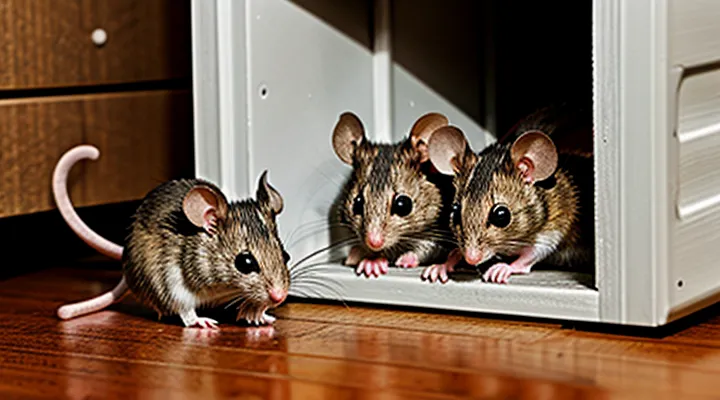
Understanding Mouse Behavior and Population Dynamics
What Attracts Mice to a House?
Food Sources and Availability
Food availability determines the upper limit of a mouse population in a residential building. Mice require a continuous supply of calories, water, and nutrients; without these, reproduction stalls and mortality rises.
Typical domestic food sources include:
- Grain products: cereal, rice, pasta, bread crumbs.
- Processed snacks: chips, crackers, cookies, candy.
- Pet food: dry kibble, canned meals, treats left uncovered.
- Fruit and vegetable waste: peels, cores, spoiled produce.
- Human leftovers: meat scraps, cheese, sauces, unattended dishes.
- Insect infestations: pantry moths, beetles, and other small arthropods that serve as secondary prey.
Availability is shaped by several factors:
- Storage practices – sealed containers, airtight pantry doors, and refrigerated leftovers reduce accessible calories.
- Cleaning frequency – regular removal of crumbs and waste eliminates opportunistic feeding sites.
- Structural integrity – gaps around pipes, vents, and baseboards allow rodents to reach concealed food caches.
- Seasonal variation – winter months increase indoor food consumption, while summer may see more outdoor foraging.
- Competition – presence of other pests (cockroaches, ants) can diminish shared resources.
When food sources are abundant and consistently accessible, a single house can sustain dozens of individuals, with population growth limited primarily by space and nesting sites. Conversely, strict sanitation and secure storage can suppress numbers to a few isolated occupants, preventing exponential expansion.
Shelter and Nesting Sites
Mice select enclosed, insulated spaces that protect them from predators and temperature extremes. Common locations include wall voids, attics, crawl spaces, and the space beneath floorboards. Each site offers a stable micro‑environment and access to building materials suitable for constructing nests.
A single nest can accommodate from one to six individuals, depending on the size of the cavity and the availability of soft bedding such as shredded insulation, paper, or fabric. When a nest reaches its capacity, mice expand to adjacent voids or create additional nests, effectively multiplying the number of occupants throughout the structure.
Factors that limit shelter availability include:
- Structural density: tightly sealed walls and sealed crawl spaces reduce accessible voids.
- Building materials: metal framing or concrete walls offer fewer gaps for nesting.
- Maintenance practices: regular sealing of entry points and removal of debris diminish suitable sites.
Overall, the total mouse population that a residence can sustain is directly proportional to the quantity and quality of these protected cavities. As shelter spaces increase, the house can support a larger colony, provided that food and water resources are also present.
Water Access
Adequate water determines the upper limit of a mouse population inside a dwelling. Each adult requires roughly 5‑10 mL of liquid per day; insufficient supply reduces survivorship and reproductive output, thereby lowering the maximum number of individuals the environment can support.
Domestic structures provide water through several pathways:
- Leaking faucets, pipes, or roof gutters
- Condensation on windows, walls, or refrigeration units
- Pet water dishes left unattended
- Moisture in stored food, fruit, or garbage
These sources can sustain large colonies when left unchecked. Continuous drip or pooled water may supply dozens of milliliters daily, enough for dozens of mice to survive and reproduce.
Effective control hinges on eliminating accessible liquid:
- Repair all plumbing faults and seal roof penetrations
- Remove standing water from basements and crawl spaces
- Keep pet water containers covered or remove when not in use
- Store food in airtight containers and promptly clean spills
By restricting liquid availability, the environment’s carrying capacity drops sharply, limiting the number of mice that can persist within the house.
How Mice Reproduce Rapidly
Gestation Period and Litter Size
The domestic mouse reaches maturity quickly; gestation lasts 19–21 days. After birth, females enter estrus within three to four days, allowing another conception cycle almost immediately.
Typical litter size ranges from five to eight pups, with occasional litters of up to twelve. Each female can produce up to ten litters per year under favorable conditions.
- Gestation: ~20 days
- Post‑partum estrus: 3–4 days
- Litters per year: up to 10
- Average pups per litter: 5–8
Rapid breeding, combined with short gestation, means a single pair can generate several hundred offspring within a year if unchecked. Consequently, the number of mice that a dwelling can sustain is driven primarily by these reproductive parameters rather than spatial constraints alone.
Sexual Maturity of Offspring
Estimating the number of mice a residential building can support requires understanding the reproductive timeline of the species. Sexual maturity of the offspring determines how quickly a small founding group can expand to fill the available space.
House mice typically reach reproductive capability at five to six weeks of age. This milestone depends on several variables:
- Nutrition: Adequate protein and caloric intake accelerate gonadal development.
- Ambient temperature: Warm environments (22‑28 °C) shorten the pre‑maturity period; cooler conditions delay it.
- Population density: High crowding can suppress hormonal signals, delaying onset of fertility.
Once offspring become fertile, each female can produce a litter of 5‑8 pups every three to four weeks. The resulting growth follows a geometric progression: a pair of founders can generate 10‑16 juveniles within two months, and those juveniles become breeders themselves after six weeks, multiplying the total population rapidly.
Consequences for occupancy limits:
- Early maturity shortens the interval between generations, allowing the colony to reach its environmental carrying capacity within a few months.
- Delayed maturity extends the time to saturation, giving owners a larger window for detection and control.
- Environmental stressors that postpone sexual development effectively reduce the maximum sustainable mouse count.
In practice, a house offering ample shelter, food sources, and stable temperature can support several hundred individuals before resources become limiting. The precise figure hinges on how quickly offspring achieve reproductive status, because that factor dictates the exponential rise that ultimately defines the upper bound of mouse density in a dwelling.
Frequency of Breeding
The rate at which mice reproduce directly determines the upper limit of their numbers inside a dwelling. A single female can start breeding as early as six weeks of age, and the reproductive cycle proceeds with remarkable speed.
Gestation lasts 19–21 days. After birth, pups are weaned by three weeks, and the mother can become fertile again within another three to four weeks. This interval permits up to ten litters per year for each breeding female under optimal conditions.
- Litter size: 5–12 pups (average 7)
- Breeding interval: 21–28 days
- Sexual maturity: 5–6 weeks
- Potential litters per year per female: 8–10
- Maximum offspring per female annually: 40–120
When multiple breeding females coexist, the population can double or triple each month. Space, food, and shelter become limiting factors, but in a typical residential environment with abundant hidden food sources, the exponential growth continues until density stress reduces reproductive output or increases mortality. Consequently, the frequency of breeding establishes a rapid escalation in mouse numbers, often reaching several dozen individuals in a modestly sized house within a few months.
Estimating Mouse Population in a Household
Signs of a Mouse Infestation
Droppings and Urine Stains
Mice leave droppings that accumulate in predictable patterns. Each adult produces 4‑6 pellets per day; a cluster of 20‑30 pellets typically indicates the presence of at least three individuals. Droppings are dark, spindle‑shaped, and often found near food sources, along baseboards, and in hidden corners. Their size and quantity provide a practical estimate of the colony’s density.
Urine stains appear as yellowish or amber discolorations on fabrics, wood, and drywall. Stains are usually accompanied by a faint, musky odor that intensifies in warm, humid conditions. Because urine contains proteins and minerals, it can cause corrosion of electrical components and foster mold growth. Detecting stains helps assess the extent of infestation and the potential for health hazards such as hantavirus and allergic reactions.
Typical indicators of mouse activity
- Concentrated droppings in a single area
- Yellow‑brown urine spots on surfaces
- Strong, lingering odor in enclosed spaces
- Gnaw marks near droppings or stains
These signs allow homeowners to gauge how many rodents occupy the dwelling and to prioritize remediation efforts.
Gnaw Marks and Damage
Mice leave characteristic gnaw marks on wood, plastic, and wiring. The incisors continuously grow, forcing the animals to chew to keep them trimmed. Each bite removes a thin layer of material, producing shallow, parallel grooves that widen with repeated activity. In structural components such as baseboards, studs, and floor joists, these grooves can weaken joints and create entry points for additional rodents.
Damage to electrical systems results from gnawing on insulation and cable sheathing. Exposed conductors increase the risk of short circuits, fire, and power outages. Signs include frayed wires, missing insulation, and scorch marks near outlets or junction boxes.
Plumbing is vulnerable to chew damage on rubber seals, PVC pipes, and flexible tubing. Compromised seals lead to leaks, water loss, and mold growth. Visible evidence consists of bite marks on pipe surfaces and displaced fittings.
Food storage areas show gnaw marks on containers, cardboard boxes, and pantry shelves. The marks are often deeper than those on structural material, reflecting the mouse’s effort to access nutrients. Persistent gnawing can render containers unusable and contaminate stored goods.
Typical indicators of gnaw-related damage:
- Parallel, shallow grooves on wood or plastic surfaces
- Frayed or stripped electrical insulation
- Scorch marks near electrical components
- Bite marks on pipe surfaces or seals
- Deepened holes in food containers or packaging
Assessing the extent of gnaw marks helps estimate mouse density within a residence. Concentrated damage in multiple zones suggests a larger population, whereas isolated marks indicate a limited number of occupants. Prompt identification and repair of gnawed elements reduce structural degradation and lower the capacity for further infestation.
Unusual Noises at Night
Unusual nocturnal sounds often reveal the presence and density of rodent occupants in a residence. Mice generate a characteristic series of noises: high‑pitched squeaks during social interaction, rapid foot‑stomps while foraging, and soft scratching against insulation or wall cavities. Each sound type correlates with specific activity levels, allowing an estimate of how many individuals share the structure.
Key acoustic indicators include:
- Repetitive squeaking bursts lasting 1–3 seconds, suggesting multiple individuals communicating.
- Continuous rustling in ceiling spaces, signifying sustained movement of a sizable group.
- Intermittent gnawing clicks on structural beams, typical of a population exceeding a few dozen.
Population thresholds become apparent when noise frequency rises above a few incidents per minute throughout the night. In a compact dwelling, such intensity generally reflects a colony of 30–50 mice, whereas a larger home with multiple floors can sustain 80–120 individuals before acoustic saturation occurs. Monitoring volume and repetition of these sounds provides a practical method for assessing the upper limit of rodent occupancy without visual inspection.
Mouse Sightings
Mouse sightings provide the most direct evidence for estimating rodent occupancy in a dwelling. Each observation reflects an interaction between the animal and the built environment, revealing the spatial distribution, activity patterns, and potential density of the population.
Typical indicators include:
- Fresh droppings, usually 3‑5 mm long, found along walls, in cabinets, or near food sources.
- Gnaw marks on wood, plastic, or wiring, often concentrated near entry points.
- Grease or oil trails left by the animal’s fur, visible on smooth surfaces.
- Scratching sounds heard at night, especially in concealed areas such as attics or basements.
- Live or dead specimens found in traps, traps’ catch records, or in hidden corners.
The frequency and location of these signs allow a quantitative assessment. Repeated droppings in a single room suggest at least one active individual, while multiple distinct clusters across several rooms imply a larger group. Consistent gnawing on structural components indicates ongoing foraging activity, which correlates with higher population pressure.
Environmental factors influencing sighting rates include:
- Availability of food stores: kitchens, pantries, and pet food increase detection likelihood.
- Structural integrity: gaps larger than 6 mm serve as entry points, raising the probability of observations.
- Seasonal temperature shifts: colder months drive mice indoors, resulting in more frequent sightings.
By systematically recording each sighting, assigning it to a specific zone, and noting the time interval between observations, one can calculate an approximate occupancy figure. For example, a pattern of three separate droppings clusters per week in a two‑story house often corresponds to a minimum of four to six individuals, accounting for breeding pairs and juveniles. This method supplies a reliable baseline for determining how many rodents a residence can support.
Factors Influencing Population Size
Size of the House and Available Space
The amount of living space directly limits the number of rodents a dwelling can support. Each mouse requires a minimum of 0.5 m² of accessible area for foraging, nesting, and movement. In a typical single‑family home, usable space includes floor rooms, wall cavities, attic insulation, and basement recesses; unused rooms, sealed basements, and open exterior areas do not contribute to capacity.
Key contributors to available habitat:
- Floor plan square footage that is not sealed off
- Wall and ceiling voids with insulation or wiring channels
- Attic insulation depth and access points
- Basement or crawl‑space openings and stored material
- Clutter and stored goods that create additional concealment
To estimate maximum occupancy, sum the square meters of all accessible zones, divide by 0.5 m², and adjust for resource limits such as food and water sources. A 150 m² house with extensive attic and wall voids may therefore sustain roughly 250–300 mice, whereas a compact 70 m² apartment with sealed walls may support fewer than 150 individuals.
Access to Resources
Mice survive in a dwelling only when essential resources are available in sufficient quantities. The number of individuals that can be sustained correlates directly with the supply of food, water, nesting material, and shelter space.
- Food: grains, crumbs, pet feed, and stored products provide calories. Each mouse requires roughly 2–3 g of food per day; the total daily intake sets an upper limit for the population.
- Water: free‑standing liquid or moisture from food items satisfies hydration needs. One milliliter per mouse per day is a practical benchmark.
- Nesting material: shredded paper, fabric fibers, insulation, and cellulose allow construction of secure nests. The amount of usable material determines how many separate colonies can be established.
- Shelter space: cavities, wall voids, and cluttered areas serve as hideouts. Approximately 200 cm³ of protected volume per mouse is required to avoid excessive competition.
When any of these resources fall below the thresholds listed, competition intensifies, leading to aggression, reduced reproduction, and eventual decline in numbers. Conversely, abundant supplies across all categories permit rapid population growth until other limiting factors, such as predation or disease, intervene.
Presence of Predators (e.g., cats)
Predatory animals inside a dwelling directly reduce the number of rodents that can be sustained. A cat’s hunting activity eliminates individual mice, interrupts breeding cycles, and creates an environment of heightened stress that lowers reproductive rates. The net effect is a lower equilibrium population compared to predator‑free conditions.
Key mechanisms through which predators limit mouse density:
- Immediate removal of adult and juvenile individuals.
- Disruption of nesting sites as mice avoid areas frequented by the predator.
- Hormonal stress responses that suppress ovulation and litter size.
- Decreased survival of offspring due to heightened vigilance and reduced foraging time.
When a cat or similar predator is present, the maximum sustainable mouse count drops sharply, often to a fraction of the theoretical capacity determined solely by food and shelter availability.
Effectiveness of Pest Control Measures
Effective pest control directly limits the number of mice a residence can sustain. Chemical baits, traps, and structural sealing each address different aspects of infestation.
- Rodenticides delivered in tamper‑resistant stations reduce active populations within days; resistance develops if rotation is absent.
- Snap and electronic traps provide immediate removal; placement along walls and near food sources maximizes capture rates.
- Sealing entry points, including gaps around pipes, vents, and foundations, prevents new individuals from entering; professional inspection can identify hidden openings.
Integrated approaches combine immediate reduction with long‑term exclusion. Data from controlled studies show that homes employing all three tactics experience a 70‑90 % decrease in mouse activity compared with chemical treatment alone. Regular monitoring, replenishment of baits, and periodic inspection of seals sustain low population levels and prevent resurgence.
Health Risks and Property Damage Caused by Mice
Health Concerns for Humans and Pets
Disease Transmission (Hantavirus, Salmonella)
Rodent occupancy directly influences the probability of pathogen exposure within a dwelling. As mouse density rises, contact with contaminated surfaces, urine, and feces increases, elevating the risk of hantavirus and salmonella transmission.
Hantavirus is primarily spread through inhalation of aerosolized particles from dried rodent excreta. Even low‑level contamination can become infectious when disturbed by cleaning or ventilation. Salmonella bacteria survive on bedding, food remnants, and hard surfaces, persisting for weeks and entering the human gastrointestinal tract via direct ingestion or cross‑contamination of kitchen utensils.
Key factors that amplify transmission risk as mouse numbers grow:
- Greater accumulation of urine and droppings per square foot.
- More frequent gnawing of electrical wiring and insulation, creating additional aerosol sources.
- Increased competition for food, leading mice to forage in human food stores and contaminate pantry items.
- Higher likelihood of bites and scratches, providing direct inoculation routes for both agents.
Estimating safe occupancy levels requires consideration of space, sanitation practices, and structural integrity. In a typical single‑family home with 1,200 ft² of usable floor area, maintaining mouse numbers below five individuals generally limits excreta buildup to levels manageable by routine cleaning. Exceeding this threshold often results in exponential growth of contaminant load, overwhelming standard hygiene measures and markedly raising infection probability.
Effective control strategies focus on reducing population size and interrupting pathogen pathways:
- Seal entry points to prevent new infestations.
- Deploy traps or baits to achieve rapid population decline.
- Conduct thorough disinfection of all areas where droppings are found, using bleach solutions (1 part bleach to 9 parts water) to inactivate hantavirus and kill salmonella.
- Store food in rodent‑proof containers and maintain a clutter‑free environment to limit shelter opportunities.
By limiting the number of mice that can survive within a residence, the concentration of hantavirus‑laden aerosols and salmonella‑contaminated surfaces remains low, decreasing the likelihood of human infection.
Allergens and Asthma Triggers
Mice generate a measurable load of allergens that scales with the size of the rodent population in a dwelling. Each additional animal adds urine, feces, saliva, and dander to the indoor environment, raising the concentration of airborne particles that trigger respiratory reactions.
- Urine proteins (e.g., Mus m 1)
- Dander shed from fur and skin
- Saliva residues transferred to food and surfaces
- Fecal pellets containing bacterial fragments
These substances become airborne through movement, cleaning, or ventilation. In susceptible individuals, exposure can provoke bronchial hyper‑responsiveness, wheezing, and asthma exacerbations. Studies show that indoor concentrations above 1 µg/m³ of mouse urine protein significantly increase the risk of asthma symptoms.
Reducing the mouse count lowers allergen levels. Effective interventions include:
- Sealing cracks and openings to prevent entry
- Removing food sources and clutter that provide shelter
- Deploying snap traps or live‑catch devices in strategic locations
- Engaging licensed pest‑control professionals for large infestations
Implementing these measures diminishes airborne allergen load, thereby decreasing the likelihood of asthma attacks among residents.
Damage to Property and Infrastructure
Chewing Electrical Wires and Fire Hazards
Mice multiply quickly in a dwelling, and each additional individual raises the likelihood that at least one will gnaw on electrical wiring. Their continuously growing incisors compel them to chew hard materials, and the soft polymer coating of most cables provides an easy target. When a rodent removes insulation, the underlying copper becomes exposed, creating a direct path for current flow.
Exposed conductors can trigger a short circuit, overload a circuit breaker, or ignite surrounding combustible material. The heat generated at the point of contact may reach ignition temperature within seconds, especially if the wire runs through insulation, drywall, or wooden framing. Once a fire starts, it can spread rapidly through the same concealed pathways that the mice used to travel.
Preventive measures reduce both the rodent population and the electrical risk:
- Seal cracks, gaps, and vent openings with steel wool or cement to block entry.
- Install conduit or armored cable in high‑traffic areas to resist gnawing.
- Place snap traps or live‑catch devices in concealed locations to control numbers.
- Conduct regular visual inspections of outlets, switches, and visible wiring for chew marks or frayed insulation.
- Engage a licensed electrician to replace damaged sections and install tamper‑resistant receptacles.
Effective control of the rodent load directly limits the probability of wire damage and the associated fire hazard.
Contamination of Food and Surfaces
Mice establish colonies by exploiting food sources and shelter. When food is contaminated with droppings, urine, or gnawed packaging, it becomes a reliable nutrient supply that sustains larger populations. Surface contamination—visible smears, greasy streaks, or shredded fibers—provides additional cues for mice, indicating a safe environment for nesting and movement. The extent of such contamination correlates directly with the number of individuals a dwelling can accommodate.
Typical indicators of food and surface contamination include:
- Visible droppings on countertops, pantry shelves, or behind appliances.
- Crumbs, spilled grain, or pet food left unretrieved for extended periods.
- Chewed packaging, torn paper, or gnaw marks on wooden structures.
- Streaks of oily residue or greasy fingerprints near food preparation areas.
- Persistent odors of ammonia or rot, detectable without close inspection.
Each sign reflects a breach in sanitation that lowers the threshold for mouse survival, thereby increasing the potential colony size within the residence. Maintaining strict cleanliness—regularly discarding waste, sealing containers, and sanitizing surfaces—reduces available resources and restricts the maximum mouse population a house can support.
Structural Damage to Wood and Insulation
Mice infestations directly affect a home’s structural components. Their incisors continuously grow, prompting constant gnawing of wooden framing, joists, and support beams. The resulting cavities weaken load‑bearing elements, increase the risk of collapse, and create entry points for additional pests.
Insulation suffers from two primary mechanisms. First, mice chew through fiberglass batts, cotton rolls, and cellulose, reducing thermal resistance and raising heating‑cooling costs. Second, nests built from shredded material compress insulation, further diminishing its effectiveness. Compromised insulation also allows moisture to accumulate, promoting mold growth and rot in adjacent wood.
Key impacts include:
- Loss of R‑value, leading to energy inefficiency.
- Accelerated deterioration of load‑bearing members due to bite marks and secondary fungal activity.
- Elevated fire hazard from chewed wiring that may be exposed during gnawing.
- Increased repair expenses, as damaged studs and insulation must be replaced to restore structural integrity.
Estimating rodent capacity in a dwelling requires accounting for the extent of structural degradation. As wood and insulation degrade, available shelter diminishes, limiting population growth despite abundant food sources. Conversely, early detection and remediation of gnawing damage can restrict the number of viable occupants, preventing exponential population increase.
Effective Mouse Control and Prevention Strategies
DIY Mouse Control Methods
Trapping Techniques (Snap Traps, Live Traps)
Effective control of a residential mouse population relies heavily on the choice and deployment of traps. Proper selection reduces reproductive cycles and prevents the infestation from reaching the maximum occupancy a dwelling can sustain.
Snap traps operate on a spring‑loaded bar that delivers an instantaneous kill. They are inexpensive, reusable, and provide immediate results when positioned along walls, behind appliances, and near known activity sites. Bait selection—peanut butter, chocolate, or dried fruit—enhances capture rates. Placement at a 45‑degree angle to the wall, with the trigger end facing the mouse’s entry point, increases reliability. Disposal of deceased rodents must follow local health regulations.
Live traps consist of a hinged compartment that closes when a mouse steps on a pressure plate. They allow removal without killing, suitable for humane‑focused environments. Successful use requires frequent monitoring; a trapped mouse left unattended may die from stress or dehydration. After capture, release should occur at least 2 m from the building, preferably in a wooded or field area, to discourage immediate return. Regular cleaning prevents scent buildup that can deter further captures.
- Snap traps: low cost, immediate kill, reusable, requires careful disposal.
- Live traps: humane, reusable, demands frequent checking, necessitates proper release distance.
Choosing the appropriate device and adhering to precise placement guidelines directly influences how many rodents can coexist within a house, often limiting the population to well below its theoretical maximum.
Baits and Rodenticides (Cautionary Notes)
Effective mouse control in residential environments often relies on baits and rodenticides, yet safety considerations dictate every step of their use.
Commercial baits combine attractants with anticoagulant or neurotoxic active ingredients. Grain‑based pellets, wax blocks, and compressed granules are typical delivery forms. Anticoagulants such as bromadiolone, difenacoum, and brodifacoum inhibit blood clotting at low concentrations; neurotoxins like bromethalin disrupt nerve function. Each product specifies a target dosage per mouse, usually measured in milligrams of active compound per kilogram of body weight.
- Place bait only inside sealed, tamper‑resistant stations.
- Position stations away from children’s play areas, food preparation surfaces, and pet pathways.
- Wear disposable gloves when handling and loading bait.
- Follow label instructions for the exact amount per station; excess bait increases risk of accidental ingestion.
- Store unopened containers in a locked cabinet, out of direct sunlight and moisture.
- Monitor for signs of secondary poisoning in predatory animals; dispose of dead rodents promptly to prevent scavenger exposure.
- Dispose of empty containers according to local hazardous‑waste regulations.
Adhering to these precautions limits mouse numbers while protecting occupants, household pets, and non‑target wildlife. Proper selection, placement, and handling of baits ensure that rodent control remains both effective and responsible.
Exclusion and Sealing Entry Points
Mice enter homes through gaps that provide shelter and access to food. Identifying and eliminating these openings dramatically reduces the number of individuals a dwelling can sustain.
Common entry points include:
- Cracks around foundation walls and floor joists
- Gaps beneath doors and windows
- Openings around utility penetrations (pipes, cables, vents)
- Openings at roof eaves, soffits, and attic vents
- Holes in siding, trim, and exterior cladding
Effective exclusion requires:
- Inspecting the exterior and interior shell for openings larger than ¼ inch.
- Applying durable materials such as steel wool, copper mesh, or silicone‑based sealants to fill gaps.
- Installing door sweeps and weatherstripping to block under‑door spaces.
- Securing vents with mesh screens that resist gnawing.
- Replacing damaged flashing, siding, or chimney caps with pest‑resistant alternatives.
When all potential pathways are sealed, the habitat becomes unsuitable for large mouse colonies. Consequently, the resident mouse population remains low, limiting the overall occupancy of the house by these rodents.
Professional Pest Control Services
When to Call an Expert
Signs that a homeowner should seek professional pest‑control assistance go beyond occasional sightings. When the infestation reaches a level that threatens structural integrity, contaminates food supplies, or poses health risks, expert intervention becomes necessary.
Typical indicators include:
- Multiple active nests discovered in walls, attics, or insulation.
- Persistent gnaw marks on wiring, piping, or structural timber.
- Visible droppings in large quantities across living spaces.
- Unexplained gaps in stored food containers or damaged packaging.
- Increased noise activity during both day and night hours.
Additional circumstances that warrant immediate contact with a specialist:
- Presence of newborn rodents, indicating rapid population growth.
- Evidence of disease vectors, such as fleas or ticks associated with the rodents.
- Inability to locate or eradicate entry points despite DIY attempts.
- Homeowners with allergies, respiratory conditions, or young children, for whom exposure poses heightened risk.
Consulting a certified exterminator ensures accurate assessment, targeted treatment, and long‑term prevention strategies tailored to the specific occupancy capacity of the dwelling.
Integrated Pest Management (IPM) Approaches
Integrated Pest Management (IPM) provides a systematic framework for estimating and limiting the number of rodents that can inhabit a residential structure. The approach begins with accurate monitoring: placement of snap traps, bait stations, or motion‑activated cameras in strategic locations yields data on activity patterns, breeding hotspots, and population density. Quantitative trap counts, combined with knowledge of average litter size and reproductive cycles, allow calculation of the maximum sustainable mouse population under current conditions.
Sanitation and exclusion form the core of preventive measures. Removing accessible food sources—stored grains, unsecured garbage, pet feed—reduces the attractant index. Sealing entry points less than ¼ inch wide, installing door sweeps, and repairing foundation cracks cut off ingress routes. Mechanical barriers such as copper mesh around vents and chimney caps act as long‑term deterrents without chemical reliance.
When monitoring indicates an established infestation, IPM escalates to targeted control tactics. A tiered list of options includes:
- Mechanical removal – high‑efficiency snap traps or live‑catch devices positioned at active runways.
- Baiting – anticoagulant or non‑anticoagulant rodenticides applied in tamper‑resistant stations, deployed only after exclusion to prevent non‑target exposure.
- Biological augmentation – introduction of predatory species (e.g., barn owls) in suitable environments, where permissible.
- Environmental modification – landscaping adjustments that eliminate dense ground cover and debris near the foundation.
Evaluation follows each intervention. Re‑assessment of trap success rates and repeat monitoring determines whether the rodent load has fallen below the calculated threshold for the dwelling. Continuous documentation and adjustment of sanitation, exclusion, and control measures sustain low mouse numbers and prevent re‑establishment.
Long-Term Prevention Measures
Maintaining Cleanliness and Food Storage
Clean living spaces limit the resources mice need to survive, directly reducing the number of individuals a residence can support. When food residues and clutter disappear, the environment becomes inhospitable, forcing any intruders to seek shelter elsewhere.
Effective sanitation includes:
- Immediate removal of crumbs, spills, and pet food leftovers.
- Daily sweeping or vacuuming of floors, countertops, and under appliances.
- Regular disposal of garbage in sealed containers; replace liners weekly.
- Prompt repair of water leaks; eliminate standing moisture that attracts insects and, consequently, rodents.
Secure food storage further restricts mouse access. Recommended measures are:
- Store dry goods in airtight, metal or heavy‑plastic containers with screw‑on lids.
- Keep pantry shelves organized; avoid stacking items that create hidden gaps.
- Rotate inventory; discard expired products to prevent long‑term odor buildup.
- Position food supplies away from walls and exterior doors to reduce easy entry points.
By maintaining rigorous cleanliness and employing airtight storage, the available carrying capacity for mice in a house drops dramatically, limiting population growth and preventing infestations.
Regular Inspections and Maintenance
Regular inspections reveal structural gaps, concealed food sources, and signs of rodent activity before populations expand. Detecting openings as small as a quarter‑inch allows immediate sealing, preventing new individuals from entering and reproducing.
- Exterior walls, roof eaves, and soffits for cracks or missing flashing
- Foundation and crawl‑space for gaps around pipes, vents, and utility lines
- Windows, doors, and garage doors for damaged weatherstripping or warped frames
- Interior walls, cabinets, and appliance spaces for gnaw marks, droppings, or grease stains
Maintenance tasks that follow inspections directly limit habitat suitability. Replacing damaged screens, installing door sweeps, and applying steel wool or silicone sealant to voids block ingress. Regular cleaning of kitchen surfaces, prompt disposal of food waste, and proper storage of pet feed remove attractants. Ensuring gutters and downspouts direct water away from the foundation reduces moisture that encourages nesting.
Inspections should occur at least quarterly, with additional checks after severe weather or renovations. Recording findings, repair dates, and observed rodent evidence creates a timeline that highlights recurring problem areas and informs future preventive measures. Consistent implementation of these practices curtails the number of mice that can establish a viable colony within a residence.
Eliminating Water Sources
Mice require water to survive; eliminating accessible moisture drastically reduces the number they can sustain in a dwelling. Leaking pipes, condensation on windows, and standing water in pet dishes create micro‑habitats that support breeding colonies. Removing these sources forces mice to seek water elsewhere, often beyond the building’s perimeter, thereby limiting population growth.
Practical measures:
- Repair all plumbing leaks promptly; inspect under sinks, behind appliances, and around fixtures.
- Install drip‑free faucets and use water‑tight lids on containers.
- Wipe down condensation from windows and walls each morning.
- Eliminate food‑related moisture by storing dry goods in airtight containers and cleaning crumbs immediately.
- Remove standing water from pet bowls after each use; consider automatic dispensers that limit excess.
By maintaining a dry environment, the habitat capacity for rodents shrinks, directly influencing how many can inhabit the structure. Continuous monitoring and prompt remediation of new moisture points sustain the reduction effect over time.