
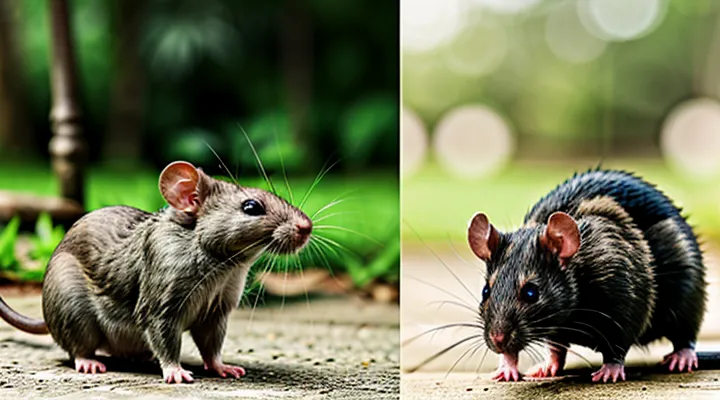
Domestication and Evolution
Genetic Divergence
Selective Breeding for Traits
Selective breeding has produced pet rats that differ markedly from their wild counterparts. Breeders choose individuals exhibiting desired characteristics and mate them over successive generations, fixing those traits in the population.
The most common traits targeted include:
- Temperament: calm, inquisitive, and tolerant of handling; achieved by pairing docile individuals.
- Coat coloration and pattern: a wide spectrum of solid, brindle, and spotted pigments, generated by selecting for specific melanin genes.
- Size and body proportion: larger or more compact frames, resulting from repeated selection of extreme growth rates.
- Health resilience: reduced susceptibility to common rodent diseases, obtained by breeding from lines with documented low morbidity.
These selections contrast with natural selection in wild rats, which favors survival skills such as predator avoidance, rapid reproduction, and aggressive foraging behavior. Consequently, pet rats display reduced wariness, altered social dynamics, and a higher tolerance for confined environments. The genetic bottleneck created by selective breeding also narrows genetic diversity, making controlled health monitoring essential for maintaining robust colonies.
Reduced Fear and Aggression
Pet rats exhibit markedly lower levels of fear and aggression than wild rats. Selective breeding for temperament, routine human interaction, and a predictable environment condition domesticated individuals to remain calm when approached, whereas wild rats retain heightened vigilance as a survival mechanism.
- Domesticated rats show rapid habituation to handling, allowing brief contact without defensive biting.
- Wild rats maintain a pronounced flight response; proximity to humans often triggers escape or aggressive displays.
- Stress hormones such as cortisol remain elevated in wild rats during human contact, while pet rats display baseline levels comparable to resting states.
These behavioral differences stem from genetic selection and environmental enrichment. Regular exposure to caretakers reduces the activation of the amygdala in pet rats, diminishing the neural circuits that mediate fear. In contrast, wild rats experience unpredictable threats, preserving an overactive threat detection system that fuels aggression. Consequently, pet rats can be safely handled and socialized, whereas wild rats require traps or protective barriers to prevent injury.
Physical Characteristics
Size and Build
Body Proportions
Pet rats kept as companions display distinct body proportions compared to their feral relatives. Domesticated individuals typically have a larger head relative to body length, with a skull that is broader and more rounded. This cranial enlargement results from selective breeding for traits such as temperament and coat color, which also influences musculature around the jaw.
Body length in pet rats averages 20–25 cm, whereas wild rats range from 15–20 cm. The tail of a domestic rat is proportionally shorter, measuring roughly 80 % of total body length, while the tail of a wild rat often exceeds 100 % of its body length, providing enhanced balance for navigating outdoor environments. Limb segments—particularly the forelimbs—are slightly longer in pet rats, facilitating climbing within cages and handling of objects.
Key proportional differences:
- Head‑to‑body ratio: domestic ≈ 0.35, wild ≈ 0.30
- Tail‑to‑body ratio: domestic ≈ 0.80, wild ≈ 1.10
- Forelimb length relative to hindlimb: domestic ≈ 0.95, wild ≈ 0.85
- Overall mass: pet rats 250–350 g, wild rats 150–250 g
These measurements reflect the divergent selective pressures on captive and free‑living populations, resulting in the observable size and shape variations.
Tail Length
Pet rats typically have tails that are proportionally shorter than those of wild rats. Domestic breeding emphasizes compact body size, and tail length averages 9–11 cm in mature individuals, compared with 12–15 cm observed in most wild populations.
The reduction in tail length results from several factors:
- Selective breeding for reduced size and increased manageability.
- Nutritional regimes that affect overall growth patterns.
- Limited exposure to environmental pressures that favor longer tails for balance and thermoregulation.
Wild rats retain longer tails because they serve functional purposes in natural habitats. The extended tail provides enhanced stability while navigating complex burrow systems and uneven terrain. It also assists in heat dissipation, a critical adaptation for survival in variable outdoor climates.
Genetic analysis confirms that domestic rats possess alleles associated with shorter vertebral segments in the caudal region. In contrast, wild specimens exhibit genetic markers that promote elongated caudal vertebrae, reflecting evolutionary pressure for agility and temperature regulation.
Overall, tail length distinguishes domesticated rats from their wild relatives through measurable differences in size, function, and genetic composition.
Fur Color and Markings
Variety in Pet Rats
Pet rats display a breadth of physical and genetic diversity that distinguishes them from free‑living rats. Selective breeding over decades has produced distinct coat colors, patterns, and textures, none of which occur naturally in wild populations.
- Coloration: albino, black, brown, agouti, and mixed shades such as “himalayan” or “sable” result from targeted gene combinations.
- Pattern: solid, piebald, roan, and “mask” markings arise through controlled allele pairing.
- Coat type: standard short hair, long hair (often called “rex”), and curly hair variants are maintained by breeders.
- Size: dwarf strains weigh 150–250 g, while standard strains reach 300–500 g, reflecting deliberate selection for size extremes.
Domesticated rats derive from the Norway rat (Rattus norvegicus) but have been isolated from wild gene flow, allowing fixation of traits that enhance visual appeal and temperament. Breeding programs prioritize traits such as docility, reduced aggression, and adaptability to handling, resulting in pets that are more sociable than their wild relatives.
Health considerations accompany this variety. Specific coat colors may be linked to predispositions—for example, albinos often exhibit higher sensitivity to bright light and a greater incidence of certain ocular issues. Long‑hair strains require regular grooming to prevent matting and skin infections. Size differences influence dietary needs and cage space requirements; dwarf rats need less space but benefit from enrichment that encourages activity.
Behavioral outcomes correlate with genetic selection. Rats bred for calmness exhibit lower stress responses during handling, facilitating research, education, and companionship. In contrast, wild rats retain heightened wariness and territoriality, traits that are largely absent in the curated pet population.
Overall, the spectrum of colors, patterns, coat types, and sizes in pet rats reflects intentional genetic manipulation, producing animals that differ markedly in appearance, health profile, and behavior from their wild counterparts.
Uniformity in Wild Rats
Wild rats exhibit a high degree of phenotypic and genetic consistency across populations that share the same ecological niche. Natural selection favors traits that enhance survival in urban and agricultural environments, resulting in a narrow range of body size, fur coloration, and dental structure. This uniformity simplifies identification and aids researchers in tracking disease vectors.
Key aspects of uniformity include:
- Morphology: Average body length of 20–25 cm, tail length proportionate to body, brown to black dorsal pelage, and white or pink ventral fur.
- Genetics: Limited allelic variation in mitochondrial DNA markers, indicating recent common ancestry among urban colonies.
- Reproductive parameters: Gestation period of 21–23 days, litter sizes of 6–12 pups, and rapid sexual maturity at 5–6 weeks.
- Behavioral patterns: Nocturnal activity, opportunistic omnivory, and strong territoriality that leads to densely packed colonies.
In contrast, domesticated rats display broader morphological diversity, altered coat colors, and reduced aggression due to selective breeding. The uniformity of wild rats remains a defining characteristic that distinguishes them from their pet counterparts and underpins their ecological success.
Sensory Organs
Vision Differences
Pet rats and their wild relatives exhibit distinct visual characteristics shaped by divergent environments. Domesticated individuals live primarily in well‑lit indoor spaces, while wild rats navigate nocturnal, predator‑rich habitats.
The retinal composition reflects these pressures. Wild rats possess a higher proportion of rod cells, enhancing sensitivity to dim light and motion. Pet rats show a modest increase in cone density, granting better color discrimination under artificial illumination.
Visual acuity and field of view differ as well. Wild rats achieve sharper detection of moving silhouettes at a distance, supporting escape responses. Pet rats demonstrate reduced acuity but maintain a wide peripheral field, suitable for exploring confined cages.
These anatomical variations translate into behavior:
- Wild rats rely on rapid motion detection to avoid predators.
- Pet rats prioritize object recognition for foraging and interaction with owners.
- Light‑adaptation speed is faster in wild rats, enabling swift transitions between darkness and brief illumination.
Overall, the visual system of domesticated rats adapts to stable lighting and human interaction, whereas the wild counterpart retains traits optimized for survival in low‑light, high‑risk environments.
Olfactory Acuity
Pet rats and their wild counterparts rely heavily on smell for foraging, predator avoidance, and social interaction, yet the intensity of this reliance diverges markedly.
Wild rats inhabit environments where food sources are scattered and threats are abundant. Their nasal epithelium exhibits a high density of olfactory receptors, enabling detection of volatile compounds at parts‑per‑billion concentrations. Enhanced olfactory bulb volume correlates with rapid discrimination of scent cues, supporting efficient navigation of complex habitats.
Domesticated rats live in controlled settings with predictable nutrition and limited exposure to predators. Selective pressures favoring extreme olfactory sensitivity diminish, resulting in a modest reduction in receptor count and slightly smaller olfactory bulbs. Nevertheless, basic scent discrimination remains functional for cage‑based enrichment and social bonding.
Key distinctions:
- Receptor density: wild individuals > domestic individuals by approximately 15‑20 %.
- Olfactory bulb size: wild rats possess larger bulbs relative to brain mass.
- Detection threshold: wild rats identify odorants at lower concentrations than pet rats.
- Behavioral response speed: wild rats react to novel scents within seconds; pet rats exhibit longer latency.
These physiological variations reflect the divergent ecological demands placed on rats in natural versus captive environments.
Behavioral Traits
Temperament and Socialization
Human Interaction
Pet rats are accustomed to regular handling, socialization, and routine care. Humans typically provide them with a controlled environment, balanced nutrition, and veterinary oversight. Interaction includes gentle restraint, tactile stimulation, and training for simple tasks, which reduces stress responses and promotes trust.
Wild rats encounter sporadic human contact, usually limited to indirect exposure such as traps, pest control measures, or accidental encounters. Their behavior reflects heightened wariness; they display rapid flight, aggressive defense, and heightened cortisol levels when approached. Human interactions are often defensive rather than cooperative, resulting in limited observational data on their cognitive abilities.
Key distinctions in human‑rat dynamics:
- Handling frequency: daily (pet) vs. rare or hostile (wild)
- Environmental control: enclosed, sanitized habitats vs. uncontrolled urban or rural settings
- Health monitoring: scheduled veterinary exams vs. opportunistic necropsies or disease surveillance
- Behavioral conditioning: positive reinforcement training vs. instinctual avoidance responses
These factors shape the nature of human engagement, influencing welfare outcomes, research applicability, and public perception of rats in domestic versus natural contexts.
Intraspecies Dynamics
Pet rats and their wild relatives belong to the same species, yet their internal social patterns diverge sharply because of differing environmental pressures.
Domesticated individuals develop stable hierarchies within confined groups. Aggression is limited by regular feeding, predictable space, and human intervention. In contrast, wild populations maintain fluid dominance structures, with frequent territorial challenges and shifting leadership as individuals compete for scarce resources.
Communication channels also separate the two groups. Pet rats rely heavily on tactile contact, high‑frequency vocalizations, and short‑range scent cues while cohabiting in a small cage. Wild rats augment these signals with extensive scent marking of burrows and ultrasonic calls that travel across larger territories, supporting coordination among dispersed members.
Reproductive cycles reflect the contrast in living conditions. Under controlled lighting and temperature, pet rats can breed continuously, producing modest litter sizes that benefit from veterinary care. Wild rats experience seasonal breeding peaks, larger litters, and higher juvenile mortality due to predation and disease.
Group cohesion patterns differ as well. Pet rats form long‑lasting bonds with specific cage‑mates and with human caretakers, resulting in consistent social groups. Wild rats exhibit fission‑fusion dynamics, assembling temporary coalitions for foraging or defense and dissolving them when conditions change.
Key distinctions in intraspecies dynamics
- Hierarchy stability: fixed in captivity, fluid in the wild.
- Communication range: short‑range tactile/vocal in cages, long‑range scent and ultrasonic signals outdoors.
- Breeding frequency: continuous under human care, seasonal in natural habitats.
- Social bonds: enduring pairings with humans and cage‑mates, versus transient alliances among wild individuals.
Activity Patterns
Nocturnal Habits
Rats are primarily active during darkness, but domestic and wild individuals display distinct nocturnal behaviors shaped by environment and human interaction.
Domesticated rats, raised in controlled cages, adjust their active periods to align with the household schedule. They often begin activity shortly after lights are dimmed, peak within the first two hours of darkness, and may continue sporadically throughout the night. Access to constant food, water, and shelter reduces the need for extensive foraging excursions, allowing shorter, more predictable bouts of movement.
Wild rats, inhabiting urban sewers, fields, or forests, maintain a broader activity window. Their nocturnal phase extends from twilight to pre-dawn, driven by the necessity to locate scattered resources, avoid predators, and establish territories. Environmental cues such as temperature fluctuations, moonlight intensity, and human activity influence the timing and intensity of their movements.
Key contrasts in nocturnal habits:
- Duration: Pet rats typically concentrate activity within a 3‑4‑hour window after dark; wild rats remain active for 6‑10 hours.
- Motivation: Domestic rats explore primarily for enrichment; wild rats hunt for food, water, and nesting sites.
- Spatial pattern: Caged rats move within a confined area; wild rats travel extensive routes, often covering several hundred meters nightly.
- Response to stimuli: Pet rats react strongly to human presence and lighting changes; wild rats exhibit heightened sensitivity to predator sounds and fluctuating light levels.
These behavioral distinctions reflect the impact of human care on the circadian rhythm of captive rats, contrasting sharply with the survival‑driven nocturnal schedule of their free‑living counterparts.
Play Behavior
Pet rats exhibit a higher frequency of play bouts than their wild counterparts. In a secure enclosure, individuals engage in prolonged chasing, wrestling, and object manipulation, often initiating play with conspecifics of similar age. The presence of humans can also trigger interactive games, such as retrieving objects or performing tricks, which expands the repertoire beyond purely social activities.
Wild rats display play primarily during the juvenile stage, limited to brief bouts of pursuit and tumble‑type wrestling. Their play is constrained by predator risk, competition for food, and the need to conserve energy. Consequently, adult wild rats rarely initiate play, and the range of behaviors remains narrow.
Key distinctions in play behavior:
- Frequency: domestic rats play daily; wild rats play sporadically, mainly in early development.
- Diversity: pet rats use objects, perform learned tricks, and engage in reciprocal play; wild rats rely on simple chase and tumble interactions.
- Social context: pet rats often play with multiple familiar cage‑mates; wild rats typically play with immediate littermates or nearby peers.
- Duration: play sessions in captivity can last several minutes; wild play episodes are short, often under a minute.
- Motivation: safety and enrichment drive captive play; survival and social hierarchy shape wild play.
These patterns reflect the differing environmental pressures and opportunities presented to rats raised as companions versus those living in natural habitats.
Problem-Solving and Intelligence
Trainability
Pet rats exhibit a high degree of trainability because they are raised in environments that reward interaction with humans. Regular handling, positive reinforcement, and exposure to varied stimuli enable them to learn commands, navigate mazes, and perform tricks.
Wild rats prioritize avoidance of threats and foraging efficiency. Their experience rarely includes structured reinforcement, so they respond to cues only when directly linked to immediate survival benefits such as food or escape routes.
Key differences in trainability:
- Motivation: Domesticated rats respond to treats and praise; wild rats respond primarily to food scarcity or predator avoidance.
- Social learning: Pet rats observe and imitate conspecifics and humans; wild rats focus on individual trial‑and‑error.
- Attention span: Training sessions of 5–10 minutes maintain engagement in pet rats; wild rats disengage quickly unless a direct reward is present.
- Habituation: Repeated exposure to human presence reduces fear in pet rats, facilitating learning; wild rats retain heightened wariness, limiting conditioning opportunities.
Instinctual Responses
Pet rats exhibit muted instinctual responses compared with their wild counterparts. Domestication reduces the urgency of predator‑avoidance behaviors; pet rats often remain calm when approached by humans, whereas wild rats display rapid flight, heightened vigilance, and aggressive posturing at the sight of potential threats.
Key instinctual differences include:
- Territorial aggression – Wild rats fiercely defend established burrows and foraging areas; pet rats show limited territoriality, tolerating close contact with conspecifics and caretakers.
- Exploratory drive – Wild rats constantly scout new environments for food and shelter, reacting to novel stimuli with cautious, rapid movements. Pet rats explore more slowly, displaying curiosity without immediate escape responses.
- Social hierarchy enforcement – In wild colonies, dominance is asserted through frequent aggressive encounters and scent marking. Pet rats maintain a softer hierarchy, relying on subtle postural cues rather than overt aggression.
- Stress reactivity – Wild rats exhibit pronounced physiological stress markers (elevated cortisol, increased heart rate) when exposed to sudden noises or predator cues. Pet rats show attenuated stress responses, adapting quickly to routine handling and environmental changes.
These variations stem from selective breeding, reduced exposure to predators, and consistent human interaction, which reshape the neural circuitry governing survival instincts. The result is a rat that retains basic survival mechanisms but expresses them with diminished intensity and altered context.
Health and Lifespan
Dietary Needs
Commercial vs. Foraged Diets
Pet rats receive food formulated for consistent nutrient balance, whereas wild rats rely on opportunistic foraging. Commercial products—pellets, lab chow, or specially blended mixes—contain measured levels of protein, fat, fiber, vitamins, and minerals. Manufacturers test batches for quality, limit contaminants, and adjust formulas to meet the physiological needs of domesticated rodents. This predictability supports stable growth, reproductive health, and disease resistance in captive populations.
Foraged diets consist of seeds, grains, fruits, insects, and occasional carrion. Nutrient content fluctuates with season, location, and availability, leading to irregular protein and fat intake. Wild rats supplement deficiencies by consuming diverse items, but exposure to toxins, pathogens, and parasites remains high. Their digestive systems adapt to variable fiber and occasional toxins, yet the lack of consistent micronutrients can affect bone density, immune function, and reproductive success.
Key distinctions:
- Nutrient consistency: Commercial feeds provide fixed ratios; foraged meals vary widely.
- Safety profile: Processed diets undergo sterilization; wild foods may harbor bacteria, parasites, or pesticides.
- Digestive adaptation: Domestic rats have reduced enzymatic capacity for high‑fiber, raw insect material; wild rats exhibit enhanced gut flora for cellulose breakdown.
- Health outcomes: Stable diets correlate with lower incidence of metabolic disorders; erratic foraging can lead to nutrient deficiencies or toxic overload.
Nutritional Deficiencies
Pet rats receive diets formulated to meet laboratory‑grade nutritional standards, while wild rats subsist on opportunistic foraging that often lacks essential nutrients. This dietary disparity creates distinct patterns of deficiency in each group.
Domesticated rats may develop shortfalls when owners rely on low‑cost feeds or omit fresh produce. Common deficiencies include:
- Vitamin C – absent in standard rodent pellets, leading to scurvy‑like symptoms if not supplemented.
- Calcium – insufficient for proper bone development, especially in growing juveniles.
- Essential fatty acids – reduced levels affect skin health and reproductive performance.
Wild rats, despite occasional access to nutrient‑rich waste, frequently encounter deficits in:
- Protein – variable quality of scavenged food can limit growth and immune function.
- B‑complex vitamins – irregular intake results in impaired metabolism and nervous system issues.
- Trace minerals such as zinc and selenium – scarcity in natural habitats hampers antioxidant defenses.
The contrasting nutritional landscapes explain why pet rat owners must monitor micronutrient intake, whereas wild populations rely on ecological adaptations to mitigate occasional shortages.
Disease Susceptibility
Common Ailments
Pet rats and their wild counterparts share many health challenges, yet the frequency and severity of each condition differ markedly because of environmental control, nutrition, and veterinary oversight.
Respiratory disease dominates morbidity in both groups. In domestic animals, Mycoplasma pulmonis infection often presents as chronic rhinitis, sinusitis, and occasional pneumonia. In wild populations, the same pathogen combines with airborne pollutants and stressors, leading to higher mortality rates and more frequent secondary bacterial invasions.
Dermatological problems also vary. Pet rats commonly develop fur mites (Radfordia spp.) and fungal dermatitis, conditions that respond to topical or systemic treatments administered by owners. Wild rats encounter ectoparasites such as fleas and ticks, which transmit additional pathogens and rarely receive therapeutic intervention, resulting in prolonged infestations and secondary skin lesions.
Gastrointestinal disturbances appear as:
- Mild dysbiosis in pets, often corrected by diet modification.
- Severe enteritis in wild rats, linked to contaminated food sources and limited access to clean water.
- Parasitic worm burdens (e.g., Hymenolepis spp.) that are more prevalent in wild individuals due to environmental exposure.
Neoplastic disease illustrates the contrast in longevity. Pet rats, living longer under controlled conditions, show a higher incidence of mammary adenocarcinomas and pituitary tumors, detectable through routine health checks. Wild rats, with shorter lifespans, display lower tumor prevalence but higher rates of trauma‑related injuries that can mask underlying neoplasia.
Overall, pet rats experience a narrower spectrum of ailments, each managed through preventive care and treatment, whereas wild rats confront a broader, more acute disease landscape driven by uncontrolled environmental factors.
Parasite Load
Pet rats kept as companions experience a markedly lower parasite burden than their feral counterparts. Controlled environments, regular veterinary care, and limited exposure to contaminated food and soil reduce the incidence of ectoparasites such as fleas, mites, and lice, as well as internal parasites including nematodes, cestodes, and protozoa. In contrast, wild rats inhabit diverse habitats where sanitation is poor, and they frequently encounter intermediate hosts and contaminated substrates, resulting in a higher prevalence of both external and internal parasites.
Key differences in parasite load include:
- Ectoparasite prevalence: < 5 % of laboratory‑bred or pet rats carry fleas or mites; wild rats show infection rates of 30–70 %.
- Intestinal helminths: Pet rats rarely harbor adult tapeworms or roundworms; wild rats commonly host Hymenolepis spp., Nippostrongylus spp., and Trichuris spp.
- Protozoan infections: Giardia and Cryptosporidium are sporadic in captive rats, whereas they are regularly detected in wild populations.
- Vector‑borne pathogens: Ticks and sand flies that transmit bacterial agents are largely absent from indoor enclosures, but are frequent on outdoor rats, increasing the risk of diseases such as leptospirosis and hantavirus.
These disparities arise from differences in habitat hygiene, diet quality, and the frequency of veterinary interventions, which together create a substantially reduced parasite load for pet rats compared with their wild relatives.
Longevity
Environmental Factors
Pet rats live in controlled indoor settings, while wild rats occupy outdoor habitats that fluctuate dramatically in temperature, humidity, and shelter availability. These contrasting environments shape physiological stress responses, immune system development, and behavioral patterns.
Key environmental distinctions include:
- Housing conditions – Domestic rats reside in cages with stable temperature (18‑24 °C) and limited exposure to rain, wind, or predators. Wild rats nest in sewers, basements, or fields, where shelter quality varies and exposure to harsh weather is common.
- Food sources – Pet rats receive nutritionally balanced pellets and occasional fresh produce, ensuring consistent caloric intake and micronutrient levels. Wild rats scavenge from garbage, crops, and other unpredictable sources, leading to irregular nutrient profiles and occasional toxin ingestion.
- Pathogen load – Enclosed habitats reduce contact with parasites, bacteria, and viruses. In contrast, wild rats encounter a broader spectrum of pathogens, fostering heightened immune activation and disease resistance but also increasing infection risk.
- Social density – Caged rats are typically housed in small groups, limiting competition and aggression. Wild populations form larger colonies with complex hierarchies, resulting in frequent territorial disputes and stress‑induced hormonal changes.
These environmental variables produce measurable differences in growth rate, coat condition, and reproductive timing between domesticated and free‑living rats, underscoring the influence of habitat on their overall biology.
Genetic Predispositions
Genetic predispositions distinguish domesticated rats from their wild counterparts through measurable variations in morphology, behavior, and disease resistance. Selective breeding for the pet trade has amplified alleles associated with tameness, coat coloration, and metabolic efficiency, while natural selection in wild populations preserves genes linked to predator avoidance and environmental adaptability.
- Coat color genes: Mutations in the melanocortin‑1 receptor (MC1R) and tyrosinase pathways produce the wide palette of pet rat phenotypes; wild rats retain the standard brown‑gray camouflage.
- Stress‑response genes: Elevated expression of glucocorticoid‑receptor (NR3C1) variants reduces cortisol spikes in domesticated rats, facilitating calmness in human‑occupied environments. Wild rats exhibit alleles that trigger rapid stress responses essential for survival.
- Social behavior genes: Polymorphisms in the oxytocin receptor (OXTR) and vasopressin‑V1a receptor (AVPR1A) correlate with increased affiliative behavior in pet rats, whereas wild rats possess alleles favoring territorial aggression.
- Disease susceptibility: Domesticated lines show reduced frequency of alleles conferring resistance to plague‑causing Yersinia pestis, reflecting relaxed selective pressure; wild rats maintain these protective variants.
- Reproductive timing: Variants in the kisspeptin (KISS1) and gonadotropin‑releasing hormone (GNRH) pathways delay puberty in pet rats, aligning breeding cycles with caretaker schedules, while wild rats retain early‑onset reproductive genes.
Research confirms that these genetic differences arise from controlled breeding practices and the divergent selective pressures of captivity versus natural habitats. Consequently, pet rats display predictable phenotypic traits that differ fundamentally from the adaptive traits preserved in wild populations.
Impact on Environment
Ecological Niche
Role in Ecosystems
Domesticated rats, kept as companions, live in controlled indoor environments and interact minimally with natural habitats. Their ecological impact is confined to waste generation, occasional escape into local fauna, and contribution to scientific research that informs pest‑control strategies.
Wild rats occupy diverse ecosystems and influence multiple ecological processes:
- Consume seeds, fruits, and insects, affecting plant regeneration and invertebrate populations.
- Serve as prey for birds of prey, snakes, and small mammals, supporting higher trophic levels.
- Scavenge carrion and organic debris, accelerating decomposition and nutrient cycling.
- Burrow in soil, enhancing aeration and water infiltration, which benefits plant root systems.
- Transport pathogens among wildlife, influencing disease dynamics within communities.
The contrast between the two groups lies in scale and direction of influence. Pet rats exert localized, human‑mediated effects, whereas wild rats shape ecosystem structure and function through direct consumption, predation, and habitat modification.
Urban vs. Domestic Settings
Pet rats live primarily in human homes, while their wild counterparts inhabit city infrastructure such as sewers, alleys, and abandoned buildings. The domestic environment offers controlled temperature, stable lighting cycles, and limited exposure to predators, whereas urban habitats present fluctuating temperatures, irregular light, and constant threat from birds, cats, and human pest control.
Dietary sources differ markedly. Domestic rats receive nutritionally balanced commercial feed supplemented with fresh vegetables and occasional treats, ensuring predictable protein, fat, and micronutrient intake. Wild rats scavenge on discarded food waste, contaminated refuse, and occasional small insects, resulting in a variable diet high in fats and low in essential vitamins. This disparity influences body condition, growth rate, and susceptibility to metabolic disorders.
Health risks reflect the surrounding setting. In homes, veterinary care provides vaccination, parasite control, and early disease detection, reducing incidence of respiratory infections, ectoparasites, and zoonoses. Urban rats encounter dense populations, unsanitary conditions, and limited medical intervention, leading to higher prevalence of leptospirosis, hantavirus, and multi‑drug‑resistant bacteria. Their immune systems adapt to continuous pathogen exposure, often resulting in asymptomatic carriage.
Reproductive dynamics also respond to environment. Domestic rats experience regulated breeding cycles, often limited by owner intervention and space constraints, producing fewer litters per year. Wild rats exploit abundant shelter sites and abundant food waste, achieving rapid breeding cycles with up to ten litters annually, each containing 6–12 offspring. This high turnover sustains large urban colonies despite elevated mortality.
Social behavior adapts to setting. Pet rats form small, stable groups under human supervision, displaying reduced aggression and increased grooming. Urban rats develop complex hierarchies within large colonies, exhibiting territorial disputes, scent marking, and cooperative foraging to secure scarce resources.
Key contrasts summarized:
- Habitat control: stable home vs. unpredictable city structures
- Nutrition: formulated feed vs. opportunistic waste consumption
- Health management: veterinary oversight vs. natural disease pressure
- Reproduction: limited breeding vs. prolific, continuous cycles
- Social organization: small, tame groups vs. large, hierarchical colonies
These differences stem directly from the contrast between domestic and urban environments, shaping the physiology, behavior, and welfare of pet versus wild rats.
Reproduction
Breeding Cycles
Pet rats and their wild counterparts exhibit distinct reproductive timing. Domesticated individuals experience a continuous estrous cycle, averaging four days, allowing multiple litters each year. Wild rats display a seasonal pattern, with estrus concentrated in the warm months and a typical interval of six to eight weeks between cycles.
The hormonal regulation of fertility diverges under controlled conditions. Laboratory environments provide constant temperature, light exposure, and abundant nutrition, which suppress the melatonin‑driven inhibition seen in wild populations. Consequently, pet rats maintain high gonadotropin levels year‑round, while wild rats experience a decline during colder periods.
Environmental stability also influences litter size. In captivity, females commonly produce eight to twelve pups per litter, reflecting optimal health and reduced stress. Wild females, constrained by food scarcity and predation risk, average five to seven offspring, with occasional reductions during harsh seasons.
Key distinctions in breeding cycles:
- Continuous estrus in pet rats versus seasonal estrus in wild rats.
- Shorter inter‑litter interval for domestic rats (≈4 weeks) compared with wild rats (≈6–8 weeks).
- Larger average litter size in captivity.
- Year‑round reproductive readiness in controlled settings; seasonal dormancy in natural habitats.
Understanding these differences informs responsible breeding practices for pet owners and aids wildlife management strategies.
Population Control
Pet rats are deliberately bred for temperament, health, and predictability, allowing owners to regulate their numbers through controlled mating and sterilization. In contrast, wild rat populations expand unchecked, driven by natural reproductive cycles and limited predation in urban habitats.
Reproductive management in domestic settings relies on surgical sterilization, hormonal contraception, and strict separation of sexes. These interventions reduce litter frequency to one or two per year, aligning population size with caretaker capacity. Wild colonies experience high fecundity, with females capable of producing five to ten litters annually, each containing up to twelve offspring. Such prolific breeding sustains large, fluctuating populations despite mortality from disease, predators, and environmental pressures.
Population control strategies differ markedly:
- Sterilization – routine spaying/neutering of pet rats eliminates breeding potential.
- Environmental sanitation – removal of food sources, nesting materials, and shelter limits wild rat reproductive success.
- Mechanical exclusion – sealing building entry points prevents colonization and subsequent population growth.
- Targeted baiting – regulated use of anticoagulant rodenticides reduces wild numbers while minimizing non‑target exposure.
- Biological control – introduction of natural predators (e.g., barn owls) contributes to mortality rates in feral colonies.
Ownership responsibilities include regular health monitoring to detect reproductive anomalies early, ensuring that accidental breeding does not occur. In wildlife management, integrated pest management (IPM) combines sanitation, exclusion, and chemical control to maintain rat densities at levels tolerable to human activity and public health standards.