
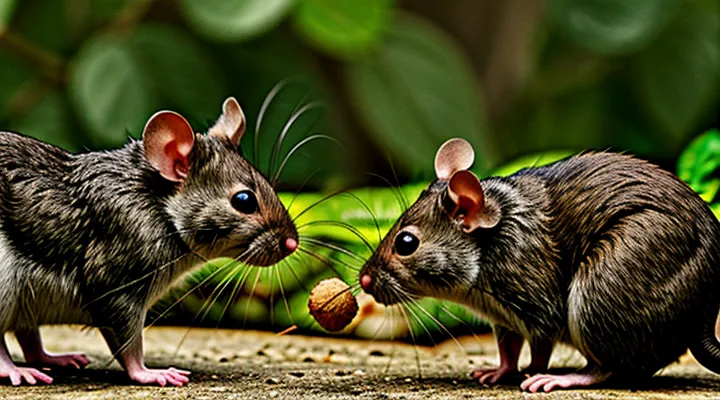
Understanding Rodent Diets
General Rodent Feeding Habits
Rodents exhibit a broad spectrum of feeding strategies that reflect their adaptive success across diverse habitats. Most species are opportunistic omnivores, consuming plant material, insects, and occasional vertebrate tissue when available.
Rats, for example, exploit human‑derived waste, seeds, fruits, and small animals, including other rodents. Mice prefer grains, seeds, and insects but will also ingest carrion under scarcity. Squirrels specialize in nuts and buds, while hamsters focus on seeds and vegetation, supplementing with insects during breeding periods. These patterns illustrate the flexible diet that characterizes the order.
Habitat determines food selection intensity. Urban environments provide abundant refuse and processed foods, increasing protein intake from animal sources. Rural and forested settings offer seasonal plant resources, prompting rodents to shift toward higher carbohydrate consumption during growth phases.
Nutritional balance centers on protein (10‑20 % of diet), carbohydrates (45‑60 %), fat (5‑15 %), and fiber (10‑15 %). Deficiencies in any component can affect reproduction, growth, and immune function.
Common food items across rodent species:
- Grains (wheat, corn, rice)
- Seeds (sunflower, millet)
- Nuts (acorns, walnuts)
- Fresh vegetation (leaves, stems)
- Insects (beetles, larvae)
- Small vertebrates (juvenile mice, lizards)
- Human food waste (bread, cheese, meat scraps)
Factors Influencing Diet
Environmental Availability
Rats encounter mice most frequently in habitats where both species thrive, such as urban sewers, agricultural storage areas, and abandoned structures. High population densities of rats increase the likelihood of encounters with mice, creating opportunities for predation when other food sources become scarce. Conversely, environments that provide abundant alternative sustenance—grain, garbage, or insect populations—reduce the incentive for rats to target mice.
Key environmental conditions influencing rat predation on mice include:
- Seasonal fluctuations that limit plant-derived food, prompting rats to expand their diet.
- Human waste management practices that either concentrate or disperse rodent food supplies.
- Structural complexity of habitats, where confined spaces facilitate direct contact between rats and mice.
- Presence of predators or competitors that alter rat foraging behavior and prey selection.
In regions where ecological niches overlap and resources are limited, rats are more likely to incorporate mice into their diet. In contrast, well‑supplied environments diminish the frequency of such inter‑species feeding events.
Nutritional Needs
Rats require a balanced intake of macronutrients to sustain rapid growth and high activity levels. Protein supplies amino acids for tissue repair and enzyme synthesis; a minimum of 15 % of dietary calories should derive from high‑quality protein sources such as soy, fish meal, or insect larvae. Fats contribute essential fatty acids and concentrated energy; 5–10 % of calories from vegetable oils or animal fats meets this demand. Carbohydrates provide glucose for immediate metabolic needs; grains and starches typically supply 55–65 % of total calories.
Micronutrients support physiological functions that cannot be stored long‑term. Calcium and phosphorus maintain skeletal integrity; a calcium‑to‑phosphorus ratio near 1:1 is optimal. Vitamin D facilitates calcium absorption, while vitamin C, though synthesized by rats, may be required under stress. Trace elements—including zinc, iron, and selenium—are vital for immune competence and antioxidant defenses.
Hydration is critical; rats drink 5–10 ml of water per 100 g body weight daily. Dehydration accelerates metabolic stress and can increase aggressive foraging behavior. In natural settings, rats supplement their diet with insects, eggs, and occasionally small vertebrates, providing protein and lipids that may be scarce in plant‑based resources.
A concise summary of nutritional priorities for rats:
- Protein: ≥15 % of calories, from animal or plant origins.
- Fat: 5–10 % of calories, emphasizing essential fatty acids.
- Carbohydrate: 55–65 % of calories, primarily complex grains.
- Calcium & Phosphorus: Balanced ratio, supporting bone health.
- Vitamins: Adequate levels of D, C, and B‑complex.
- Trace minerals: Zinc, iron, selenium at recommended concentrations.
- Water: 5–10 ml per 100 g body weight, continuously available.
When dietary protein or fat falls below these thresholds, rats may resort to opportunistic predation on smaller rodents to acquire missing nutrients. This behavior aligns with observations in studies of rodent feeding ecology, where nutritional deficits drive interspecific aggression and cannibalism. Understanding these requirements clarifies why rats sometimes consume mice, linking nutritional demand directly to observed predatory incidents.
The Predatory Nature of Rats
Rat Species and Their Diets
Common Rat Species
Rats occupy diverse ecological niches, and their species differ markedly in size, habitat preference, and feeding behavior. Understanding which species are most likely to encounter and potentially consume smaller rodents clarifies the broader question of inter‑rodent predation.
- Rattus norvegicus (Norwegian or brown rat) – Largest urban rat, typical weight 250–500 g. Omnivorous diet includes grains, waste, insects, and occasionally live prey such as mice when food scarcity or high population density creates competition.
- Rattus rattus (Black rat) – Smaller, 150–250 g, prefers elevated structures. Primarily frugivorous and seed‑eating, but documented instances of opportunistic hunting of juvenile mice in attic environments.
- Rattus exulans (Polynesian rat) – Weight 60–120 g, highly adaptable to island ecosystems. Diet centers on fruits, nuts, and invertebrates; predation on mice reported only when mouse populations are abundant and other resources limited.
- Rattus losea (Lesser ricefield rat) – 120–200 g, associated with agricultural fields. Consumes crops, insects, and occasionally small vertebrates; field studies note occasional capture of field mice during pest outbreaks.
- Rattus tanezumi (Asian house rat) – 140–250 g, thrives in human‑dominated habitats. Omnivorous with a strong inclination toward stored food; occasional predatory behavior toward mice observed in densely populated warehouses.
These species share a flexible digestive system that allows rapid dietary shifts. Larger rats, particularly the brown and black varieties, possess the physical capability to subdue mice, especially juveniles. In environments where food waste is limited, interspecific aggression increases, leading to higher instances of rats preying on mice. Conversely, smaller or more herbivorous species rarely target mice, focusing instead on plant matter and insects.
Dietary Flexibility
Rats display a high degree of dietary flexibility, allowing them to exploit a wide range of food resources in both urban and natural environments. Their omnivorous physiology supports consumption of plant material, insects, carrion, and, under certain conditions, other rodents.
When prey items such as mice become available, rats may incorporate them into their diet. This behavior depends on several variables:
- Resource scarcity: Limited access to preferred foods increases predatory attempts.
- Size disparity: Larger rats are more capable of subduing smaller mice.
- Habitat overlap: Shared burrows or foraging zones raise encounter rates.
- Seasonal fluctuations: Autumn and winter reduce insect abundance, prompting opportunistic carnivory.
Laboratory observations confirm that rats can kill and eat mice, but field data indicate such events are relatively infrequent compared to scavenging or plant consumption. The propensity for predation rises in dense populations where competition intensifies.
Overall, rat dietary flexibility enables opportunistic inclusion of mouse meat, yet it remains a supplemental component rather than a primary nutritional source.
Documented Cases of Murine Predation
Observation in the Wild
Field researchers have recorded interactions between Rattus species and smaller murine rodents in natural settings. These encounters occur primarily in urban sewers, agricultural granaries, and temperate woodlands where both taxa exploit similar food resources.
Observations demonstrate that predatory behavior is not uniform. Larger brown rats (Rattus norvegicus) occasionally seize juvenile house mice (Mus musculus) when the latter are confined to burrows or trapped in limited refuge spaces. Conversely, smaller roof rats (Rattus rattus) rarely engage in direct predation, preferring fruit, insects, and anthropogenic waste.
Documented incidents include:
- Direct capture of a mouse pup by a 350‑gram brown rat in a grain silo, followed by consumption of the carcass within minutes.
- Opportunistic killing of a mouse trapped in a sewer pipe by a 300‑gram brown rat; the mouse remained uneaten, suggesting territorial aggression rather than nutritional drive.
- Observation of a roof rat scavenging a dead mouse found near a compost heap; the rat consumed only the soft tissues, leaving the skeleton intact.
Interpretation of these events points to several influencing factors:
- Size disparity: Rats exceeding 250 g possess sufficient jaw strength to overpower a mouse.
- Resource scarcity: Predation increases when conventional food supplies are depleted.
- Habitat density: High rodent population density raises encounter rates, elevating the likelihood of aggressive interactions.
Overall, field data confirm that rat predation on mice occurs under specific ecological conditions, primarily involving larger rat individuals and limited alternative food sources. The phenomenon contributes to the complex trophic dynamics of rodent communities and informs pest‑management strategies that must consider intra‑order predation.
Laboratory Studies
Laboratory investigations have quantified the frequency with which rats consume mice under controlled conditions. Researchers typically employ standard laboratory strains of Norway rats (Rattus norvegicus) and house mice (Mus musculus) of comparable age and weight. Experiments involve single‑pair housing or enclosure of multiple individuals, with food availability manipulated to assess predatory behavior when alternative nutrition is scarce.
Key methodological elements include:
- Isolation of subjects to eliminate social hierarchy effects.
- Provision of live mice in a transparent compartment to observe capture attempts.
- Video recording for precise timing of attack, handling, and ingestion.
- Post‑mortem analysis of stomach contents to confirm consumption.
Results consistently show that:
- Rats initiate predatory attacks when food deprivation exceeds 24 hours.
- Successful killing occurs in 70–85 % of trials where live mice are presented.
- Actual ingestion follows in approximately 50 % of successful kills, with the remainder involving partial consumption or abandonment.
- Younger rats (< 8 weeks) display lower predation rates than mature individuals, reflecting developmental differences in hunting proficiency.
These findings demonstrate that rat predation on mice is not incidental but emerges under specific nutritional stress. The data support the conclusion that rats possess opportunistic carnivorous capabilities, which become measurable in laboratory settings designed to isolate hunger‑driven behavior.
Examining Mouse Vulnerability
Size and Behavioral Differences
Rats and mice differ markedly in body mass, head‑to‑tail length, and bite force, factors that directly affect the likelihood of interspecific predation. Adult Norway rats (Rattus norvegicus) commonly reach 250–300 g and 20–25 cm in total length, whereas house mice (Mus musculus) average 15–30 g and 7–10 cm. The larger skull and more robust musculature of rats generate a bite pressure capable of subduing small vertebrates, while mice possess only enough force to process soft plant material and insect prey.
Behavioral patterns reinforce the size disparity. Rats exhibit:
- Strong territoriality; individuals defend burrows and foraging zones against intruders.
- Opportunistic feeding; they readily scavenge carrion and capture live prey when available.
- Social hierarchies that concentrate hunting activity in dominant individuals.
Mice display:
- High reproductive output; energy is allocated primarily to rapid breeding rather than predation.
- Preference for concealed, seed‑rich microhabitats; they avoid confrontations with larger rodents.
- Limited aggression; interactions with conspecifics are chiefly communal, not predatory.
The combination of greater mass, superior bite mechanics, and assertive territorial behavior equips rats to capture and consume mice under certain conditions. Conversely, the diminutive size and avoidance‑oriented conduct of mice render them poor candidates for predation on rats.
Predatory Evasion Strategies
Rats occasionally prey on mice, creating a dynamic where smaller rodents must avoid capture. Survival depends on a suite of evasion tactics that reduce detection, hinder pursuit, and increase escape success.
Key strategies include:
- Acoustic vigilance: Mice emit high‑frequency alarm calls that rats cannot easily locate, prompting rapid dispersal.
- Burrow complexity: Multi‑chamber nests with narrow tunnels restrict rat movement while allowing swift retreat.
- Temporal activity shifts: Peak foraging during periods of low rat activity minimizes encounter probability.
- Camouflage coloration: Fur patterns that blend with substrate lower visual detection rates.
- Erratic locomotion: Sudden changes in direction and speed disrupt predator tracking algorithms.
These mechanisms collectively lower predation risk, influencing population distribution and interspecies competition. Understanding the interplay between rat predation and mouse evasion informs ecological models of rodent community structure.
The Role of Scavenging and Opportunism
When Predation Occurs
Rats will prey on mice when environmental pressures make alternative food sources scarce. In urban sewers, garbage accumulation often supplies abundant insects and carrion, reducing the incentive for rats to hunt. Conversely, in arid or heavily disturbed habitats, limited protein drives opportunistic attacks on smaller rodents.
Key factors that trigger predation include:
- High population density of rats, leading to increased competition for limited resources.
- Presence of juvenile or weakened mice, which are easier to capture.
- Seasonal fluctuations that lower plant‑based food availability, such as winter droughts.
- Spatial overlap of rat and mouse burrows, creating frequent encounters.
Physiological adaptations support this behavior. Rats possess strong incisors capable of delivering lethal bites, and a flexible diet that rapidly incorporates animal protein. Their nocturnal activity patterns often align with mouse foraging times, maximizing encounter rates.
Observed outcomes of rat‑mouse predation range from isolated kills to localized reductions in mouse numbers. In laboratory settings, controlled experiments demonstrate that a single adult rat can eliminate multiple mice within a short period when food is restricted. Field studies report similar patterns in grain storage facilities, where rat infestations correlate with measurable declines in mouse populations.
Survival Tactics
Rats occasionally capture and consume mice when opportunistic conditions arise. This behavior aligns with their omnivorous diet and provides a rapid source of protein, especially during periods of food scarcity.
Survival tactics that enable rats to exploit mice as prey include:
- Opportunistic hunting: Rats assess the availability of vulnerable mice, such as juveniles or individuals separated from their nest, and act swiftly to seize them.
- Territorial advantage: Dominant rats maintain control over densely populated areas, reducing competition and increasing access to smaller rodents.
- Resource caching: After a successful kill, rats may store the carcass in concealed locations to sustain themselves during prolonged shortages.
- Adaptive foraging: Rats adjust their diet composition based on seasonal fluctuations, increasing reliance on animal protein when plant-based resources decline.
These strategies enhance rat resilience in fluctuating environments, allowing them to supplement their nutrition with other rodents when necessary.
Broader Ecological Implications
Interspecies Competition
Rats and mice frequently occupy overlapping habitats, leading to direct competition for food, shelter, and nesting sites. When resources are scarce, larger rats may prey on smaller mice, supplementing their omnivorous diet with vertebrate tissue. This predatory behavior is opportunistic rather than habitual, occurring primarily in densely populated urban environments where waste concentrations attract both species.
Key drivers of interspecies competition include:
- Size disparity: Adult rats outweigh mice by a factor of two to three, enabling them to overpower and consume mice when the opportunity arises.
- Dietary flexibility: Rats consume grains, insects, carrion, and human refuse; occasional ingestion of mice provides additional protein without requiring specialized hunting skills.
- Territorial aggression: Rats establish dominant burrow systems, often displacing mouse colonies and limiting their access to preferred food sources.
- Population density: High rat numbers increase encounter rates, raising the likelihood of predation events.
Ecological studies show that mouse populations decline in areas with persistent rat presence, especially where waste management is poor and shelter options are limited. Conversely, mouse abundance can suppress rat foraging efficiency by forcing rats to travel farther for comparable caloric intake.
Overall, interspecies competition between rats and mice shapes local rodent community structure. Predation by rats represents a secondary, context‑dependent feeding strategy that emerges under competitive pressure rather than a primary dietary component.
Population Control
Rats occasionally prey on mice, a behavior that directly reduces mouse numbers and alters local rodent community structure. Predatory encounters occur when rats encounter vulnerable mice in confined spaces, during food scarcity, or when territorial disputes arise. The resulting mortality contributes to a natural check on mouse populations without human intervention.
Population regulation among rodents involves several interacting mechanisms:
- Direct predation by larger rats on smaller mice.
- Competition for limited food and shelter, forcing weaker individuals to relocate or perish.
- Transmission of pathogens that disproportionately affect dense mouse groups.
- Seasonal fluctuations in resource availability, prompting increased aggression and cannibalistic tendencies.
These factors collectively shape rodent demographics. In environments where rats dominate, mouse abundance often declines, leading to reduced crop damage and lower disease transmission risk associated with mice. Conversely, excessive rat populations can suppress mouse numbers while amplifying rat‑related hazards.
Effective pest management leverages this intrinsic control. Strategies that promote healthy rat populations—such as providing adequate shelter and food sources—can indirectly suppress mouse infestations. However, unchecked rat growth poses its own risks, necessitating balanced interventions that monitor both species to maintain ecological equilibrium.