
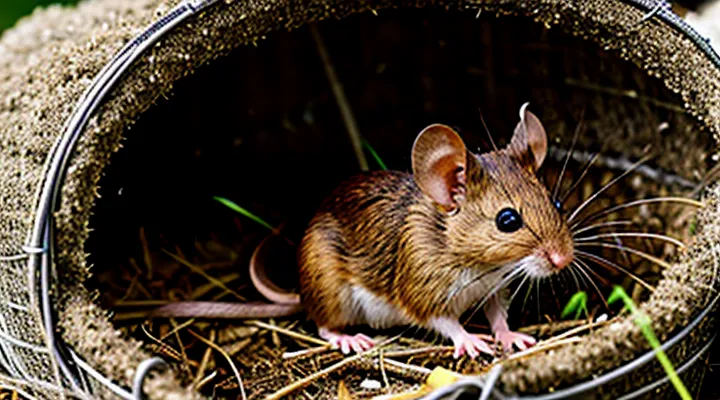
The Field Mouse: An Introduction
Species Overview
The field mouse (Apodemus sylvaticus) belongs to the family Muridae and is widespread across temperate regions of Europe and parts of western Asia. Adult individuals measure 8–10 cm in body length, with a tail of comparable size, and weigh 15–30 g. Coat coloration varies from brown to gray, providing camouflage within grassland and woodland understories.
Habitat preference includes open fields, hedgerows, and the edges of forests where dense vegetation offers protection from predators. The species thrives in environments that supply abundant seeds, insects, and plant material, which constitute its omnivorous diet. Breeding occurs year‑round in milder climates, with litters of three to six offspring produced after a gestation period of approximately 21 days.
Nest construction reflects the mouse’s adaptation to its surroundings. Key characteristics of the species that influence nest building are:
- Strong forelimb musculature enabling manipulation of grasses, leaves, and soft bark.
- Incisor morphology suited for cutting and shredding plant material.
- Spatial awareness that guides selection of concealed sites beneath ground cover or within low vegetation.
- Scent‑marking behavior that reinforces colony cohesion and deters intruders.
Nests are typically spherical or irregularly shaped structures composed of interwoven grasses, moss, and shredded foliage. They are lined with soft detritus, such as fur and down, to provide insulation against temperature fluctuations. Construction time ranges from a few hours for a temporary shelter to several days for a permanent domicile, depending on material availability and seasonal conditions.
Population density correlates with nest abundance; areas supporting high seed productivity often host multiple overlapping nests. This spatial arrangement reduces competition for resources while maintaining proximity for social interactions and collective vigilance.
Habitat Preferences
Field mice select nesting sites that provide shelter, stable microclimate, and easy access to food resources. Their preferences reflect the need to minimize predation risk while maintaining thermal efficiency.
- Dense herbaceous cover such as tall grasses, clover, or low shrubs, which conceals entrances and reduces exposure to aerial predators.
- Soil that is loose, well‑drained, and rich in organic matter, facilitating excavation of shallow chambers and tunnels.
- Proximity to abundant seed and insect sources, often within a radius of 10–30 m from cultivated fields, meadow edges, or riparian zones.
- Areas with moderate humidity, avoiding waterlogged ground that could compromise nest integrity, yet retaining enough moisture to support a soft bedding layer of plant material.
- Landscape features that offer structural complexity, such as fallen logs, stone piles, or root systems, which serve as anchor points for nest construction.
These environmental criteria are consistently observed across temperate regions where field mice thrive, confirming a strong correlation between habitat structure and nest success.
Nest Characteristics
Location and Placement
Underground Burrows
Field mice construct complex underground burrows that serve as the foundation for their nests. These tunnels provide protection from predators, temperature regulation, and a stable environment for breeding.
The architecture of a typical burrow includes:
- Entrance shaft: a narrow tunnel leading to the surface, often concealed by vegetation.
- Main passage: a horizontal corridor extending 30–80 cm, connecting multiple chambers.
- Nest chamber: a deeper, insulated room lined with grasses, leaves, and shredded plant material.
- Escape routes: secondary exits positioned at strategic angles to facilitate rapid retreat.
Construction proceeds in stages. First, the mouse excavates soil with its incisors and forepaws, creating a primary tunnel. Soil is displaced outward, forming a mound that camouflages the entrance. Next, the animal widens the tunnel, reinforcing walls with compacted earth to prevent collapse. Finally, the mouse gathers soft materials, arranging them in the nest chamber to create a dry, insulated bedding.
Burrow dimensions vary with soil composition and seasonal conditions. In loamy soils, tunnels are broader and longer, while compact clay limits expansion. During winter, mice deepen chambers to maintain temperatures above freezing, often extending the burrow by an additional 20 cm.
Overall, underground burrows represent a sophisticated engineering solution that enables field mice to thrive in diverse habitats.
Surface Nests
Surface nests are the above‑ground structures built by field mice to house offspring and store food when soil conditions are unsuitable for burrowing. They appear as compact, dome‑shaped mounds composed of gathered vegetation, leaf litter, and shredded plant material.
Construction begins with a foundation of dry grasses and twigs, layered with finer fibers such as moss or shredded bark to create insulation. The mouse compacts the material with its forepaws, forming a dense shell that resists wind and rain. Entrances are typically narrow tunnels that reduce exposure to predators.
Typical dimensions range from 10 to 25 cm in diameter and 5 to 12 cm in height. Nests are positioned on low vegetation, fallen logs, or open ground near food sources. Seasonal adjustments include adding thicker layers in winter and reducing material in summer to prevent overheating.
Key characteristics of surface nests:
- Material selection: Preference for dry, lightweight fibers that provide thermal insulation.
- Structural integrity: Compact layering and tight packing create a stable dome resistant to collapse.
- Location strategy: Proximity to foraging areas minimizes travel distance and exposure.
- Predator mitigation: Small entrance size and camouflage with surrounding debris limit detection.
Materials Used
Insulation
Field mice construct nests that retain heat and protect occupants from temperature fluctuations. The primary insulating component consists of dry grasses, shredded plant fibers, and fine leaves, which trap air within their loosely packed structure. This air layer reduces conductive heat loss to the surrounding soil and vegetation.
The insulation strategy includes several specific features:
- Multiple layers of loosely woven material create a gradient of density, with the outermost layer denser to shield against wind and the innermost layer fluffier to maximize trapped air.
- Incorporation of moss and fungal hyphae adds moisture‑resistant properties, preventing dampness from degrading thermal performance.
- Periodic replacement of worn material maintains optimal loft and insulating capacity throughout the breeding season.
By selecting readily available, lightweight resources and arranging them to maximize air entrapment, field mice achieve effective thermal regulation with minimal energy expenditure. This method allows the nest to remain warm during cold nights and cool during heat spikes, supporting the physiological needs of the occupants.
Structural Support
Field mice construct nests that rely on a framework of intertwined plant fibers, grasses, and shredded bark. The framework provides the necessary rigidity to maintain shape and resist collapse under the weight of the occupants and external pressures.
The primary components of structural support include:
- Root and stem fragments – thin yet resilient, they form the outer shell that distributes load.
- Leaf sheaths – layered to create a semi‑rigid wall, reducing gaps and enhancing insulation.
- Molded soil particles – compacted within the core, they act as a binding matrix that stabilizes the interior.
Support is achieved through a combination of weaving and compacting techniques. Mice interlace fibers in a lattice pattern, then press surrounding material into the lattice to lock it in place. This method produces a self‑reinforcing structure that adapts to irregular cavity shapes.
The nest’s stability is further enhanced by strategic placement of heavier debris at the base, lowering the center of gravity and preventing tipping. The resulting architecture enables the nest to endure vibrations, minor flooding, and the occasional intrusion by predators, while maintaining a compact, thermally efficient environment for the occupants.
Nest Dimensions and Architecture
Entrance Design
The entrance of a field mouse nest is a compact tunnel that balances accessibility with protection. It is positioned low to the ground, often concealed by vegetation, leaf litter, or soil mounds, reducing visibility to predators. The opening measures 1–1.5 cm in diameter, just large enough for the mouse to pass while limiting intrusion by larger animals.
Key design elements include:
- Camouflage: Entrance is masked by surrounding debris and a slight depression that blends with the terrain.
- Structural reinforcement: Layers of shredded plant material and compacted soil line the tunnel walls, preventing collapse.
- Orientation: Openings face away from prevailing winds and direct sunlight, maintaining a stable microclimate.
- Escape routes: Secondary shafts branch off near the main entrance, offering rapid egress when threats approach.
- Seasonal adjustment: In colder months, mice seal the entrance with additional nesting material, leaving a narrow slit for ventilation; in warmer periods, they keep it partially open to facilitate airflow.
These features collectively create an entrance that secures the nest, regulates temperature, and supports the mouse’s daily activities without exposing the interior to external hazards.
Chamber Layout
The chamber layout of a field mouse nest is a compact, three‑dimensional structure optimized for protection, thermoregulation, and food storage. The architecture consists of a primary chamber surrounded by auxiliary compartments, each serving a distinct function.
- Entrance tunnel: Short, low, and often concealed by vegetation; limits predator access while allowing rapid escape.
- Main chamber: Central, spacious enough to accommodate the adult pair and several offspring; lined with soft material such as shredded grasses, moss, and fur.
- Side chambers: Smaller, adjacent spaces used for nesting material accumulation, waste segregation, and temporary food caches.
- Bedding layer: Dense mat of dry vegetation and fur that provides insulation and moisture control.
- Storage pockets: Thin, peripheral pockets formed by loosely packed debris; hold seeds, grains, and insects collected for later consumption.
Spatial arrangement follows a predictable pattern: the entrance leads directly to the main chamber, which connects to side chambers via narrow passageways. This configuration minimizes movement within the nest, reduces exposure to external temperature fluctuations, and creates a hierarchical flow that prioritizes the safety of the young.
Nest Construction Process
Site Selection
Field mice choose nesting sites based on microhabitat conditions that maximize shelter, thermal stability, and predator avoidance. Preference centers on dense ground cover such as tall grasses, low shrubs, or leaf litter that conceals the entrance and provides structural support for the nest.
Key criteria influencing site selection include:
- Soil composition: loose, well‑drained soils facilitate burrow excavation and reduce moisture accumulation.
- Vegetation density: thick herbaceous layers obscure visibility and create a barrier against aerial and terrestrial predators.
- Proximity to foraging zones: locations within 10–30 m of seed‑rich patches lower energy expenditure during feeding trips.
- Microclimate: sites offering consistent temperature ranges (5–15 °C) and limited wind exposure enhance nest insulation.
- Predator presence: avoidance of areas with high activity of foxes, owls, or snakes reduces predation risk.
These factors interact to shape the spatial distribution of field mouse nests, resulting in clusters that reflect optimal balance between safety, resource accessibility, and environmental stability.
Excavation Techniques
Field mice construct subterranean nests by removing soil with coordinated movements of the incisors and forepaws. The excavation process begins with selection of loose, well‑drained substrate that permits easy displacement while maintaining structural integrity.
Initial loosening involves repeated gnawing at the surface to fracture compacted material. The animal then pushes loosened particles backward, creating a shallow depression that expands into a tunnel network. Tunnel walls are reinforced by compacting surrounding soil with hind‑limb pressure, preventing collapse.
Chamber formation follows the tunnel extension. The mouse enlarges a segment of the tunnel by widening the cavity with rhythmic forelimb sweeps, shaping a rounded nest chamber. Lining material, such as grasses or shredded plant matter, is deposited to provide insulation and moisture regulation.
Key excavation techniques:
- Surface gnawing – incisors fracture topsoil, reducing resistance.
- Particle displacement – forepaws push broken soil outward, forming a passage.
- Wall compaction – hind‑limb thrust consolidates tunnel walls.
- Cavity enlargement – alternating fore‑ and hind‑limb motions expand the nest chamber.
- Entrance concealment – displaced soil is redistributed to mask the opening.
These methods enable rapid creation of a protected, thermally stable habitat suitable for breeding and foraging activities.
Material Gathering
Field mice construct nests using readily available resources, selecting items that provide insulation, structural support, and camouflage. The gathering process involves systematic collection of specific materials that meet these functional requirements.
- Dry grasses and sedges form the primary framework, offering flexibility and strength.
- Soft mosses and leaves serve as internal padding, retaining warmth and moisture.
- Small twigs and bark fragments reinforce the outer walls, preventing collapse.
- Fungal mycelium and shredded plant fibers are occasionally incorporated to bind components together.
Mice locate materials within a radius of 10–30 meters from the nest site, favoring areas with dense vegetation and minimal predator exposure. Collections occur primarily during twilight hours, reducing visibility to predators while exploiting peak plant humidity, which enhances material pliability. Individual trips last a few minutes; multiple trips accumulate sufficient volume for a nest of 150–300 cubic centimeters.
Transport is achieved by grasping items with forepaws and maneuvering them to the construction zone. When larger pieces exceed carrying capacity, mice fragment them into smaller sections before relocation. Seasonal variations influence material choice: autumn provides abundant dry foliage, while spring offers fresh mosses, prompting adjustments in nest composition.
The assembled nest exhibits layered architecture: an outer shell of twigs and bark, a middle cushion of grasses, and an inner chamber lined with moss and leaves. This configuration ensures structural integrity, thermal regulation, and concealment, directly reflecting the deliberate material gathering strategies employed by field mice.
Building and Reinforcement
Field mice construct subterranean or surface nests using locally available resources, creating compact chambers that provide shelter and breeding space. The architecture balances insulation, moisture control, and predator avoidance.
Materials are selected for availability and functional properties. Common components include dried grasses, leaf litter, shredded bark, and soft plant fibers. Mice gather these items in discrete trips, arranging them to form a dense inner lining that traps air and retains warmth.
The nest layout typically consists of a primary chamber surrounded by peripheral tunnels. The central area houses the nest cup, where eggs and juveniles are kept. Peripheral passages allow ventilation and rapid egress. Walls are compacted by repeated pressing with forepaws, increasing structural stability.
Reinforcement techniques employed by field mice:
- Layered packing – successive layers of dry material create a gradient of density, enhancing load-bearing capacity.
- Interwoven strands – fibers are twisted together, forming a mesh that resists collapse.
- Compaction cycles – periodic kneading with paws compresses the interior, eliminating voids and strengthening cohesion.
- Moisture barriers – outer layers of leaf litter repel damp ground, preserving the dry core.
These methods produce nests that withstand environmental fluctuations while remaining lightweight and easily expandable as the colony grows.
Seasonal Variations in Nest Building
Summer Nests
Field mice build summer nests to accommodate higher temperatures and increased activity during the warm months. These structures differ from winter retreats in material composition, placement, and ventilation.
The nests are typically located in dense ground vegetation, low shrub cover, or beneath fallen logs. Positioning provides shade, protection from predators, and easy access to food sources such as seeds and insects.
Construction follows a consistent pattern:
- Core material – shredded grasses, dried leaves, and fine plant fibers form the inner chamber.
- Outer layer – coarser twigs, bark fragments, and root pieces create a protective envelope.
- Insulation – additional layers of moss or soft leaf litter improve thermal regulation.
- Ventilation – small gaps at the base allow airflow, preventing overheating and moisture buildup.
Mice assemble the nest by gathering materials with their forepaws, shaping them into a dome-shaped cavity. The interior is compacted to create a firm floor, while the outer shell remains loosely arranged to facilitate quick repairs.
Seasonal adjustments occur as temperatures rise. Mice may enlarge the entrance, add extra insulating layers, or relocate the nest to a higher, sunnier spot to maintain optimal microclimate conditions.
Winter Nests
Field mice modify their nests during the cold season to maintain thermal stability and protect offspring. The winter nest differs from the summer structure in material composition, insulation thickness, and placement within the burrow system.
The primary adaptations include:
- Increased insulation – dry grasses, dried leaves, and fine moss are packed tightly to create a dense barrier against heat loss.
- Reduced cavity size – the interior space is compacted to limit air exchange and retain warmth.
- Deeper positioning – nests are relocated to lower sections of the burrow, often below the frost line, where soil temperature remains relatively constant.
- Enhanced structural integrity – additional layers of root fibers and shredded bark reinforce the walls, preventing collapse from frozen ground pressure.
Construction proceeds in three stages. First, the mouse gathers dry vegetation, selecting items with low moisture content to avoid freezing. Second, the material is layered, each stratum overlapped to eliminate gaps. Third, the mouse compresses the layers with its forepaws, forming a uniform mass that conforms to the surrounding tunnel walls.
Physiological benefits stem from the nest’s design. The dense insulation reduces metabolic demand by up to 30 % compared to an unmodified cavity, allowing the animal to conserve energy reserves. The deeper location shields the nest from external temperature fluctuations, maintaining an interior temperature close to 5 °C even when ambient conditions drop below –15 °C.
Winter nests also serve as a refuge for multiple litters. The compact structure accommodates successive broods without the need for frequent reconstruction, thereby minimizing exposure to predators and harsh weather during the breeding period.
Breeding Nests
Field mice construct breeding nests to provide a secure environment for reproduction and early development of offspring. These nests are typically situated in shallow depressions within dense vegetation, beneath logs, or inside abandoned burrows. The location offers protection from predators, temperature fluctuations, and moisture loss.
Materials used in breeding nests include dry grasses, leaves, shredded bark, and soft moss. Mice collect and arrange these components in layers: an outer layer of coarser fibers for structural stability, a middle layer of finer material for insulation, and an inner lining of soft, pliable substances that cushion the young. The selection of materials reflects availability in the immediate habitat and the need for both durability and warmth.
Key structural features of breeding nests:
- Compact shape: Rounded or oval form reduces surface area, conserving heat.
- Ventilation openings: Small gaps prevent excess humidity while maintaining a stable microclimate.
- Reinforced walls: Interwoven fibers create a resilient barrier against disturbance.
Construction proceeds in stages. First, the mouse gathers raw material and creates a shallow pit. Next, it deposits the coarse outer layer, followed by successive additions of finer insulation. Finally, the mouse shapes the inner chamber, often compressing the material to achieve a snug fit for the litter. The entire process may span several days, with the mouse making frequent adjustments as the litter grows.
Seasonal considerations influence nest design. In colder months, mice increase the thickness of insulating layers and may incorporate additional dry foliage to enhance thermal retention. During warmer periods, nests are built with thinner walls and more ventilation to avoid overheating.
Breeding nests serve as a focal point for parental activity. The female continuously monitors temperature, rearranges bedding, and provides direct contact to regulate the pups’ body heat. Males may assist by delivering additional material or defending the nest perimeter, though their involvement varies among populations.
Overall, breeding nests represent a specialized adaptation that balances structural integrity, thermal regulation, and concealment, ensuring successful reproduction in field mouse populations.
Importance of the Nest for Field Mouse Survival
Protection from Predators
Field mouse nests incorporate multiple defensive strategies to reduce predation risk. The nest’s placement typically occurs in concealed locations such as dense vegetation, underground burrows, or within hollow stems, providing visual obstruction and limiting predator access. Structural elements further enhance security: tightly woven grass and shredded plant material create a compact mass that masks movement and muffles sounds, while the entrance is often positioned downward or angled away from common predator pathways.
Key protective features include:
- Camouflage: Nest materials match the surrounding environment, rendering the structure difficult to detect.
- Physical barriers: Layers of fibrous material increase thickness, deterring small mammals and birds from penetrating the interior.
- Limited exposure: Small, concealed openings reduce the chance of direct attacks and allow rapid retreat into deeper chambers.
- Strategic orientation: Entrances face away from open spaces, minimizing visibility to aerial and terrestrial predators.
These adaptations collectively lower the likelihood of detection and successful predation, enabling field mice to maintain reproductive success and population stability.
Thermal Regulation
Field mice construct nests that function as insulated microhabitats, maintaining stable internal temperatures despite external fluctuations. The nest’s thermal regulation results from several interrelated features.
The outer layer consists of dry grasses, leaves, and shredded plant material arranged loosely to trap air, which reduces conductive heat loss. Beneath this, a denser core of soft fibers—such as moss, down, and animal hair—provides additional insulation by limiting convection and retaining warmth generated by the mouse’s body heat.
Moisture control contributes to temperature stability. Mice line the interior with dry, absorbent materials that wick away humidity, preventing condensation that could lower the nest’s thermal efficiency. In colder periods, the mouse may add extra layers of insulating material, effectively increasing the nest’s R‑value.
Behavioral adjustments complement structural design. When ambient temperatures drop, mice increase metabolic heat production by huddling together and reducing activity, thereby raising the nest’s internal temperature without expending additional energy on construction.
Key factors influencing thermal regulation:
- Material selection: Preference for low‑density, dry vegetation that maximizes trapped air.
- Layering strategy: Loose outer shell for airflow, compact inner core for heat retention.
- Moisture management: Use of absorbent linings to keep the nest dry.
- Dynamic modifications: Seasonal addition or removal of insulating layers.
- Social thermoregulation: Group nesting to amplify collective heat generation.
These mechanisms enable field mice to occupy a wide range of habitats, from temperate grasslands to sub‑arctic meadows, by ensuring that nest temperatures remain within the physiological limits required for survival and reproduction.
Rearing Young
Field mice build nests primarily to protect and nurture their offspring. The structure provides a stable microclimate, shielding young from temperature fluctuations, predators, and moisture.
Nest construction begins with a shallow depression in the ground, often beneath dense vegetation or within a burrow. Mice line the cavity with shredded grasses, leaves, and fine plant fibers, creating a compact, insulating layer. Additional material, such as downy plant hairs, is placed atop the nest to retain heat during early developmental stages.
Females produce litters of three to eight pups after a gestation period of approximately 19–21 days. Birth occurs within the nest, where pups remain immobile for the first 10–12 days. During this period, the mother remains close, providing constant warmth through body contact.
Parental care includes several coordinated actions:
- Thermoregulation: Mother huddles over pups, adjusting position to maintain optimal temperature.
- Feeding: Pups receive milk for the first three weeks; the mother returns to the nest every few hours to nurse.
- Cleaning: Mother removes waste and soiled material, replenishing nest lining with fresh fibers.
- Protection: Mother monitors the entrance, responding to vibrations that may indicate predators.
By the third week, pups develop fur, open their eyes, and begin exploring the nest interior. At this stage, the mother introduces solid food, gradually reducing nursing frequency. The nest remains the central hub until juveniles achieve independence and disperse to establish their own territories.
Threats to Field Mouse Nests
Human Activity
Field mice construct nests using grasses, leaves, and soil, shaping compact domes or tunnels that provide shelter, thermoregulation, and protection from predators. The architecture varies with vegetation density, moisture levels, and seasonal temperature shifts.
Human activities modify the environment in ways that directly alter nest characteristics and building processes. Agricultural tillage breaks up ground cover, reducing available material and exposing nests to collapse. Urban expansion replaces native grasses with pavement and ornamental plants, limiting suitable nesting sites and forcing mice to occupy fragmented green spaces. Pesticide application eliminates insects that contribute to nest insulation and can poison mice occupying contaminated burrows.
Key effects of human influence include:
- Decreased structural integrity due to loss of native vegetation.
- Relocation of nests to suboptimal microhabitats, increasing predation risk.
- Chemical contamination of nest interiors, leading to health decline.
- Elevated disturbance frequency, causing premature abandonment.
Management practices that mitigate these impacts involve preserving field margins, maintaining low-intensity mowing regimes, and limiting pesticide use near known mouse activity zones. Such measures sustain the natural materials and conditions required for the construction of functional nests.
Natural Disasters
Field mice construct nests that serve as shelter, breeding sites, and food storage chambers. Nests are typically built in shallow depressions beneath grasses, under leaf litter, or within burrow entrances. Materials include dry grasses, shredded stems, moss, and occasionally animal fur. The architecture consists of a central dome surrounded by peripheral tunnels, measuring 10–30 cm in diameter and providing insulation against temperature fluctuations.
Natural disasters impose abrupt stress on these structures. The following events produce distinct effects:
- Flooding: water infiltrates ground layers, saturates nest material, collapses dome integrity, and displaces stored provisions.
- Fire: intense heat destroys vegetation used for construction, eliminates cover, and forces mice to abandon compromised sites.
- Earthquake: ground shaking destabilizes burrow entrances, cracks soil, and creates voids that render nests unusable.
- Drought: prolonged dryness hardens soil, reduces availability of pliable plant matter, and increases exposure to predators.
Field mice respond with adaptive construction behaviors. They select elevated micro‑sites to avoid water accumulation, incorporate fire‑resistant twigs when available, reinforce tunnel walls with compacted soil after seismic activity, and expand nests to include deeper chambers during dry periods. These modifications improve survival rates across variable disturbance regimes.
Monitoring nest condition after extreme events provides direct insight into small‑mammal population health and ecosystem resilience. Data on nest reconstruction speed, material selection, and site fidelity inform conservation strategies aimed at mitigating the indirect impacts of climate‑driven disasters.
Predation
Predators exert direct pressure on the architecture and location of field‑mouse burrows. Species such as foxes, kestrels, and snakes locate nests by scent, sound, and visual cues, forcing mice to embed entrances beneath dense vegetation, within steep banks, or under stones to reduce detection.
Construction adjustments reflect this threat:
- Entrance tunnels are short, angled downward, and often concealed by leaf litter.
- Interior chambers are reinforced with compacted soil to withstand trampling.
- Multiple escape routes are incorporated, allowing rapid retreat when a predator approaches.
Temporal patterns of predation influence nest occupancy. Peak predator activity during twilight and early night prompts mice to seal peripheral chambers and limit foraging trips, concentrating activity in central, more secure sections of the burrow.
Consequences of predation extend beyond immediate loss of individuals. High predation risk selects for nests that prioritize concealment and structural resilience, shaping the overall design of field‑mouse dwellings across habitats.