
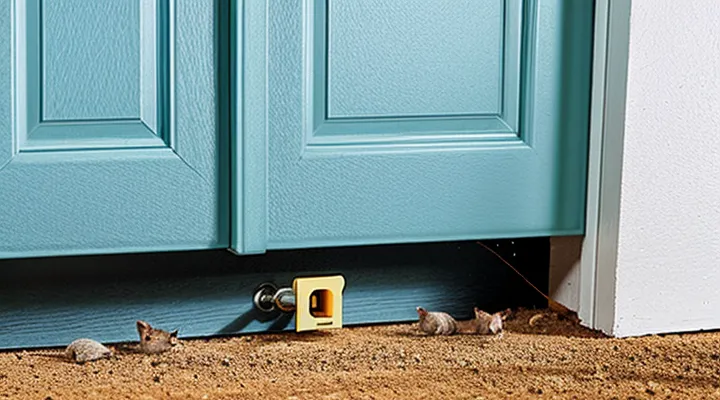
Understanding Mouse Behavior and Entry Points
Common Entry Points for Mice
Gaps Under Doors
Gaps beneath doors provide a direct pathway for rodents to enter homes and buildings. Their low profile makes them difficult to notice, yet even a few millimeters of clearance can accommodate a mouse.
Identify each opening by sliding a thin piece of cardboard or a flashlight along the floor line. Observe any light leakage or audible drafts; these indicate spaces larger than ¼ inch. Measure the width and height of each gap to determine the appropriate sealing material.
Select a solution based on gap dimensions and door construction:
- Compression weatherstripping – rubber or silicone strips pressed into a groove cut into the door threshold; effective for gaps up to ½ inch.
- Door sweeps – rigid or flexible blades attached to the door’s bottom edge; suitable for continuous gaps up to ¾ inch.
- Expanding foam – low‑expansion polyurethane injected into irregular voids; fills gaps up to 1 inch without exerting excessive pressure on the door frame.
- Metal or wood flashing – custom‑cut pieces fastened with screws or nails; used when structural reinforcement is required.
Installation steps:
- Clean the gap area, removing debris and old caulk.
- Cut the chosen material to length, allowing a slight overlap at each end.
- Apply adhesive or fasteners according to the product specifications.
- Press the seal firmly into place, ensuring a tight fit without warping the door.
- Test the seal by closing the door and checking for remaining light or airflow.
Regularly inspect the seals for wear, especially after seasonal temperature changes, and replace any compromised sections promptly. Maintaining airtight thresholds eliminates the primary entry point for mice, reducing the risk of infestation.
Cracks in Foundations
Cracks in a building’s foundation create direct pathways for rodents to infiltrate interior spaces. These fissures often develop from settlement, moisture fluctuations, or poor construction practices. When left untreated, they enlarge over time, allowing mice to exploit the voids for shelter and access to food sources.
Assessment begins with a visual inspection of the perimeter wall, basement floor, and any exposed footings. Look for hairline splits, horizontal separations, and gaps wider than ¼ inch. Use a moisture meter to detect damp areas that may accelerate crack propagation. Record the location, length, and width of each fissure to prioritize repairs.
Repair methods depend on crack dimensions and underlying cause:
- Hairline or hair‑thin cracks: Apply a liquid epoxy sealant that penetrates the fracture and hardens to create a continuous barrier.
- Horizontal or vertical cracks up to ½ inch: Inject polyurethane foam or low‑viscosity epoxy resin, then overlay with a cementitious patching compound for structural integrity.
- Large gaps exceeding ½ inch: Excavate the affected segment, install a pressure‑injected polyurethane or hydrophobic grout, and reinforce with a steel‑rebar or carbon‑fiber mesh before back‑filling with concrete.
After sealing, implement a moisture control regimen. Direct downspouts away from the foundation, maintain a 6‑inch clearance between soil and the exterior wall, and install a perimeter drainage system if water accumulation persists. Regularly re‑inspect repaired areas to verify that the seal remains intact and that no new openings have emerged.
Utility Line Openings
Utility line openings—gaps left where electrical, telephone, gas, water, or fiber‑optic lines enter a building—are frequent pathways for rodents. These openings are often overlooked during routine inspections, yet even a one‑inch aperture can permit mice to infiltrate structural cavities, insulation, and stored goods.
To eliminate this risk, follow a systematic approach. First, identify every utility penetration by reviewing as‑built drawings and conducting a physical survey of exterior walls, foundations, and crawl spaces. Second, assess the size and condition of each opening; prioritize those larger than ¼ inch or showing signs of wear. Third, select a sealing material compatible with the utility type: stainless‑steel mesh for fire‑rated walls, silicone‑based sealants for non‑structural gaps, and expanding foam with rodent‑resistant additives for irregular spaces. Fourth, apply the chosen barrier according to manufacturer specifications, ensuring a continuous seal that does not compromise the utility’s function or code requirements. Fifth, document the work, noting location, material used, and date of installation for future maintenance.
Key practices for durable protection:
- Install metal flashing or conduit sleeves that extend at least 2 inches beyond the exterior wall surface.
- Use UL‑listed rodent‑proof gaskets on service entrances where removable covers are required.
- Seal joints with high‑grade silicone that remains flexible under temperature fluctuations.
- Perform quarterly visual checks, focusing on areas with vegetation, moisture, or recent construction activity.
- Replace compromised seals promptly to prevent re‑entry.
By integrating these measures into regular building maintenance, utility line openings become effective barriers, reducing the likelihood of mouse intrusion and the associated damage to infrastructure and health.
Vents and Chimneys
Vents and chimneys provide direct pathways from the exterior to interior spaces, making them common entry points for mice seeking shelter and food. Open grates, damaged flues, and unsealed ductwork allow rodents to navigate through small gaps as narrow as a quarter‑inch.
Before any repair, conduct a thorough visual inspection. Look for rusted or missing vent covers, cracked chimney caps, and gaps around pipe sleeves. Use a flashlight to trace the interior of ducts and confirm that no nesting material or droppings are present.
Secure the openings with the following measures:
- Install stainless‑steel mesh (¼‑inch opening) over all vent openings; secure with corrosion‑resistant screws.
- Replace damaged chimney caps with a tight‑fitting, bird‑proof model that includes a mouse‑proof screen.
- Apply high‑temperature silicone sealant around pipe sleeves, flue joints, and any penetrations in the vent housing.
- Fit expandable foam sealant to fill irregular gaps, ensuring the product is rated for pest control and does not compromise fire safety.
- Conduct periodic maintenance: clean mesh screens, check cap integrity, and reseal any new cracks that develop.
Implementing these steps eliminates the primary routes mice use to infiltrate structures through ventilation and chimney systems, thereby reducing the risk of infestation and associated damage.
Damaged Screens
Damaged screens are a common gateway for rodents. Inspect all mesh, door, and vent screens for tears, gaps, or loose framing. Replace compromised sections before mice can exploit the opening.
- Remove the screen frame and lay the mesh flat.
- Measure the damaged area; cut a replacement piece that overlaps the original by at least two inches on each side.
- Secure the new mesh with a heavy‑duty staple gun or screen spline, ensuring no slack remains.
- Reinstall the frame, tightening screws or clips to restore a taut surface.
- Apply a thin bead of silicone caulk around the perimeter to seal any micro‑cracks.
If the screen material is brittle, use aluminum or stainless‑steel mesh instead of fiberglass; these metals resist chewing and maintain structural integrity longer. For high‑traffic entry points, add a secondary barrier such as a solid door sweep or magnetic strip to block residual gaps.
Regular maintenance prevents re‑damage: clean screens quarterly, check for corrosion on frames, and repair minor tears promptly. A well‑maintained screen eliminates a primary access route, reducing the likelihood of rodent intrusion.
Signs of Mouse Activity
Mice leave unmistakable evidence of their presence. Recognizing these indicators early allows prompt sealing of entry points and prevents infestation.
Typical signs include:
- Small, dark droppings about the size of a grain of rice, often found along walls, behind appliances, or in pantry corners.
- Gnaw marks on wood, plastic, or wiring; teeth leave clean, crescent-shaped cuts.
- Wispy trails of urine that appear as faint, oily stains on surfaces; a UV light reveals them clearly.
- Nesting material such as shredded paper, cotton, or insulation gathered in hidden locations like wall voids, under cabinets, or inside attics.
- Scratching noises in ceilings, walls, or crawl spaces, especially at night when mice are most active.
- Grease smears along baseboards and behind objects, resulting from the animal’s oily fur.
Additional clues can emerge from damage to food packaging, chewed-through cables, and the presence of live or dead mice. Documenting these findings helps prioritize which gaps—cracks, vent openings, pipe penetrations—require immediate closure to block further access.
Identifying and Locating Holes
Visual Inspection Techniques
Interior Inspection
A thorough interior inspection identifies every aperture that permits rodent ingress and provides the data needed for effective sealing.
Begin with a systematic visual sweep of all interior surfaces. Move clockwise around each room, using a bright flashlight and a mirror to view hidden junctions. Focus on:
- Baseboards and trim where gaps may appear after settling
- Cabinet backs, especially under sinks and appliances
- Wall outlets, switch plates, and conduit sleeves
- HVAC vents, ductwork, and dryer exhaust openings
- Pipe and cable penetrations through walls and floors
- Flooring seams, especially where tile, laminate, or carpet meet walls
Measure each opening with a ruler or caliper, noting width and length. Record location, dimensions, and material condition in a log sheet or digital app. Prioritize gaps larger than ¼ inch, as they accommodate adult mice.
After documentation, match each opening with an appropriate sealing method—steel wool, copper mesh, expanding foam, or cement‑based filler—based on material compatibility and durability requirements. Schedule repairs promptly, verify that filler material fully expands to close the gap, and re‑inspect the site to confirm successful closure.
Exterior Inspection
Exterior inspection provides the foundation for eliminating rodent access points. Begin by walking the perimeter at ground level, then progress to the roofline and upper walls. Identify any gaps, cracks, or openings that could accommodate a mouse.
- Foundation: examine cracks wider than ¼ in., joints between concrete and soil, and gaps around utility lines.
- Siding and trim: look for loose panels, damaged weather‑stripping, and spaces where paint has peeled away.
- Vents and openings: inspect dryer, attic, and crawl‑space vents; ensure screens are intact and mesh is fine enough to block small rodents.
- Roof and eaves: check for missing shingles, damaged flashing, and gaps around chimneys or skylights.
- Doors and windows: verify that thresholds, seals, and hardware are secure; test for movement when pressure is applied.
- Garage and outbuildings: assess door sweeps, wall penetrations for wiring or plumbing, and any holes left by rodents.
Use a flashlight, mirror, and a flexible probe to reach concealed areas. For each defect, record location, size, and material needed for repair. Preferred sealing materials include stainless‑steel mesh, heavy‑duty hardware cloth, silicone‑based caulk, and expandable polyurethane foam. Apply mesh first for larger openings, then seal edges with caulk to prevent future deterioration.
After repairs, conduct a second walk‑through to verify that all identified points are closed. Document the completed work with photographs and a checklist. Schedule periodic re‑inspections, especially after severe weather, to maintain a barrier that keeps mice from re‑entering the structure.
Using Tools for Detection
Flashlights
Flashlights provide essential illumination for detecting and addressing gaps that permit rodent intrusion. A high‑intensity, adjustable beam reveals cracks, gaps around pipe entries, and concealed openings behind appliances that are otherwise invisible in ambient light.
Key flashlight attributes for this task include:
- Brightness measured in lumens; 300 lumens or higher ensures clear visibility in dark corners.
- Focus control; a zoomable head concentrates light on small openings while a wide beam scans larger areas.
- Durability; impact‑resistant housing and water‑proof rating prevent failure in harsh environments.
- Battery reliability; rechargeable lithium‑ion cells sustain prolonged use without frequent replacement.
Practical application proceeds as follows:
- Power the flashlight and set the beam to a narrow focus.
- Examine walls, floors, and ceilings from the interior, moving the light along baseboards, vent ducts, and utility penetrations.
- Observe light spill through any fissure; a visible halo indicates a potential entry point.
- Mark the location with a temporary tag or chalk.
- Assess the size of the opening; select appropriate sealing material (steel wool, caulk, or metal mesh).
- Apply the chosen material while the flashlight maintains illumination, confirming complete coverage before moving on.
- Re‑inspect the repaired area with the flashlight to verify no residual gaps remain.
Consistent use of a reliable flashlight streamlines the identification of rodent pathways and supports thorough sealing, reducing the likelihood of future infestations.
Smoke Pencils
Smoke pencils are handheld devices that emit a thin, non‑toxic plume of vapor when activated. The vapor is visible against most backgrounds, allowing precise observation of airflow patterns around potential rodent entry points.
When a mouse passes through a gap, it creates a pressure differential that draws the smoke inward or pushes it outward. By directing the pencil’s stream toward suspected openings—such as cracks in foundations, gaps around utility penetrations, or openings in siding—one can see the direction and speed of movement. A rapid influx of smoke indicates an active pathway; a slow, steady drift suggests a passive gap that still permits ingress.
Procedure for using smoke pencils to locate and seal mouse entry points
- Close all doors and windows in the area to eliminate external drafts.
- Activate the smoke pencil and hold it a few inches from the suspected opening.
- Observe the vapor:
- Inward flow → mouse is entering through the gap.
- Outward flow → air is escaping, confirming a passage.
- Mark the exact location with a temporary indicator (e.g., a piece of tape).
- Choose an appropriate sealing material: steel wool, copper mesh, or expanding foam rated for rodent resistance.
- Apply the material directly over the marked spot, ensuring complete coverage of the aperture.
- Verify the seal by repeating the smoke test; absence of movement confirms successful closure.
After sealing, re‑inspect the area periodically, especially after seasonal temperature changes, to detect any new gaps. Maintaining a tight envelope around the structure prevents future rodent infiltration and eliminates the need for repeated pest control measures.
Thermal Cameras
Thermal imaging devices reveal temperature differences that expose hidden rodent pathways. Mice emit body heat distinct from surrounding insulation, allowing cameras to pinpoint active entry points even in concealed wall cavities, ceilings, or floor joists.
When inspecting a property, follow these steps:
- Scan all exterior walls, foundation seams, and utility penetrations with a handheld thermal camera. Look for localized hot spots that appear intermittently, indicating mouse movement.
- Record the coordinates of each hotspot. Compare images taken at different times of day to differentiate transient heat sources from structural anomalies.
- Prioritize gaps that align with the hotspots. Typical culprits include unsealed pipe sleeves, damaged weatherstripping, and gaps around vent ducts.
- Apply appropriate sealing materials—steel wool, copper mesh, or silicone‑based caulk—directly over the identified openings. Verify the repair by re‑scanning the area; absence of the previous hotspot confirms successful closure.
- Schedule periodic thermal checks, especially after seasonal changes, to detect new ingress points before infestations establish.
Thermal cameras also assist in evaluating the effectiveness of existing barriers. By visualizing heat flow through insulated structures, they reveal compromised seals or deteriorated materials that may otherwise go unnoticed. Integrating regular thermal inspections into a maintenance routine reduces the likelihood of mouse entry and minimizes the need for reactive pest control measures.
Sealing Holes Effectively
Choosing the Right Materials
Steel Wool
Steel wool provides a reliable barrier against rodent intrusion because its tightly packed fibers resist gnawing and compress easily to fill irregular openings.
The material’s abrasive texture discourages chewing, while its flexibility allows it to conform to gaps of various shapes and sizes. When combined with a sealant, steel wool creates a long‑lasting obstruction that remains effective even in high‑traffic areas.
Application procedure
- Locate all openings where rodents may gain access, including gaps around pipes, vents, and foundation cracks.
- Remove debris and dry the surface to ensure proper adhesion.
- Pack steel wool firmly into the opening, pressing until the fibers fill the space completely.
- Apply a layer of exterior‑grade caulk or expanding foam over the steel wool to lock it in place and protect against moisture.
Regular inspection is necessary. Verify that the steel wool has not shifted or become exposed, and replace any compromised sections promptly to maintain an effective seal.
Caulk and Sealants
Caulk and sealants provide a reliable barrier against rodent intrusion by filling cracks, gaps, and joints where mice can squeeze through. Selecting the appropriate product depends on the material being sealed, exposure to moisture, and expected movement of the substrate.
- Silicone caulk: flexible, water‑resistant, ideal for bathroom fixtures, exterior door frames, and any area prone to humidity.
- Acrylic latex caulk: easy to apply, paintable, suitable for interior trim, baseboards, and non‑structural gaps.
- Polyurethane sealant: high adhesion, durability, recommended for foundation cracks, concrete, and outdoor masonry.
Application procedure
- Inspect the area, remove loose debris, old mortar, and any existing insulation that may harbor pests.
- Clean the surface with a mild detergent, rinse, and allow it to dry completely.
- Cut the caulk tube tip at a 45‑degree angle, creating an opening matching the gap width.
- Load the caulk gun, apply a continuous bead, pressing the material into the opening to eliminate voids.
- Smooth the bead with a damp finger or a tooling tool to ensure full contact and a tight seal.
- Allow the sealant to cure according to the manufacturer’s specifications before exposing the area to traffic or moisture.
Maintenance tips
- Examine sealed points quarterly for cracks or shrinkage.
- Reapply sealant where edges have detached or where new gaps appear after structural settling.
- Use rodent‑resistant caulk formulations that contain added deterrents, such as bittering agents, for high‑risk zones.
By employing the correct caulk type, preparing the surface meticulously, and adhering to proper application steps, homeowners can effectively block mouse entry points and reduce the likelihood of infestation.
Expanding Foam
Expanding foam, typically polyurethane‑based, is a two‑component material that inflates on exposure to air, hardens, and adheres to most building surfaces. Its low viscosity allows it to flow into cracks, seams, and voids that are otherwise inaccessible.
The product creates a sealed barrier that blocks rodents from exploiting openings. As the foam expands, it fills irregular shapes, eliminates gaps as small as 1 mm, and forms a durable shell that resists chewing.
Application procedure
- Identify all potential entry points: gaps around pipes, vent openings, foundation cracks, and utility penetrations.
- Remove debris, dust, and loose material from the area.
- Wear disposable gloves, safety goggles, and a mask; ensure adequate ventilation.
- Cut the nozzle tip to the recommended size for the target opening.
- Insert the nozzle into the gap and dispense a short burst; the foam will expand to fill the space.
- Allow the foam to cure for the time specified by the manufacturer (usually 5–10 minutes).
- Trim excess material with a utility knife once fully hardened.
Safety measures include keeping the foam away from open flames, avoiding direct skin contact, and storing the cans in a cool, dry place. Follow the manufacturer’s temperature guidelines; extreme heat can accelerate curing and reduce adhesion.
Limitations of expanding foam must be considered. It does not provide structural support, degrades under prolonged UV exposure, and loses effectiveness when used on openings larger than ½ inch without additional reinforcement. For exterior walls, a weather‑resistant variant is required to prevent premature breakdown.
Regular inspection is advisable. After seasonal temperature changes, check for cracks in the cured foam and reapply as needed to maintain a continuous seal.
When used correctly, expanding foam offers a quick, reliable method for eliminating rodent access points and reinforcing the overall integrity of a building’s envelope.
Wire Mesh
Wire mesh provides a physical barrier that stops rodents from passing through openings in walls, foundations, and utility penetrations. Choose a mesh with openings no larger than 1/4 inch (6 mm) and a stainless‑steel or galvanized material to resist corrosion and chewing. A gauge of 20‑24 AWG offers sufficient strength without excessive rigidity.
When installing, follow these steps:
- Identify all gaps larger than 1/4 inch, including vents, pipe sleeves, and foundation cracks.
- Cut the mesh to size, leaving a 1‑inch overlap on each side of the opening.
- Secure the mesh with corrosion‑resistant screws or heavy‑duty staples, spacing fasteners every 4‑6 inches.
- Apply a silicone‑based sealant around the perimeter to eliminate any remaining voids.
- Inspect the installation quarterly for signs of wear, rust, or displacement; replace damaged sections promptly.
For high‑traffic areas, reinforce the mesh with a rigid frame or metal flashing to prevent sagging. In vent installations, attach a removable panel that allows access for cleaning while maintaining the barrier. Using wire mesh in conjunction with other exclusion methods—such as door sweeps and weather stripping—creates a comprehensive defense against mouse intrusion.
Concrete Patch
Concrete patch provides a durable, load‑bearing solution for sealing openings that rodents exploit. The material bonds directly to masonry, concrete, or brick, creating a barrier that resists chewing and weathering.
Preparation
- Identify all gaps larger than ¼ inch on foundations, walls, and utility penetrations.
- Remove loose debris, wood, or insulation from the opening.
- Clean the surface with a wire brush and a vacuum to eliminate dust and loose particles.
- Dampen the area lightly; excess moisture can impair adhesion.
Application
- Mix the patch compound according to the manufacturer’s specifications, achieving a smooth, lump‑free consistency.
- Apply a thin primer coat if the product recommends it; allow the primer to become tacky.
- Fill the hole with the patch material, over‑filling by approximately 1 mm to accommodate shrinkage.
- Use a putty knife or trowel to press the compound firmly into the cavity, eliminating air pockets.
- Smooth the surface level with the surrounding substrate, feathering edges to prevent gaps.
Curing and Inspection
- Allow the patch to cure for the time stated on the label, typically 24–48 hours, keeping the area protected from direct rain or runoff.
- After curing, inspect the seal for cracks, gaps, or unfinished edges; repair any deficiencies immediately.
- Apply a paint or sealant compatible with the patch if aesthetic integration with the surrounding surface is required.
Maintenance
- Periodically check patched areas during seasonal inspections, especially after heavy rain or temperature fluctuations.
- Reapply a thin layer of patch compound or a sealant where minor deterioration appears, ensuring continuous protection against rodent entry.
Step-by-Step Sealing Process
Cleaning the Area
Cleaning the area around potential entry points removes food residues, nesting material, and visual clues that draw rodents. A spotless environment makes gaps and cracks easier to spot and discourages mice from establishing a foothold.
- Sweep floors, vacuum corners, and clear debris beneath appliances and furniture.
- Wipe countertops, shelves, and cabinet interiors with a detergent solution; rinse and dry thoroughly.
- Empty trash cans daily, use containers with tight‑fitting lids, and store recyclables in sealed bins.
- Inspect pantry shelves for spilled grains or crumbs; discard expired products and reorganize items in airtight containers.
After debris is cleared, illuminate the space with a flashlight or headlamp. Trace the perimeter of walls, baseboards, and the underside of cabinets; any fissure wider than a quarter‑inch warrants sealing. Mark discovered openings with masking tape to prioritize repair.
Maintain cleanliness with a scheduled regimen: sweep high‑traffic zones each evening, vacuum weekly, and perform a deep clean of storage areas monthly. Consistent removal of attractants reduces the likelihood that mice will locate and exploit remaining openings.
Applying the Material
Apply the chosen sealant directly to the opening after removing loose debris. Press the material into the gap until it contacts both sides of the surrounding structure. Smooth the surface to eliminate air pockets that could compromise the barrier.
- For steel‑wool patches, pack the wool tightly, then cover with expanding foam to lock it in place.
- When using hardware cloth, cut a piece that overlaps the opening by at least one inch, secure with stainless‑steel staples, then seal the edges with silicone caulk.
- With liquid caulk, dispense a continuous bead along the perimeter of the hole, then use a putty knife to press the caulk into the crack and create a uniform finish.
After application, allow the material to cure according to the manufacturer’s specifications before exposing the area to moisture or pressure. Inspect the sealed area periodically for signs of separation or wear, and reapply material promptly if deterioration is observed.
Checking for Completeness
When sealing gaps that permit mouse intrusion, a thorough verification process prevents missed openings that could compromise the effort.
Begin by walking the interior and exterior of the building with a bright flashlight. Examine baseboards, window frames, door thresholds, and utility penetrations. Pay special attention to areas where pipes, cables, or vents pass through walls and floors.
Create a checklist that includes:
- All visible cracks larger than ¼ inch.
- Gaps around vent covers and exhaust fans.
- Openings around HVAC ducts, especially where they enter the attic or basement.
- Spaces beneath appliances, such as refrigerators and stoves.
- Gaps at the top and bottom of interior doors, including weather‑stripping gaps.
- Holes left by removed fixtures, including old wiring boxes and plumbing fixtures.
After initial repairs, repeat the inspection from a different angle or with a mirror to view hidden corners. Use a piece of tissue or a thin wire to probe suspected seams; if the material passes through, the seal is incomplete.
Document each location, the material used for sealing (e.g., steel wool, caulk, expanding foam, metal flashing), and the date of repair. This record simplifies future audits and confirms that no area was overlooked.
Finally, perform a short test by sprinkling a fine layer of flour or talc around repaired zones. If particles remain undisturbed after 24 hours, the barrier is intact; otherwise, re‑examine the spot for residual openings.
Preventive Measures and Ongoing Maintenance
Regular Home Maintenance
Inspecting Foundations
Inspecting a building’s foundation reveals pathways that rodents exploit to infiltrate structures. Cracks, gaps around utility penetrations, and deteriorated sealants constitute the most common entry points.
- Conduct a walk‑around inspection at ground level; note any visible fissures in concrete or masonry.
- Use a flashlight and mirror to examine the underside of sill plates and crawl‑space walls.
- Probe suspicious openings with a thin gauge; a gap larger than ¼ inch permits mouse passage.
- Verify that vent openings, pipe sleeves, and drainage pipes are fitted with metal or rigid mesh.
- Document each defect with photographs and measurements for prioritization.
Assess each identified opening for severity and proximity to interior spaces. Prioritize repairs that connect directly to living areas or food storage zones. Apply appropriate sealing methods: hydraulic cement for concrete cracks, steel wool combined with expanding foam for pipe gaps, and stainless‑steel mesh for vents.
Schedule foundation inspections at least twice yearly, after severe weather and before winter, to ensure newly formed gaps are addressed before they become functional rodent routes. Continuous monitoring reduces the likelihood of infestations and protects structural integrity.
Sealing New Openings
When new gaps appear—through renovation, utility work, or structural damage—prompt sealing prevents rodents from establishing a foothold. Unsealed openings serve as direct pathways for mice, allowing them to infiltrate walls, crawl spaces, and stored provisions.
Effective sealing follows a systematic approach:
- Identify all fresh apertures. Inspect walls, floors, ceilings, and exterior cladding for cuts, cracks, and unfinished penetrations. Use a flashlight and a thin probe to locate hidden voids.
- Choose appropriate filler material. For gaps wider than ¼ inch, employ steel wool backed with caulk or expanding foam designed for pest control. For smaller cracks, apply high‑quality silicone or acrylic sealant.
- Prepare the surface. Remove debris, dust, and loose paint. Clean with a mild detergent solution and allow to dry completely.
- Apply the filler. Insert steel wool or mesh into the opening, then press sealant over it to create a continuous barrier. For foam, dispense directly into the void, allow expansion, then trim excess flush with the surrounding surface.
- Verify integrity. Run a light source or smoke test to confirm no residual openings remain. Reinforce edges with a strip of metal flashing or a pressure‑treated wood board if the gap borders a structural element.
- Monitor periodically. Conduct quarterly inspections, especially after extreme weather, to detect any new fissures caused by settlement or moisture movement.
By adhering to these steps, any newly formed passages become impermeable, eliminating the primary access points that mice exploit. This proactive maintenance reduces infestation risk and protects the building’s structural and sanitary integrity.
Repairing Damaged Screens
Repairing damaged window or vent screens eliminates one of the most common pathways for rodent intrusion. A compromised mesh provides a direct route for mice to enter living spaces, especially during colder months when they seek shelter.
Begin by inspecting every screen in the property. Look for tears larger than a quarter‑inch, rusted frames, and loose fasteners. Mark each defect with a temporary label to ensure none are missed during the repair process.
Materials required:
- Heavy‑duty fiberglass or stainless‑steel mesh, cut to the dimensions of the opening
- Screen spline and a spline roller
- Fine‑grit sandpaper
- Rust‑inhibiting primer and metal‑compatible paint (if the frame is metal)
- Small screwdriver or drill with appropriate bits
- Replacement corner brackets or clips, if needed
Repair procedure:
- Remove the existing screen by loosening the spline with a flat‑head screwdriver. Discard torn sections.
- Clean the frame with sandpaper to eliminate rust and debris; apply primer and allow it to dry completely.
- Lay the new mesh over the frame, ensuring it extends beyond the edges by at least half an inch.
- Re‑insert the spline into the groove, pressing it firmly with the roller to secure the mesh evenly.
- Trim excess mesh with a utility knife, then reinstall any corner brackets or clips.
- Test the repair by gently pulling the mesh; it should remain taut without gaps.
After installation, conduct a final inspection. Verify that the spline is flush with the frame and that the mesh shows no visible openings. Schedule periodic checks—at least twice a year—to detect wear before mice can exploit new damage. Prompt maintenance of screens maintains a barrier that deters rodent entry effectively.
Landscape Management
Trimming Vegetation
Trimming vegetation directly reduces the pathways mice use to approach structural openings. Dense shrubs, overgrown vines, and tall grass create cover that masks gaps in foundations, vents, and utility penetrations. Removing this cover exposes potential entry points, making them easier to inspect and seal.
Effective vegetation management includes:
- Cutting back shrubs to a minimum of 12 inches from walls, foundations, and utility lines.
- Pruning vines and climbing plants away from the exterior of the building.
- Mowing lawns regularly so grass does not exceed 3 inches in height near the perimeter.
- Removing leaf litter, wood debris, and compost piles that lie against the structure.
Timing and frequency matter. Perform an initial thorough trim before the heating season, then schedule bi‑monthly inspections to maintain clearance. Use sharp, clean tools—hand shears for low shrubs, pole pruners for taller growth, and a rotary mower for grass. Apply a mulch barrier at least 6 inches deep, kept away from the building’s base, to deter rodents while preserving soil health.
After trimming, conduct a visual audit of the exposed exterior. Identify any cracks, gaps around pipe sleeves, or gaps in siding revealed by the cleared view. Apply appropriate sealants, steel wool, or hardware cloth to close these openings. Consistent vegetation control, combined with prompt sealing of uncovered gaps, creates a perimeter that discourages mice from seeking shelter within the structure.
Storing Firewood Properly
Proper firewood storage reduces the likelihood that rodents will create or enlarge entry points around the home. Keep wood elevated at least six inches above ground to prevent direct contact with soil, which serves as a natural pathway for mice. Place the stack on a level, impermeable surface such as a concrete pad or thick plastic sheet; this blocks moisture that attracts rodents and eliminates a hidden tunnel beneath the pile.
Arrange logs with enough space between them to allow air circulation. Good airflow dries the wood quickly, discouraging nesting. Use a sturdy, tight‑fitting cover that can be lifted for access but remains closed when not in use. Secure the cover with straps or clamps to stop wind from lifting it and exposing the interior.
Maintain a clear perimeter around the stack. Trim vegetation, remove leaf litter, and keep the area free of debris that could serve as shelter. Inspect the storage site regularly for gaps, cracks, or holes in the foundation, siding, or roofing; seal any openings with steel wool, caulk, or metal flashing before they become accessible.
Key practices
- Elevate firewood ≥ 6 inches above ground.
- Store on a non‑porous base.
- Allow airflow by spacing logs.
- Cover with a tight‑fitting, secured lid.
- Keep surrounding area clean and vegetated.
- Seal all surrounding gaps promptly.
Implementing these measures minimizes the chance that mice will exploit firewood piles to reach the structure, thereby strengthening overall rodent‑proofing efforts.
Food Storage and Sanitation
Securing Food Containers
Secure food containers are essential for preventing rodents from accessing nourishment. Choose containers made of hard plastic, glass, or metal with tight‑fitting lids. Avoid thin, flexible covers that can be chewed through.
When selecting lids, verify that the sealing mechanism creates a complete barrier. Snap‑on, screw‑top, or latch‑type closures work best. Test each container by pressing the lid; any flex or gaps indicate a potential entry point.
Maintain container integrity by following these practices:
- Store containers upright to keep lids seated fully.
- Inspect seals regularly for cracks, wear, or loosened threads.
- Replace damaged containers promptly; minor repairs do not restore full protection.
- Keep containers away from walls and appliances where mice can gnaw surrounding structures to reach the contents.
Position containers on smooth surfaces such as countertops or shelves rather than on the floor. Elevated placement reduces the likelihood that rodents will encounter the containers while foraging. Clean spills immediately; residue attracts pests and can compromise seals.
By using robust containers, verifying closures, and maintaining a clean, elevated storage environment, the risk of mice accessing food supplies is minimized.
Regular Cleaning
Regular cleaning eliminates food residues and nesting material that attract rodents to gaps in walls, floors, and foundations. Removing crumbs, spilled pet food, and standing water reduces the incentive for mice to explore openings, making it less likely they will gnaw new entry points.
A systematic cleaning routine should include:
- Sweep and vacuum floors daily, focusing on corners, under appliances, and behind furniture where debris accumulates.
- Wipe countertops, tables, and shelves after each meal preparation to erase food particles.
- Empty trash cans regularly, seal lids tightly, and store waste containers away from building walls.
- Clean pet feeding areas weekly, washing bowls and removing leftover food immediately.
- Inspect and mop kitchen and bathroom sinks, ensuring no drips create moist environments that encourage rodent activity.
Periodic deep cleaning of storage spaces, basements, and attics prevents buildup of insulation, cardboard, and fabric that can serve as hidden shelters. During each deep‑clean session, examine surfaces for gnaw marks or droppings; their presence indicates a breach that requires sealing.
Consistent sanitation, combined with prompt repair of identified holes, creates an environment where mice find no food source or shelter, thereby discouraging them from attempting entry through structural gaps.